









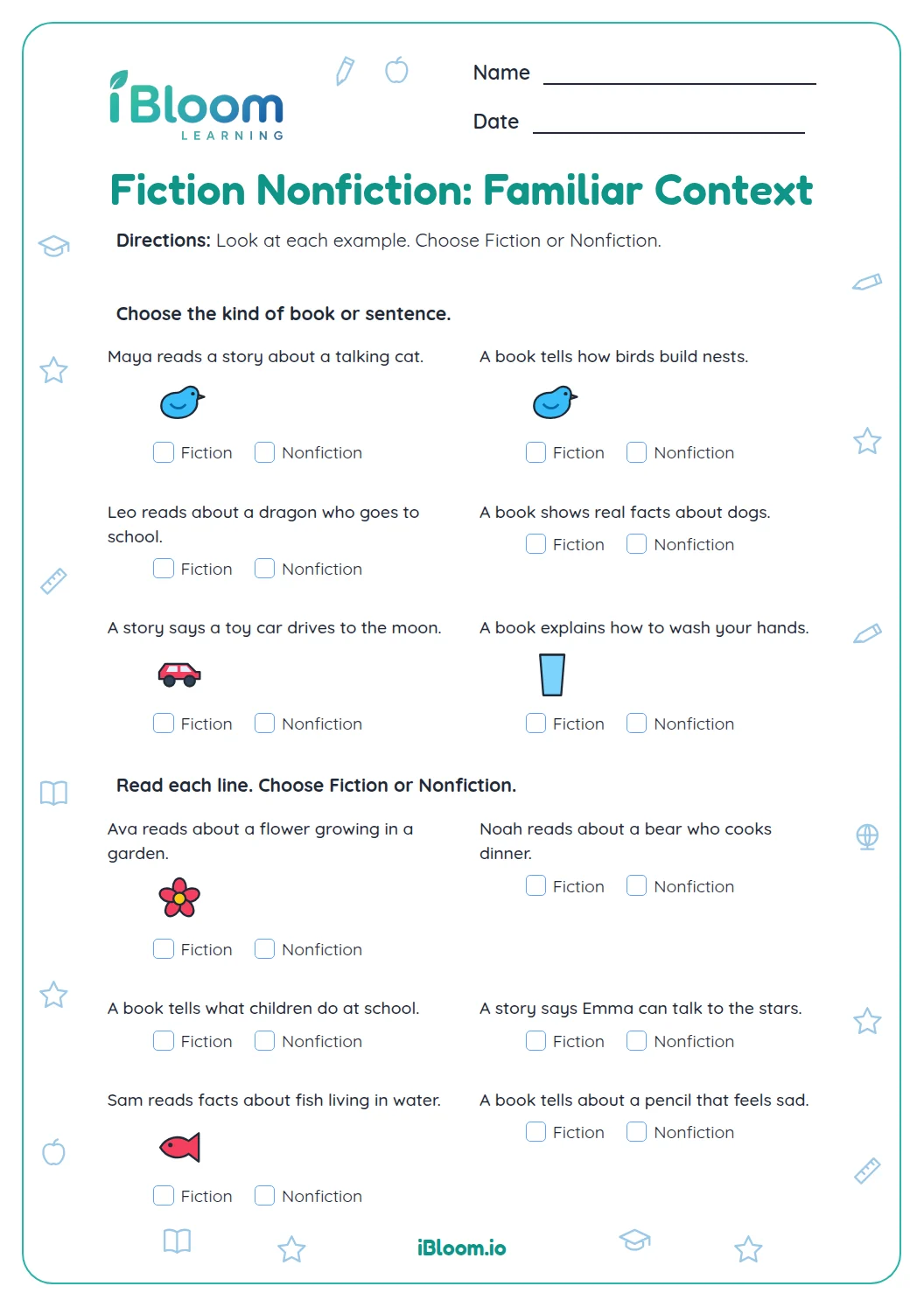
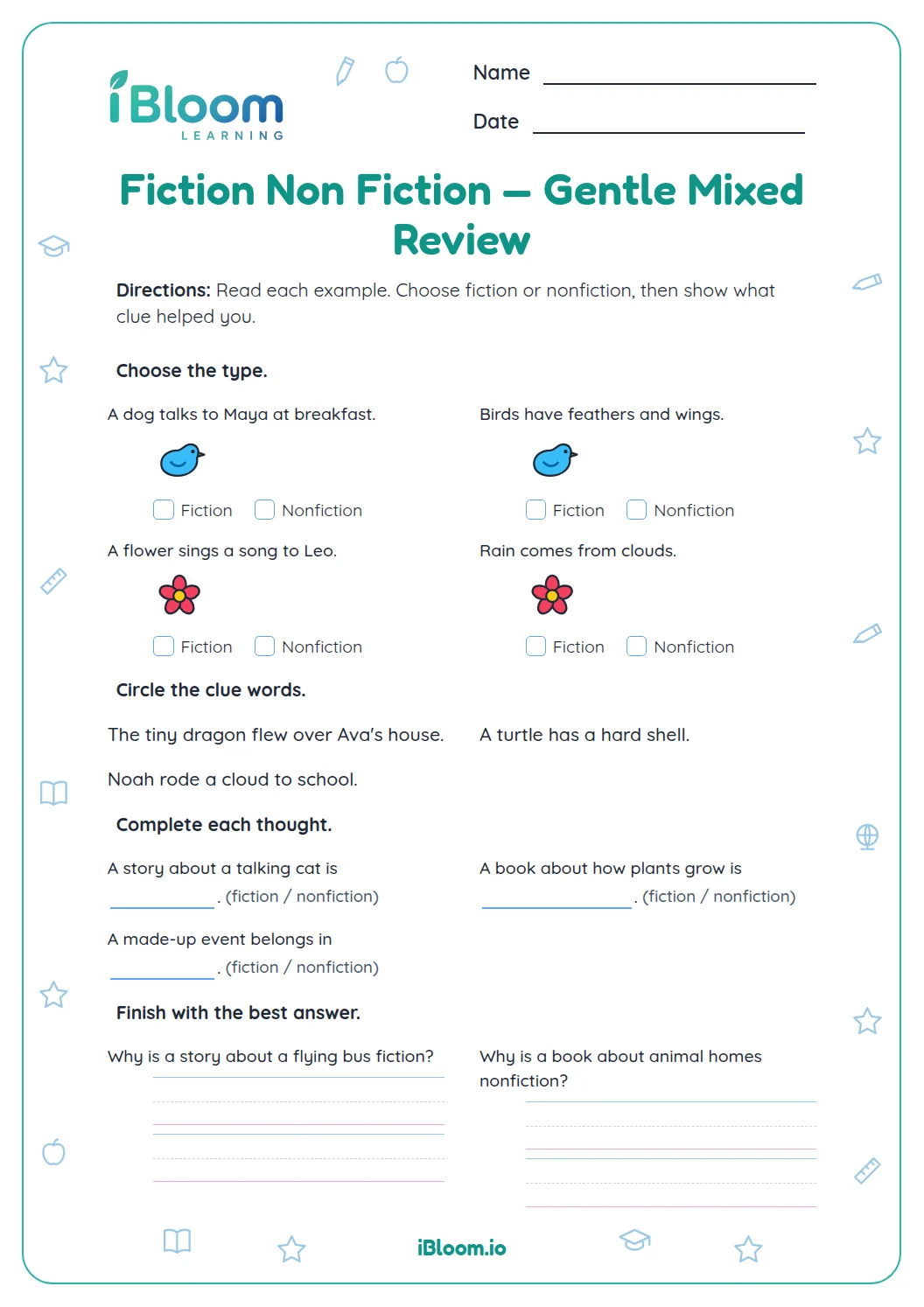
About this worksheet
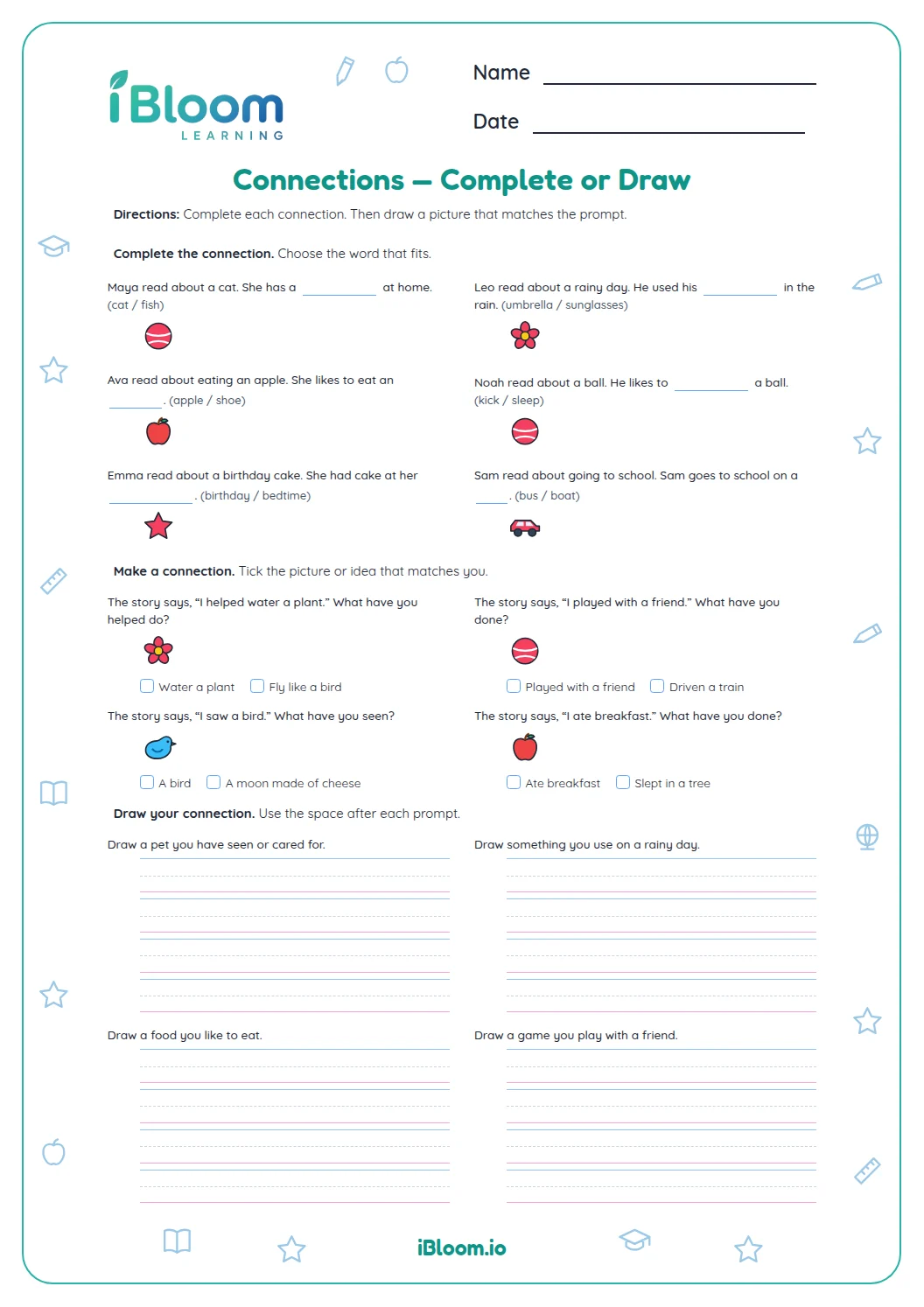
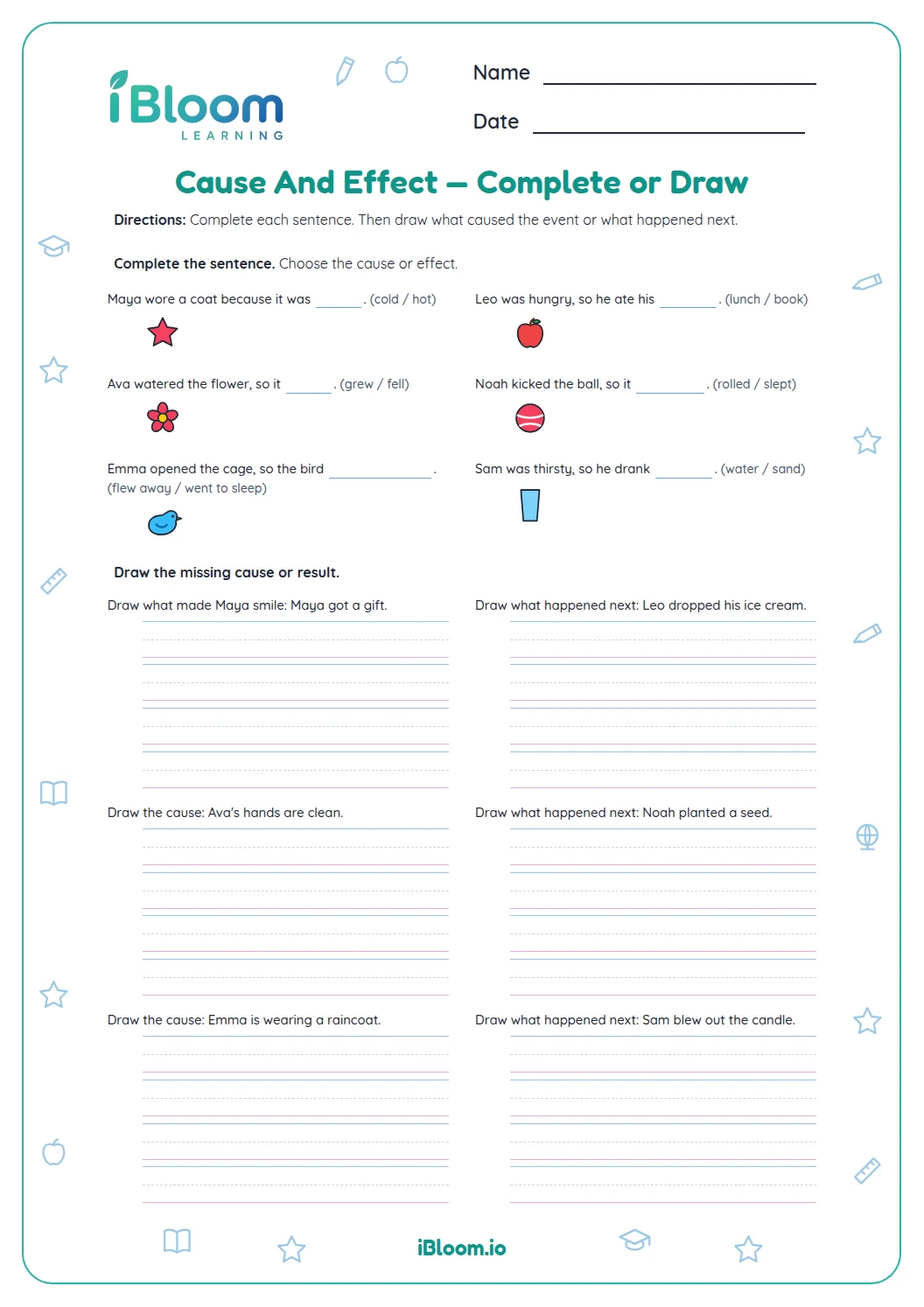
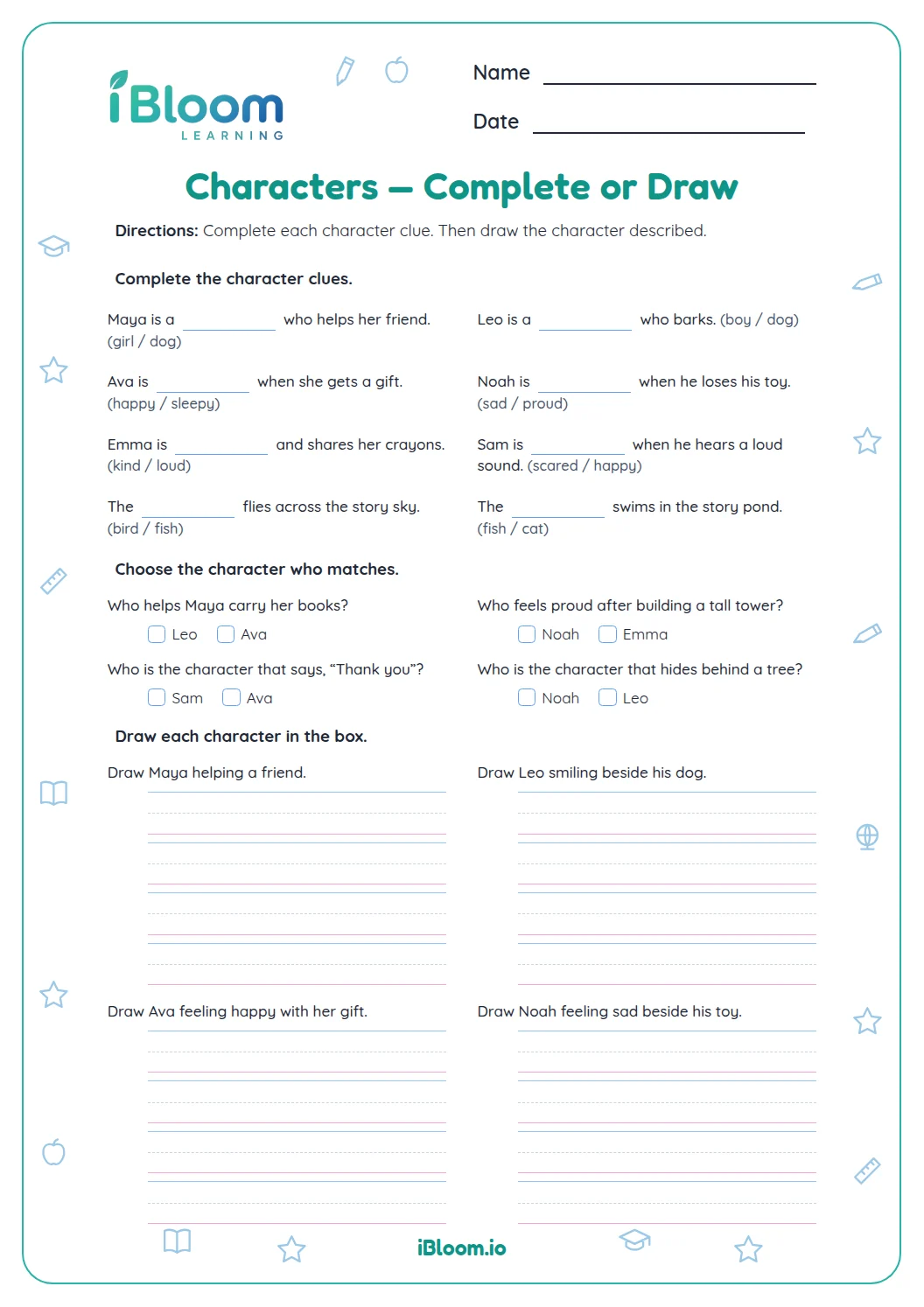
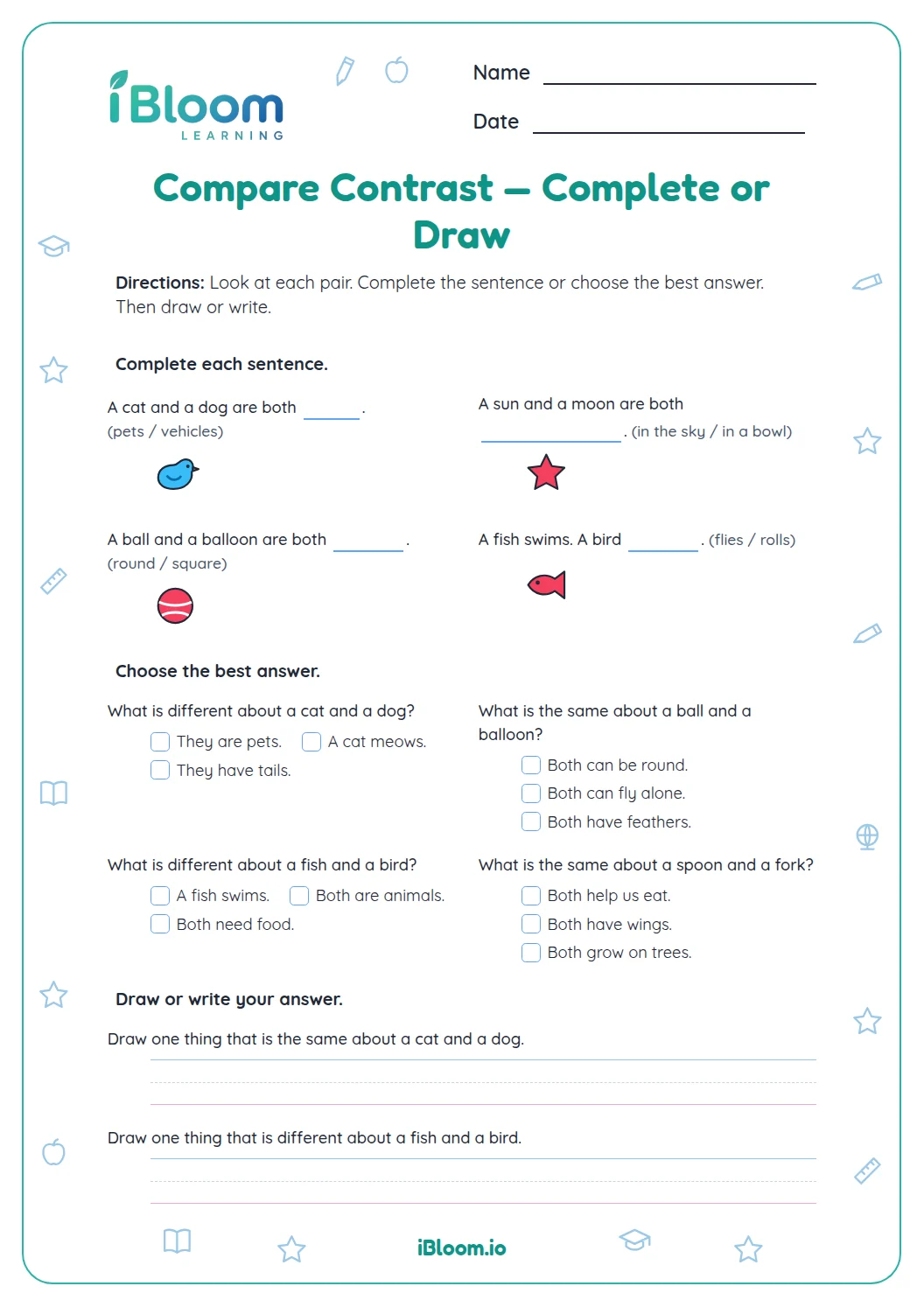
This Preschool–Kindergarten printable gives children 16 picture-supported opportunities to connect a familiar situation with a related idea or experience. The first set matches situations to categories such as a bird’s home or school time; later items connect short scenes with familiar sentences. An adult can read each prompt aloud, and the separate key lists the best matches.
What does it mean to make a connection?
A connection links a situation to something related or familiar. When Leo sees a bird build a nest, “a bird’s home” fits because nests are where birds live.
The first six items match everyday scenes to a related idea. The next six match a scene to a familiar sentence, and the final four continue sentence matching with picture clues.
- 1A bird builds a nest.
- 2A nest is a bird’s home.
- 3Choose “A bird’s home.”
How do the pictures support each match?
The pictures name or show the main people, animals, and objects in a short situation. Have the child listen to the full prompt, then compare what happens with each answer choice.
The best choice is the one that connects directly to the scene. Invite the child to explain the link in a few words.
How can an adult read these questions aloud?
Read the situation without rushing, point to the picture clues, and let the child choose. Ask “How do those ideas go together?” to hear the connection the child noticed.
How to use this worksheet
- 1Read the short situation aloud.
- 2Name the person, animal, or object in the picture clue.
- 3Listen to each answer choice.
- 4Choose the idea or sentence that connects to the situation.
- 5Ask the child to explain the link in their own words.
Common mistakes and quick fixes
The mistake
Choosing an answer that shares one object but not the main idea.
The fix
Retell what happens in the situation before choosing.
The mistake
Picking a sentence that describes a different event.
The fix
Compare the action in the scene with the action in the sentence.
The mistake
Expecting one exact phrase from the child.
The fix
Accept a clear explanation that makes the relationship understandable.
What to practice next
Make more practice
Questions parents and teachers ask
What does making a connection mean here?
A connection links the short situation to a related idea or familiar experience. When a bird builds a nest, “a bird’s home” is a direct match. Children choose the answer that fits the clue, then can explain the relationship aloud.
How should a child use the picture clues?
Look at the people, animals, or objects pictured and listen to the situation read aloud. Then compare the answer choices with what is happening. For example, a rainy scene connects with an umbrella because people use one in the rain.
Can a child give a different answer?
The multiple-choice items ask for the best match among the choices, so use the listed answer for checking. A child may also explain another sensible connection aloud. Focus on whether the child can describe a clear relationship between the situation and the idea.
Does the worksheet include drawing prompts?
No. All 16 items use picture-supported choices, so children can focus on matching situations with related ideas and sentences. An adult reads the short prompts, and children choose the best connection. The answer key lists a matching choice for each question.
How can an adult support this activity?
There are 16 picture-supported questions in three parts. The first group connects familiar situations to related ideas; later groups match scenes with sentences. The separate answer key lists the best choice for each item. Ask the child to explain how the scene and selected idea go together.
How many questions are included?
There are 16 picture-supported questions in three parts. The first group connects familiar situations to related ideas; later groups match scenes with sentences. The separate answer key lists the best choice for each item. Ask the child to explain how the scene and selected idea go together.