





About this worksheet
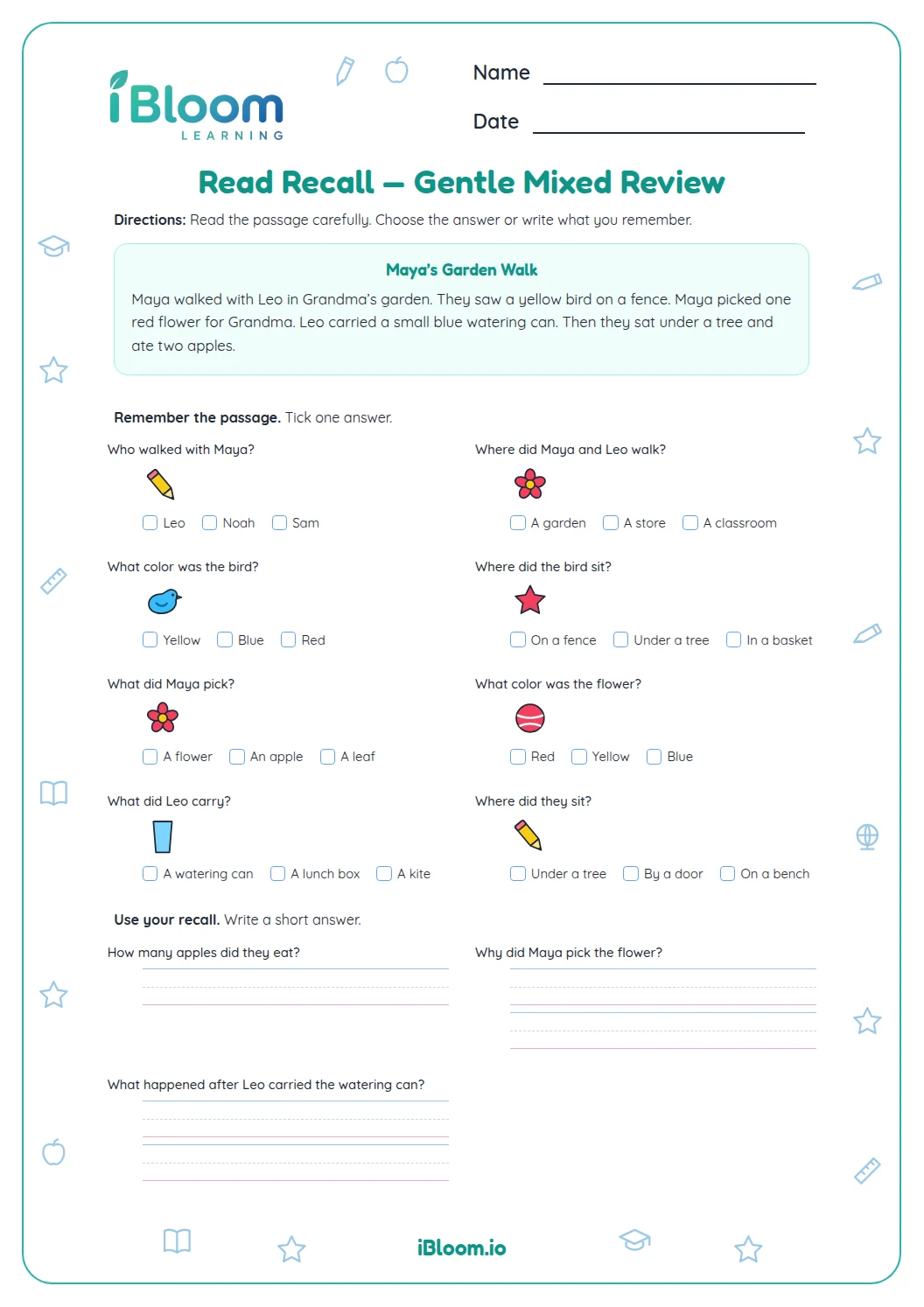
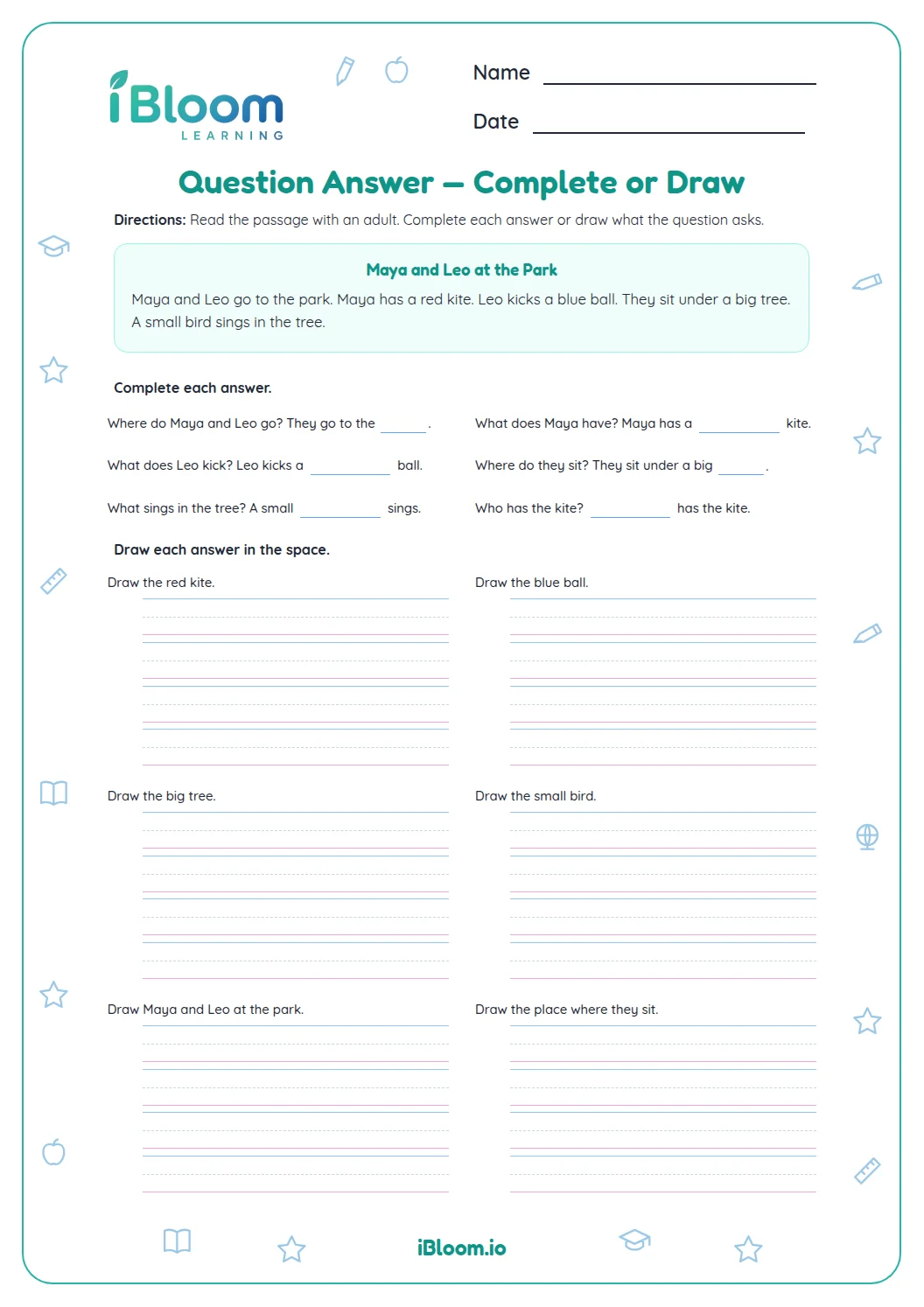
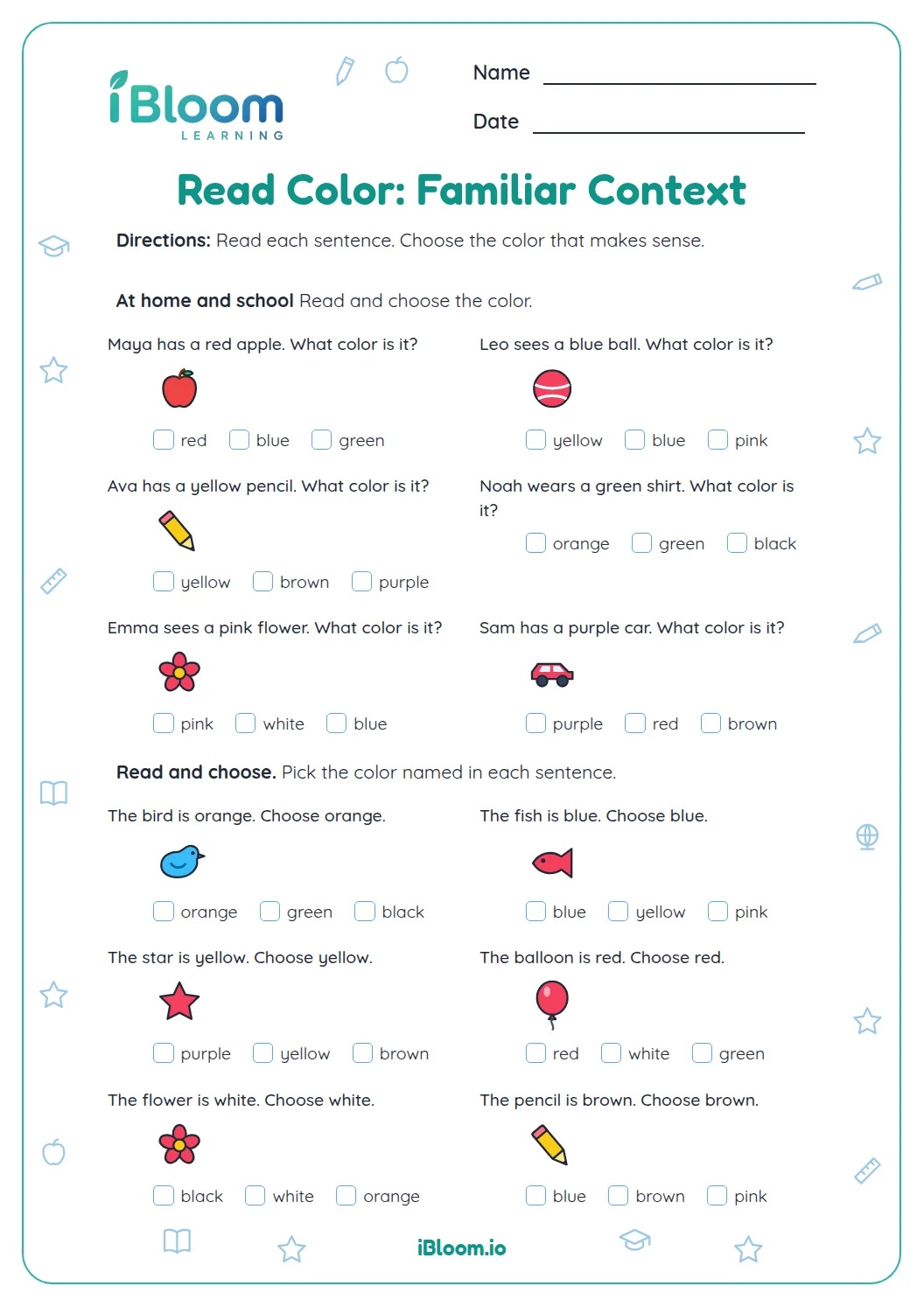
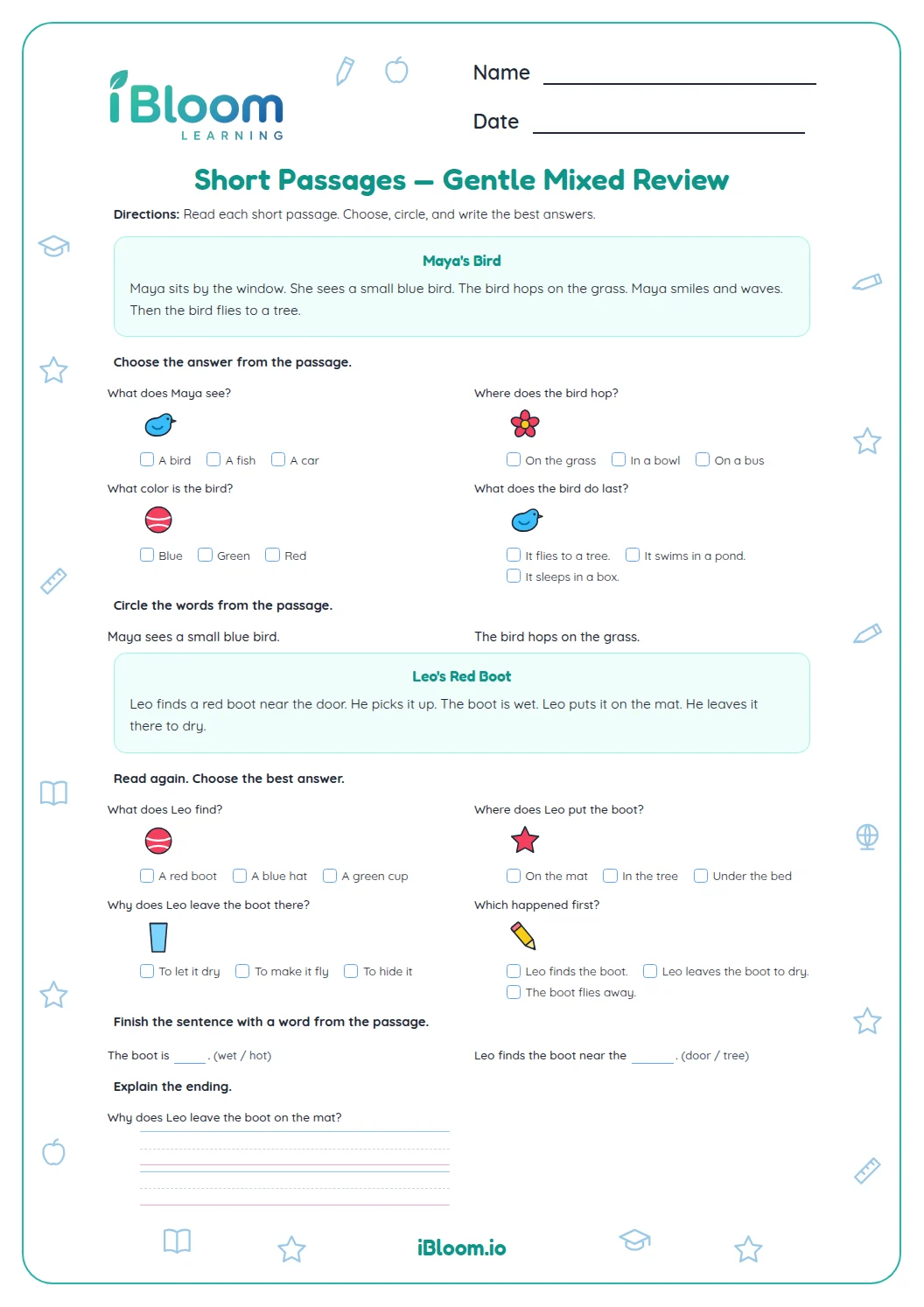
This free preschool and kindergarten printable pairs a short read-aloud about Milo caring for a plant with 12 recall questions. Children name people, objects, places, and actions, then connect details to familiar pictures and home routines. An adult can read the passage aloud and accept spoken or pointed answers. It practices CCSS RL.K.1.
Aligned to RL.K.1
Which details can a young listener recall?
Invite the child to name a person, object, or place from the passage. In question 3, Milo carries a cup of water to help the plant.
How do picture choices support recall?
Pictures let children connect a spoken detail with a familiar object. Question 7 asks which pictured item Milo watered; the seedling matches the passage.
How does the story connect to everyday life?
Ask what a child might use for a similar job at home. In question 10, a cup can carry water to a small plant, just as Milo does.
How to use this worksheet
- 1Read “Milo Helps at Home” aloud at a comfortable pace.
- 2Pause and let the child picture what Milo is doing.
- 3Ask the recall questions; accept a spoken word or short phrase.
- 4For picture choices, name each object and invite the child to point.
- 5Reread the matching sentence when the child wants another clue.
Common mistakes and quick fixes
The mistake
Remembering a detail from a different story.
The fix
Reread the sentence that names the object or place.
The mistake
Choosing a picture because it is familiar.
The fix
Ask which choice matches a word or action from the passage.
The mistake
Expecting a full sentence from a beginning speaker.
The fix
Accept a clear spoken word or picture choice, then model a complete sentence.
Common Core alignment
This worksheet practices the following grade-level skill.
Answer who, what, and where questions about a short read-aloud.
On this sheet: Answer who, what, and where questions about a short read-aloud.
Show the official wordingHide the official wording
With prompting and support, ask and answer questions about key details in a text.
What to practice next
Make more practice
Further reading
Questions parents and teachers ask
Should an adult read the passage aloud?
Yes. The short passage is designed for a shared read-aloud, and an adult can pause to let a child picture the events. Children may answer aloud, point to a choice, or give a short phrase as they recall a detail.
What does this page ask a child to remember?
The questions revisit what Milo saw, where the plant was, what he carried, and what he did after watering it. Picture choices also connect the story with familiar objects such as a cup and the sun. Each prompt points back to a detail in the short story.
How do picture choices support recall?
Picture choices let a child connect a spoken detail with an object they recognize. An adult can name the items and reread the related sentence, then invite the child to point to the picture that best matches what happened. This gives the child a concrete way to show what they remember.
Does a child need to write every answer?
No. The adult can accept a spoken answer, a point to a picture, or a short phrase. The key lists target responses so a grown-up can guide the conversation and return to the passage when a detail is hard to remember.
How can I extend the story after the page?
Talk about another small way to care for a plant. Ask what the child might carry, where the plant could sit, and what it needs. Connecting those questions to a familiar routine gives the child a chance to recall and apply the story idea.