








About this worksheet
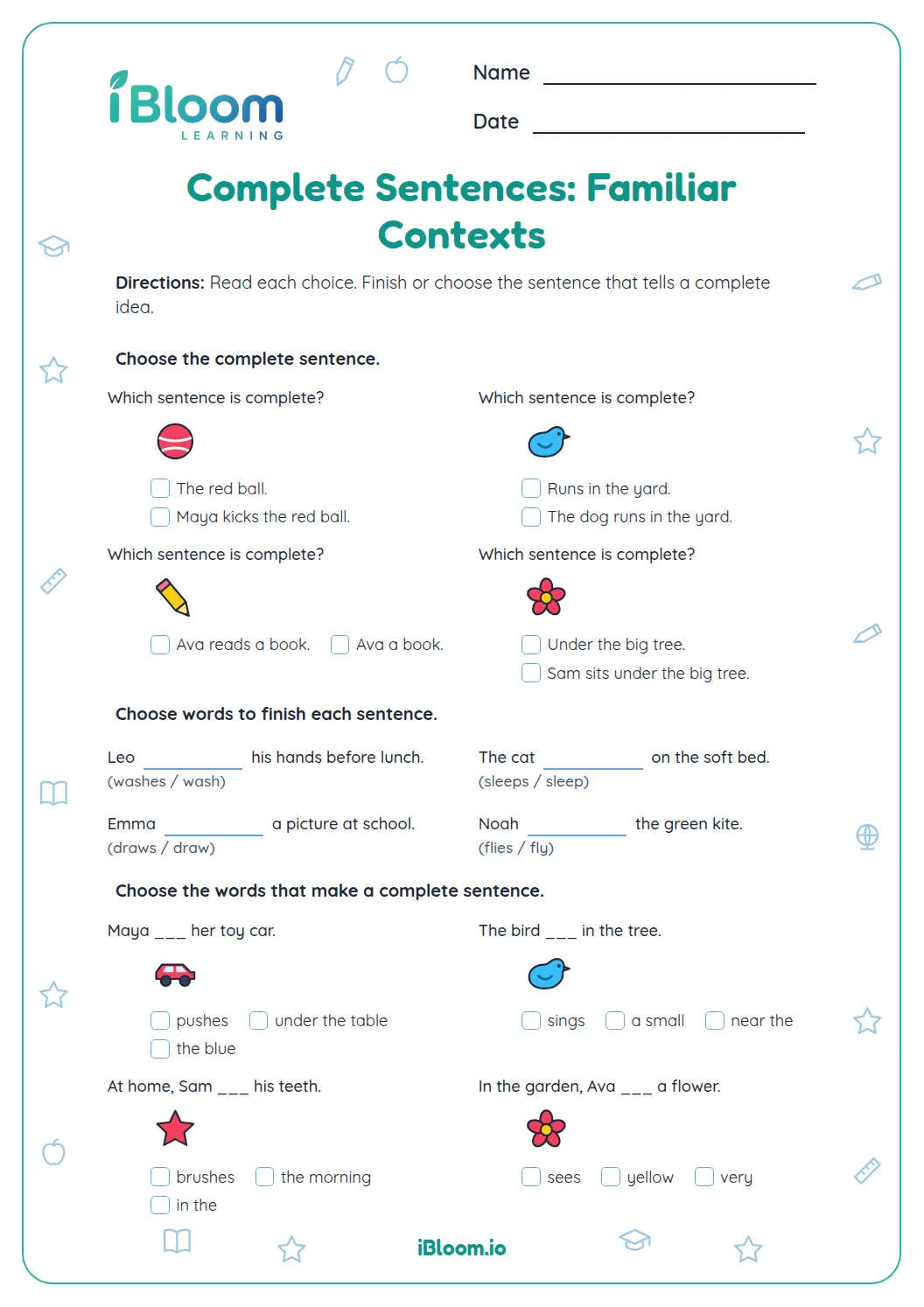
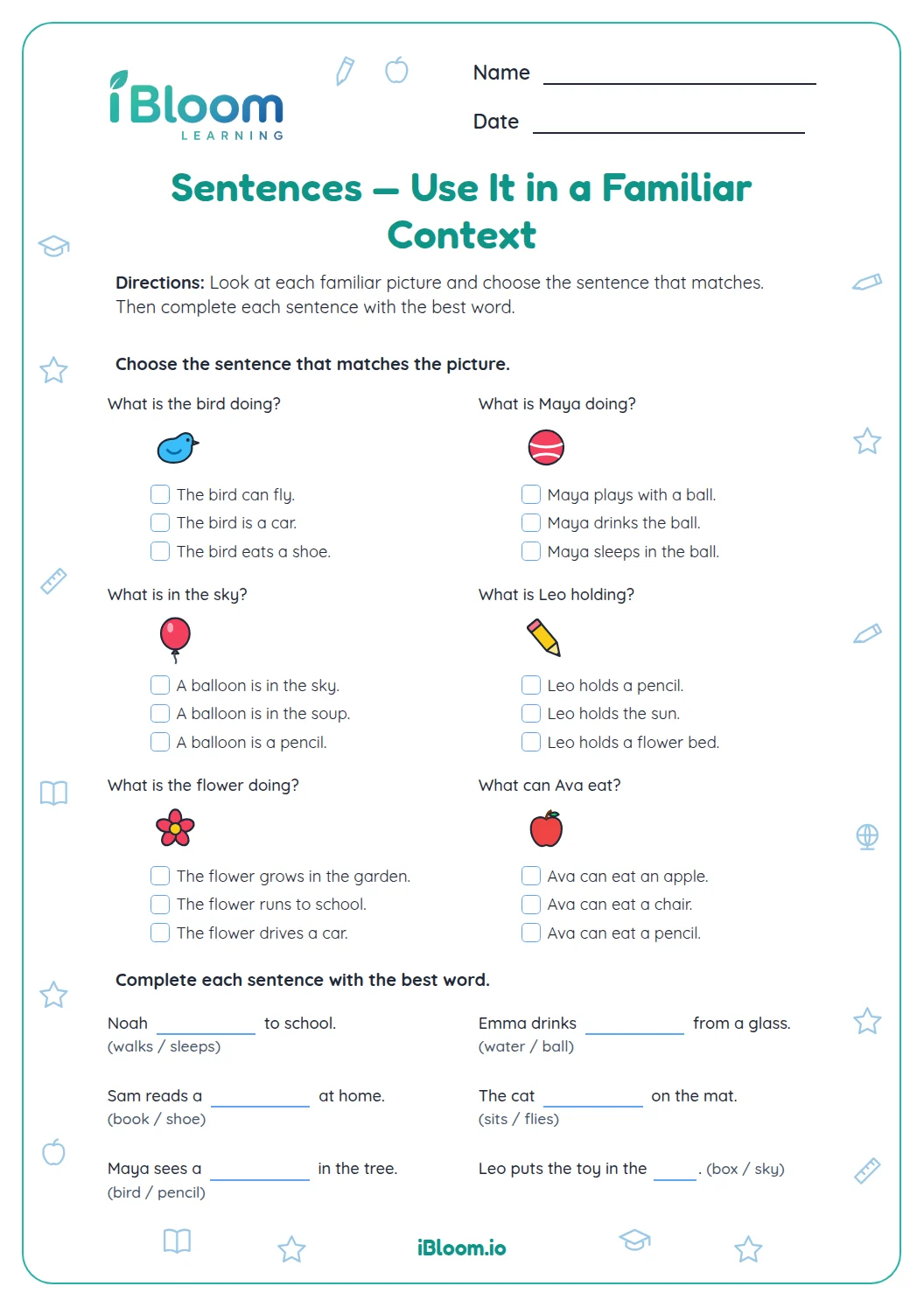
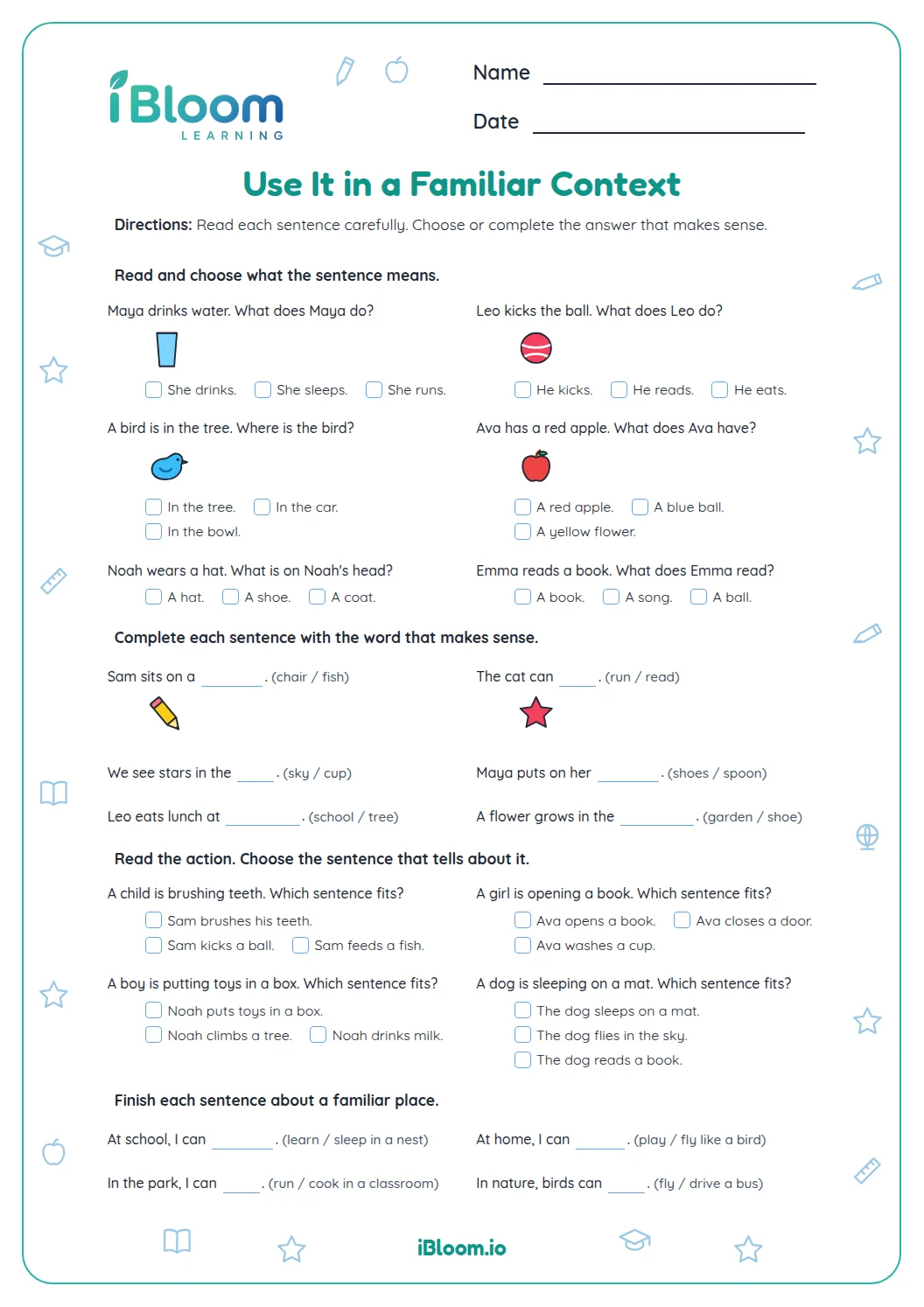
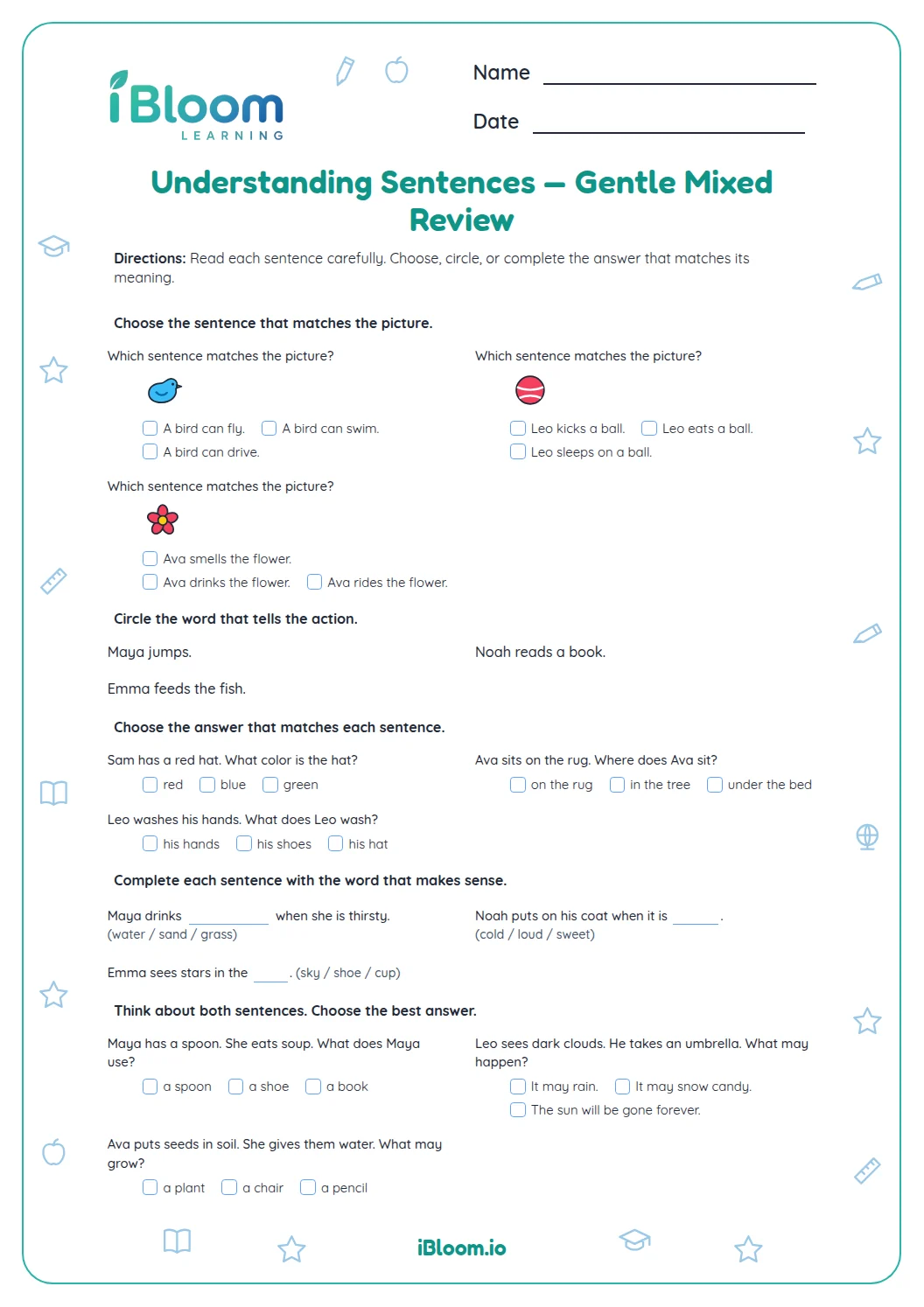
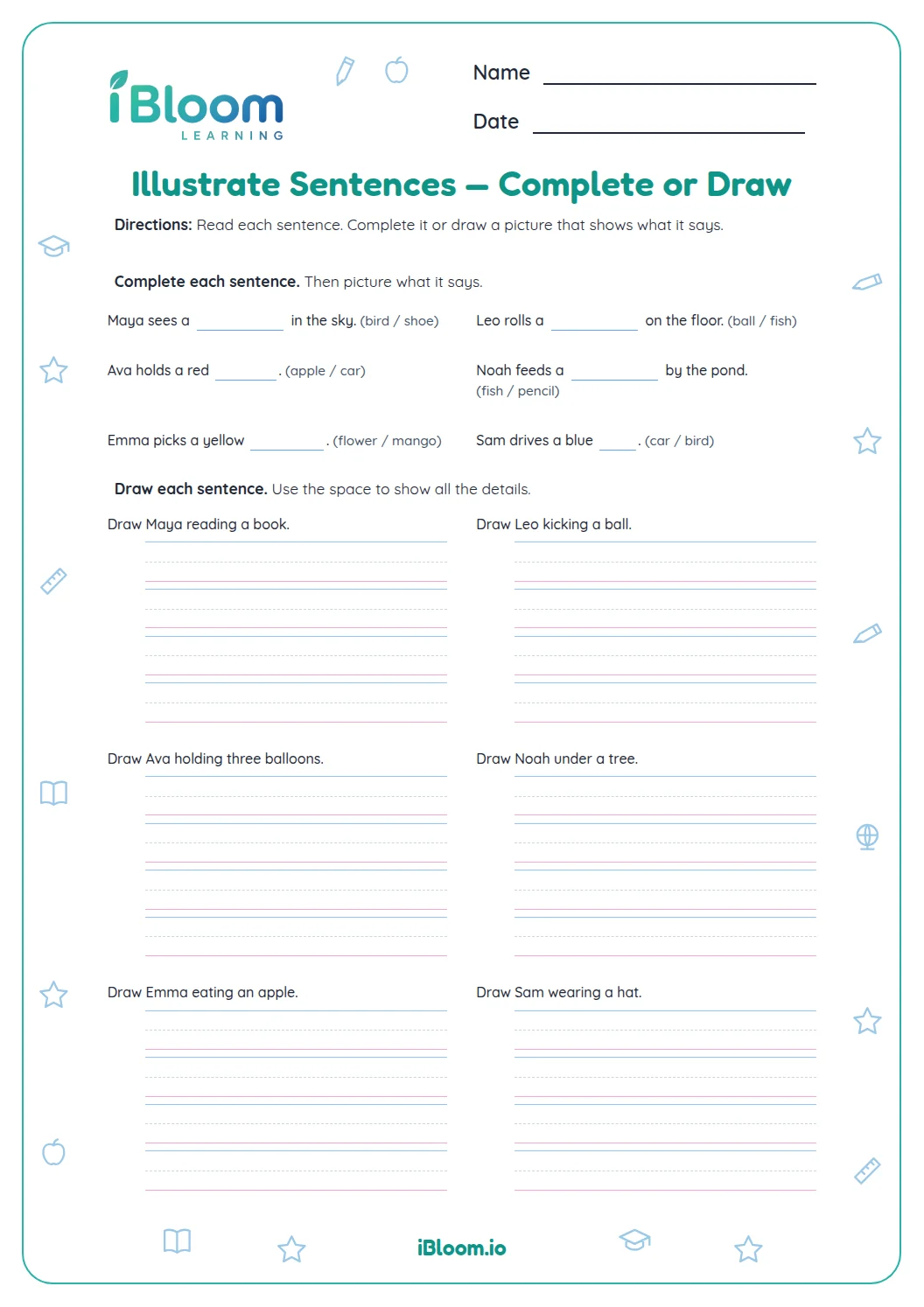
This Kindergarten printable has 16 short sentences with a missing ending and picture clues. Children choose a word that makes each thought complete, using meaning and familiar words such as run, water, and night. The last four questions use picture-supported sentence endings too, so every item practices completing a sentence. A separate answer key lists each target word. The page supports Common Core L.K.1.f through sentence completion and discussion in a shared language activity.
Aligned to L.K.1.f
What makes a sentence ending fit?
A good ending completes the thought and makes sense with the words already printed. The picture gives another clue, but the child should read or hear the whole sentence.
How can I choose an ending?
Read the sentence aloud with each choice. Keep the word that makes a complete idea and matches the clue.
- 1q1: The dog can ___.
- 2Try each word and use the dog picture as a clue.
- 3Answer: run
How can adults support the practice?
Read the sentence and choices aloud if needed. Ask the child to say the completed sentence, then explain which clue helped. Accept the target word shown in the key.
Complete a sentence
- 1Look at the picture clue.
- 2Read the sentence and each choice.
- 3Say each choice in the blank.
- 4Choose the word that makes a complete, sensible thought.
- 5Read the finished sentence aloud and check it with the key.
Sentence completion slips
The mistake
Choosing a word that matches the picture but does not fit the sentence.
The fix
Read the whole sentence with the word inserted.
The mistake
Picking the first familiar word without checking the other choices.
The fix
Try each choice aloud and compare how the complete sentences sound.
The mistake
Using only the picture and ignoring the sentence meaning.
The fix
Use both clues: the picture and the words around the blank.
Curriculum alignment
Choose a word that makes a complete thought, then express a simple idea in a drawing.
On this sheet: Sentence choices form a complete thought; final items ask children to represent a simple sentence idea.
Show the official wordingHide the official wording
Produce and expand complete sentences in shared language activities.
What to practice next
Make more practice
Further reading
Questions parents and teachers ask
What kind of sentence practice is included?
Each of the 16 questions has a short sentence, a blank, and three word choices. Picture clues help children use sentence meaning to select an ending that completes the thought. For example, “The dog can run” is a complete thought that fits the dog picture. The other choices do not make the intended sentence.
What grade is this worksheet for?
The sentence activity is designed for Kindergarten. Read a prompt aloud if needed, then have the child repeat the sentence after choosing its missing word. Repeating it helps check meaning. The child can point to the picture, choose a word, and then say the entire sentence. Adults may repeat the choices when the printed words are not yet familiar.
How many questions are on the page?
There are 16 questions, and each has three choices. Children use the blank, surrounding words, and picture clues to choose a complete sentence ending that makes sense. The choices are short words or phrases that complete the printed sentence. Children can test each option by saying it in the blank before selecting.
Does it include drawing prompts?
The revised sheet makes every item a sentence completion choice. Four later items pair picture clues with a sentence blank instead of asking for a separate drawing. These items still focus on matching a word to a sentence and picture clue. They give a printed context instead of an open drawing task.
How should I help if a child is unsure?
Read each choice within the full sentence and consider the picture clue. Let the child say the complete thought aloud to hear whether the ending fits and sounds sensible. If more than one choice sounds possible, return to the picture and the specific sentence. The key identifies the intended word for each item.