







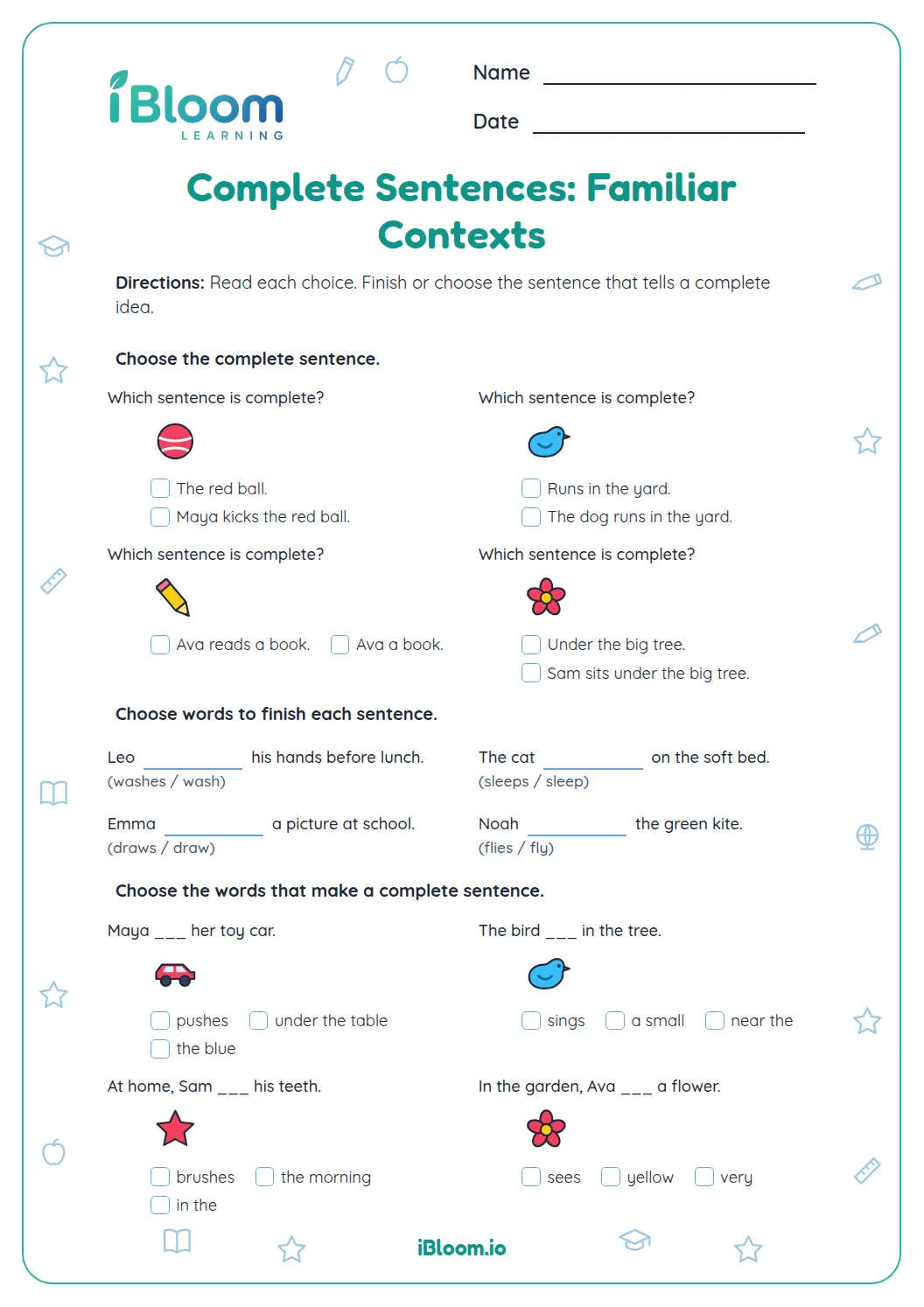

About this worksheet
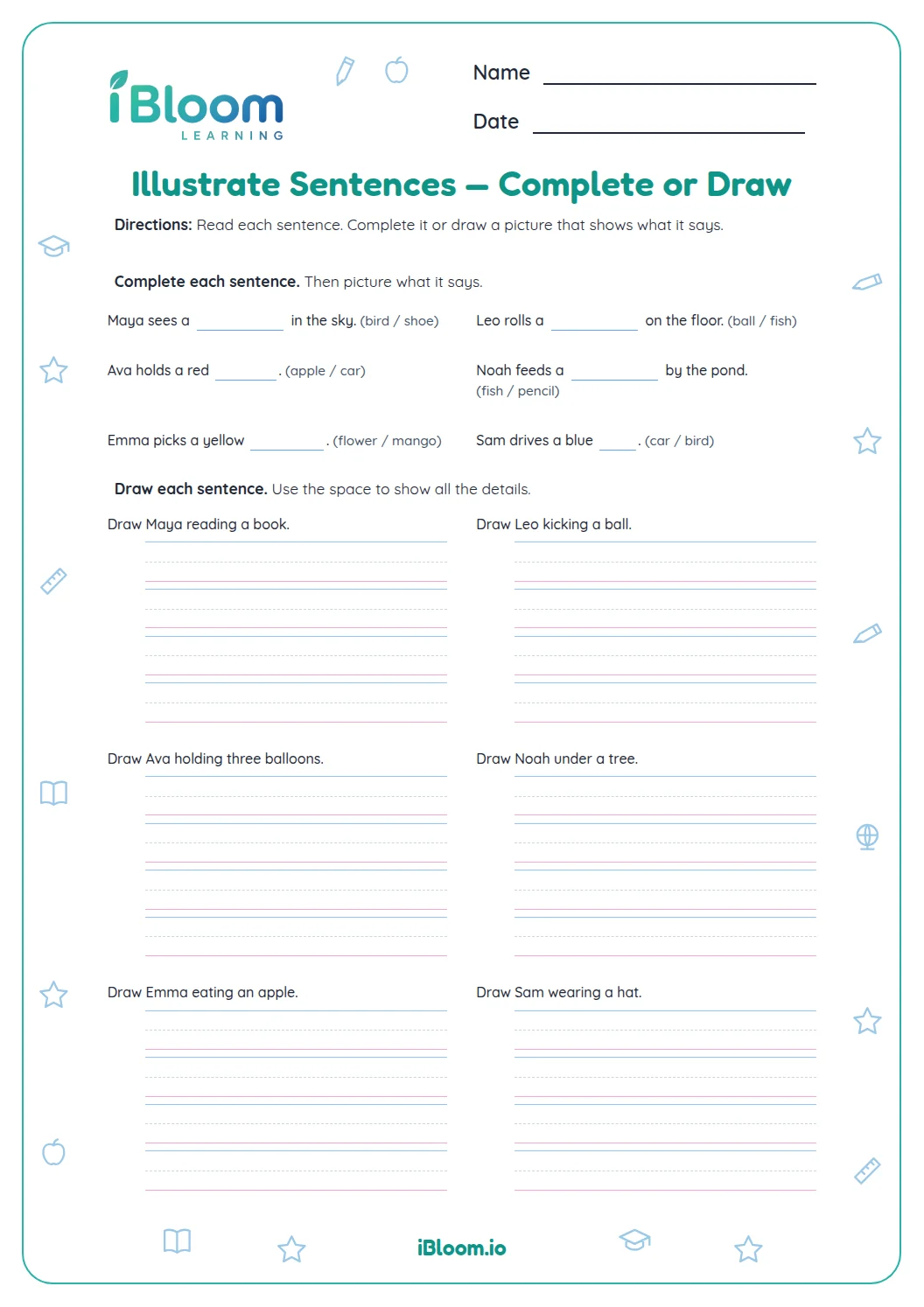
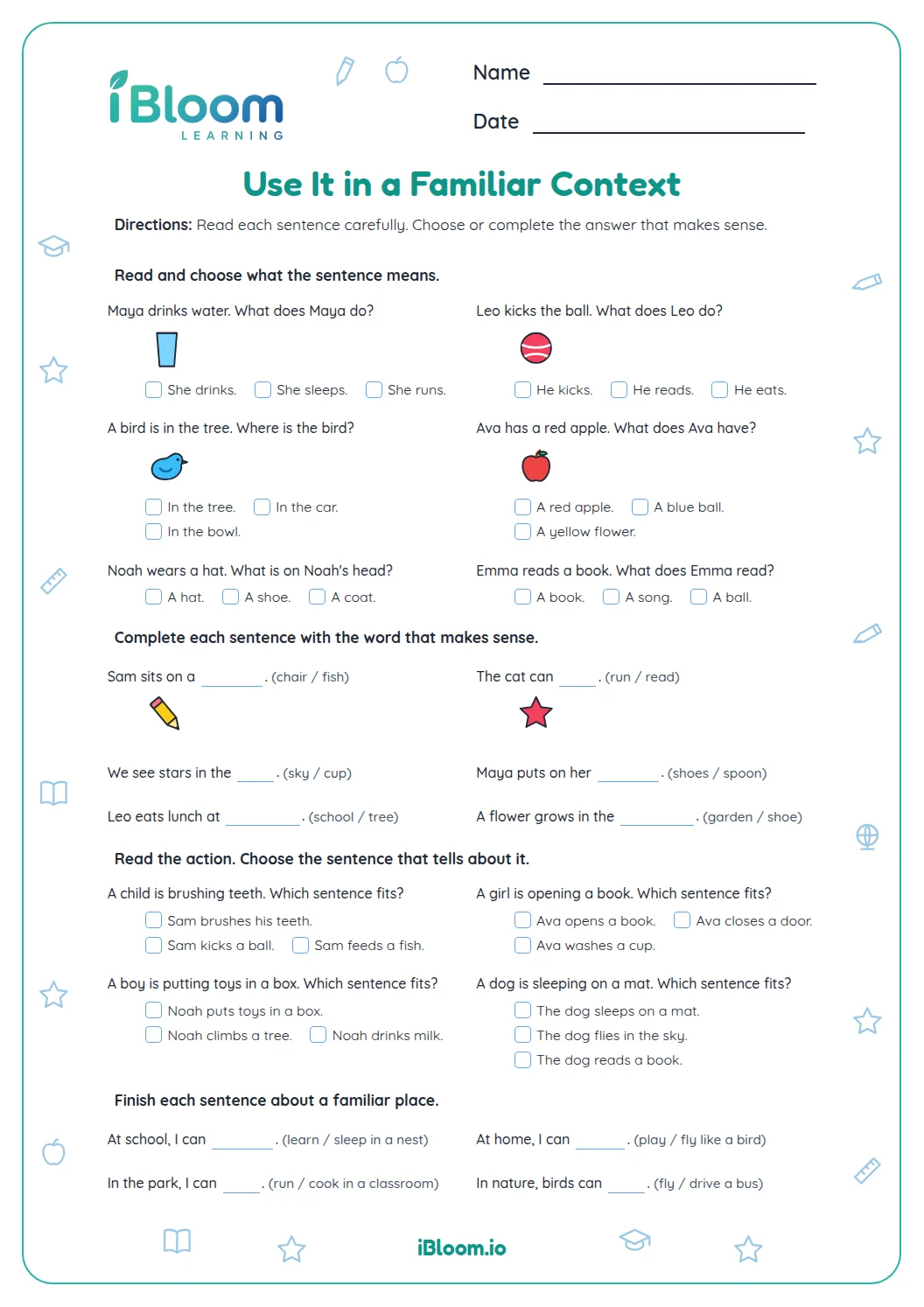
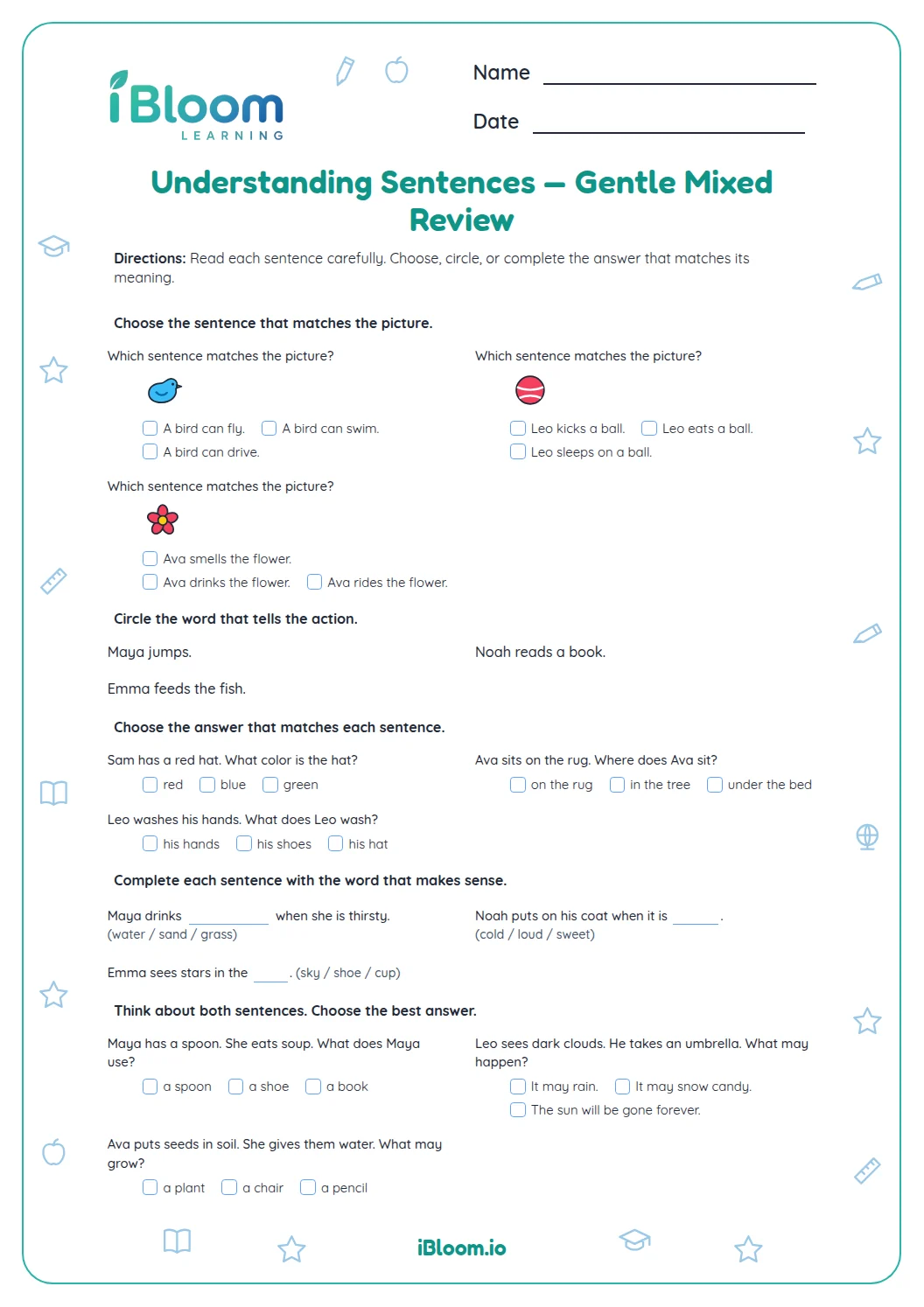
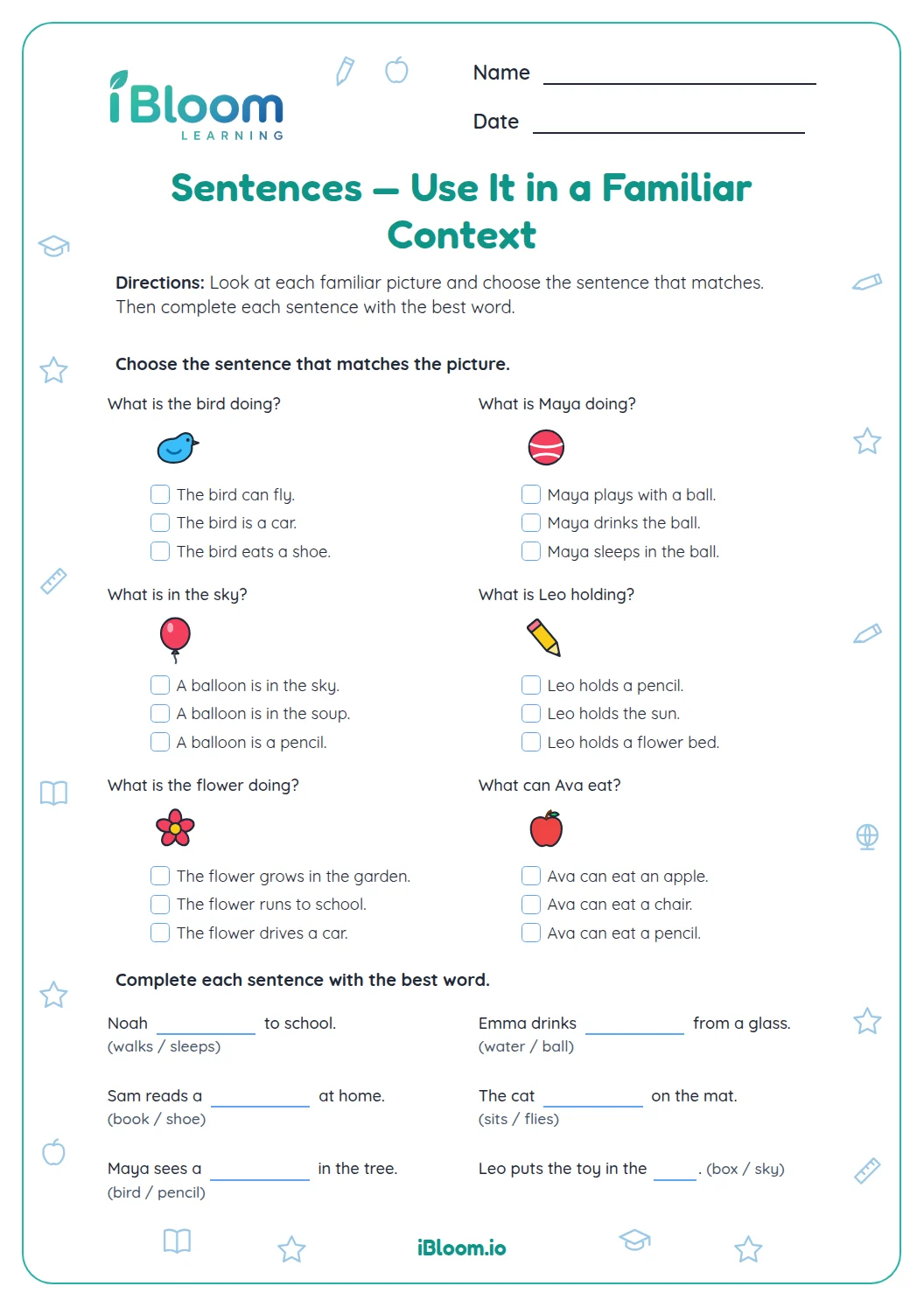
This free preschool and kindergarten worksheet helps children connect a short sentence with its meaning. Learners match 10 sentences to picture choices, then illustrate four more sentences by including the named person, object, action, or detail. The separate answer key identifies the picture matches and describes what each drawing should show.
How does a sentence guide a picture?
Read each whole sentence before choosing. Notice who or what it names and what happens. For “A fish swims,” choose the fish picture, then check that the sentence and picture name the same thing.
The first 10 questions use picture choices. The final four ask children to illustrate sentence details.
- 1Sentence: A fish swims.
- 2Picture choice: fish.
- 3Check that the pictured subject matches the sentence.
Which words are useful picture clues?
A drawing should include the main person or thing and the detail named in the sentence. For “Draw a cat sleeping on the soft mat,” show a cat resting on a mat. Children may choose their own colors.
What should a drawing include?
Include all the details in the prompt. A drawing for “Draw two birds beside the red flower” should show two birds next to a red flower. Children can add colors or background details.
How to use this worksheet
- 1Read the sentence aloud together.
- 2Ask who or what the sentence is about.
- 3Notice the action or detail word in the sentence.
- 4Choose the picture that includes the named details.
- 5For the drawing prompt, include each detail named in the sentence.
Common mistakes and quick fixes
The mistake
Choosing a picture that shows the right animal but misses the action or object.
The fix
Reread all the words and check each detail.
The mistake
Drawing only the main object.
The fix
Look for a second clue, such as a ball, tree, or sun.
The mistake
Mixing up position words like under and by.
The fix
Point to the position word, then place the objects in that relationship.
What to practice next
Make more practice
Further reading
Questions parents and teachers ask
What does this worksheet ask children to do?
Children read 10 short sentences and choose a matching picture, then draw details for four more sentences. The answer key marks each picture choice and gives a brief description of what each drawing should include. It has 14 questions altogether.
How should a child choose a picture?
Read the whole sentence and identify its subject and action. For “A fish swims,” the fish is the subject, so choose the picture that shows a fish. This strategy helps connect the words to a matching image and its meaning.
What should the drawings include?
Each drawing should show the main person or thing and the details named in its sentence. For the kite sentence, include Sam and a yellow kite. Children may add other details that do not conflict with the sentence or change its meaning.
Can an adult read the sentences aloud?
Yes. Read one sentence at a time and pause to ask who or what it is about and what is happening. The child can then choose a picture or draw the named details. This keeps attention on the meaning of the complete sentence.
How many activities are on the page?
There are 14 questions: 10 picture-choice matches followed by four drawing prompts. The worksheet and its answer key each take two pages. The key provides a model description for every open-ended drawing so adults can check for the sentence details.