





About this worksheet
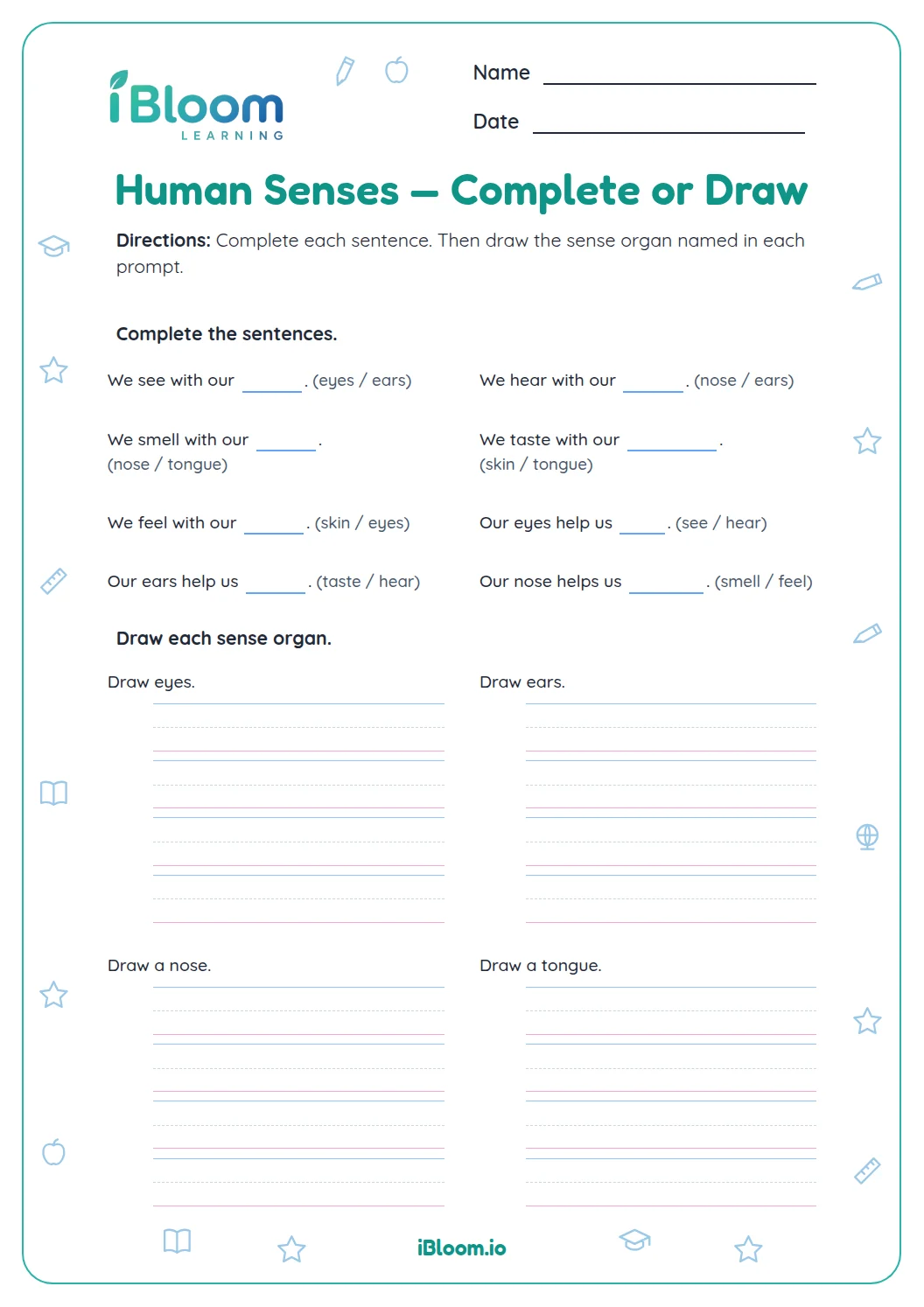
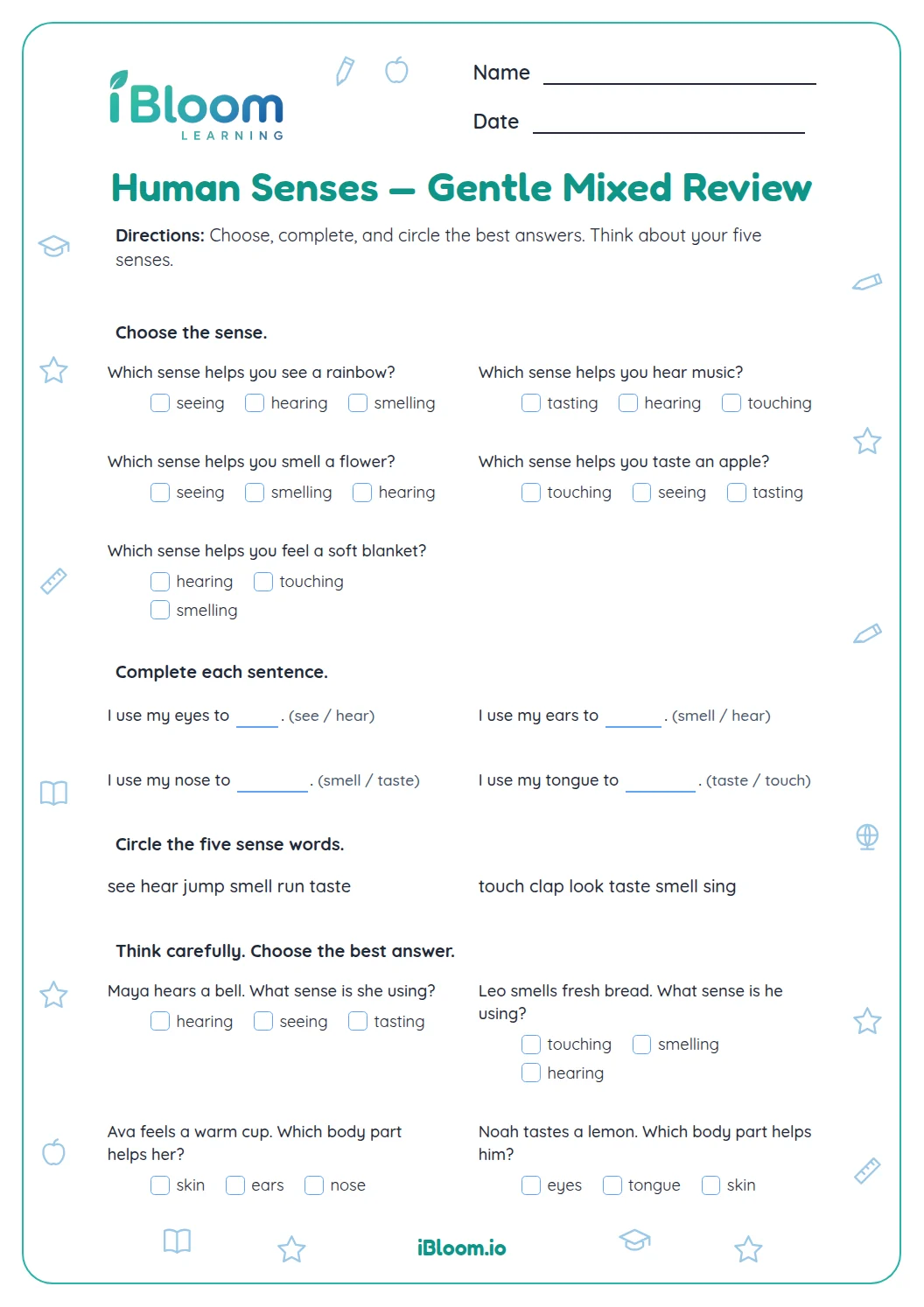
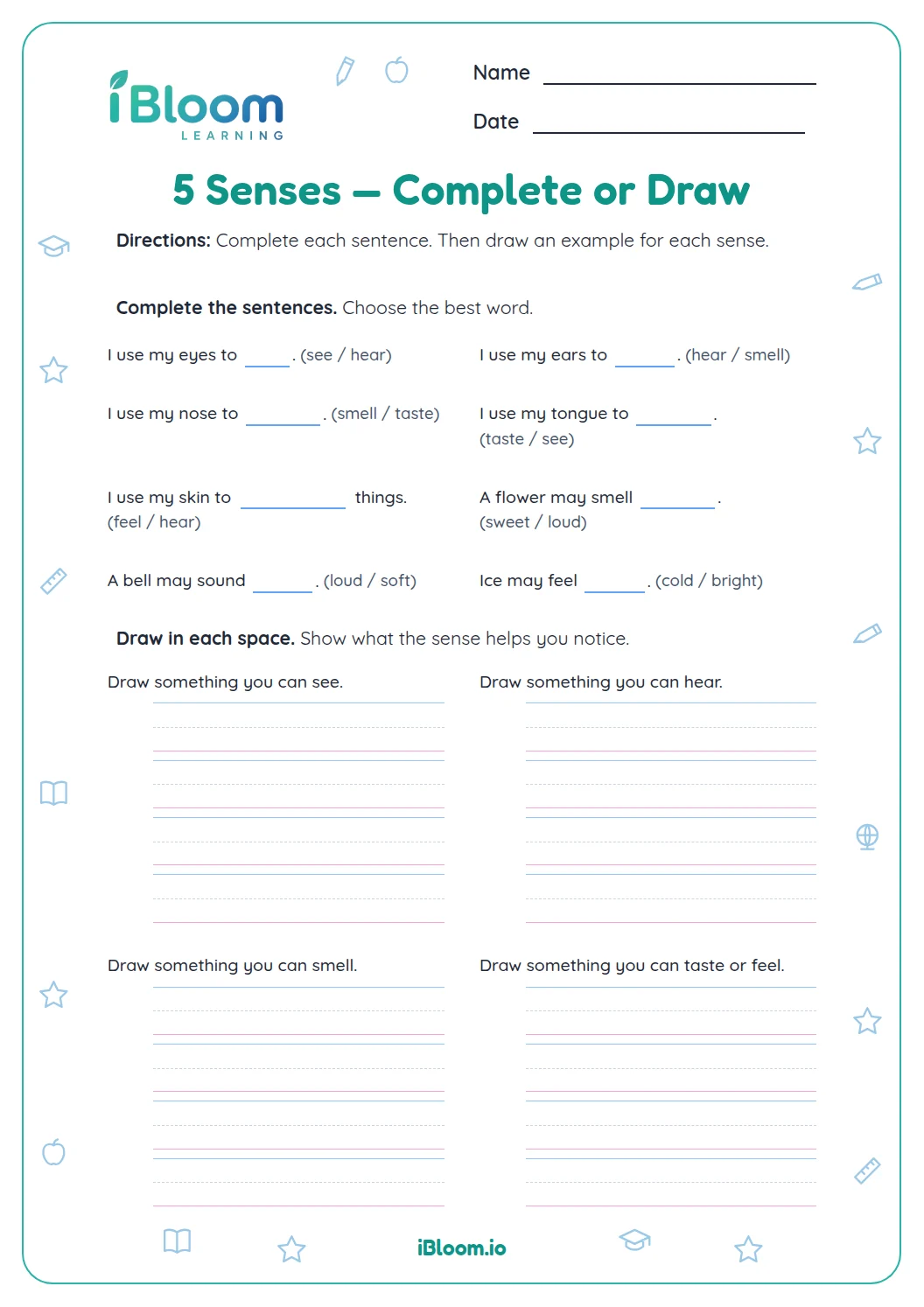
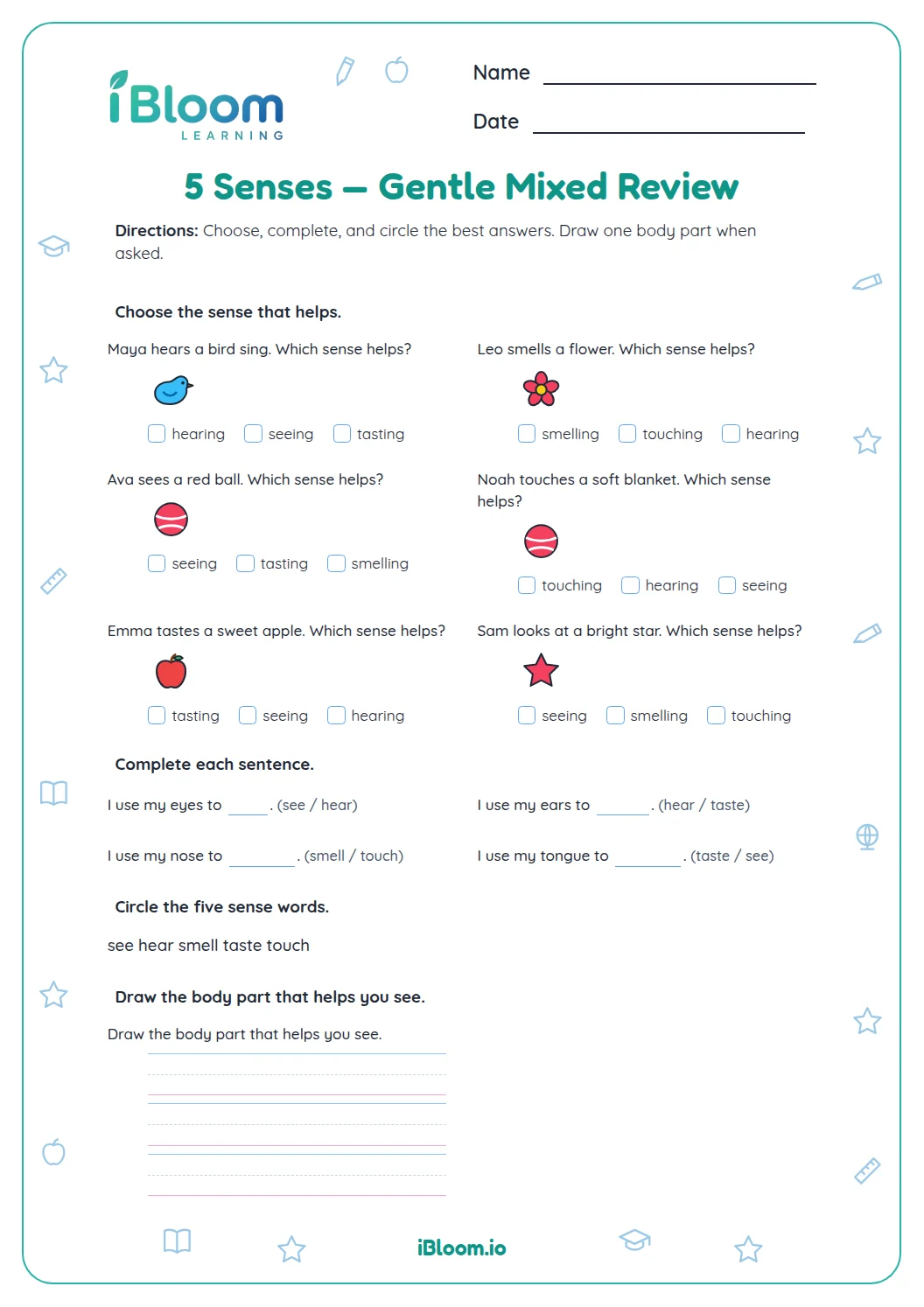
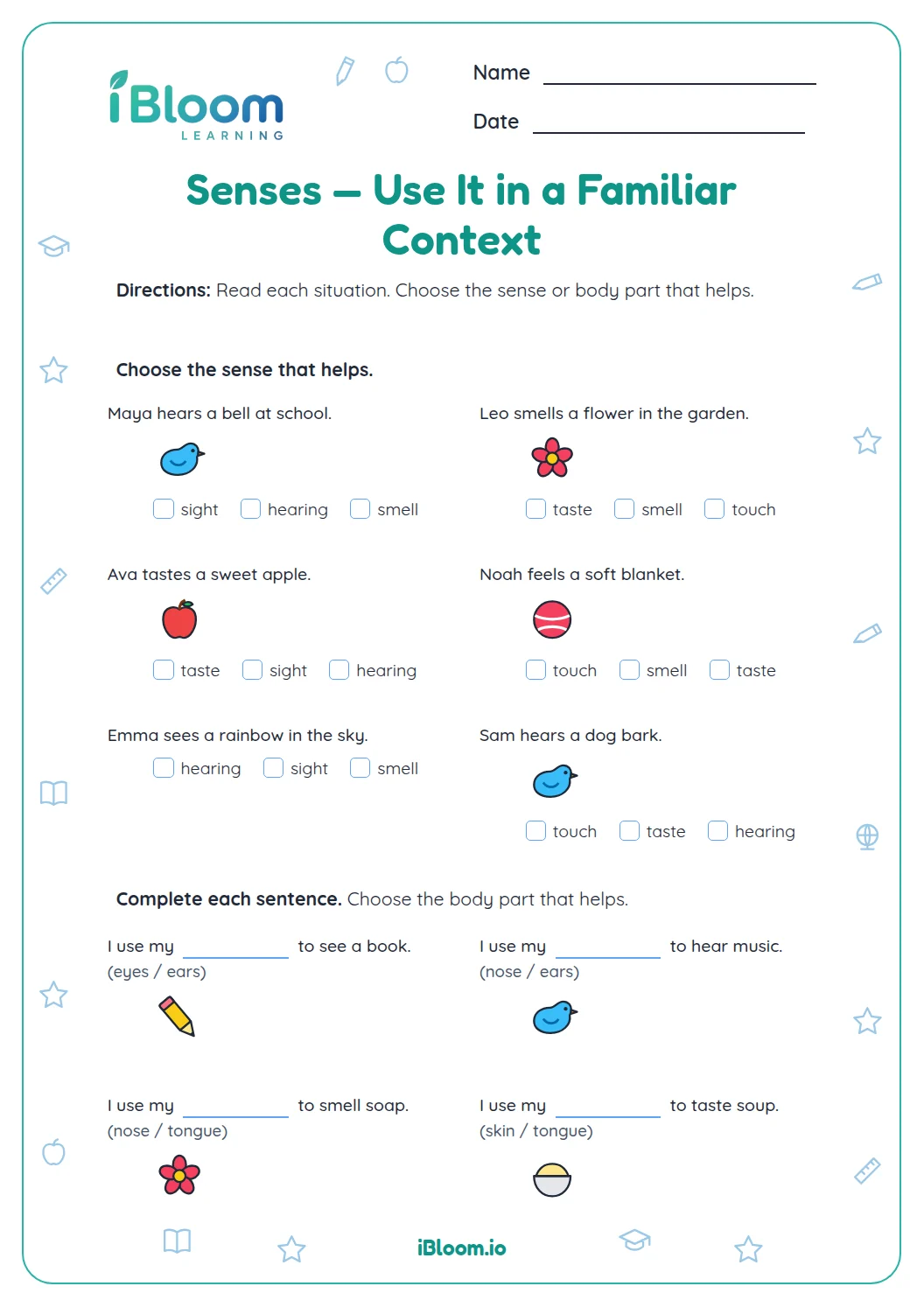
This free preschool and kindergarten science worksheet uses 14 picture clues to connect the five senses with everyday experiences. Children see a familiar object or event, such as a bell ringing or a soft sock, and choose the sense that helps gather that information. Pictures appear in both the clues and answer choices to keep the task accessible to early learners. The answer key identifies the matching sense for each item.
How do familiar clues connect to a sense?
A picture clue gives a concrete starting point. A ringing bell makes sound, so the ear helps us hear it. A flower has a smell, so the nose helps notice it. Children can name the experience aloud before choosing the matching sense word.
- 1Nia hears a bell ring.
- 2The clue is a sound.
- 3Ears help us hear sounds.
- 4Choose the ear picture.
Why are the answer choices pictures?
Picture clues make the response concrete for preschool and kindergarten learners. An adult can read the choices aloud and invite the child to name the sense, extending the activity into a short conversation about how senses help us learn about our surroundings.
How are all five senses included?
The set includes clues for sight, hearing, smell, taste, and touch. Examples include seeing the moon, hearing a drum, smelling soap, tasting watermelon, and feeling a fuzzy sock. Several familiar situations give children repeated chances to name the sense.
How to use this worksheet
- 1Name the object or event in the clue.
- 2Ask what the child notices: sound, smell, taste, touch, or sight.
- 3Choose the sense word that matches the clue.
- 4Say the pair aloud, such as “ears help us hear.”
- 5Check the answer key and talk about another daily-life example.
Common mistakes and quick fixes
The mistake
Choosing a sense based only on the object’s name.
The fix
Ask what the child is doing with the object: hearing, smelling, tasting, touching, or seeing.
The mistake
Mixing up smelling and tasting food.
The fix
Use the clue verb: smelling uses the nose; tasting uses the tongue.
The mistake
Mixing up touch and sight when looking at an object.
The fix
Ask what the clue says the child notices: texture uses touch, while color or shape uses sight.
What to practice next
Make more practice
Questions parents and teachers ask
What does this worksheet help children practice?
This printable focuses on matching a familiar action to a sense. It includes picture clues for hearing, smelling, tasting, touching, and seeing and a matching answer key. Children can work through the questions in order, pause to explain a choice or calculation, and then use the key to review each response. The examples are written for this particular sheet.
Is an answer key included?
Yes. The key includes an answer for all 14 questions, with sample wording where different clear responses can be correct. For an open response, compare the child’s idea with the passage or math relationship and accept an accurate explanation even when the wording differs from the model.
Can children complete this in one sitting?
Yes. The printable is designed for one practice session, and adults can also divide it by part. Begin with the directions, let the child try the first few items, and pause to discuss the strategy. The time estimate is a guide; careful reading or conversation may take longer.
How should I use the answer key?
Use the key after the child has attempted each part. For a missed item, ask which detail, clue, or calculation supports the answer, then revisit the question together. Open responses may have multiple correct versions, so check the idea and its support rather than requiring an exact match to the sample sentence.
What if a child needs help with a question?
Read the directions aloud and return to the specific clue the question asks about. For reading, point back to the sentence with the evidence. For math, name the known numbers and operation before solving. A small hint can help the child continue while still doing the thinking and recording the response.