





About this worksheet
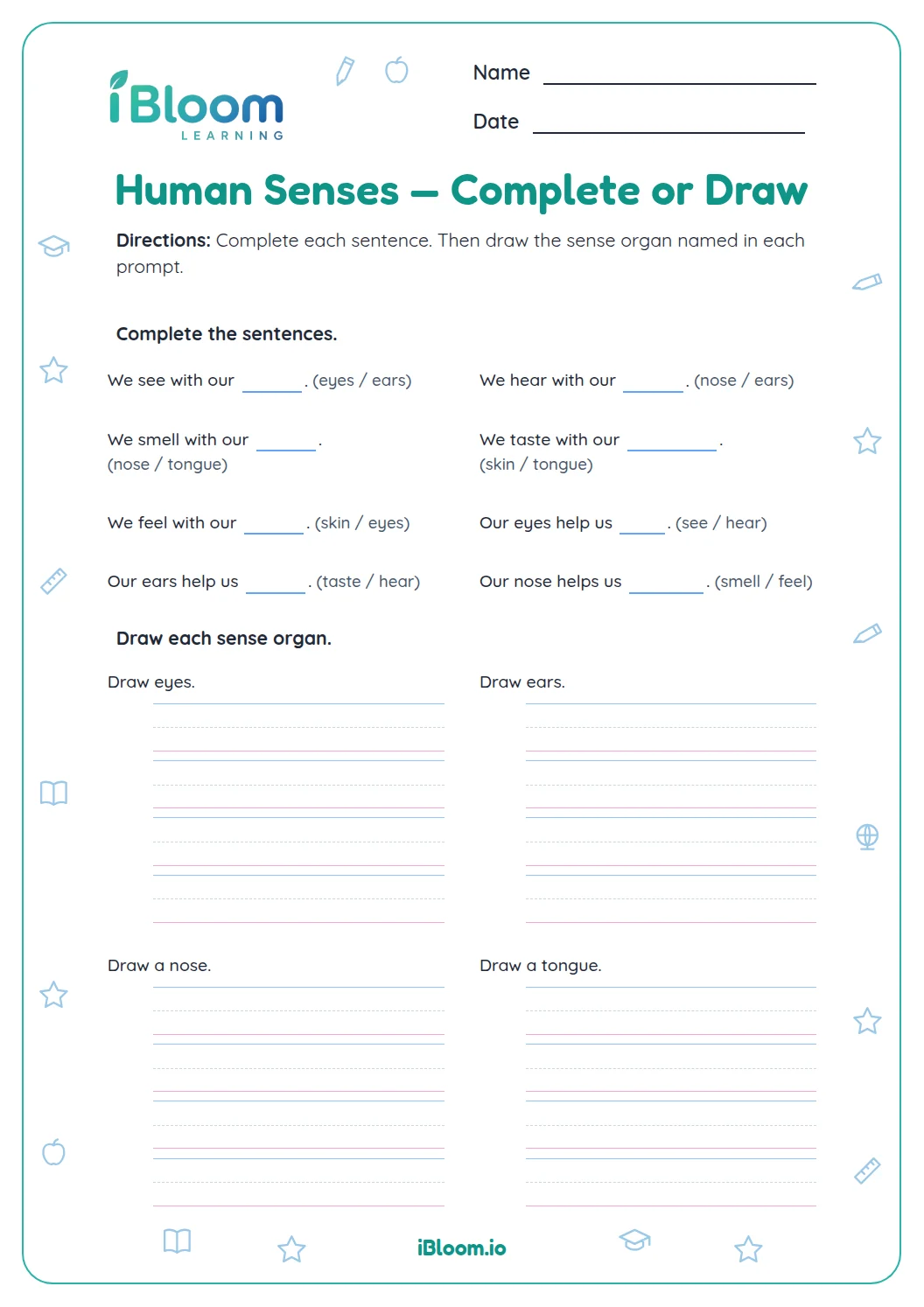
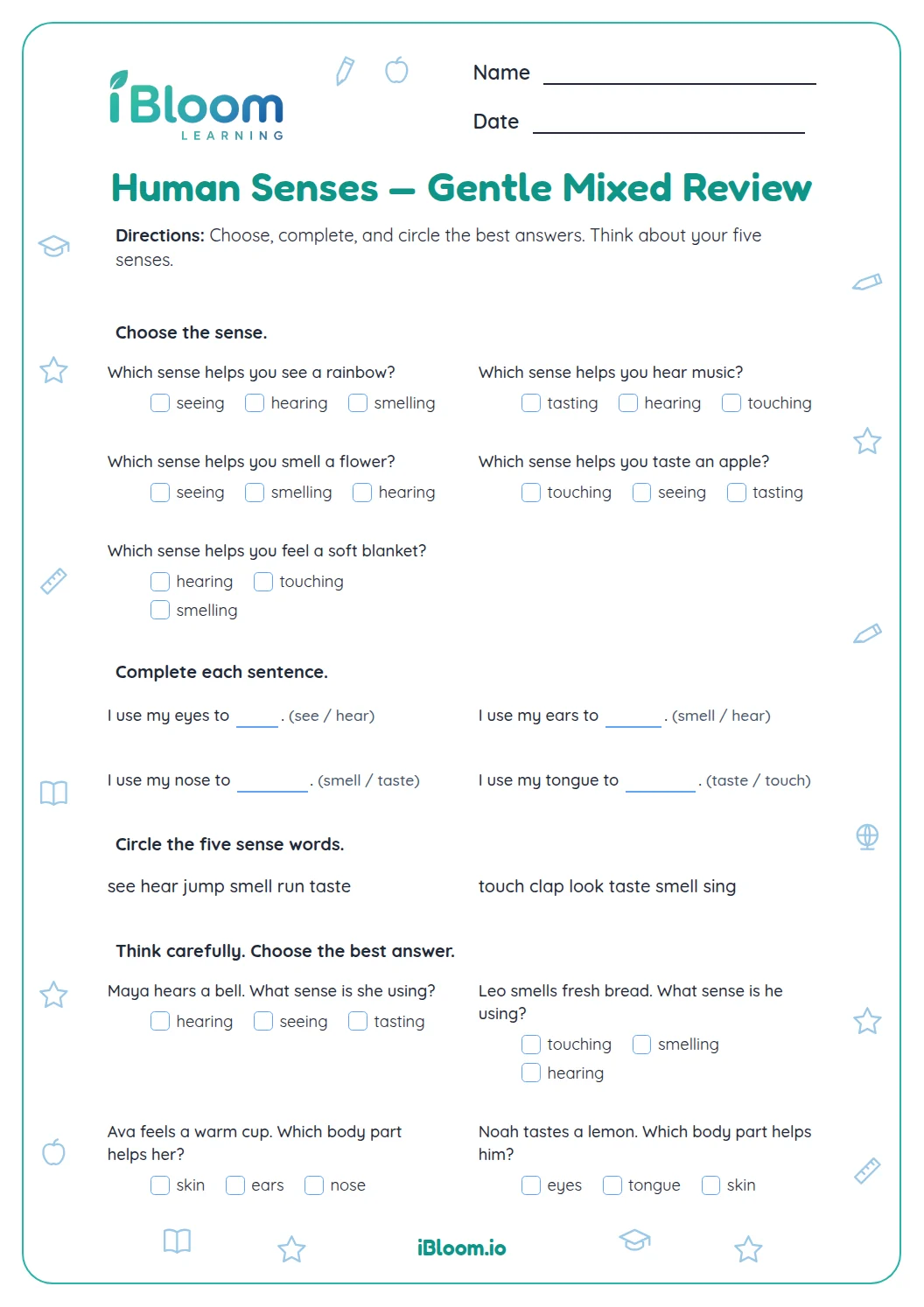
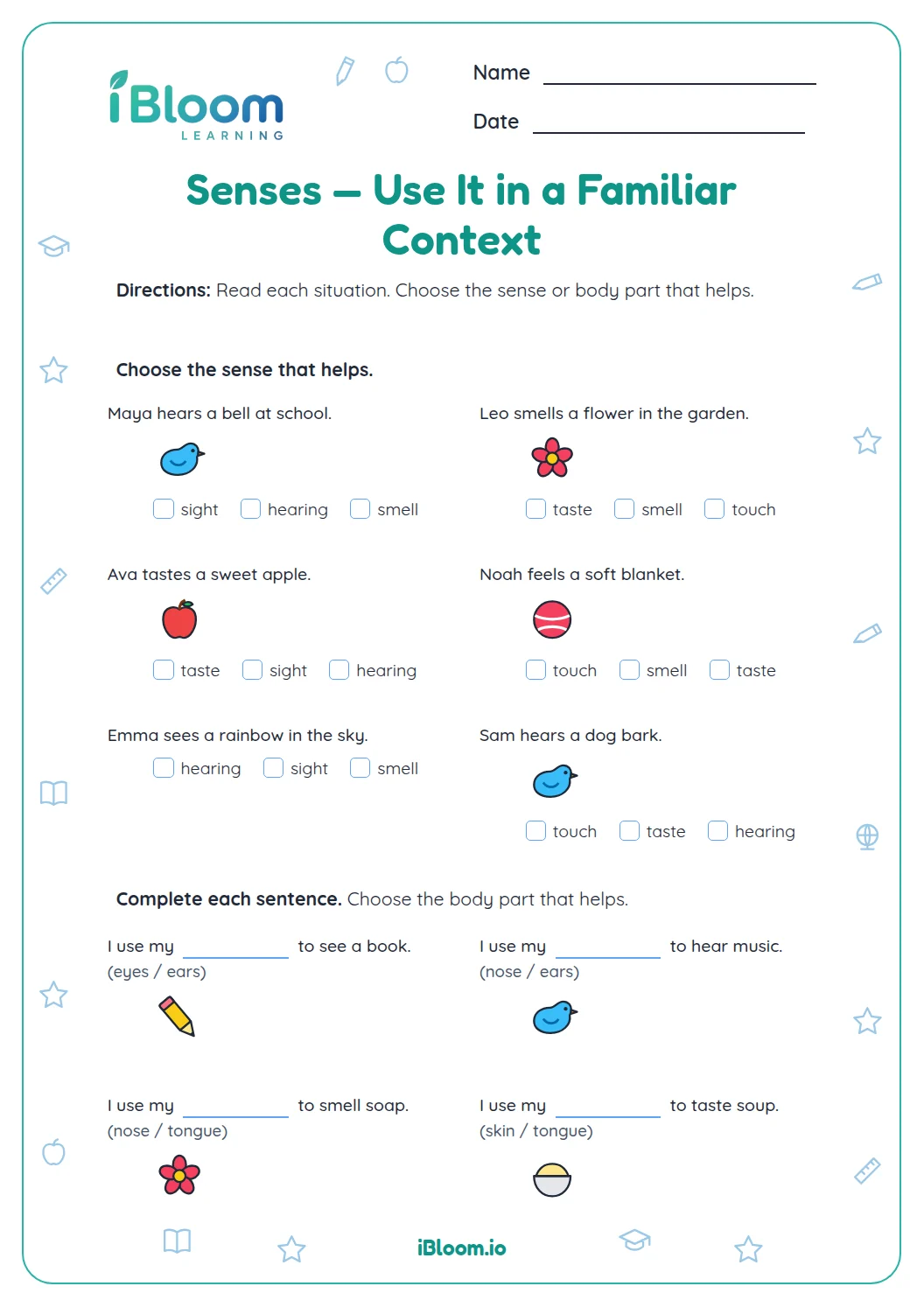
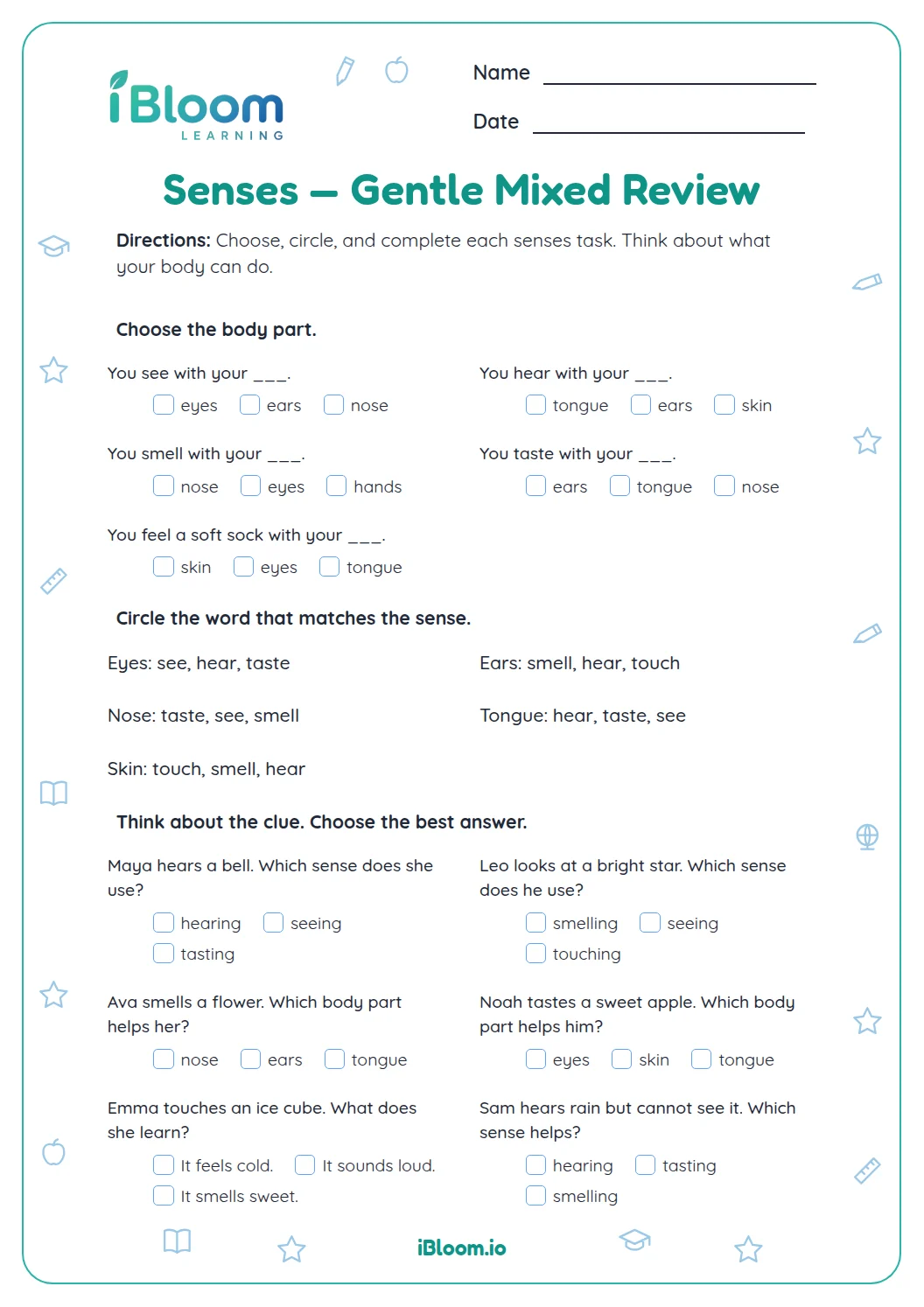
This preschool and kindergarten science worksheet connects familiar actions with the body parts that help us do them. Children choose a body part for everyday examples such as seeing a ball, hearing a bird, waving, and chewing, then complete short sentences. The 16 questions use familiar situations and clear choices, with a separate answer key for checking.
How do actions help children name body parts?
Begin with the action in the sentence. Seeing a red ball uses eyes; hearing a bird sing uses ears; kicking a ball uses feet. The action gives a familiar clue about which body part is involved.
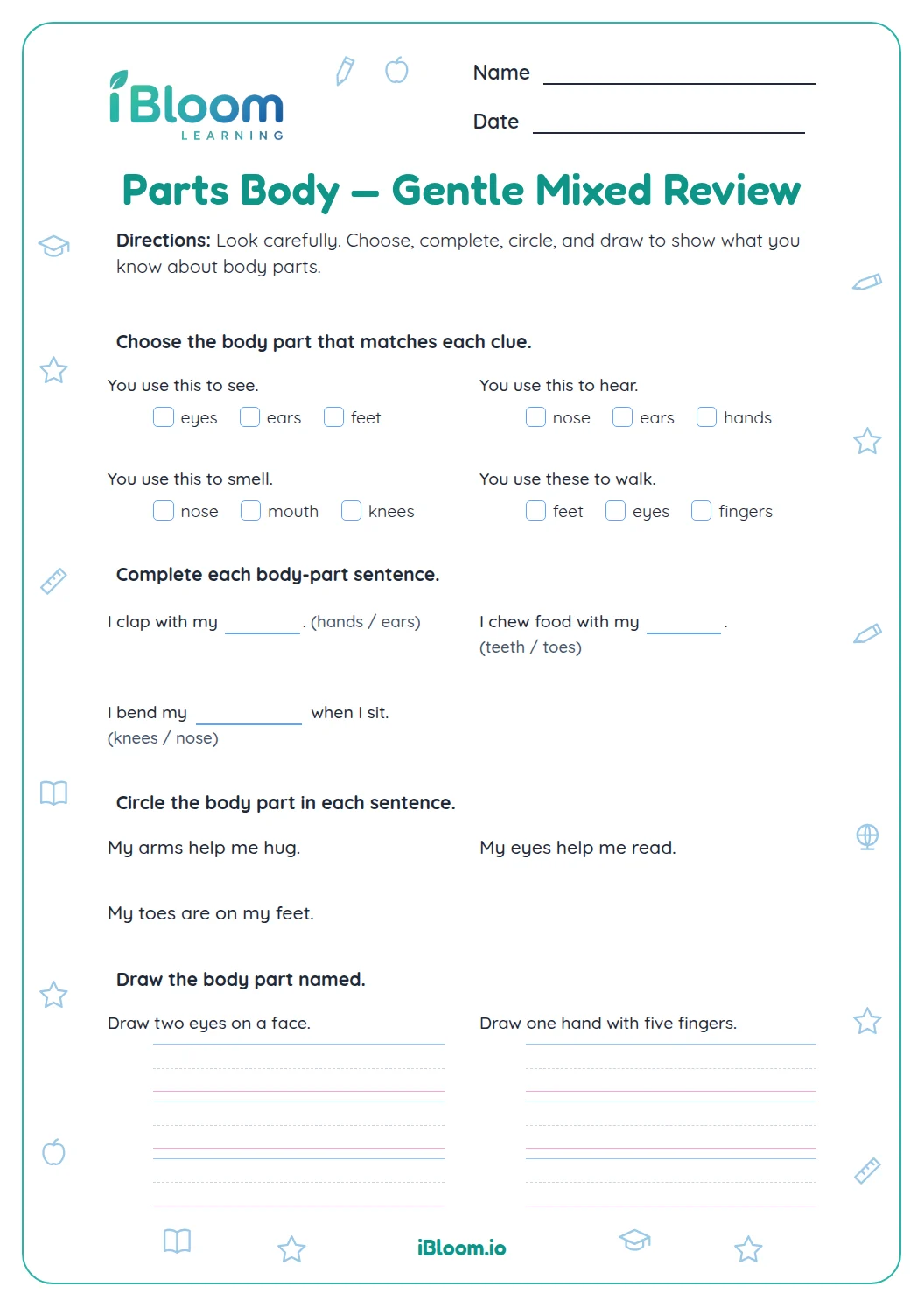
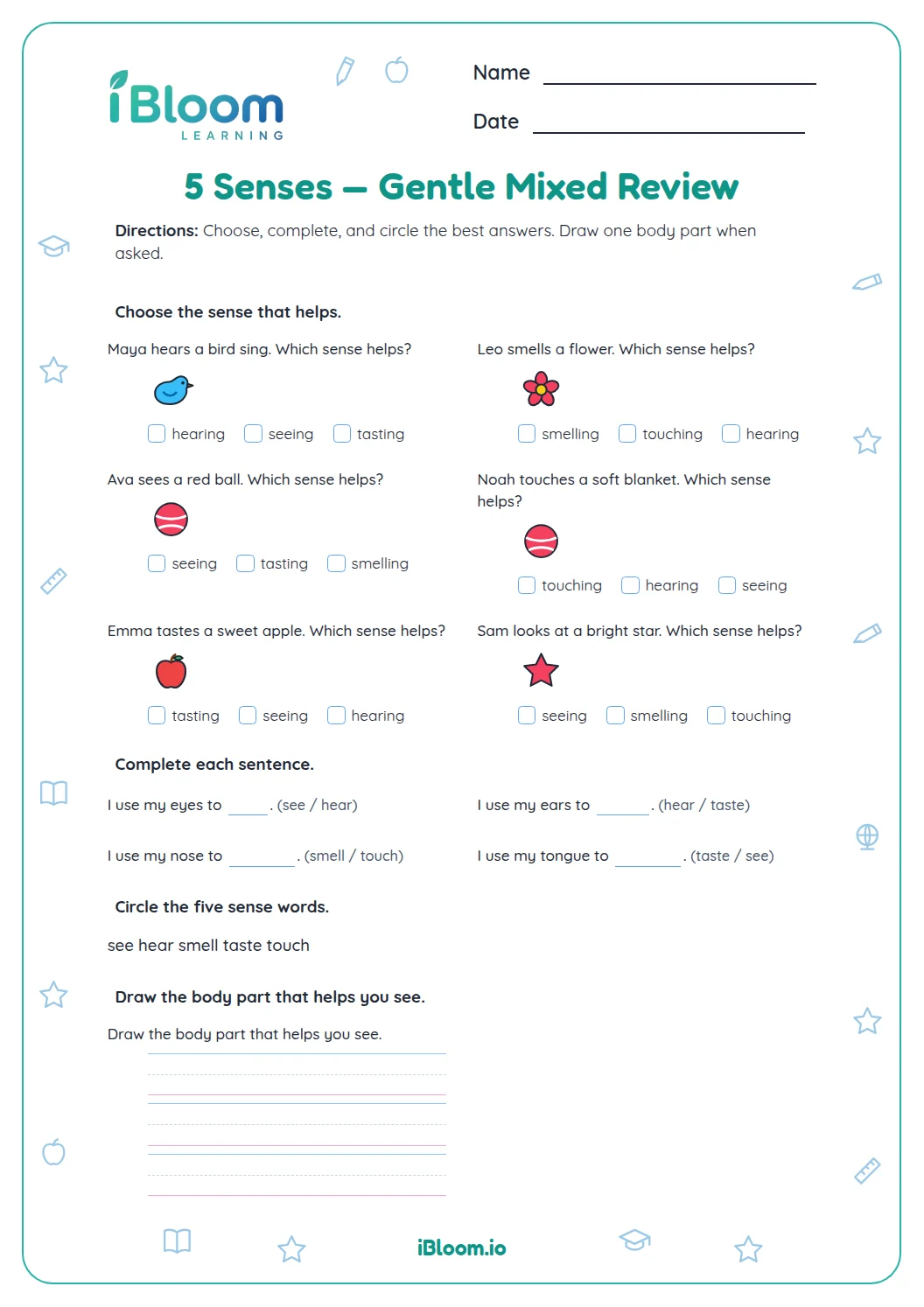
- 1Maya sees a red ball. What does she use?
- 2She uses her eyes to see.
What kinds of actions appear?
The choice questions include seeing, hearing, smelling, kicking, waving, chewing, and movement by people or animals. Children select from body-part words such as eyes, ears, nose, hand, feet, teeth, and wings.
How does sentence completion work?
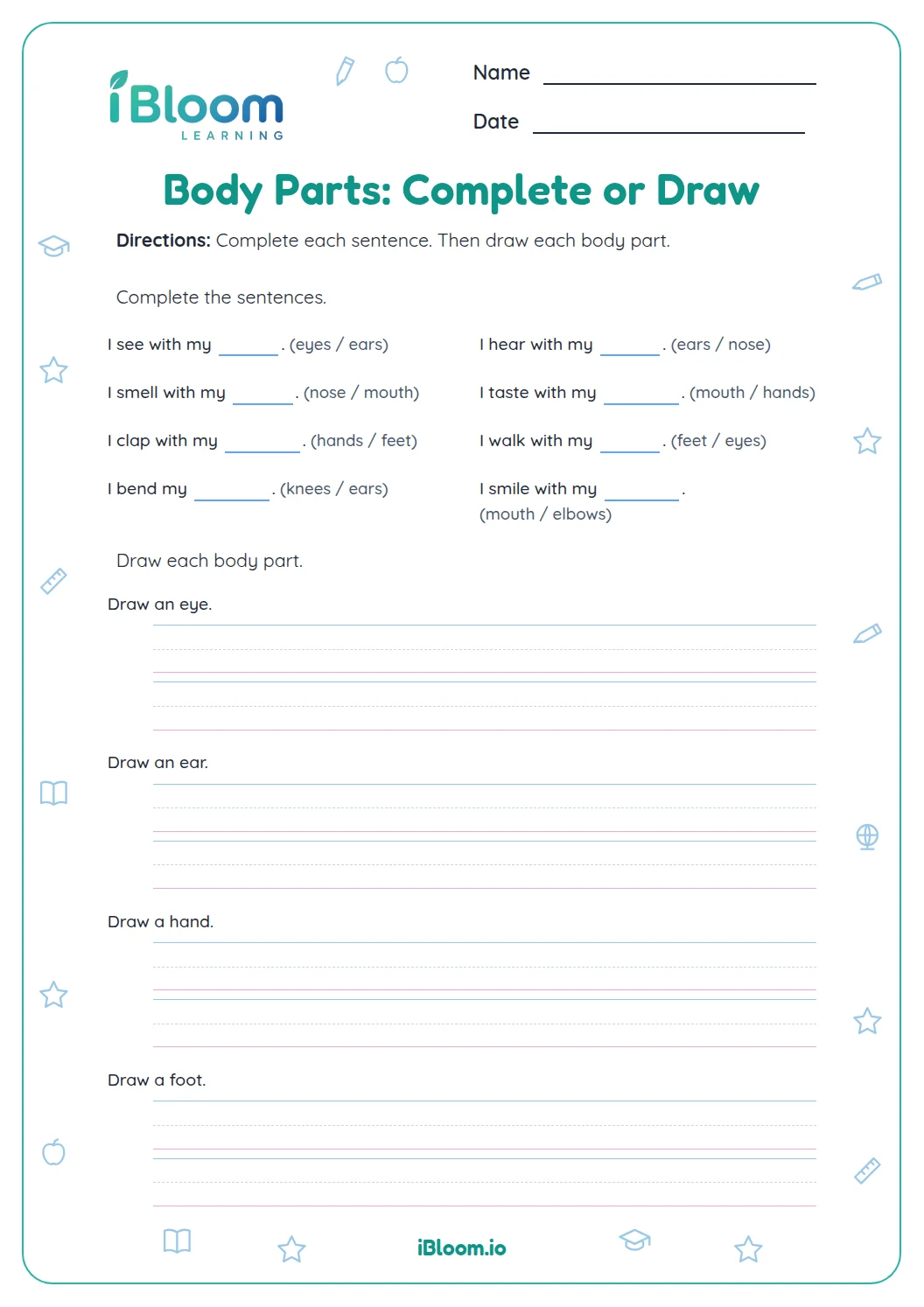
In Part B, read the whole sentence and choose the body part that makes sense in its context. For “I clap with my ___,” hands complete the sentence. There are eight choices and eight short sentence completions across the two parts.
How to use this worksheet
- 1Read the action in the sentence.
- 2Think about which body part helps with that action.
- 3Read each choice before deciding.
- 4For a sentence blank, say the completed sentence aloud.
- 5Use the key to review a missed answer together.
Common slips and quick fixes
The mistake
Choosing a body part that is nearby but does not do the action.
The fix
Focus on the action word, such as see, hear, or kick.
The mistake
Using singular and plural forms carelessly.
The fix
Match the sentence: one hand, two hands; one foot, two feet.
The mistake
Guessing from one word without reading the full sentence.
The fix
Read the whole situation before choosing a body part.
What to practice next
Questions parents and teachers ask
What body parts are included?
Children work with eyes, ears, nose, mouth-related parts, hands, feet, teeth, and wings in familiar contexts. The questions connect each part with an action, such as seeing, hearing, smelling, holding, or flying. Examples include the body parts used to think, bend an arm, read, and chew.
How many questions are on the page?
There are 16 questions in two parts. Part A asks children to choose body parts for familiar actions. Part B gives short sentences to complete with a body part. The separate answer key lists all responses. The second part includes eight sentence blanks, such as “I clap with my ___.”
Is this worksheet suitable for preschoolers?
The prompts use familiar situations and short sentences, and the answer choices make the task concrete. An adult can read each item aloud and invite the child to name the action before choosing a body part. The choice questions include familiar body parts and actions, and the sentence blanks invite a spoken completion before marking a choice.
Why does the worksheet include animal actions?
One question asks what a bird uses to fly and another asks what a cat uses to walk. These examples extend the same matching idea to familiar animals while keeping attention on the body part connected to the action. A cat walks with its legs; a bird flies with its wings. These two questions connect the action to an animal body part.
How can an adult help without giving the answer?
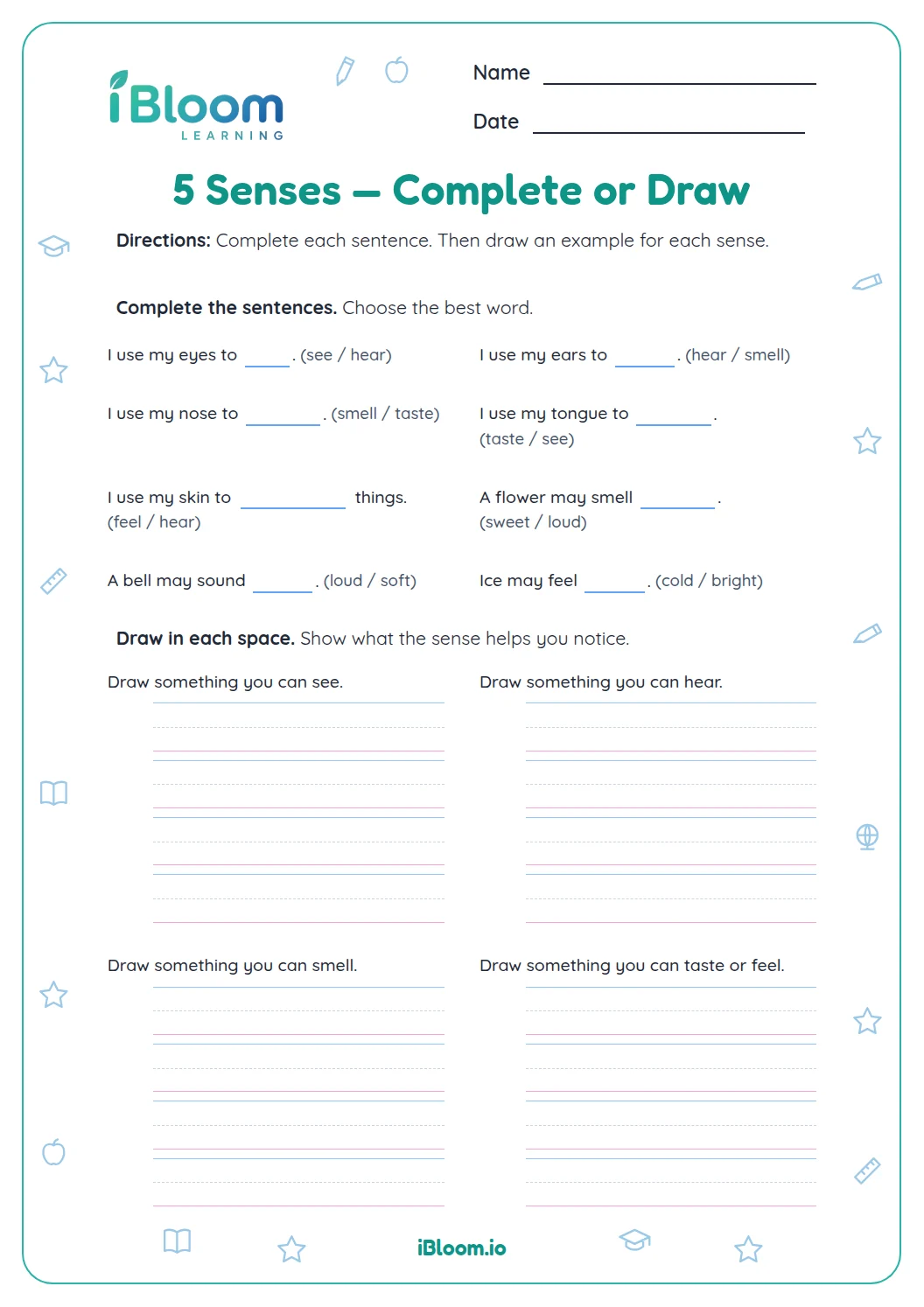
Repeat the action and ask the child what part of the body helps do it. For “I taste my lunch,” invite the child to think about the part used for tasting, then let them choose from the options. The key gives a concise answer for each item, including hands for clapping and tongue for tasting.