





About this worksheet
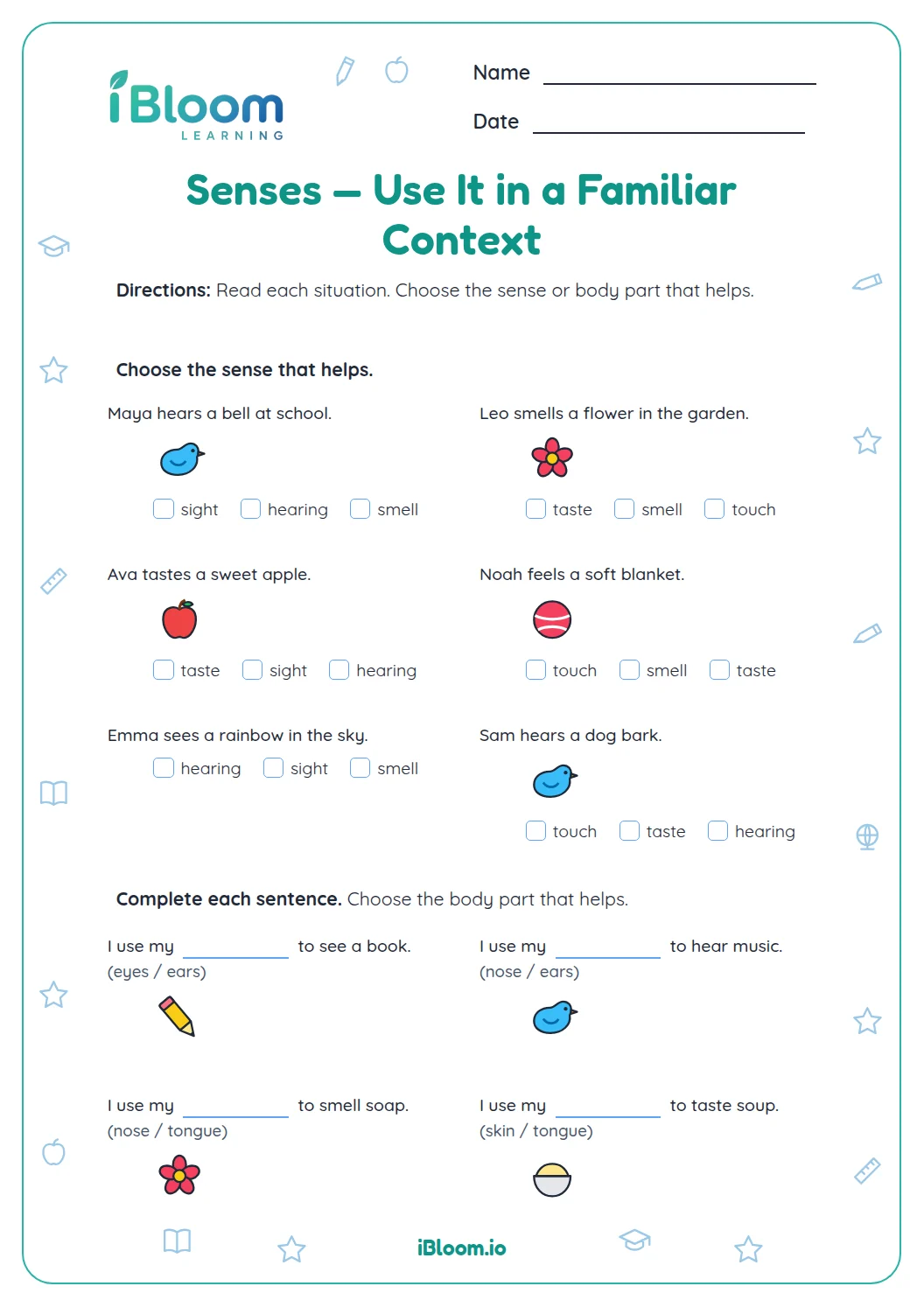
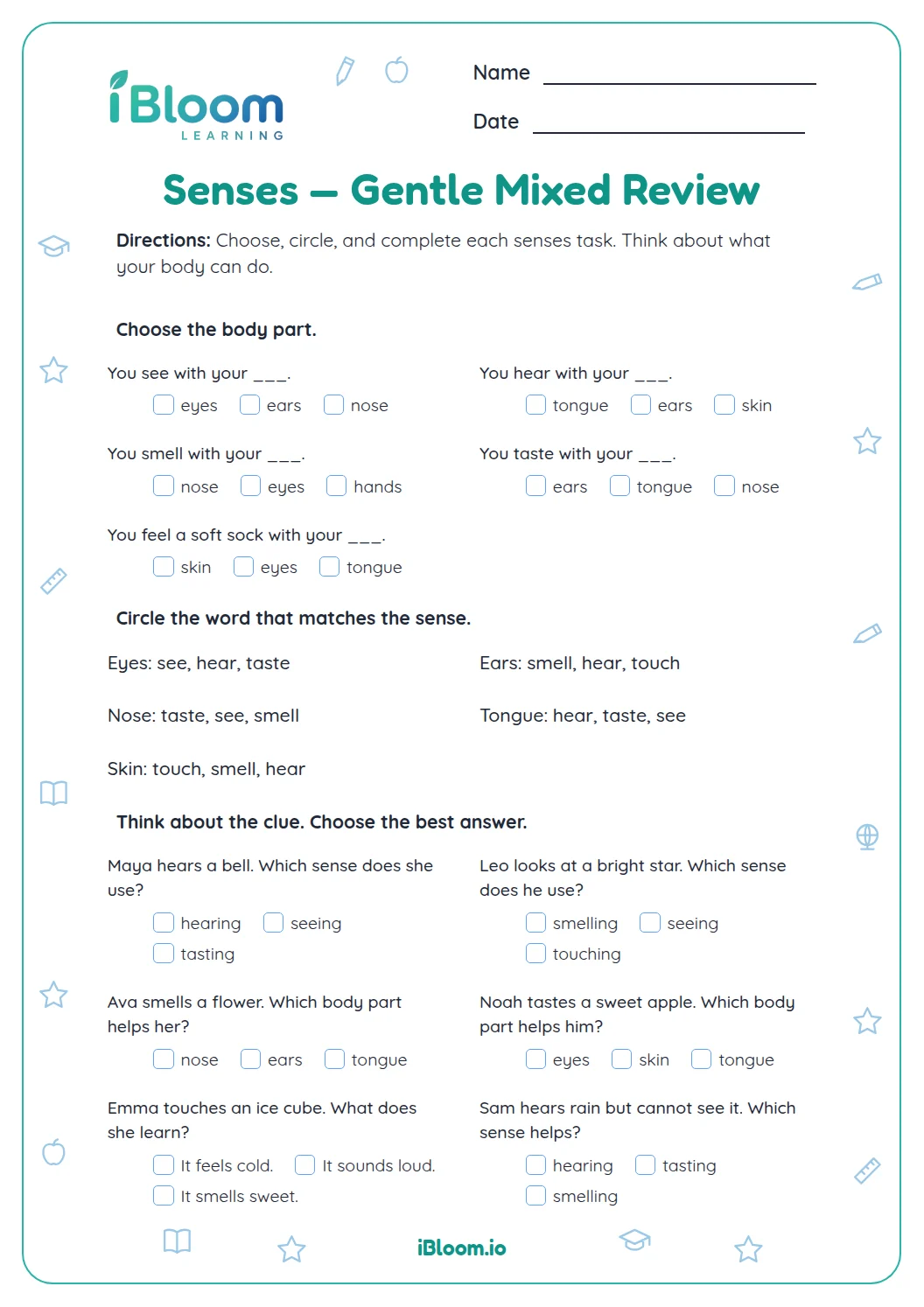
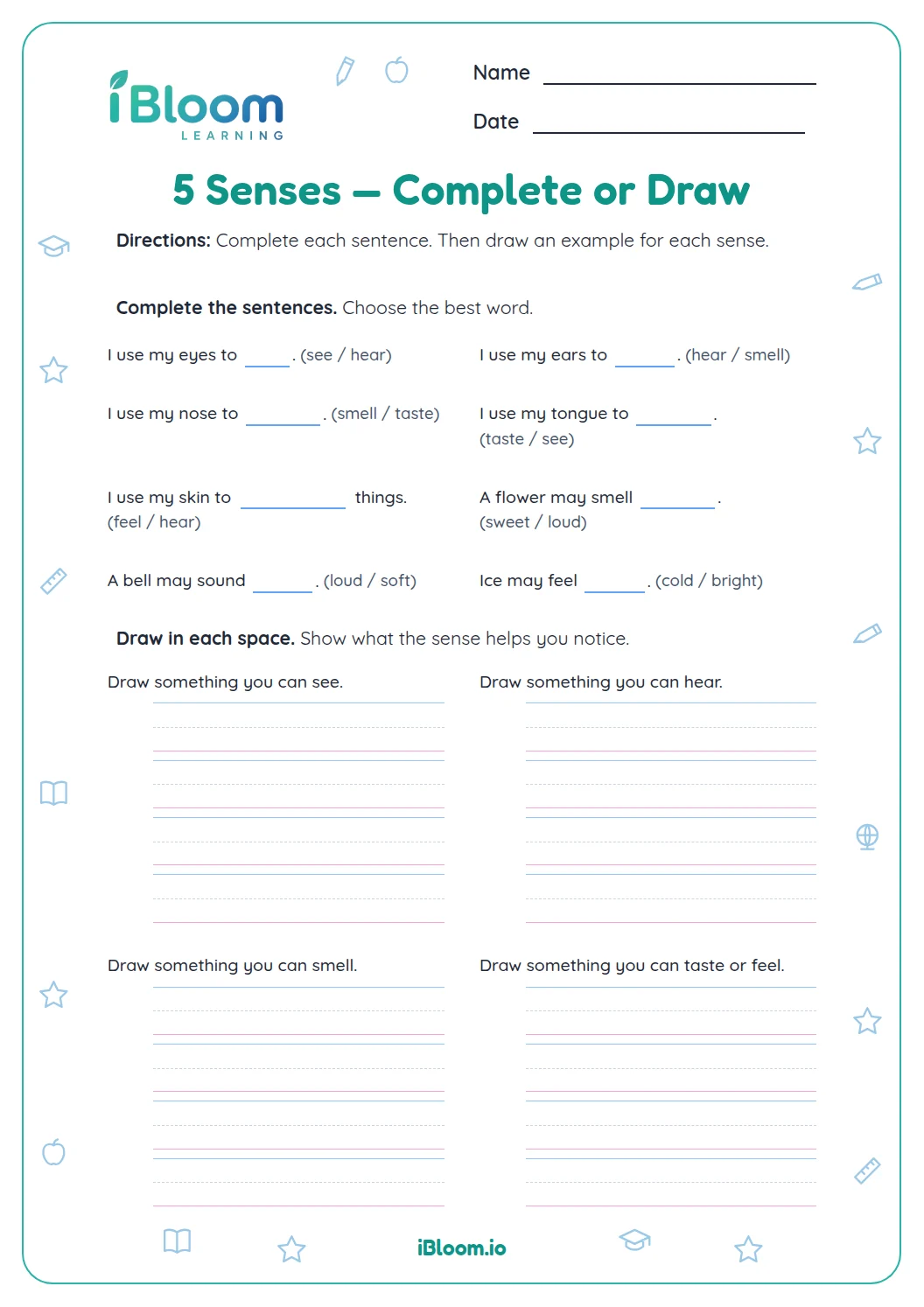
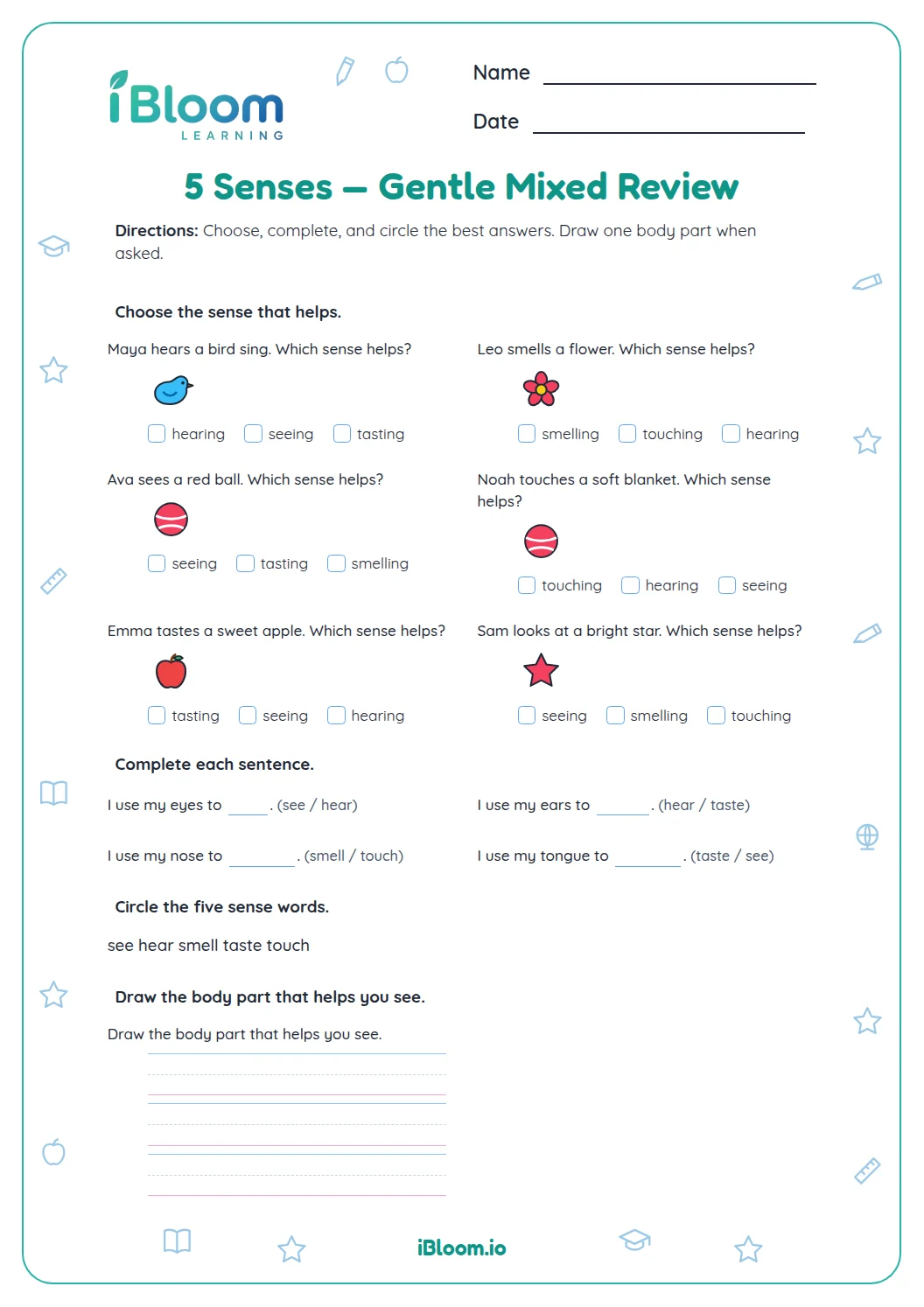
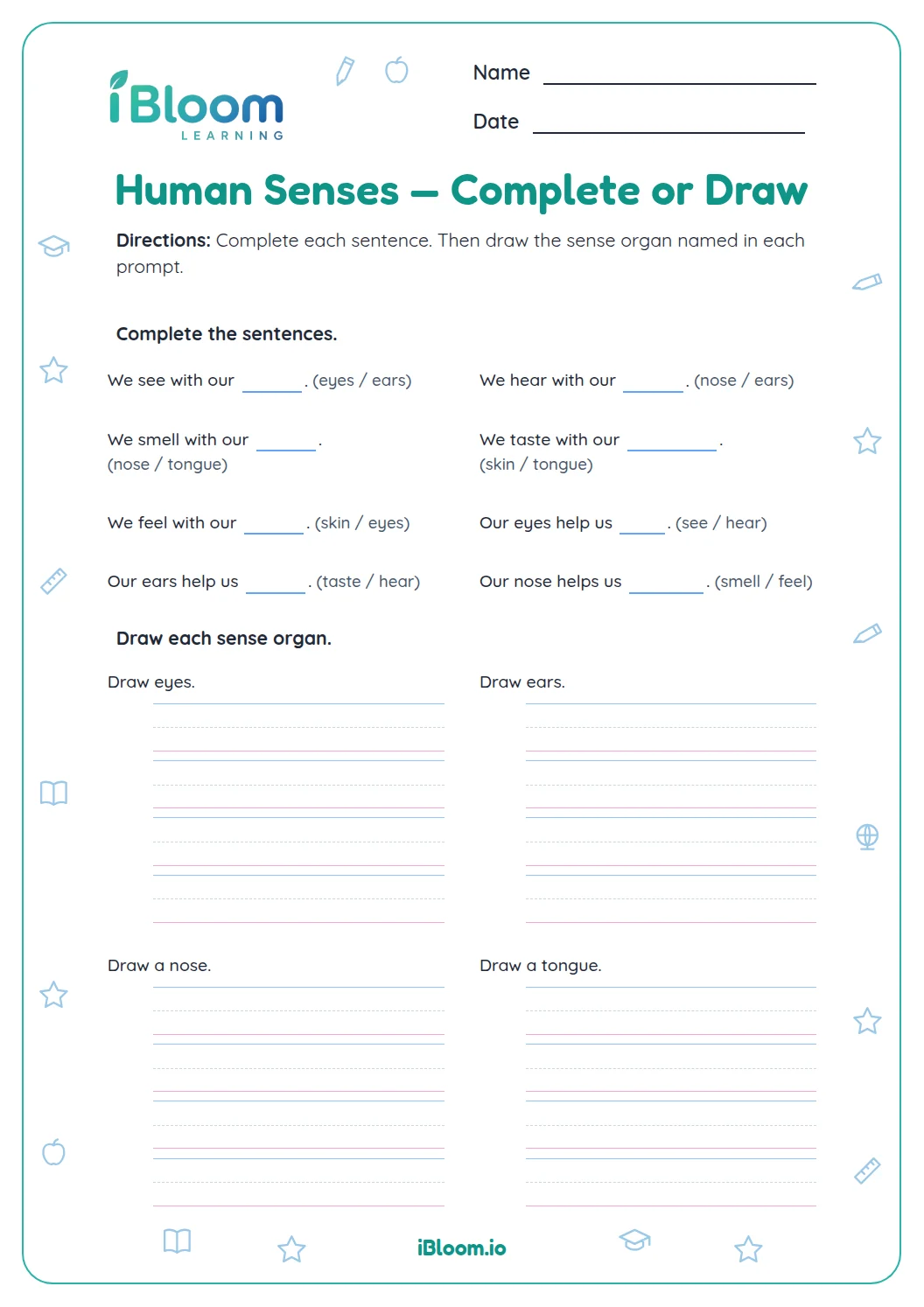
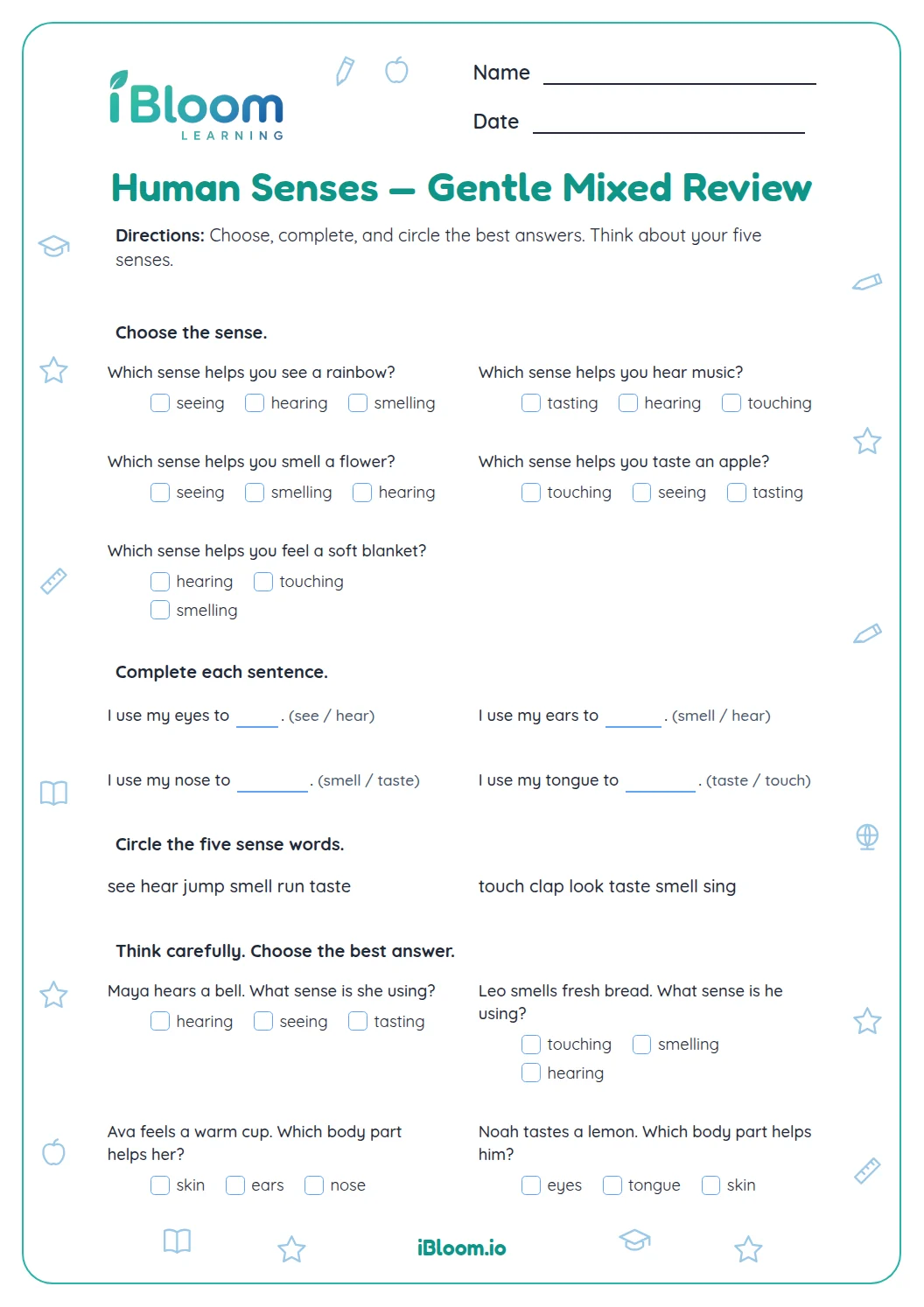
This free printable introduces the five senses with familiar examples for preschool and kindergarten learners. Children choose a body part for each clue, name the sense used in everyday situations, and draw eyes, ears, a nose, and a tongue. The picture choices keep the matching activity visual, while the final four prompts preserve the draw-a-body-part practice of the original sheet. An answer key includes sample drawing guidance.
Which body part helps with each sense?
The first part pairs familiar clues with picture choices. For example, a ringing bell is heard with the ears, while a rainbow is seen with the eyes. Let children point to each picture as they choose.
- 1A bell is ringing. Which body part helps you hear it?
- 2Look at the picture choices and find the ears.
- 3Answer: [pic:ear]
How do the senses help in everyday moments?
The next questions connect a sense to an action: sniffing bread uses smell, watching a bird uses sight, and biting a lemon uses taste. Children can say the sense aloud before choosing an answer.
- Part A: choose a pictured body part for each clue.
- Part B: choose the sense used in familiar situations.
- Part C: draw eyes, ears, a nose, and a tongue.
What should children draw?
The last four prompts ask children to draw one body part in each box. Simple shapes are enough: eyes, two ears, a nose, and a tongue. The answer key gives examples of what each drawing should show.
How to use this worksheet
- 1Read one short clue aloud.
- 2Look at the picture choices and name the body part.
- 3For an action, say which sense helps first.
- 4Complete the six choice questions in each of the first two parts.
- 5Draw the four named body parts in the final boxes.
- 6Review the choices and drawings with the sample key.
Mistakes to watch for
The mistake
Choosing the object in a clue instead of the sense organ.
The fix
Ask which body part receives the sound, sight, smell, taste, or touch.
The mistake
Mixing up smelling and tasting food.
The fix
Sniffing uses the nose; tasting uses the tongue.
The mistake
Thinking the hand is the only way to feel.
The fix
Explain that skin helps the body feel warmth and texture.
What to practice next
Make more practice
Questions parents and teachers ask
What ages is this five-senses worksheet for?
The worksheet is labeled for preschool and kindergarten learners. It uses familiar clues such as a bell, rainbow, flower, apple, and blanket, with picture choices for the body-part questions. An adult can read the prompts aloud and let the child point before marking a choice.
What will children do on the printable?
Children answer 12 choice questions and complete four drawing prompts. The first part matches pictured body parts to clues, the next connects everyday actions with senses, and the last asks children to draw eyes, ears, a nose, and a tongue.
Does the worksheet include pictures?
Yes. The body-part matching questions use picture choices, so children can identify an ear, eye, nose, tongue, or hand visually. The remaining sense questions use short familiar actions. The last section has open drawing boxes for four body parts to complete.
Is there an answer key for the drawing prompts?
Yes. The separate key gives a sample description for each drawing rather than expecting every child’s picture to look alike. A drawing is suitable when it clearly represents the requested body part. The choice questions have specific answers in the key.
How can I help a child who is unsure about a sense?
Connect the prompt to a simple action: listen to a bell, look at a rainbow, smell a flower, or touch a soft blanket. Ask which body part helps. Children can talk through the example before selecting a picture or sense word.