





About this worksheet
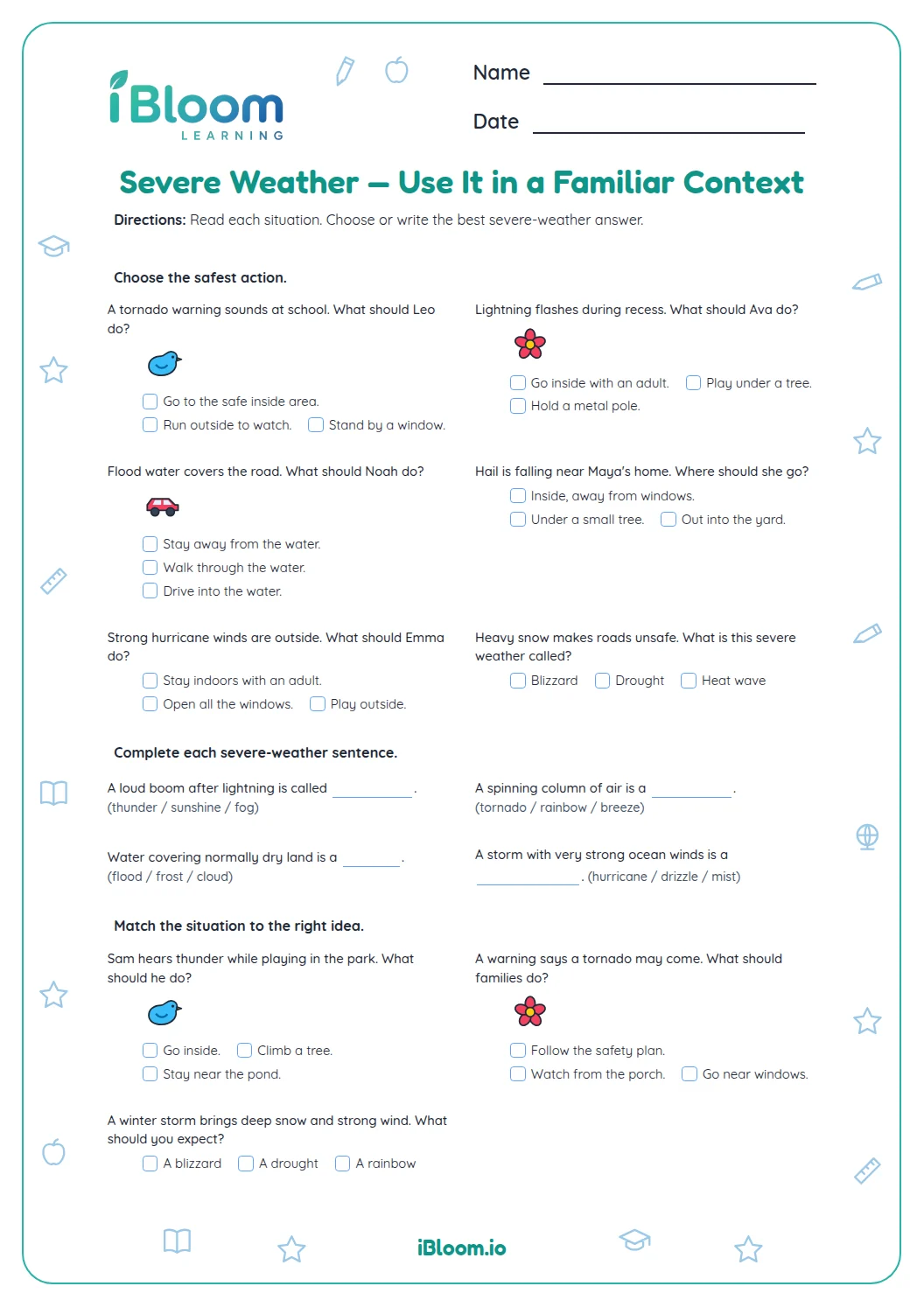
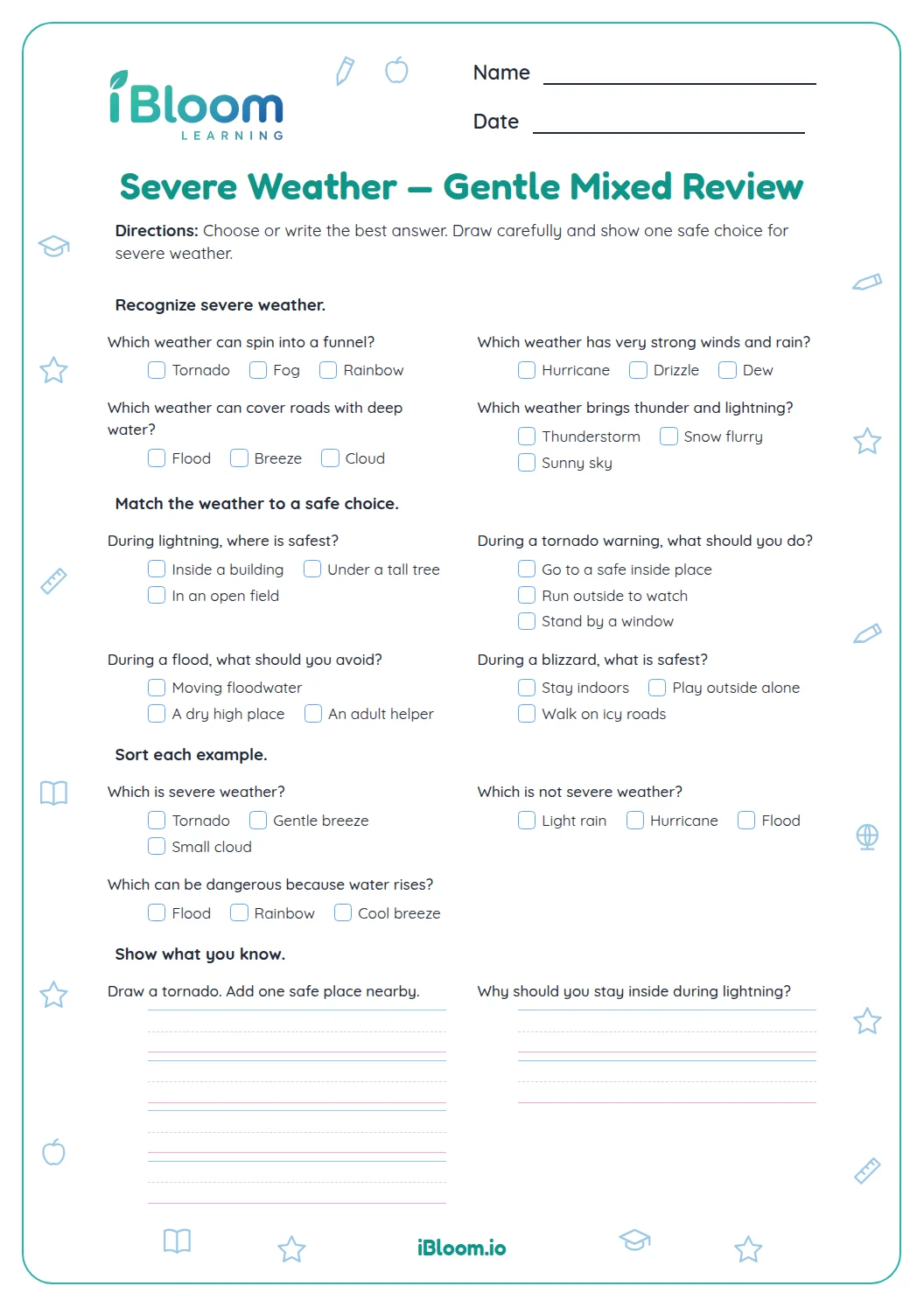
This printable preschool and kindergarten worksheet introduces thunderstorms, tornadoes, hurricanes, floods, and hailstorms through short clues and choices. Children practice matching weather clues, selecting a safe response with adult help, and drawing a safe place during a storm. Fourteen activities support early science talk about how forecasts help communities prepare for severe weather, aligned with NGSS K-ESS3-2. A separate key describes an acceptable drawing response.
Aligned to K-ESS3-2
What weather clues appear on the sheet?
Short weather clues describe thunder and lightning, a funnel-shaped wind, strong coastal wind and rain, floodwater, and ice balls from clouds. In question 2, the funnel-shaped spinning-wind clue points to a tornado. Read the clue aloud, then choose the matching weather word.
- 1Clue: A funnel-shaped spinning wind
- 2Think of the weather word for this event.
- 3Choose: tornado
How can children practice a safe response?
The choices model simple actions that require adult direction, such as going inside a sturdy building or staying away from floodwater. Reinforce that children follow a trusted adult and local warnings.
What can children draw?
Question 13 asks children to draw one safe place to go during a storm. Accept a clear indoor place, such as a sturdy home with a trusted adult, and invite the child to explain the drawing aloud.
How to use this worksheet
- 1Look at each weather symbol and say what clue it suggests.
- 2Read each short choice together.
- 3Ask which action follows a trusted adult’s safety direction.
- 4Name the weather that matches each clue.
- 5Draw one safe place and one useful storm-kit supply.
Common mistakes and quick fixes
The mistake
Thinking every rainy day is a severe storm.
The fix
Notice the clue words: strong, spinning, flood, or ice balls.
The mistake
Choosing a risky place outdoors during a warning.
The fix
Pause and ask where a trusted adult would guide the child.
The mistake
Thinking the child should handle a warning alone.
The fix
Repeat that children stay with a trusted adult and follow directions.
Next Generation Science Standards alignment
The safety choices connect warning information with actions people can take to prepare for severe weather.
Connect weather warnings with preparation and response actions.
On this sheet: Weather clues and safety choices help children discuss how warnings guide preparation and response.
Show the official wordingHide the official wording
Ask questions to obtain information about the purpose of weather forecasting to prepare for, and respond to, severe weather.
What to practice next
Make more practice
Further reading
Questions parents and teachers ask
What severe weather types do children meet?
The worksheet names thunderstorms, tornadoes, hurricanes, floods, and hailstorms with short written clues. Children match a clue to a weather event and practice talking about how a warning can help people prepare with a trusted adult. Read the clue aloud together, then ask the child to explain the choice.
How many activities are included?
There are 14 activities: six multiple-choice questions, seven fill-in answers, and one drawing. Children identify severe weather, complete simple safety ideas, and draw a safe place. A separate key lists choices and an example drawing response. The child can explain each choice aloud to an adult.
Do children need to read all the choices alone?
No. An adult can read each clue and choice aloud, then ask the child to choose the matching weather word. The goal is to connect a simple weather clue with a safe response and an adult’s guidance. An adult can model how to say the answer aloud.
What should I accept for the drawing questions?
Accept a clear drawing of one safe indoor place for a storm, such as a sturdy home with a trusted adult. Ask the child to explain why it is a safe place. The worksheet has one drawing prompt; the answer key gives an example of a suitable response.
Does the worksheet replace local weather instructions?
No worksheet can tell a family what to do for a specific event. Use the page to practice the general idea that forecasts help people prepare, then follow local alerts and the directions of trusted adults. Connect the discussion to a current local alert and adult guidance.
Is an answer key included?
Yes. The answer key gives the correct choices and describes the kinds of drawings that fit the prompts. For open-ended drawings, the child’s picture can vary as long as it shows the requested safe place or useful supply. Review the choices together after the activity.