





About this worksheet
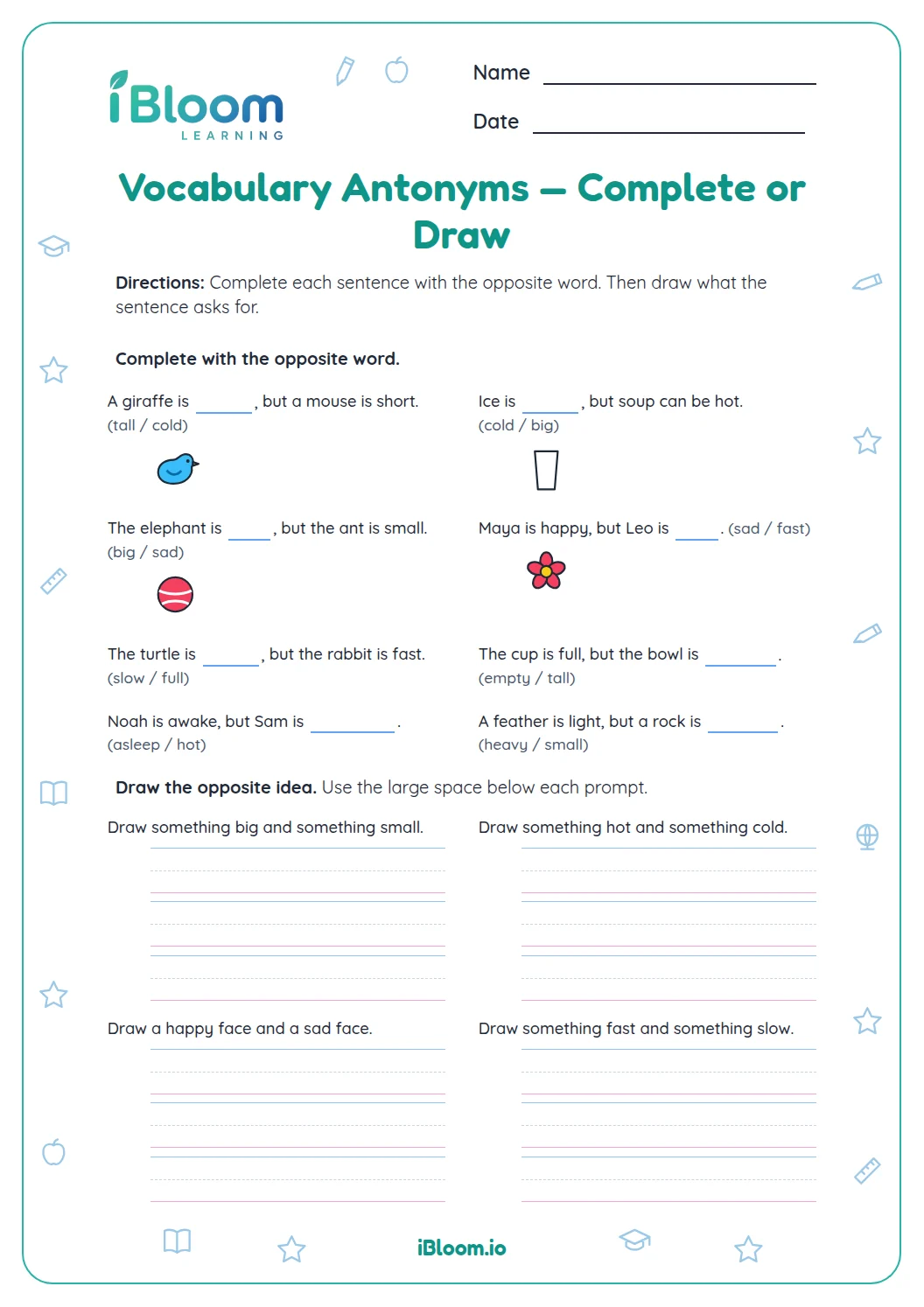
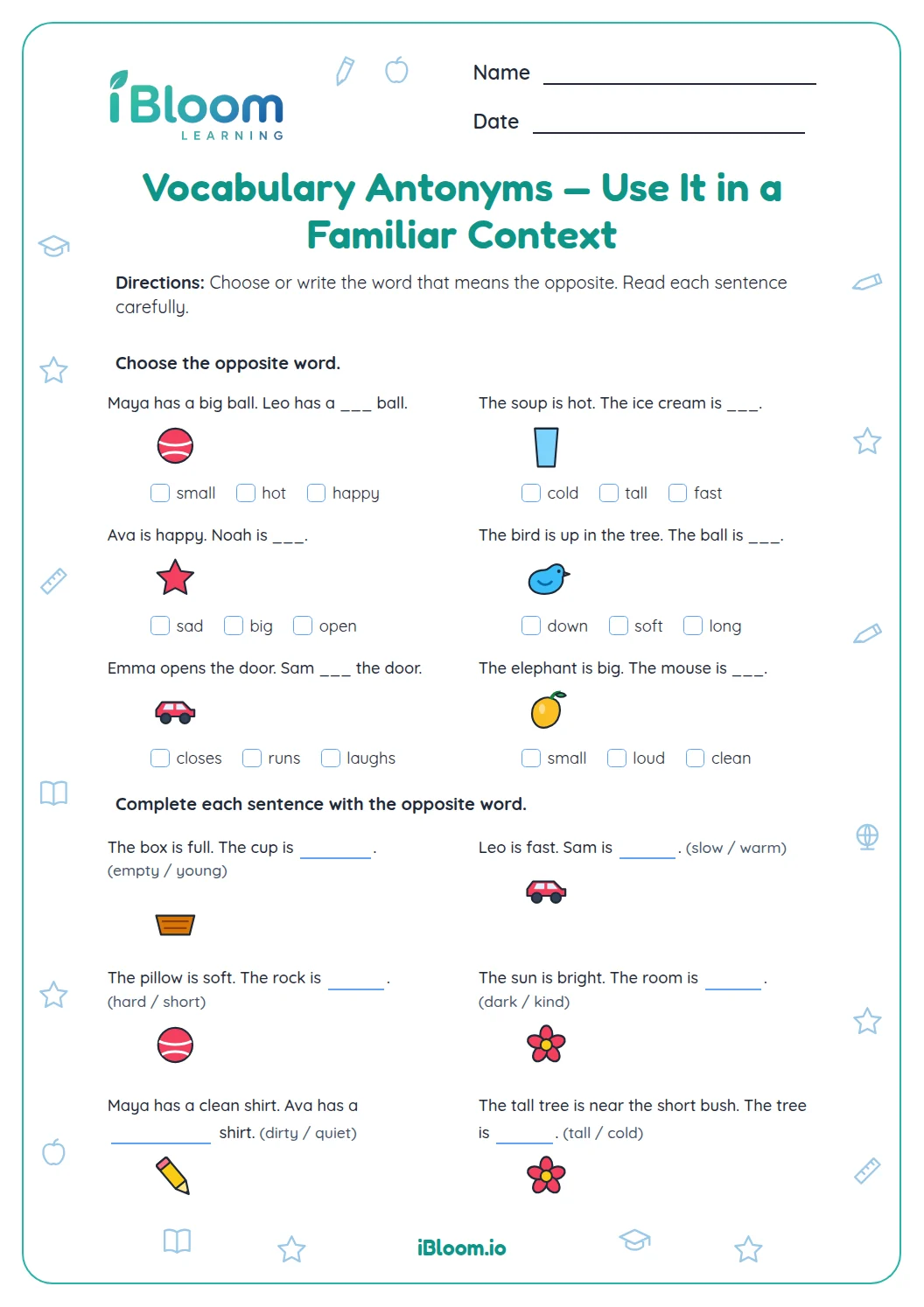
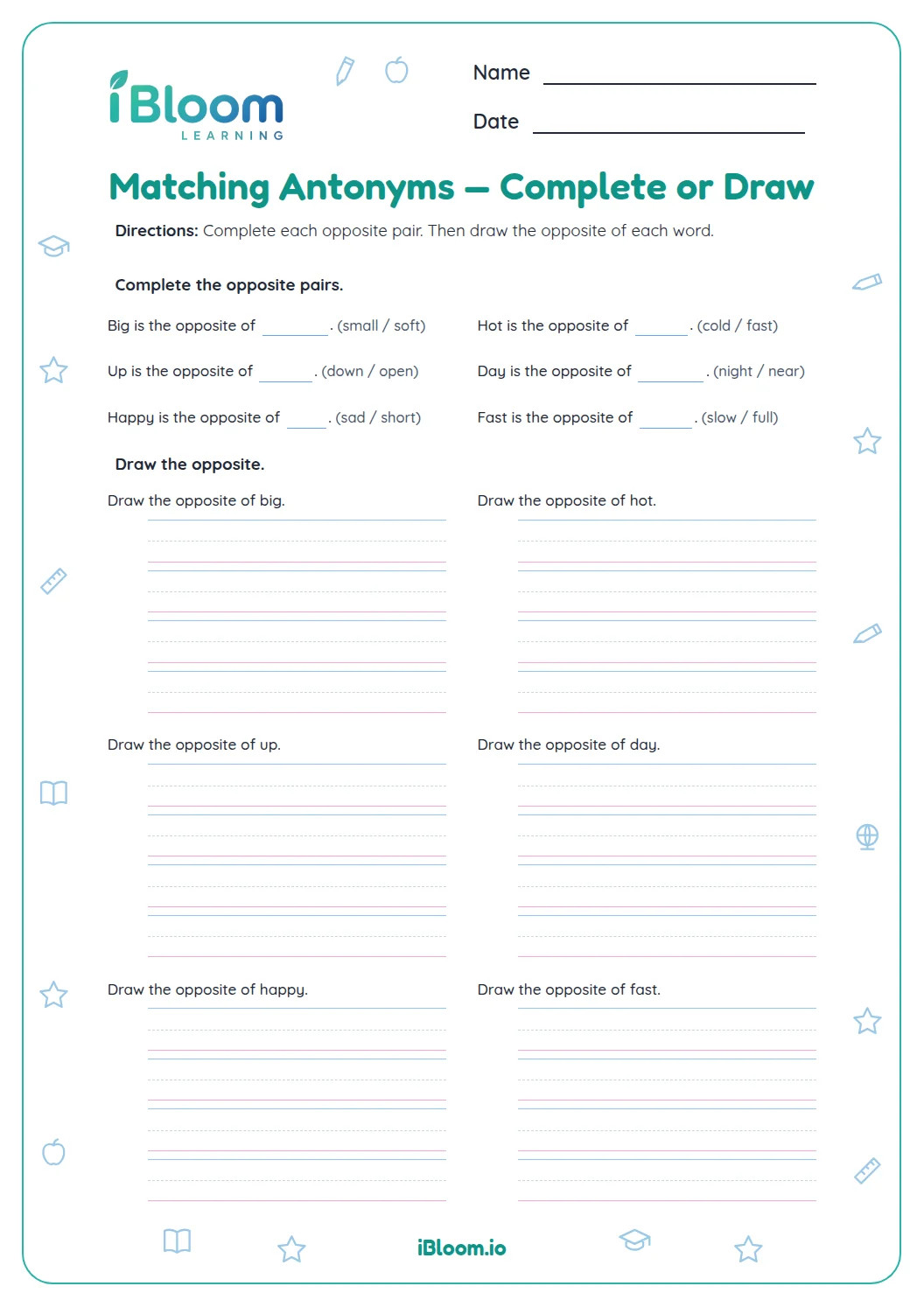
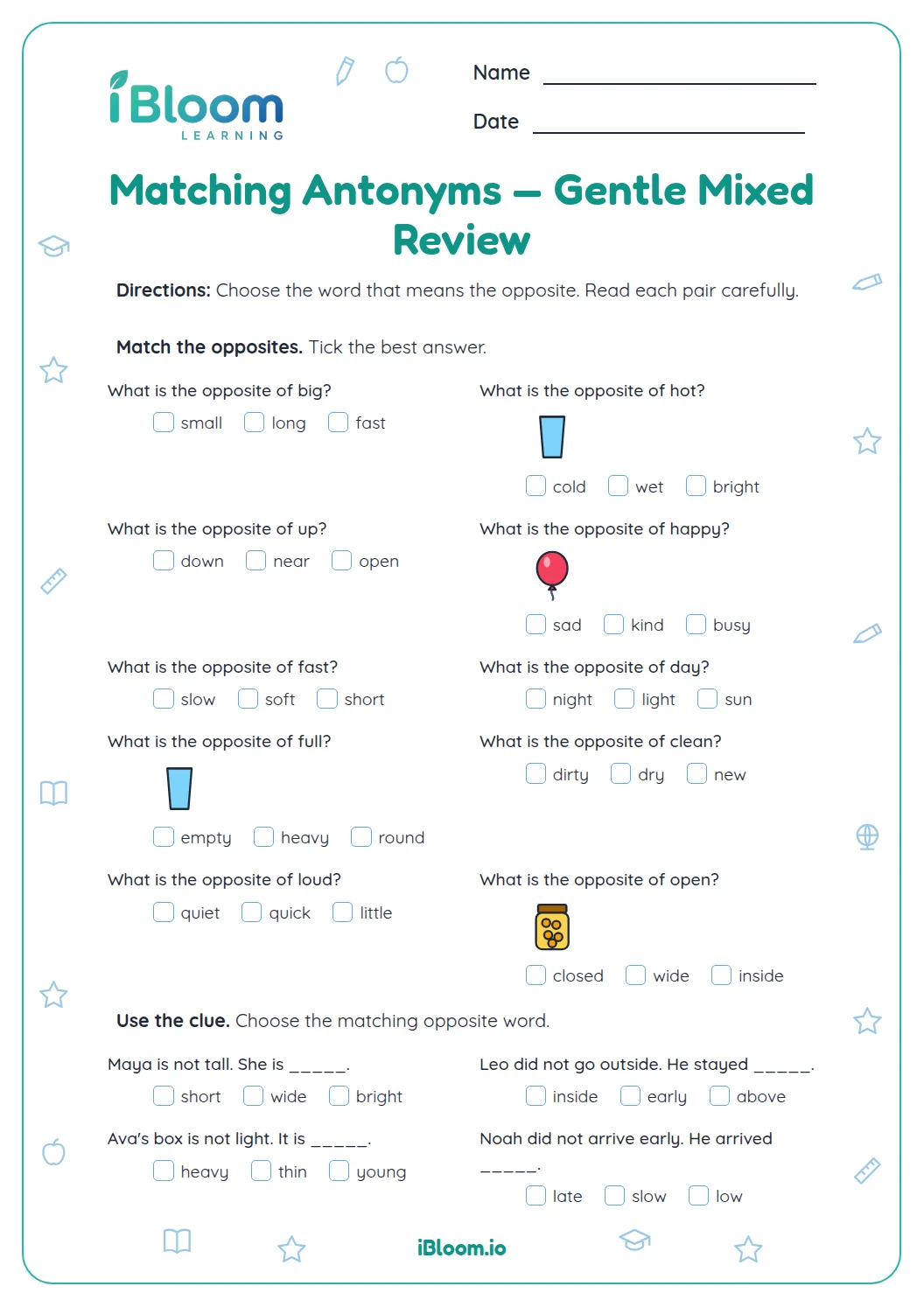
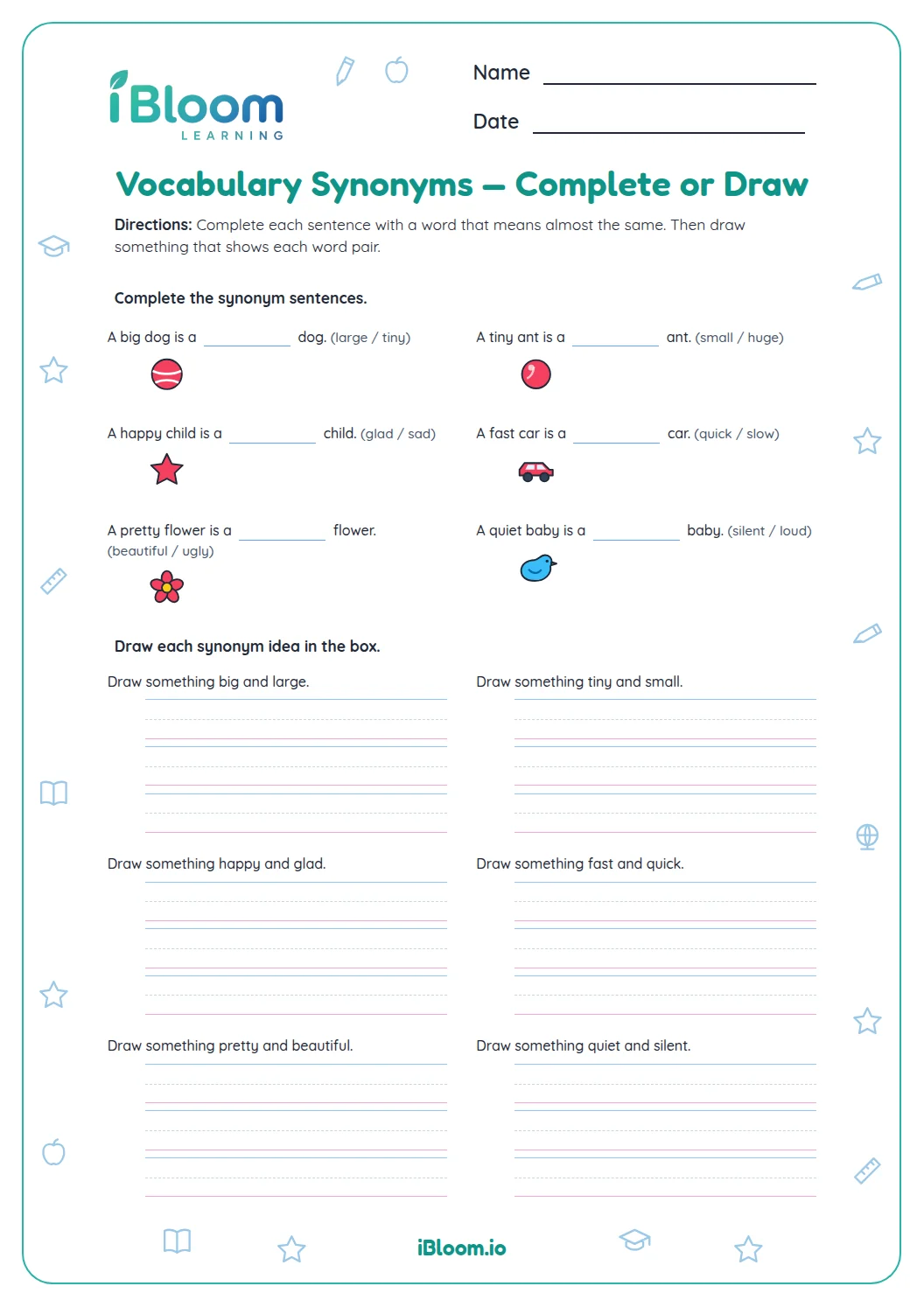
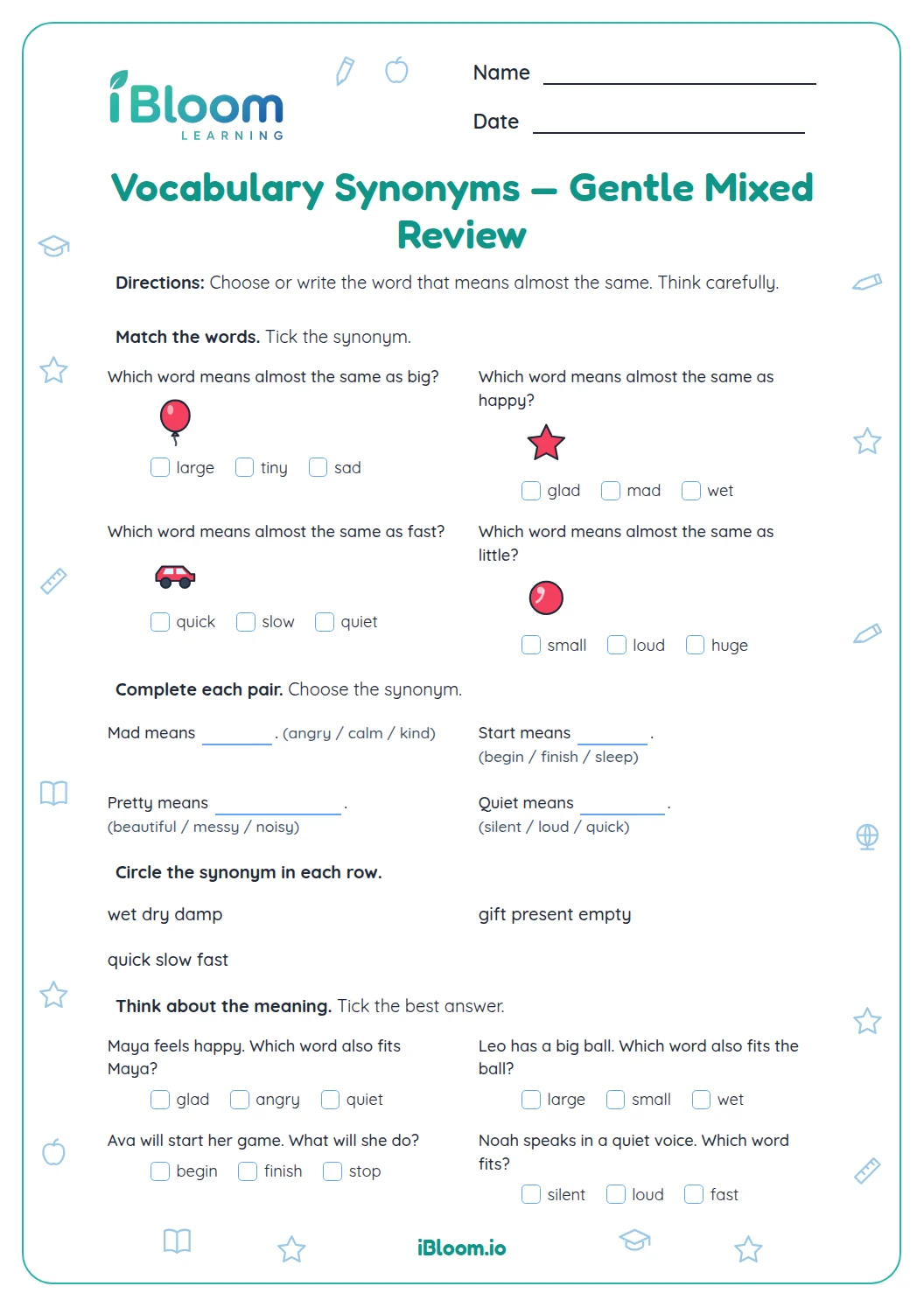
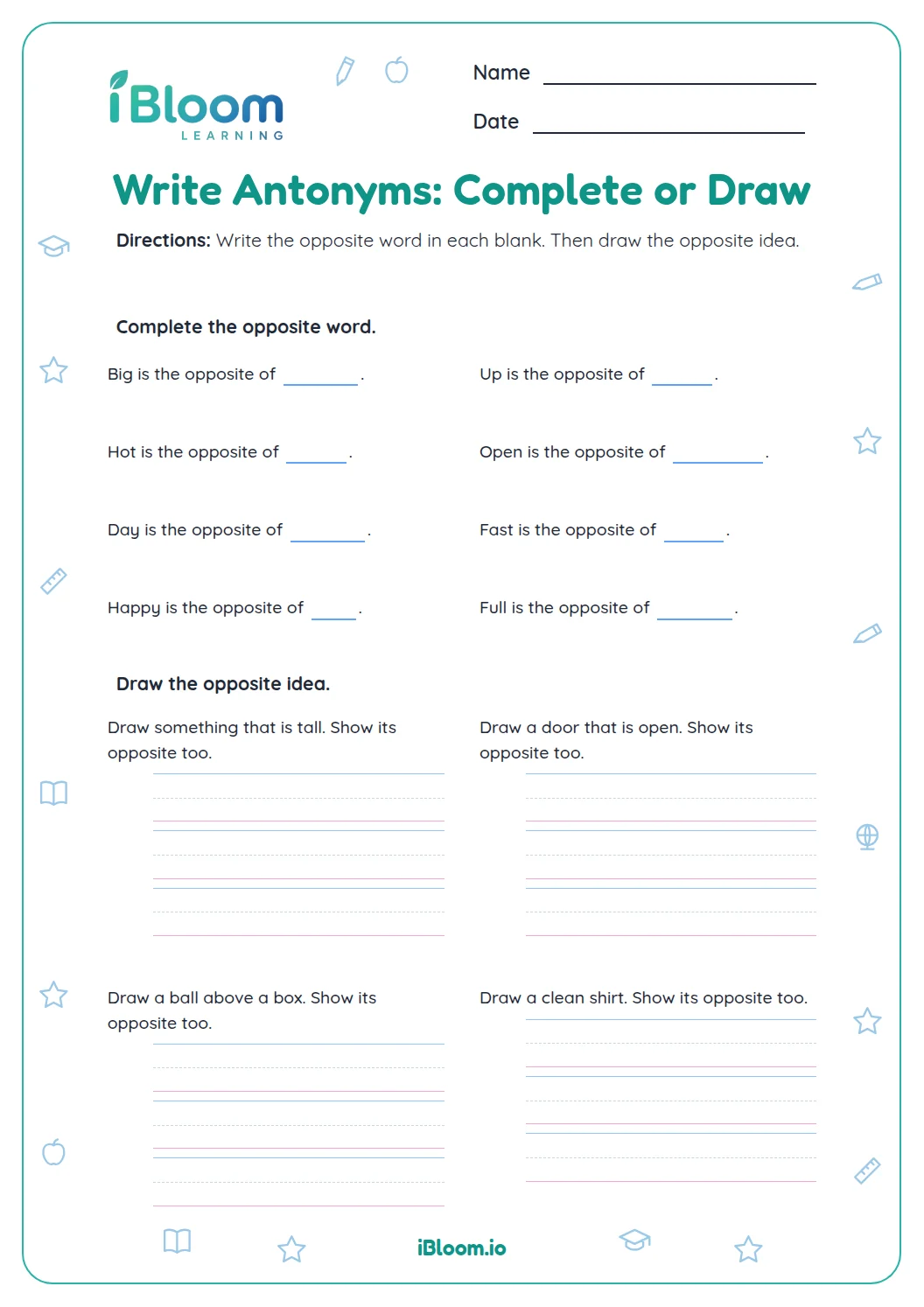
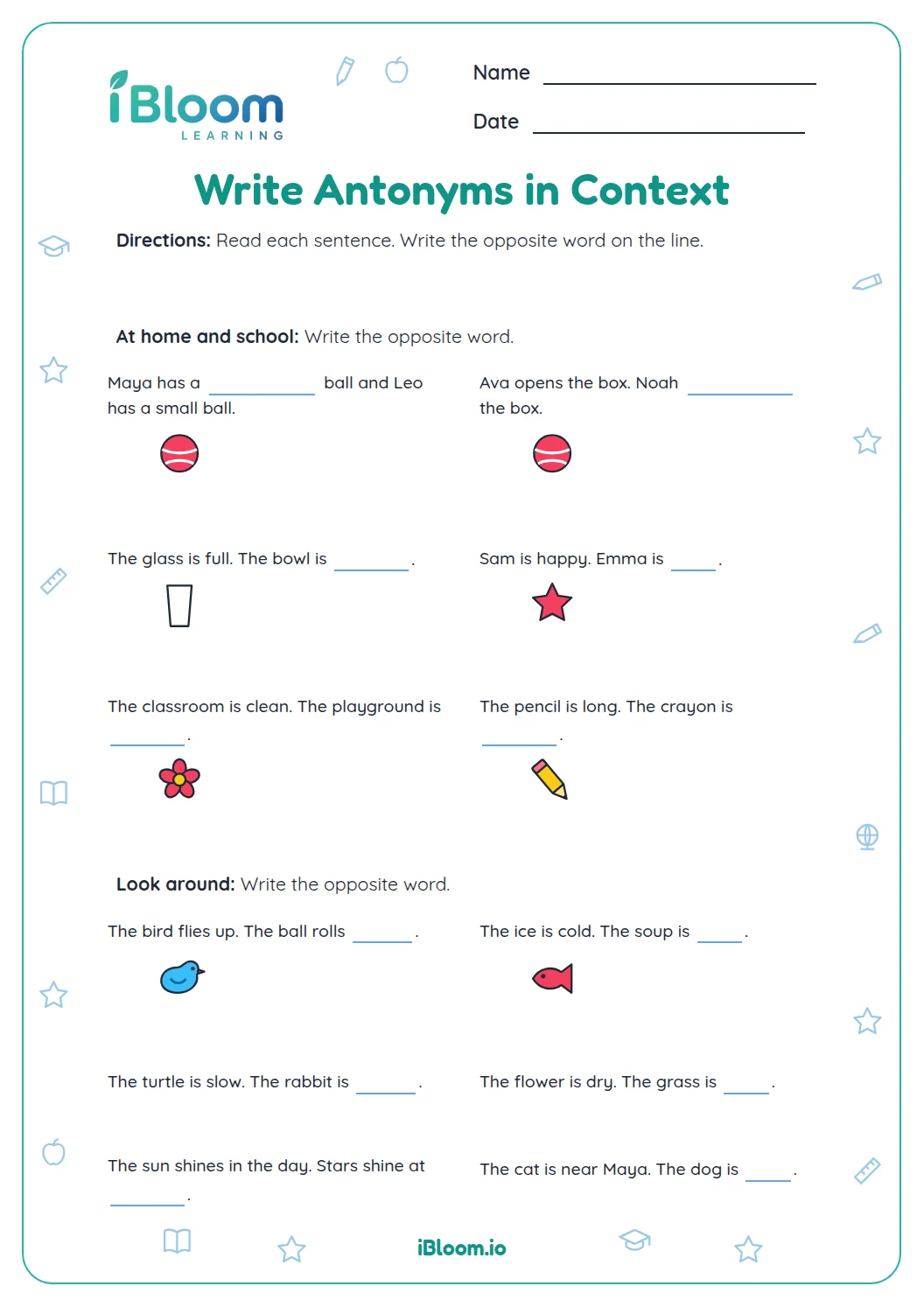
This printable gives preschool and kindergarten learners 14 questions about familiar opposite words. Children choose opposites with picture clues, complete four word pairs, and circle opposite pairs in short rows. Examples include hot and cold, fast and slow, and full and empty. A separate answer key lists the intended choices and word pairs. The sheet practices Common Core L.K.5b by connecting familiar words with their opposites.
Aligned to L.K.5.b
How do pictures support opposite words?
A familiar image gives a concrete starting point. Children say the target word and select a word with a contrasting meaning.
- 1hot → cold
- 2The sun picture gives a familiar hot-weather clue.
How do children finish each pair?
The prompt gives two choices in parentheses. Read the target word, then write the choice that means the opposite.
What happens in the circle-word rows?
Each row includes one opposite pair and one extra word. Children circle both words that contrast in meaning.
How to use this worksheet
- 1Read the target word aloud.
- 2Name the picture clue when one is shown.
- 3Choose or write the word with the opposite meaning.
- 4In each row, find both words that make an opposite pair.
- 5Check each response with the answer key.
Common slips and quick fixes
The mistake
Choosing a related word instead of an opposite.
The fix
Ask whether the two words mean contrasting things.
The mistake
Reading only one word in a circle row.
The fix
Circle both words in the opposite pair.
The mistake
Rushing past the picture clue.
The fix
Name what the picture shows before choosing.
Common Core alignment
The questions connect familiar adjectives and other common words with their opposites.
Connect familiar words with their opposites in choices and word pairs.
On this sheet: Children identify and produce opposite words in picture choices and short word pairs.
Show the official wordingHide the official wording
Demonstrate understanding of frequently occurring verbs and adjectives by relating them to their opposites (antonyms) and to their similar (though not identical) verbs and adjectives (synonyms).
What to practice next
Questions parents and teachers ask
What opposite words appear on the page?
Pairs include hot and cold, up and down, big and small, open and closed, clean and dirty, happy and sad, fast and slow, day and night, full and empty, and near and far. The circle rows add familiar pairs such as tall and short.
How many questions are included?
The worksheet has 14 questions: six picture-supported choices, four word-pair completions, and four circle-word rows. These sections let children hear, choose, and recognize opposite meanings in several short formats, with a separate key for discussion and review. The separate key supports a quick check after each section.
Can I help by reading the words aloud?
Yes. Read the target and answer choices slowly, and invite the child to repeat them. For a circle row, say each word in turn and ask which two have contrasting meanings. The pictures also give a concrete clue for the first section.
What should a child do in the circle-word section?
Each row has three words. The child circles the two words with opposite meanings and leaves the extra word uncircled. The answer key shows the intended pair for each of the four rows, making the section straightforward to check.
What does the answer key include?
The key lists the opposite for every choice and completion, plus the two words to circle in each row. Check answers after each part and ask the child to explain a pair in their own words using an example they know.