
About this worksheet
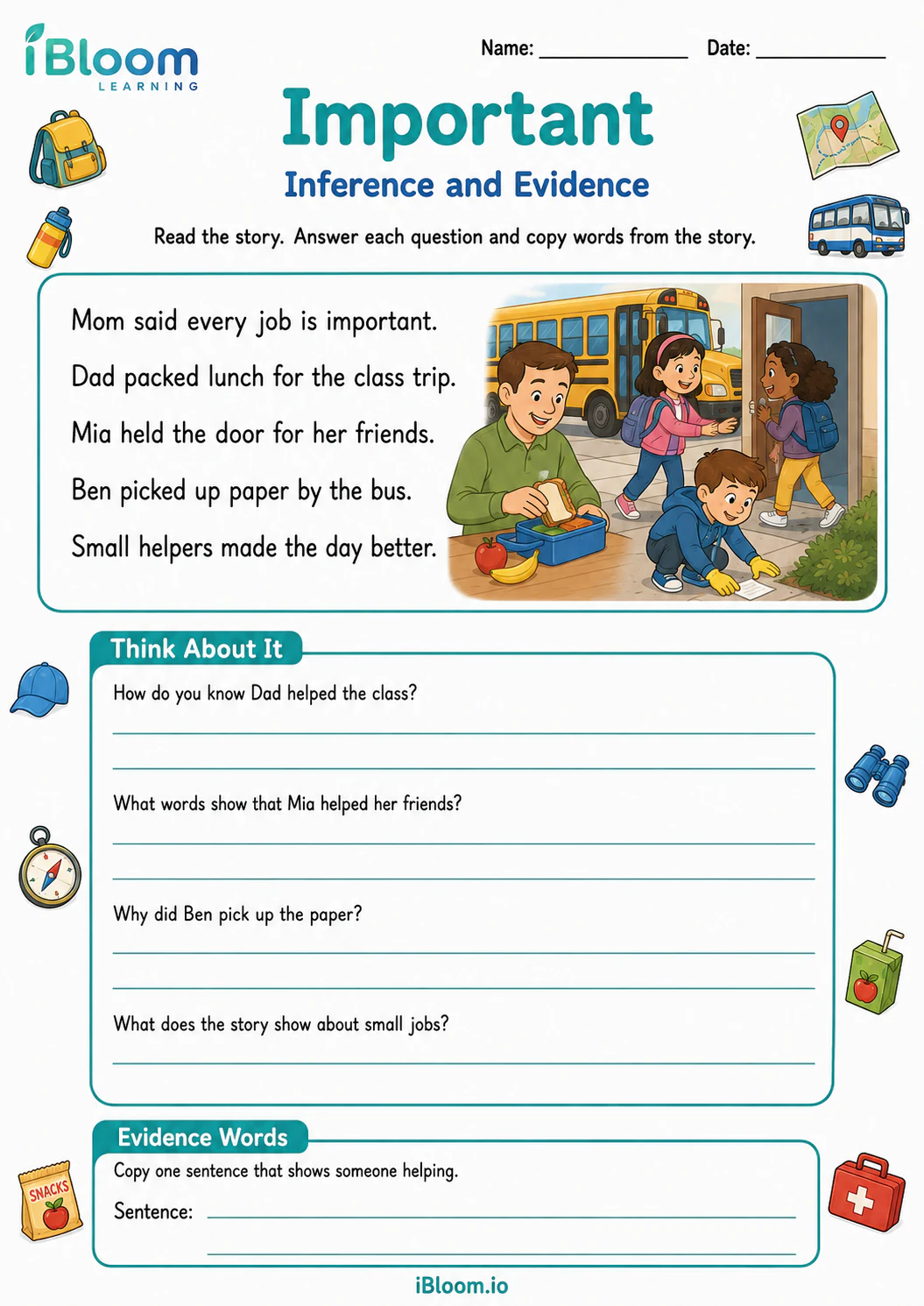
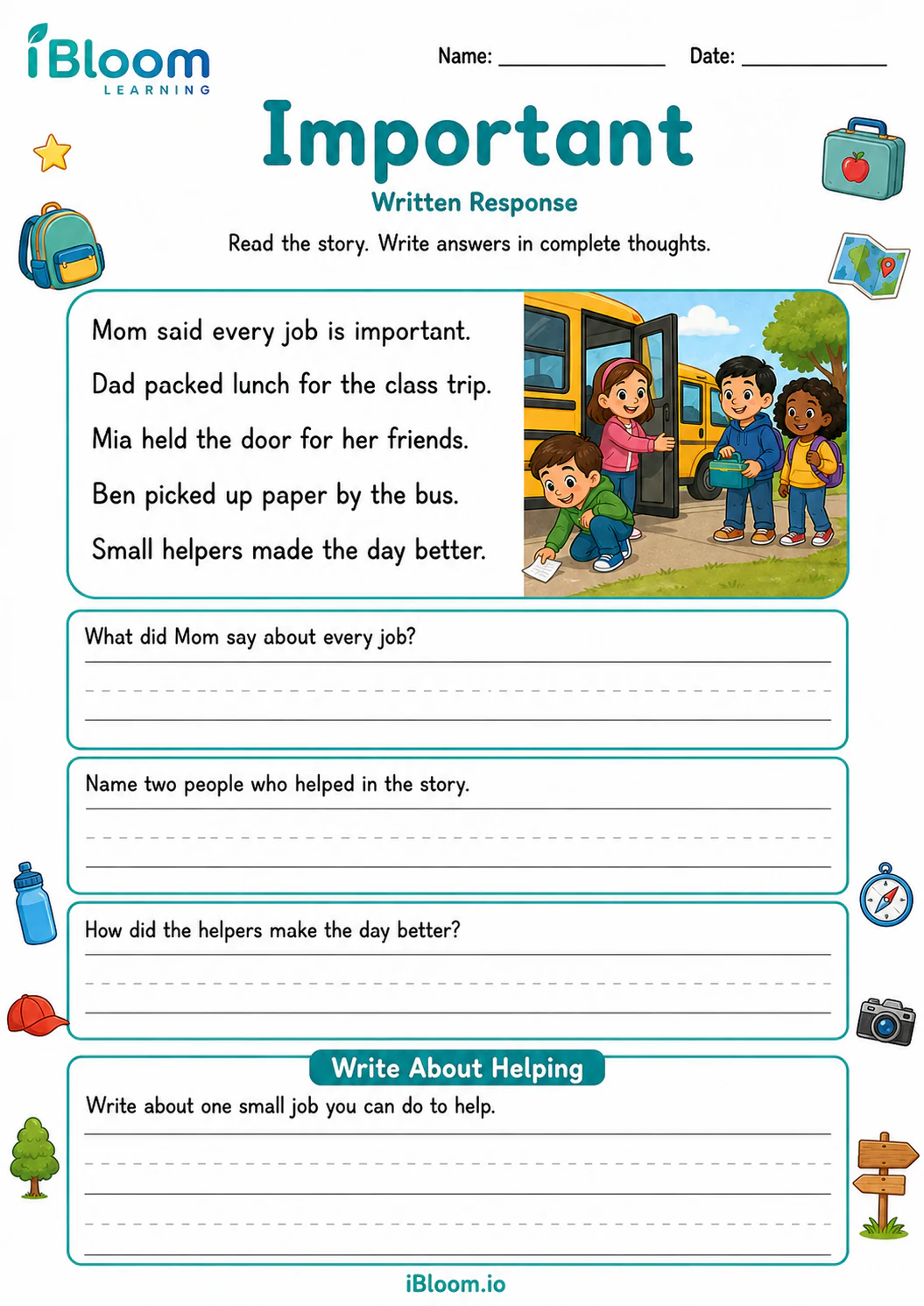
This Grade 1 printable pairs the short story “Important Jobs” with 17 comprehension questions. Children find who did each job, explain the word important, choose the central idea, use story clues, and write about event order and evidence. A separate answer key supplies concise answers and sample responses. The questions practice Grade 1 reading literature standards RL.1.1 and RL.1.2.
Aligned to RL.1.1 and RL.1.2
How do story details reveal the central idea?
In “Important Jobs,” Dad packs lunch, Mia holds the door, and Ben picks up paper by the bus. Each action is a detail; together, the details show how small jobs help everyone.
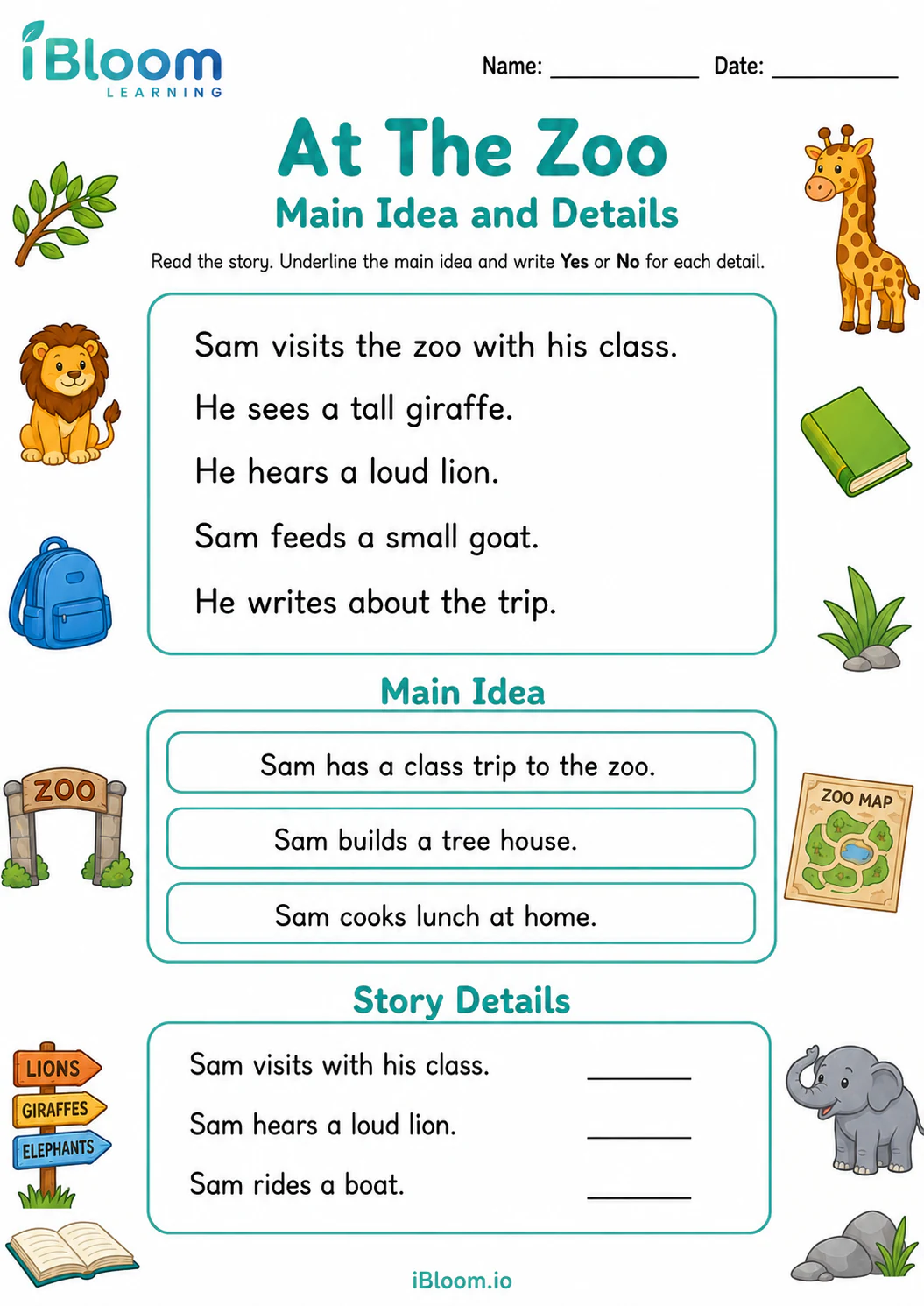
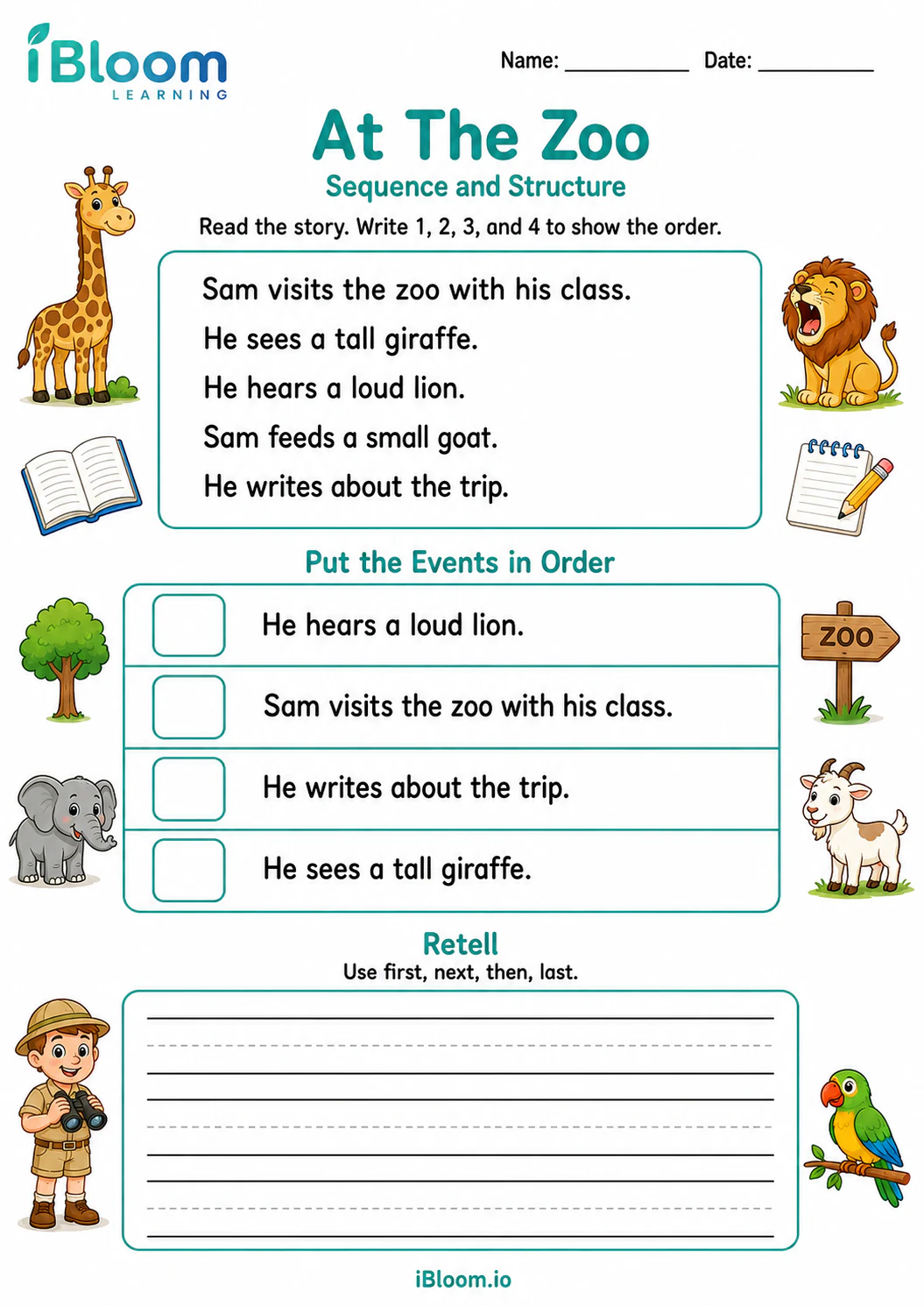
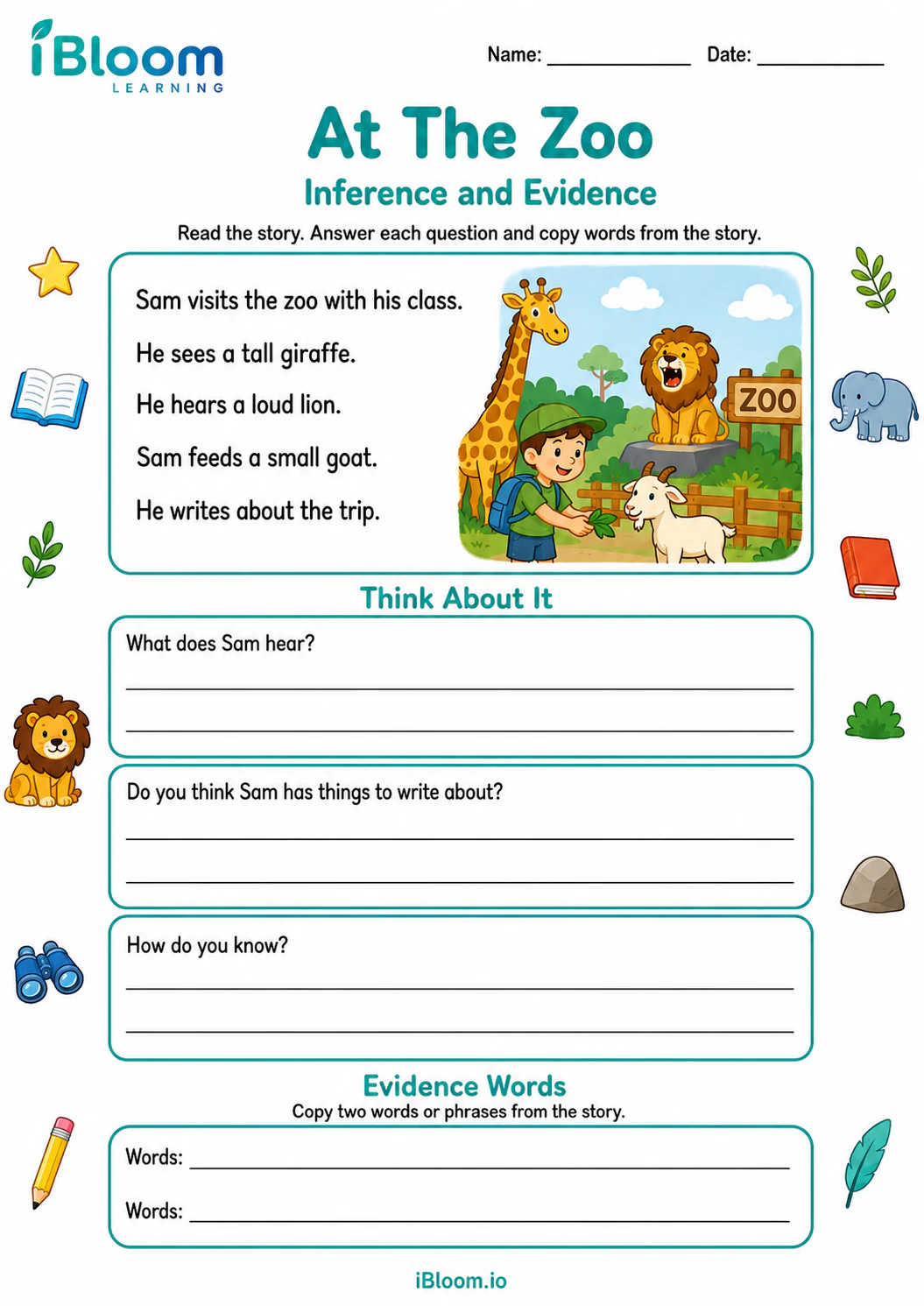
Part B asks about word meaning, central idea, and inference. Part C asks readers to sequence events, name evidence, and retell the story.
- 1Find the sentence: “Ben picked up paper by the bus.”
- 2Match the question to the person in that detail.
- 3Answer: Ben.
How does the worksheet move from details to retelling?
The first questions ask readers to locate explicit information. Later choices ask what “important” means and what the helpers’ actions suggest. Written responses then ask children to recall and explain events.
For an open response, accept wording that matches the passage even when it differs from the sample answer.
How can an adult support a first grader?
Read the passage aloud once, then invite the child to point to the sentence that supports an answer. For the retell, ask what happened first and what Mia or Ben did next.
How to use this worksheet
- 1Read “Important Jobs” once for the whole story.
- 2Return to the passage when a question asks who, what, or where.
- 3Use nearby words and actions to reason about “important.”
- 4Put the events in order before writing a retell.
- 5Check written answers against story details, not exact wording in the key.
Common mistakes and quick fixes
The mistake
Choosing an answer from memory without checking the passage.
The fix
Point to the sentence that gives the detail.
The mistake
Naming one event as the whole central idea.
The fix
Combine the helpers’ actions into a message about small jobs.
The mistake
Retelling events out of order.
The fix
Reread from Dad packing lunch through Mia and Ben helping.
Curriculum alignment
Readers answer about key details and retell the story’s events and central message.
Readers answer questions about details in the “Important Jobs” passage.
On this sheet: Questions ask readers to locate details, explain actions, and support answers from the passage.
Show the official wordingHide the official wording
Ask and answer questions about key details in a text.
Retell key events and identify the story’s central idea.
On this sheet: The written items ask children to sequence and retell key events and explain the story’s central message.
Show the official wordingHide the official wording
Retell stories, including key details, and demonstrate understanding of their central message or lesson.
What to practice next
Make more practice
Further reading
Questions parents and teachers ask
What is “Important Jobs” about?
Mom says every job is important. Dad packs lunch for the class trip, Mia holds the door for her friends, and Ben picks up paper by the bus. The questions ask children to remember these details and explain how small acts help the group.
How can a child find a detail answer?
Return to the sentence that matches the question. For “Who picked up paper?” the passage says Ben picked up paper by the bus, so the answer is Ben. Pointing to the sentence helps connect an answer to evidence in the text.
What does important mean in this story?
In this passage, important means that something matters. The children’s small jobs help the class trip go more smoothly, which supports the word’s meaning. A reader can use both Mom’s statement and the examples of the children helping.
How does the worksheet practice retelling?
The final questions ask what happened first, what followed Dad packing lunch, and how Mia and Ben helped. Children can use the short passage to put those events in order. The answer key gives sample responses while allowing accurate wording of the child’s own.
How many questions and pages are included?
There are 17 questions across four parts, including detail, vocabulary, main idea, inference, evidence, sequence, and retell items. The passage appears alongside the questions for children to revisit, and a separate answer key supplies concise answers and sample responses. Families can accept any written response supported by the story.
Which reading standards are practiced?
The questions ask Grade 1 readers to answer about key text details and retell events with the story’s central message. Those skills align with RL.1.1 and RL.1.2. The curriculum section names both standards and links to their official wording.