


About this worksheet
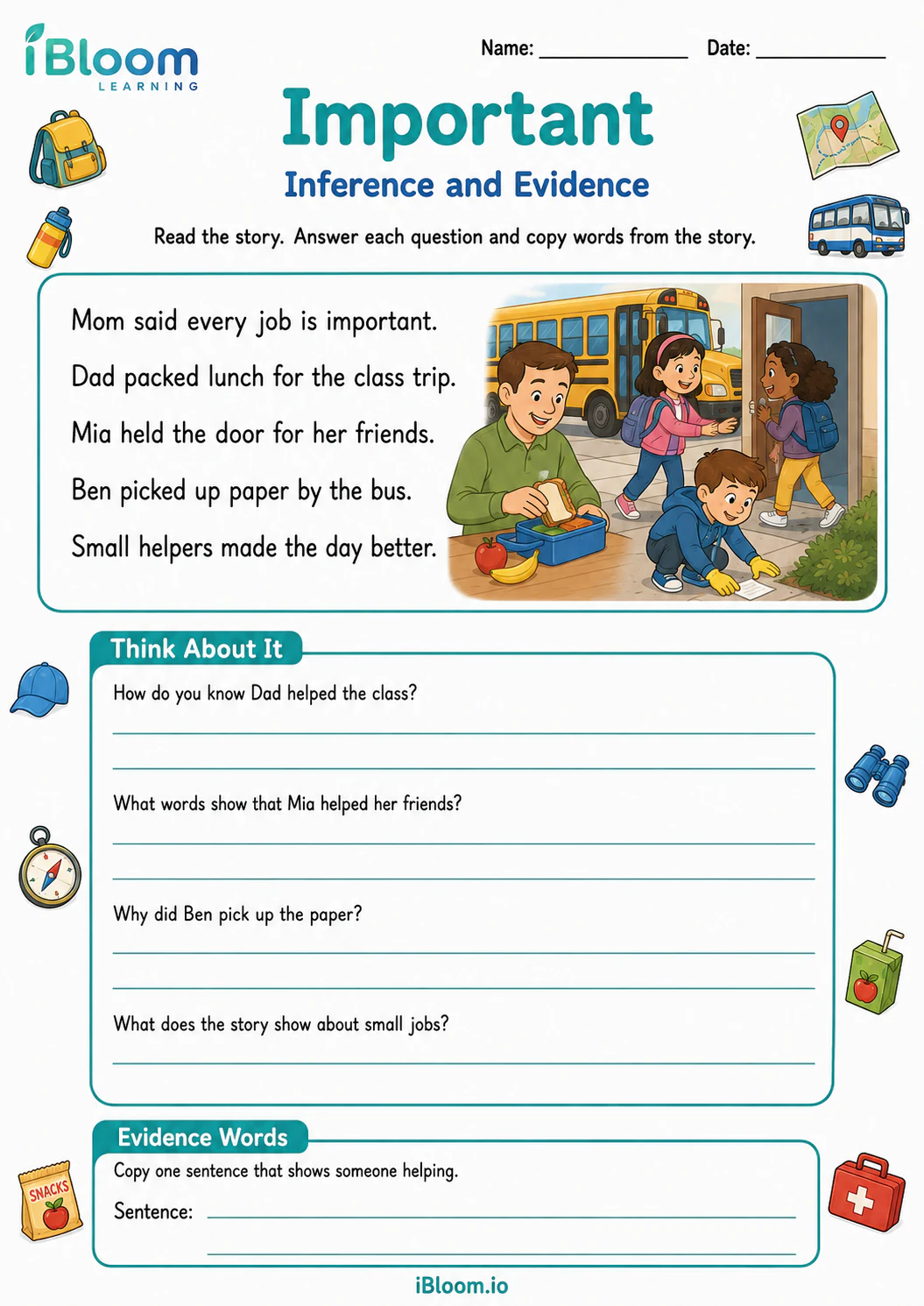
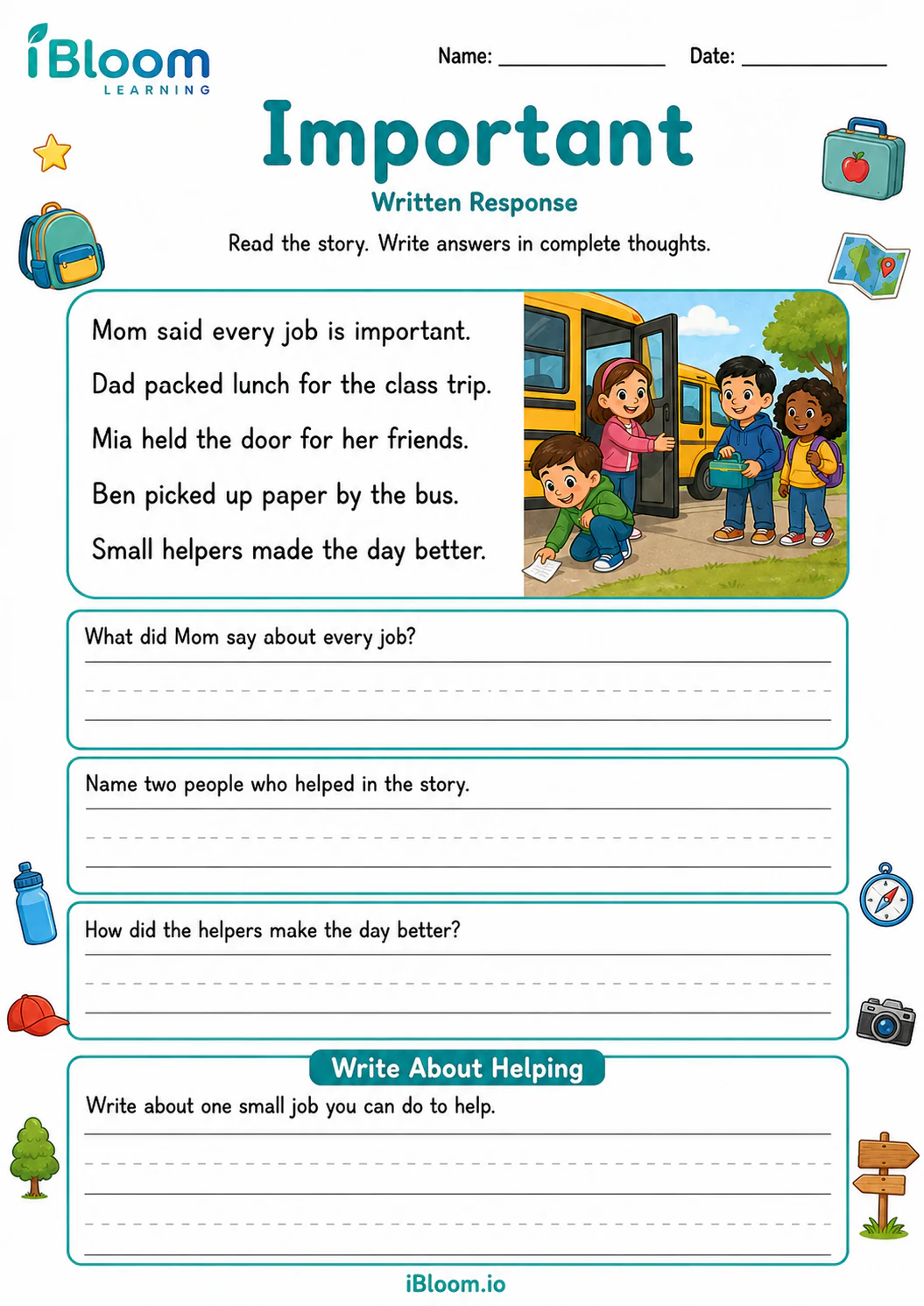
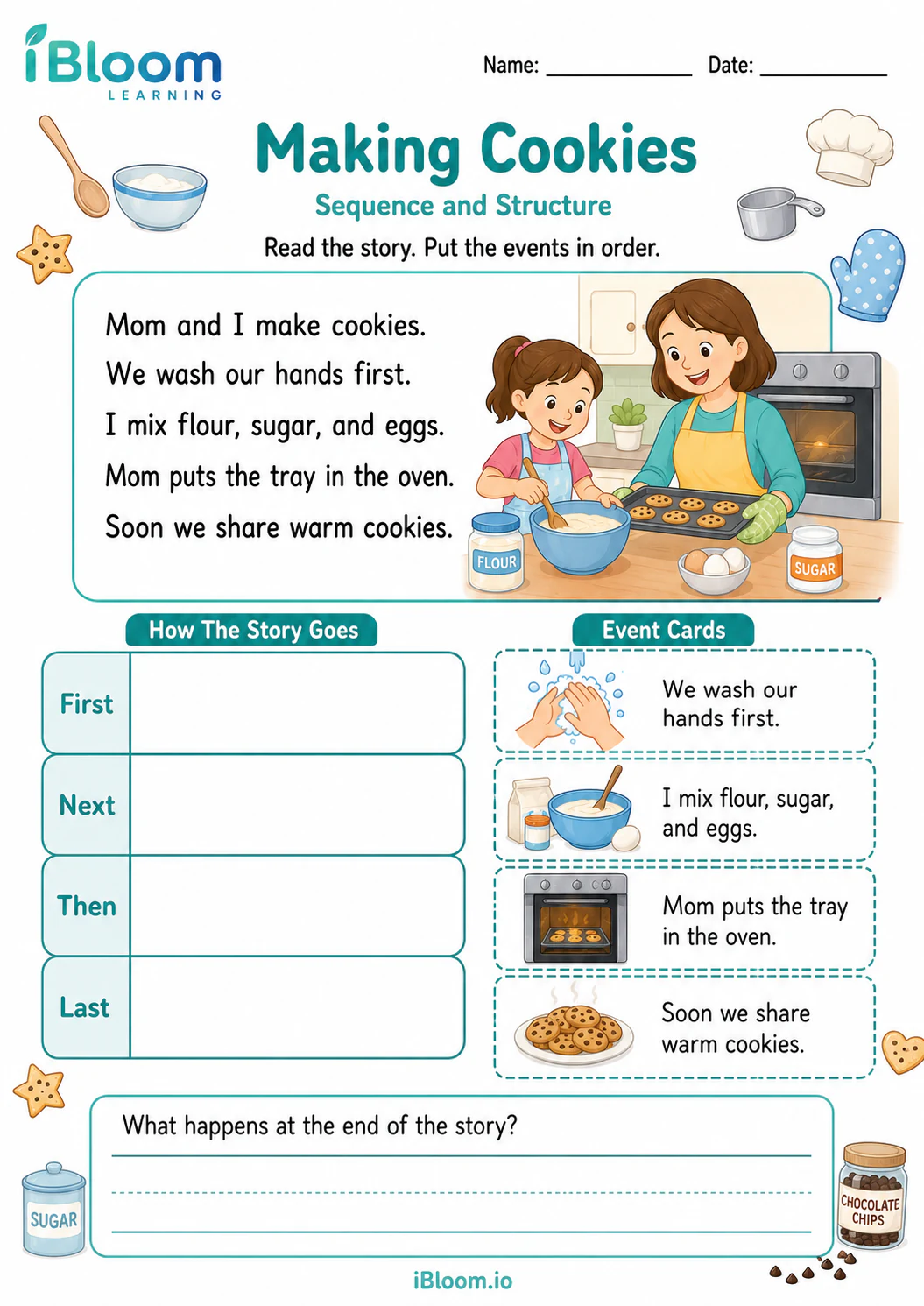
This free Grade 1 printable uses the “Important” class-trip story to practice story structure and sequence. Children read about Dad packing lunch, Mia holding the bus door and Ben picking up paper. They answer six questions about details and the story’s message, order all five events, then retell how the helpers made the morning easier. The work practices Common Core RL.1.2 by retelling key events and showing understanding of the central message. A separate answer key includes the sequence and a sample retelling.
Aligned to RL.1.2
How is Important organized?
The passage follows a class-trip morning. Dad packs lunch, Mia holds the bus door and Ben picks up paper beside the bus. The children’s small jobs make the morning easier.
Part A checks details and the central message. Ask the child to find the sentence that supports each answer.
How should children number the three events?
Part B asks children to number five events from the story. Each event has one place in the order, from Mom’s reminder to the children boarding the bus.
The steps also show how the story develops: several children help in different ways, and Mom recognizes that their work matters.
- 1The story begins with Mom saying every job is important.
- 2That is the first event, so write 1 beside it.
- 3Dad packs lunch after Mom’s reminder, so his event comes next.
- 4Continue through Mia, Ben and the children boarding the bus.
How does the sequence help reveal the lesson?
The final prompt asks the child to retell how the small jobs helped. A complete response names key events and explains that their help made the morning easier.
Children may use different words as long as the retelling keeps the events in order and states the story’s message.
How to use this worksheet
- 1Read the passage aloud or take turns reading it.
- 2Name the people and the job each person does.
- 3Answer the six detail and message questions.
- 4Number all five events, checking the passage for clues.
- 5Retell what the children did and how their help mattered.
Mistakes to notice and how to help
The mistake
Putting Ben’s cleanup before Mia holds the door.
The fix
Reread the passage and follow the events in the order they are told.
The mistake
Mixing up who packed lunch and who picked up paper.
The fix
Match each action to the person named in that sentence.
The mistake
Retelling only one event without the message.
The fix
Include more than one helpful job and explain how the jobs helped the morning.
Common Core alignment
Retell Mia’s actions in order and connect her daily care with the story’s lesson.
On this sheet: Children identify and order key events, select the lesson and write a short retelling.
Show the official wordingHide the official wording
Retell stories, including key details, and demonstrate understanding of their central message or lesson.
What to practice next
Make more practice
Further reading
Questions parents and teachers ask
What story does the worksheet use?
It uses a short class-trip story called “Important.” Mom says every job matters, Dad packs lunch, Mia holds the bus door, and Ben picks up paper. The children’s small jobs make the busy morning easier for everyone, which gives the events a shared message.
How many events should children put in order?
There are five events to sequence, from Mom’s reminder through the children boarding the bus. Children write each number from 1 to 5 once. They can reread the passage to check which event happens first and what comes after it.
What does the story teach?
The story shows that small helpful jobs matter. Dad packs lunch, Mia holds the door, and Ben picks up paper beside the bus. Their actions make the morning easier for everyone. The questions ask children to connect those details to the story’s message.
Can I read the passage aloud?
Yes. Read the passage together or take turns reading its sentences. Pause after each helpful action and ask who did it. This supports the detail questions and gives the child a clear sequence to use when numbering the events. The answer key shows the full order.
What should a good retelling include?
A good retelling names the children’s actions in order and explains that their small jobs helped the class-trip morning. For example, Dad packed lunch, Mia held the door and Ben picked up paper, making things easier for everyone. Other wording is fine if it keeps those ideas.