
About this worksheet
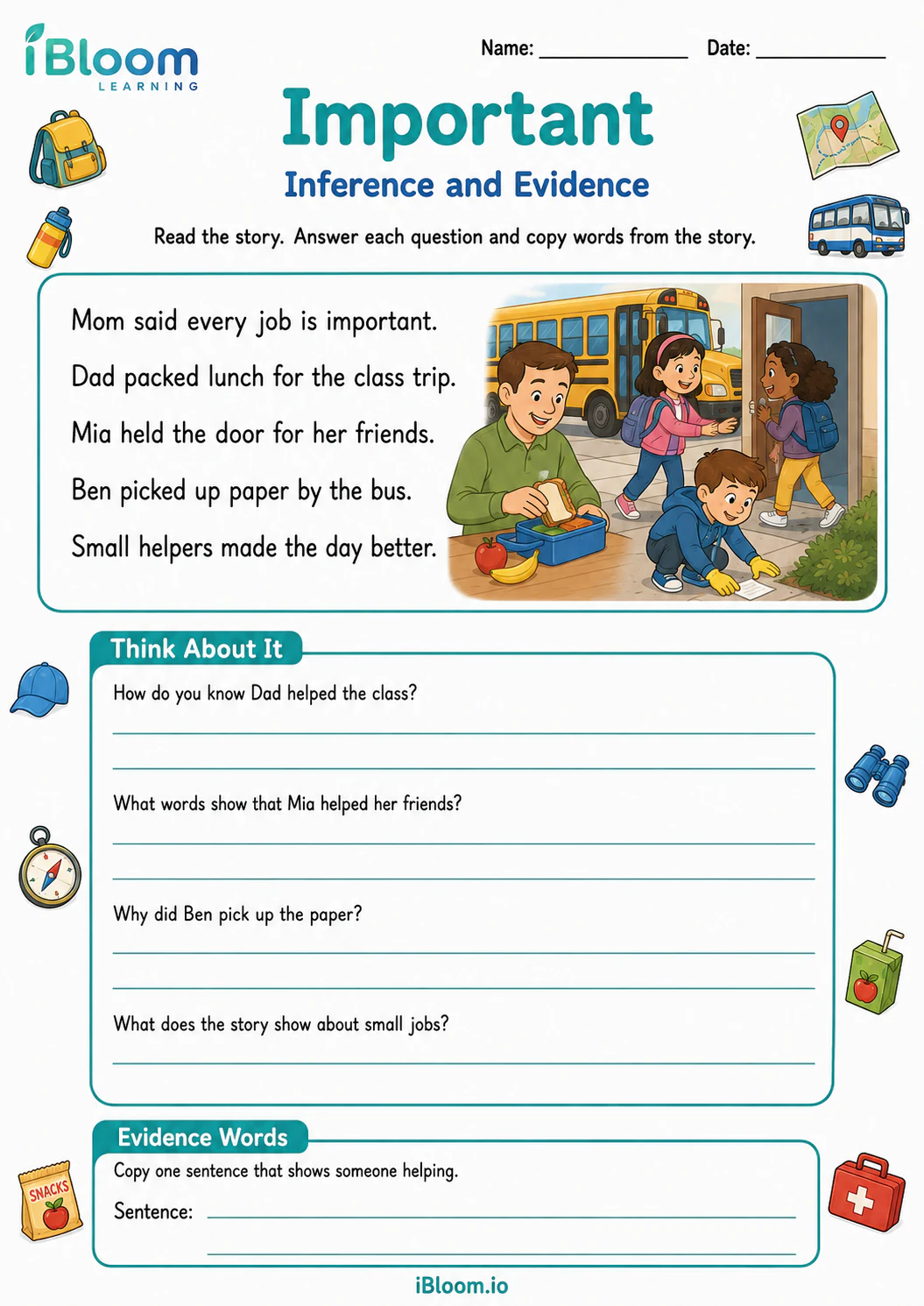
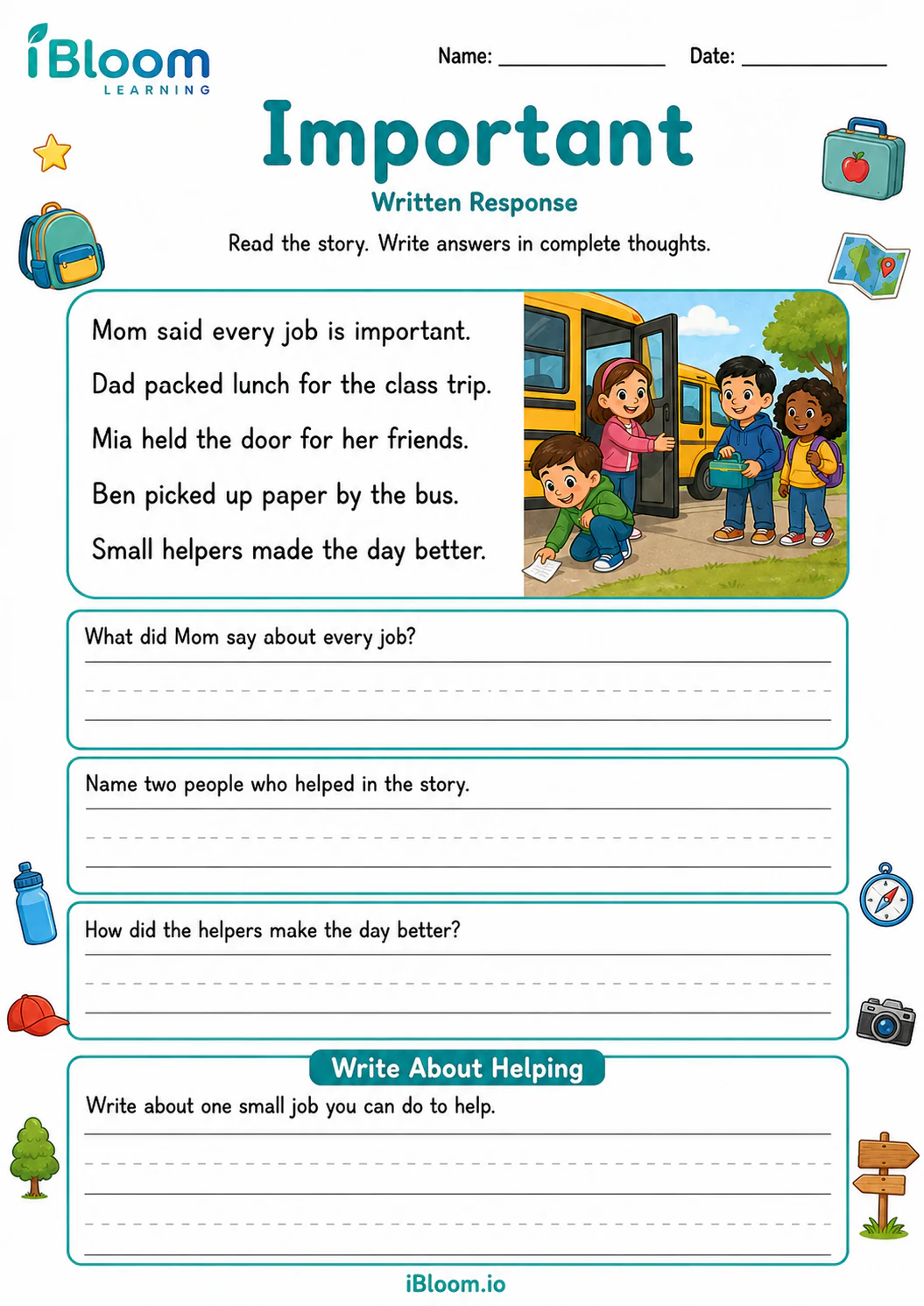
This free Grade 1 reading worksheet pairs the story “Important” with 10 title and vocabulary questions. Dad packs lunch for a class trip, Mia holds a door, and Ben picks up paper near the bus. Children first preview the title in Part B, then read the short story in Part A. Parts C and D ask them to use sentence clues for words such as packed, held, helpers and important, then apply two words in fresh sentences. The vocabulary questions practice Common Core L.1.4a. A separate answer key includes sample title responses and the word meanings.
Aligned to L.1.4a
How can children preview the title?
Read only “Important” first. Invite one idea about what may matter in the story and one question to wonder about. Part B records both before the child reads the passage.
After reading, return to the prediction and question. The class-trip story shows several small jobs that help the group.
How does the story explain held?
Question 4 says Mia held the door for her friends as they carried their things. The words “for her friends” show why she held it: she kept it open so they could pass.
- 1Clue: Mia held the door for her friends.
- 2Think: Her friends were carrying their things.
- 3She kept the door open so they could pass.
- 4Answer: kept it open
Which story words do children practice?
Part C uses packed, held, picked up, helpers, important and thanked. Children connect each word with an action or sentence clue from the class trip. For example, Dad put lunch items in a bag, so packed means put things into a bag.
Part D applies packed and helper in new sentences. These prompts let children check whether a meaning still makes sense outside the story.
How to use this worksheet
- 1Read only the title and invite an idea and a question in Part B.
- 2Read the class-trip story in Part A together or let your child read it aloud.
- 3For each Part C word, point to the action or nearby words that give a clue.
- 4Try the meaning in the sentence before selecting it.
- 5Finish Parts D and revisit the first title thoughts.
Mistakes to notice and ways to help
The mistake
Treating a title prediction as a fact that must match the story.
The fix
Keep the first idea, then talk about what the story added.
The mistake
Thinking held means Mia carried the door away.
The fix
Read the rest of the sentence: she held it for friends carrying their things.
The mistake
Choosing a meaning for packed without checking the sentence.
The fix
Notice Dad put lunch items in a bag; packed means he put them inside.
Common Core alignment
Use sentence clues in a story to understand words and apply meanings in new sentences.
On this sheet: Six questions use story clues about class-trip actions, and two blanks apply packed and helper in new sentences.
Show the official wordingHide the official wording
Use sentence-level context as a clue to the meaning of a word or phrase.
What to practice next
Make more practice
Further reading
Questions parents and teachers ask
Which part should my child do first?
Start with the title and Part B, then read the story in Part A. Use the story clues for Parts C and D. The worksheet directions give that order, so children can make a prediction before they see the story.
Is there one right prediction about the title?
No. The two title responses are open, and the answer key gives samples rather than required wording. Accept a sensible idea and question. After reading, ask which class-trip details might explain why the title is Important. Different predictions can still make sense.
Can I read the passage aloud?
Yes. Read it aloud if decoding is getting in the way of thinking about word meanings. Keep the page visible, point to the clue sentence, and invite your child to explain which words helped. This keeps the story available while your child reasons.
What does important mean in the story?
Important means that something matters. The children’s small jobs—packing lunch, holding the door, and picking up paper—help the class trip go better. Those details give a reason for the title and show that several people helped. Each action makes a difference.
How do the last two blanks extend vocabulary practice?
They use packed and helper in new situations. A child packs a backpack by putting items inside, and a helper is someone who helps. Ask your child which sentence clues support each word, then try another example together.