





About this worksheet
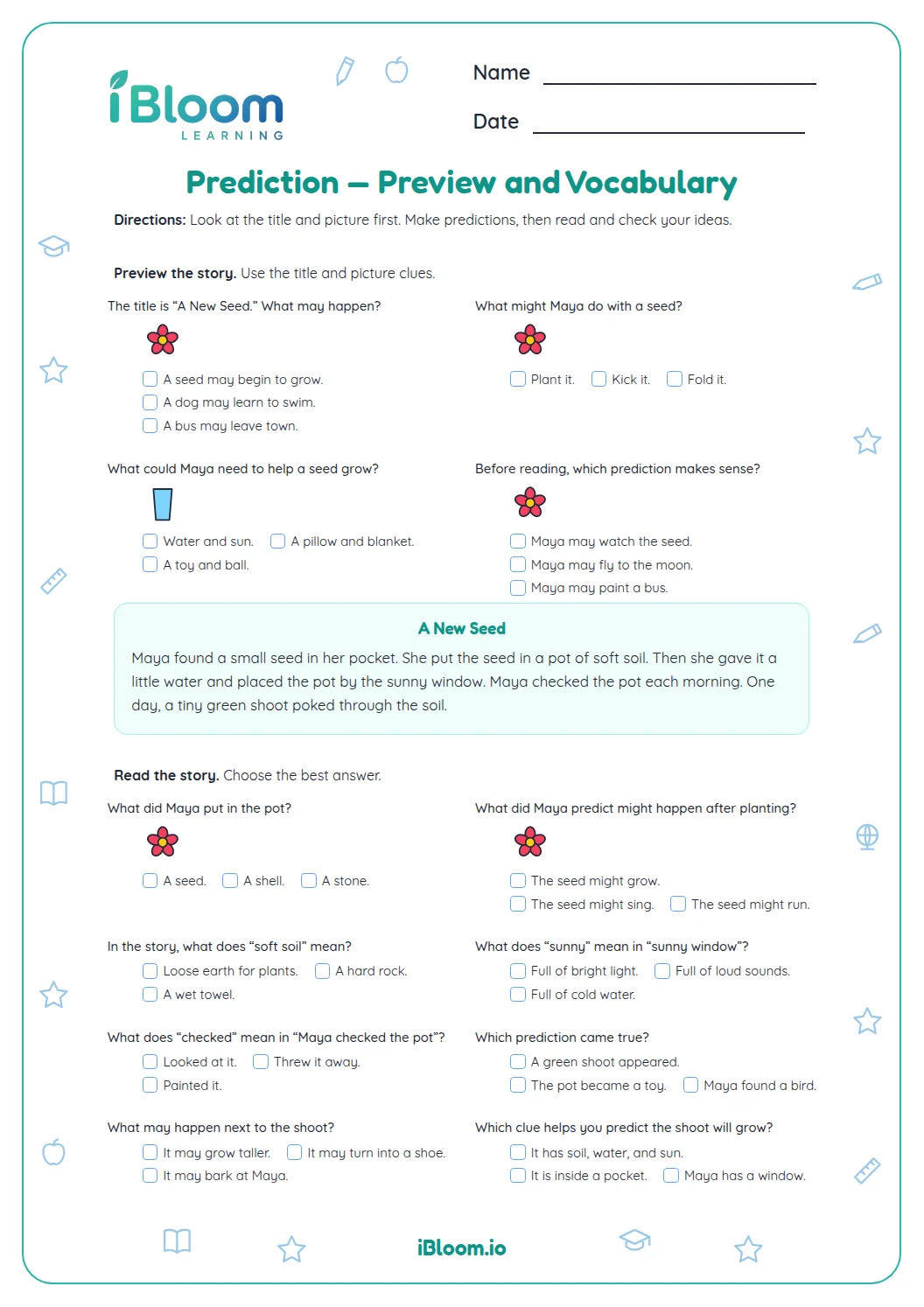
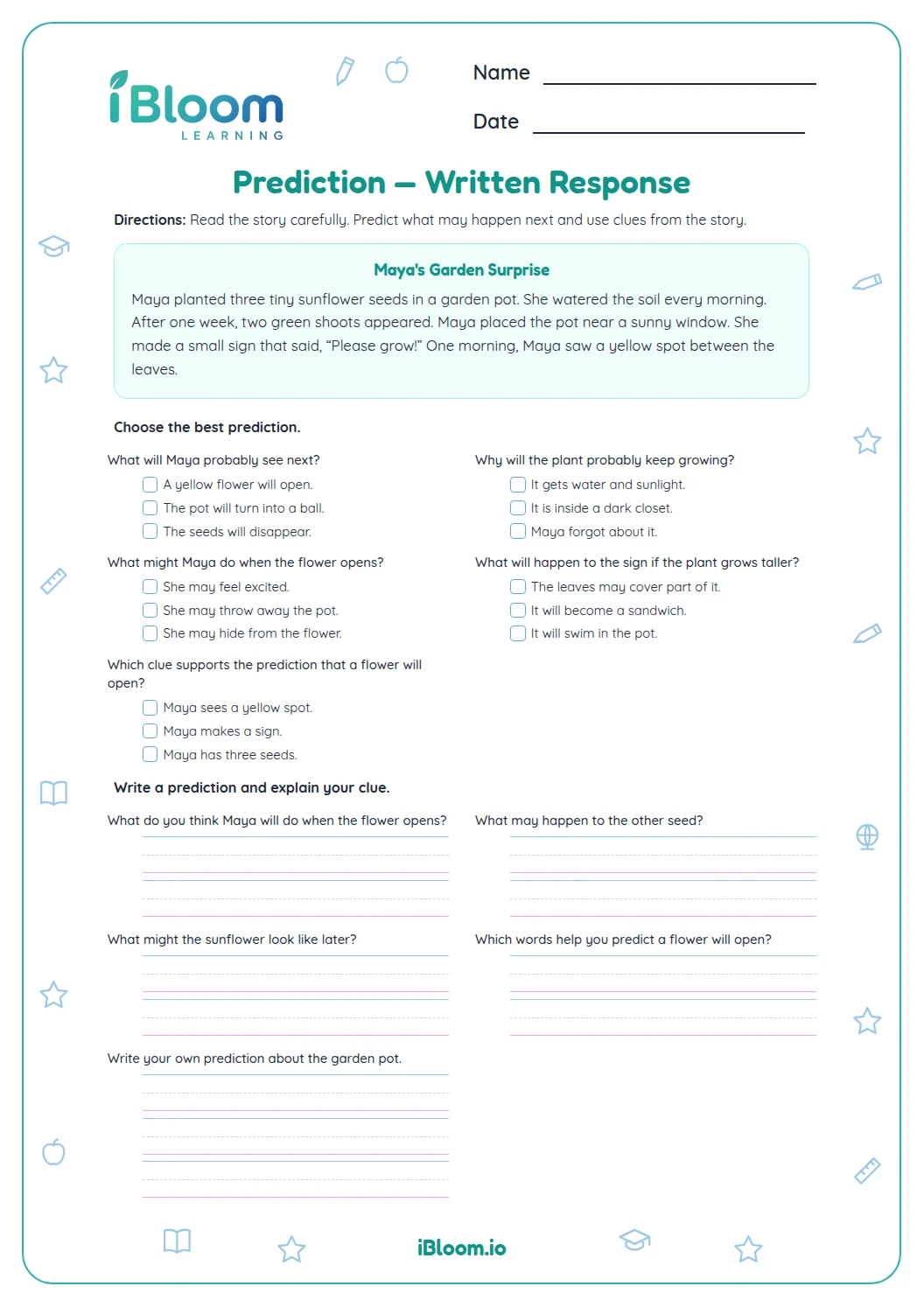
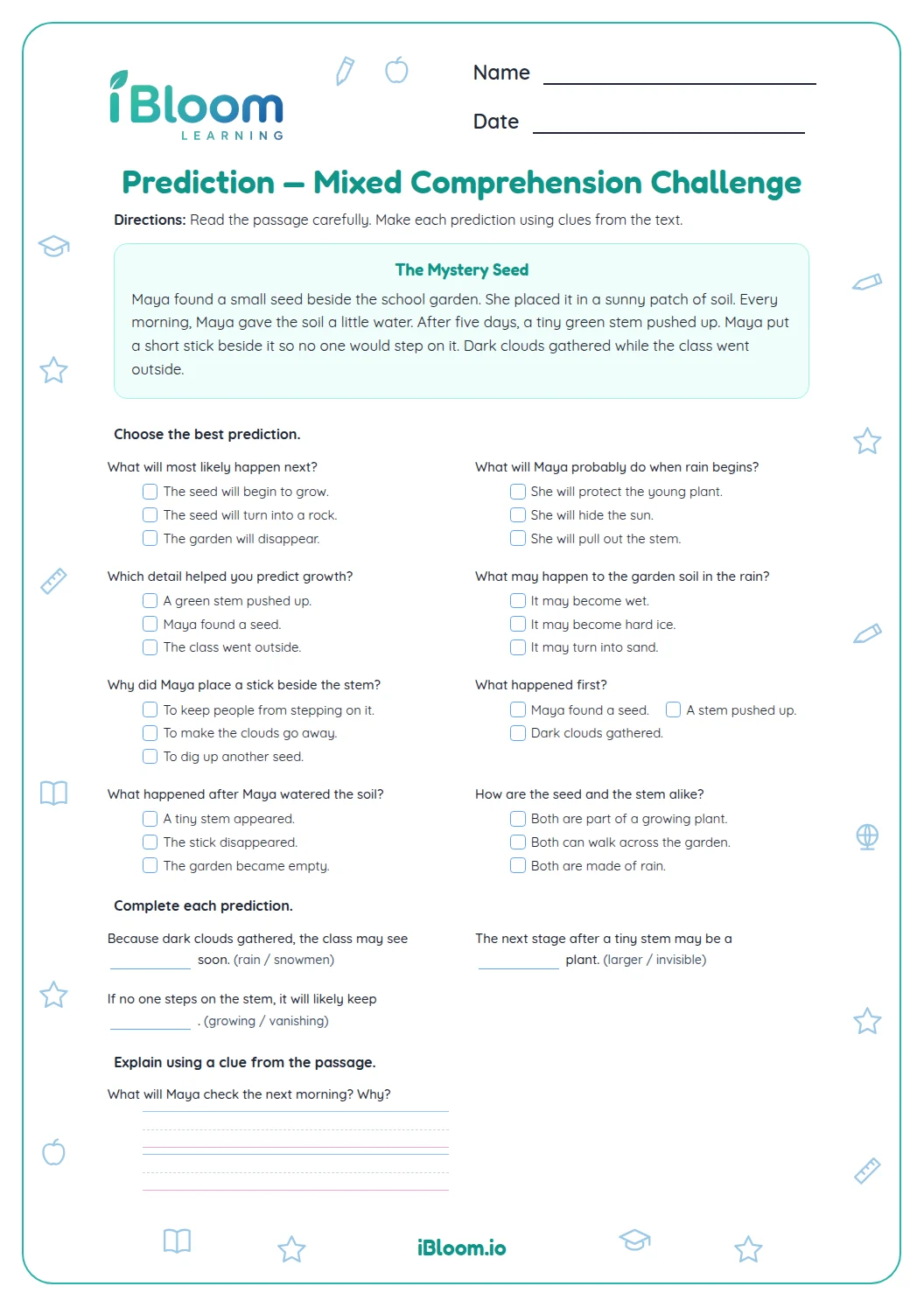
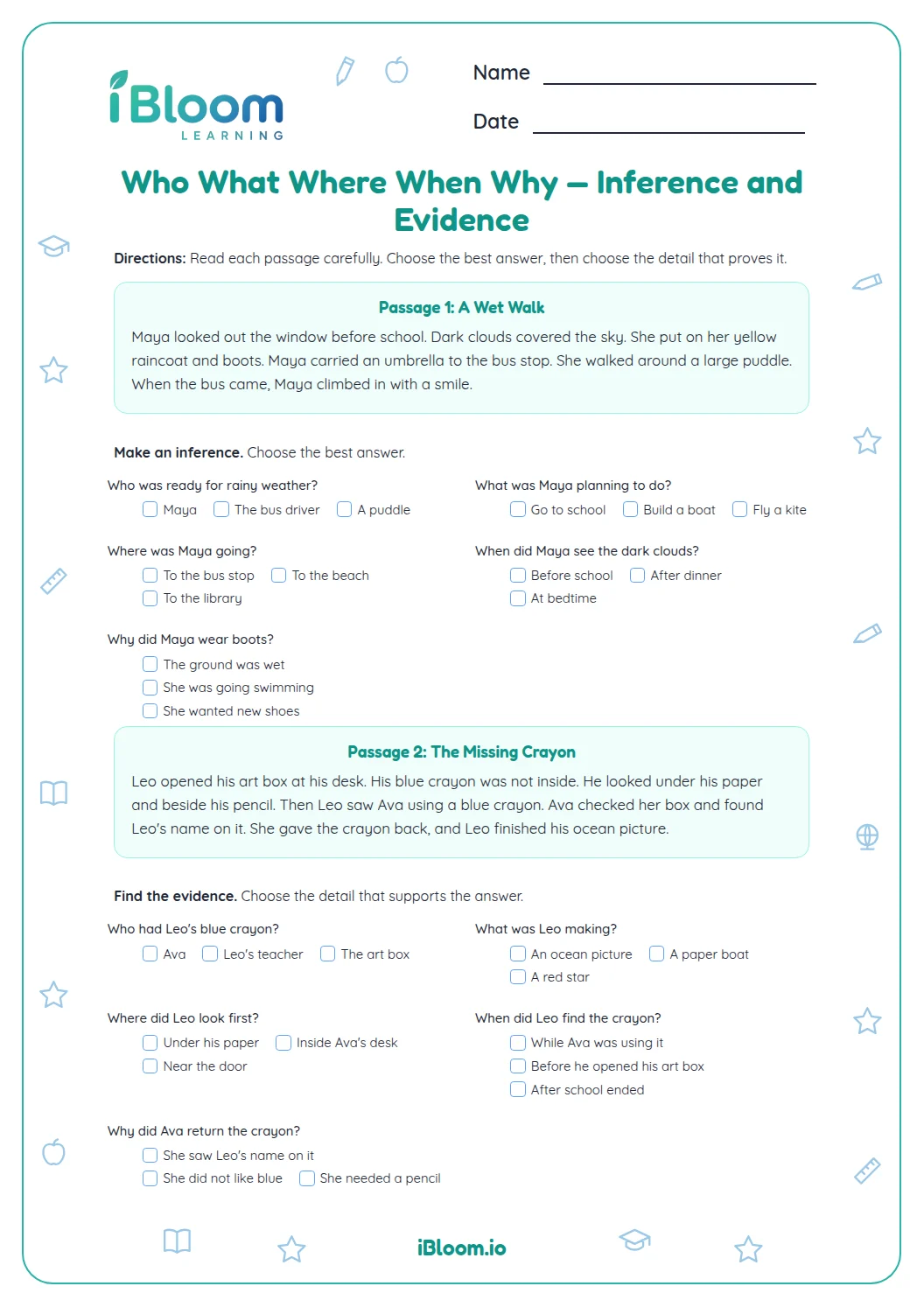
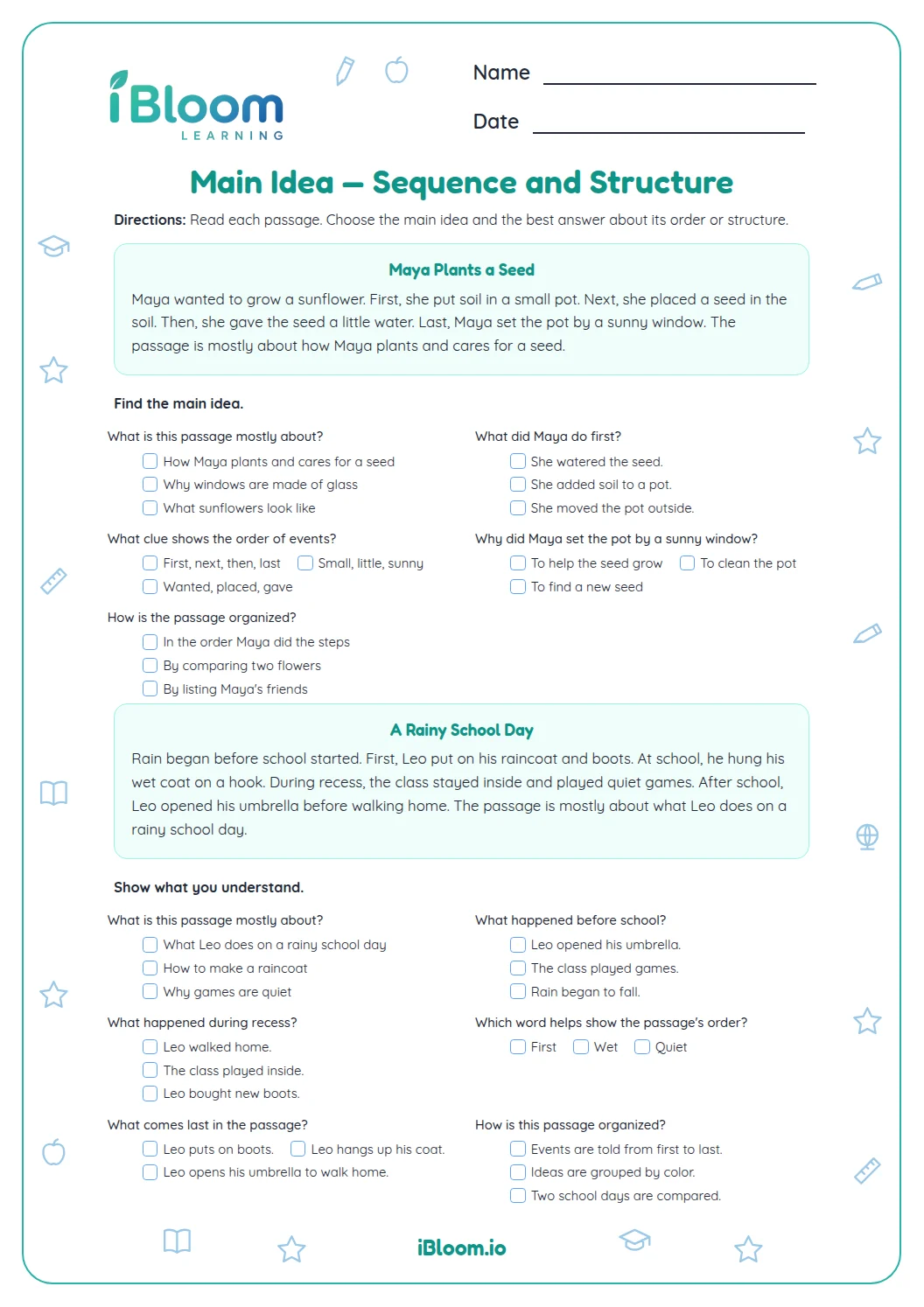
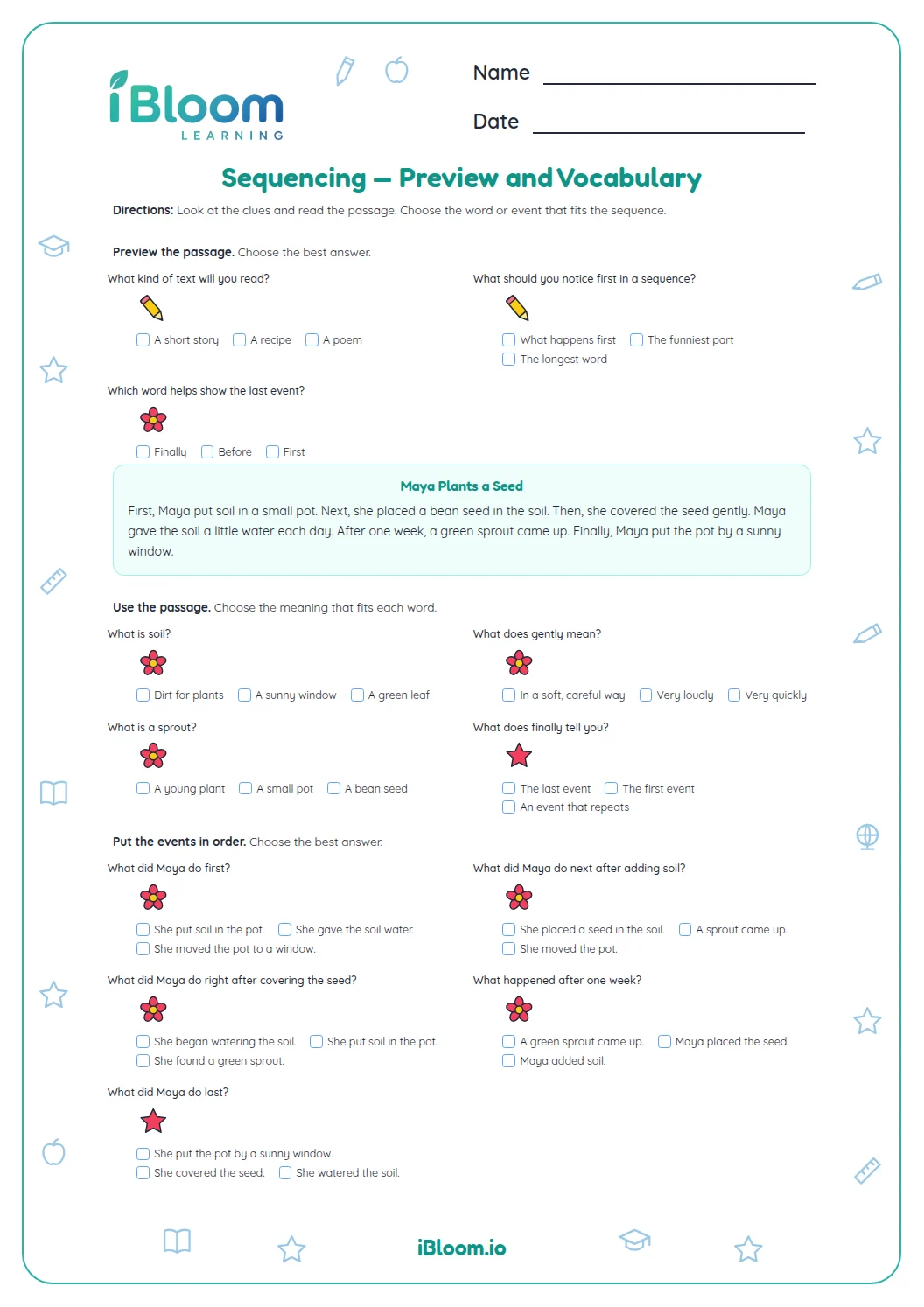
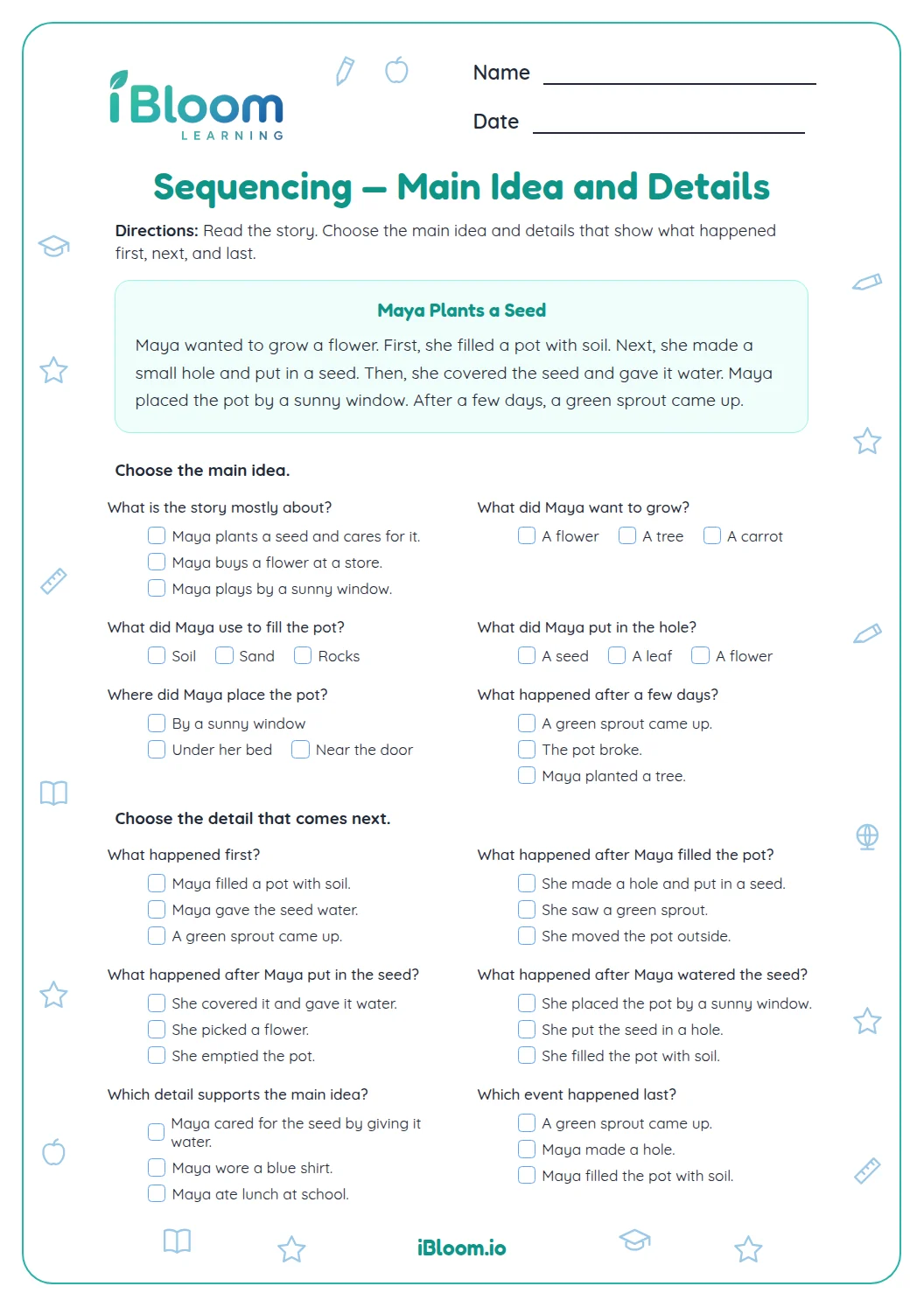
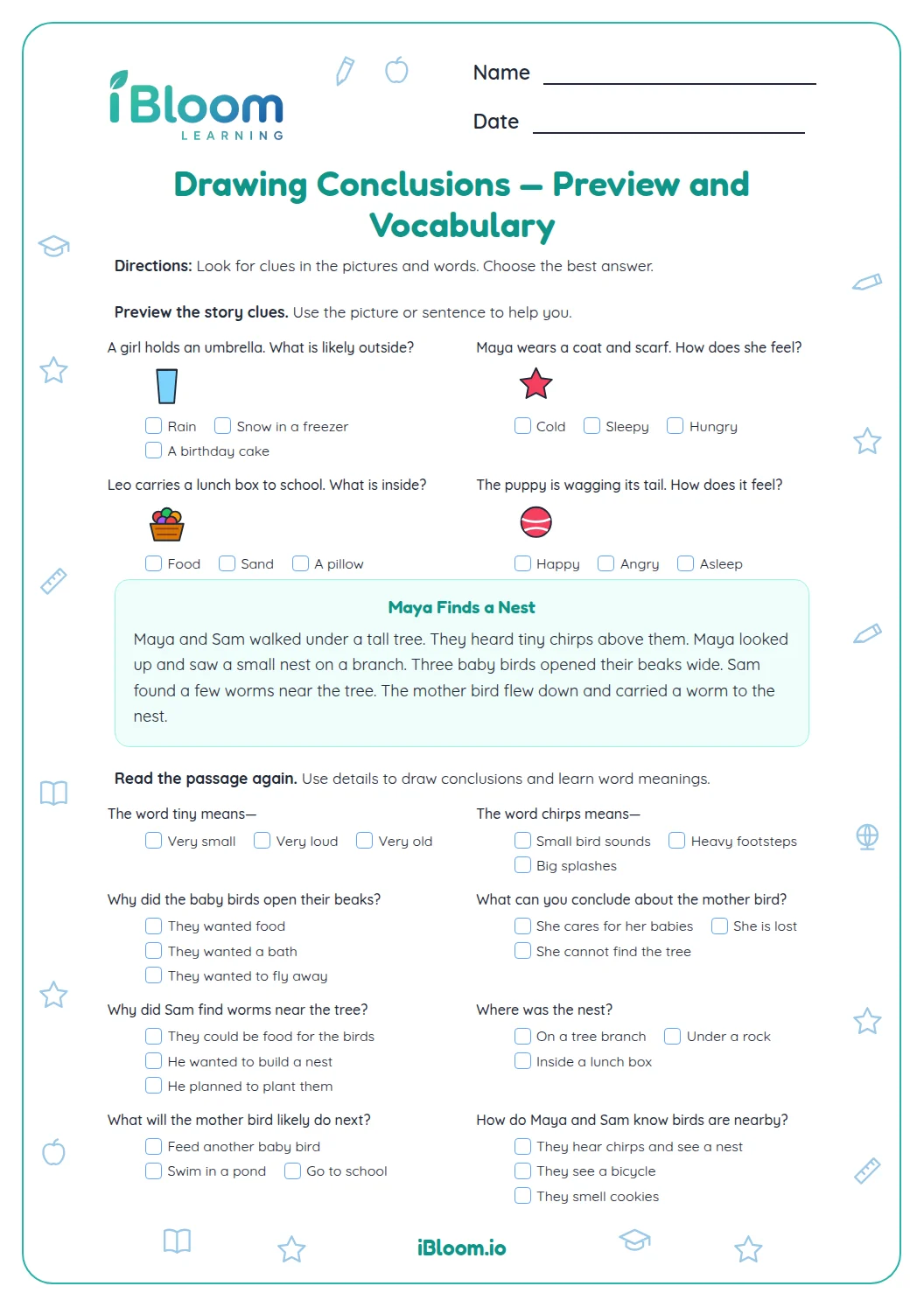
This free printable Grade 1 worksheet uses a short story about Maya caring for a bean seed to connect details, main idea and prediction. After the passage in Part A, four Part B questions find details and connect Maya’s daily checks and the green tip to likely next events. Four Part C questions ask for the main idea, a lesson and likely next events. Two written responses invite a prediction with a clue and a brief retelling. These ten questions practice Common Core RL.1.1 and RL.1.2. A separate answer key gives the correct choices and sample written responses.
Aligned to RL.1.1 and RL.1.2
What makes a prediction fit this story?
A prediction fits when it follows from a detail already in the story. Maya has watered the seed, kept it by a sunny window and seen a green tip. Those details make more growth a reasonable prediction.
Use may or might when talking about a prediction. The story ends with Maya wondering about tomorrow, so the reader is using clues to suggest a possible next event.
- 1Story clue: A tiny green tip came up.
- 2Prediction: The shoot may grow taller.
- 3Connect them: It may grow taller because it has begun to grow.
How is the main idea different from one detail?
The main idea connects the story’s events: Maya cares for a seed. The small pot and sunny window are details that help show what she does. They support the main idea but do not tell the whole story by themselves.
Part C also asks for a lesson. Care helps things grow fits Maya’s repeated attention to the seed and the new green tip.
What should the written responses include?
Question 9 asks what Maya may do if the soil is dry tomorrow and asks for a story clue. A child can predict that she will add a little water because the passage says she waters the seed when the soil is dry. The key gives one sample; another supported prediction can also work.
Question 10 asks children to retell what happens. A short response should include planting the seed, caring for it and seeing a green tip. The order matters more than copying the exact words of the passage.
How to use this worksheet
- 1Read the story once all the way through, helping with unfamiliar words.
- 2Reread Part B to find what Maya does and which details support continued care and growth.
- 3Choose the Part C main idea and lesson by thinking about several events together.
- 4Discuss the two predictions and name a clue that makes each likely.
- 5Write a next event with one clue, then retell the story in order.
- 6Compare with the key and accept different wording that stays faithful to the passage.
Mistakes to notice and fix
The mistake
Calling “a small pot” the main idea.
The fix
Ask which choice tells what Maya does through the whole story; caring for the seed connects the details.
The mistake
Giving a prediction that already happened, such as planting the seed.
The fix
Find the ending, then ask what could happen after the green tip appears.
The mistake
Predicting a fully grown bean plant the very next morning.
The fix
Use the tiny green tip as a clue to size and time. A slightly taller shoot is a better fit for one more day.
Common Core alignment
Answer detail questions and use story clues to support a prediction.
On this sheet: Children identify Maya’s actions and use the green shoot as evidence for what may happen next.
Show the official wordingHide the official wording
Ask and answer questions about key details in a text.
Retell Maya’s seed story and connect its details to a lesson about care.
On this sheet: Children identify the main idea and lesson, then retell what Maya does and what changes.
Show the official wordingHide the official wording
Retell stories, including key details, and demonstrate understanding of their central message or lesson.
What to practice next
Make more practice
Further reading
Questions parents and teachers ask
What is the main idea of Maya’s seed story?
The main idea is that Maya cares for a seed. She plants it, gives it water and sunlight, and checks it each day. The green tip shows a change after that care. These details work together, while the pot’s size alone describes just one small part.
What prediction should my child make?
A reasonable prediction is that the shoot may grow taller or develop a leaf. The story says a tiny green tip has appeared and Maya keeps caring for it. Ask your child to name one of those clues when explaining the prediction, using words such as may or might.
Can I read the passage aloud to my first grader?
Yes; read it aloud while your child follows the text and points to useful details. The questions focus on understanding the story and using its clues. After listening, the child can reread short sentences to locate answers, then explain a prediction before writing it down.
How much should my child write for questions 9 and 10?
One or two short sentences per question are enough. For question 9, say what Maya may do if the soil is dry and give a clue from her earlier care. For question 10, retell the planting, care and green tip in order. The key offers compact samples, but the child can use different words for the same ideas.
How do the main idea and lesson differ here?
The main idea tells what the story is mostly about: Maya caring for a seed. The lesson is an idea readers can take from those events: care helps things grow. Have your child point to Maya’s watering and checking, then connect those actions to the green tip appearing.