
About this worksheet
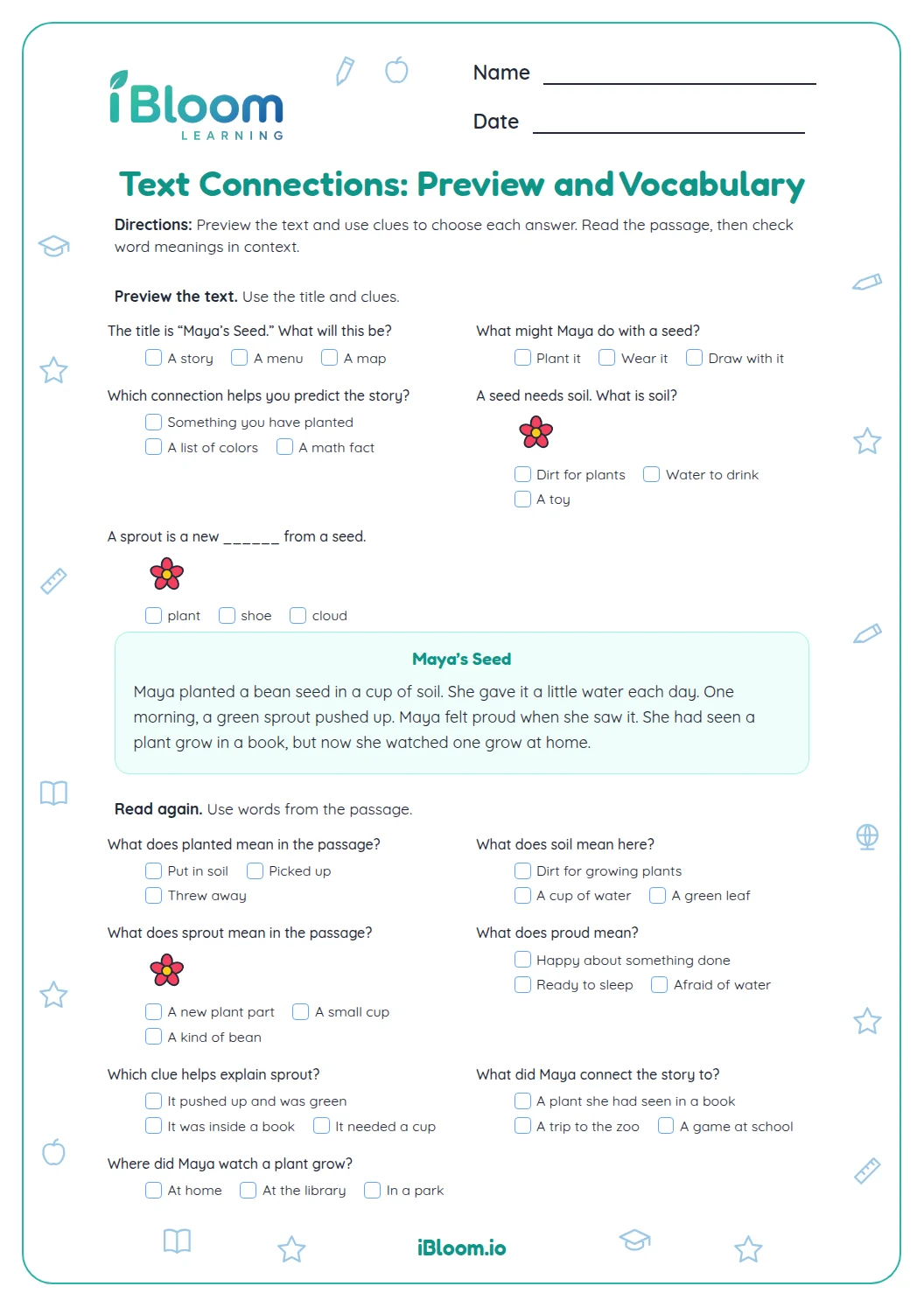
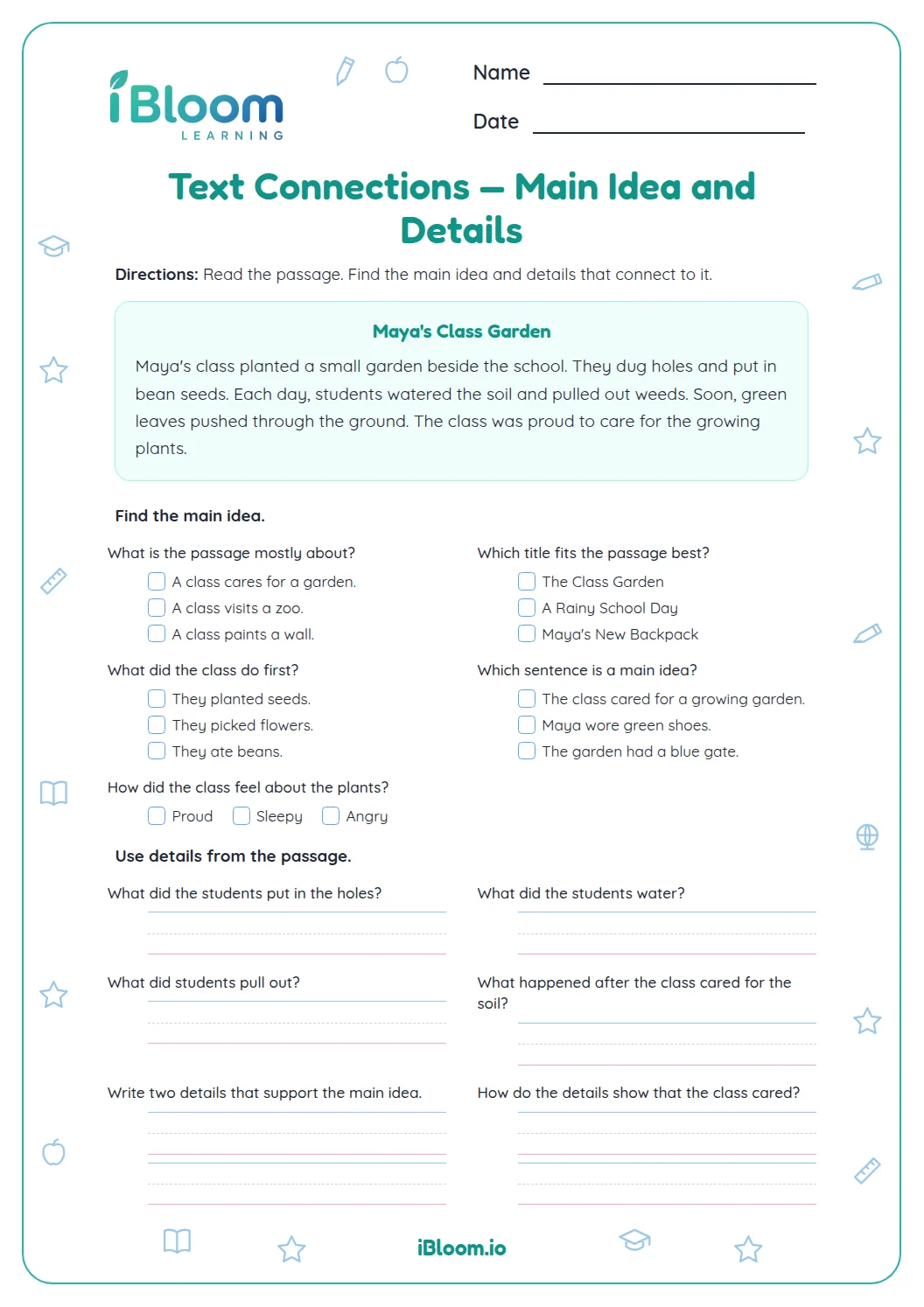
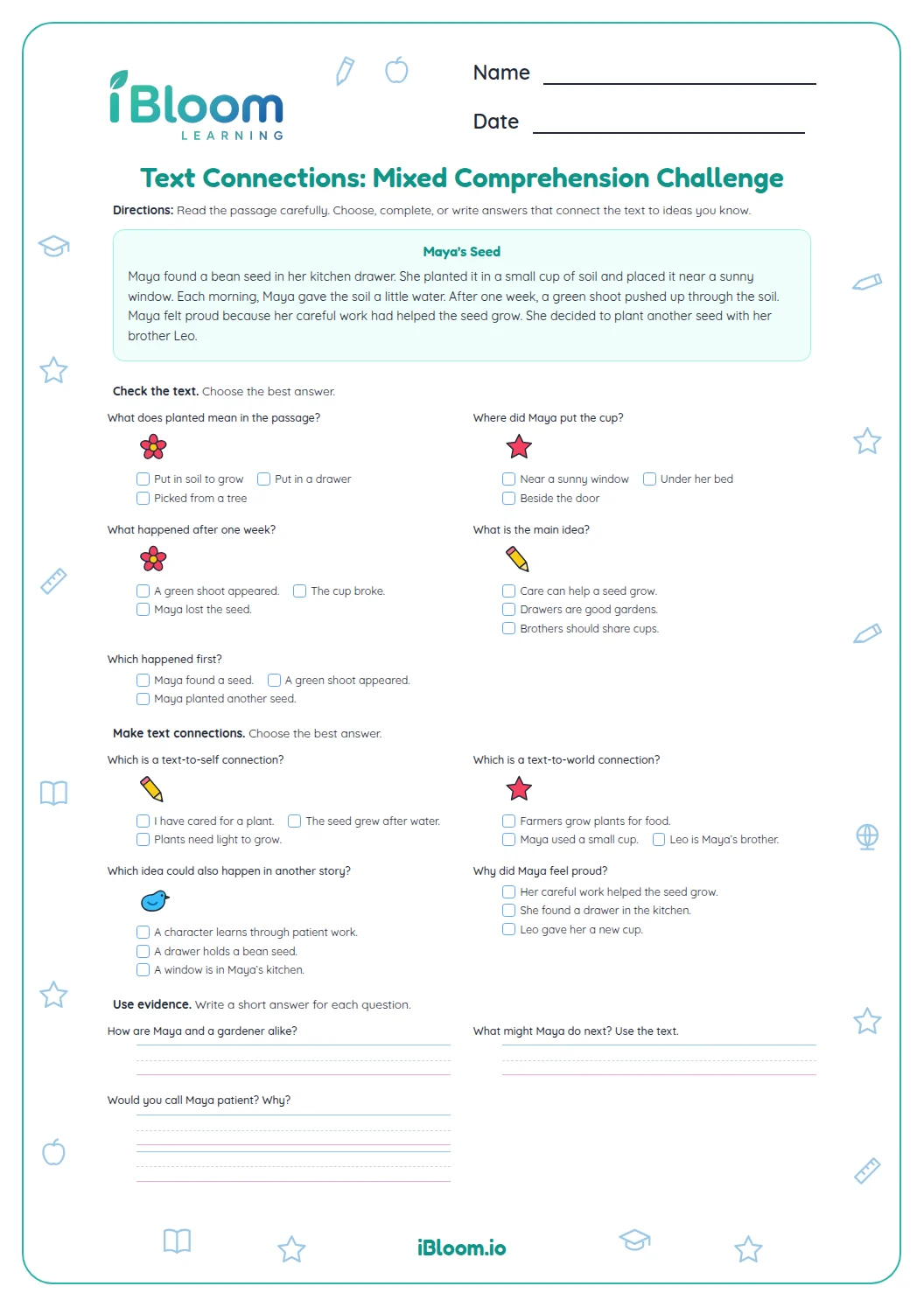
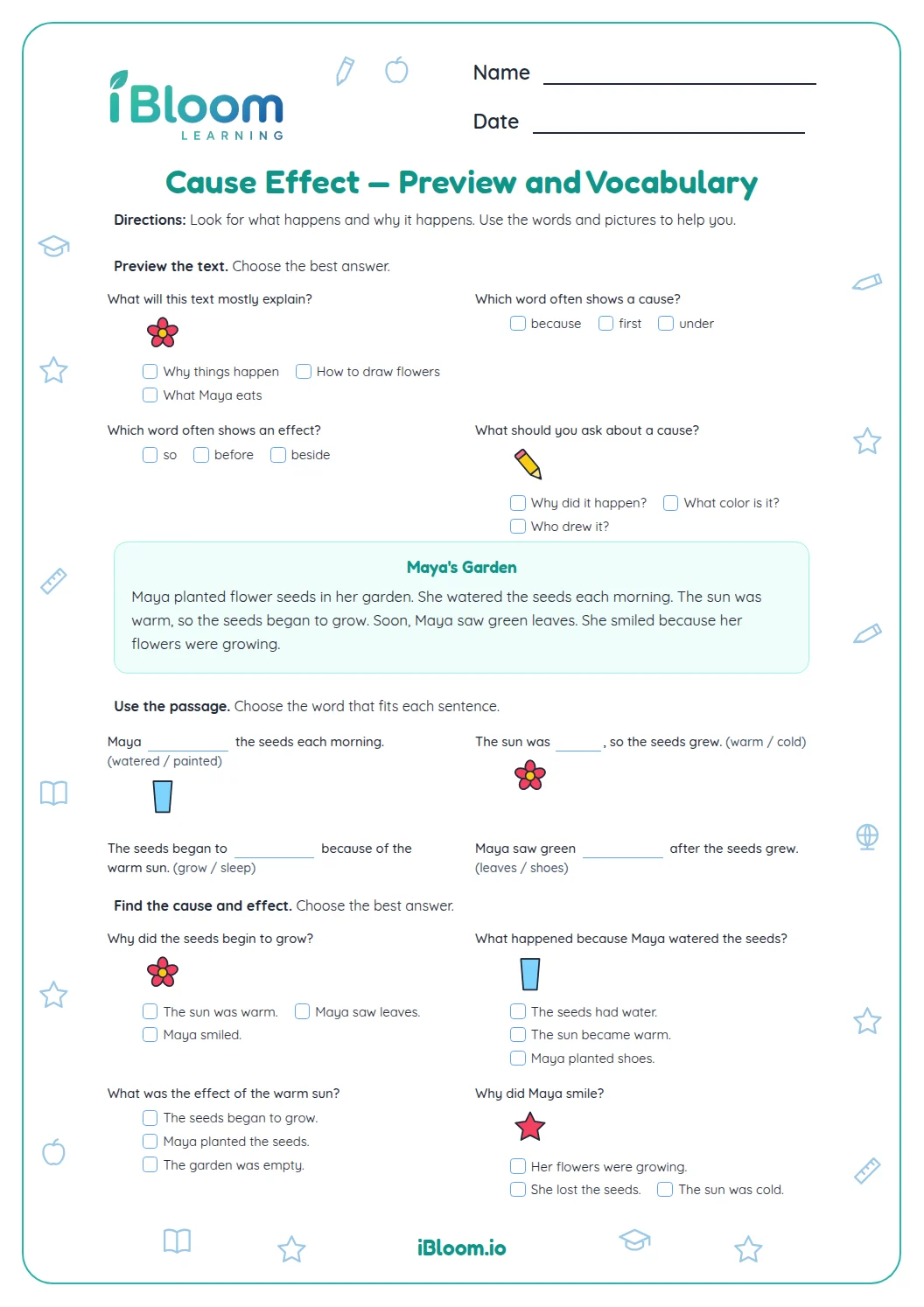
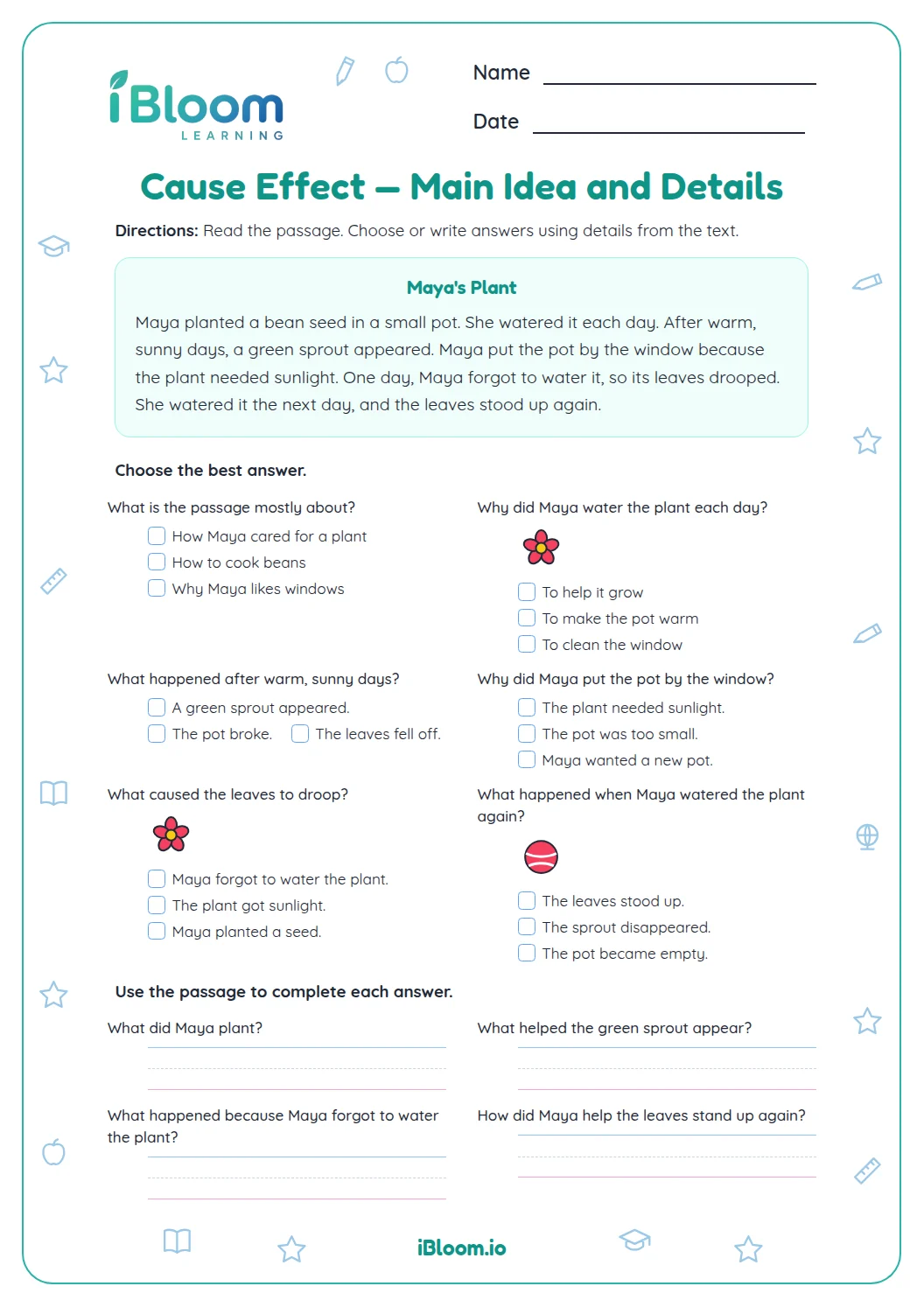
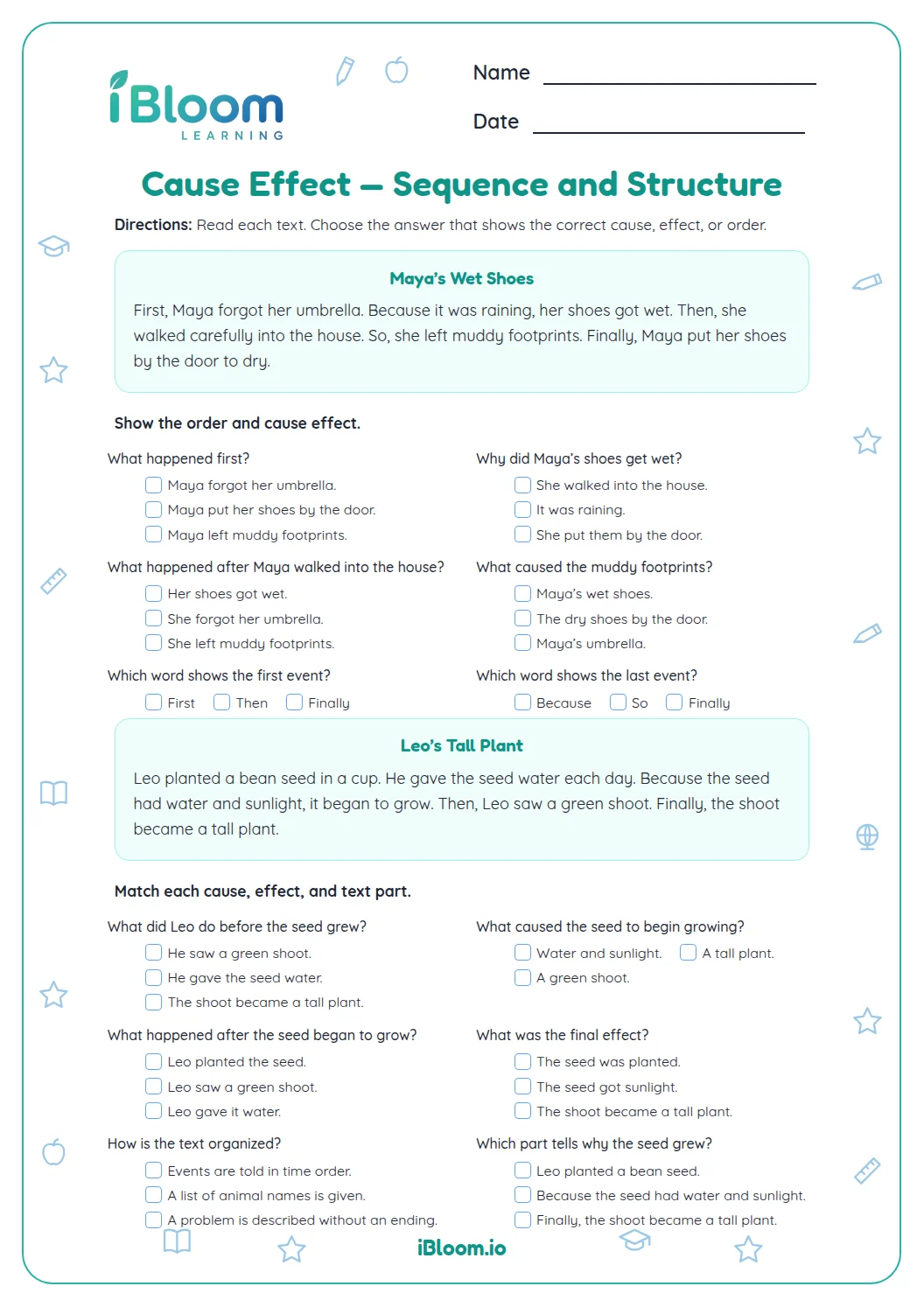
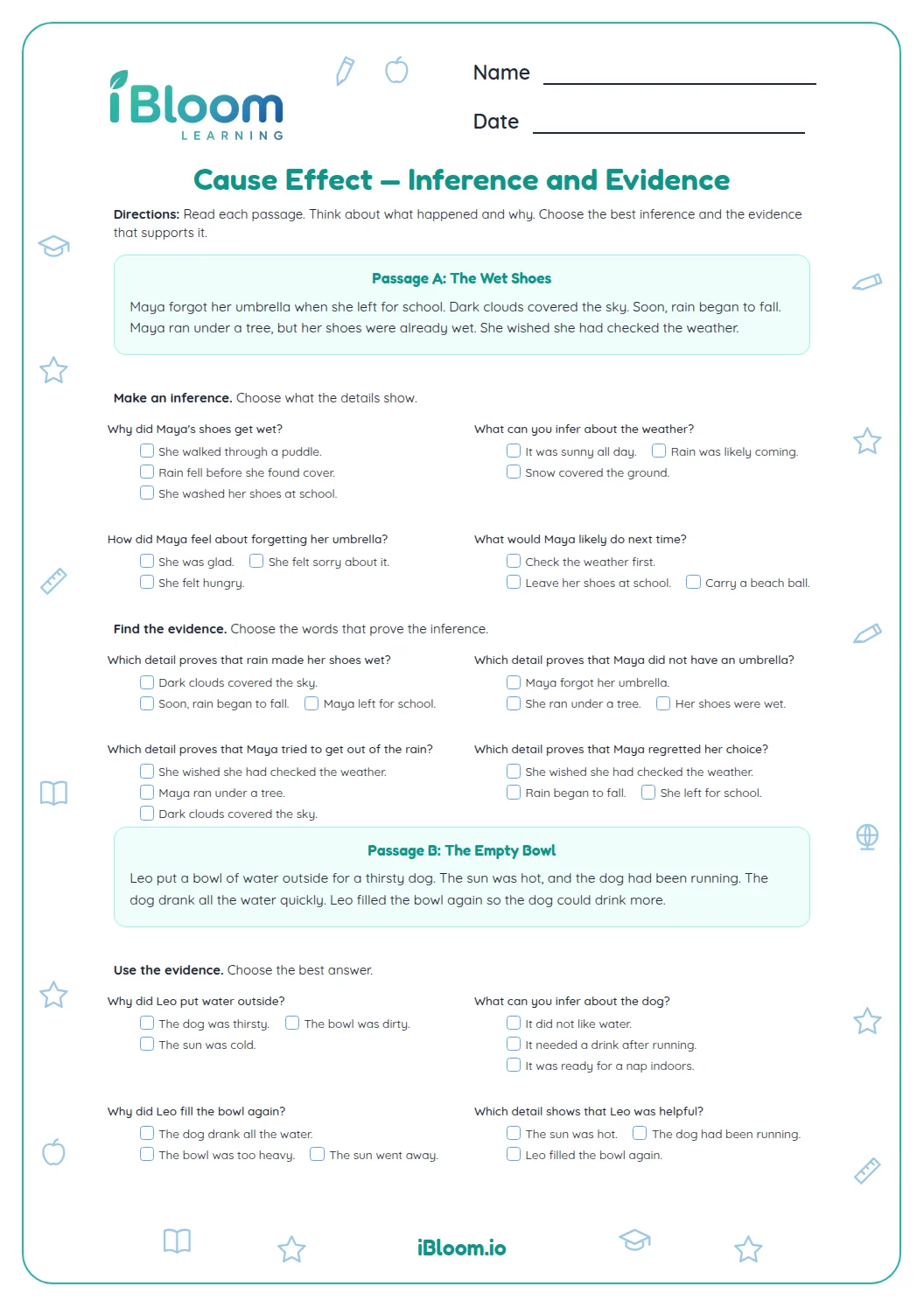
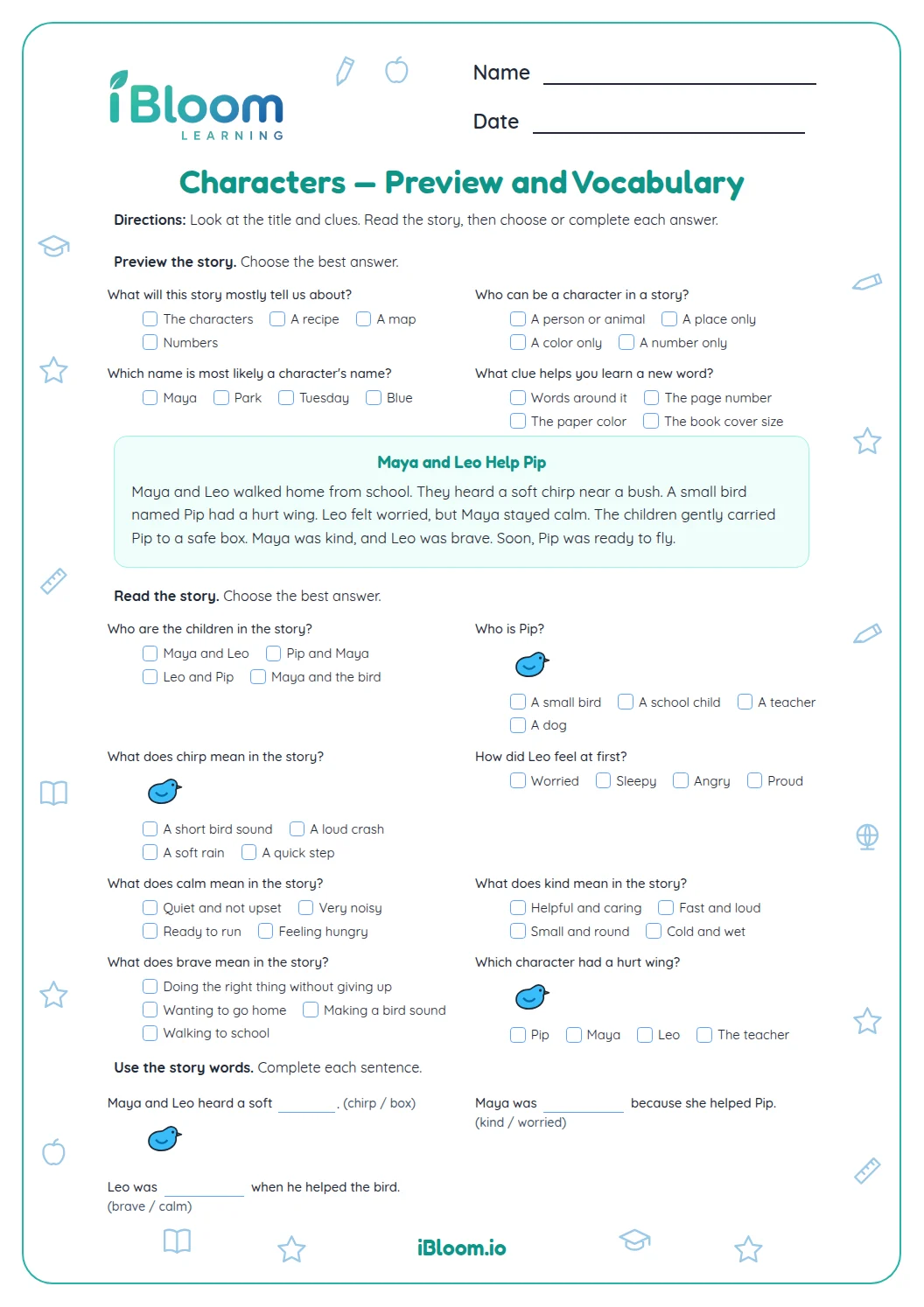
This free Grade 1 reading worksheet centers on “A Seed for the Window,” an original story about Mia caring for a bean seed. Children answer five detail questions, use story clues for five inferences, then make five personal or story connections. The three worksheet pages include a separate answer key. It practices asking and answering about key details in CCSS RL.1.1.
Aligned to RL.1.1
What skill does this sheet practice?
This worksheet gives Grade 1 learners focused practice with story details, inference, and text connections. Each item asks children to use the same idea in a slightly different way, so they can check both the answer and the reasoning behind it.
How can a reader support an inference?
A good inference combines a clue from the story with what the reader knows. In question 6, the cup is beside a sunny window and Mia is growing a plant. Those details support the idea that the plant can get sunlight.
- 1Why did Mia put the cup by the window?
- 2Clue: The plant is beside a sunny window.
- 3Answer: So it could get sunlight.
What happens in each question group?
Questions 1–5 ask for details such as what Mia planted and when she watered it. Questions 6–10 ask readers to infer why characters act and what might happen next. Questions 11–15 invite a connection or a short explanation using the story.
Can an adult read the story aloud?
Yes. Reading the story aloud lets a child focus on remembering a detail, using a clue, or making a connection. For inference questions, ask the child to point to the story detail that supports the answer.
How to use this reading worksheet
- 1Read “A Seed for the Window” aloud or quietly.
- 2For questions 1–5, look back for the exact story detail.
- 3For questions 6–10, choose the answer supported by a clue.
- 4For questions 11–15, connect the story to an experience or idea.
- 5Ask the learner to point to the words that support an inference.
- 6Check the answer key after completing each part.
Reading mistakes to watch for
The mistake
Guessing what Mia feels without checking what she does.
The fix
Reread the sentence about her watering or moving the seedling and use that clue.
The mistake
Choosing an answer that could happen but is not supported by the story.
The fix
Ask which sentence gives evidence for the idea before selecting it.
The mistake
Giving a personal connection without linking it to the story.
The fix
Name one detail in Mia’s experience that reminds the reader of their own.
Common Core alignment
Ask and answer questions about key details in a story.
On this sheet: Children answer detail questions and support inferences with story evidence.
Show the official wordingHide the official wording
Ask and answer questions about key details in a text.
What to practice next
Make more practice
Further reading
Questions parents and teachers ask
What story does the worksheet use?
The original story “A Seed for the Window” follows Mia as she plants a bean seed, checks its soil, and moves the growing seedling with her grandmother. Details from the story support the inference questions, while the final questions invite children to connect the events to their own ideas.
What does an inference question ask a child to do?
It asks the child to use a story clue and what they know to figure out an idea the story does not state directly. For example, the sunny window suggests Mia wants the plant to get light. The answer choices are supported by details in the story.
How are text connections practiced?
The last five prompts ask children to connect Mia’s experience with plants to something they have seen, done, or might do. A short written response can be different for each child; the key provides a sample that uses a detail from the story.
Can I read the passage aloud to my child?
Yes. Read the story aloud and let the child answer in their own words or choose an option. For an inference, ask them to point to a clue in the story. This keeps the focus on understanding and evidence even if independent reading is still developing.
How many pages are included?
There are three worksheet pages: the first includes the passage and opening questions, and the next two continue the question groups. A separate three-page answer key includes the correct choices and sample responses for open-ended connections. An adult can keep the key aside until the child finishes.