

About this worksheet
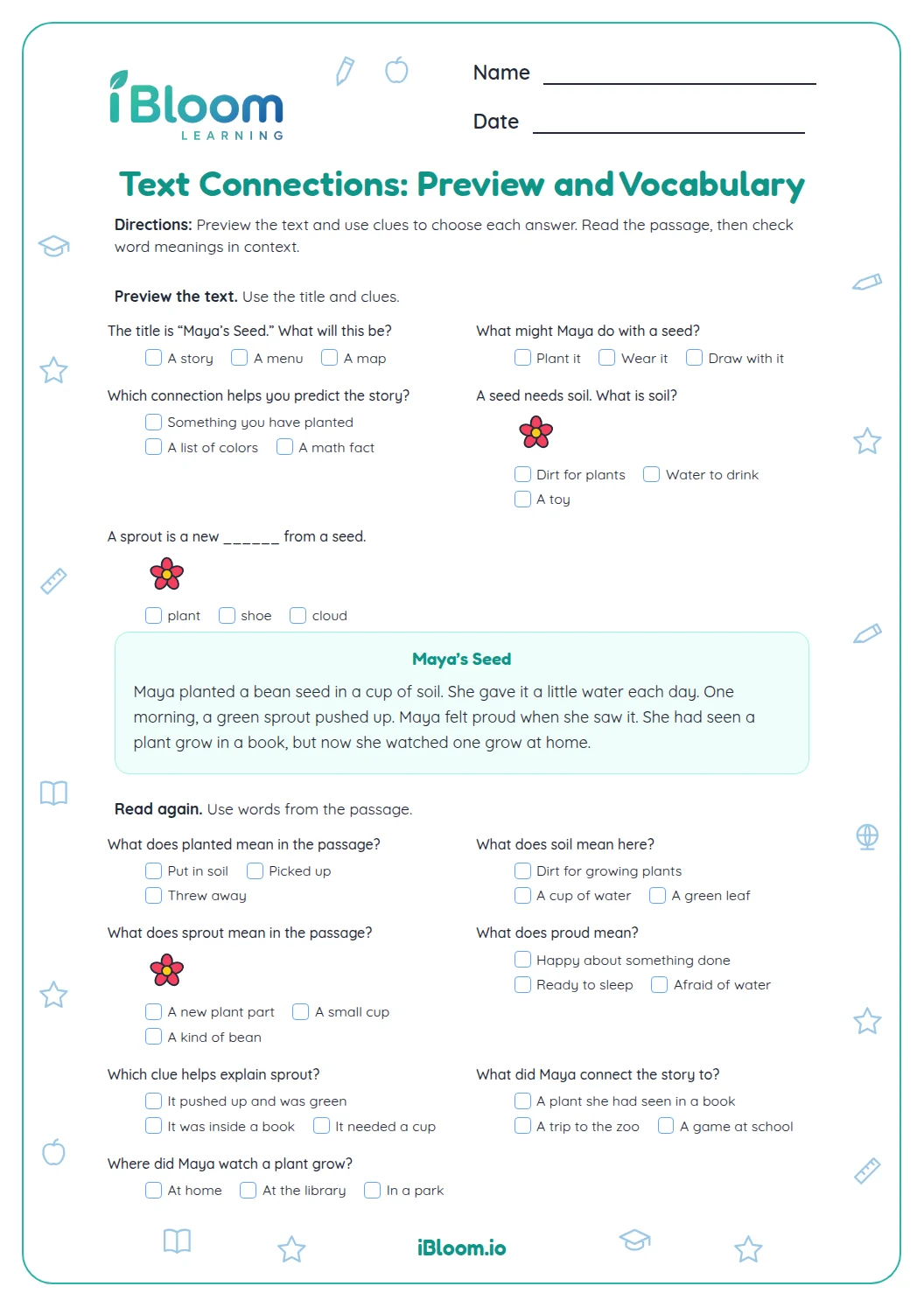
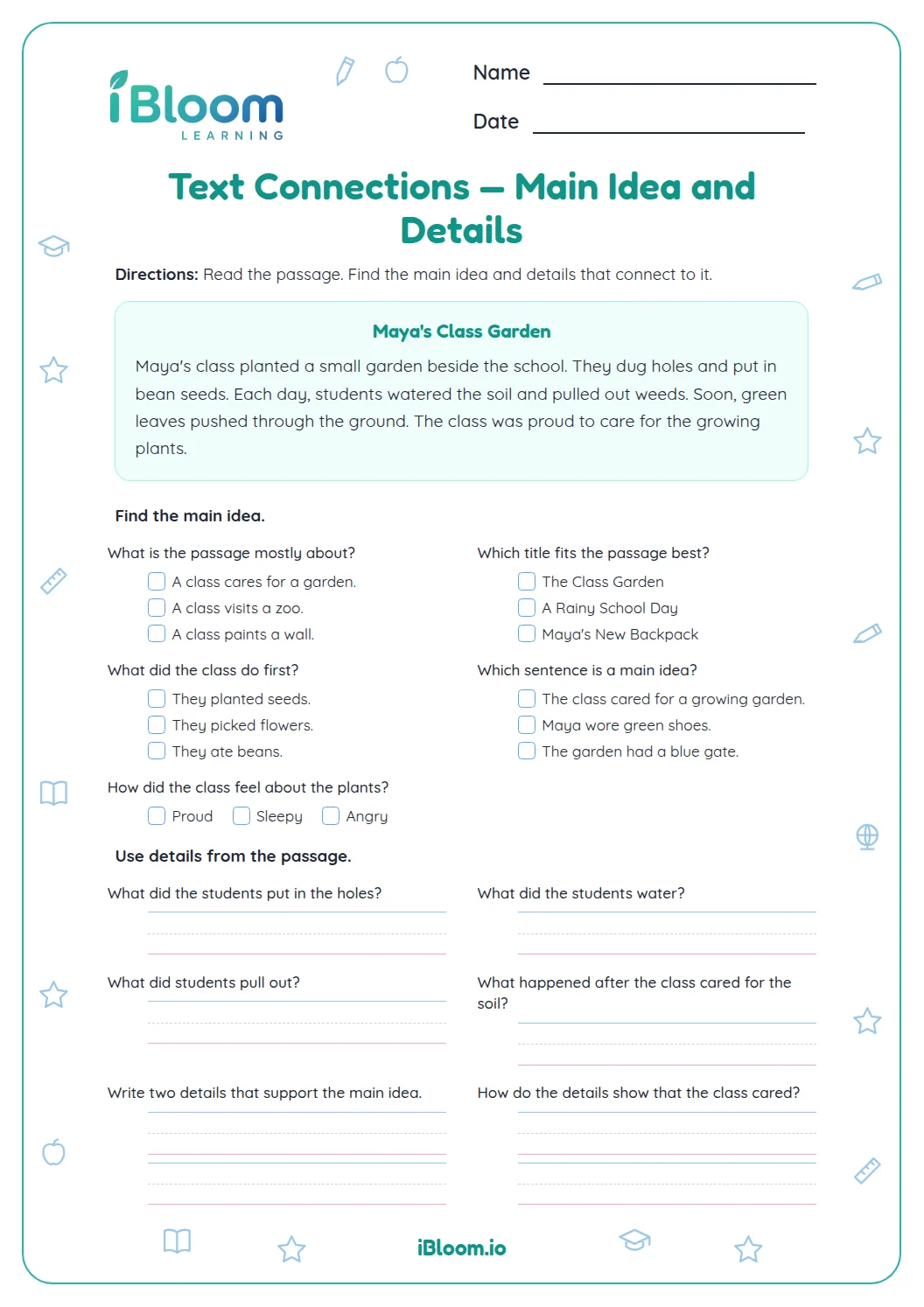
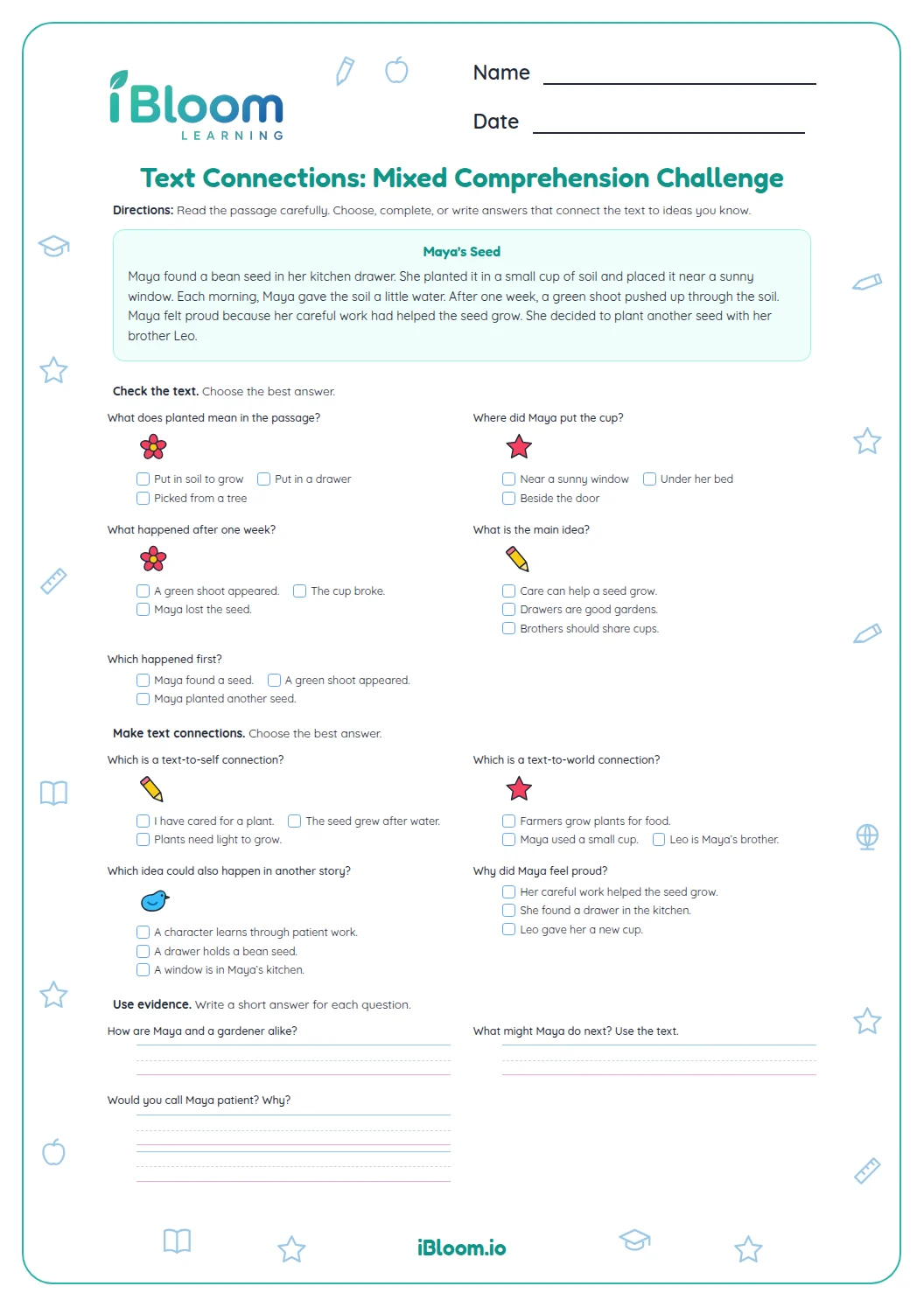
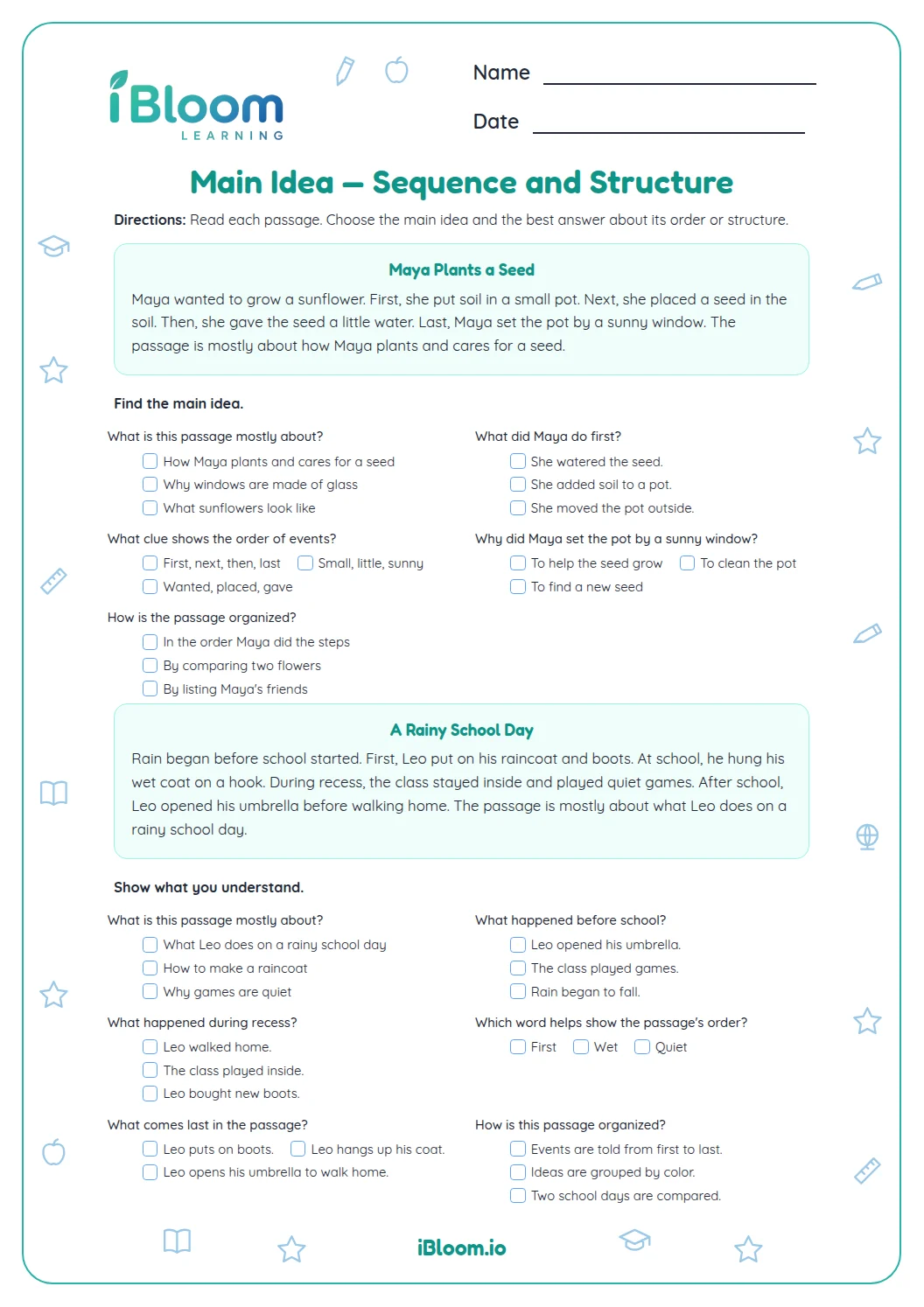
This free Grade 1 printable uses an original short story about Mia sharing a plant with her neighbor Ben. Students answer ten multiple-choice questions about story details, then write five responses that connect the story to their lives, another story, or the world around them. The passage and answer key are included.
Aligned to RL.1.1
Which details help answer story questions?
A detail is a piece of information the story gives directly. In the passage, Mia put the pot by a sunny window before moving it outside. Remembering that order helps answer where the pot began.
For a written answer, find the sentence that tells what happened and say it in your own clear words.
- 1Question: What did Mia do each day?
- 2Story detail: Mia checked the soil.
- 3Answer: Mia checked the soil each day.
How do story events connect?
A text connection links a story to a reader’s life, another text, or the wider world. Mia gives Ben a plant because he has no garden; a reader might connect that act to sharing or helping a neighbor.
Part C asks students to name a story detail and explain how it connects to something beyond the passage.
What makes a clear written response?
A clear response names the story detail and explains the connection. For example: “Mia gave Ben a plant. I shared seeds with my neighbor, too.” Answers can vary when the student explains a sensible link.
- 1Story detail: Mia gave Ben a little plant.
- 2My connection: I shared seeds with my neighbor, too.
How to use this worksheet
- 1Read the passage once to learn who the story is about.
- 2Answer the first ten questions using details from the text.
- 3For Part C, choose a story event that brings a connection to mind.
- 4Name the detail and explain the link in a complete sentence.
- 5Use the answer key to check story facts and compare connection answers with the samples.
Common mistakes and quick fixes
The mistake
Choosing an answer that sounds possible but is not in the story.
The fix
Point to the sentence that supports the choice before marking it.
The mistake
Giving a one-word response when the question asks how or why.
The fix
Use a short sentence that names the action and the person who did it.
The mistake
Mixing up where Mia first kept the pot and where Ben kept his plant.
The fix
Reread the beginning and middle of the passage; Mia used the sunny window, while Ben used his porch.
Common Core alignment
This worksheet practices the listed Common Core skill through the questions and examples on the printable.
Ask and answer questions about key details in a story.
On this sheet: Students answer detail questions and cite story information in short responses.
Show the official wordingHide the official wording
Ask and answer questions about key details in a text.
What to practice next
Further reading
Questions parents and teachers ask
What is a text connection in this worksheet?
A text connection links a story to a reader’s experience, another text, or the world. In this worksheet, children use a detail such as Mia sharing a plant, then explain a similar experience or idea in their own words. The answer key provides sample connections.
What does the passage teach students to read for?
The passage gives clear details about the characters, setting, actions, and events. Students answer questions about where Mia placed the pot, how she helped Ben, and what the neighbors enjoyed. Looking back at the text helps them support each answer with information.
How many questions does the printable include?
There are 15 questions in all. Ten multiple-choice questions focus on details from the story. The last five ask students to make personal, story, or real-world connections in writing, with sample responses in the answer key. The worksheet includes the passage and questions, and a separate key has sample written responses.
What grade is this worksheet for?
The story and questions are written for Grade 1 readers. The passage uses familiar events and short sentences. The response prompts ask children to name a story detail and connect it to their experiences, another story, or something they know about gardens. They can complete the sheet with a teacher, family member, or independently.
How can I support a child who gives a very short answer?
Ask the child to name one event from the passage, then tell how it reminds them of something else. For example, Mia sharing a plant may bring to mind sharing a toy or helping a neighbor. The written response should include both the story detail and the connection.
Does the answer key require the exact same wording?
The multiple-choice answers match the printed choices, while the written key gives sample responses. A child can use different words and still be correct when the connection makes sense and includes a story detail. Invite them to explain the link aloud before writing.