



About this worksheet
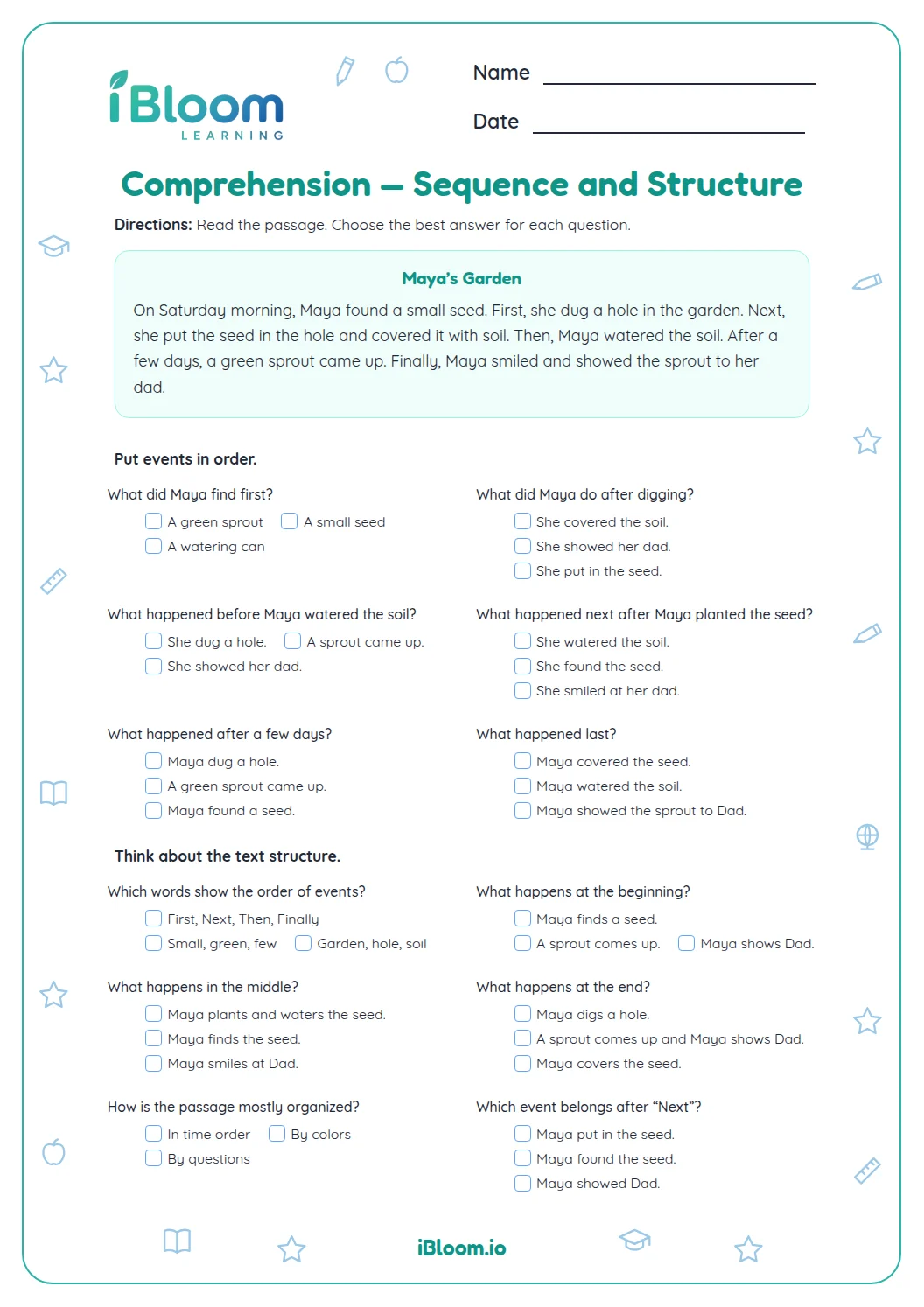
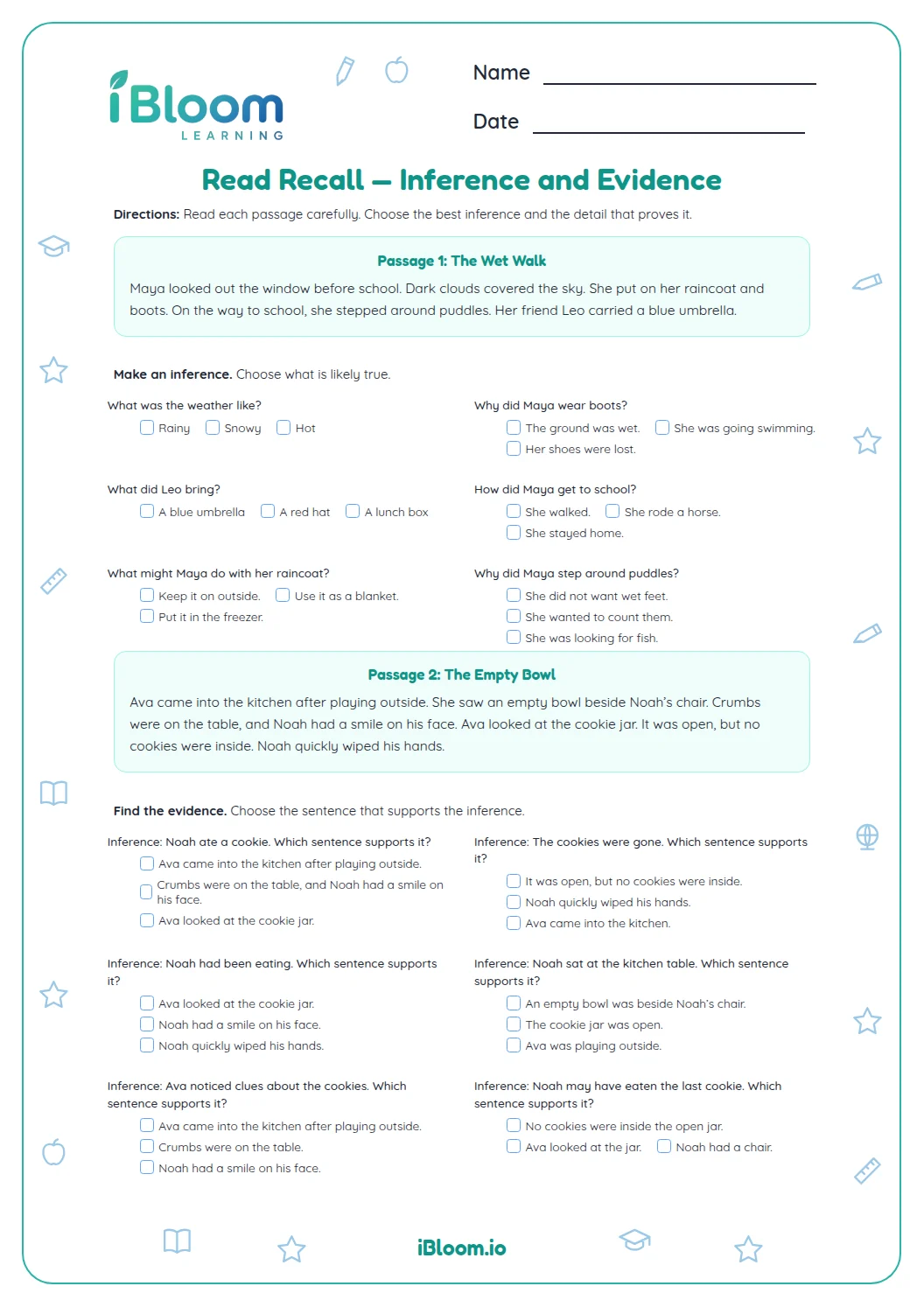
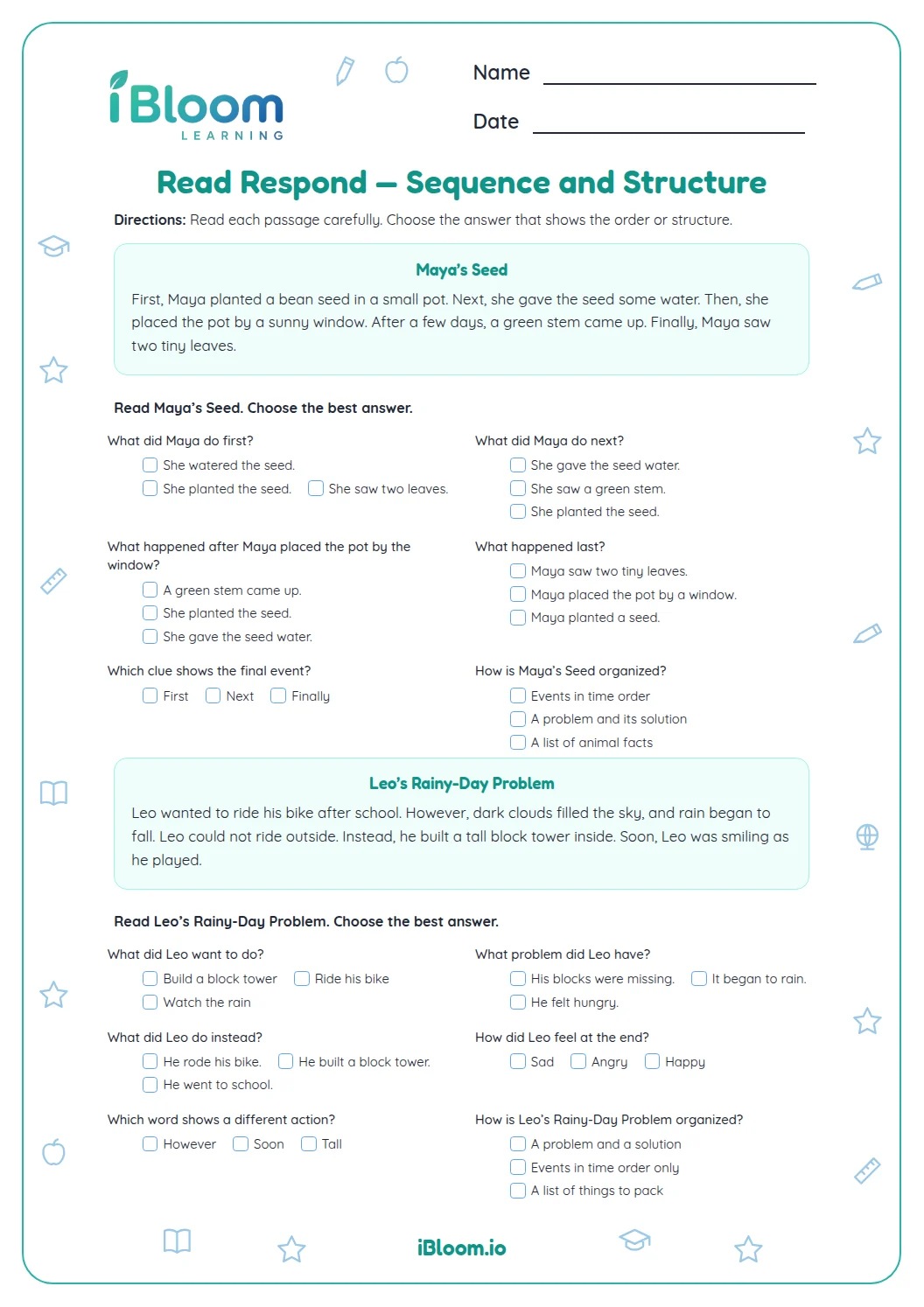
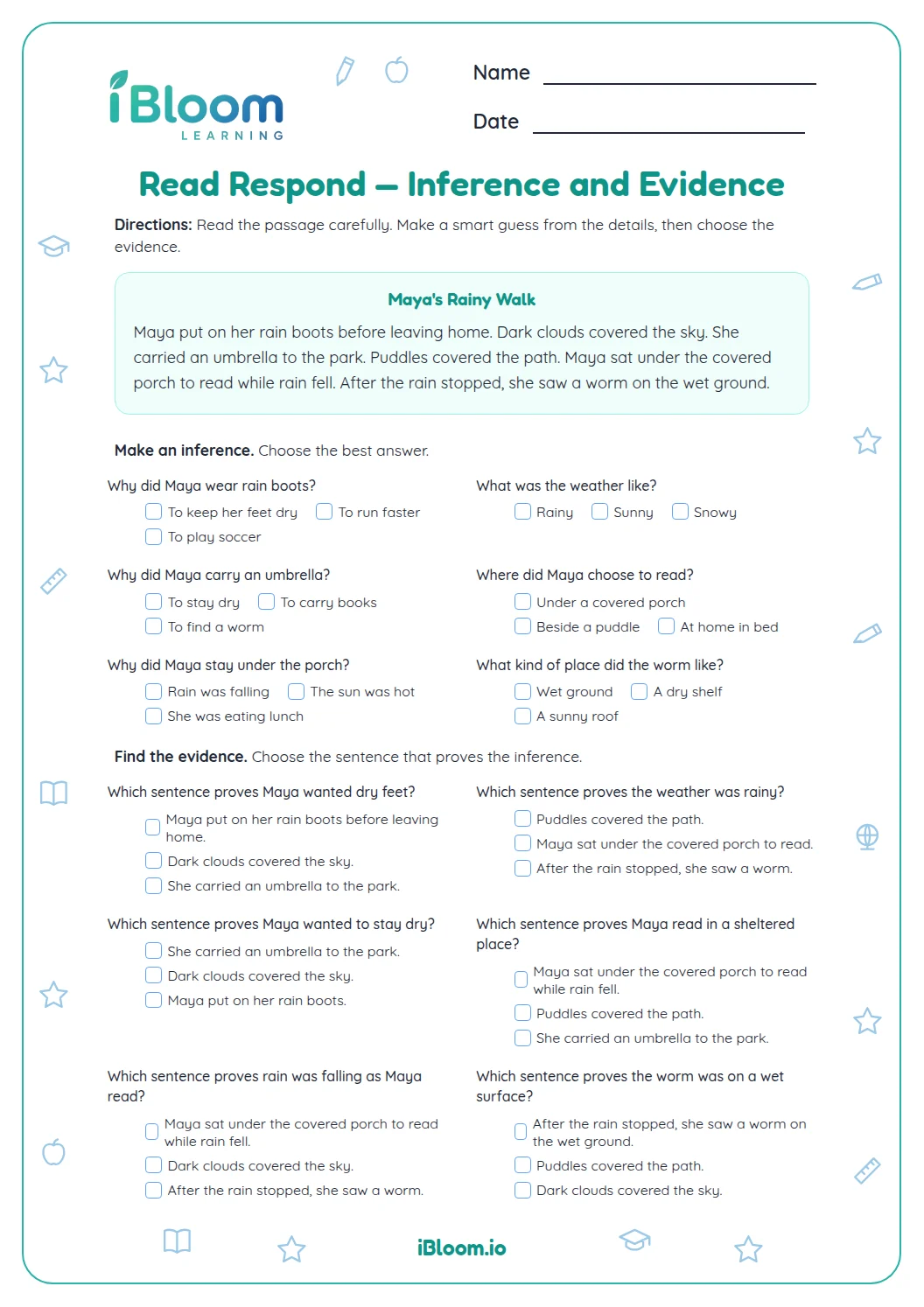
This Grade 1 printable pairs an original 75-word story with questions about details, event order, and words that signal sequence. Readers follow Maya as she plants and cares for a bean seed, then choose answers and write short responses using events from the passage. The 15 questions include compact choices and three written responses. A separate answer key offers sample responses. It practices Common Core RI.1.3 by asking how events connect.
Aligned to RI.1.3
Which details should a reader notice?
Notice the seed, cup, soil, water, and sunny window. These details explain the steps Maya takes and what happens as she cares for the seed.
- 1Question: What did Maya find in the packet?
- 2Find the first sentence.
- 3Answer: a bean seed.
How do sequence words guide the reader?
Words such as first, next, each morning, and after show when events happen. For example, Maya fills the cup with soil first, then puts in the seed and adds water.
How can a child write about the story?
For the short written responses, use details from the passage. The answer key gives sample wording, and another clear response supported by the story is acceptable.
How to use this worksheet
- 1Read the passage once to understand what happens.
- 2Reread the sentence that answers each detail question.
- 3Notice words such as first, next, each morning, and after.
- 4Retell the events aloud before choosing their order.
- 5Use passage details in each written response.
- 6Check answers with the key; accept clear supported wording.
Common slips and quick fixes
The mistake
Putting watering before planting.
The fix
Reread the sentences beginning First and Next.
The mistake
Treating “each morning” as one event after the shoot.
The fix
Notice it describes repeated care before the shoot appears.
The mistake
Adding a detail that is not in the passage.
The fix
Point to a sentence that supports the response.
Reading standards
The questions use story details to describe how events connect and happen in sequence.
Describe connected events and explain their order in an informational text.
On this sheet: Questions ask learners to identify and explain connected steps in Maya’s seed-growing process.
Show the official wordingHide the official wording
Describe the connection between two individuals, events, ideas, or pieces of information in a text.
What to practice next
Make more practice
Further reading
Questions parents and teachers ask
What is the passage about?
Maya finds a bean seed in a paper packet. The story follows her as she puts it in soil, adds water, and sets the cup by a sunny window. After several days, a green shoot appears and Maya draws a picture for her class.
What does “Next” tell the reader?
“Next” introduces the action after Maya fills the cup with soil. She pushes the seed into the soil and pours in a little water. Readers can use the word to track the order of the steps in the story.
Why does Maya add water?
Maya adds a few drops when the soil feels dry. This detail shows how she cares for the seed while it grows. The question asks readers to connect the dry soil with Maya’s watering action and the events that follow.
What can my child write for a sequence response?
A response can name two actions in order, such as putting the seed in soil and then watering it. The key offers sample wording, but accept another clear answer if it uses events from the passage and keeps their order.
How many questions are on the worksheet?
There are 15 questions: four story-detail items, four about sequence, four about sequence words and purpose, and three written responses. The passage and questions fit three worksheet pages, with a separate three-page answer key for checking together as a family.