




About this worksheet
This free printable Grade 1 worksheet with a short original passage, 14 questions on sh, ch, th, wh, main idea, and details, plus an answer key. It practices RL.1.1, RF.1.3.a.
Aligned to RL.1.1 and RF.1.3.a
How do learners practice consonant digraphs, main idea, and details?
Free printable Grade 1 worksheet with a short original passage, 14 questions on sh, ch, th, wh, main idea, and details, plus an answer key.
Work through each part in order, then use the answer key to check responses.
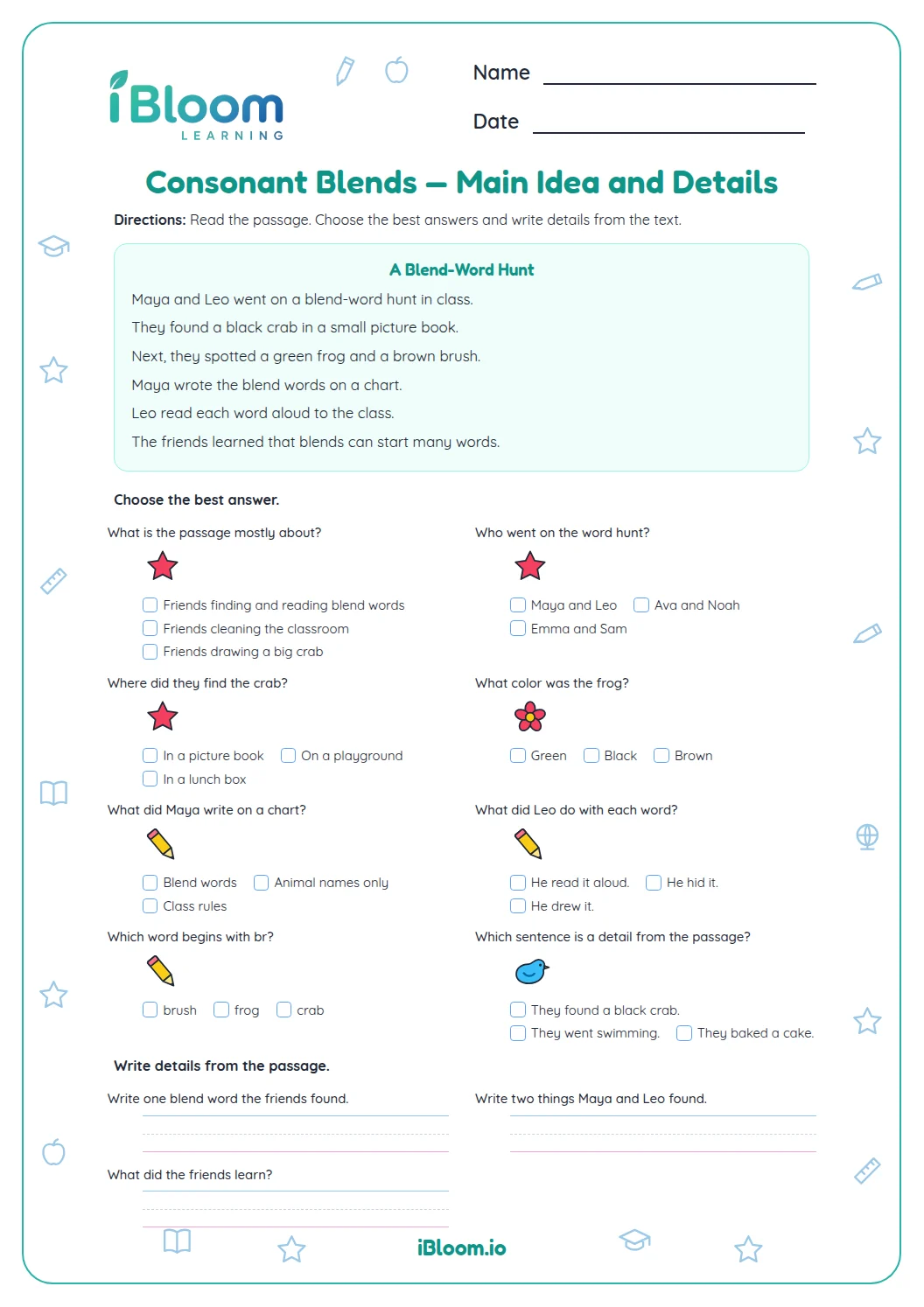
- 1Which word begins with sh?
- 2Use the directions and show the skill named in the prompt.
What does the practice include?
The 14 questions move from focused recognition or practice to applying the skill in context. Items use the words, numbers, and examples printed on this sheet.
How can the answer key help?
Check work after completing a part. For a missed item, revisit the relevant word, place value, or passage detail and correct the response.
How to use this worksheet
- 1Read the direction for the current part.
- 2Complete each item before checking the key.
- 3For a tricky response, point to the word, number, or passage clue that supports it.
- 4Compare your work with the key.
- 5Correct any missed item and explain the change.
Common mistakes and quick fixes
The mistake
Rushing past a key word or detail.
The fix
Reread the whole prompt and underline the clue that matters.
The mistake
Choosing an answer that sounds right without checking the evidence.
The fix
Point to the exact text or computation that supports the response.
The mistake
Leaving a correction unexplained.
The fix
Name the step or detail that changes the answer.
Common Core alignment
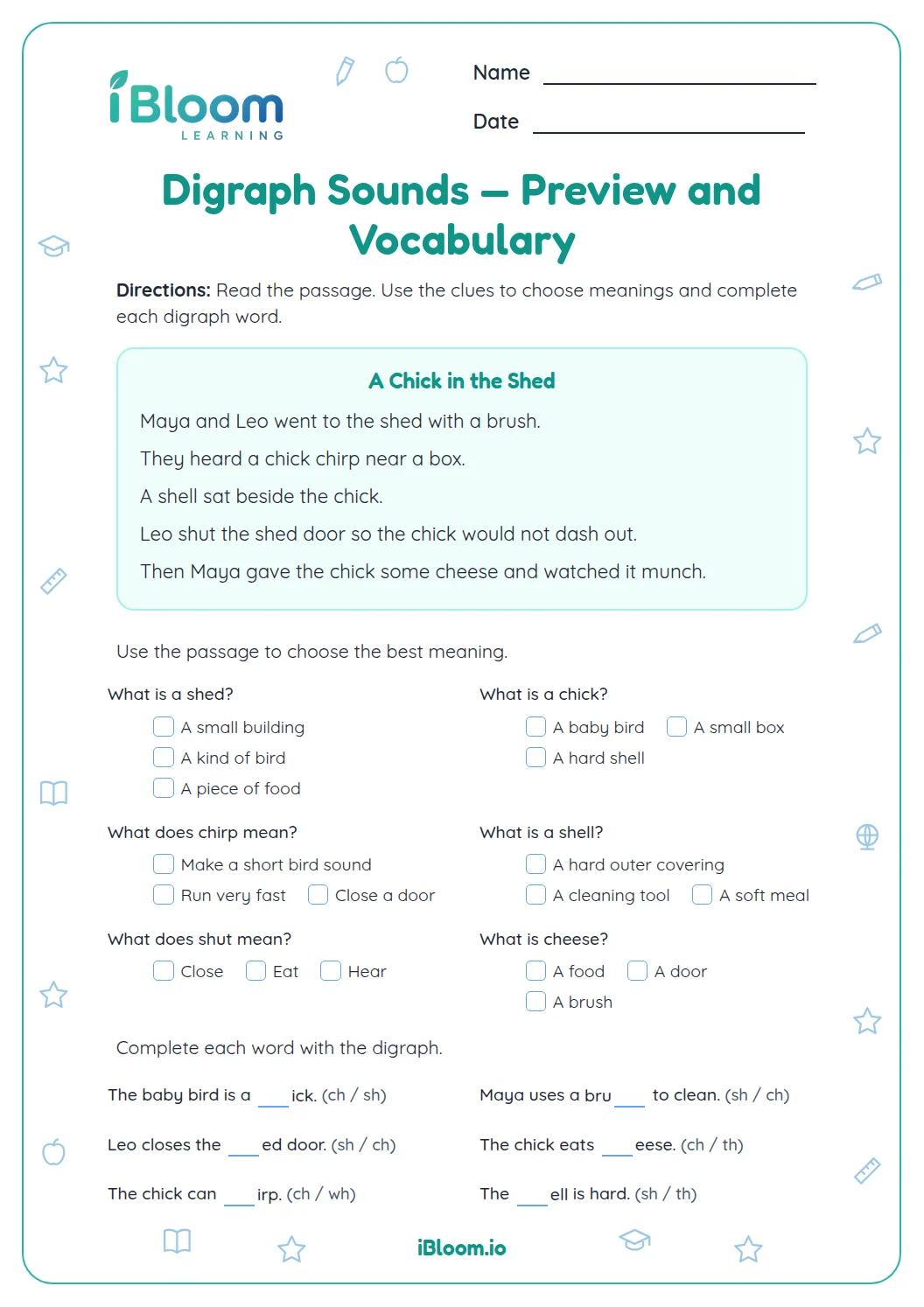
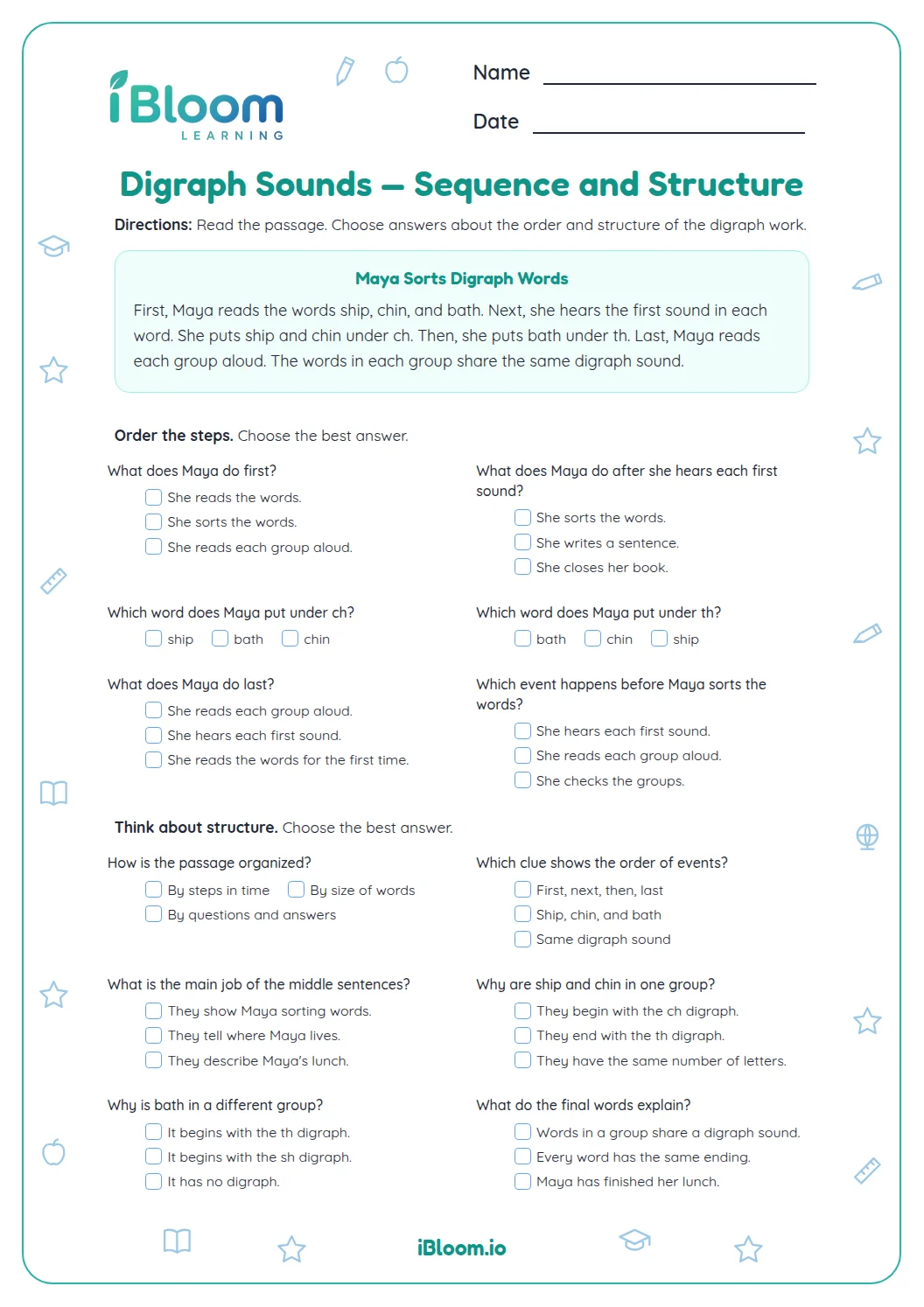
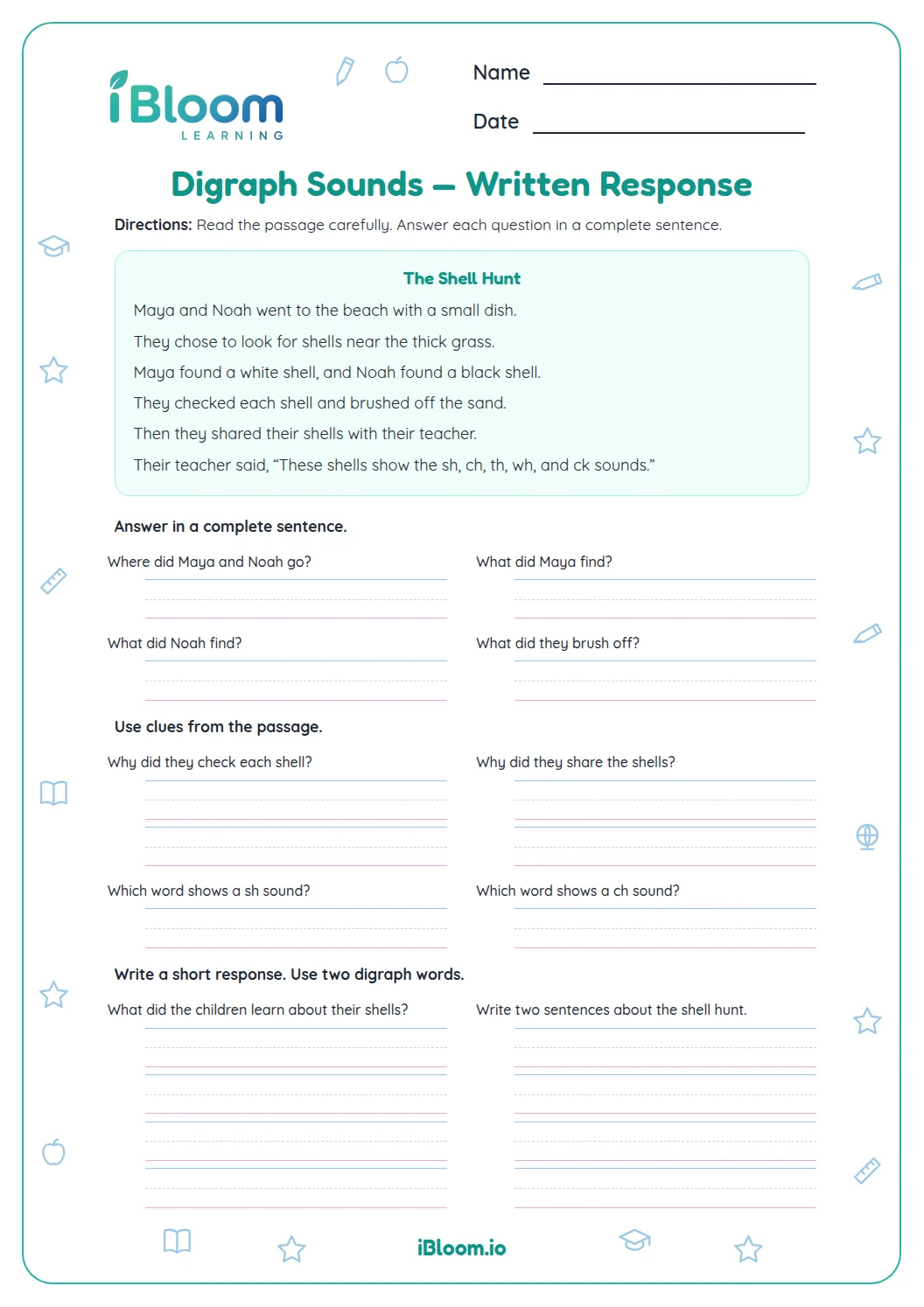
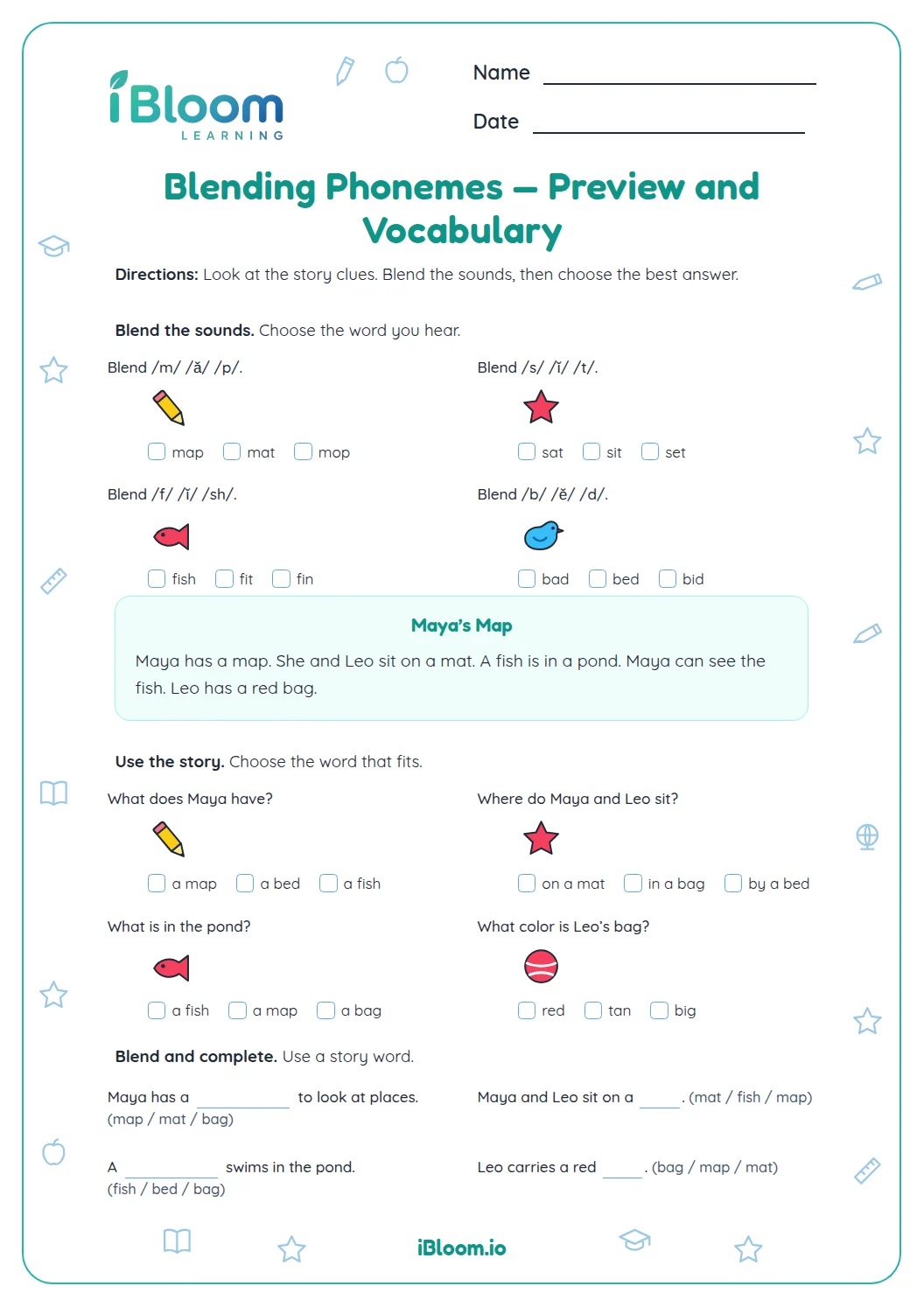
This worksheet gives learners practice with digraph decoding and story details through the activities shown on the page.
Answer questions about key details in the story.
On this sheet: Part B asks where Chip finds the shell, what it looks like, and what he does.
Show the official wordingHide the official wording
Ask and answer questions about key details in a text.
Recognize the sounds represented by common consonant digraphs.
On this sheet: Parts B and C identify sh, ch, th, and wh in words.
Show the official wordingHide the official wording
Know the spelling-sound correspondences for common consonant digraphs.
What to practice next
Make more practice
Further reading
Questions parents and teachers ask
What skills does this worksheet combine?
Learners recognize the consonant digraphs sh, ch, th, and wh, then use details from “A Shell at the Shore” to identify its main idea and answer questions. The answer key supports checking each response. Afterward, ask the learner to explain one response using a printed example or a clue from the page.
How many questions are included?
There are 14 questions: four digraph recognition items, six passage questions, and four items that identify or write digraphs. The passage is printed on the sheet for readers to refer back to. Afterward, ask the learner to explain one response using a printed example or a clue from the page.
How can I support a beginning reader?
Read the passage aloud together if needed, then ask the learner to point to the matching word or sentence. For sound questions, say each word slowly and listen for the two letters working together. Afterward, ask the learner to explain one response using a printed example or a clue from the page.
Is an answer key included?
Yes. The separate key lists the selected answers and digraphs. For the main-idea item, talk about how Chip’s actions and observations all relate to finding and noticing things at the shore. Afterward, ask the learner to explain one response using a printed example or a clue from the page.
Can I print the key separately?
Yes. The worksheet and key are separate printable pages. Let the child attempt the sound and passage questions first, then review a missed answer by finding its clue in the printed text. Afterward, ask the learner to explain one response using a printed example or a clue from the page.