




About this worksheet
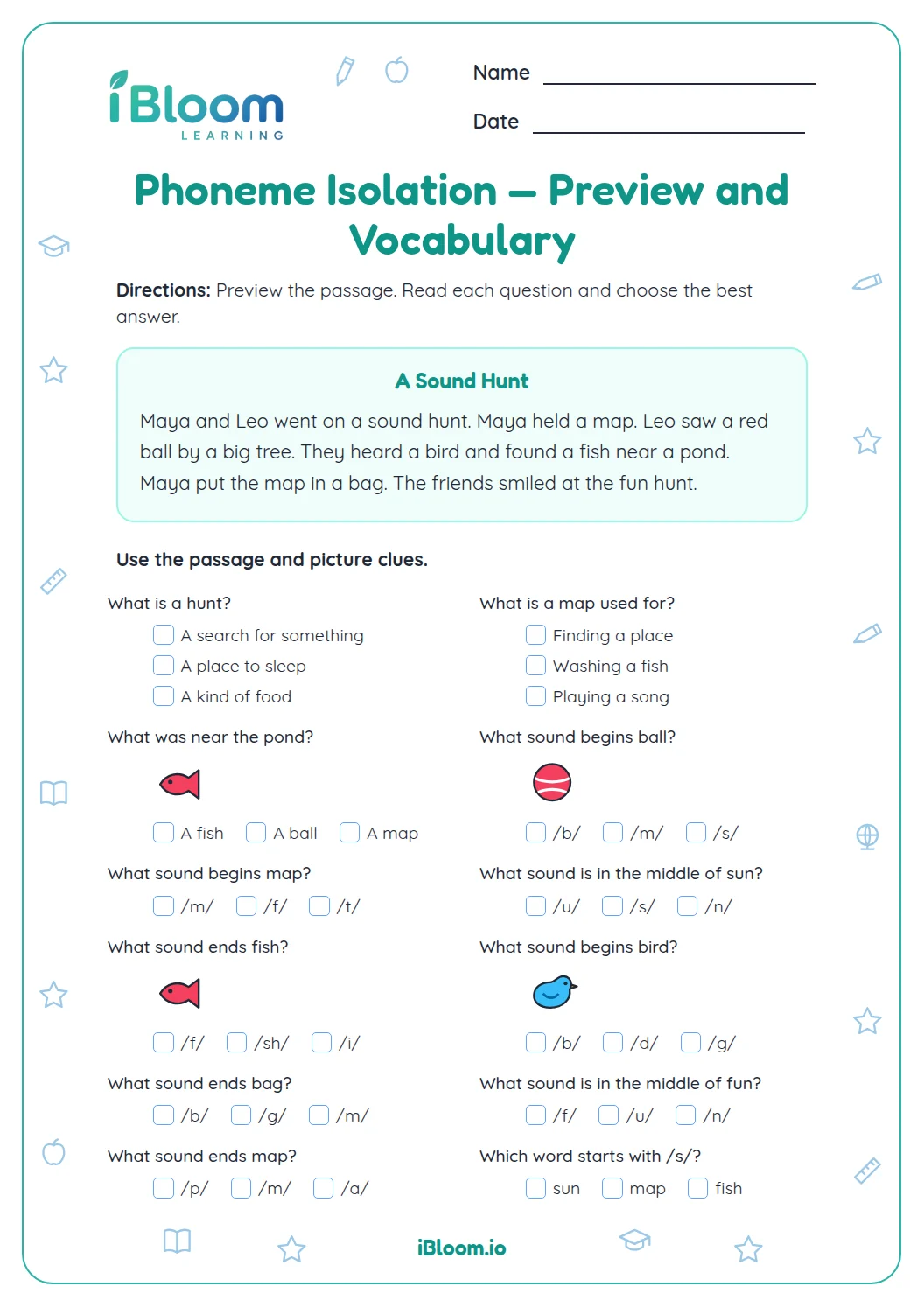
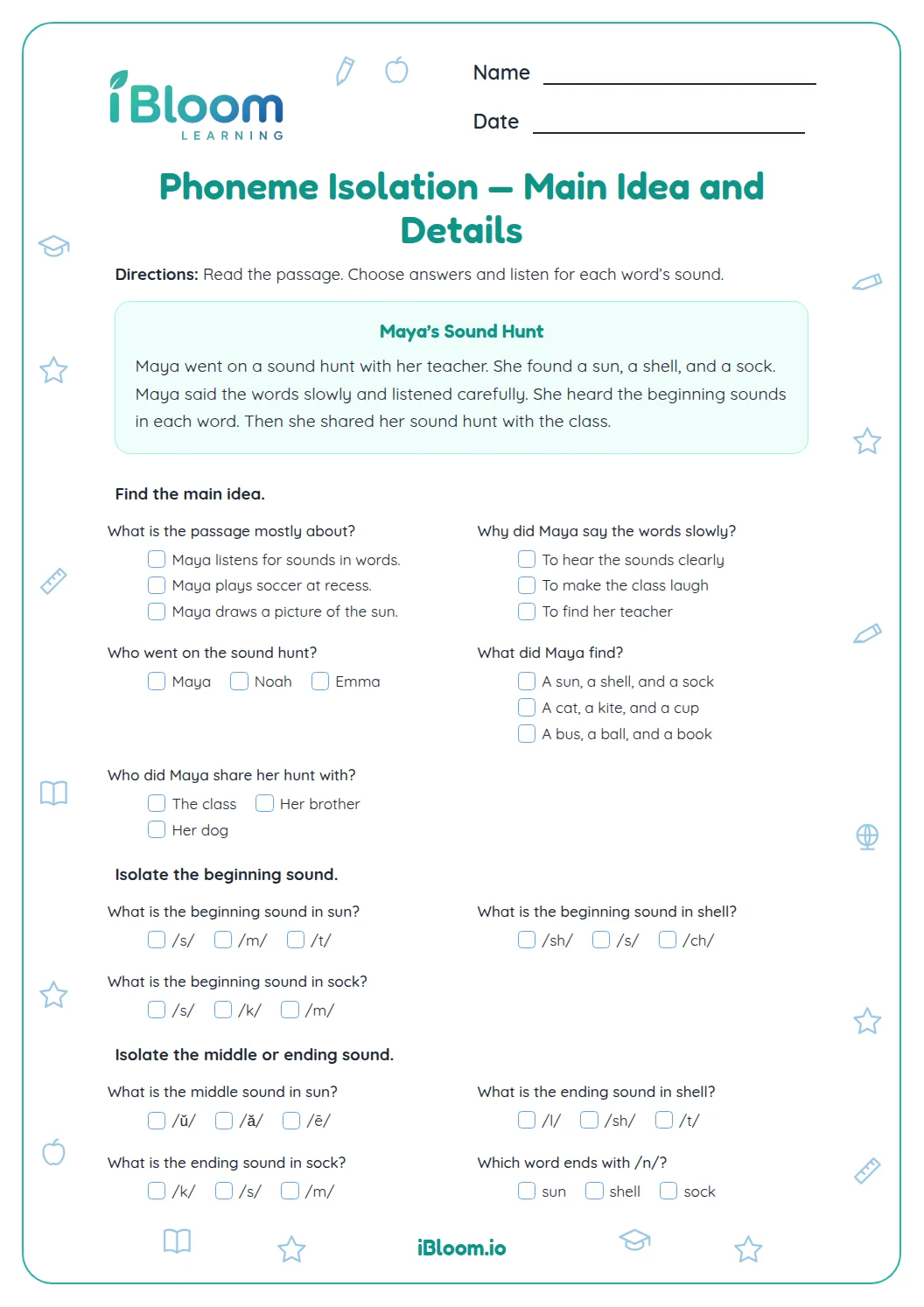
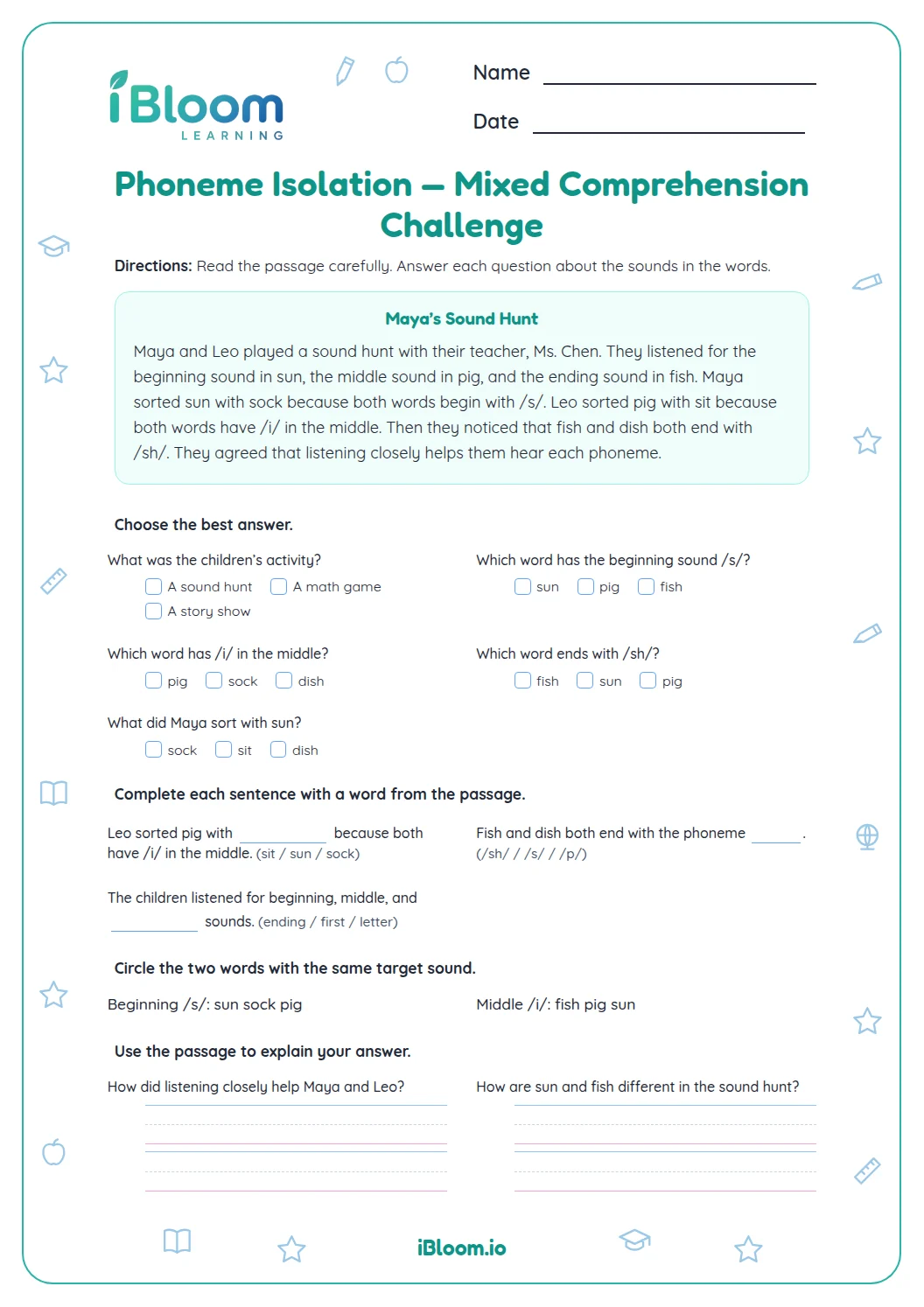
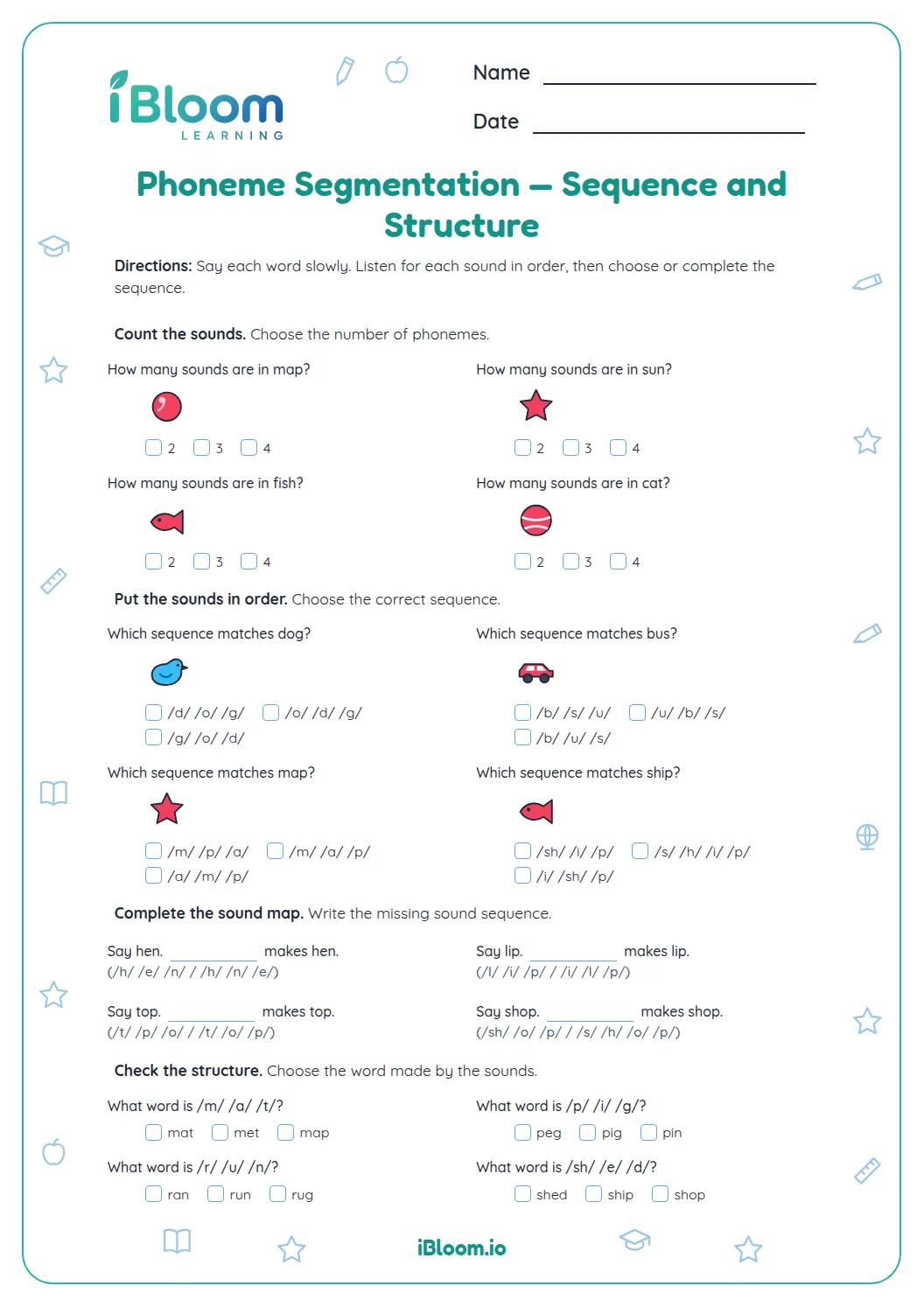
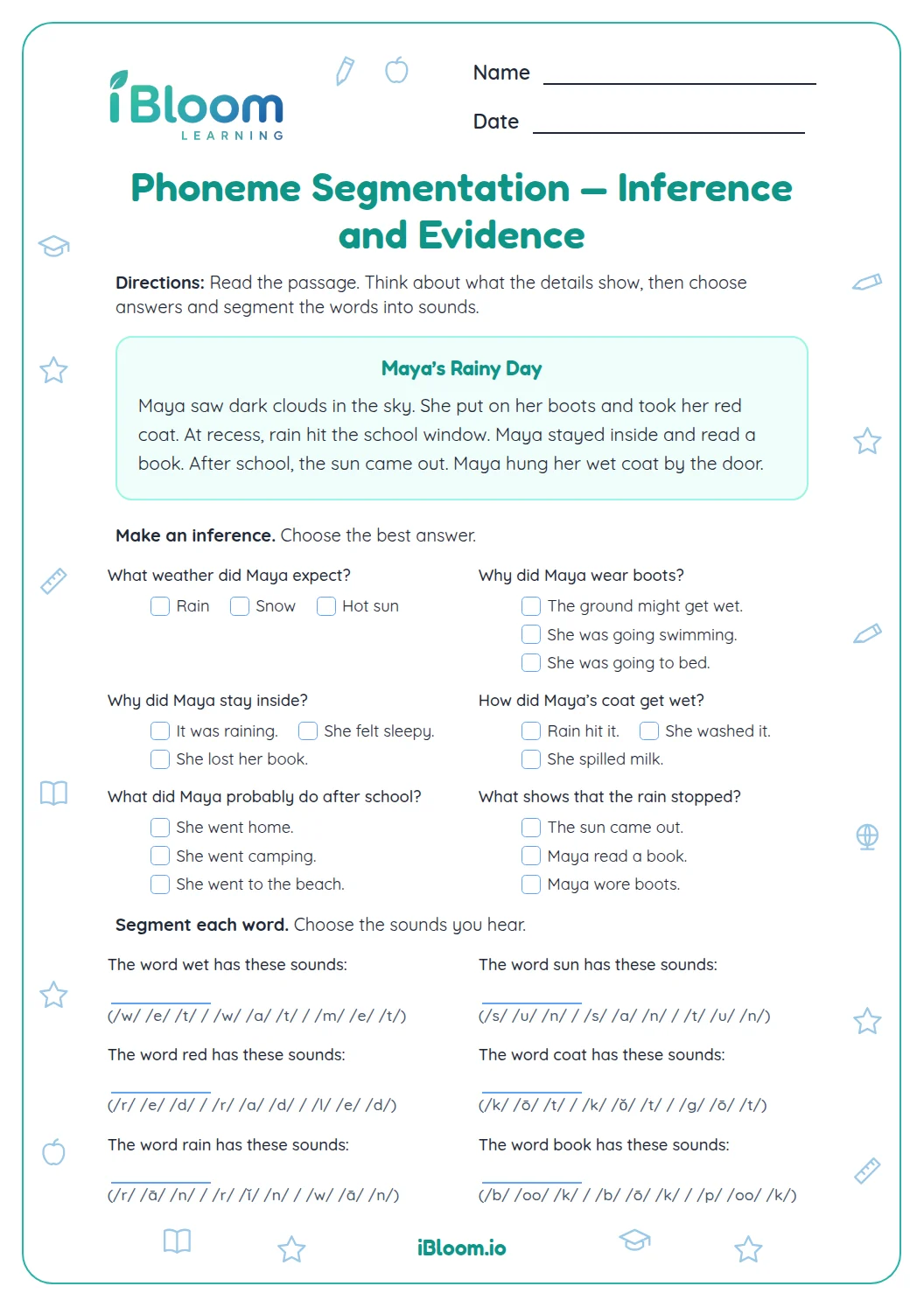
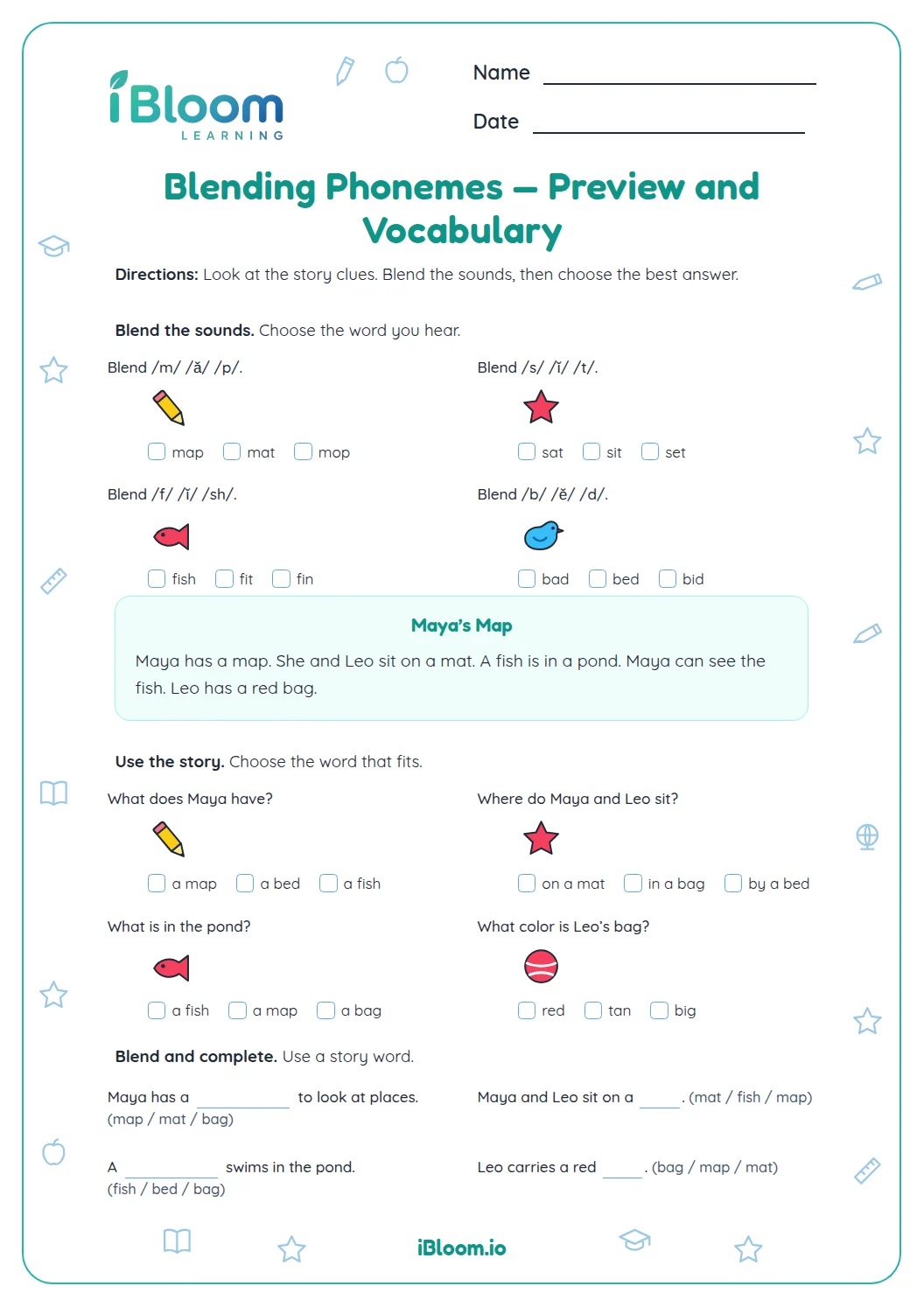
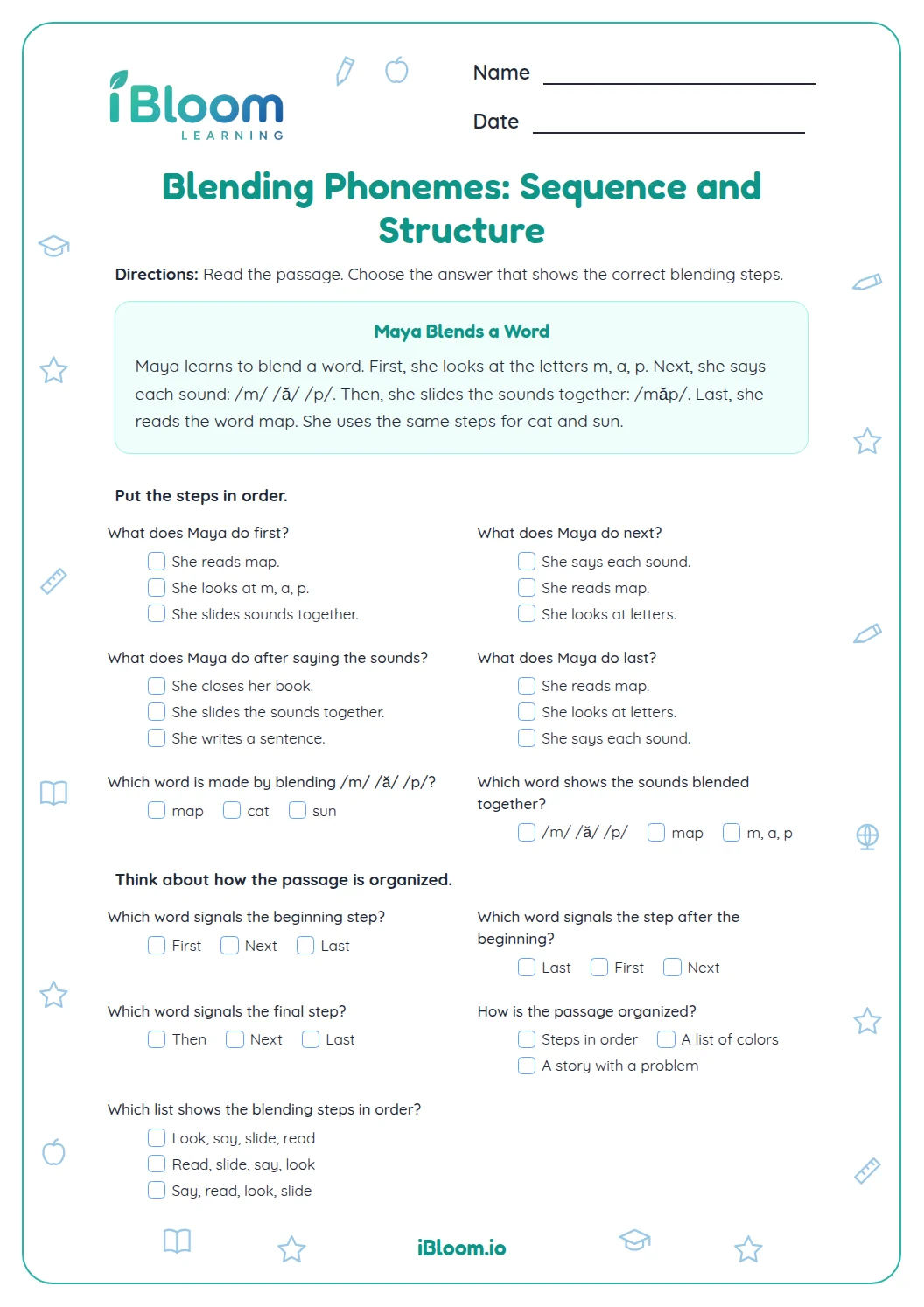
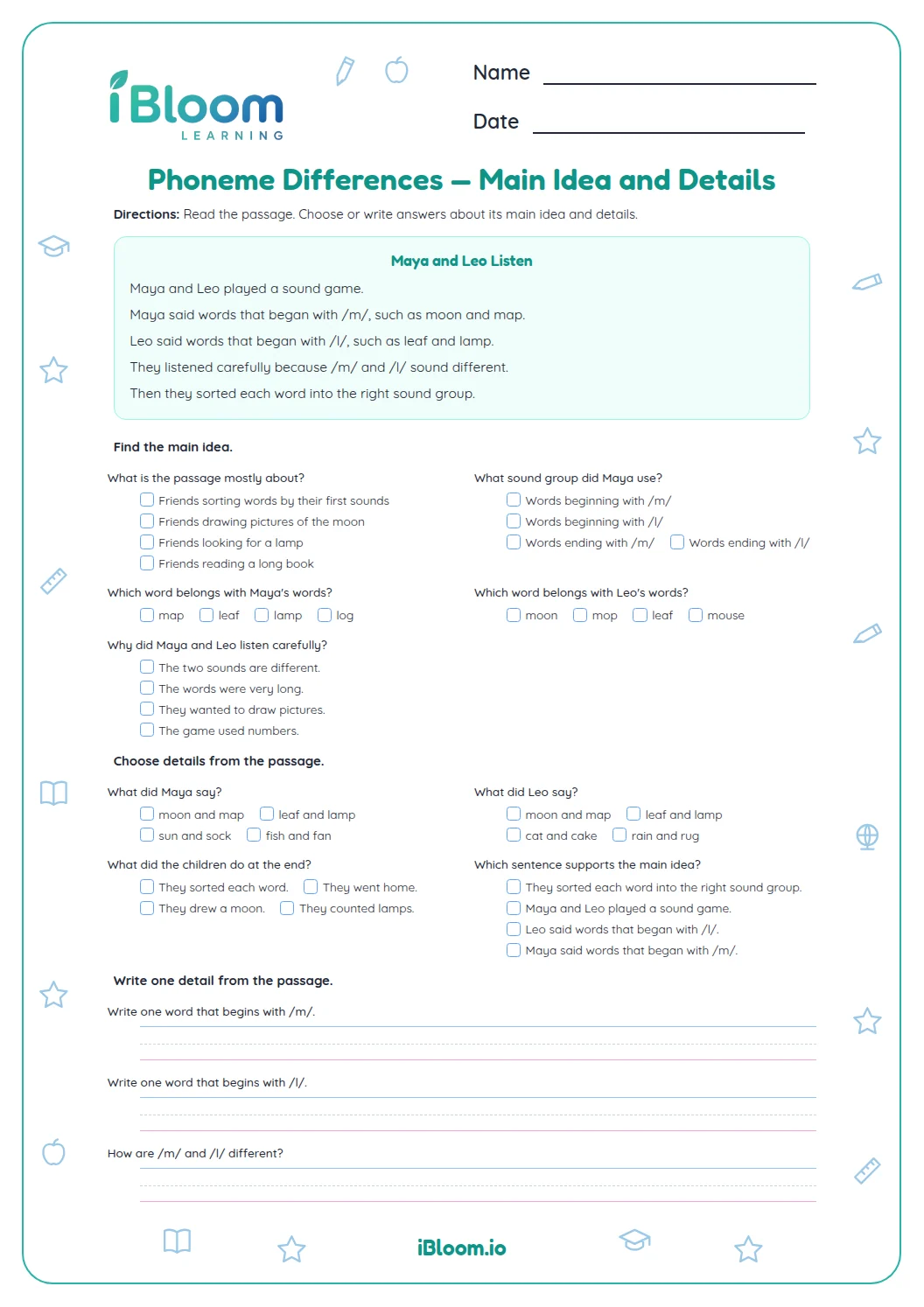
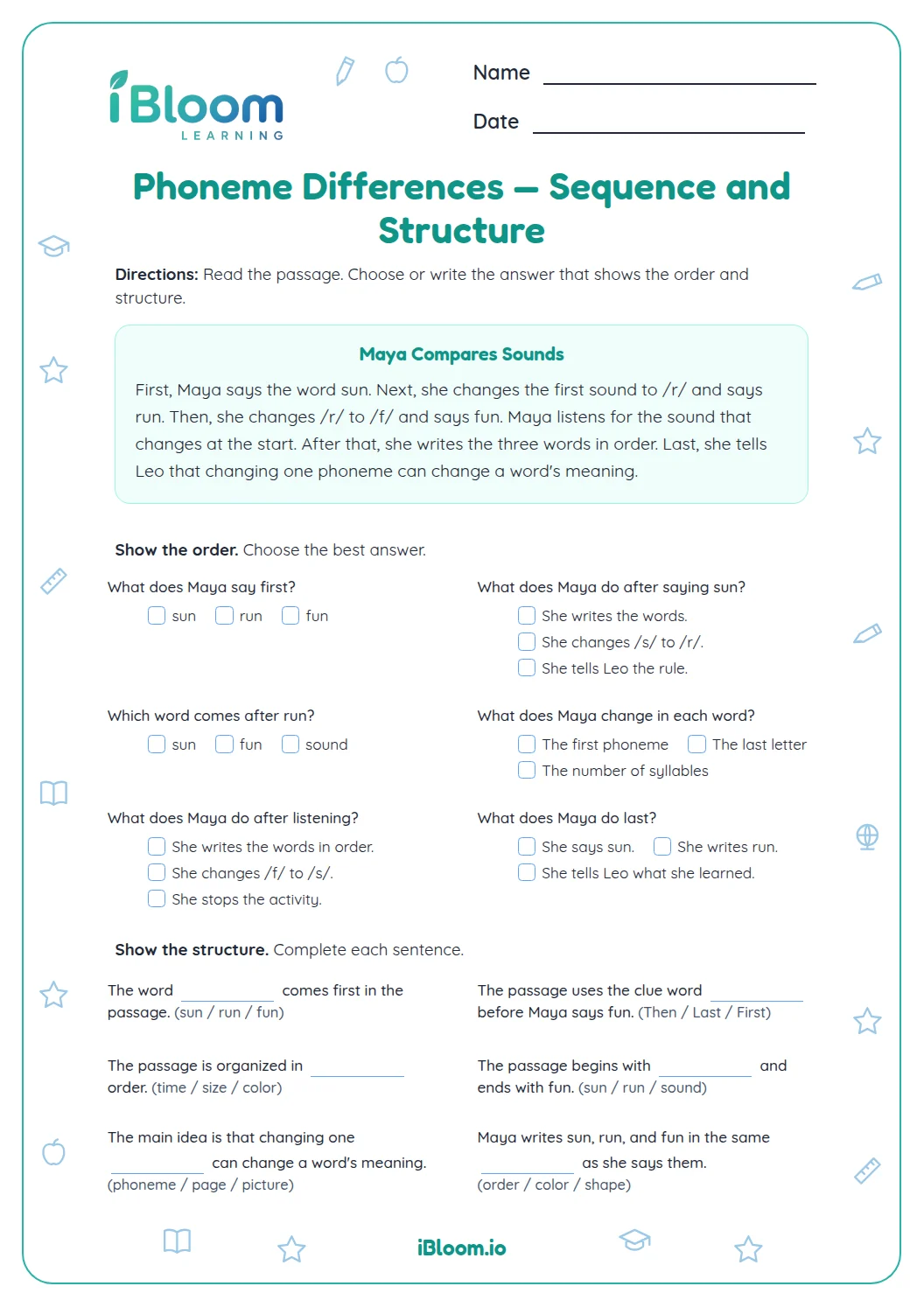
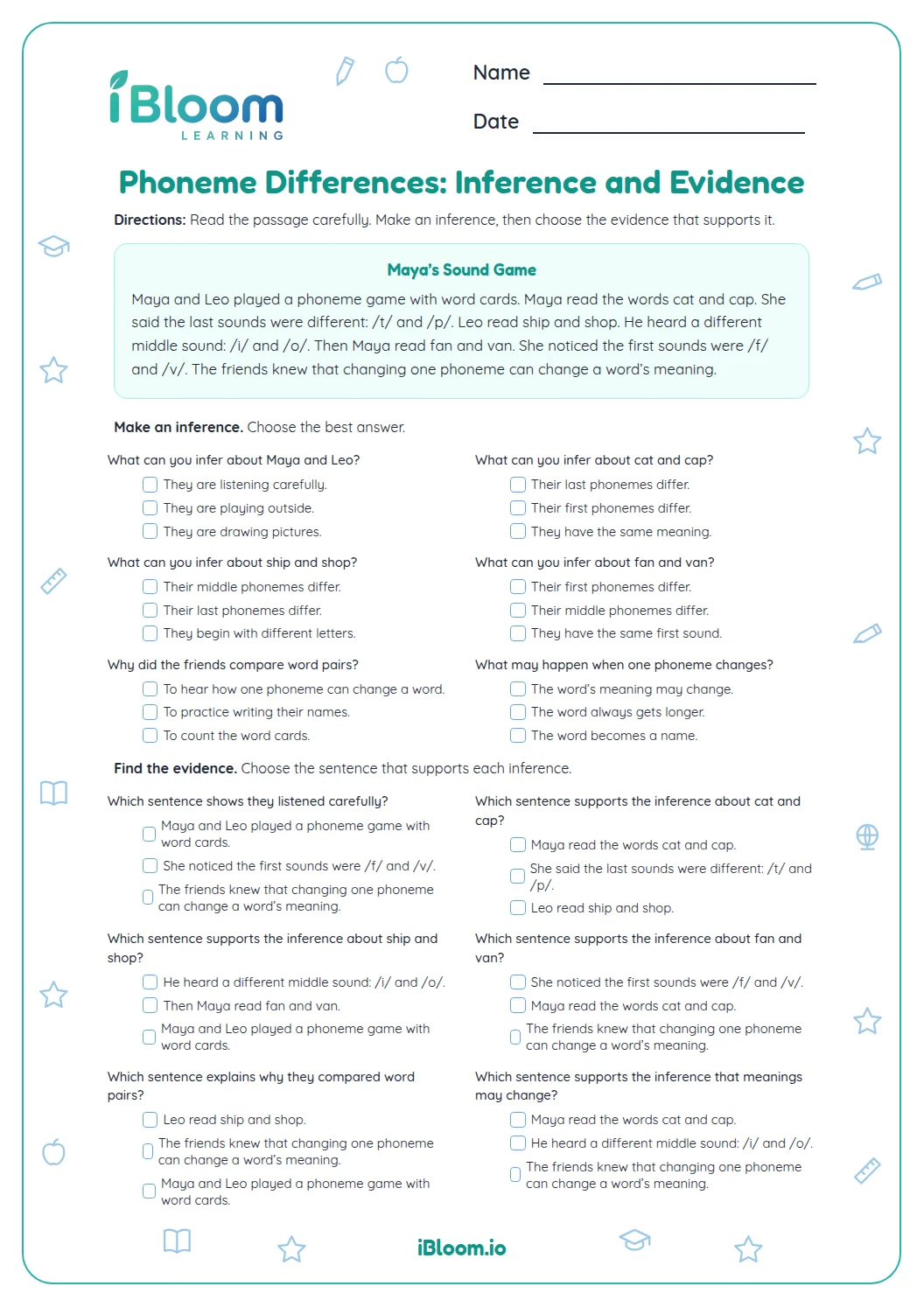
This Grade 1 phonics worksheet uses a short original passage about a school sound hunt. Learners identify first sounds in familiar words, listen for a middle vowel sound and an ending sound, and write sound symbols or matching words. Saying each word slowly supports the phoneme isolation skill in CCSS.ELA-LITERACY.RF.1.2, which includes recognizing and producing spoken sounds in words.
How do you hear a beginning sound?
Say the word and listen to its first sound. For example, fish begins with /f/.
How can you listen for a middle sound?
Say the word slowly and listen to the vowel sound. In sun, the middle vowel is the short u sound, /ŭ/.
How do you find the ending sound?
Say the word slowly from start to finish and listen to its last sound. Sun ends with /n/.
How to use this worksheet
- 1Read the target word aloud.
- 2Say it slowly without adding an extra vowel to consonants.
- 3Listen for the first, middle, or final sound named.
- 4Write the sound between slashes or give a matching word.
- 5Reread the word and check that your sound comes from it.
Common mistakes and quick fixes
The mistake
Naming a letter instead of the sound it represents.
The fix
Say the word aloud and record the sound heard, such as /f/.
The mistake
Listening to the first sound when asked for the middle sound.
The fix
Stretch the word and focus on its vowel.
The mistake
Adding an extra sound to a consonant.
The fix
Keep the sound short and crisp when you say it.
What to practice next
Make more practice
Questions parents and teachers ask
What is phoneme isolation?
Phoneme isolation means hearing one individual sound in a spoken word, such as the first sound /f/ in fish. This sheet asks learners to listen for beginning, middle, and ending sounds. Have the child say each example aloud and listen for the target sound before writing. This keeps attention on spoken sounds, rather than the printed letter names.
Why are sounds written between slashes?
Slashes show a speech sound rather than a printed letter name. For example, /m/ is the sound at the start of map and mop, while the letter name is different. Have the child say each example aloud and listen for the target sound before writing. This keeps attention on spoken sounds, rather than the printed letter names.
How many practice questions are included?
There are 16 questions. They include sound choices, short sound responses, words from the passage, and written responses about beginning, middle, and final sounds. Have the child say each example aloud and listen for the target sound before writing. This keeps attention on spoken sounds, rather than the printed letter names.
Does the page include a passage?
Yes. Maya and Leo find words during an original school sound hunt. The questions use words from that passage, including fish, fan, fox, map, mop, and sun. Have the child say each example aloud and listen for the target sound before writing. This keeps attention on spoken sounds, rather than the printed letter names.
What should an adult do if a child is unsure of a sound?
Say the word slowly and invite the child to repeat it. Keep the sound connected to the word, then ask which sound comes first, in the middle, or at the end. Have the child say each example aloud and listen for the target sound before writing. This keeps attention on spoken sounds, rather than the printed letter names.