





About this worksheet
This free printable Grade 1 worksheet pairs a short original story about Mia planting a seed with questions about who, when, where, what, and why. Children explain what happened first, next, and last, then compare beginning sounds in three simple word pairs. The reading questions practice describing story characters, setting, and major events with details, aligned to CCSS RL.1.3. The answer key gives concise sample responses.
Aligned to RL.1.3
Which details help you understand a story?
Readers keep track of the character, place, and important actions. The details in Mia’s story show what she needed and how the seed changed.
How can children put events in order?
Look for time words and actions. “First,” “then,” and “on Friday” help readers arrange events without guessing.
- 1Question: What did Mia do after she put in the seed?
- 2Find the clue: “Then she poured in a little water.”
- 3Answer: She poured in water.
What does this worksheet include?
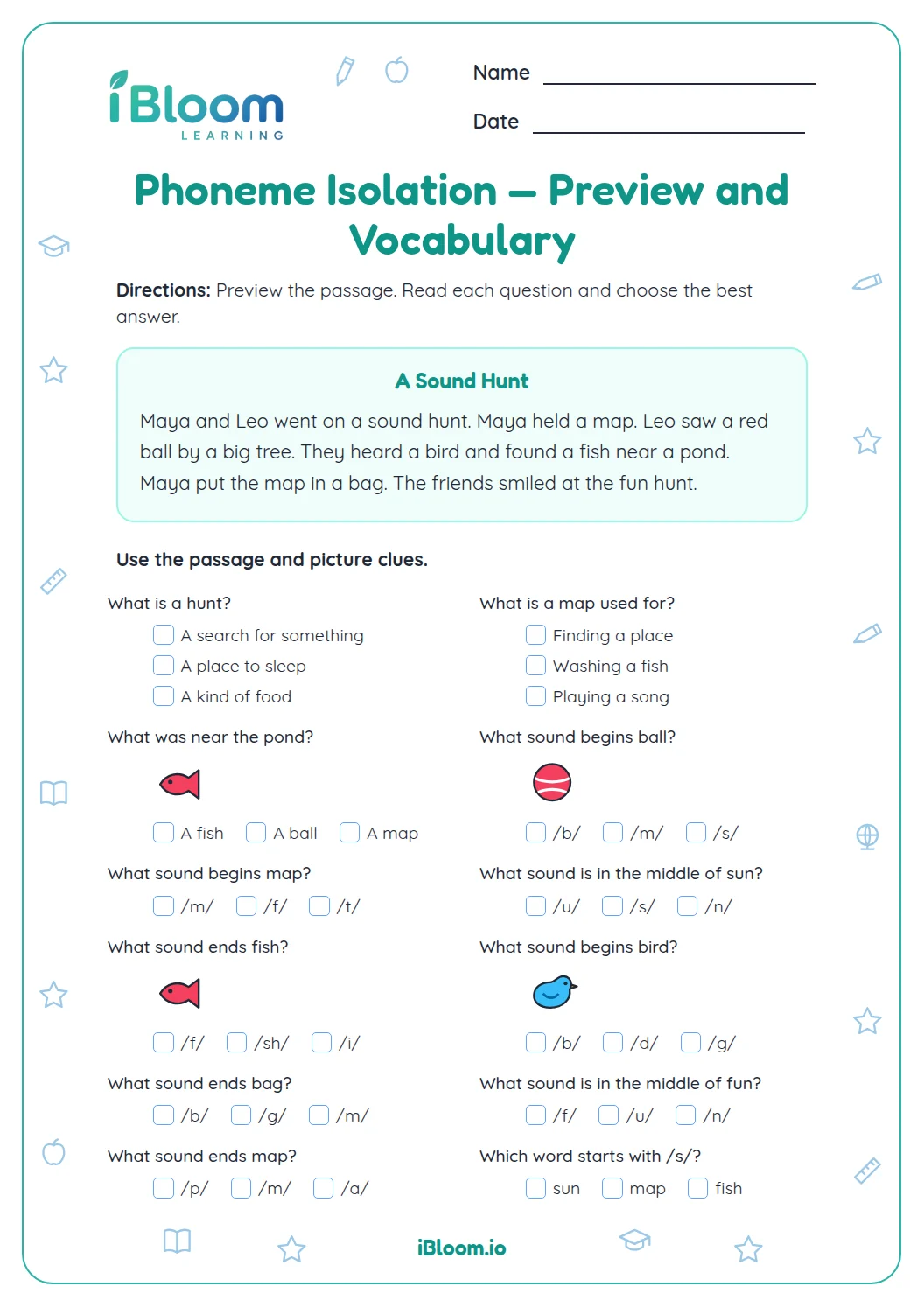
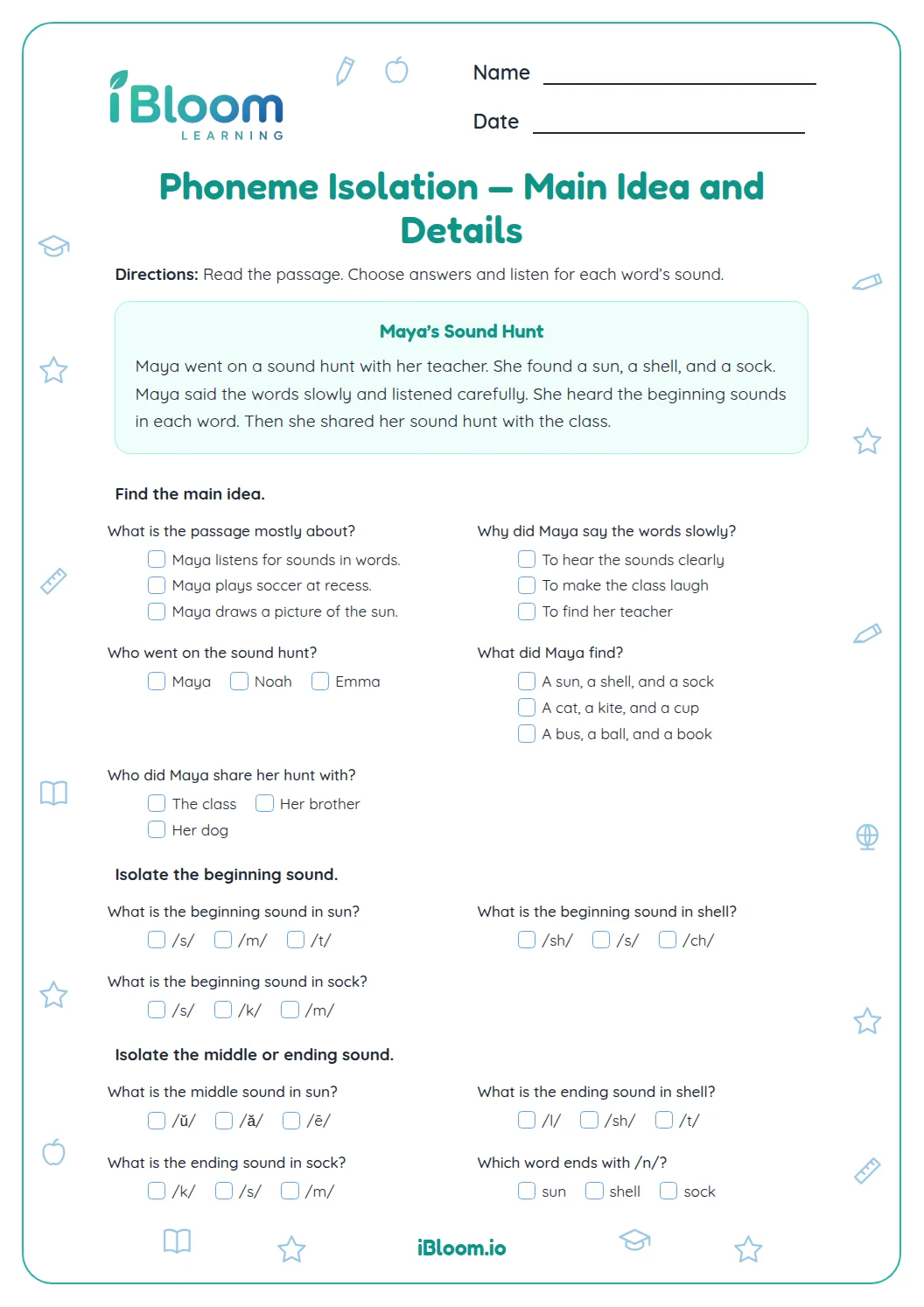
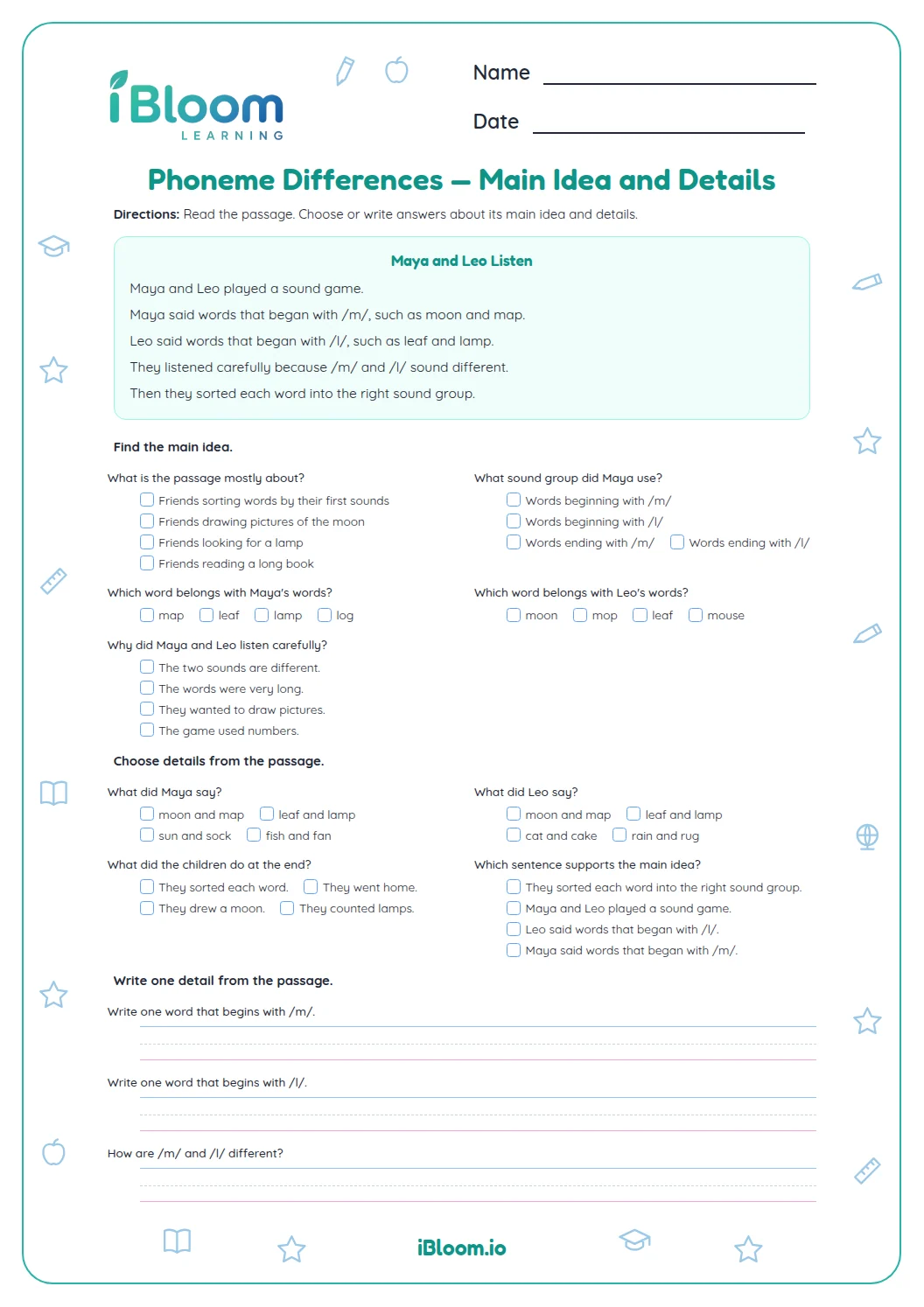
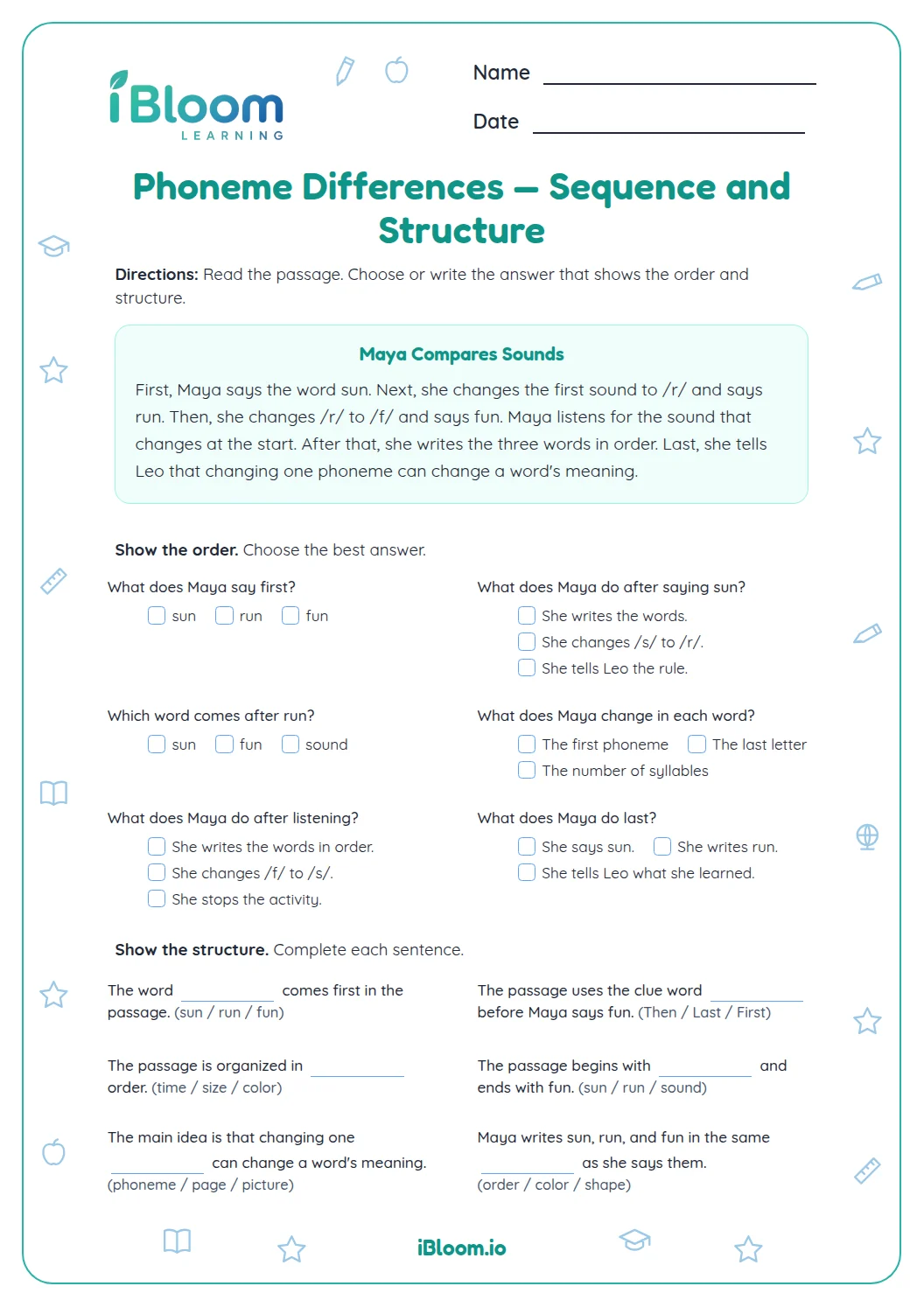
Part A has eight multiple-choice detail questions. Part B has six short responses about the order, details, and time-order structure of Mia’s actions. Part C has three beginning-sound choices.
How to use the worksheet
- 1Read the story aloud once, or have the child read it independently.
- 2Reread a sentence when a question asks about a detail.
- 3In Part A, cross out choices that do not match the story.
- 4In Part B, answer in a short phrase or sentence.
- 5Use first, next, and last to explain the event order.
- 6Check each response with the separate answer key.
Common mix-ups and quick fixes
The mistake
Mixing up the day Mia found the seed with the day the shoot appeared.
The fix
Point to the Saturday and Friday sentences and match each event to its day.
The mistake
Saying Mia watered the pot before she planted the seed.
The fix
Track the actions in the passage: soil, seed, water, sunny window.
The mistake
Giving an answer that is sensible but not stated in the story.
The fix
Ask the child to find the sentence that supports the answer.
Curriculum alignment
Use story details to describe characters, setting, and major events.
On this sheet: Questions ask children to identify Mia, the setting, and the major planting events.
Show the official wordingHide the official wording
Describe characters, settings, and major events in a story, using key details.
What to practice next
Make more practice
Further reading
Questions parents and teachers ask
How many questions are on this sheet?
There are 17 questions: eleven multiple-choice items and six short written responses. The first group checks story details such as who planted the seed and where Mia set the pot. The written group asks children to describe actions in order and notice how the story is organized. The answer key is separate.
Can I read the passage aloud?
Yes. An adult may read the story and questions aloud if decoding is getting in the way of the reading-comprehension work. Pause after each event so the child can point to a detail, then encourage the child to give the answer in their own words.
What is the story about?
Mia plants a seed in a pot, cares for it by a sunny window, and sees a green shoot a few days later. The short story gives children a clear sequence of actions and details to use when answering the questions.
What does the answer key include?
The key lists the correct choice for each multiple-choice question and a sample response for each short-answer item. Children may use different wording and still be correct when they include the same story detail, such as saying Mia put the pot near a sunny window.
How can I help with event order?
Have the child retell the story using “first,” “then,” and “finally.” If the order is confusing, reread one sentence at a time and point out time clues such as Saturday, each morning, and Friday. Then have the child answer the sequence questions.
How long should this worksheet take?
Plan for about 15 minutes, with time to read or reread the passage. A child working independently may finish sooner; reading the story together and discussing the clues can take longer. The page is designed for practice rather than a timed score.