




About this worksheet
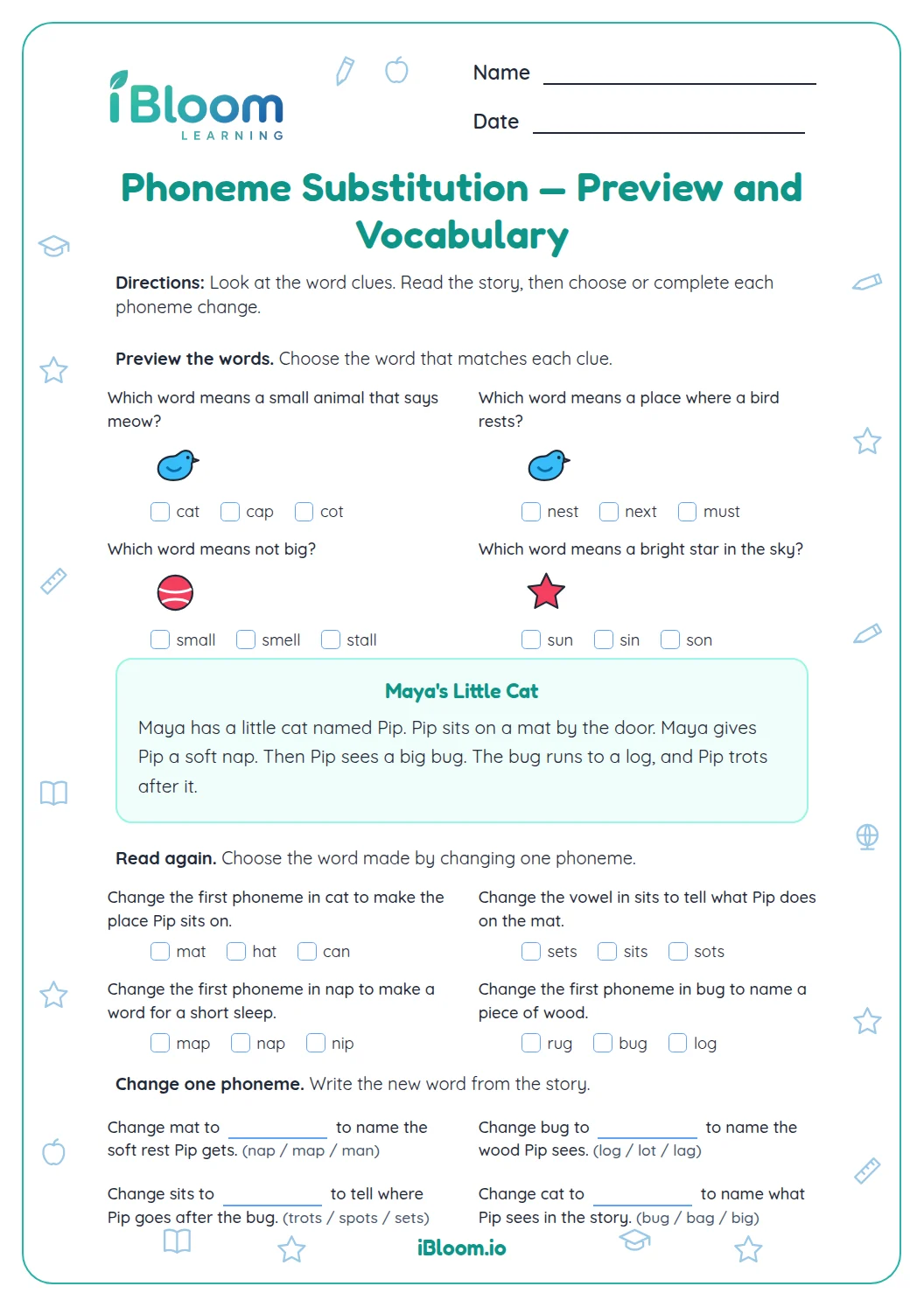
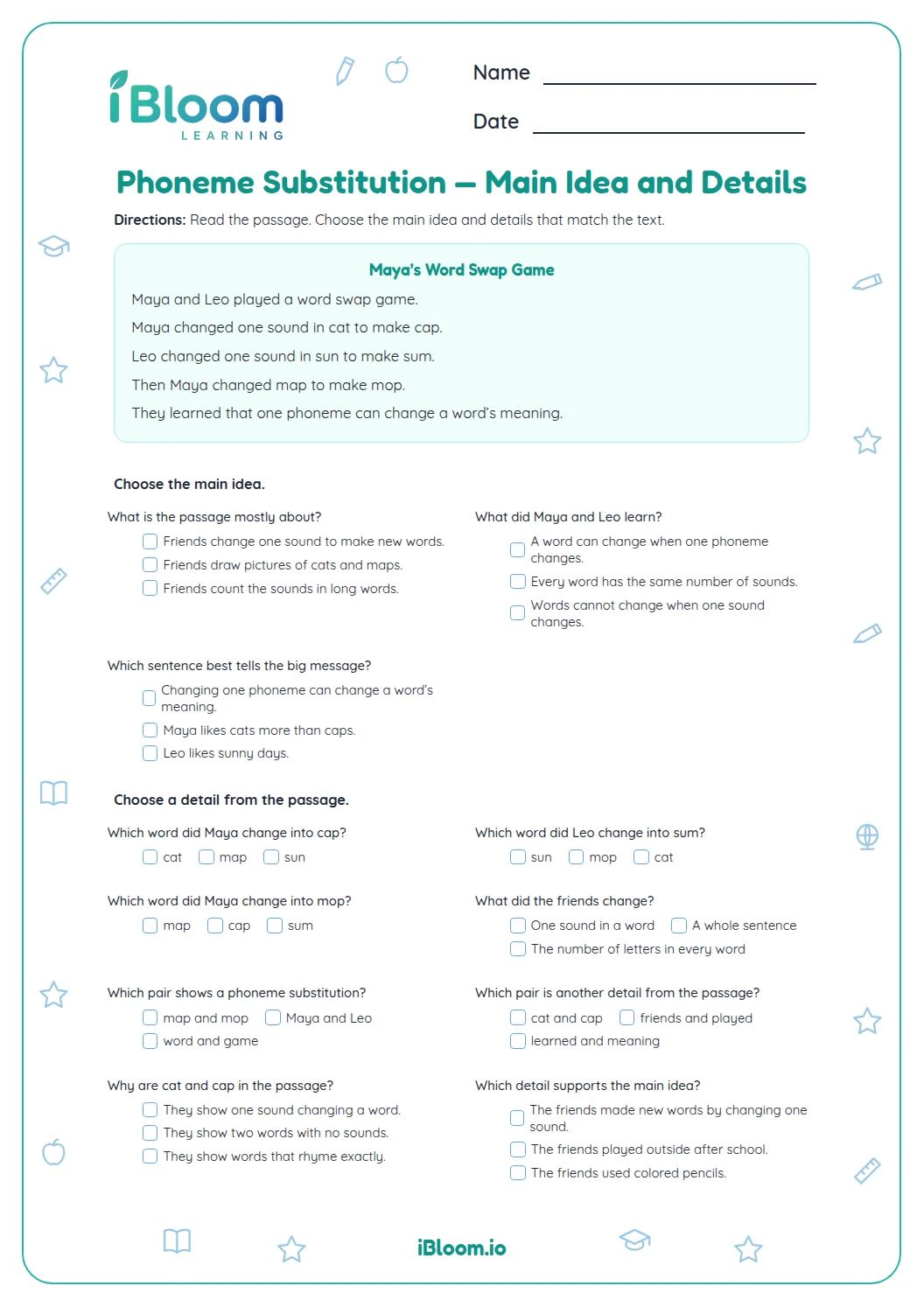
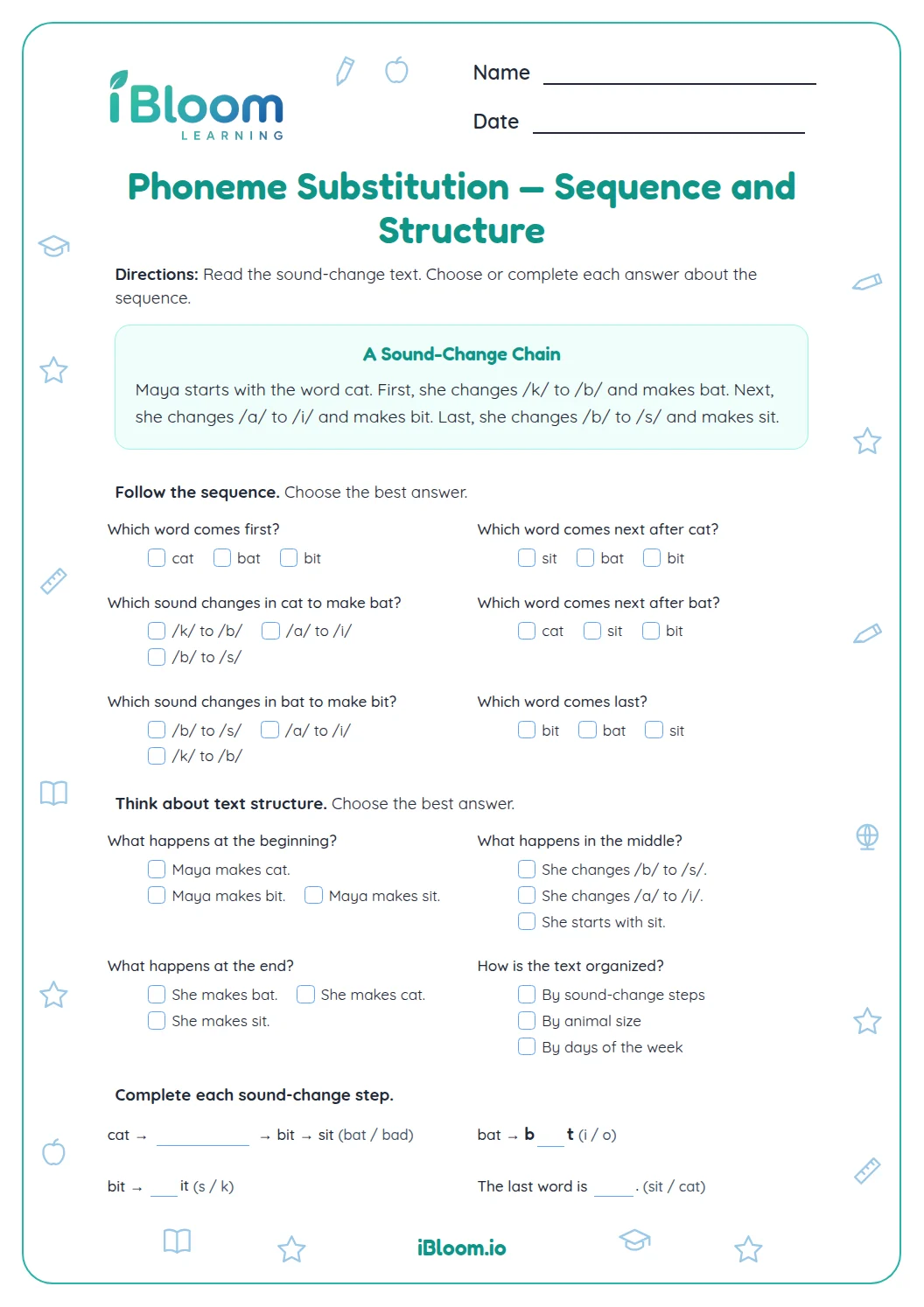
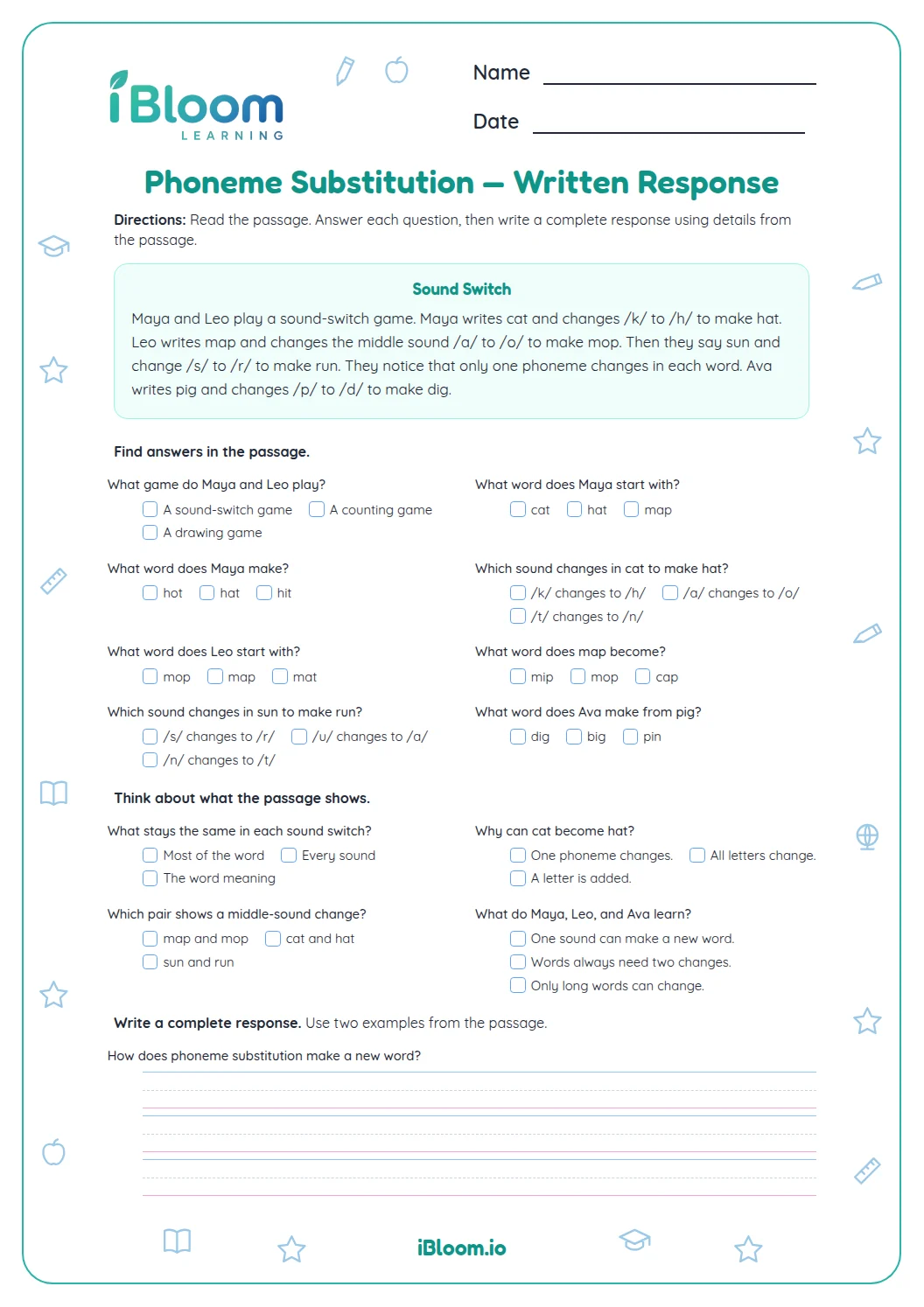
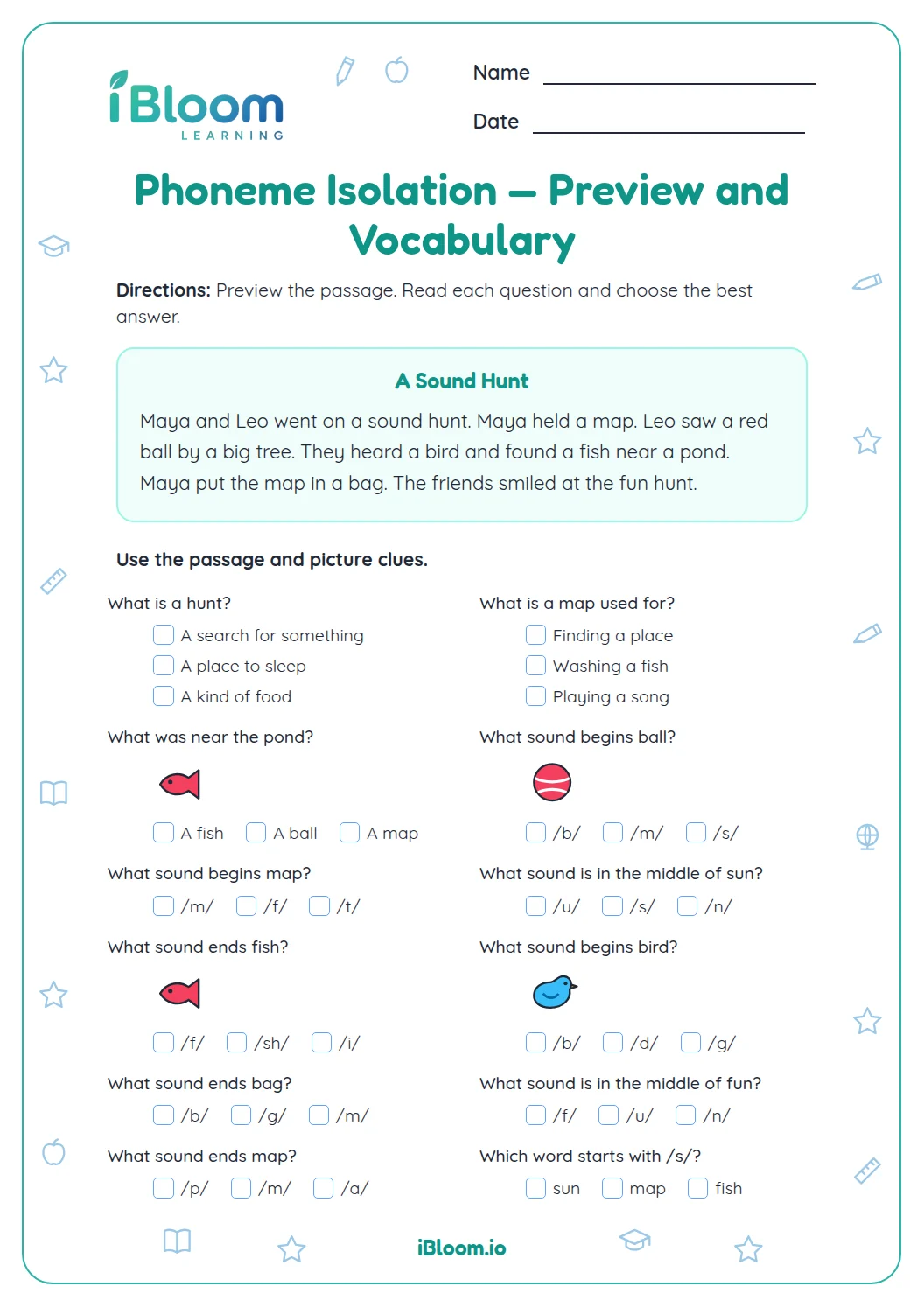
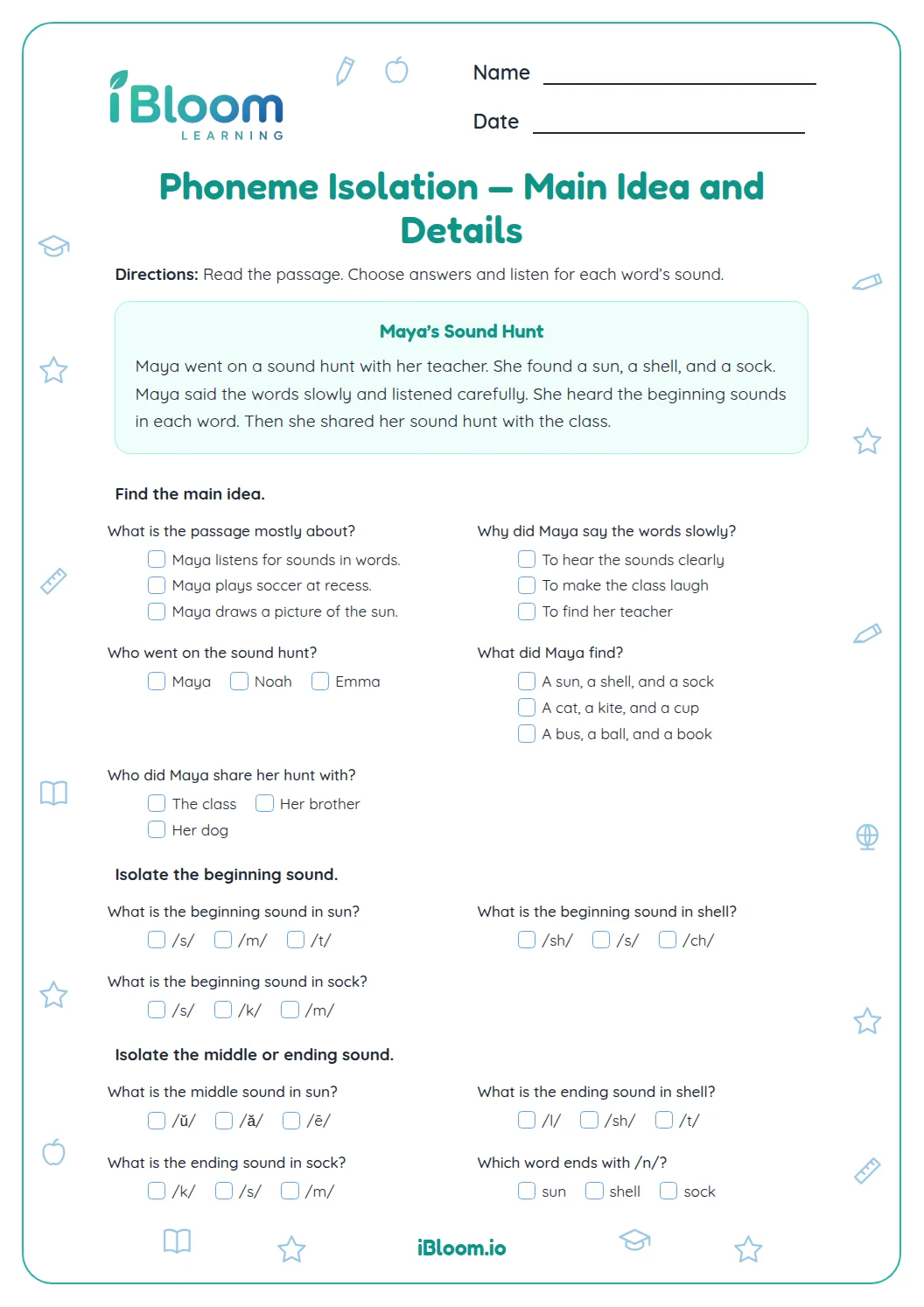
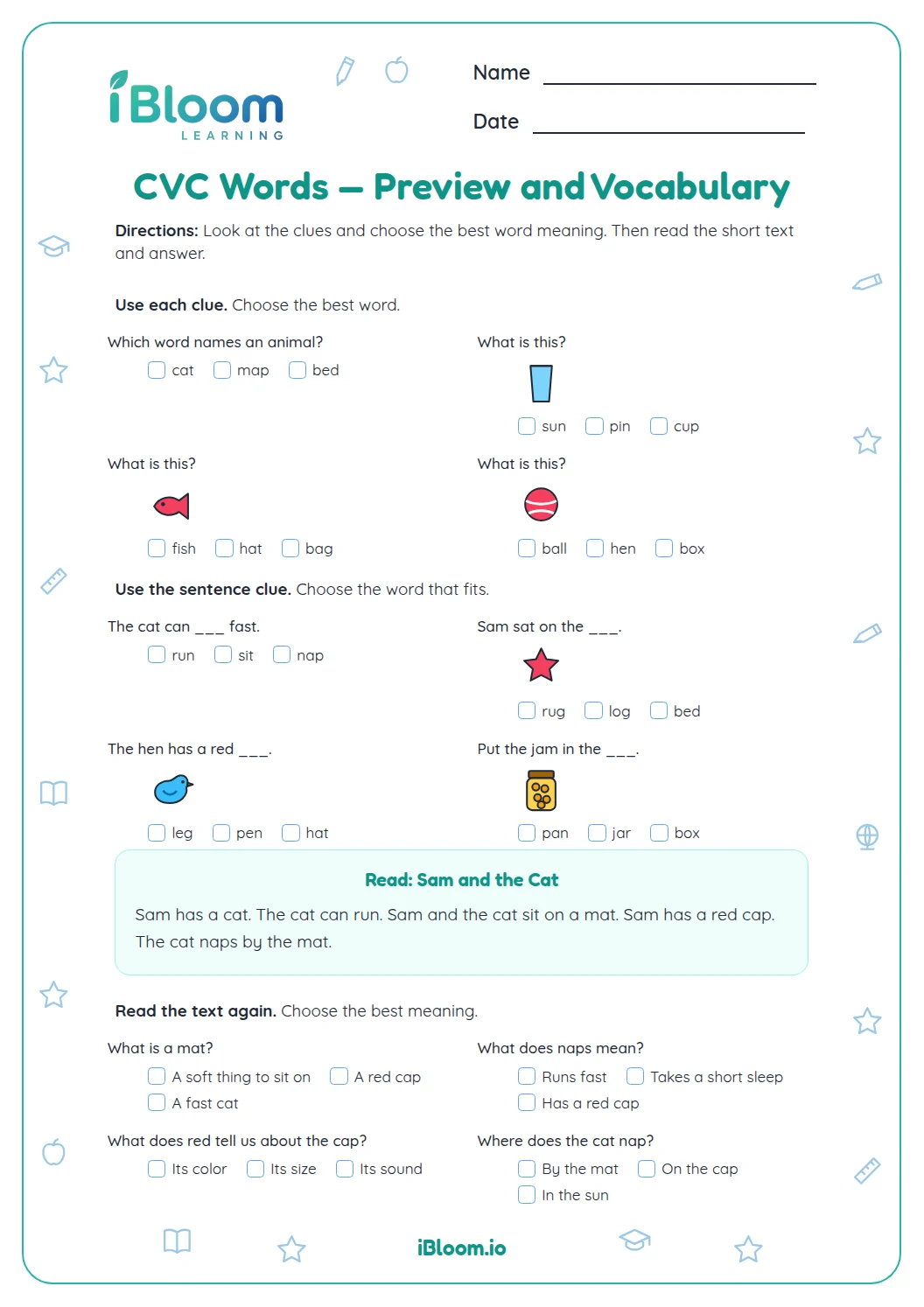
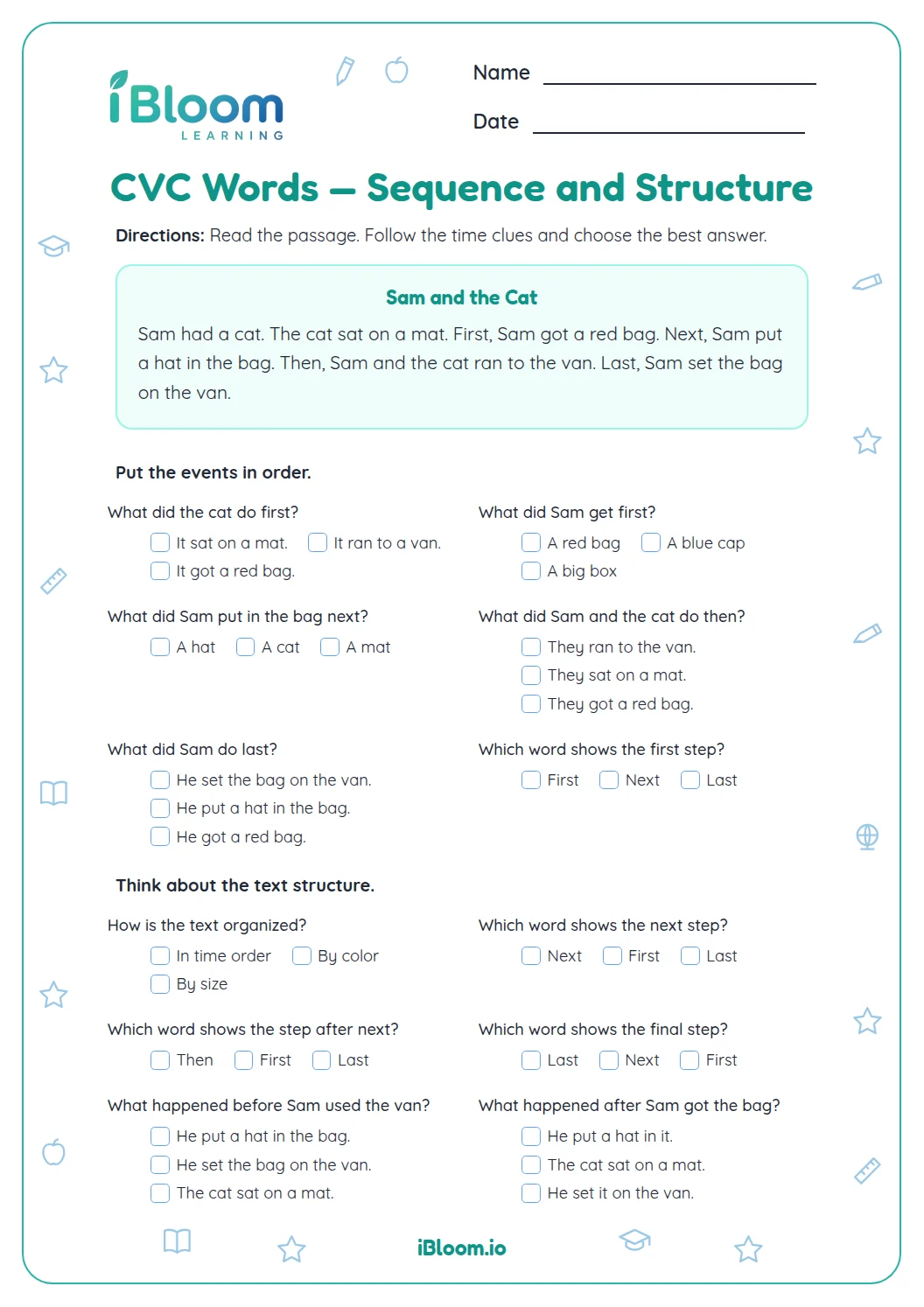
This free Grade 1 worksheet pairs two initial-sound changes with a short original story about Maya and Leo planning a walk to a lake. Children change cap to map and lake to make, then answer passage questions about details, evidence, and a supported inference. The passage is 61 words. The printable spans three worksheet pages, with a separate answer key.
Aligned to RL.1.1
How do the sound changes work?
Say cap slowly and replace only its first sound, /c/, with /m/ to make map. In the next change, replace /l/ in lake with /m/ to make make. The vowel and final sound stay in place.
What happens in Maya and Leo’s story?
Maya and Leo use the map to plan a walk to a lake. They pack a snack, sit by the water, and eat. The 61-word passage gives details children can reread when answering.
How can a child support an answer?
For a detail question, find the sentence that says it directly. For an inference, connect a clue with what is likely; the plan to walk to the lake supports the idea that they will go there.
How to use this worksheet
- 1Say the whole word before changing a sound.
- 2Hold the two unchanged sounds in your mind.
- 3For passage questions, point to the sentence that supports the answer.
- 4Use the key to review both sound changes and evidence.
Common mistakes and quick fixes
The mistake
Changing more than the first sound in cap.
The fix
Say /c/ /a/ /p/, then replace only /c/ with /m/.
The mistake
Choosing a passage answer from memory without checking the text.
The fix
Reread the sentence that names the detail and match it to the question.
The mistake
Calling a possible next event a fact.
The fix
Use “might” for an inference or prediction and point to the clue that supports it.
Common Core alignment
Ask and answer questions about key details in a text.
On this sheet: Children answer questions and select details from the passage to support their responses.
Show the official wordingHide the official wording
Ask and answer questions about key details in a text.
What to practice next
Make more practice
Further reading
Questions parents and teachers ask
What is phoneme substitution?
Phoneme substitution means changing one sound in a spoken word to make a new word. In the first item, changing the first sound in cap from /c/ to /m/ makes map. The next sound task changes lake to make while keeping the other sounds in place.
What is the story about?
Maya changes cap to map, and the map shows a lake. Leo changes lake to make, and the friends use the map to plan a walk. They pack a snack, sit by the water, and eat. The passage gives details for comprehension questions.
How many questions and pages are included?
The worksheet has 14 questions across three pages, followed by a separate three-page answer key. The first two questions focus on sound substitution. The remaining questions ask about story details, evidence, and a supported inference. Children may reread the short passage as they work.
What does “use evidence” mean on this sheet?
Using evidence means choosing a detail stated in the passage that supports an answer. For example, “The map showed a lake” supports the idea that the map showed water. Children can return to the passage and point to the sentence.
Can an adult read the passage aloud?
Yes. An adult can read the passage and questions aloud while the child listens for the changing sounds and story details. For sound work, pause at the target word and say each sound clearly; for comprehension, reread the sentence that supports the answer.