


About this worksheet
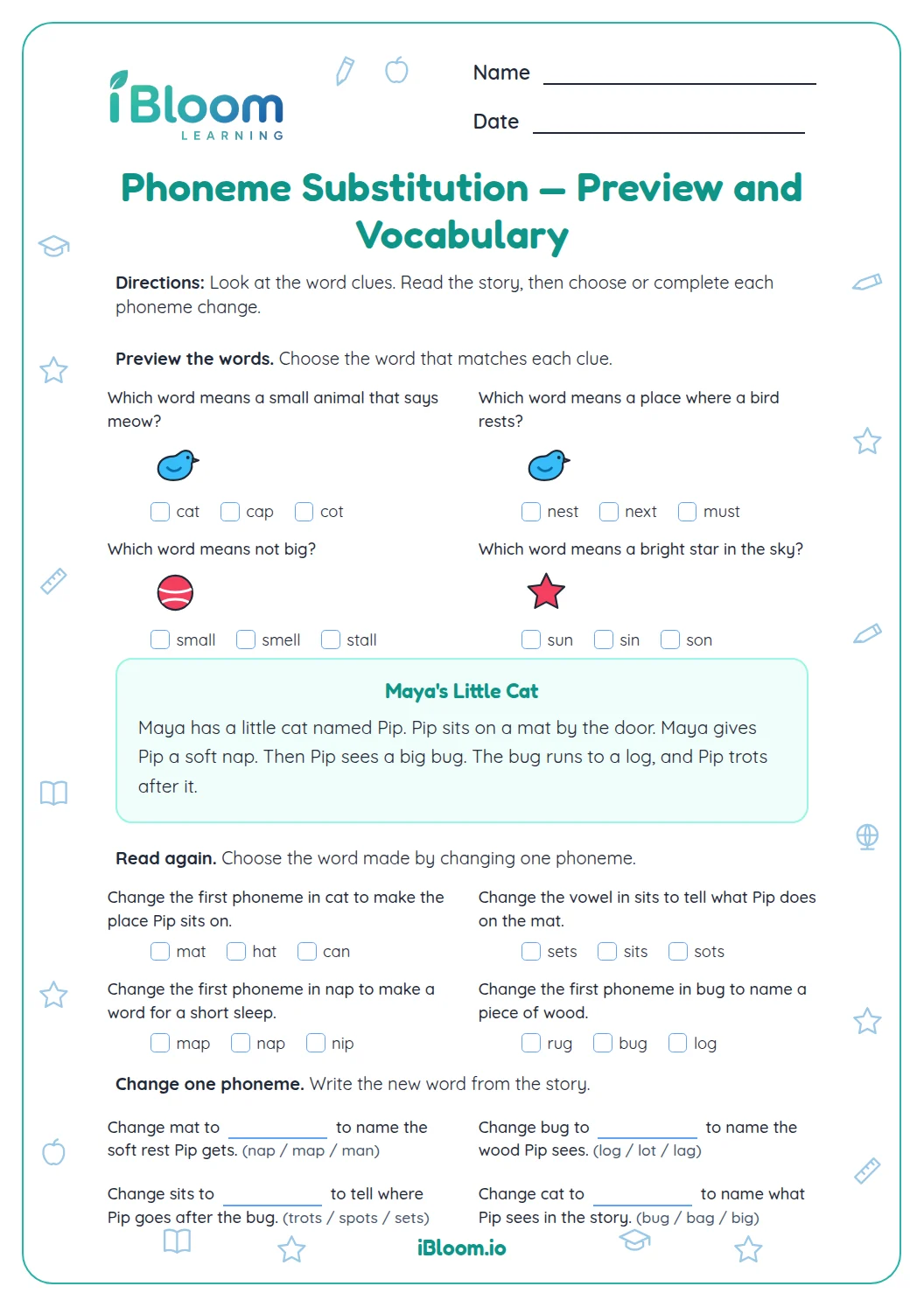
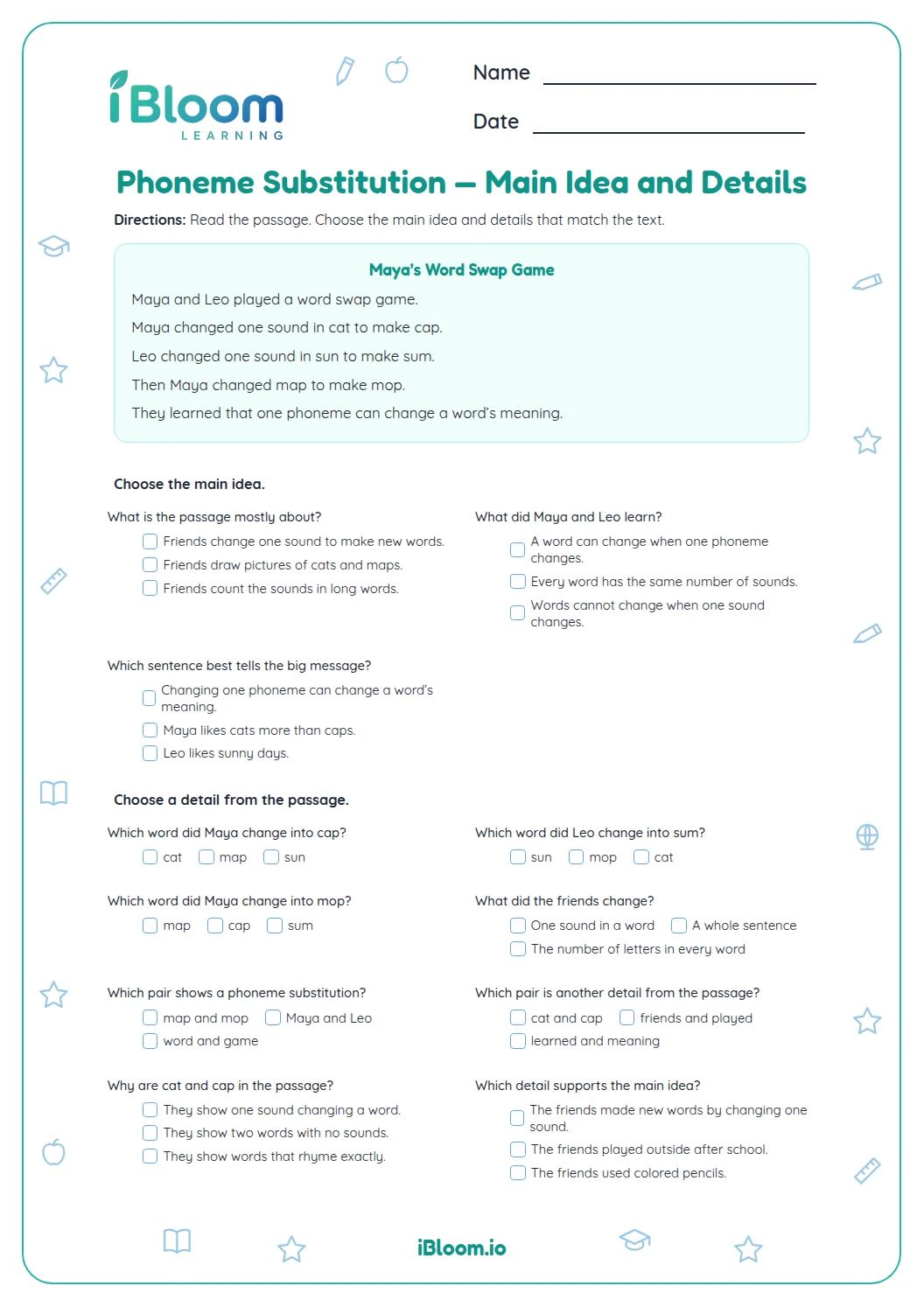
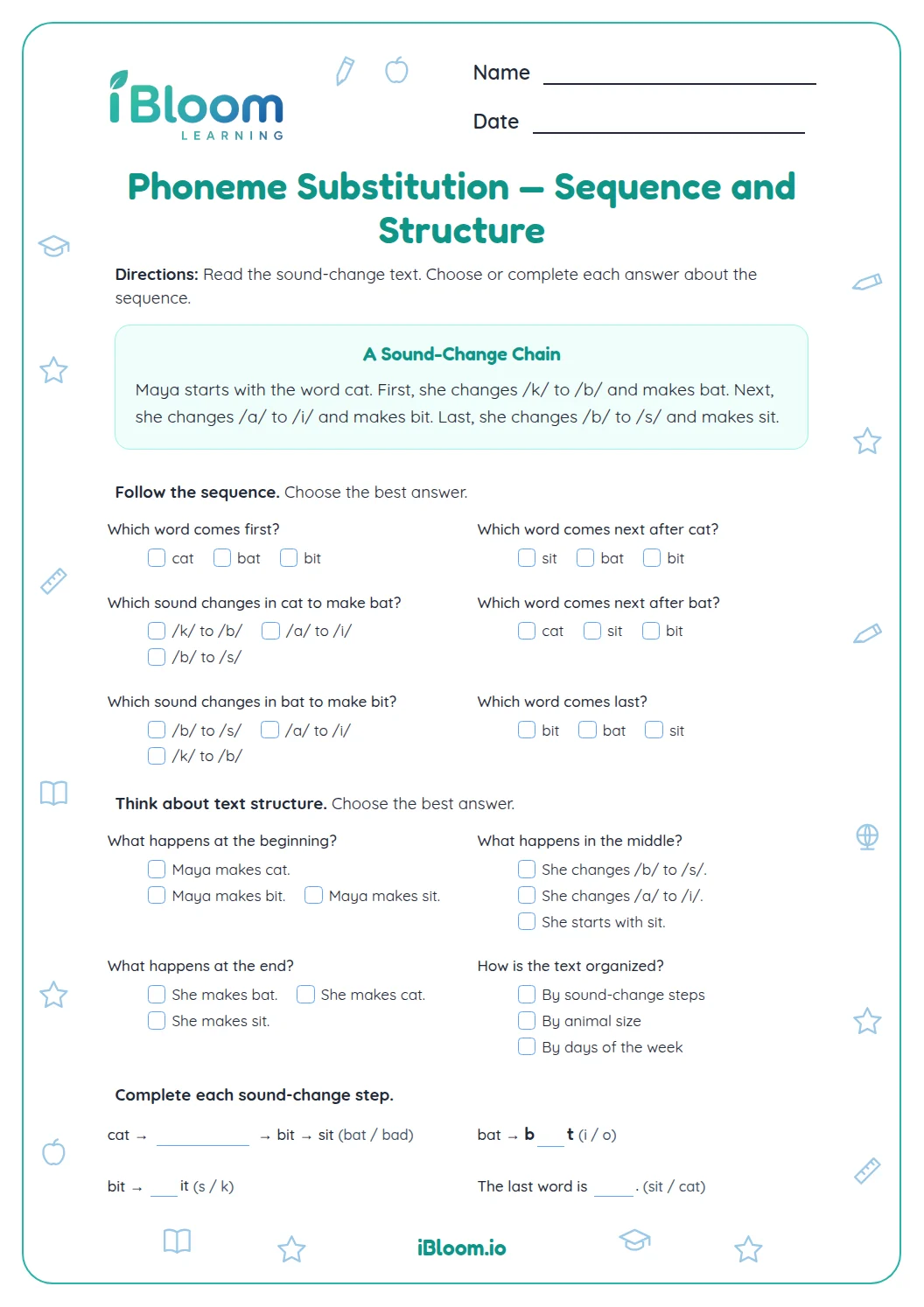
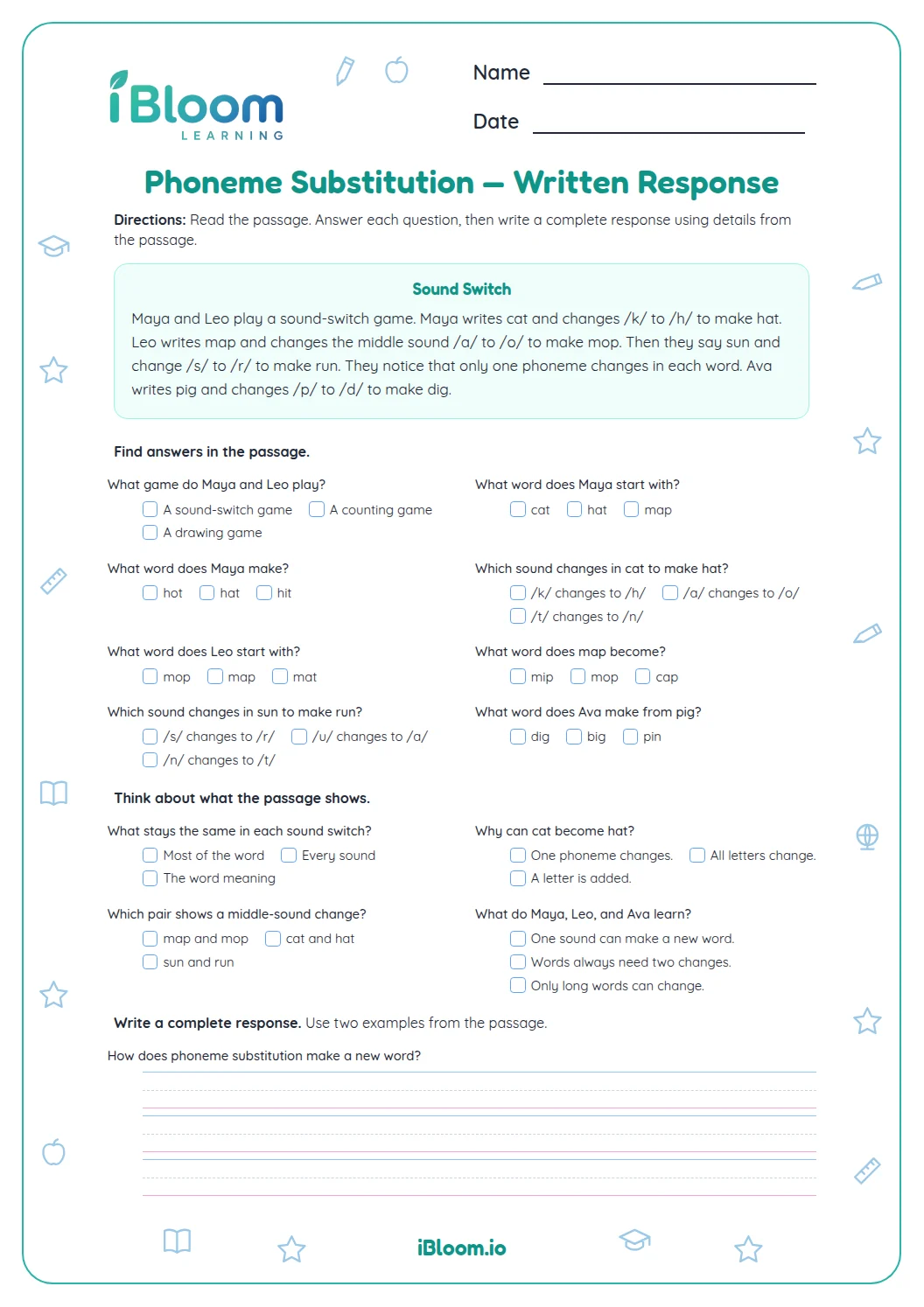
This Grade 1 printable worksheet combines phoneme substitution with a short reading passage. Learners change one sound in six simple words, read “A Seed for Mia,” and answer eight comprehension questions about details in the story. The phonics questions build phonological awareness; the passage supports early reading comprehension. A separate answer key is included.
How does one sound change a word?
A phoneme is a speech sound. To substitute a phoneme, keep the other sounds in place and change only the sound named in the prompt. Then blend the sounds to hear the new word.
How can a reader find a story detail?
Read the whole passage once for the idea. Then return to the sentence that mentions the question topic. The answer may be a word or phrase copied from that sentence.
- 1Question: Where did Mia put the seed?
- 2Find the sentence that tells where she planted it.
- 3The passage says she put it in a cup of soil.
- 4Answer: in a cup of soil
What is included in the mixed practice?
Part B has six sound substitutions. Part C has four multiple-choice questions about the passage. Part D has four fill-in details. The passage prints as Part A and follows Mia as she plants a seed and watches it sprout.
How to use this worksheet
- 1Say the word in the sound-change question.
- 2Change only the first, middle, or last sound named.
- 3Blend the new word and select it.
- 4Read the passage once from beginning to end.
- 5Return to the passage to find each answer.
- 6Check the filled words and choices with the key.
Common mistakes and quick fixes
The mistake
Changing more than one sound.
The fix
Keep every sound except the one named in the question.
The mistake
Guessing a story answer from memory.
The fix
Look back at the sentence that gives the detail.
The mistake
Filling a blank with a related word that is not in the text.
The fix
Find the exact word in the passage and reread the sentence.
What to practice next
Make more practice
Further reading
Questions parents and teachers ask
What is phoneme substitution?
Phoneme substitution means changing one sound in a word to make a different word. For example, changing the first sound in map to /t/ makes tap. The first six items ask learners to change an initial, middle, or final sound.
How does this sheet mix phonics and comprehension?
Learners first complete six sound-change questions, then read an original short passage about Mia planting a seed. The eight story questions ask them to find details stated in the passage and complete short sentences with words from it.
Can I read the passage aloud?
Yes. For a learner who is still building reading fluency, read the passage aloud together and point to each word. Then ask the learner to find the answer in the text. The sound-swap questions can also be spoken aloud to keep attention on phonemes.
What should a learner do when changing a sound?
Say the original word slowly, listen for the sound named in the prompt, replace only that sound, and blend the sounds together again. Check that the new spoken word matches one of the choices and that the other sounds stayed the same.
What are the answers to the story questions?
The passage questions are answered in order: in a cup of soil; by the sunny window; a green sprout; drew it in her notebook; stem; water; sign; grow. Each answer appears directly in the story, so learners can point to the sentence as evidence.
What does phoneme substitution practice?
The sound-change section asks learners to change one speech sound in a simple, one-syllable word to make a new word. Each prompt names the sound position and replacement sound, and the choices help learners check that only one sound changed.