




About this worksheet
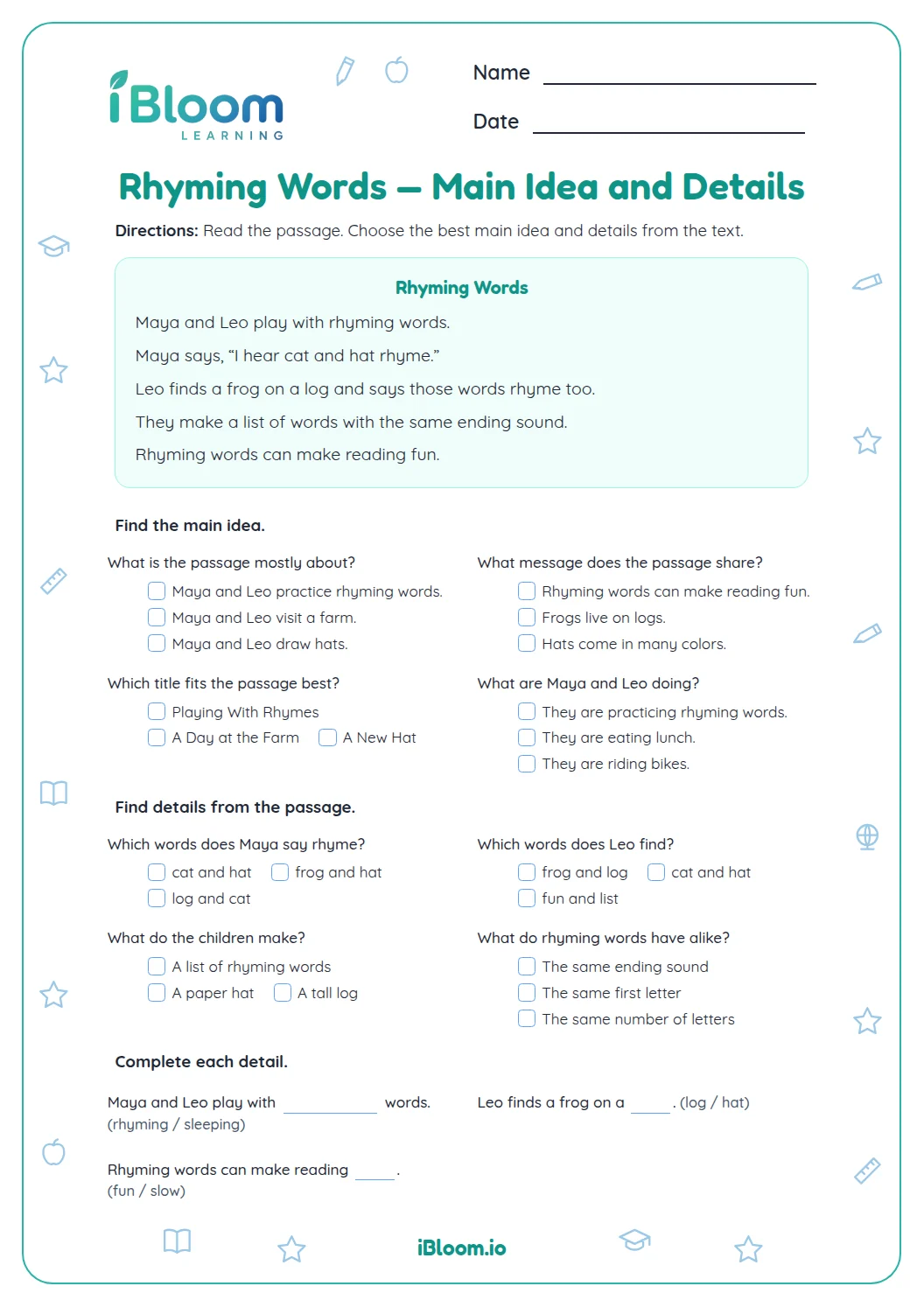
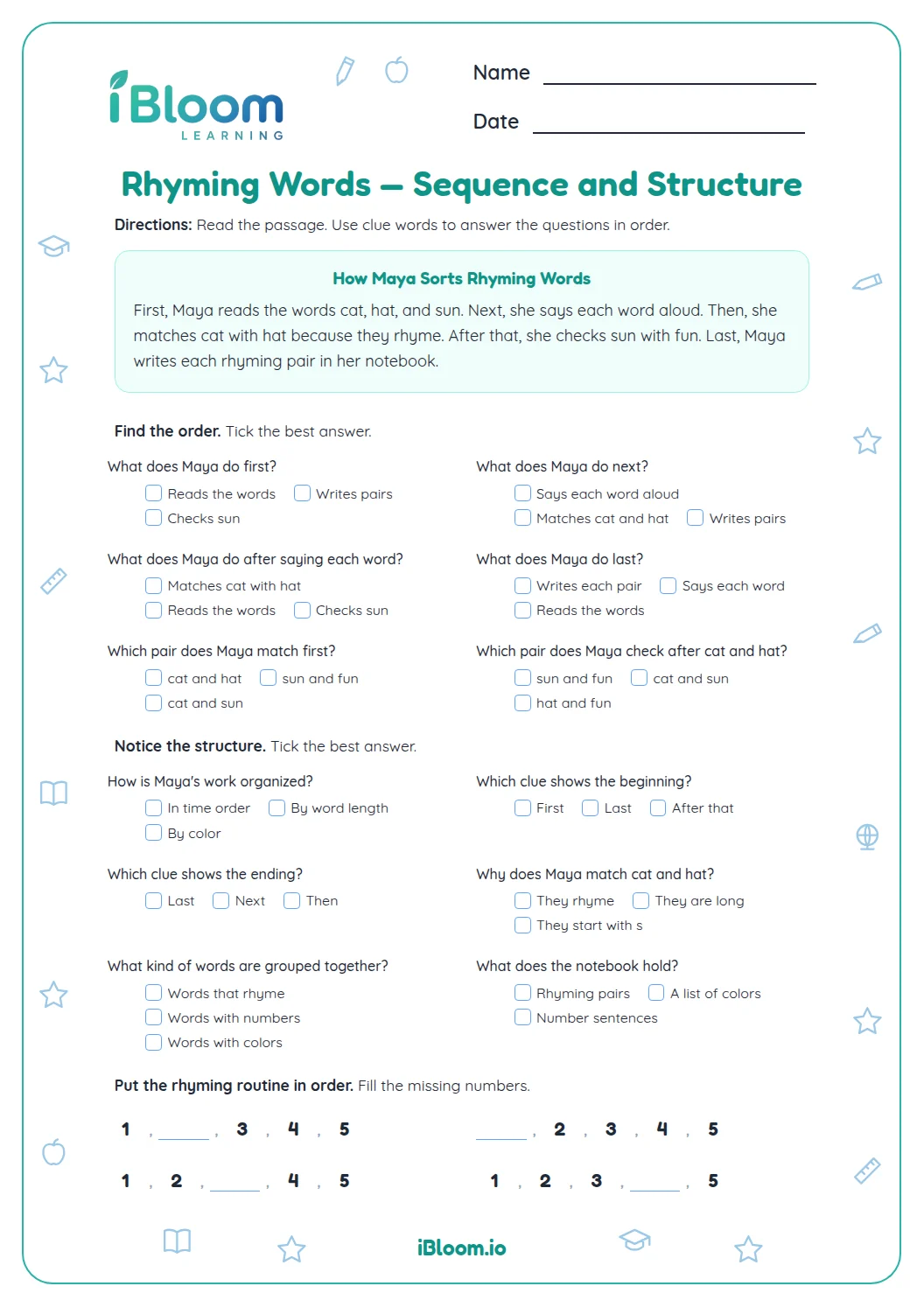
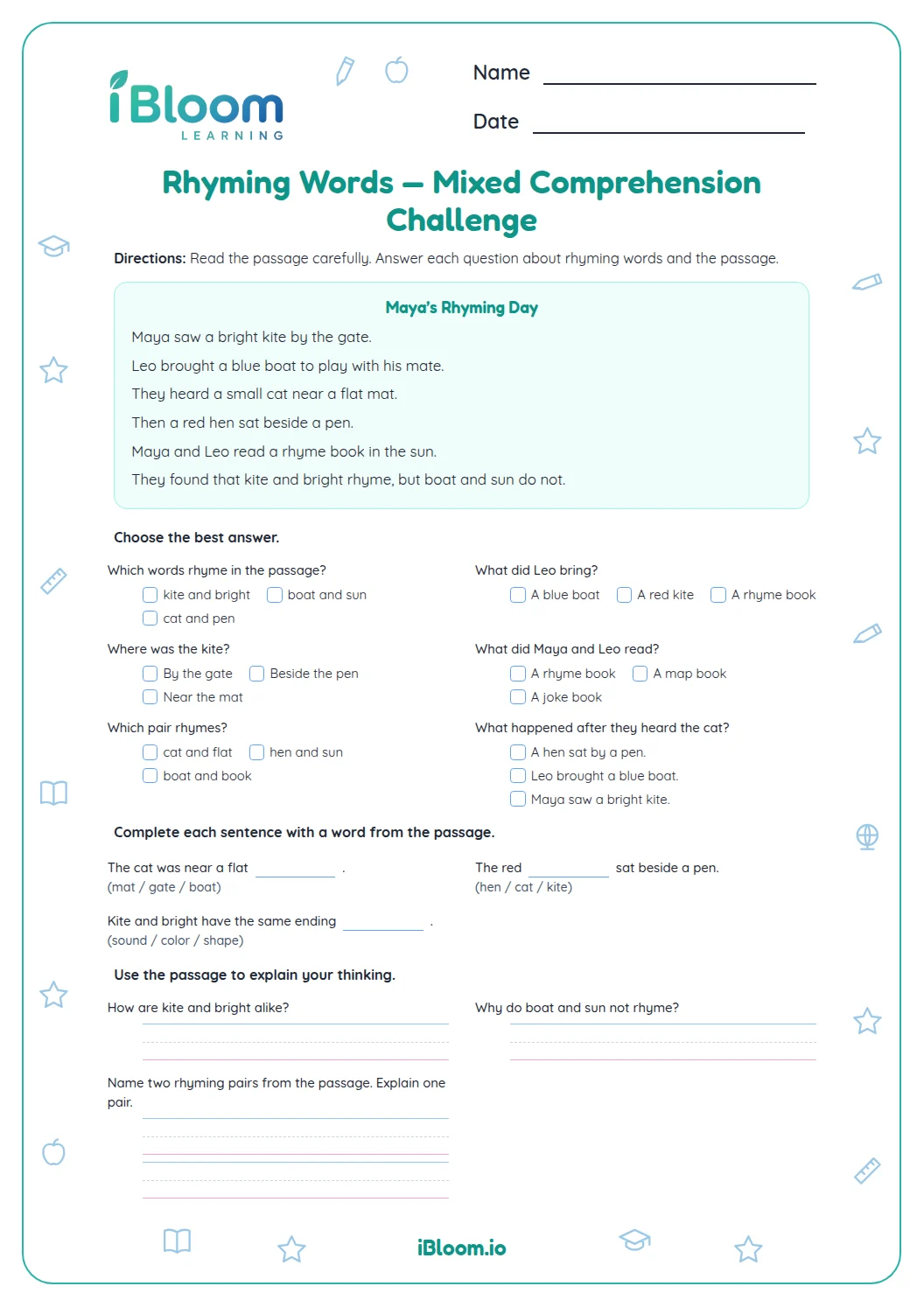
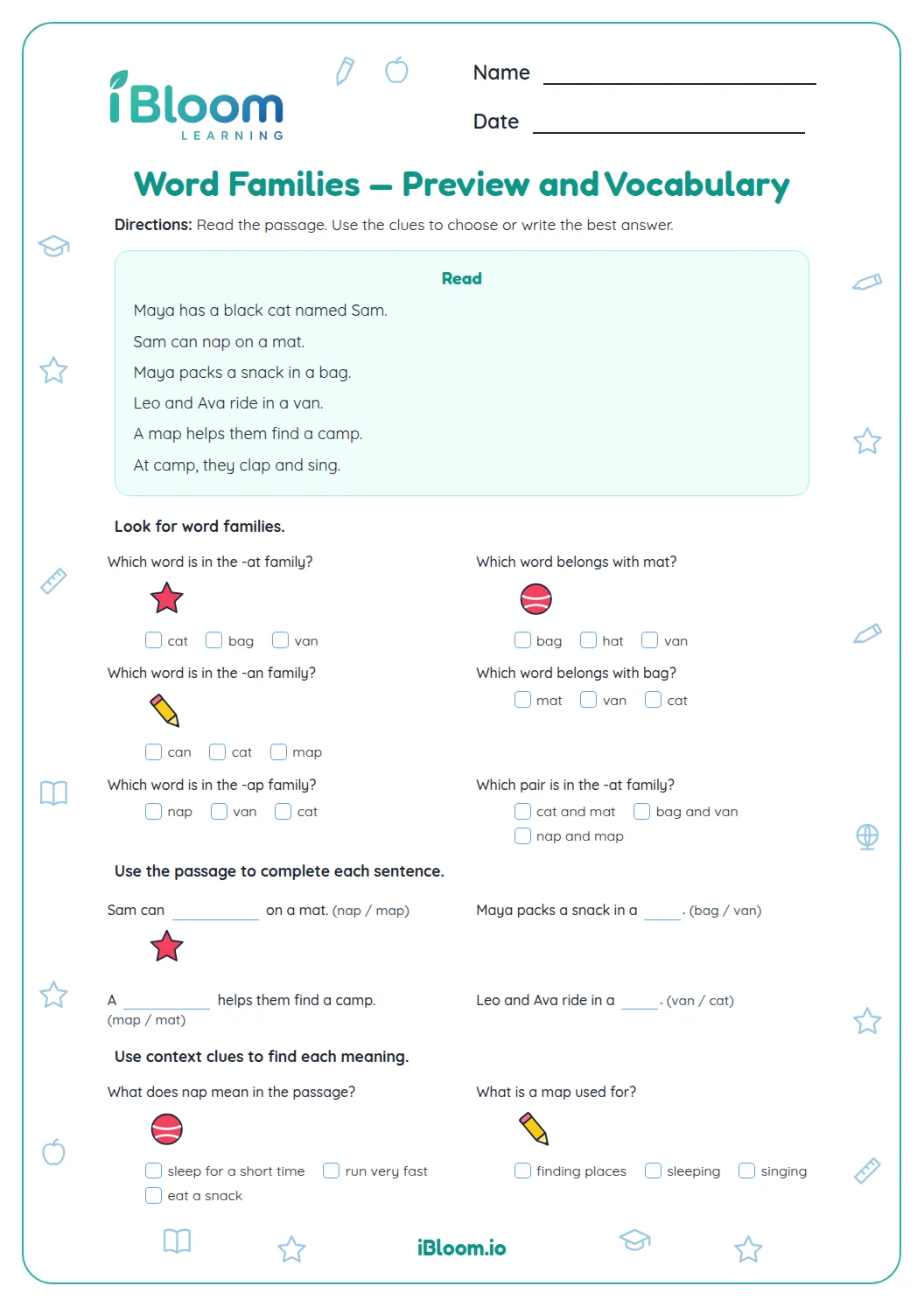
This Grade 1 printable pairs a short story about Ben flying a kite with 14 questions about rhyming words. Children identify matching end sounds, compare word pairs, find rhymes in the passage, and write a few of their own. The passage is brief enough to reread while answering. The separate answer key gives sample responses where more than one rhyme can work. It practices CCSS RF.K.2.a through the named foundational skill of recognizing and producing rhymes.
Aligned to RF.K.2.a
How do you hear a rhyme?
Say each word and focus on the sound from its vowel to the end. Kite and white share the same ending sound even though they start differently. In the passage, children can find several words with that pattern.
- 1kite
- 2white
- 3Both end with the same “ite” sound.
How does the passage support practice?
Ben’s kite story includes repeated rhymes such as kite, white, night, light, and bright. Rereading helps children find words in context and compare how they sound.
What will children write?
The last questions ask for a rhyme found in the passage, a new rhyming word, a pair, a reason, and a short rhyming line.
How to use this worksheet
- 1Read the passage aloud once for meaning.
- 2Reread and underline words with matching endings.
- 3Say each multiple-choice pair aloud before choosing.
- 4For written items, check the ending sound, not just the spelling.
Common mistakes and quick fixes
The mistake
Choosing words that start alike but end differently.
The fix
Say both words and compare the sounds after the vowel.
The mistake
Matching only the last letter.
The fix
Listen to the whole ending sound, such as “ite.”
The mistake
Rejecting a rhyme because it is spelled differently.
The fix
Rhymes are based on sounds; spelling may vary.
Curriculum alignment
Hear and make rhymes by matching words with the same ending sound.
On this sheet: The questions directly practice this skill.
Show the official wordingHide the official wording
Recognize and produce rhyming words.
What to practice next
Make more practice
Further reading
Questions parents and teachers ask
Should children read the passage aloud?
Reading it aloud can help children hear the ending sounds. Invite your child to reread a line, say two words slowly, and listen to the parts after the vowel. The worksheet also asks children to find rhymes in print and make their own examples.
What makes two words rhyme?
Rhyming words have the same ending sound, beginning with the vowel sound. Kite and white rhyme, as do red and bed. The first sounds can differ, and spellings can differ too, as long as the ending sounds match when spoken aloud.
Can more than one answer work for the written rhyme questions?
Yes. Several written prompts allow many valid rhymes. The answer key gives one sample response, but a different word is correct if it has the same ending sound and fits the prompt. Reread the line and say both words aloud to check the sound.
How many questions are on this worksheet?
There are 14 questions in four parts, plus one short original passage. The questions move from recognizing rhyming words to comparing pairs and writing examples. A separate key includes sample answers for the open responses. Reread the line and say both words aloud to check the sound.
What if my child reads “kite” and “white” differently?
Say each word clearly and say the ending slowly: k-ite, wh-ite. The beginning sounds differ, but the vowel and final sound match. Listening to the ending is more useful than looking only at the first letter. Reread the line and say both words aloud to check the sound.