




About this worksheet
This free Grade 1 worksheet pairs an original pond story with 14 questions. Children read phrases such as “a little frog” and “dark clouds roll in” smoothly, then answer who, where, what, and why questions from Nina and Dad’s walk. The answer key lists the passage-based answers and sample responses. The practice supports CCSS RF.1.4, reading grade-level text with accuracy, appropriate rate, and expression.
Aligned to RF.1.4
How do phrase reading and comprehension work together?
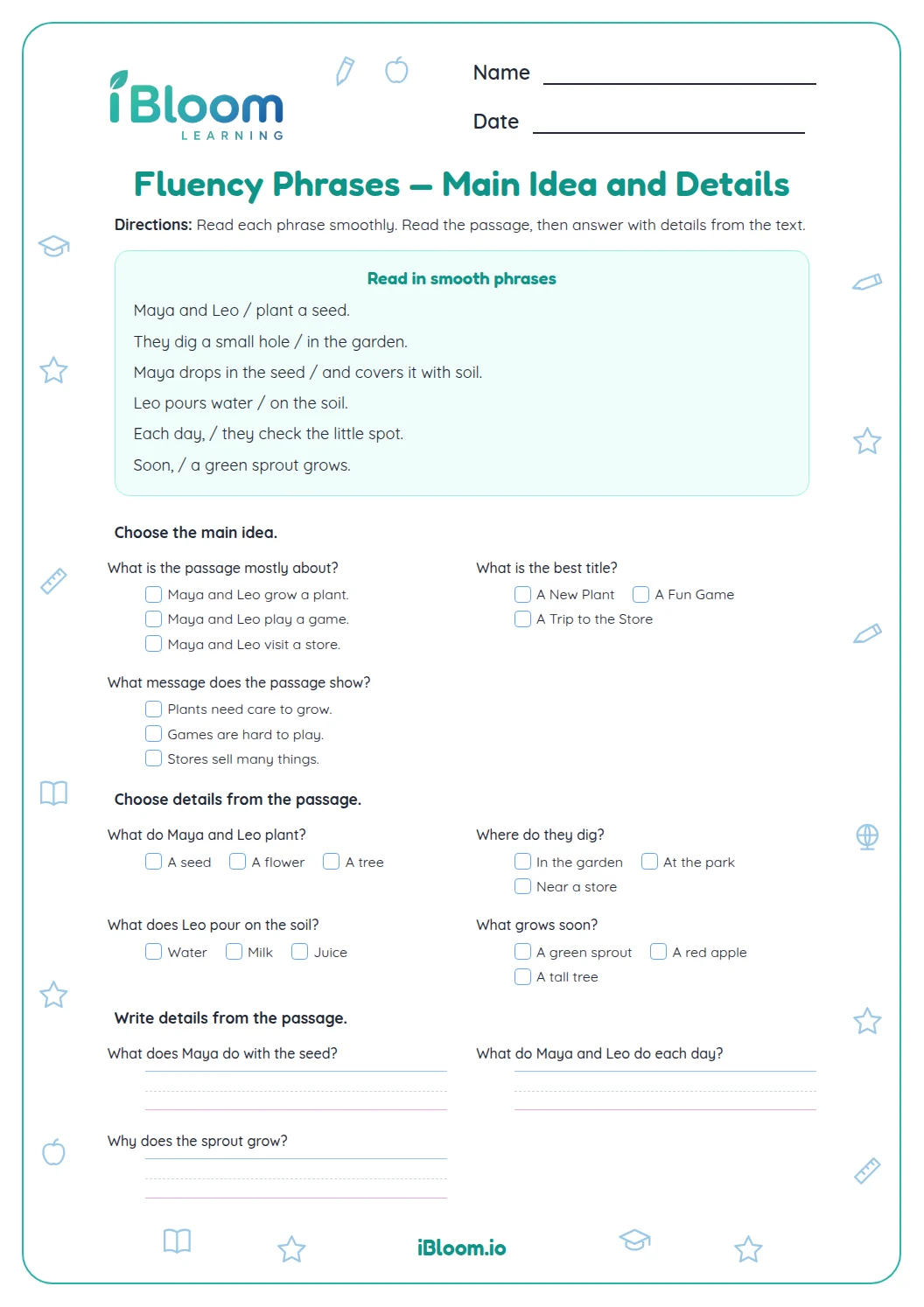
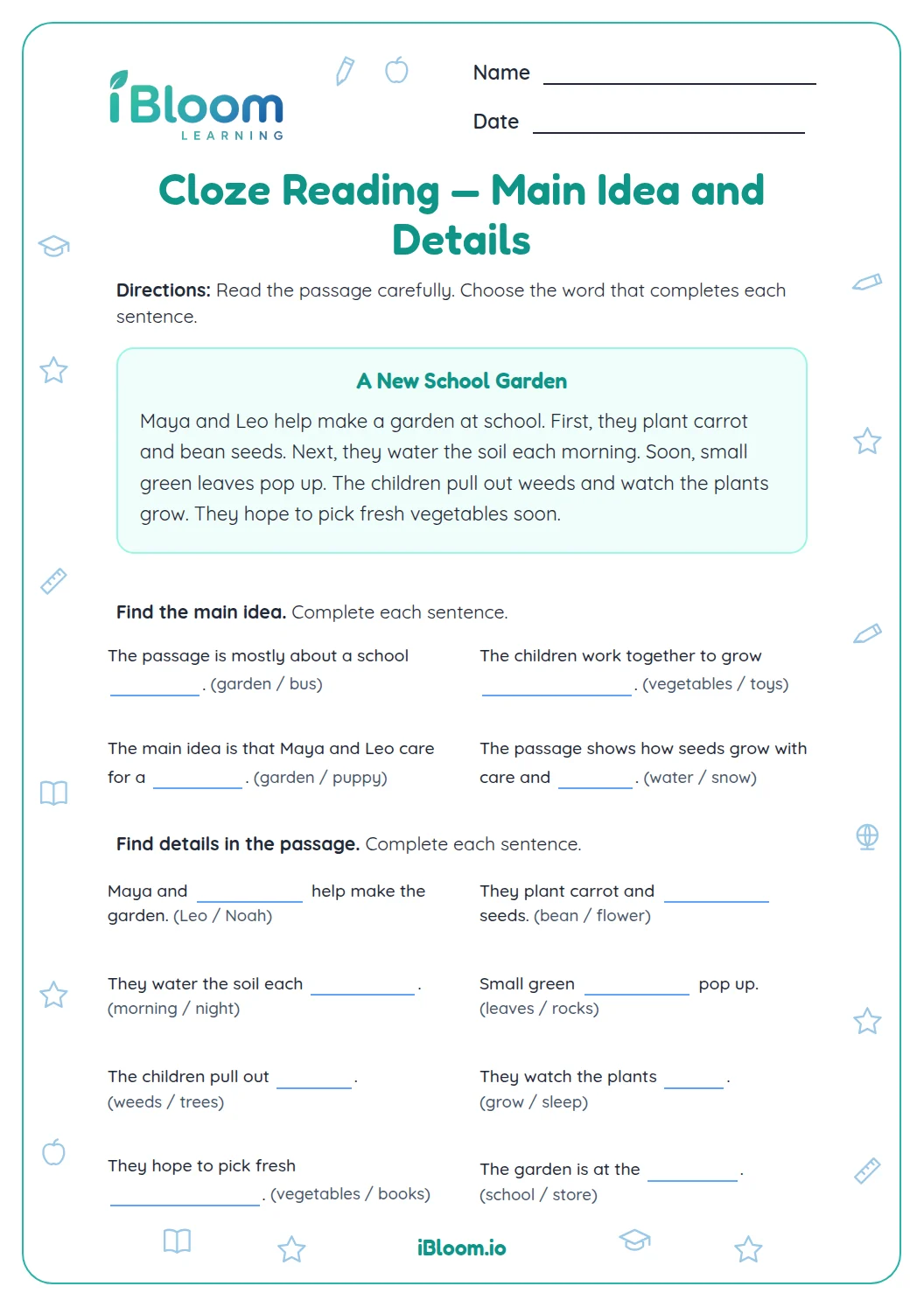
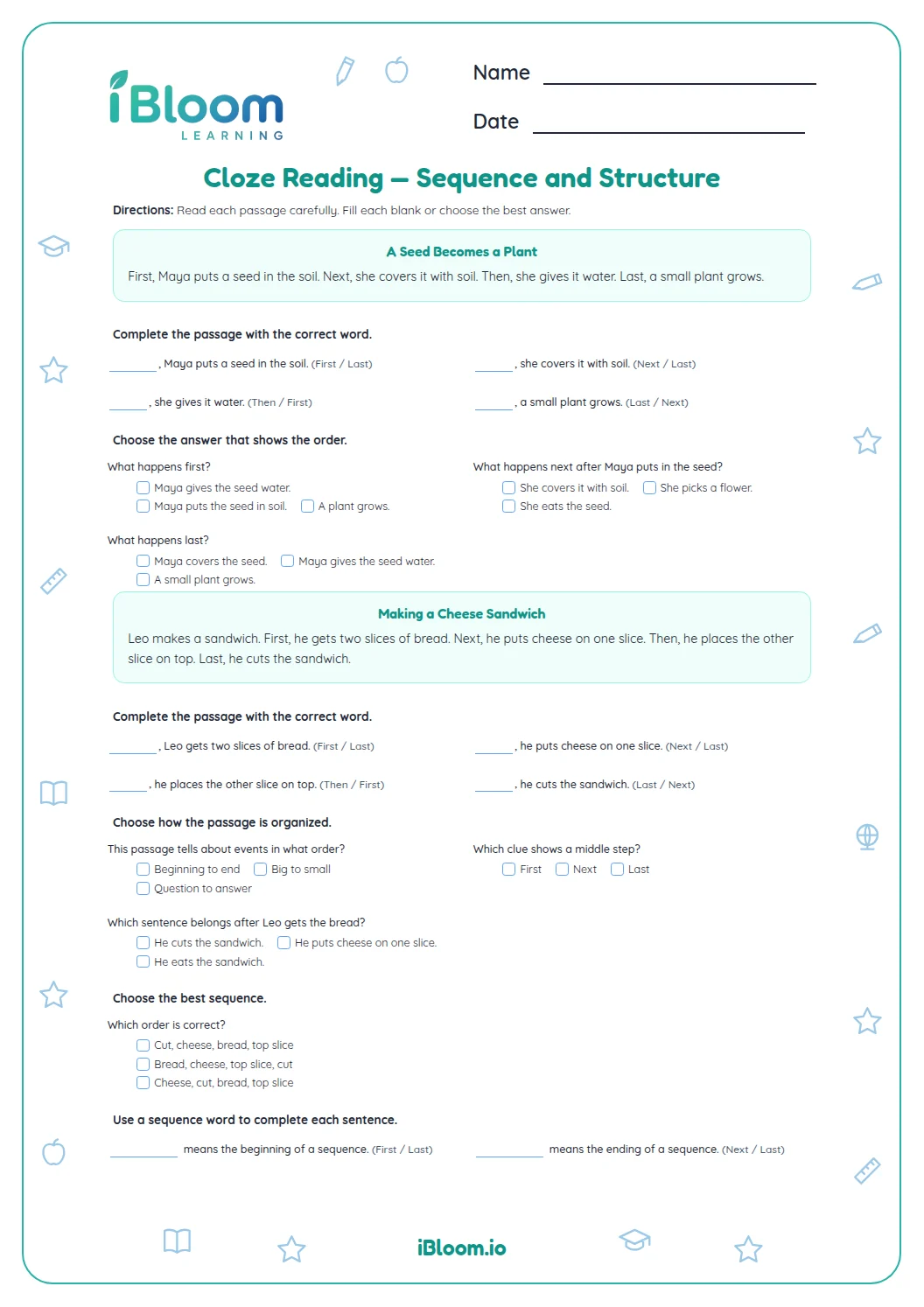
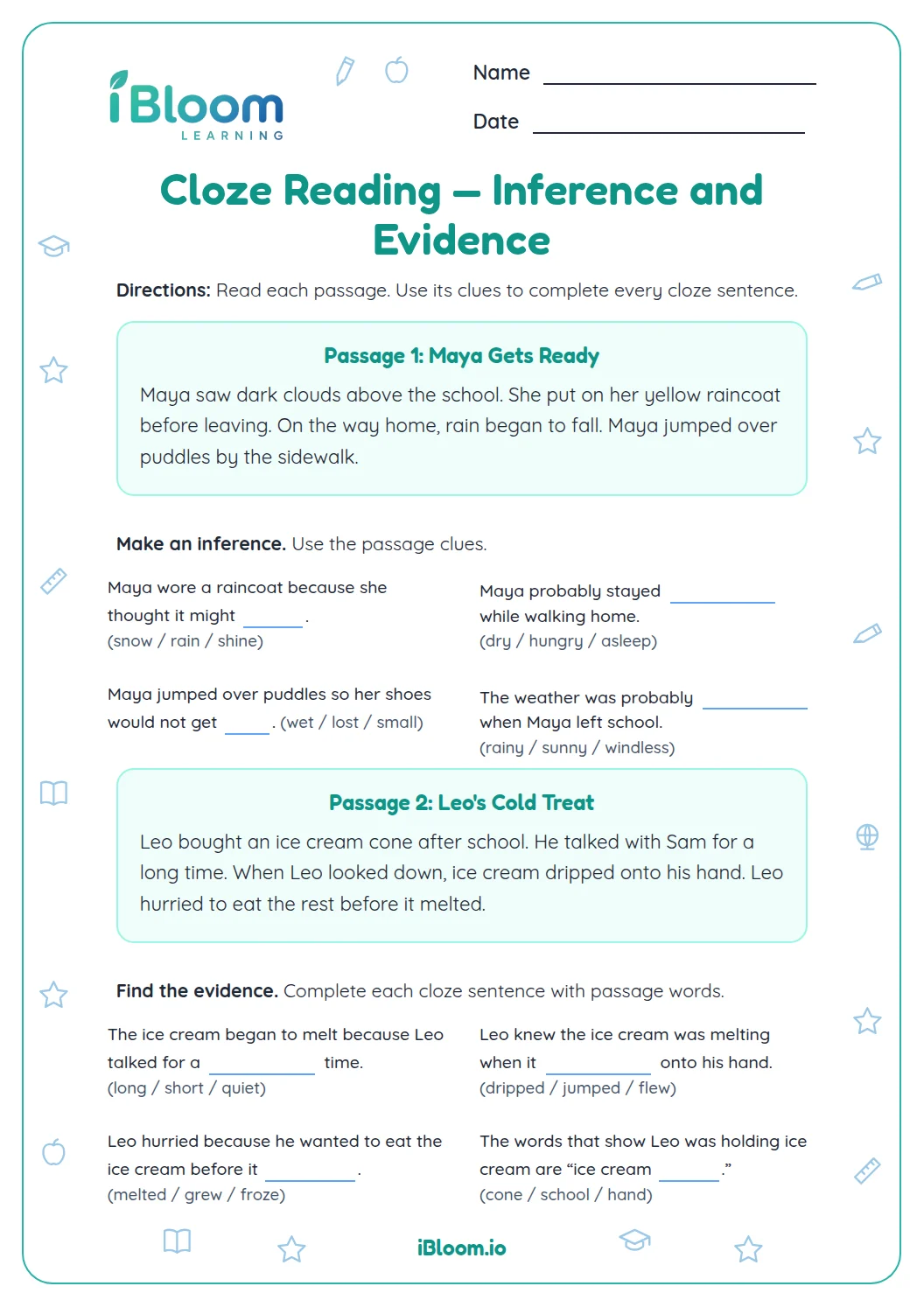
The pond passage gives a connected story to read aloud. Several prompts ask the child to read a short phrase as a group, then questions check literal details, sequence, vocabulary, and a simple reason from the story.
Use the separate answer key to check each response.
- 1“a little frog”
- 2Read the words together smoothly; the animal is a frog.
How can a student work through the page?
Read the story aloud once at a comfortable pace. Reread the phrase prompts in natural word groups. Then complete each remaining part in order.
How can families check the answers?
Check the response against the key and the passage, word meaning, or place-value chart that supports it.
How to use this worksheet
- 1Read the story aloud once at a comfortable pace.
- 2Reread the phrase prompts in natural word groups.
- 3Pause at punctuation and make the voice match the sentence.
- 4Answer the story questions by finding the matching detail.
- 5Use the key to check facts and discuss any answer that needs evidence.
Common mistakes and quick fixes
The mistake
Reading every word separately
The fix
Blend the phrase into a meaningful group, such as “a little frog.”
The mistake
Guessing from memory
The fix
Look back at the passage for the exact detail.
The mistake
Rushing to sound fast
The fix
Read clearly and smoothly; keep the words accurate.
Common Core alignment
This worksheet practices the listed Common Core skill through its questions.
Read a phrase in a meaningful group of words, then use passage details to answer.
On this sheet: The pond passage gives a connected story to read aloud. Several prompts ask the child to read a short phrase as a group, then questions check literal details, sequence, vocabulary, and a simple reason
Show the official wordingHide the official wording
Read with sufficient accuracy and fluency to support comprehension.
What to practice next
Make more practice
Further reading
Questions parents and teachers ask
What story does the worksheet use?
The passage follows Nina and her dad on a walk to a pond. Nina sees a duck and a frog, then they hurry inside as rain begins. Every question refers to a detail in this short story. This printable gives families a focused way to review the skill together.
How many questions are included?
There are 14 questions across two worksheet pages, with a separate answer key. Some ask children to read phrases smoothly; others check story details, sequence, word meaning, and a reason. This printable gives families a focused way to review the skill together.
What does phrase reading practice?
Phrase reading groups words that belong together, such as “a little frog.” Children pause between meaningful groups instead of reading every word in a separate, choppy rhythm. This printable gives families a focused way to review the skill together.
What grade is this worksheet for?
It is written for Grade 1 readers. The passage presents a short sequence of familiar events, and the questions ask children to return to the text to find supporting details. This printable gives families a focused way to review the skill together.
Should the child read the passage more than once?
Yes. A first read can focus on understanding the story. On a second read, pause at punctuation and read phrases smoothly, then answer questions using details from the passage. This printable gives families a focused way to review the skill together.