






About this worksheet
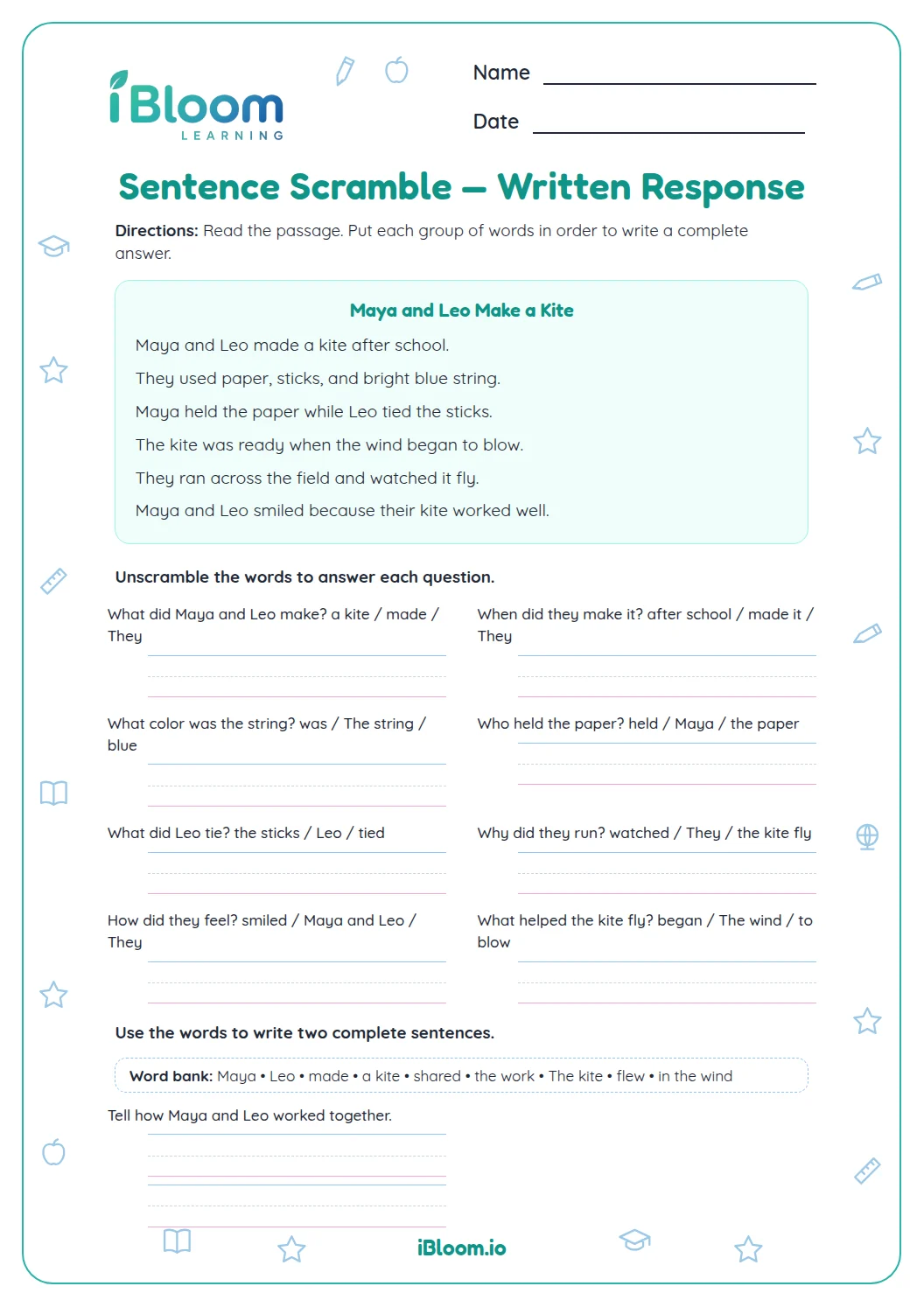
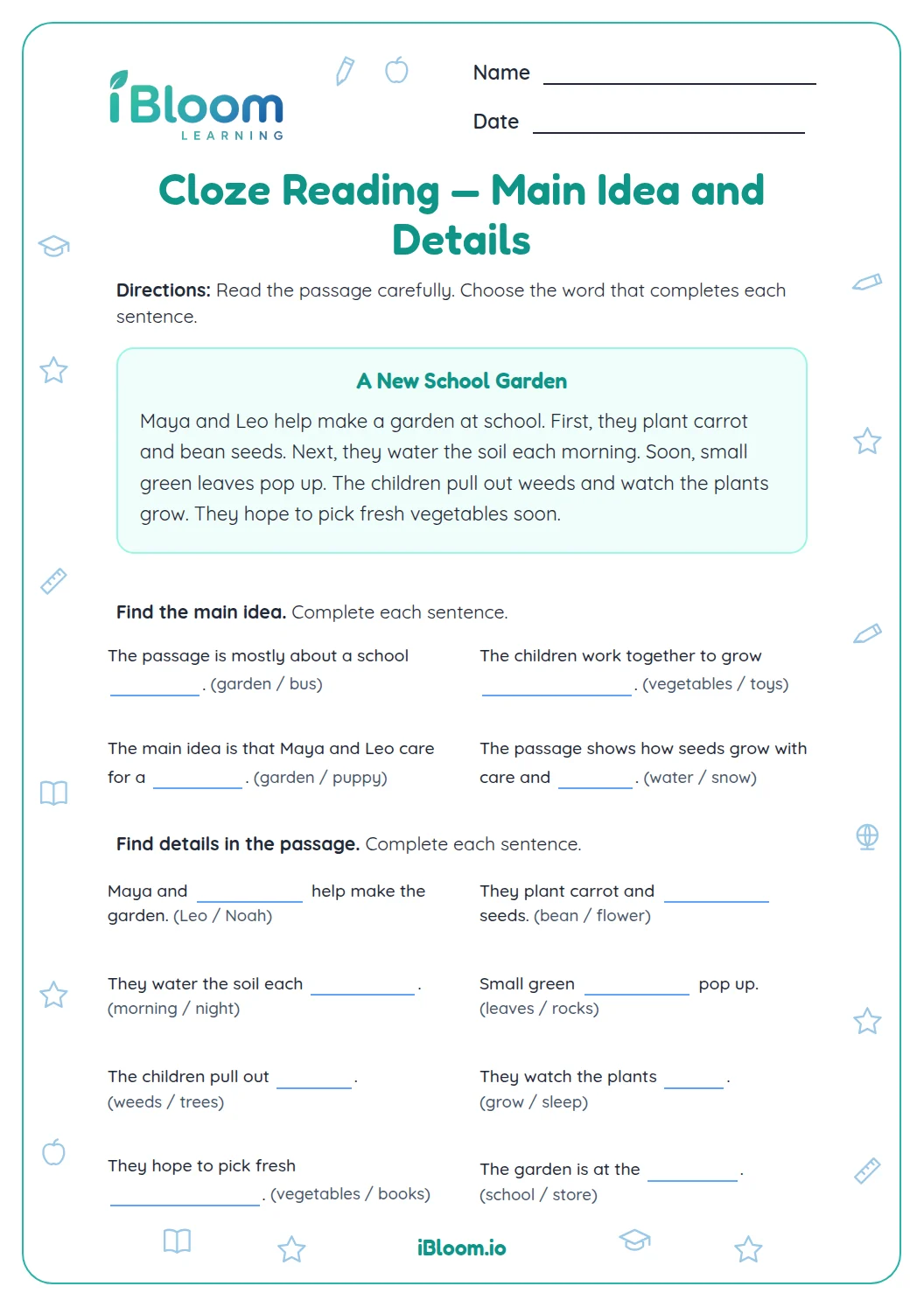
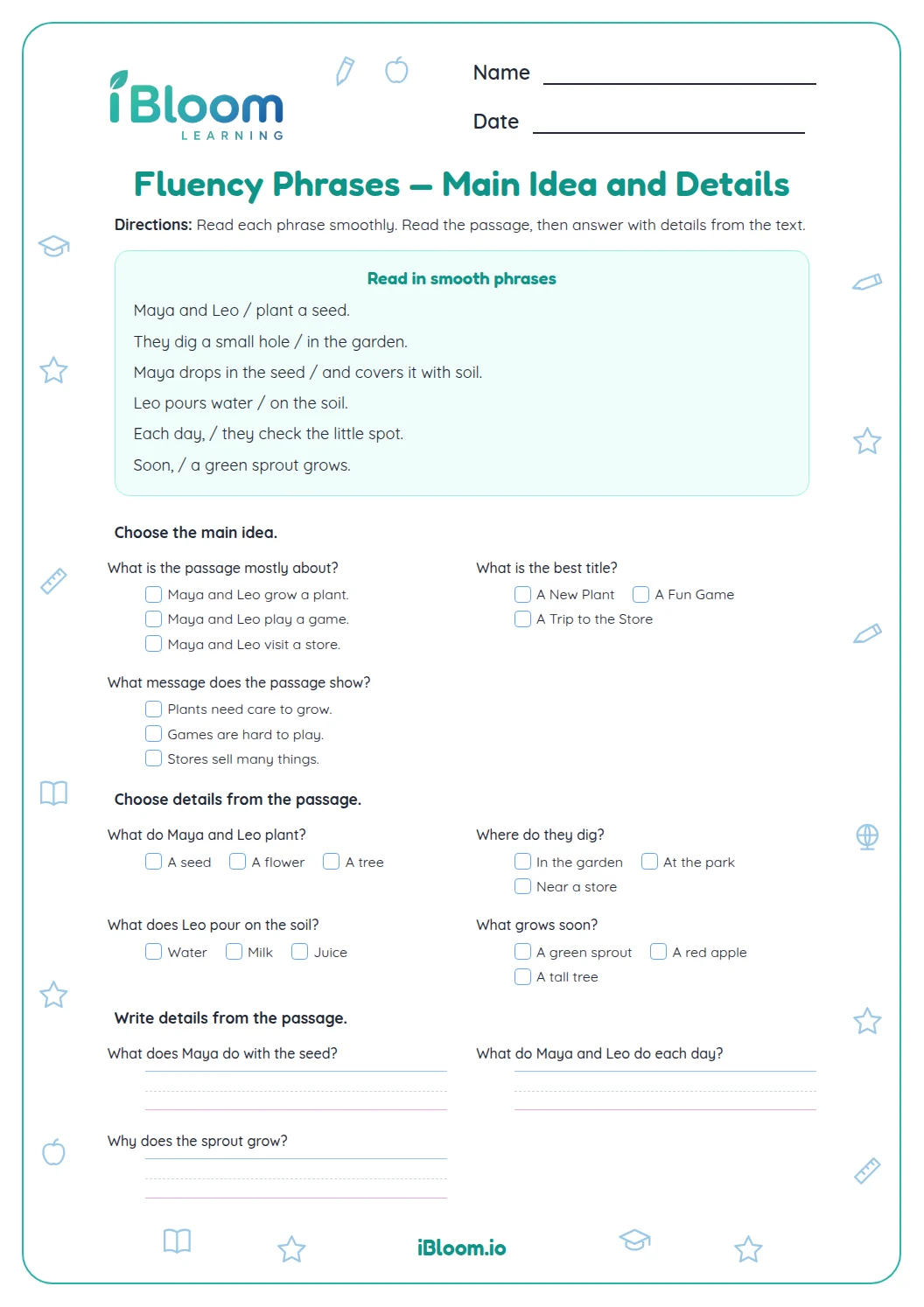
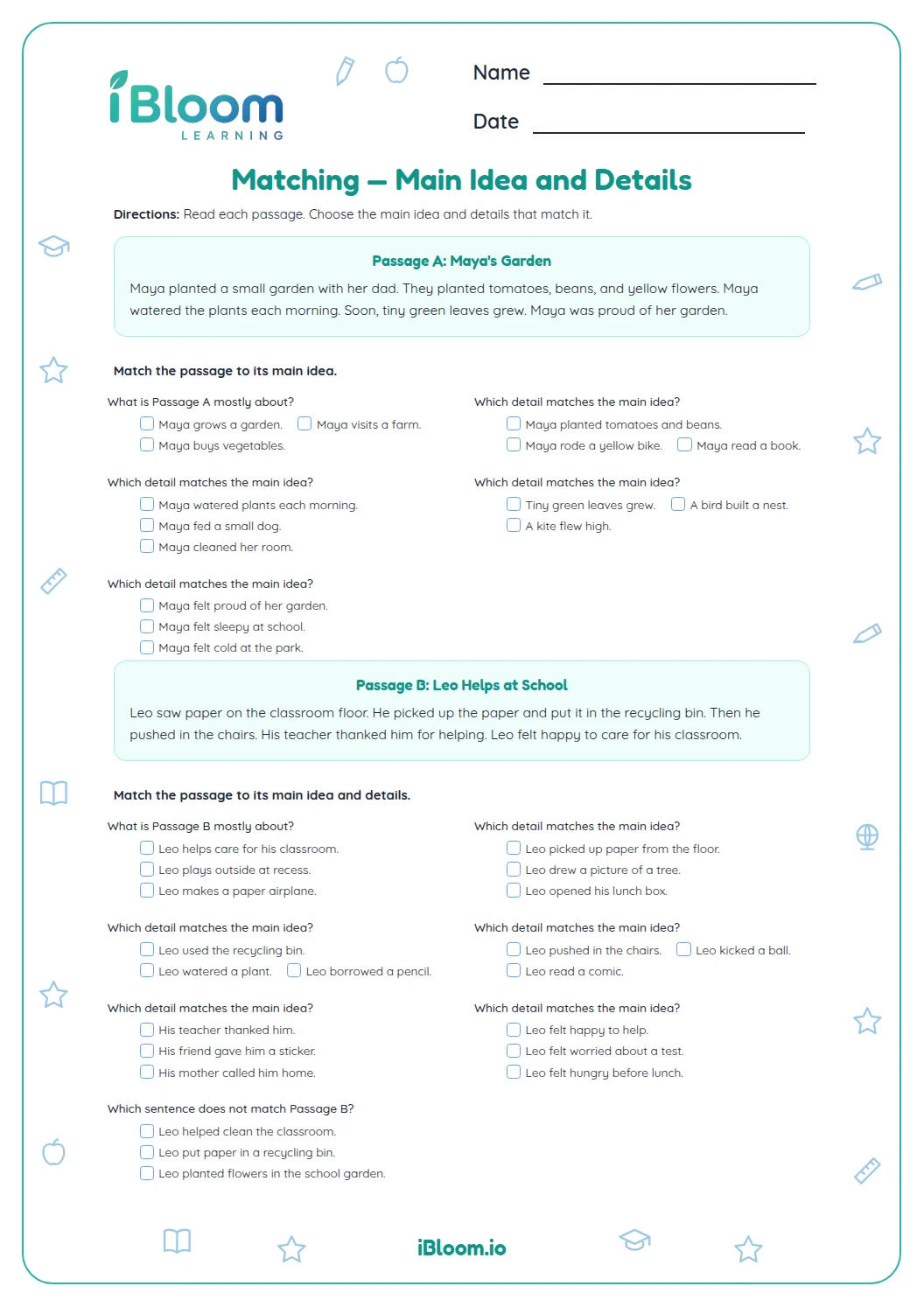
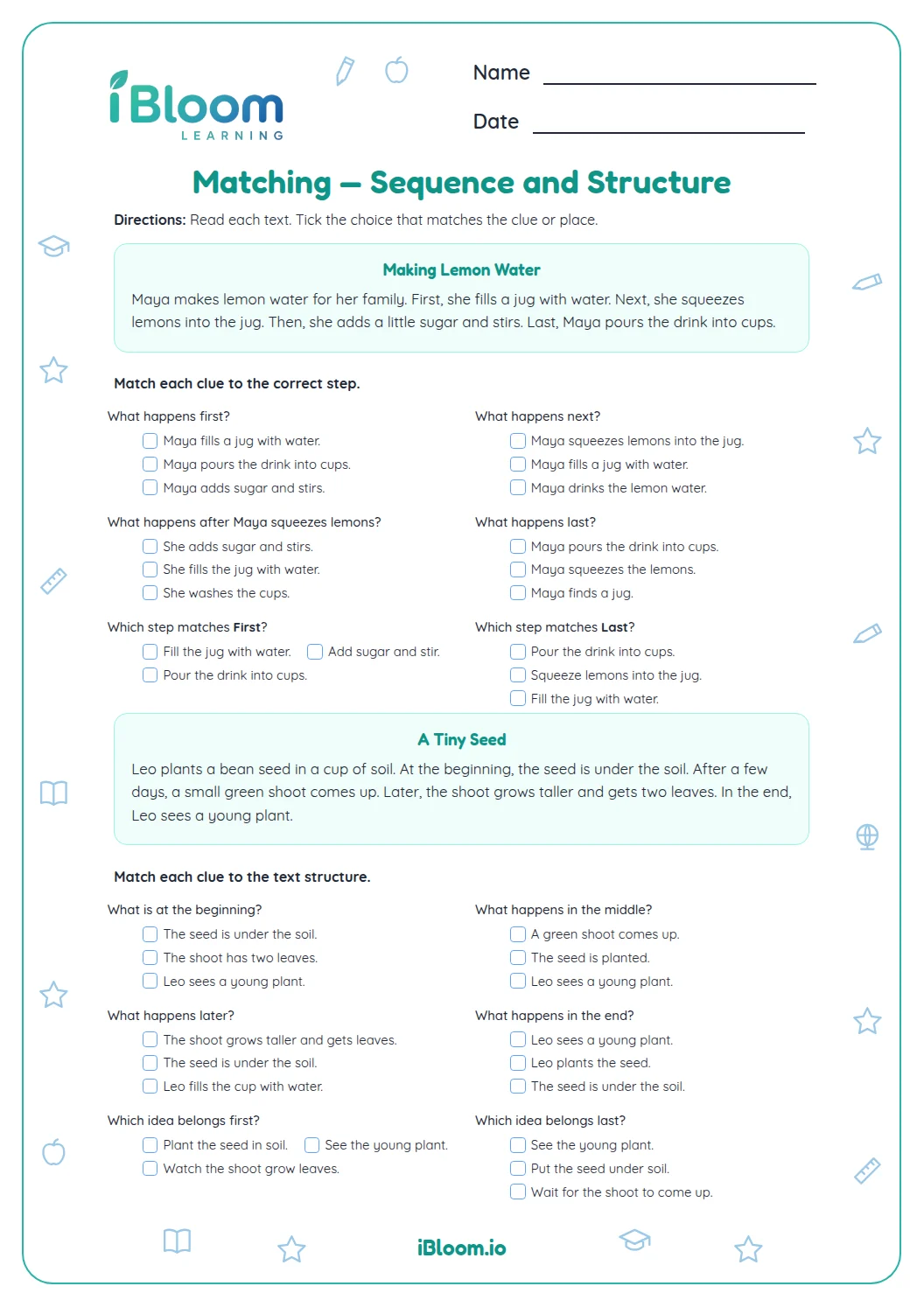
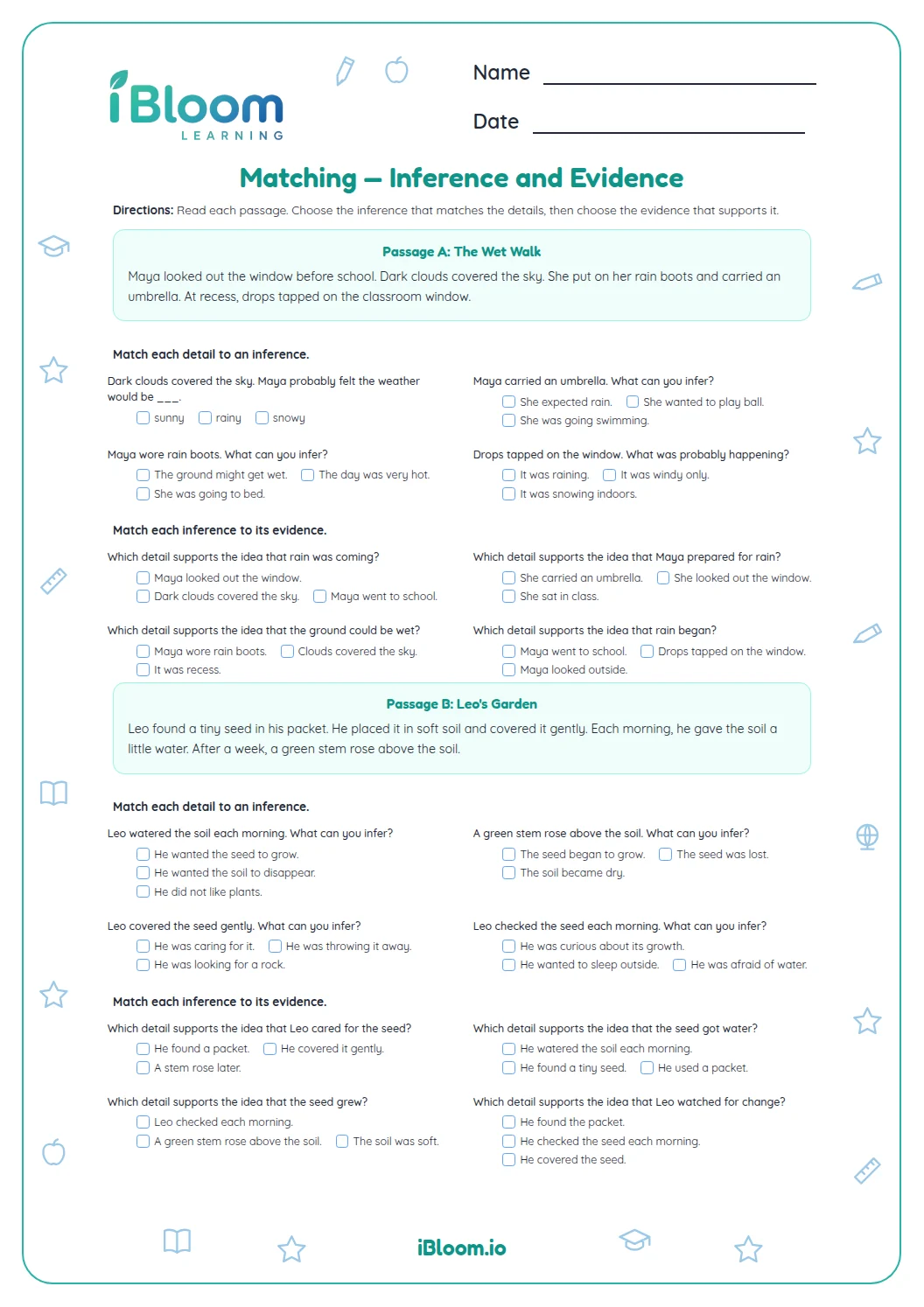
This Grade 1 reading printable uses an original passage about Mia caring for a school garden. Fifteen questions ask children to identify the main idea, find supporting details, follow the events, and unscramble two sentences. A final written response asks for the main idea and a detail. The answer key includes a sample response.
Aligned to RI.1.2
How can a reader find the main idea?
The main idea tells what the whole passage is mostly about. In Mia’s story, many details describe planting and caring for beans, so the best answer is that Mia cares for a garden. A single detail, such as making a sign, is too narrow.
How do details help retell events?
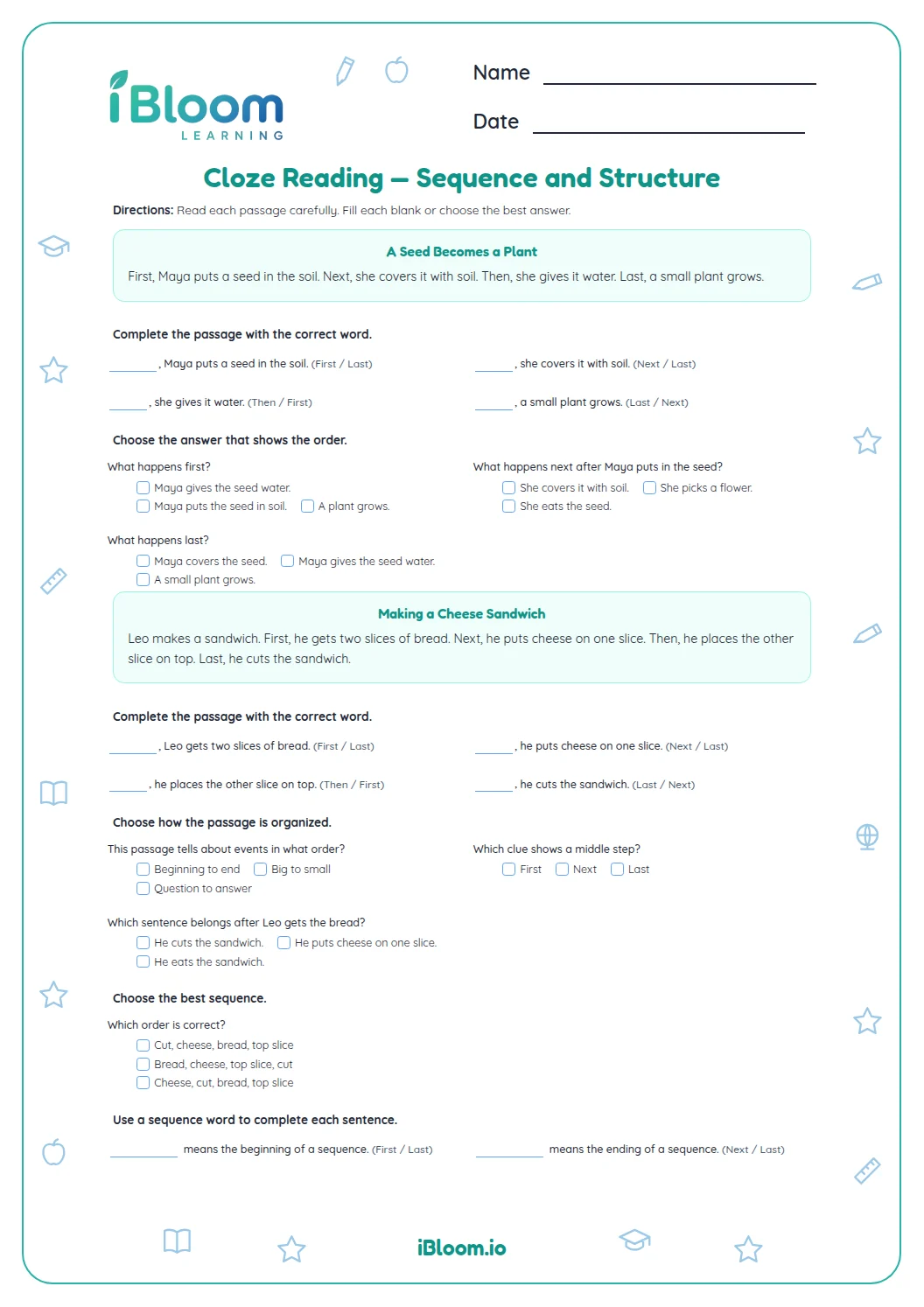
Part B follows the events from pulling weeds to planting, watering, and seeing shoots. Part C asks children to select details and rebuild scrambled sentences. Reading each sentence aloud helps check that the words make sense in order.
- 1What is the passage mostly about?
- 2Answer: Mia caring for a garden
How to use this worksheet
- 1Read the directions and look over the first example together.
- 2Work through Part A slowly, pointing to each clue or model.
- 3Ask the learner to explain one answer in their own words.
- 4Continue to the next parts, taking a short pause if needed.
- 5Use the separate key to check answers and revisit one tricky item.
Common mistakes and quick fixes
The mistake
Rushing past a clue in the prompt or model.
The fix
Pause and name the clue before selecting an answer.
The mistake
Mixing up two related words or steps.
The fix
Say both choices aloud and check which one matches the task.
The mistake
Leaving an answer unchecked.
The fix
Return to the passage, picture, or count and verify it once.
Curriculum alignment
Identify a passage’s main topic and retell details in sequence.
On this sheet: Identify a passage’s main topic and retell details in sequence.
Show the official wordingHide the official wording
Identify the main topic and retell key details of a text.
What to practice next
Make more practice
Further reading
Questions parents and teachers ask
What is the passage about?
The passage is about Mia caring for a school garden. She clears weeds, loosens soil with Dad, plants bean seeds, waters them, and watches green shoots appear. The details show how she helps the garden grow. The questions ask readers to connect those actions to the passage’s main idea.
How many questions are included?
There are 15 questions in five question parts after the passage. Children identify the main idea, sequence events, notice supporting details, unscramble two sentences, and write a one-sentence response. The key includes the correct choices and a sample for the open response.
What is a supporting detail?
A supporting detail tells something specific that helps explain the main idea. “Mia waters the seeds each day” supports the idea that she cares for a garden. “The bed is small” is a detail, but it says less about her actions.
How should children unscramble a sentence?
Look for a capitalized word that can begin the sentence, put the words in a sensible order, and check that the sentence ends with punctuation. Read it aloud to see whether it sounds complete. The worksheet gives two short sentences based on the passage.
May an adult read the passage aloud?
Yes. Reading aloud can help a child focus on understanding the events and details. Pause after each part and ask what happened first, next, and soon. Then let the child choose answers or try reading the passage independently. An adult can pause to point out the transition words before the child answers the sequence questions.
What does the answer key show for the written response?
The key gives a sample that names the main idea and one supporting detail: Mia cares for a garden, and she waters the bean seeds each day. Another sentence is acceptable if it states the passage’s main idea and one accurate detail.