









About this worksheet
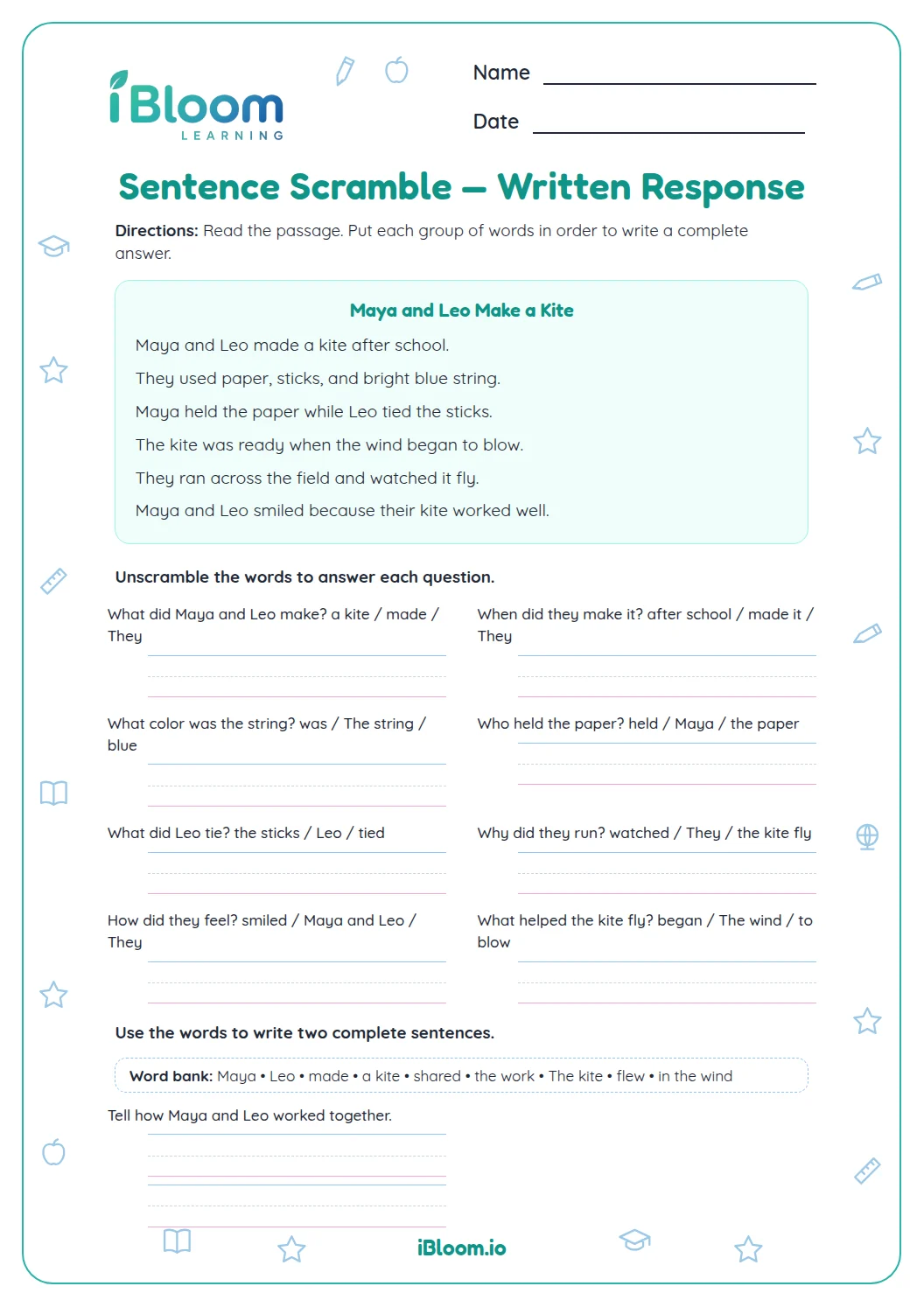
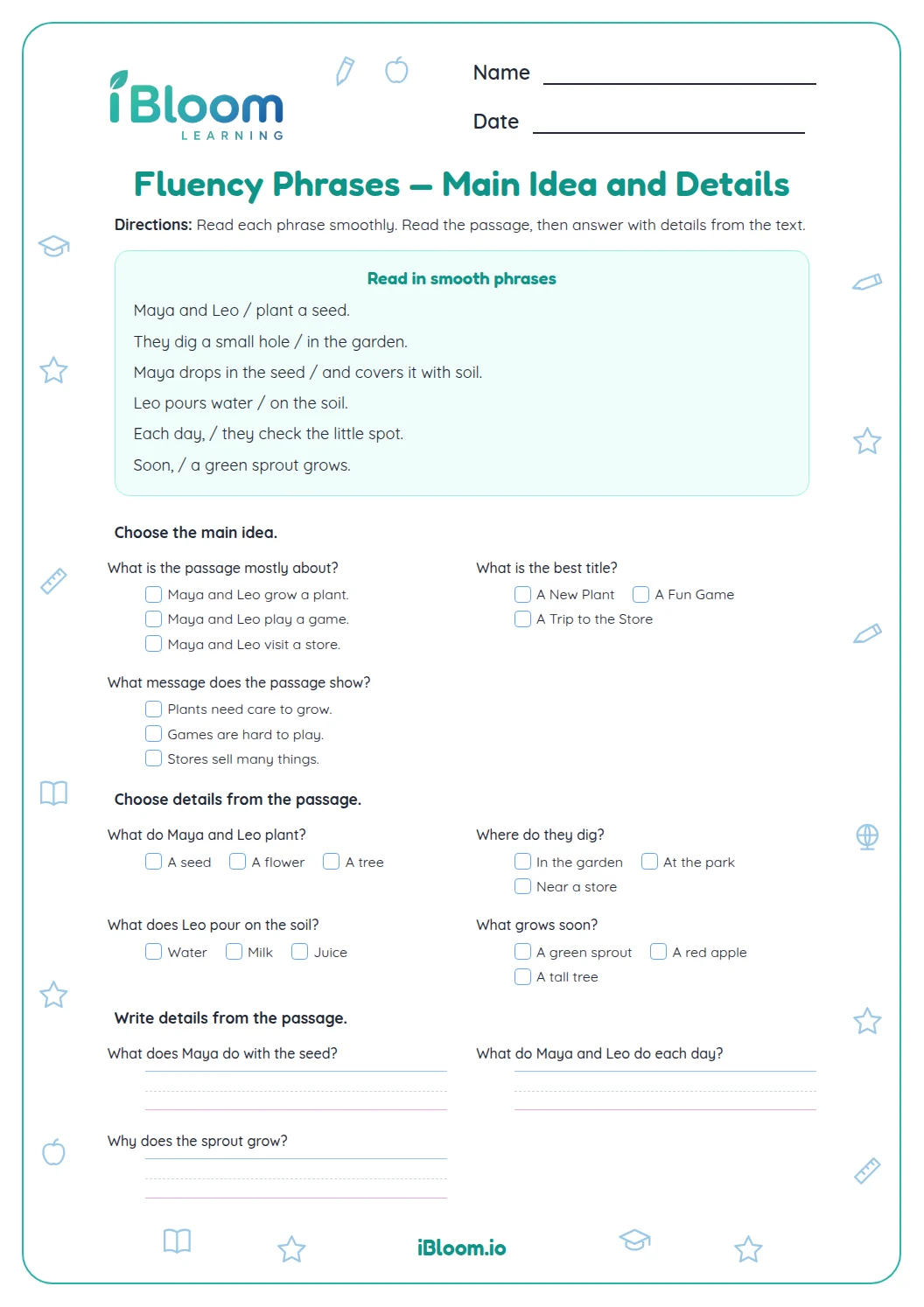
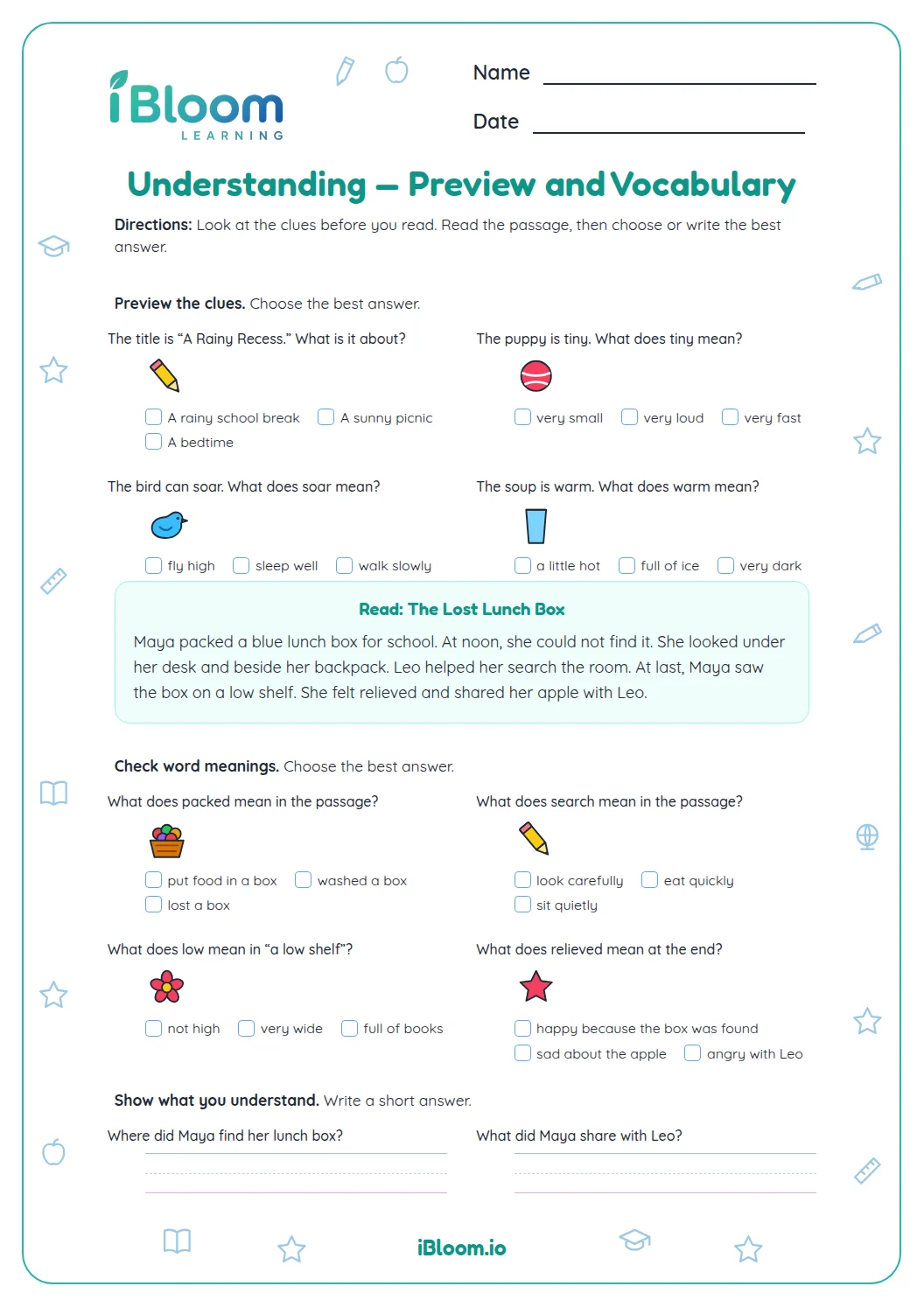
This Grade 1 printable turns sentence structure and sequencing into short, readable choices. Learners arrange familiar words into complete sentences, put everyday events in order, and write two original sentences. The activity supports producing complete sentences in response to prompts, with an answer key that includes sample responses for writing.
Aligned to L.1.1.j
How do words make a complete sentence?
A sentence usually names who or what, then tells what that person or thing does. Read each choice aloud to hear whether the words fit together. For example, “Maya reads a book” gives a person, an action, and what she reads.
- 1Mixed words: reads / Maya / a / book.
- 2Maya reads a book.
- 3The sentence names Maya, then tells what she does.
How do first, next, and last help?
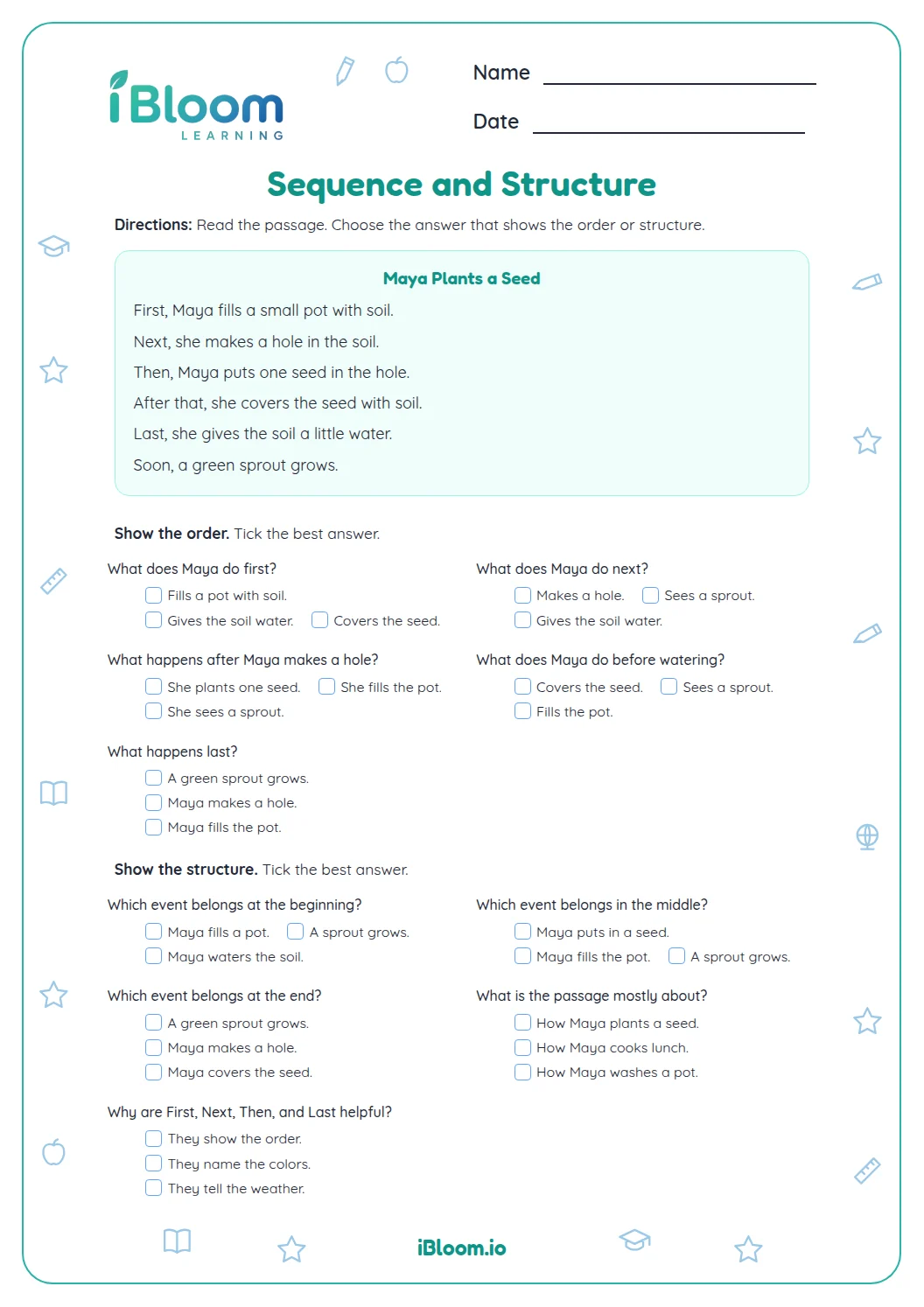
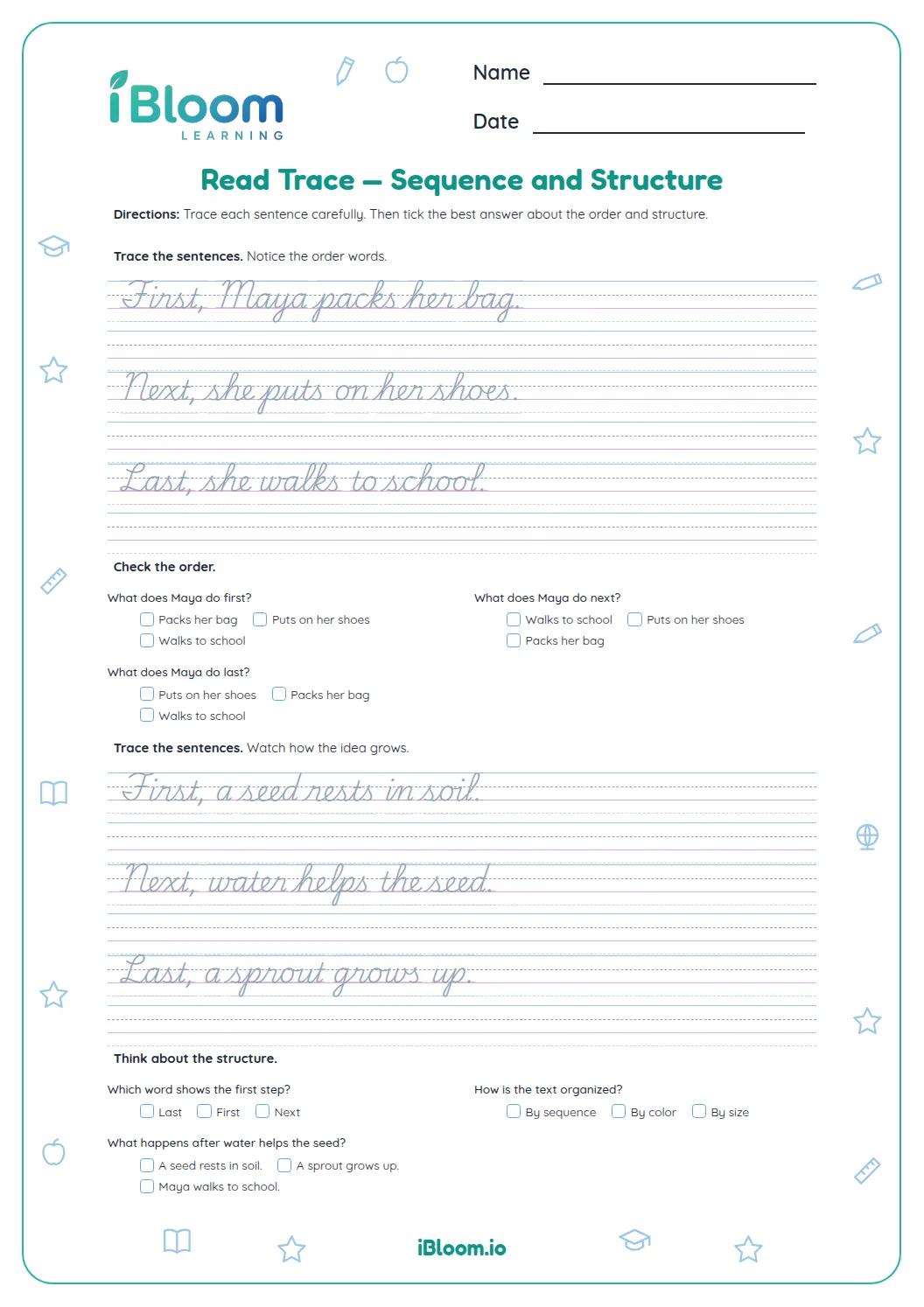
Part B asks learners to order familiar events. Each choice includes all three events, so children can compare both sequence and sentence order.
What is included in this printable?
The 14 questions move from choosing complete sentences to ordering actions and writing two original sentences. The key shows intended choices and sample writing.
- Part A: arrange words into complete sentences
- Part B: order familiar events
- Part C: write two complete sentences
How to use this worksheet
- 1Read each scrambled group aloud once.
- 2Choose the word order that makes a complete thought.
- 3For sequence questions, decide which action must happen first.
- 4Write one complete thought for each open prompt.
- 5Check capitals, end marks, and the answer key.
Common mistakes and quick fixes
The mistake
Choosing a group of words that sounds familiar but is incomplete.
The fix
Check that the sentence tells a complete thought.
The mistake
Putting events in the order they are listed.
The fix
Use first, next, and last to reason about the actions.
The mistake
Leaving off a capital or end mark.
The fix
Start with a capital and finish with punctuation.
Common Core alignment
This sheet asks learners to select and produce complete sentences.
Produce complete sentences in response to a prompt.
On this sheet: Children choose correctly ordered sentences and write complete sentences of their own.
Show the official wordingHide the official wording
Produce and expand complete simple and compound declarative, interrogative, imperative, and exclamatory sentences in response to prompts.
What to practice next
Make more practice
Further reading
Questions parents and teachers ask
What does this sentence scramble practice?
The worksheet has 14 items: six sentence-order choices, six event-order choices, and two sentence-writing prompts. In the first group, learners arrange words into a complete sentence. In the next group, they choose a sensible order for three familiar events. The final two items invite a sentence about their day.
How many questions are included?
There are 14 questions: twelve multiple-choice word-order or sequence items and two written sentence prompts. The answer key gives each selected sentence and sample responses for the open-ended writing questions. Have the learner explain the choice aloud and point to the matching words or model as a quick check.
Why are there sequence questions on a sentence worksheet?
The source activity includes both sentence structure and sequence. The sequence items ask a child to order familiar actions, such as waking, packing, and leaving for school, using first, next, and last clues. Have the learner explain the choice aloud and point to the matching words or model as a quick check.
How should a child check a sentence?
Read the words from left to right and ask whether they make a complete thought. Check that the person or thing comes before the action in ordinary statements, and notice the capital letter and ending punctuation in the choices. Have the learner explain the choice aloud and point to the matching words or model as a quick check.
Are there several acceptable answers to the writing prompts?
Yes. The key gives a sample sentence for each prompt, but a child may write a different complete and sensible sentence. Look for a clear thought, understandable word order, and a capital letter and end mark. Have the learner explain the choice aloud and point to the matching words or model as a quick check.
Is an answer key included?
Yes. A separate answer key shows the intended choice for each of the first twelve items and gives sample sentences for the final two. The samples support checking without requiring every learner to write identical wording. Have the learner explain the choice aloud and point to the matching words or model as a quick check.