




About this worksheet
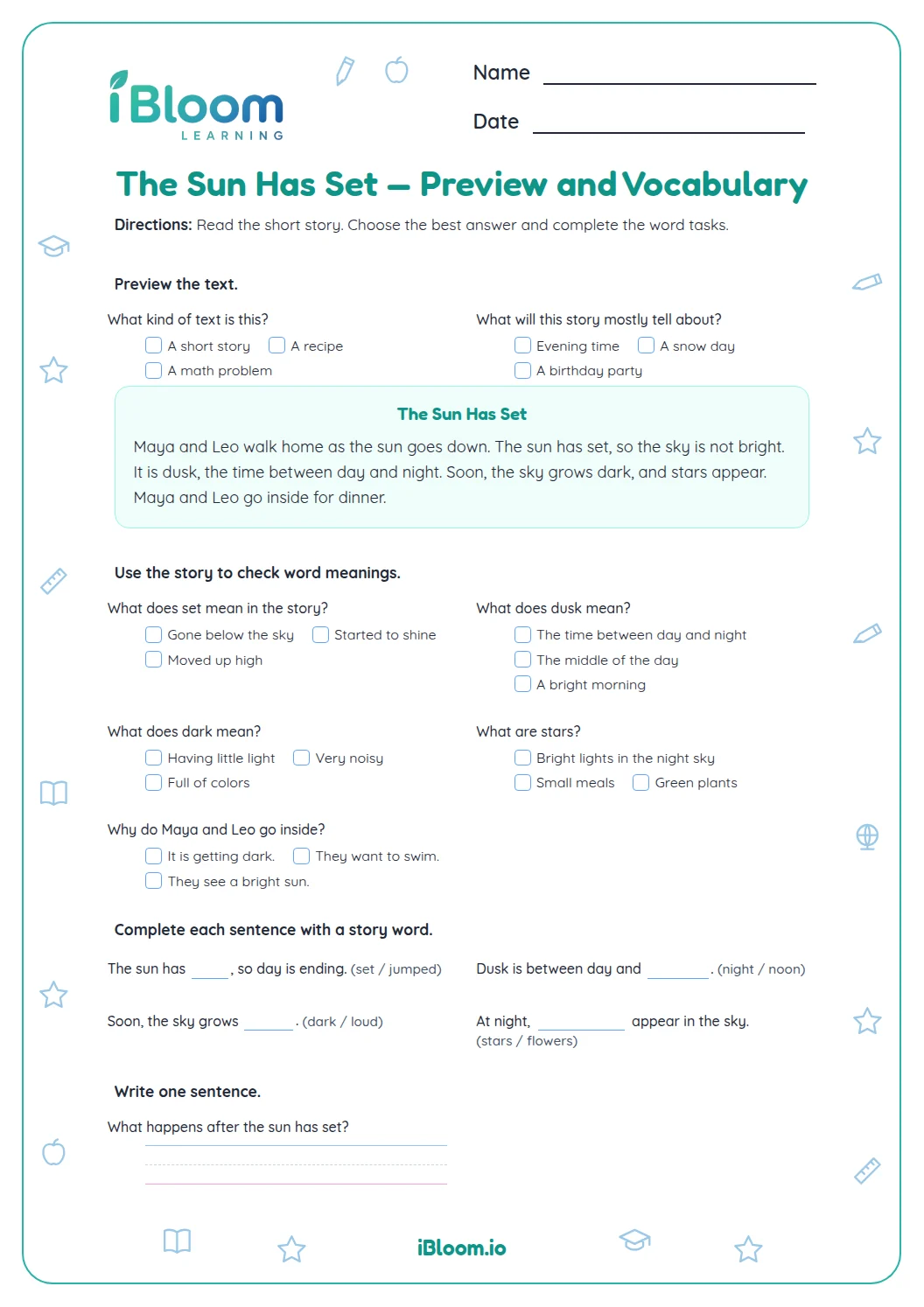
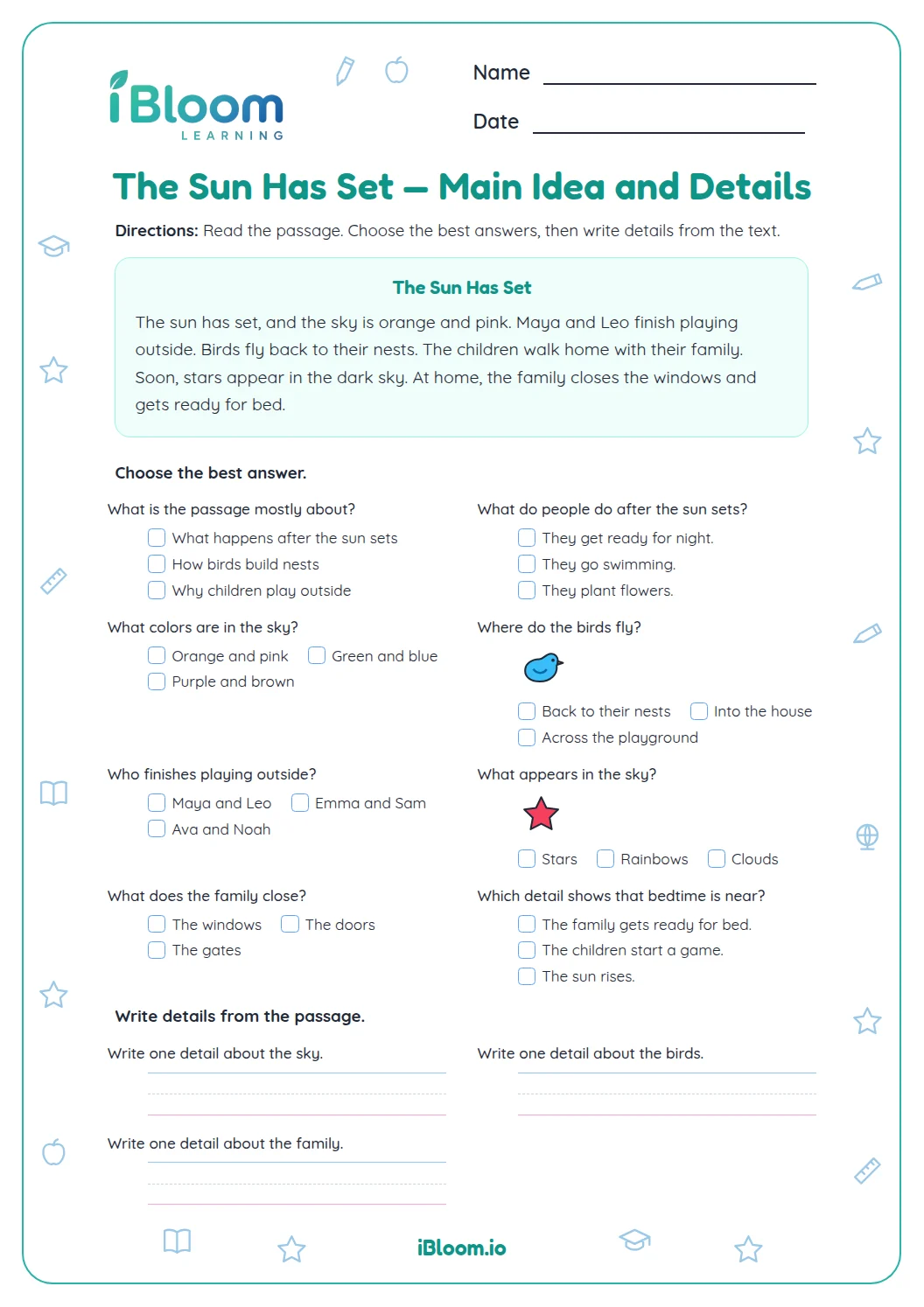
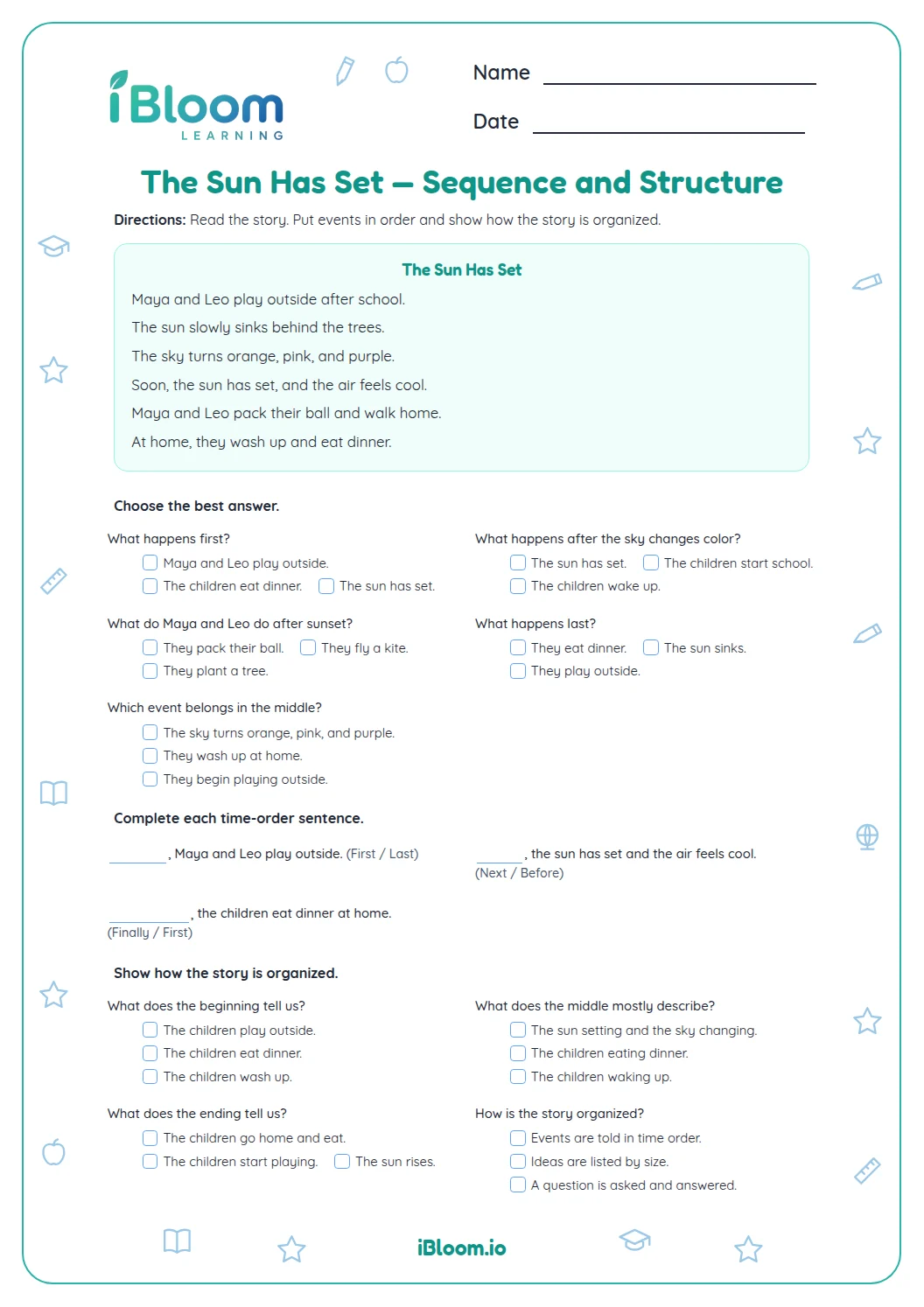
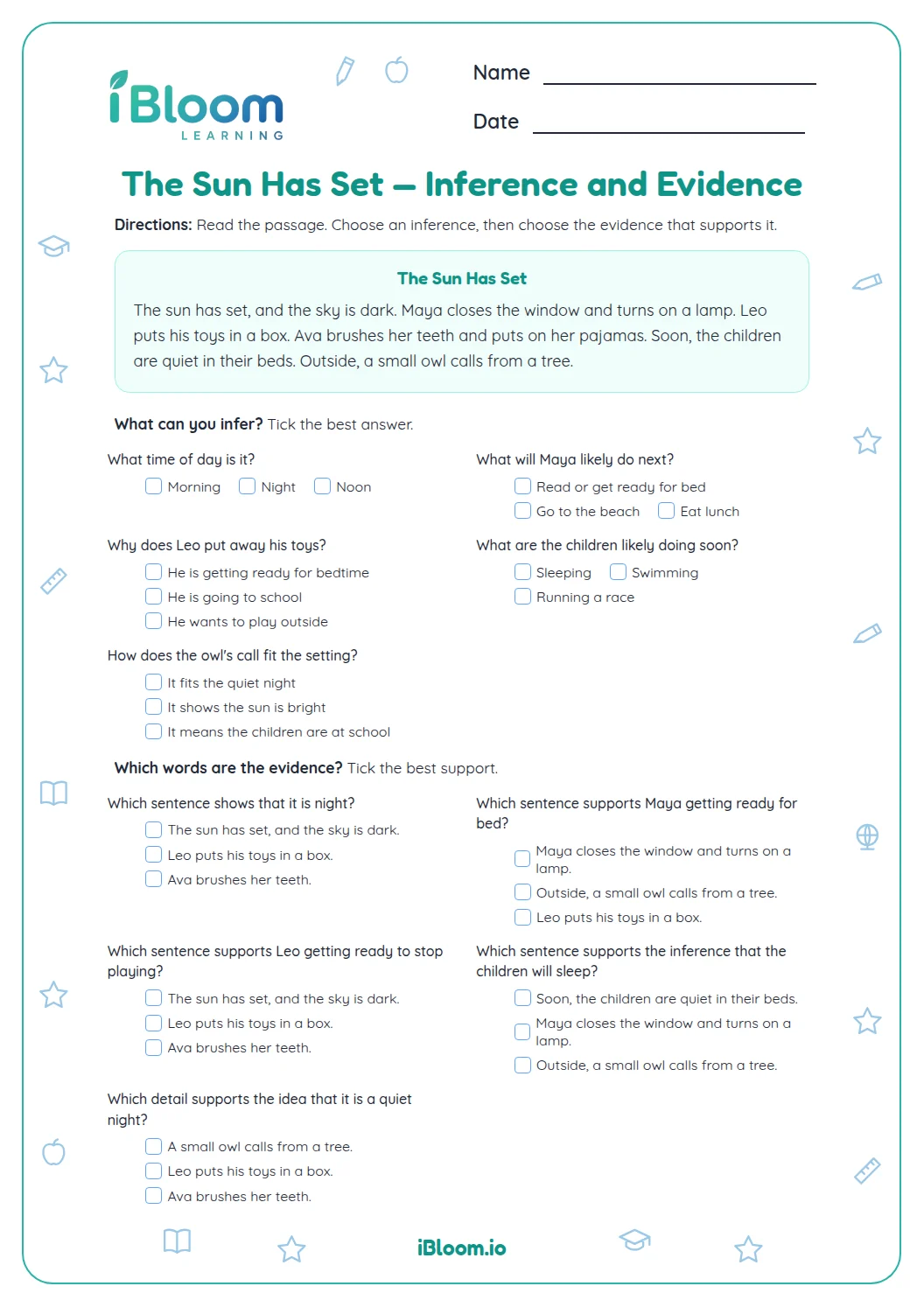
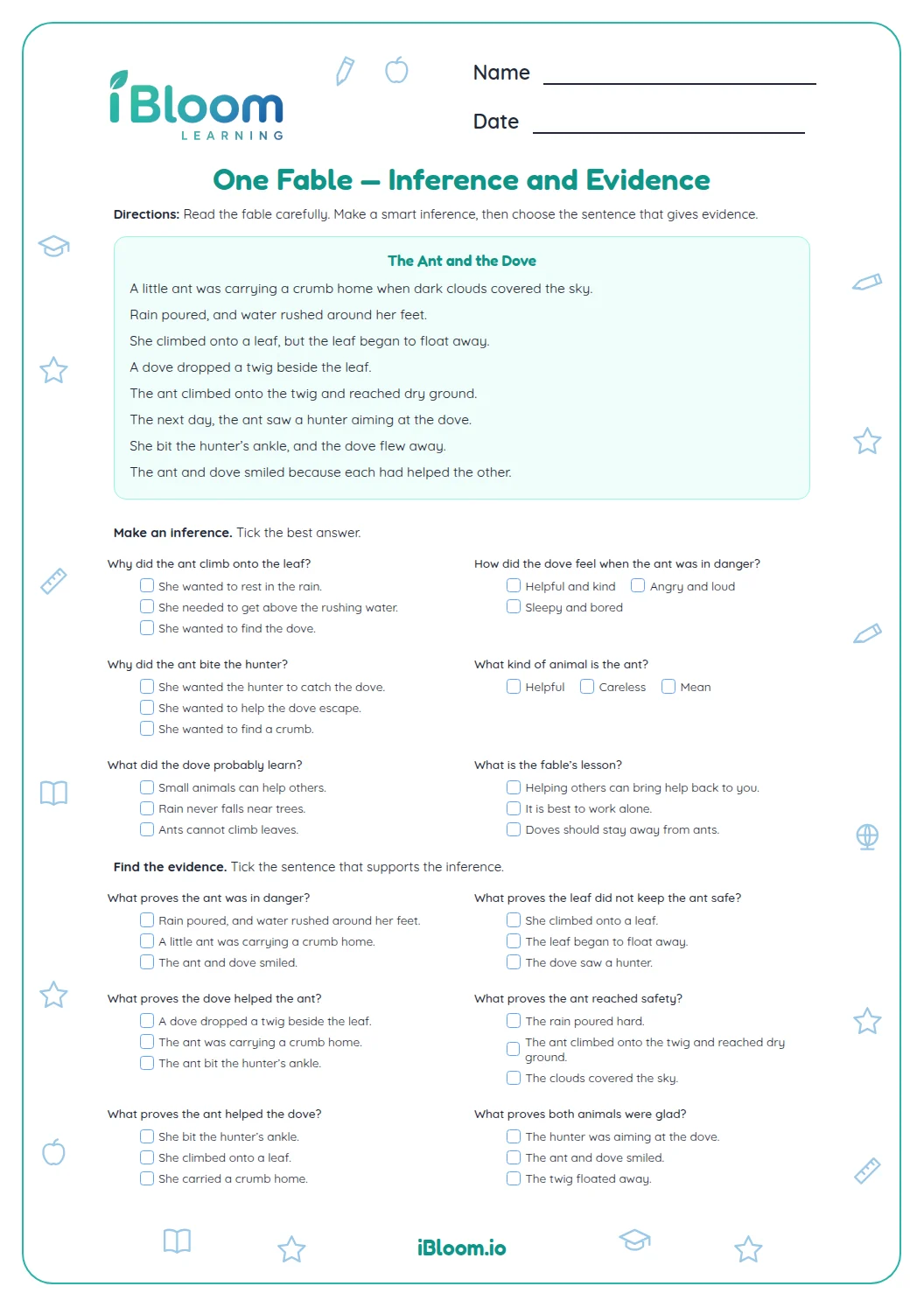
This free printable worksheet is for grade 1 learners practicing details, event order, reasons, and evidence in a Grade 1 story passage. It has 12 questions: 11 multiple-choice or written-response questions about details, sequence, reasons, and story evidence. It practices CCSS RL.1.1 by asking readers to answer questions about story details. A separate answer key lets learners check the work.
Aligned to RL.1.1
Which details help readers follow the story?
Maya and Leo see the sun sink behind the hills, notice the sky turn orange and pink, and watch birds fly to their nests. The questions ask readers to return to these details.
- 1The first stars appeared as the children walked home.
- 2That detail shows evening was coming.
How can a reader track the events?
Follow the passage in order: the children play after school, see the sunset, put away the ball, and walk home as stars appear. Time words and actions help keep the sequence clear.
How do story clues support an answer?
For a written response, point to a detail in the story. The first stars appearing is evidence that evening is coming.
How to use this worksheet
- 1Read the passage once to understand the main events.
- 2Return to the story when a question asks for a detail.
- 3Track actions in the order they happen.
- 4For a reason question, connect the character’s action to a story clue.
- 5Use a complete sentence for the written responses.
- 6Check each response against the passage and answer key.
Common mistakes and quick fixes
The mistake
Mixing up when events happen.
The fix
Reread the passage from the beginning and follow each action in order.
The mistake
Choosing an answer that is not stated.
The fix
Point to the sentence that gives the detail before selecting.
The mistake
Giving a reason without evidence.
The fix
Add the story clue that supports the explanation.
Common Core alignment
Ask and answer questions about key details in a text.
On this sheet: The questions practice details, event order, reasons, and evidence in a Grade 1 story passage.
Show the official wordingHide the official wording
Ask and answer questions about key details in a text.
What to practice next
Make more practice
Further reading
Questions parents and teachers ask
What is the passage about?
Maya and Leo play outside after school, notice the sunset, put away their ball, and walk home as stars appear. The questions check details, sequence, a reason for Maya’s decision, and an evidence-based response about evening. This keeps practice tied to the skill and prompts on this printable worksheet.
How many questions are on the worksheet?
There are 12 questions after the passage. Ten ask readers to choose a detail or explain an event, and two use writing lines for a complete response. The answer key provides the correct choices and sample written answers. This keeps practice tied to the skill and prompts on this printable worksheet.
How can a child answer a sequence question?
Follow the actions in the order the story gives them: Maya and Leo play outside, see the sunset, put away the ball, and walk home as stars appear. Time and action clues help readers avoid reversing what happened. This keeps practice tied to the skill and prompts on this printable worksheet.
What makes a good written answer?
A good answer responds to the question in a complete thought and includes a detail from the passage. For example, the first stars appearing is a clue that evening is coming. The key offers a sample, and equivalent wording can work. This keeps practice tied to the skill and prompts on this printable worksheet.
Can an adult read the story aloud?
Yes. An adult can read the passage and questions aloud, then invite the child to find the sentence that supports an answer. Returning to the story helps the learner distinguish remembered details from details actually stated. This keeps practice tied to the skill and prompts on this printable worksheet.
How long does this worksheet take?
Plan for about 15 to 20 minutes, including reading, answering, and checking the key. A learner may take longer when rereading the story or composing a complete written response. Pause as needed to keep attention on the text. This keeps practice tied to the skill and prompts on this printable worksheet.