



About this worksheet
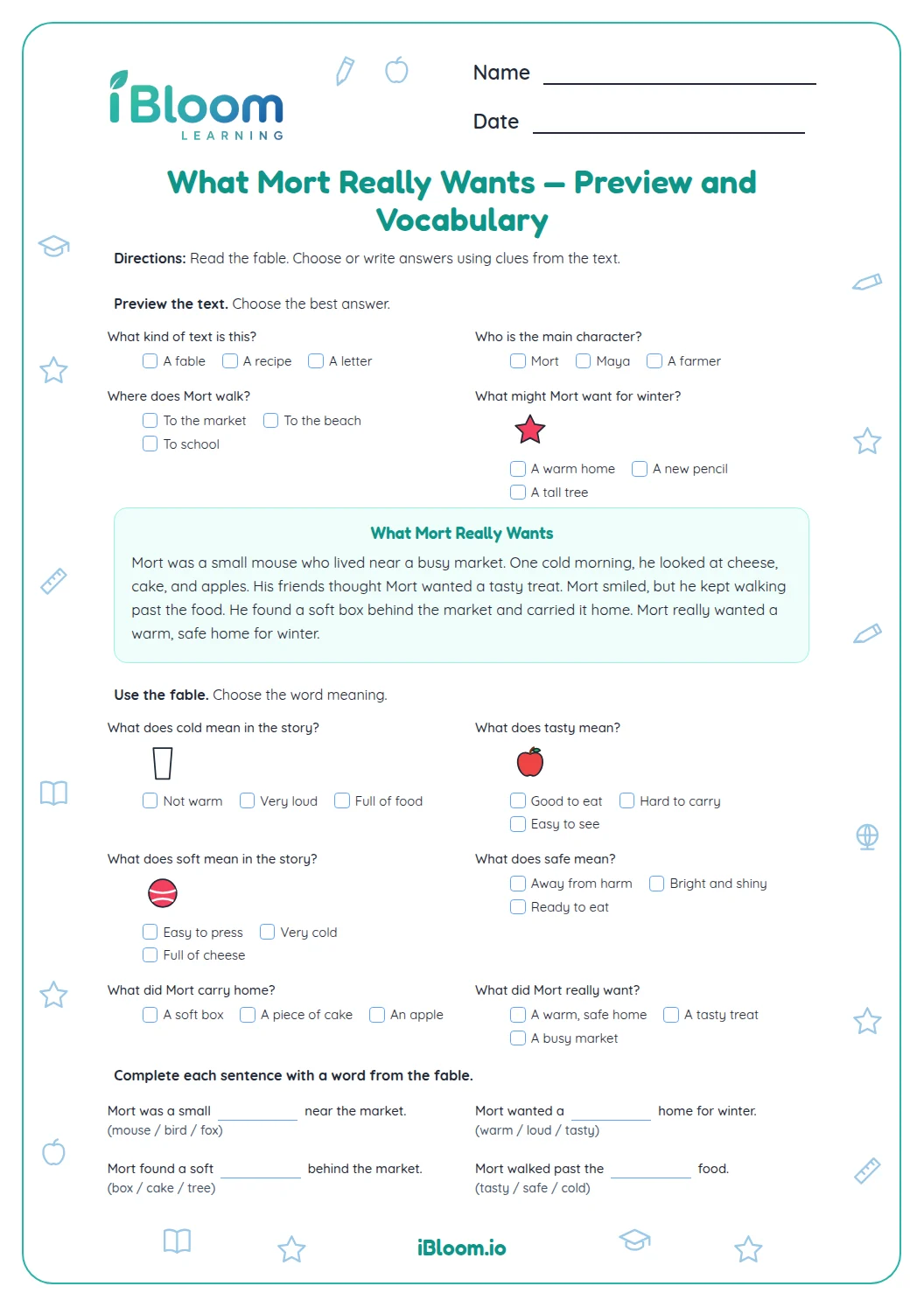
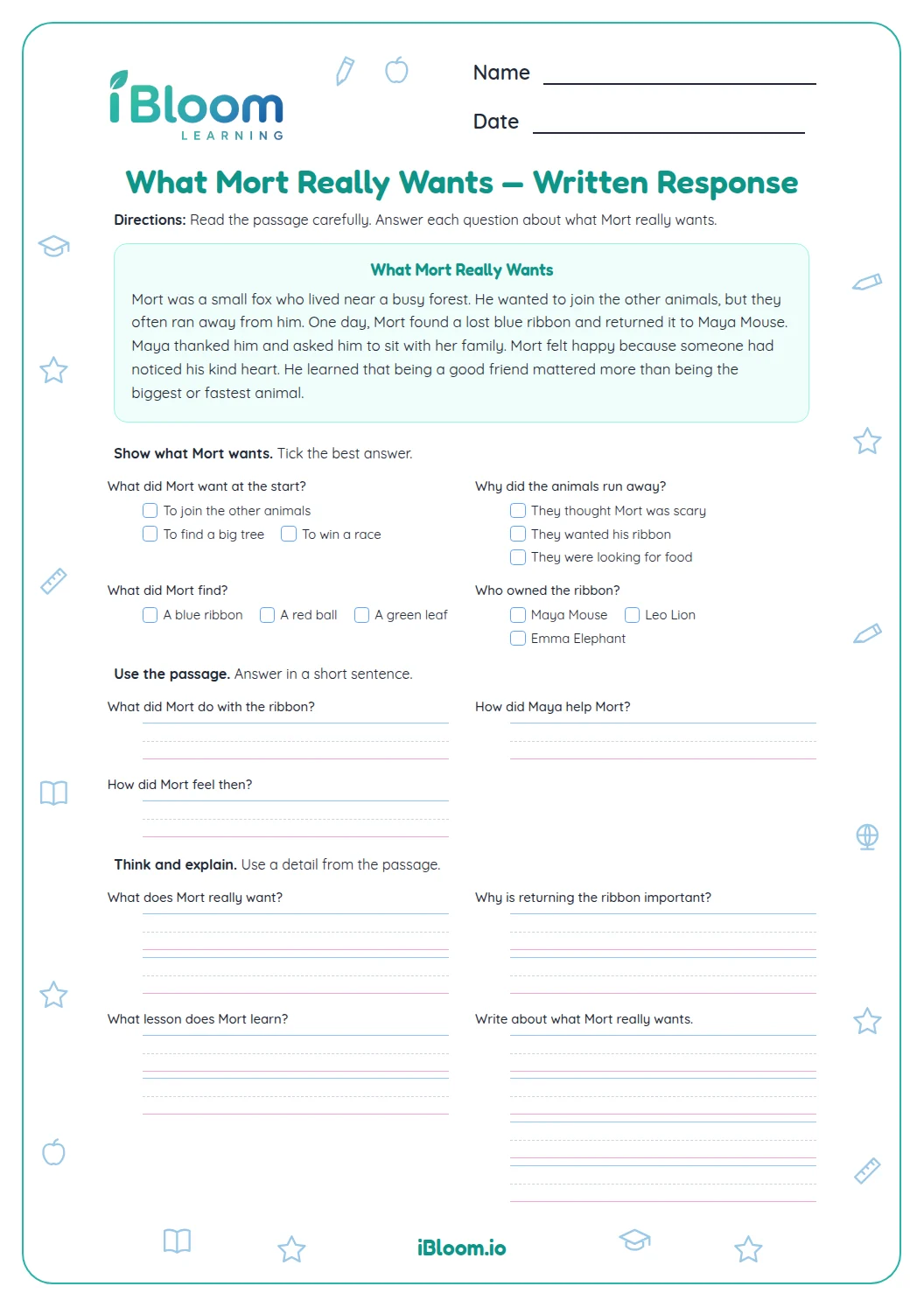
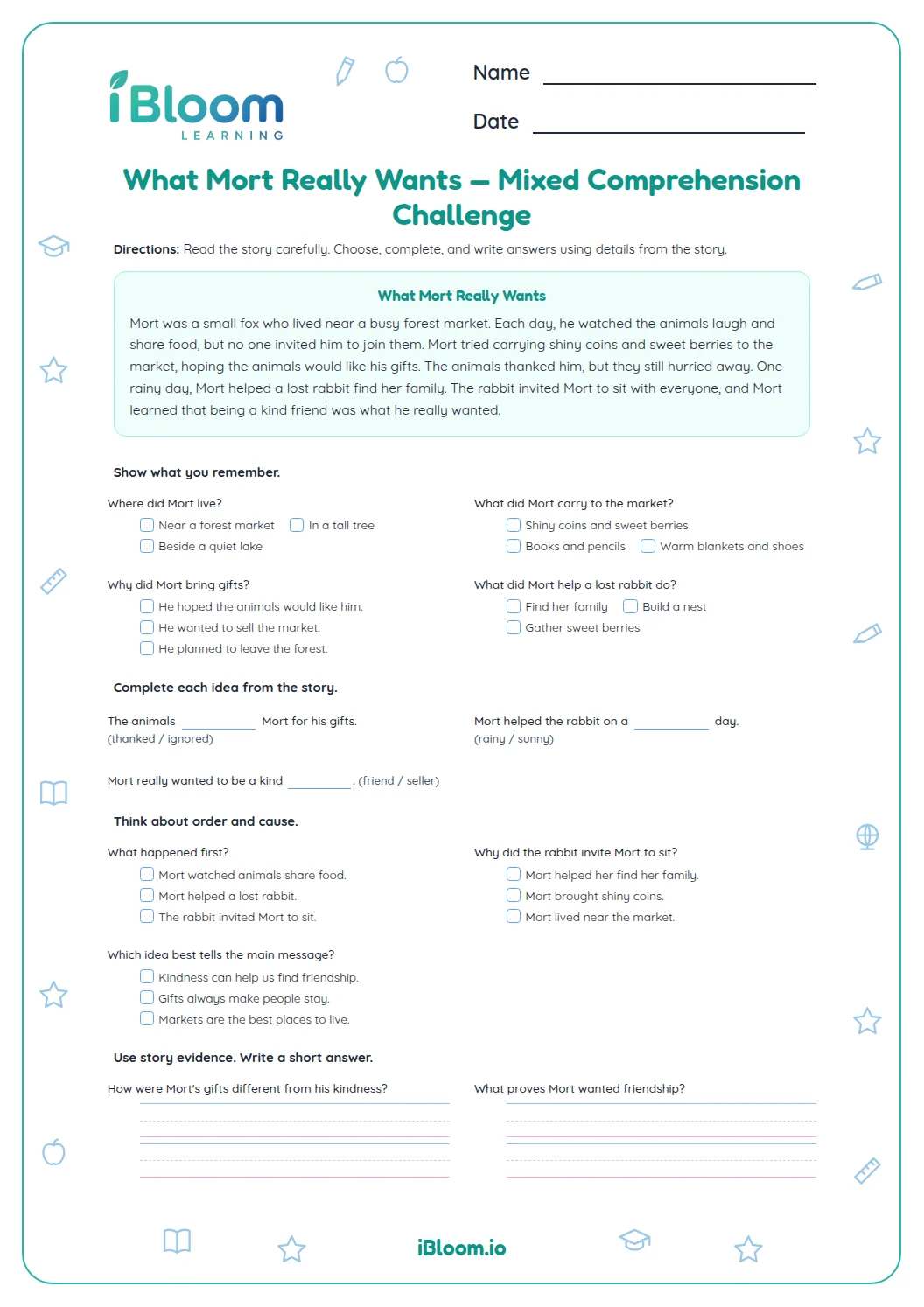
This Grade 1 reading worksheet uses a short story about Mort, who wants company but feels shy. Children answer six stated-detail questions, make six inferences from Mort’s actions, and write two responses supported by a story clue. It practices CCSS RL.1.1 by asking and answering questions about key details; a separate answer key includes sample written responses.
Aligned to RL.1.1
Which details does the story state?
Part B asks about details such as the red button, the empty stump, and the two acorns. Children can reread the short story and point to the sentence that answers each question.
What can Mort’s actions suggest?
An inference joins a story clue with an idea. Mort slides an acorn closer to the rabbit and smiles when it stays, which suggests that he wants to share and enjoys the company.
- 1Clue: Mort slides an acorn closer.
- 2Idea: He wants to share with the rabbit.
- 3The action supports the inference.
How can a written answer include evidence?
State an idea about Mort, then name an action from the story that supports it. A response might say he wants the rabbit to stay because he makes a sign that says “Sit with me.”
A simple story-clue routine
- 1Read the story once to follow what Mort does.
- 2For a detail question, return to the sentence that states the answer.
- 3For an inference, connect an action with what it suggests.
- 4In a written response, name the idea and one supporting detail.
- 5Use the key to check the multiple-choice answers and compare sample responses.
Inference and evidence mix-ups
The mistake
Choosing a detail that is true but does not answer the question.
The fix
Reread the question and find the sentence about that exact event.
The mistake
Treating an inference as if the story says it word for word.
The fix
Name the clue and then explain the idea it suggests.
The mistake
Giving an idea without a story detail.
The fix
Add one action or sign from the passage that supports the idea.
Common Core alignment
Answer questions about story details and support an inference with evidence.
On this sheet: Answer questions about story details and support an inference with evidence.
Show the official wordingHide the official wording
Ask and answer questions about key details in a text.
What to practice next
Make more practice
Further reading
Questions parents and teachers ask
What is an inference in Mort’s story?
An inference is an idea a reader reaches from story clues. Mort hides when birds come near, then slides an acorn toward a rabbit and later makes a “Sit with me” sign. Those actions support the idea that he feels shy but wants company.
What counts as evidence for an answer?
Evidence is a detail from the story that supports an answer. For example, Mort slides an acorn closer to the rabbit and makes a sign inviting it to sit. A child can point to either action when explaining that Mort wants the rabbit to stay.
How many questions are included?
There are 14 numbered questions: six about stated story details, six multiple-choice inference questions, and two written responses. The short story appears before the questions. The worksheet and answer key each take three pages, giving room to read and respond.
Can children give different written answers?
Yes. The final two questions invite a supported response, so wording may vary. A strong answer gives an idea about Mort and a story clue, such as the acorn he slides toward the rabbit or his “Sit with me” sign.
Should a child reread the story?
Yes. Rereading helps a child locate a detail before choosing an answer or explaining an inference. Ask the child to point to the sentence that supports the response, then explain how that clue connects to the idea about Mort in the passage itself.