
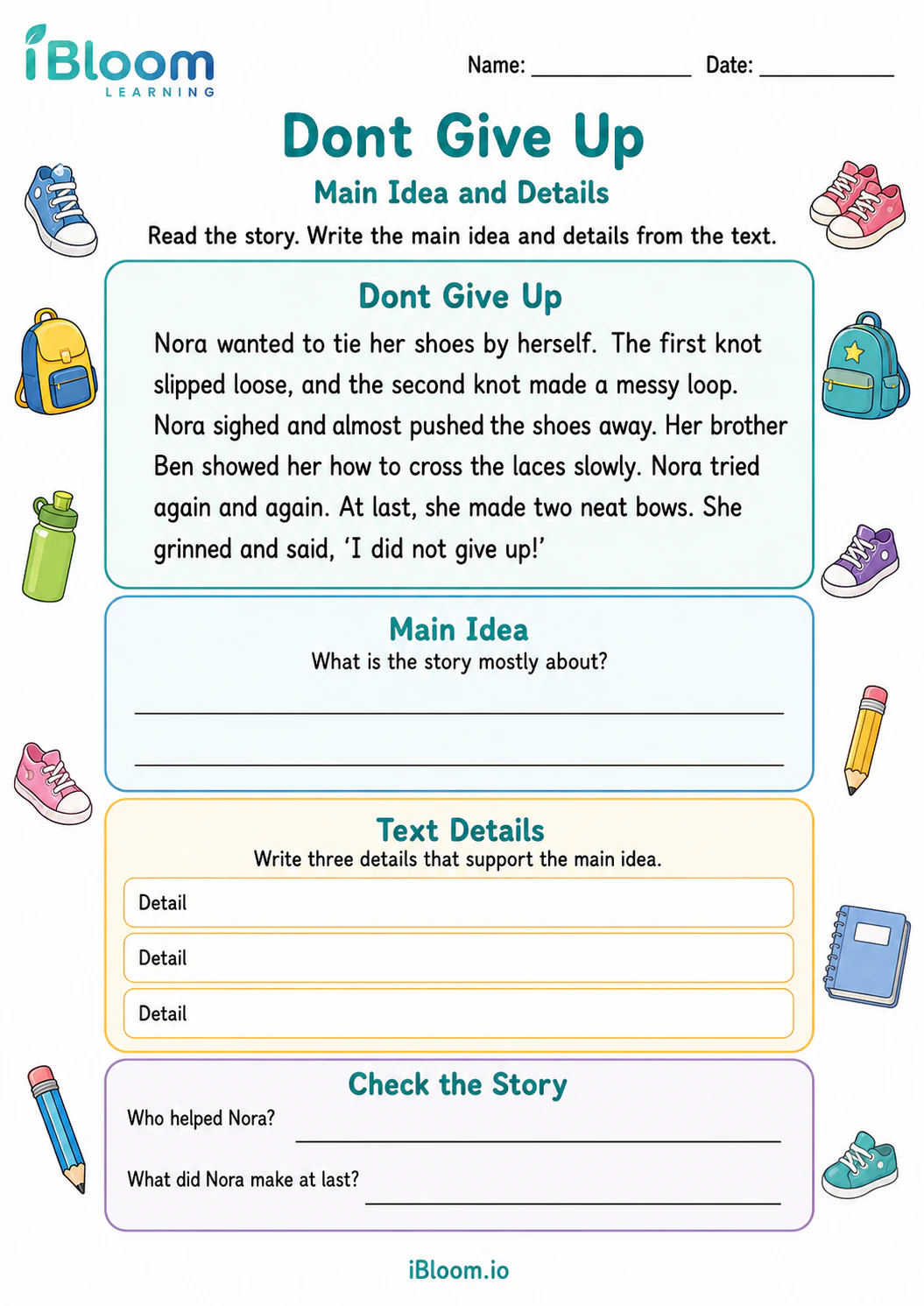
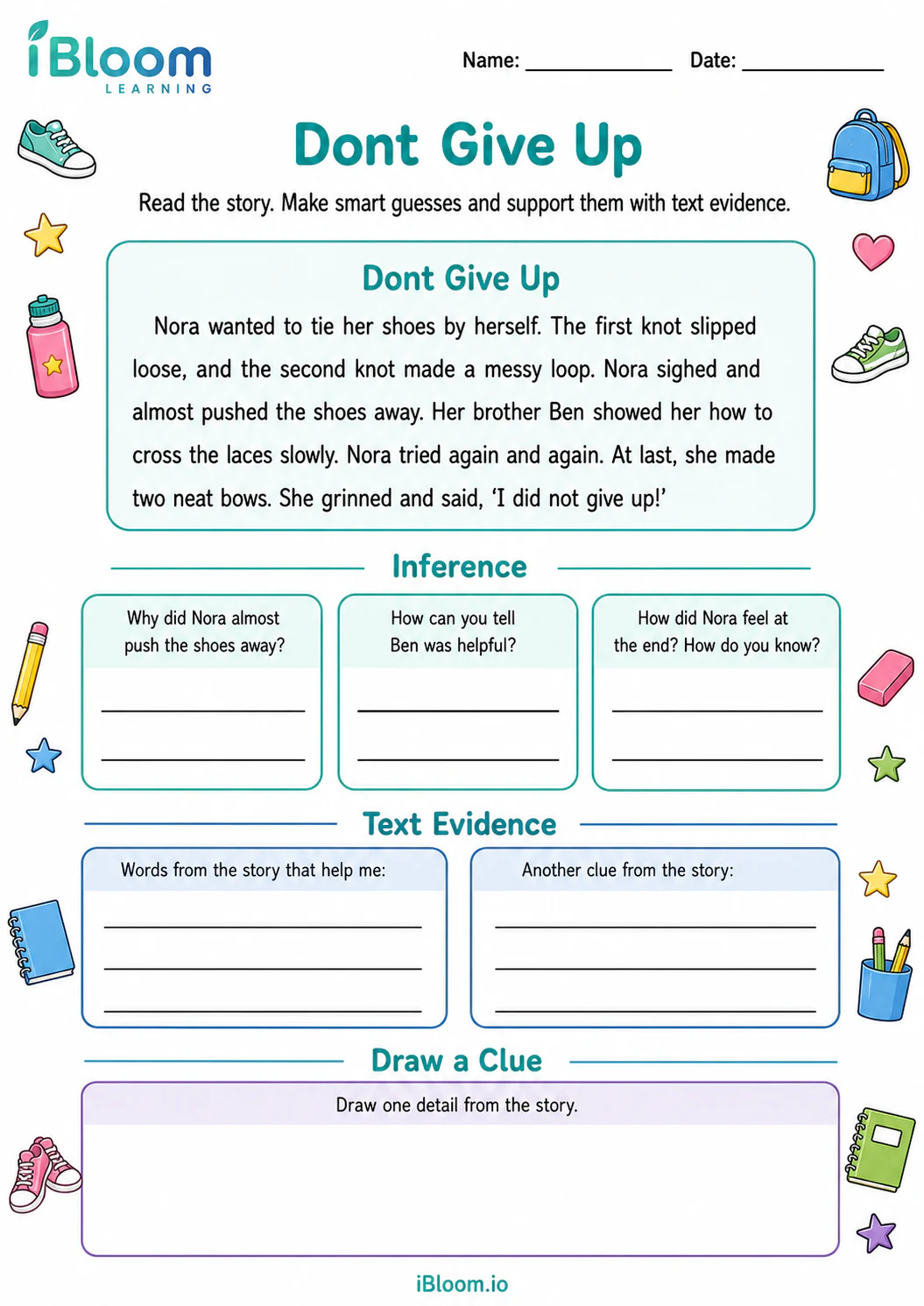
About this worksheet
This free Grade 2 reading worksheet pairs the story Going to the Movies with fourteen questions about clues in a character’s words and actions. Sam visits a theater with Mom, watches a funny dog, laughs, and asks to return. Children read the passage in Part A, choose eight inferences in Part B, and answer six short questions about supporting details in Part C. The questions practice Common Core RL.2.1 by linking answers to key details in a text. A separate answer key marks each choice, and children can point to the passage as they explain their reasoning.
Aligned to RL.2.1
What is an inference in this movie story?
An inference combines a story clue with what a reader knows. The passage says Sam laughs when a funny dog slides into pillows. Readers can infer that he enjoyed the movie, even though that sentence does not use the word enjoyed.
Separate a detail that the story states from an idea the reader works out. “Sam laughed” is a detail; “Sam liked the movie” is an inference.
- 1Question 2 asks what Sam’s laughter suggests.
- 2Answer: He found a moment funny.
- 3Question 12 asks what Sam did when the dog slid into pillows.
- 4Evidence: He laughed.
How do the questions build from clues to explanations?
Part B asks six questions about Sam’s reactions, Mom’s plan to attend with him and his wish to return. Part C asks eight short-answer questions for details supporting an idea or identifying when an event happened. Each question returns to an action or statement in the passage.
How can I discuss the answers after checking?
Ask children to explain one choice using because. For question 3, they might say Mom planned to watch with Sam because she bought two tickets.
Question 5 asks what Sam’s favorite part suggests. The story says he told Mom about it afterward, so readers can infer that it was a moment he liked. Then have the child find the exact sentence that supports the answer.
How to use this worksheet
- 1Read the story once to follow Sam’s visit from arrival to the trip home.
- 2Reread the relevant sentence before choosing each Part B inference.
- 3In Part C, write the action or words that support each idea.
- 4Explain one choice aloud using because and a clue from the story.
- 5Check the key and return to the passage when two choices seem possible.
Mistakes to notice and how to help
The mistake
Choosing a feeling without checking when it occurs.
The fix
Find the moment in the question: the dark theater comes before Sam laughs.
The mistake
Picking a true detail that does not support the inference.
The fix
Ask how the detail proves this particular idea; popcorn does not explain a blocked view.
The mistake
Choosing only Sam’s final feeling for the change question.
The fix
Compare her question about the dark at the beginning with her request to return at the end.
Curriculum alignment
Use story details to explain what characters likely think, feel and do.
On this sheet: Children answer why and how questions and select details that support inferences about the characters.
Show the official wordingHide the official wording
Ask and answer such questions as who, what, where, when, why, and how to demonstrate understanding of key details in a text.
What to practice next
Make more practice
Further reading
Questions parents and teachers ask
Is the story included on the worksheet?
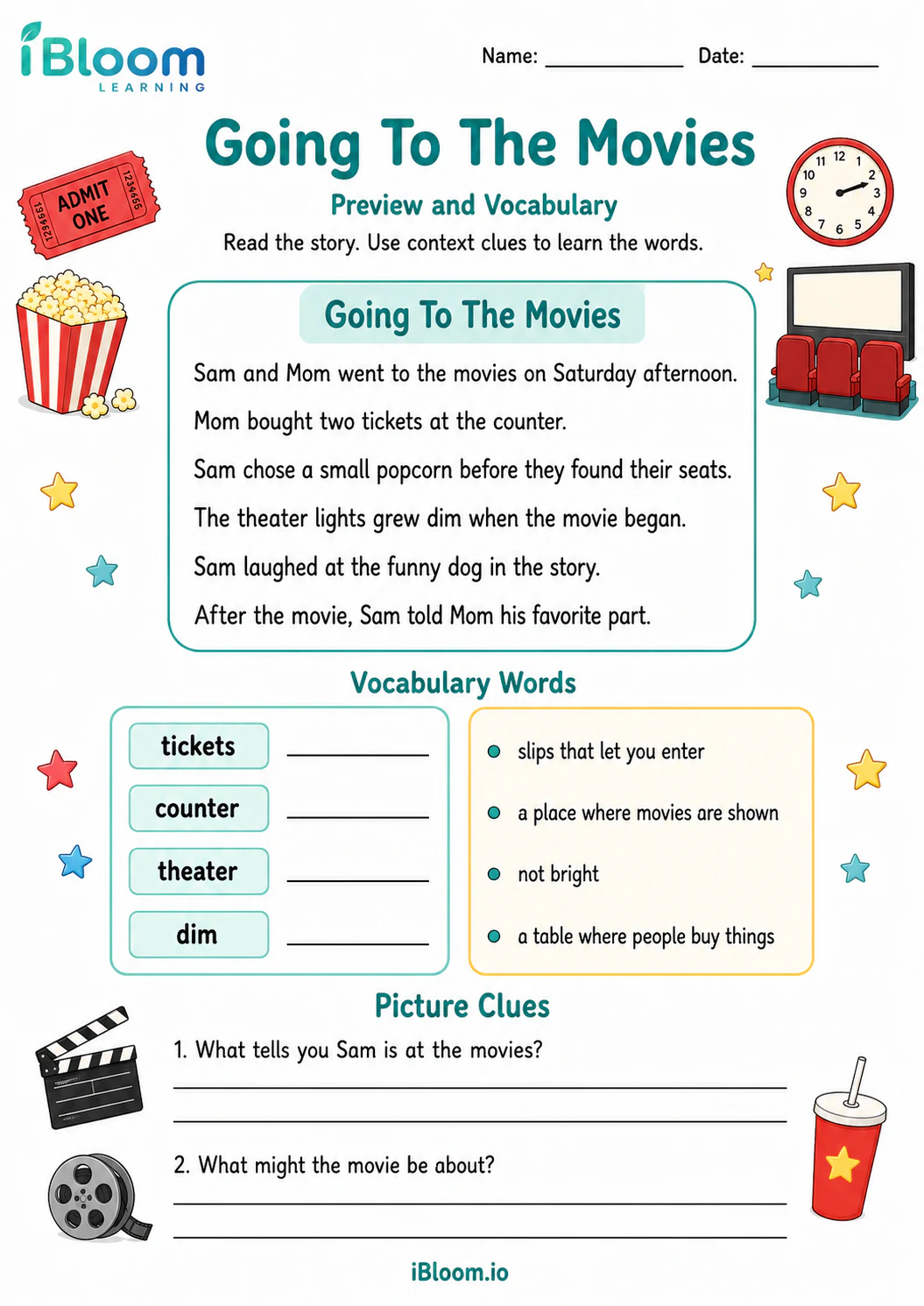
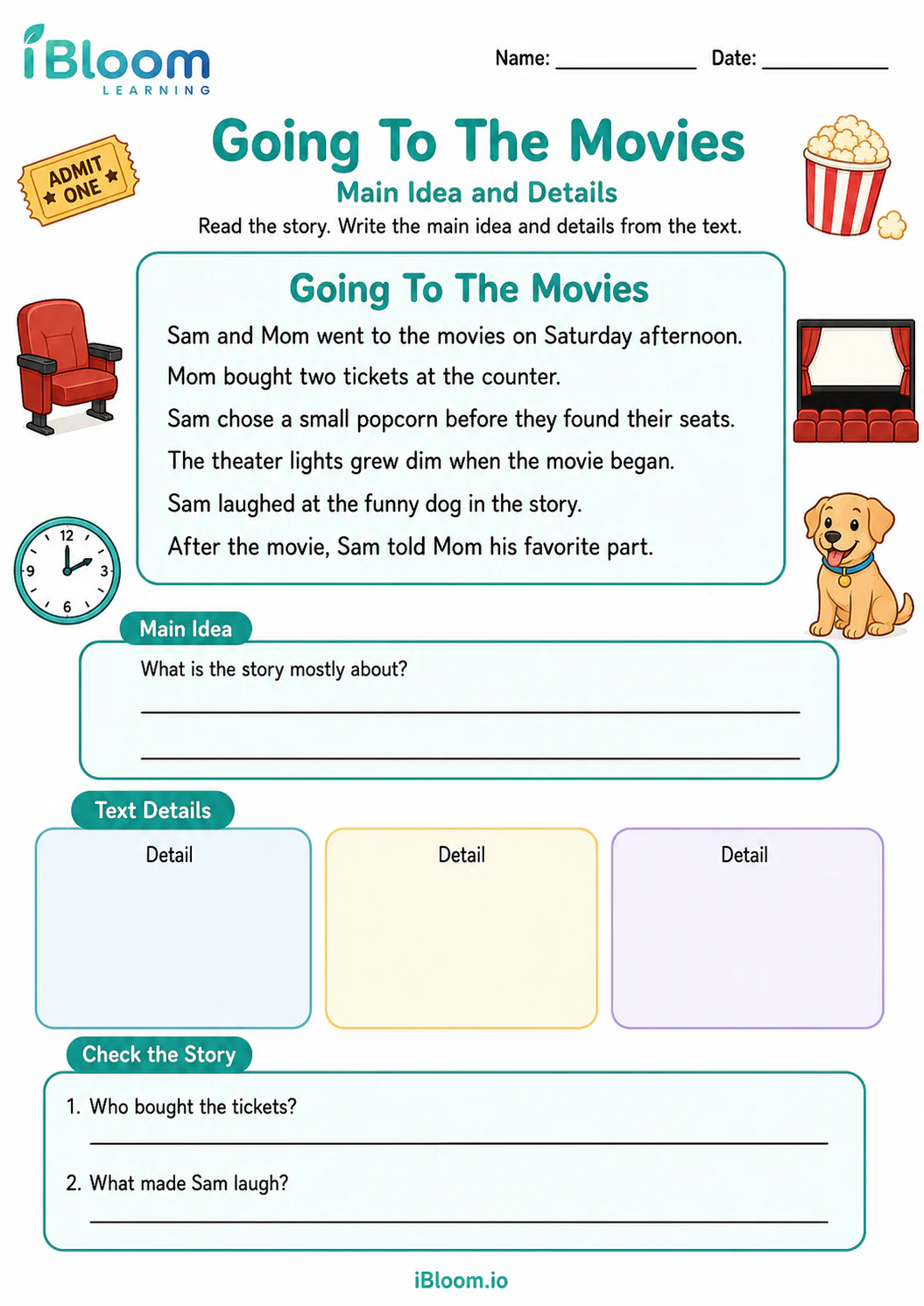
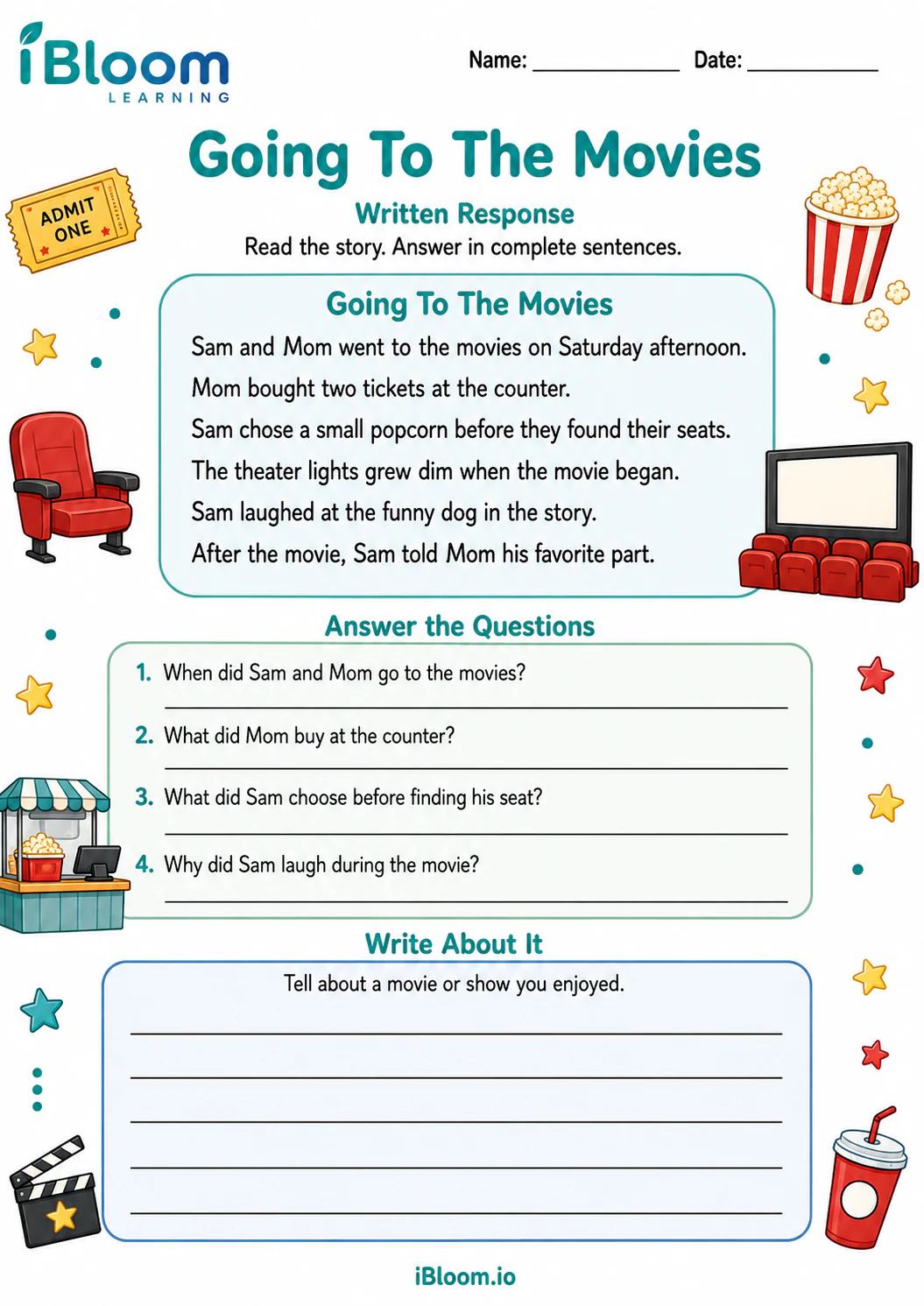
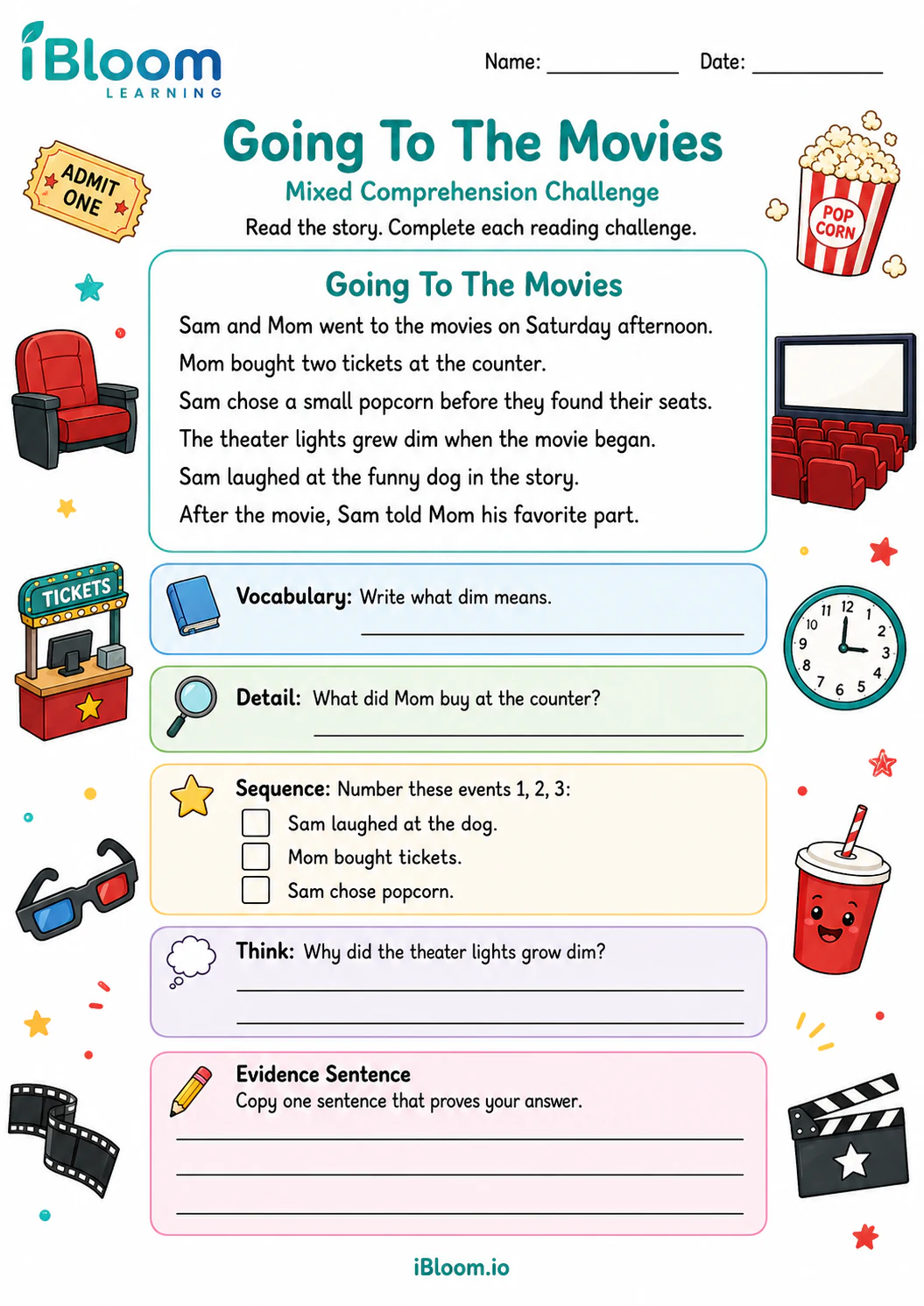
Yes, the complete Going to the Movies passage is printed as Part A. Children can return to it while answering all fourteen questions. It follows Sam and Mom through a movie visit, using the ticket, popcorn, dim lights, funny dog and return request as clues.
What is the difference between an inference and a detail?
A detail is something the passage directly tells you, while an inference is an idea you work out from those details. Sam asks to return next Saturday; that is a detail. The idea that he enjoyed the visit is an inference supported by his request.
How can my child explain a choice with evidence?
Ask your child to say an idea and add a reason with because. For example, Sam likely enjoyed the movie because he laughed at the funny dog and asked to come again. Then have the child point to those details in the printed passage.
Can I read the passage aloud with my child?
Yes, you can read it aloud while your child follows the printed words. Pause after each paragraph to check what happened, then let the child choose answers from the clues. For independent reading practice, ask the child to reread the relevant sentence before explaining a choice.
What does the answer key include?
The answer key gives the correct choice for all six inference questions and a concise detail for each of the eight evidence questions. Children can check an answer, then return to the passage and point to the sentence that supports it.