
About this worksheet
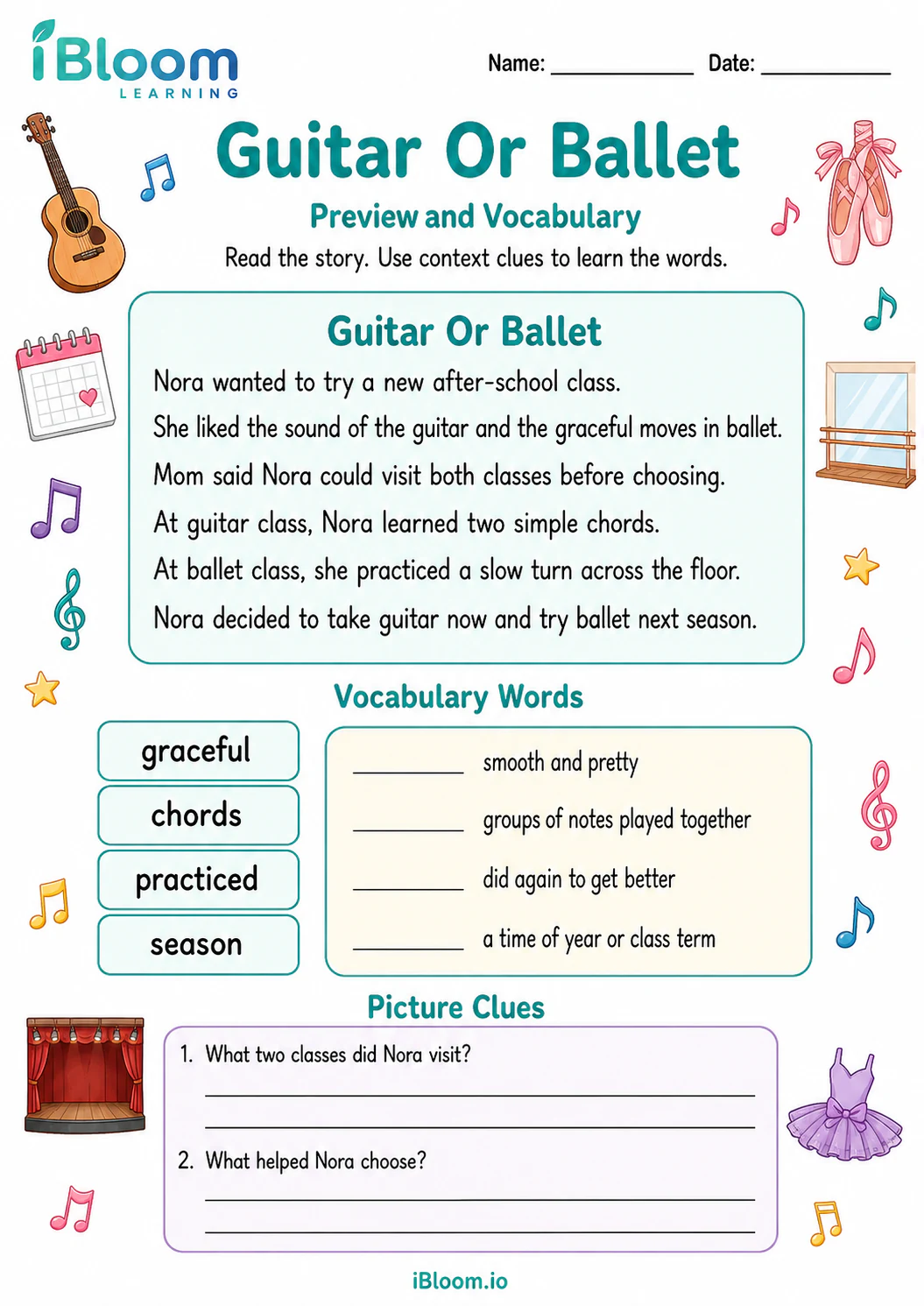
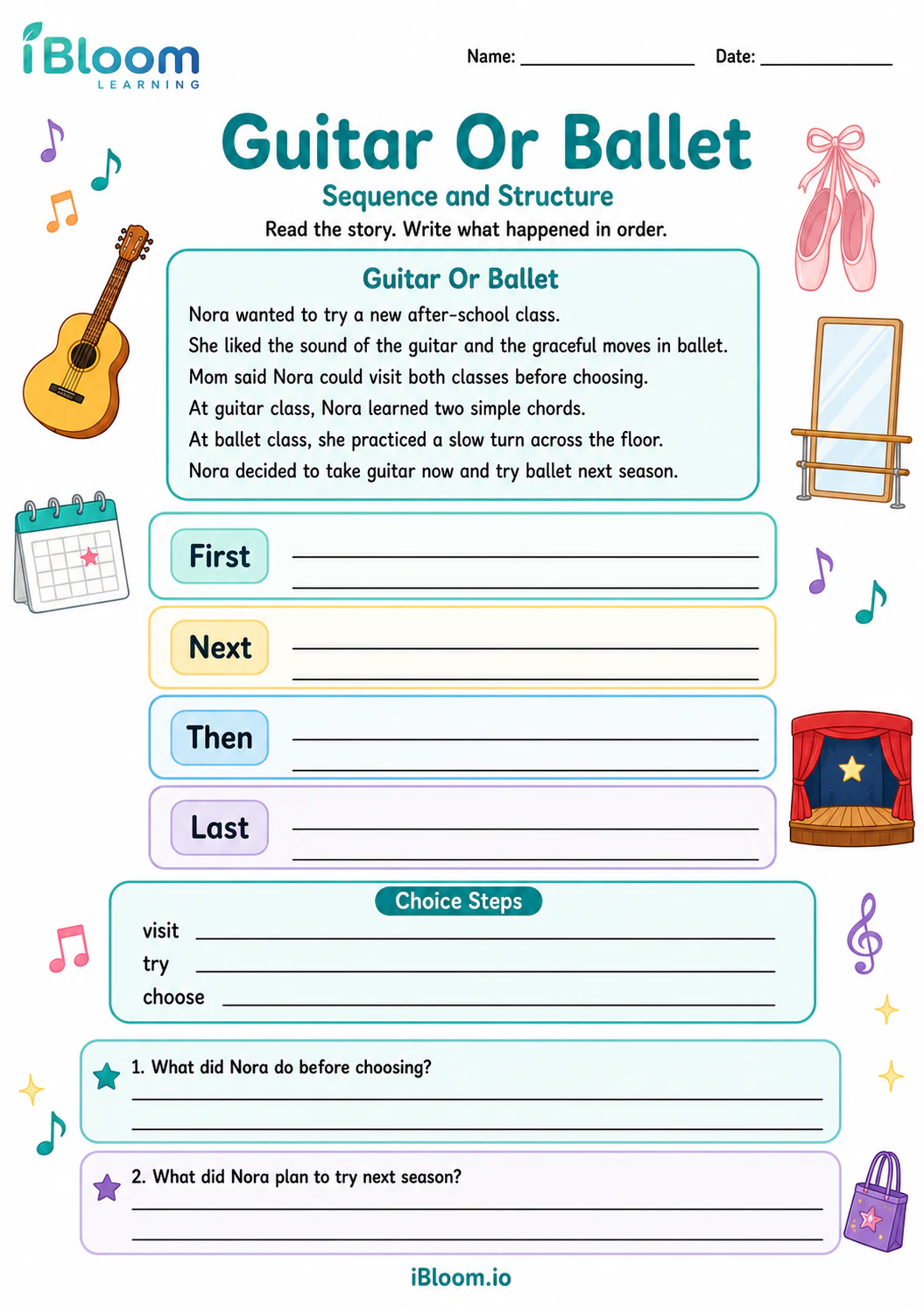
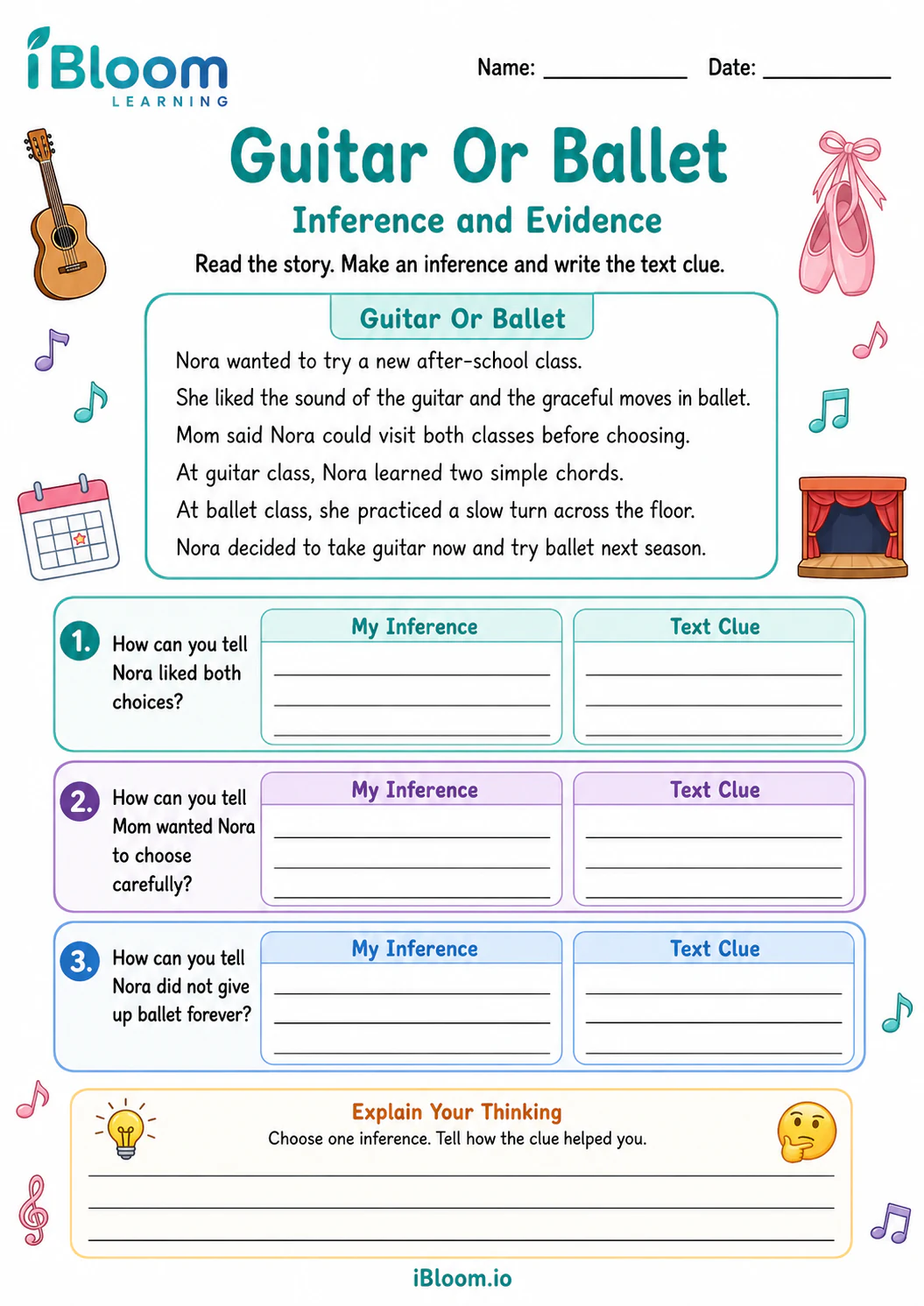
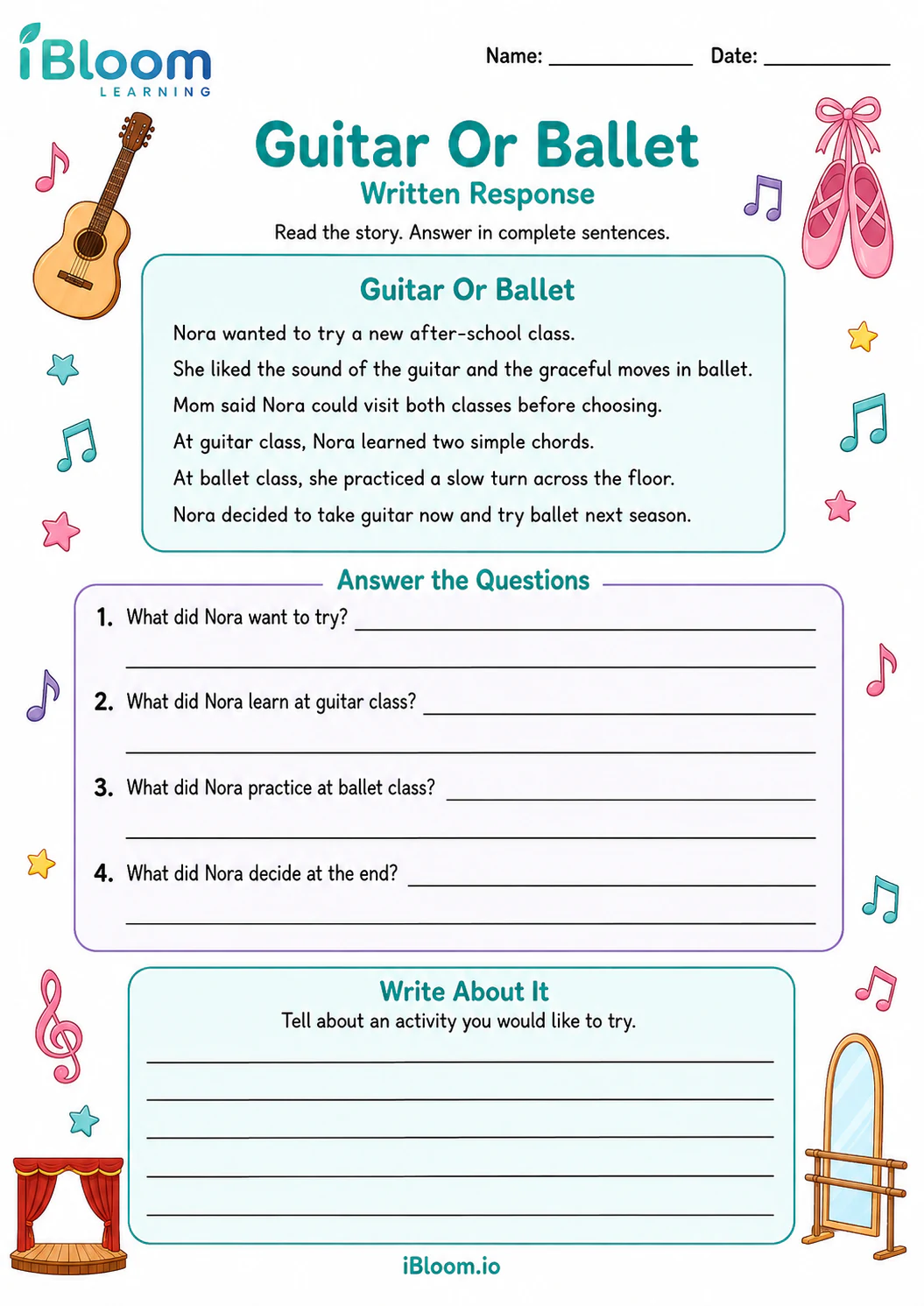
This free printable worksheet is for Grade 2 readers practicing guitar or ballet. Children read an original passage, return to its details, and explain what they learn from the events. The questions move from finding evidence to putting ideas together, with a separate answer key for checking. It practices RL.2.1. Print the sheet for independent work, a small reading group, or a quiet at-home practice session.
Aligned to RL.2.1
Which details help explain Lena’s choice?
Reread the lines about guitar and ballet. Details include what Lena tried, what she liked, and what she decided to do next.
- 1Question: What did Lena like about the guitar?
- 2Find the sentence about the sound of the strings.
- 3Answer: The strings hummed.
How can you find the main idea?
The main idea tells what the passage is mostly about. Lena tries two activities and chooses guitar; a single detail, such as borrowing a guitar, supports that bigger idea.
How do details support an answer?
Use the passage to check each response. The detail about Lena enjoying music with Mateo supports why guitar suited her, while the ballet description adds another part of her comparison.
How to use the worksheet
- 1Read the passage aloud once or have the child read it quietly.
- 2Ask the child to retell the main events in order.
- 3For Part B, point back to the passage before choosing an answer.
- 4For written responses, say the answer aloud before writing it.
- 5Use the key to check answers and revisit the sentence that supports a missed item.
Common reading slips and quick fixes
The mistake
Choosing an answer that sounds sensible but is not in the passage.
The fix
Find the sentence that supplies evidence before deciding.
The mistake
Naming one event when asked for the story’s lesson.
The fix
Connect the character’s choice to what happened afterward.
The mistake
Giving a detail without answering the whole question.
The fix
Repeat the key words from the question in the response.
Common Core alignment
This worksheet builds careful reading and text-based responses.
Ask and answer questions about important details in a story.
On this sheet: Readers answer questions using details from the passage.
Show the official wordingHide the official wording
Ask and answer such questions as who, what, where, when, why, and how to demonstrate understanding of key details in a text.
What to practice next
Make more practice
Further reading
Questions parents and teachers ask
Should a child read the passage more than once?
Yes. A first read helps the child follow the events, and a second look helps locate evidence. Encourage the child to reread only the part connected to a question instead of guessing from memory. The worksheet is designed for readers to return to the passage as they work.
How should children answer the written questions?
A complete sentence is a helpful goal, especially when the question asks why or what lesson the story teaches. The answer key includes sample wording for open responses. A child’s phrasing can differ as long as it is supported by the passage.
Can this worksheet be used in a small group?
Yes. Children can take turns reading paragraphs, then point to evidence before sharing an answer. Partners may compare which detail best supports an idea. The separate answer key makes it easy for an adult to check the group’s work afterward.
What is included in the answer key?
The key lists the correct choices and short answers, along with sample responses for questions that allow different wording. Use it after the child finishes so the passage remains the source for solving each question. It also helps adults check which story detail supports a response.
How long should the worksheet take?
Plan for about 25 minutes, including time to read the passage and look back for evidence. A child who needs more time can complete one part, take a short break, and return to the next part without losing the story.