




About this worksheet
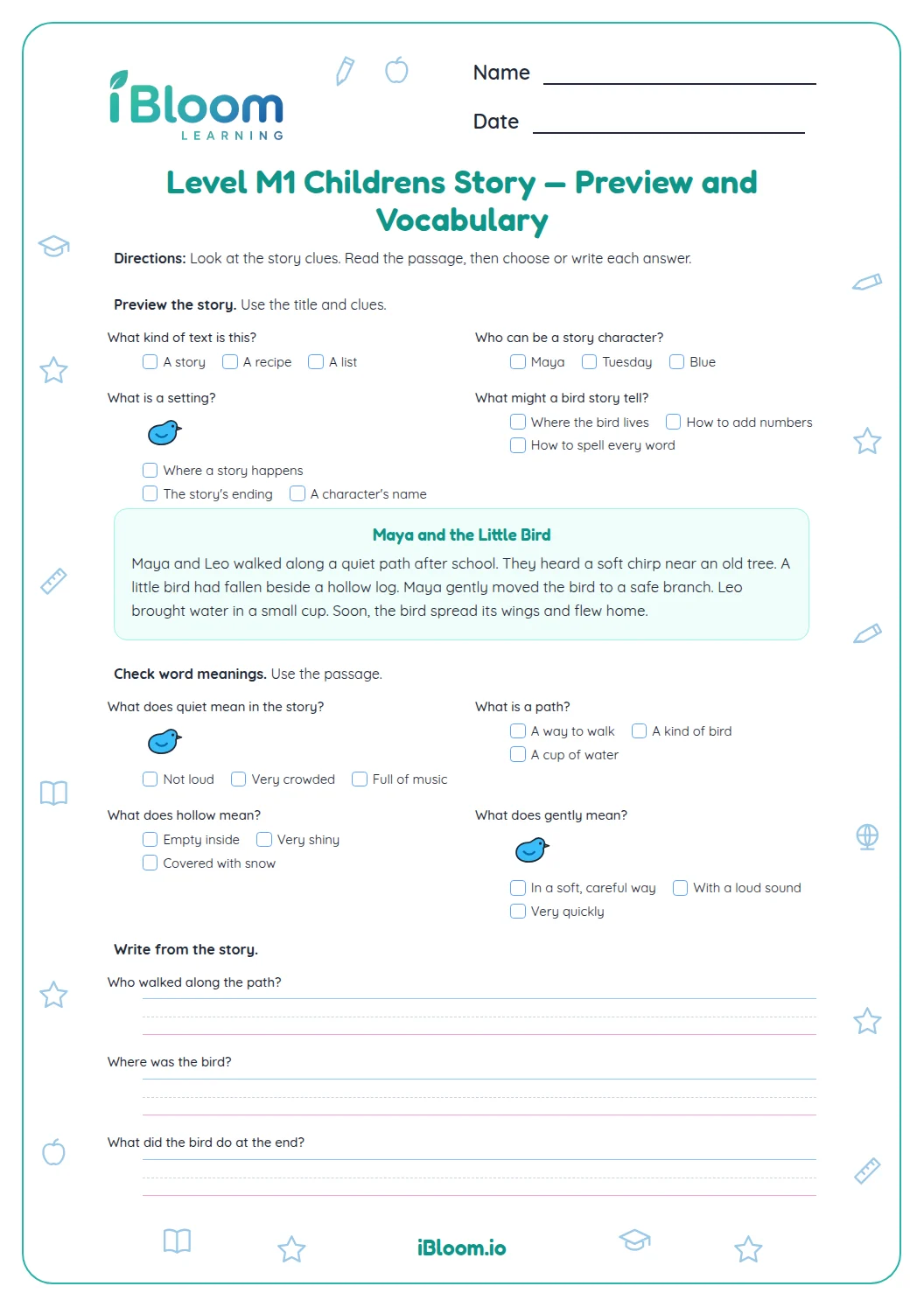
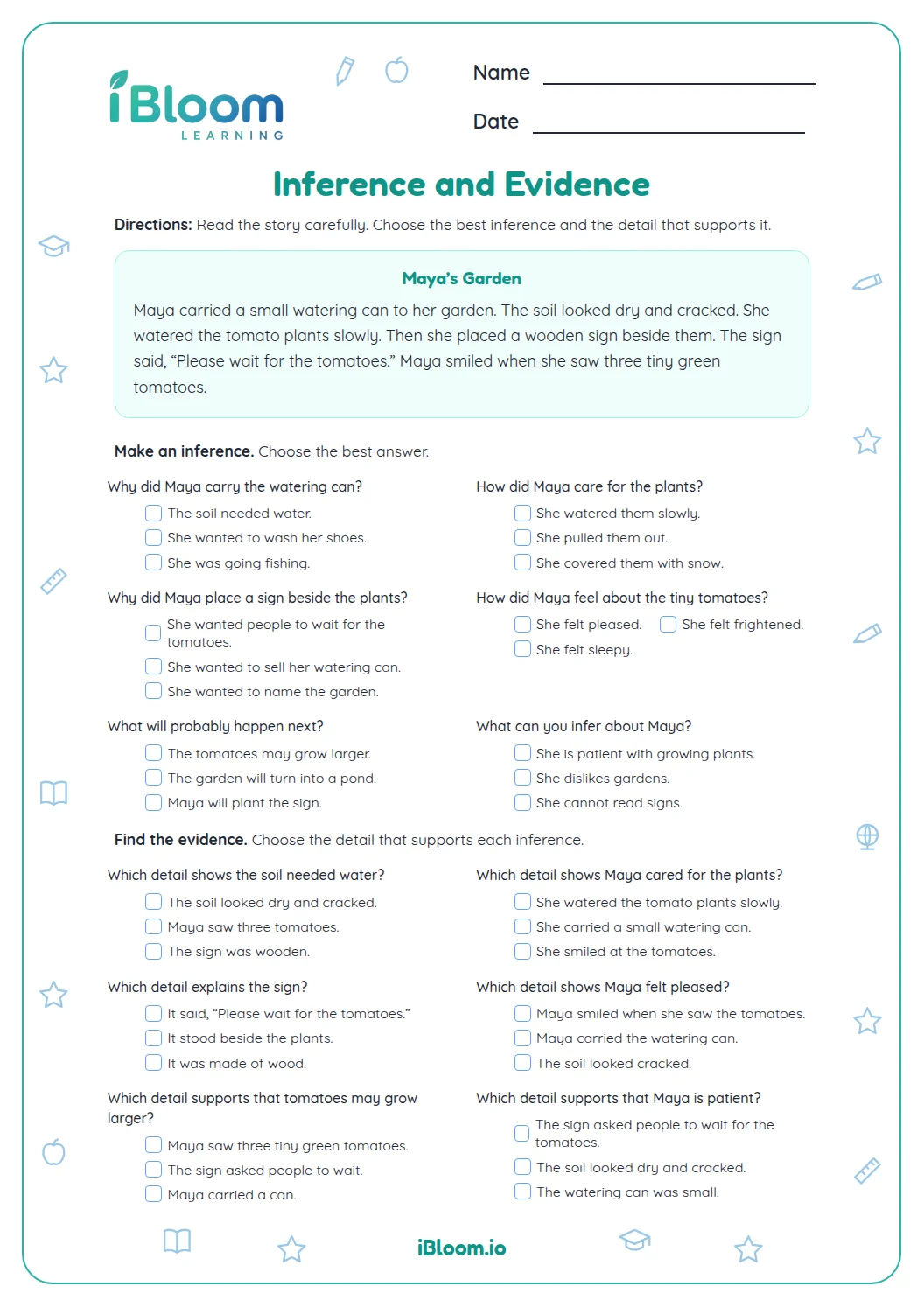
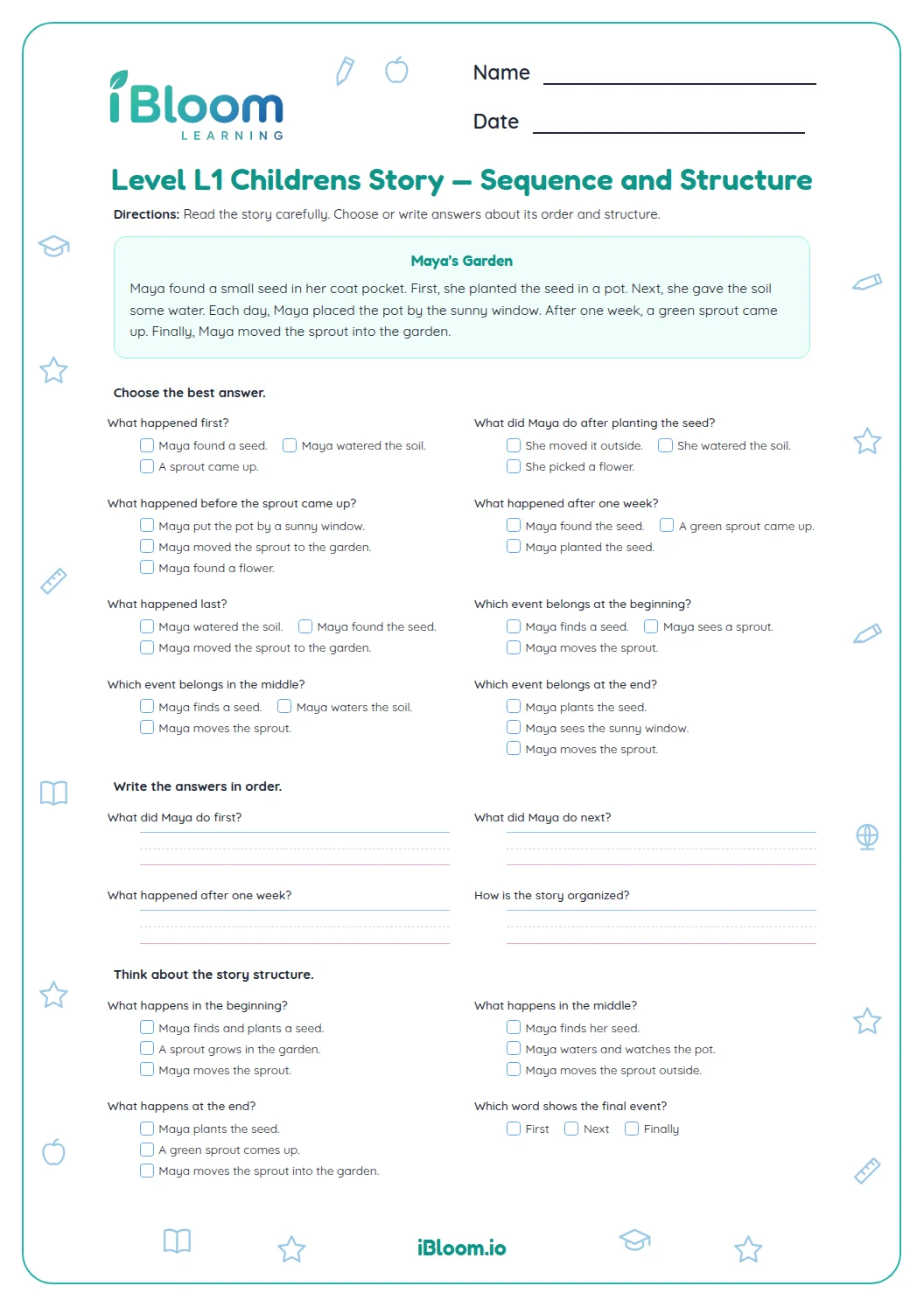
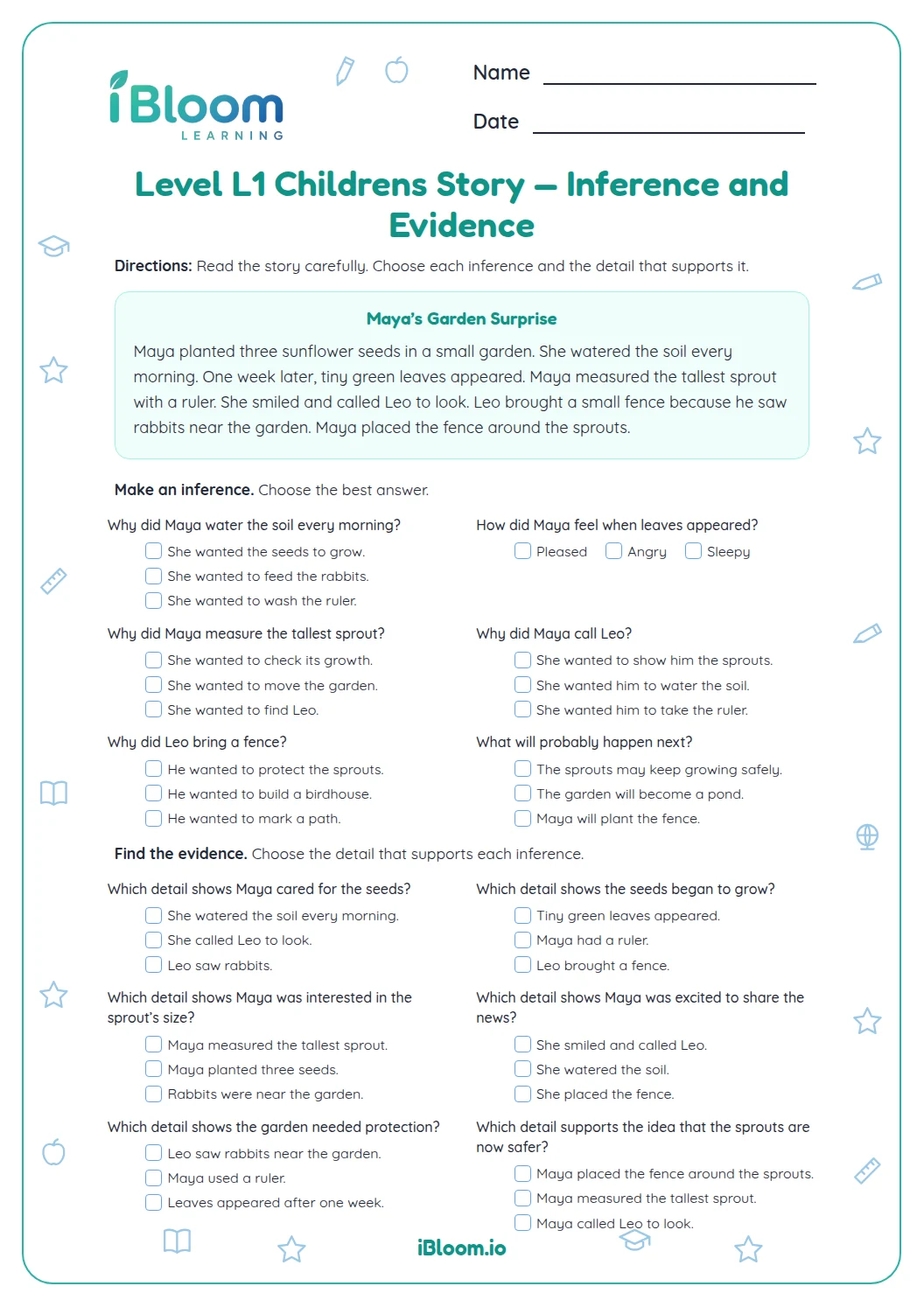
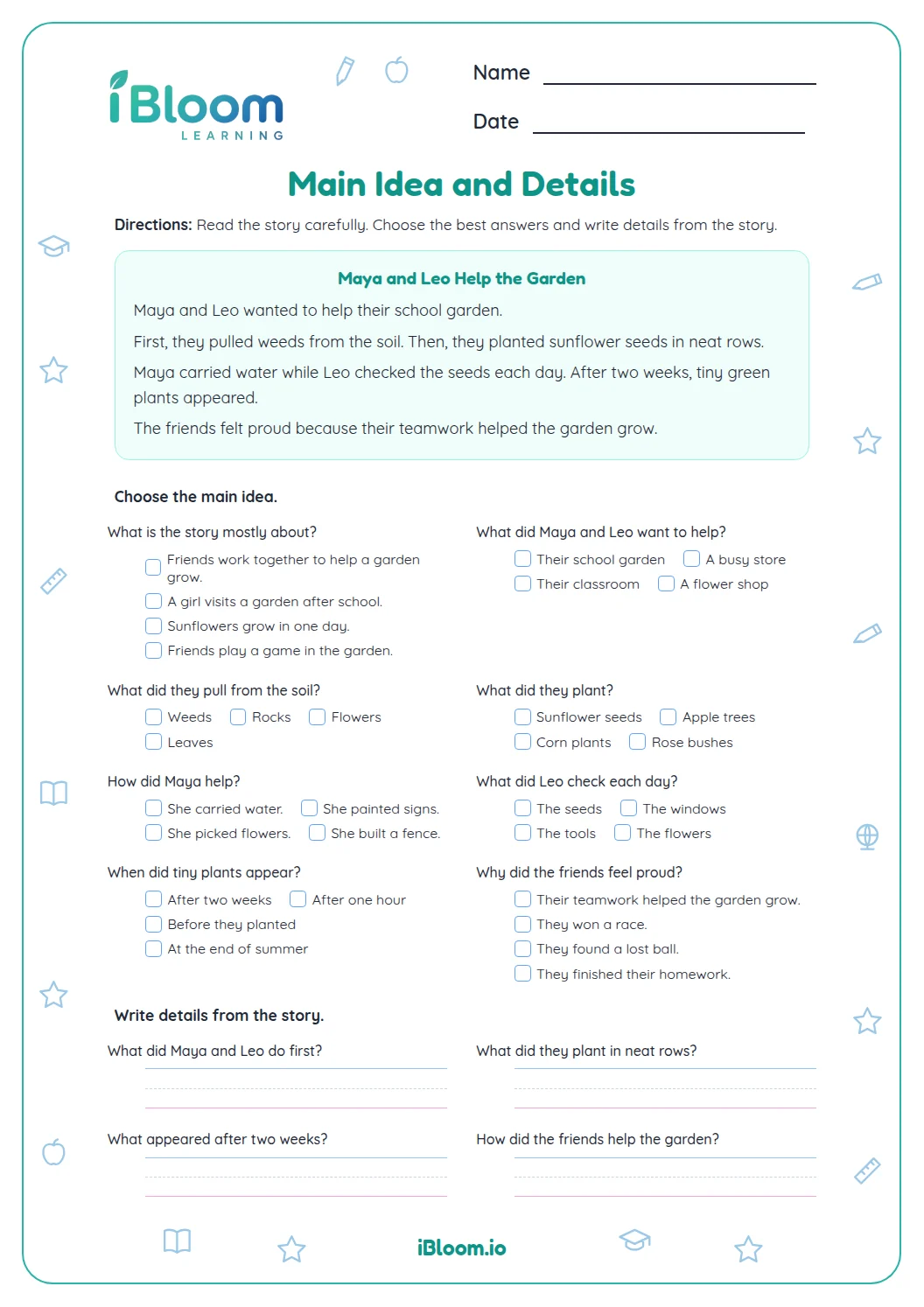
This free Grade 2 reading comprehension worksheet pairs an original children’s story with questions about its main idea and details. In “A Safe Place,” Mia and her grandpa help a tired bird and contact a wildlife helper. Students choose the best main idea, find supporting and story details, and write short evidence-based responses. The questions practice CCSS RL.2.1 by asking who, what, where, why, and how about a text.
Aligned to RL.2.1
How do I identify the main idea of a story?
The main idea tells what the whole story is mostly about. It should fit the beginning, middle, and ending, not just one small detail.
Mia finds an injured-looking bird, gets help from Grandpa, and contacts a wildlife helper. Together, those events support the main idea that Mia and Grandpa help a bird safely.
- 1Question 1: What is the story mostly about?
- 2Answer: Mia and Grandpa help a bird safely.
Which details support that main idea?
A supporting detail is a particular action or event that helps prove the main idea. Calling Grandpa, making a quiet place, and calling the wildlife center all show the characters helping the bird. The garden gate is a setting detail, but it does not explain the whole story.
How should I answer a written question?
Answer the question directly and include one accurate detail. For example, Mia and Grandpa help by placing the bird in a quiet box and calling a wildlife helper. Responses can use different words as long as the story supports them.
How to use this worksheet
- 1Read the title and first paragraph to meet the character and problem.
- 2After reading the whole story, say what happens from beginning to end in one sentence.
- 3Choose the answer that fits the whole story, not just one detail.
- 4For detail questions, look back for the exact action or place.
- 5Write a short answer and include one story detail when asked.
Common mistakes and quick fixes
The mistake
Choosing the first detail as the main idea.
The fix
Check whether the answer explains the beginning, middle, and ending together.
The mistake
Mixing up where the bird is found and where it rests.
The fix
Reread the story: Mia finds it beside the gate, then the box goes to a shady spot.
The mistake
Writing an opinion that the story does not support.
The fix
Use an event from the text as evidence for the response.
Curriculum alignment
The questions ask students to answer who, what, where, why, and how using details from the story.
Answer questions about the story using key details.
On this sheet: Questions ask who, what, where, why, and how, and students support answers with details from the story.
Show the official wordingHide the official wording
Ask and answer such questions as who, what, where, when, why, and how to demonstrate understanding of key details in a text.
What to practice next
Make more practice
Further reading
Questions parents and teachers ask
What is the main idea of “A Safe Place”?
The story is mostly about Mia and Grandpa helping a bird safely. Details that support this idea include calling Grandpa, placing the bird in a quiet box, and asking the wildlife center for advice. A detail about the garden gate matters because it tells where the story begins, but it does not describe the whole story.
How can a reader find a supporting detail?
First choose a sentence that summarizes the whole story. Then look for an action or event that shows that summary is true. In this story, Mia and Grandpa make a quiet place and call a trained helper, which supports the idea that they are helping the bird.
Why does the wildlife helper take over?
The helper is trained to check the bird and decide whether it is ready to fly. The story says Mia learns that caring for a wild animal sometimes means asking a trained helper to take over. This detail supports the message that people can help by getting the right kind of care.
How many questions are included?
There are 14 questions: 10 multiple-choice items and 4 written responses. The first questions focus on the main idea and details in “A Safe Place,” and the final questions ask students to explain their thinking with story evidence.
Should a child copy a whole sentence from the passage?
A short response can use a story detail in the child’s own words. For example, the answer can say that Mia and Grandpa put the bird in a quiet box and called the wildlife center. The key lists sample answers; another response is fine if the story supports it.
What is the story’s message about helping animals?
The story shows that helping a wild animal can include making a safe place and contacting a trained helper. Mia does not try to treat the bird herself. The wildlife helper checks its wing and takes it to the center to make sure it is ready to fly.