



About this worksheet
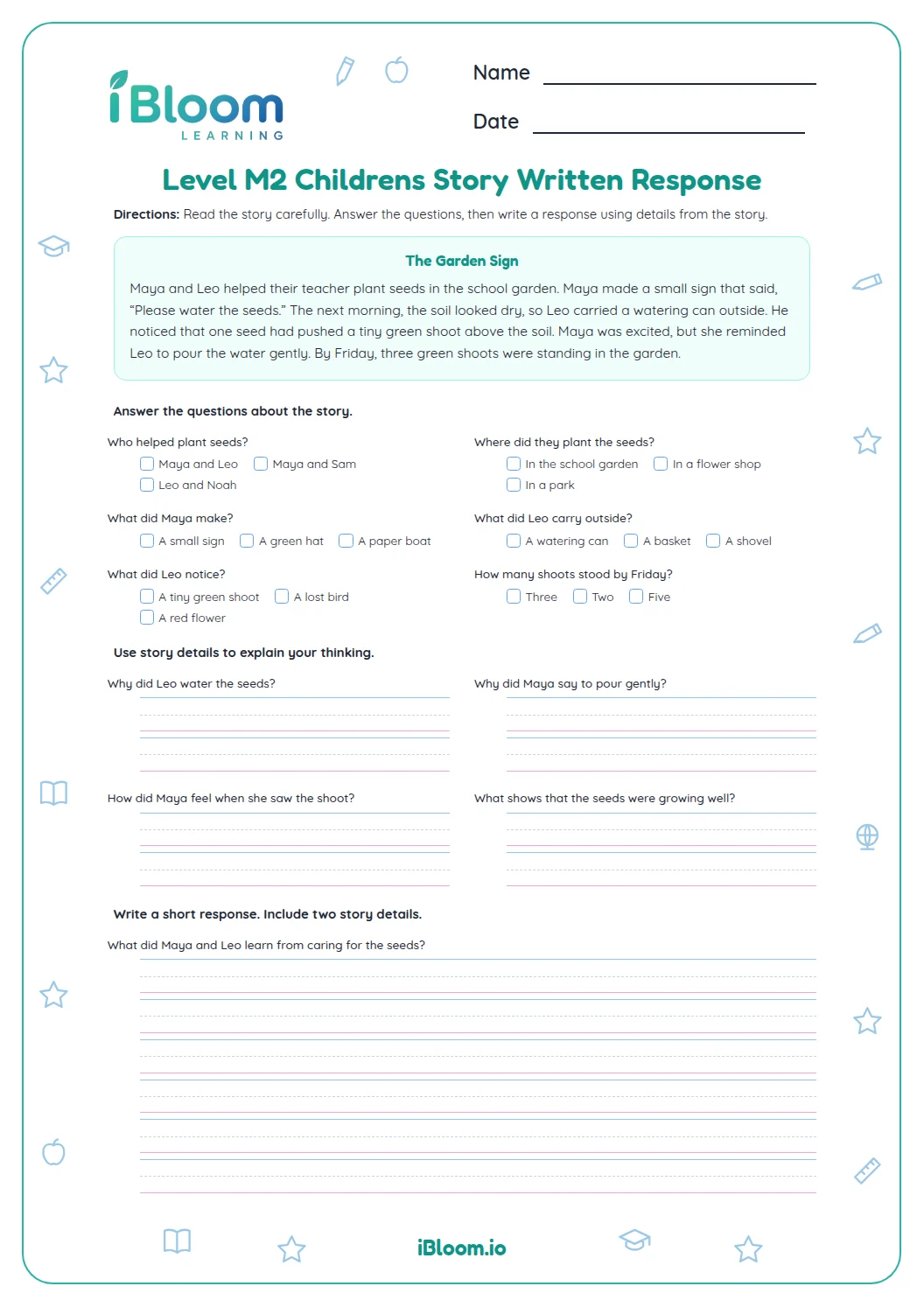
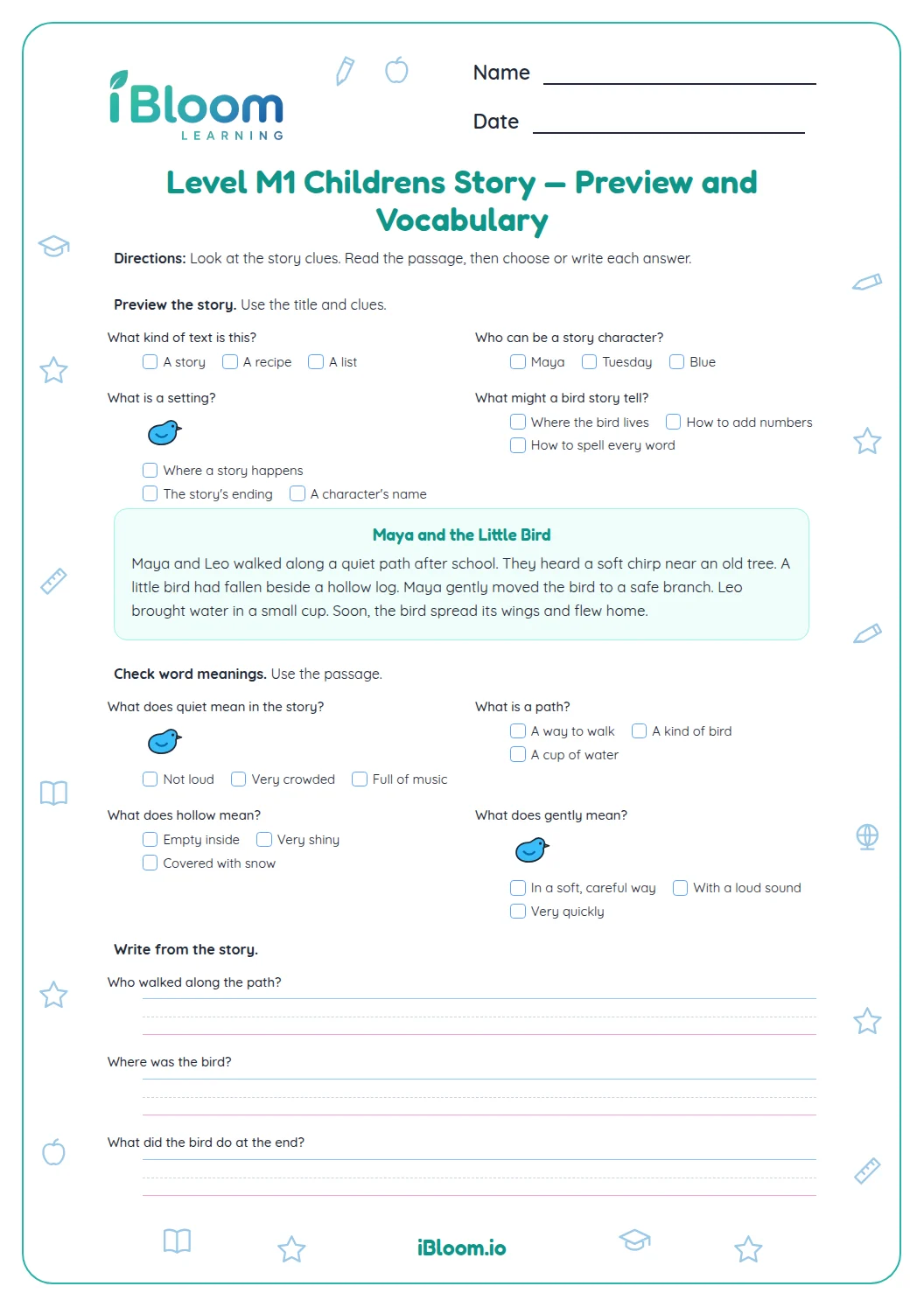
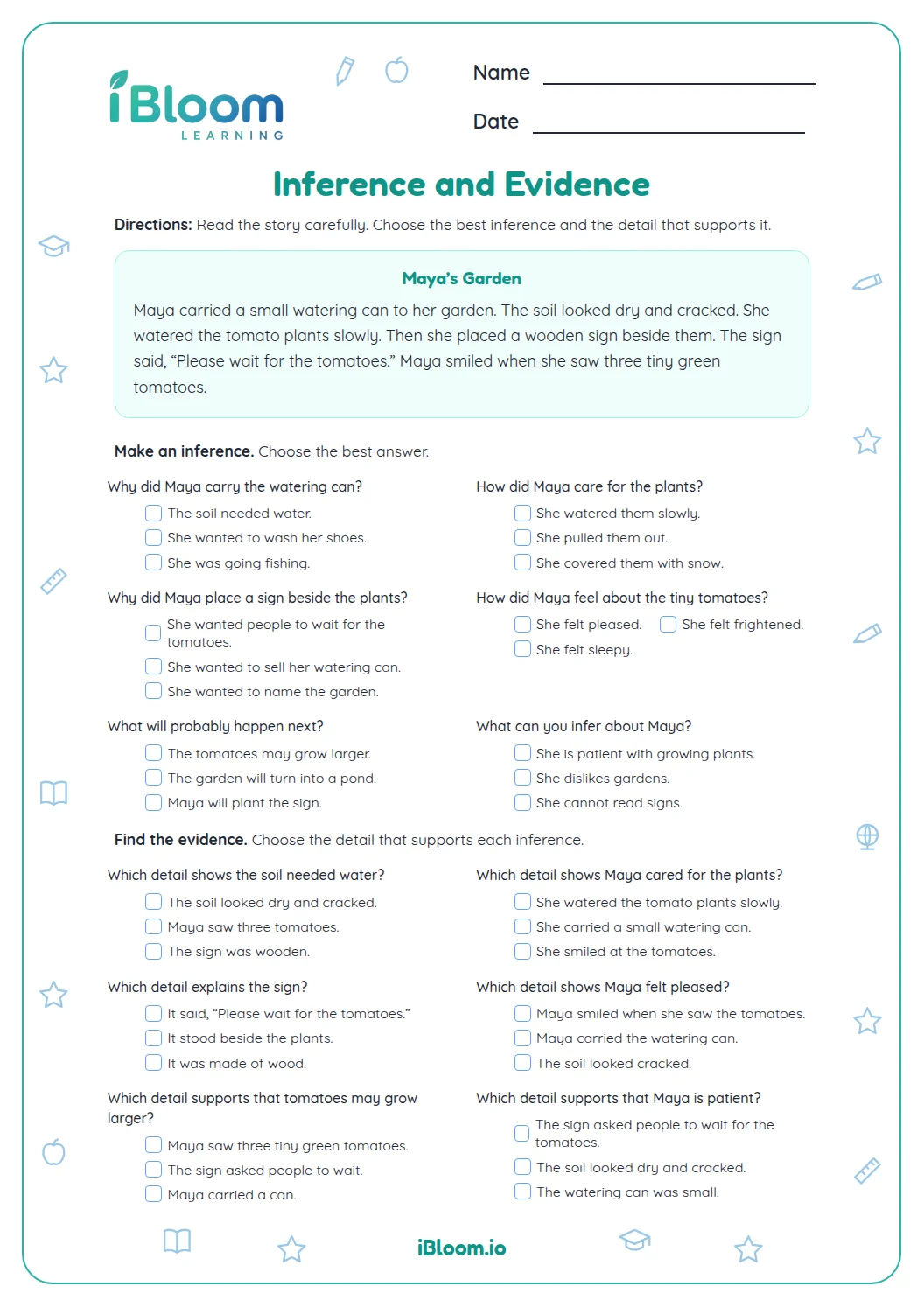
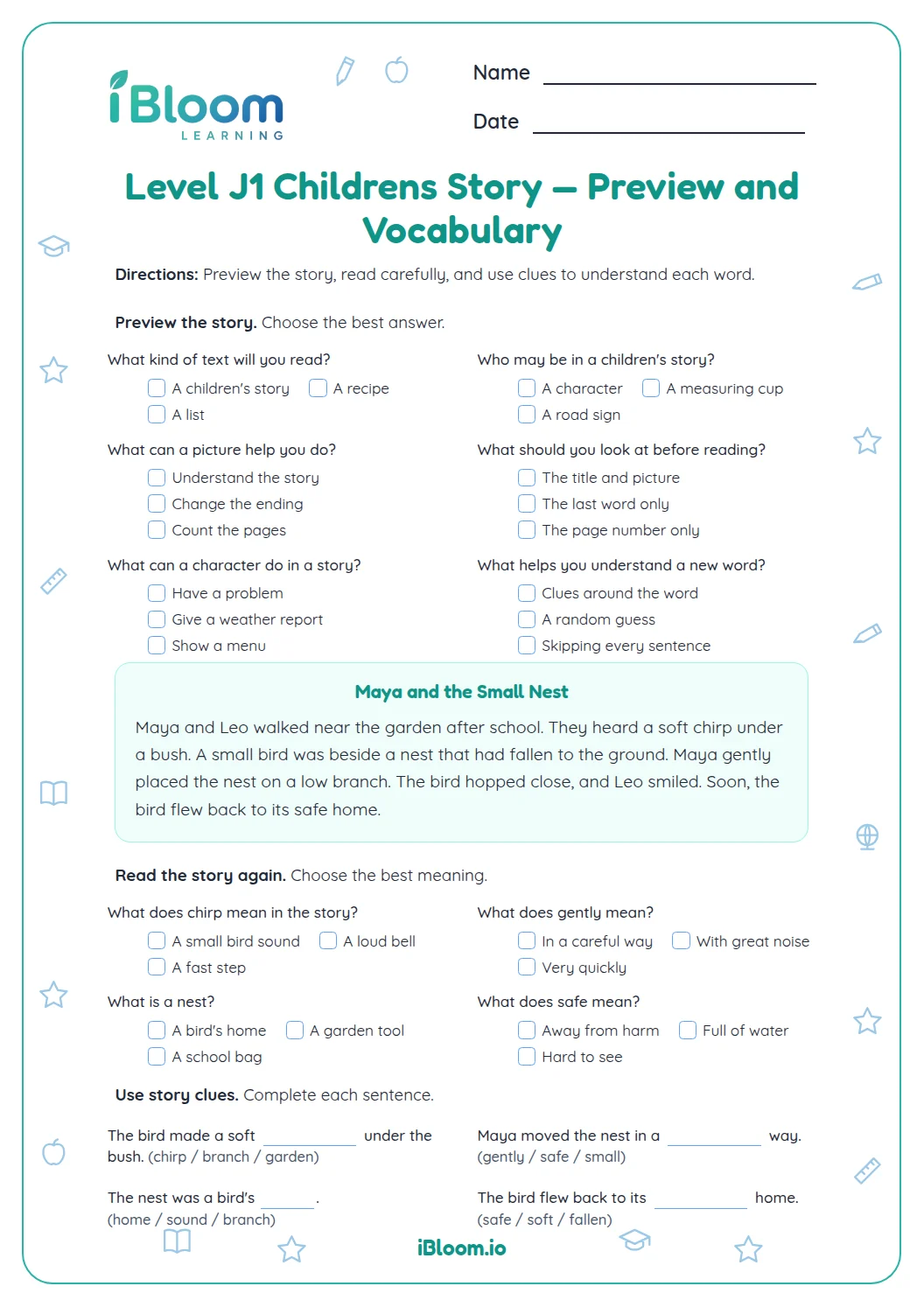
This printable Grade 2 reading page replaces the earlier brief multiple-choice preview with a complete original story and focused follow-up practice. Children read about Maya and Leo flying a kite, use sentence clues to understand words such as “flutter” and “narrow,” and answer questions about characters, setting, sequence, and evidence. It includes 15 questions and an answer key, with practice aligned to CCSS RL.2.1 and L.2.4.a.
Aligned to RL.2.1 and L.2.4.a
How can a reader preview a story?
The title and an early detail can help a reader make a prediction. Question 1 asks children to choose a detail that suggests an outdoor activity, then they read to see how the kite trip unfolds.
How do nearby words help explain vocabulary?
Readers can use the rest of a sentence to test a word’s meaning. In “the kite began to flutter and rise,” the action of rising helps show that flutter means moving lightly in the air.
- 1The kite began to flutter and rise.
- 2“Rise” is a clue about how it moves.
- 3Flutter means move lightly in the air.
Which story details support an answer?
Questions ask who made the kite, where the friends went, and what happened when a gust arrived. Readers can return to the passage and point to a sentence that supports each answer.
How can a reader track the events?
Notice signal words such as “before,” “when,” and “at the end.” Question 11 asks which event came first; making the kite happens before flying it and folding it for tomorrow.
How can I use this page?
- 1Read the title, then make a quick prediction from an early clue.
- 2Read the whole passage once before answering detail questions.
- 3For a new word, reread the sentence and look at the action around it.
- 4For sequence questions, underline time words such as “before” and “then.”
- 5Use one precise passage detail in each written response.
What should learners check?
The mistake
Choosing an answer that sounds possible but is not in the passage.
The fix
Find the sentence that directly supports the choice.
The mistake
Giving a word meaning without using its sentence.
The fix
Read the whole sentence and connect the word to what happens.
The mistake
Mixing up the order of events.
The fix
Retell the actions from the first paragraph through the ending.
Common Core alignment
This worksheet practices the following Common Core skill.
Ask and answer who, what, where, when, why, and how questions about a story.
On this sheet: Learners answer questions about the characters, events, setting, and story details.
Show the official wordingHide the official wording
Ask and answer such questions as who, what, where, when, why, and how to demonstrate understanding of key details in a text.
Use nearby words in a sentence to figure out an unfamiliar word.
On this sheet: Vocabulary questions use the story sentences as clues to word meaning.
Show the official wordingHide the official wording
Use sentence-level context as a clue to the meaning of a word or phrase.
What to practice next
Make more practice
Further reading
Questions parents and teachers ask
What is the story about?
Maya and Leo make a kite and take it to a garden to fly. The story follows their preparation, the kite rising in a gust, and their careful return home. Children use the events to practice finding details, understanding vocabulary from context, and describing what happened in order.
How does the worksheet teach vocabulary?
Several questions ask what a story word means, with the sentence serving as a clue. For example, the kite “began to flutter and rise,” so the action helps readers infer that flutter means moving lightly in the air. Learners can reread before choosing.
What does question 10 ask children to explain?
It asks why Maya kept a firm grip on the string. The passage says a gust pulled the string tight, which explains why she held it firmly. A complete answer connects Maya’s action to that event. The reason comes directly from that event in the passage.
How can a child answer the sequence question?
The reader can list the events in the order they happen: first Maya and Leo make the kite, then they go to the garden and fly it, and at the end they fold it carefully. Question 11 asks which event happened first.
Are the written-response answers fixed?
No. The answer key gives sample responses, but a child can use different wording if the response is clear and supported by the passage. The last two questions invite learners to cite a detail and make a reasonable prediction.
Is an answer key included?
Yes. A separate answer key shows the selected choices and sample responses for the open-ended questions. Families can have the child answer independently, then revisit the passage together to find the clues for any missed item. The key includes each response and selected choice.