





About this worksheet
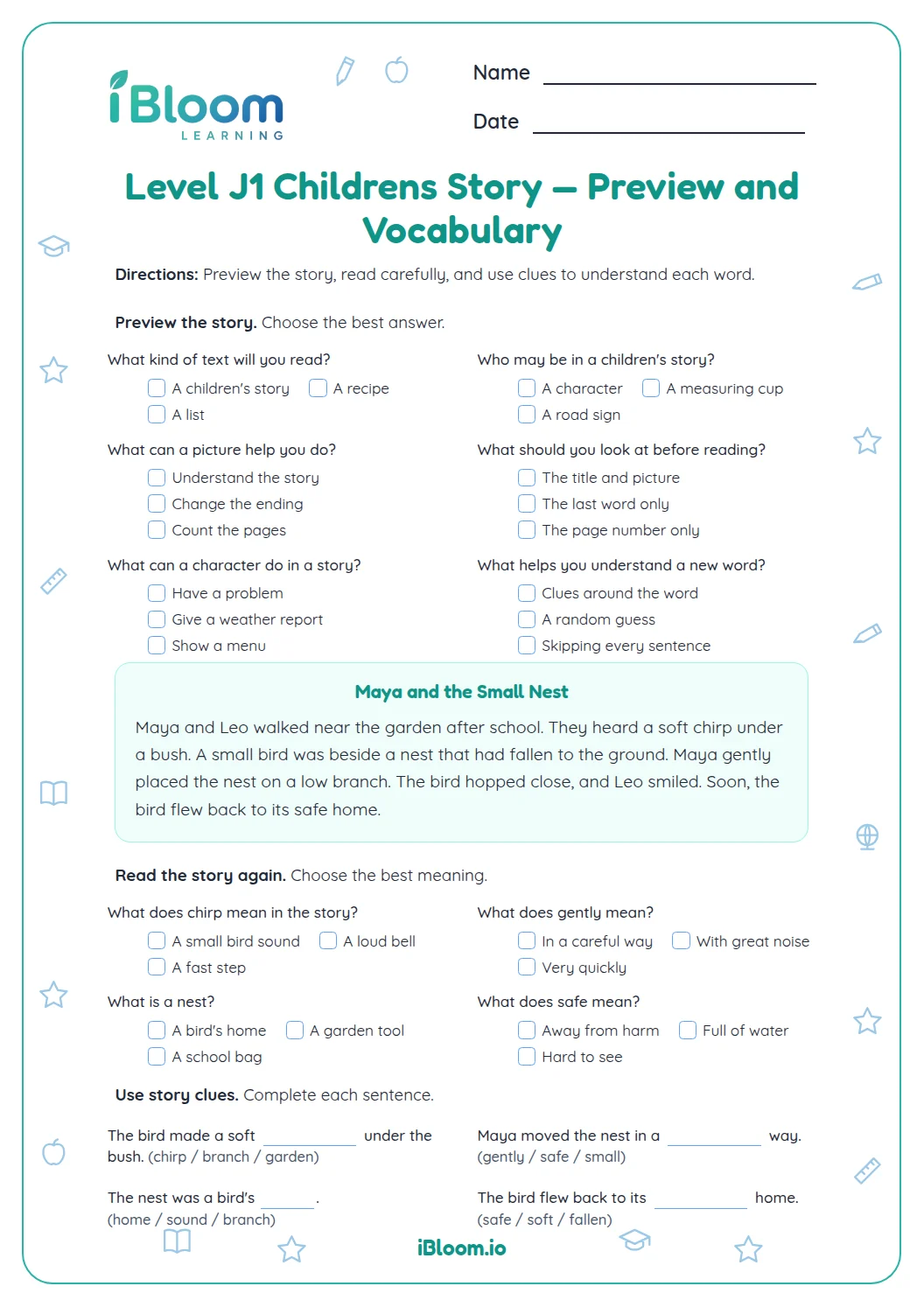
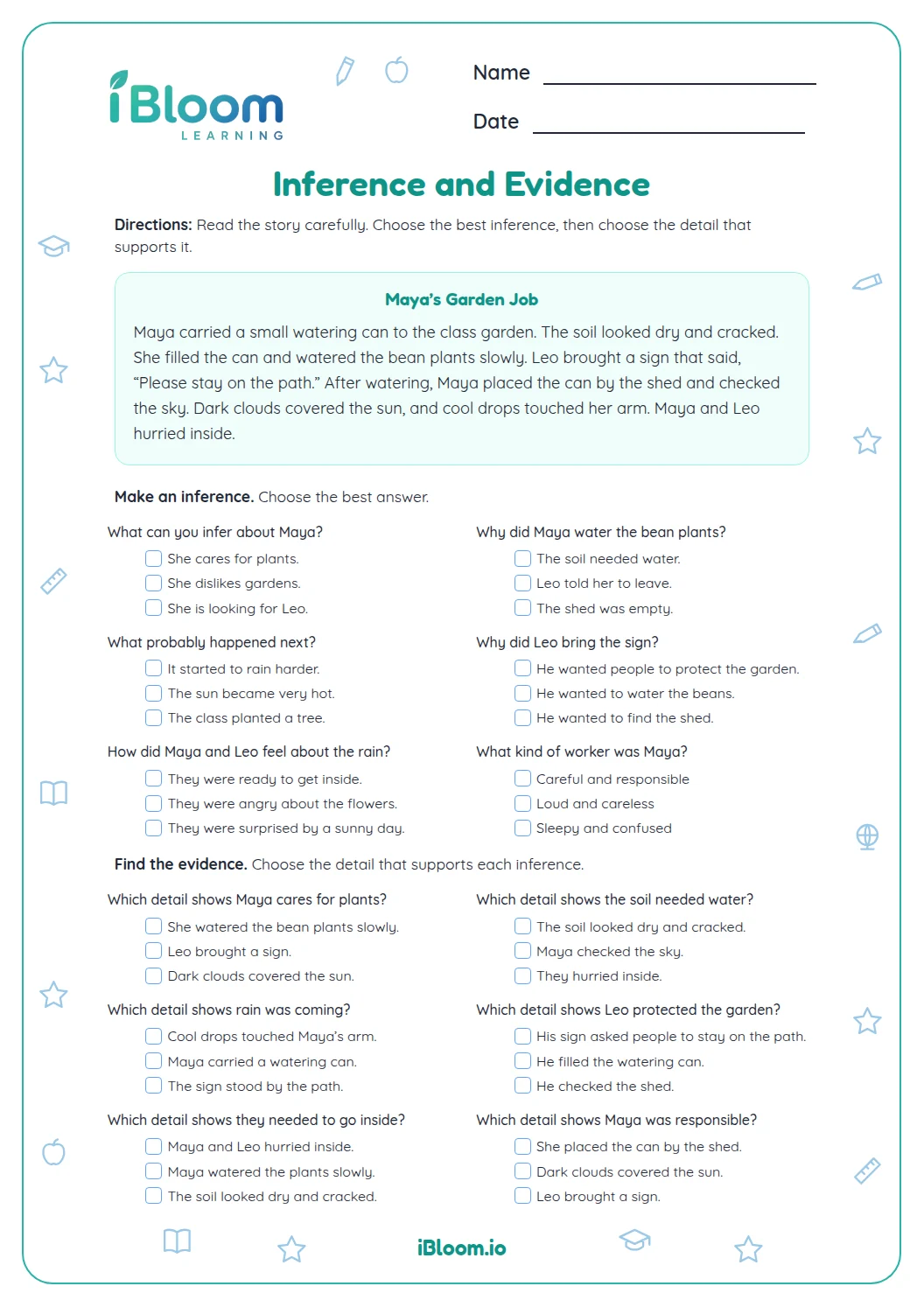
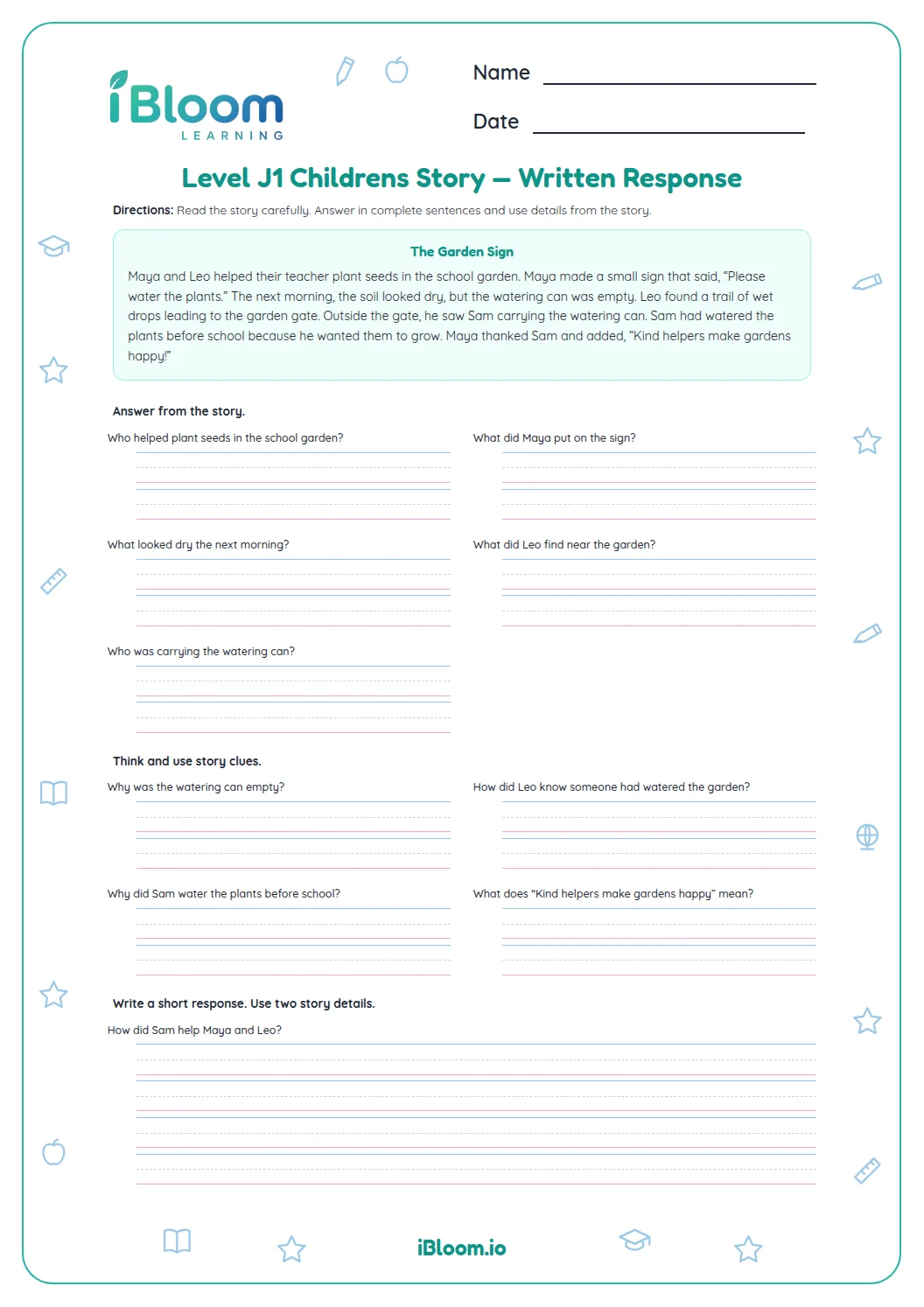
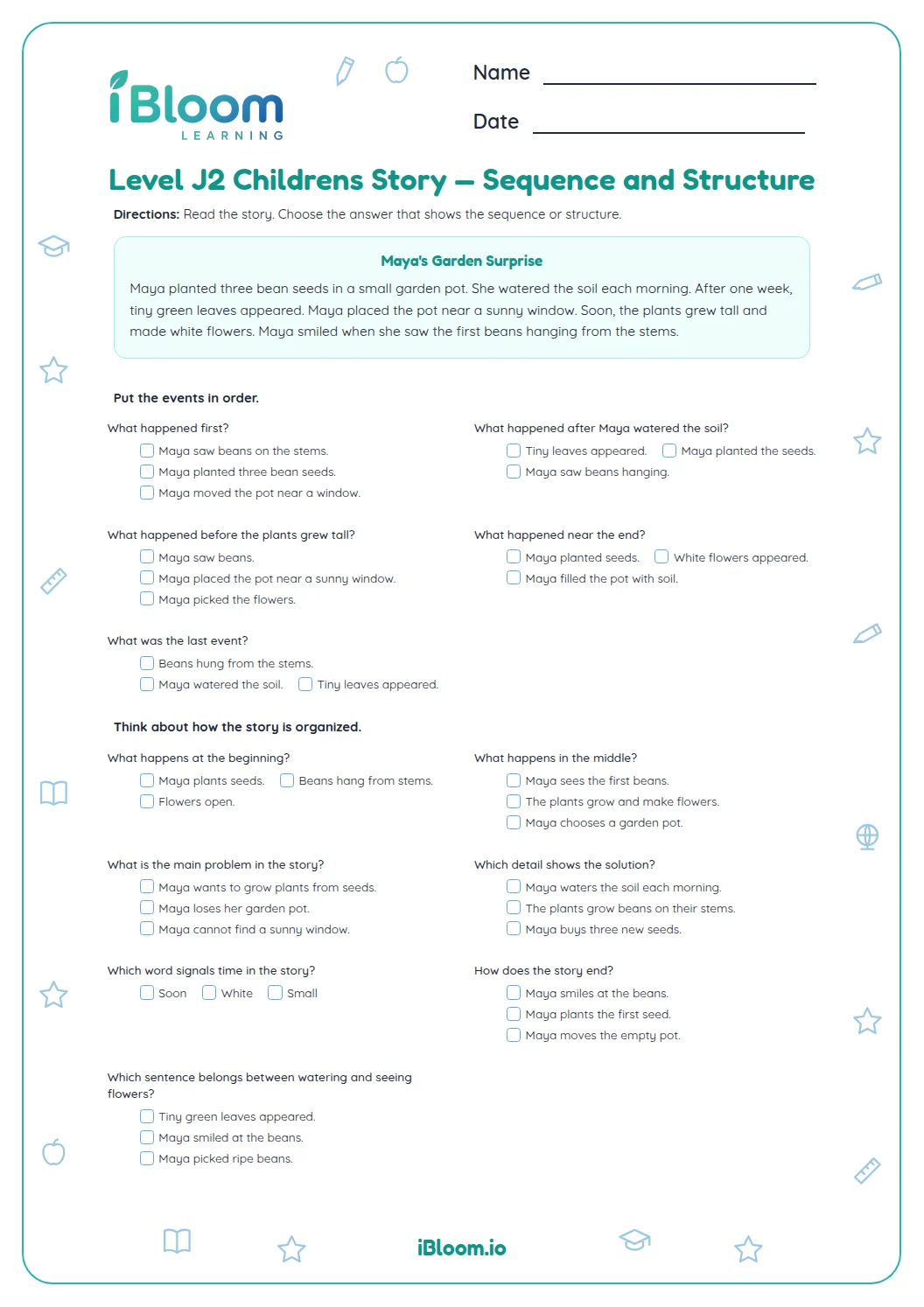
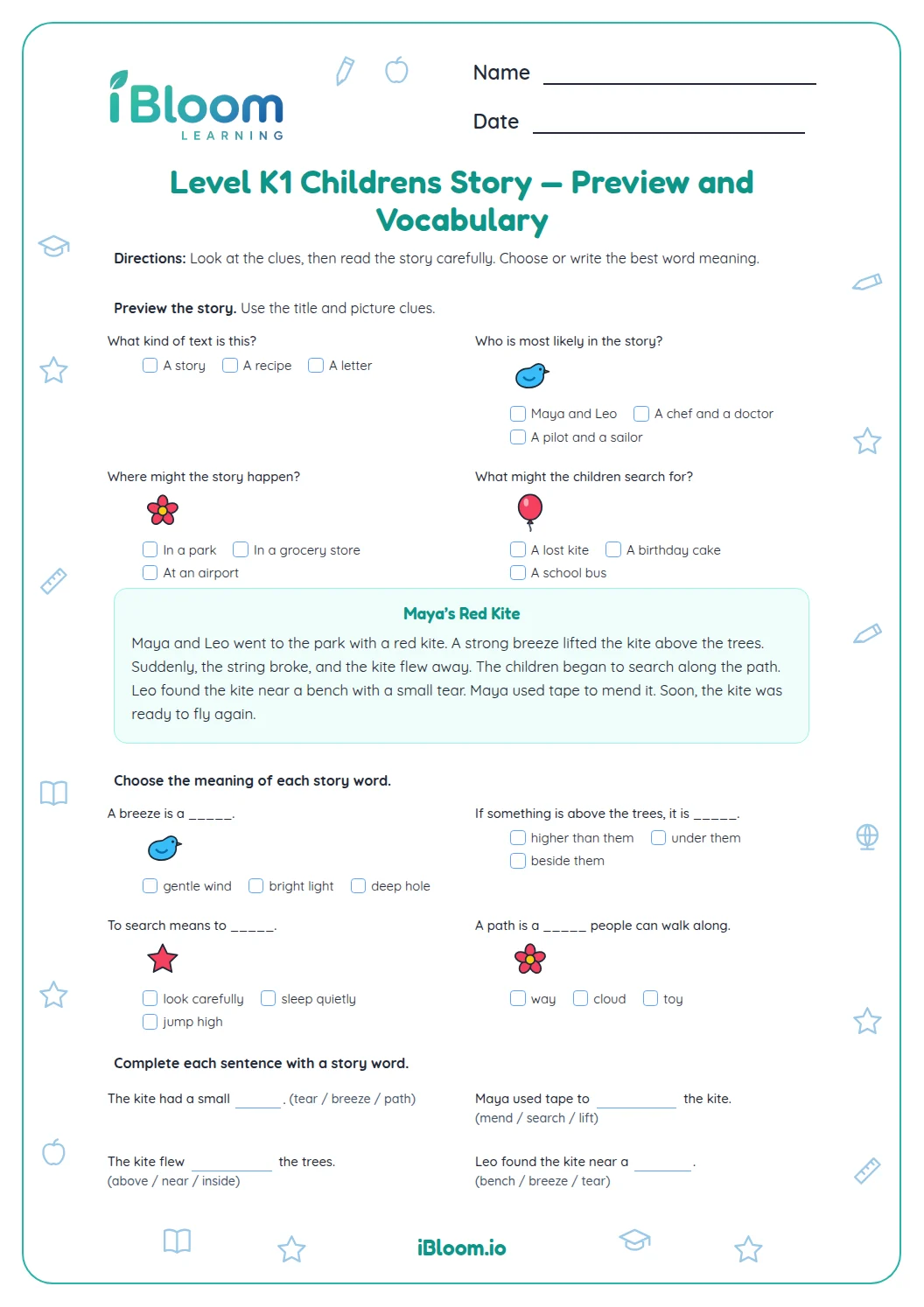
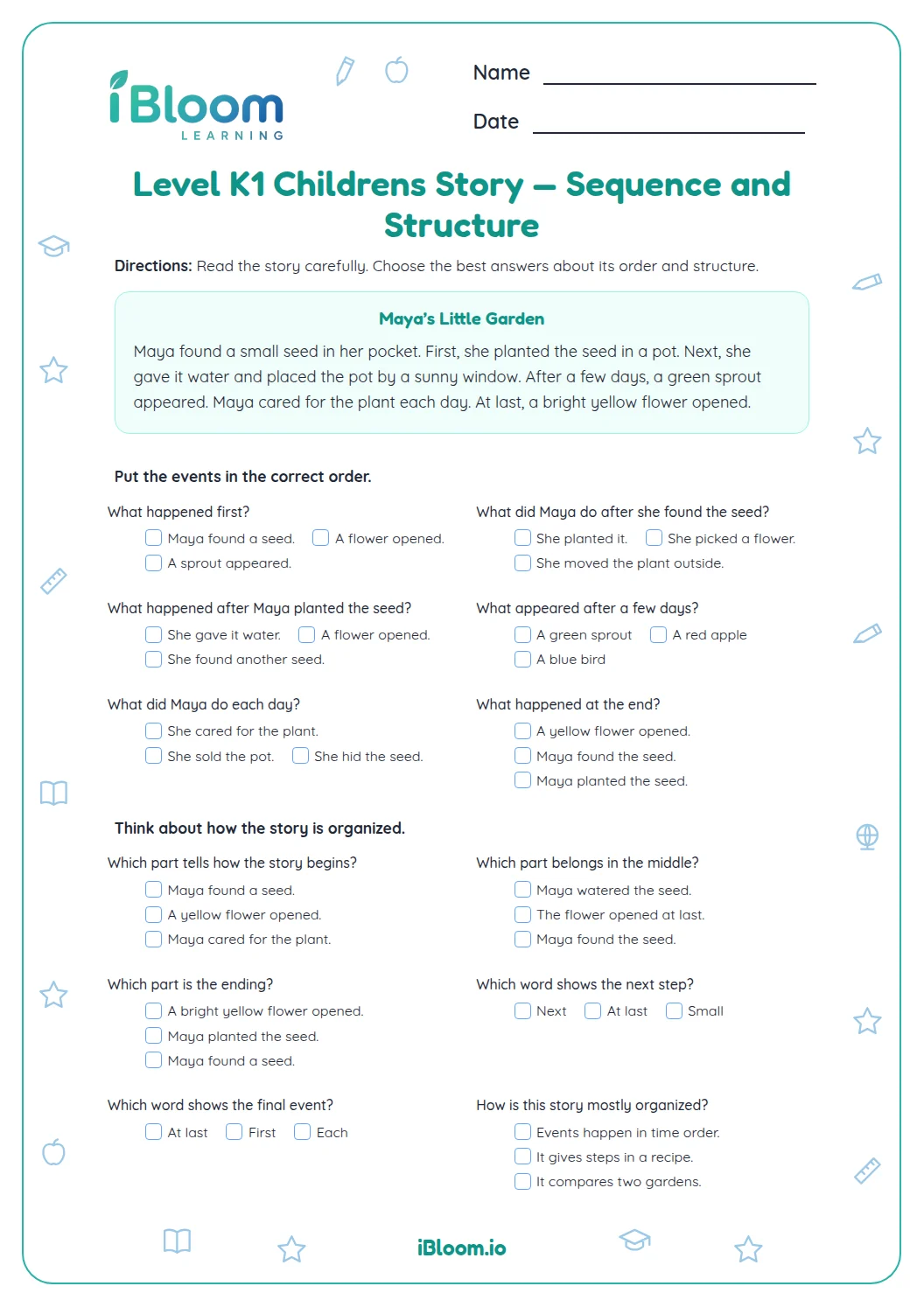
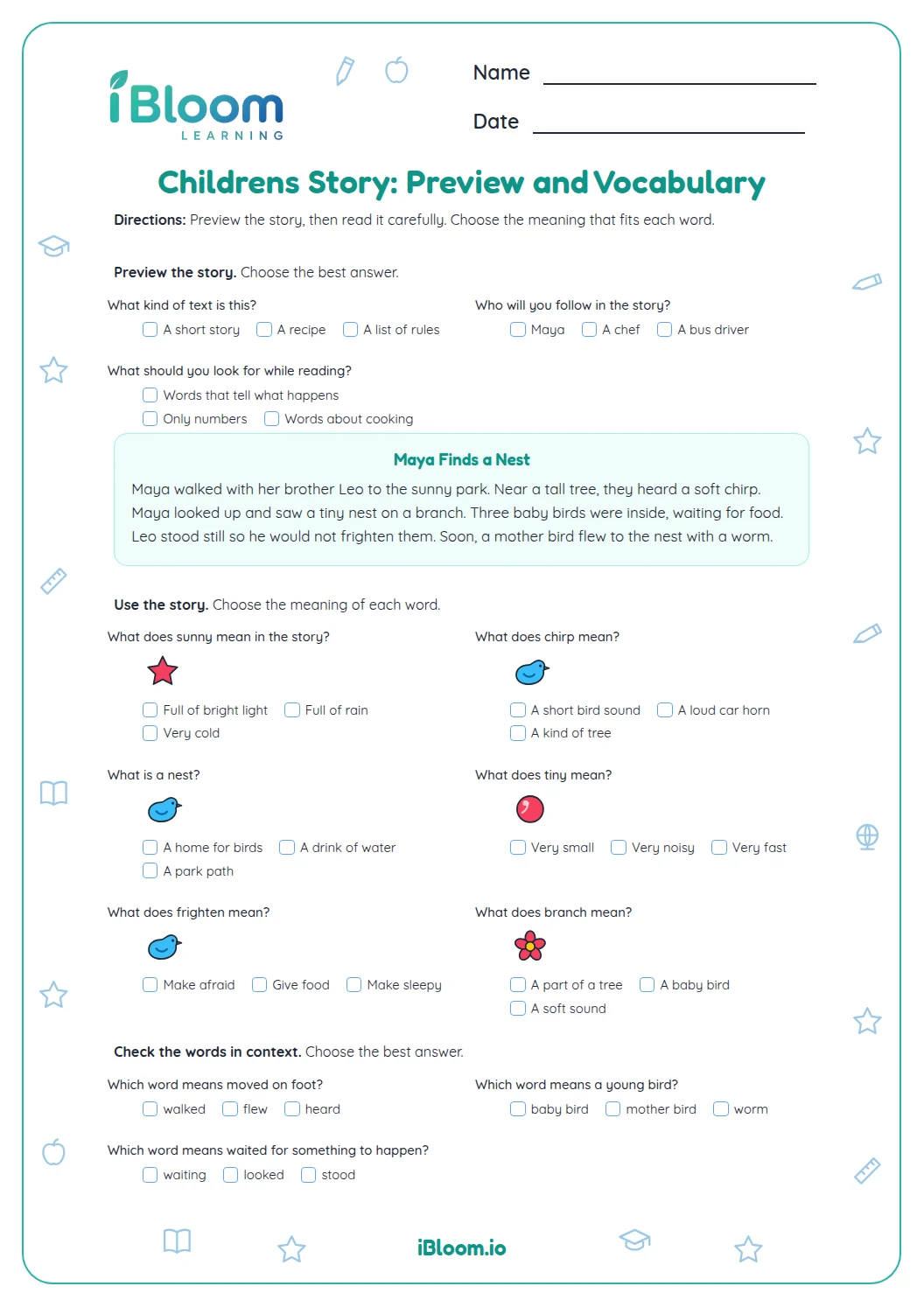
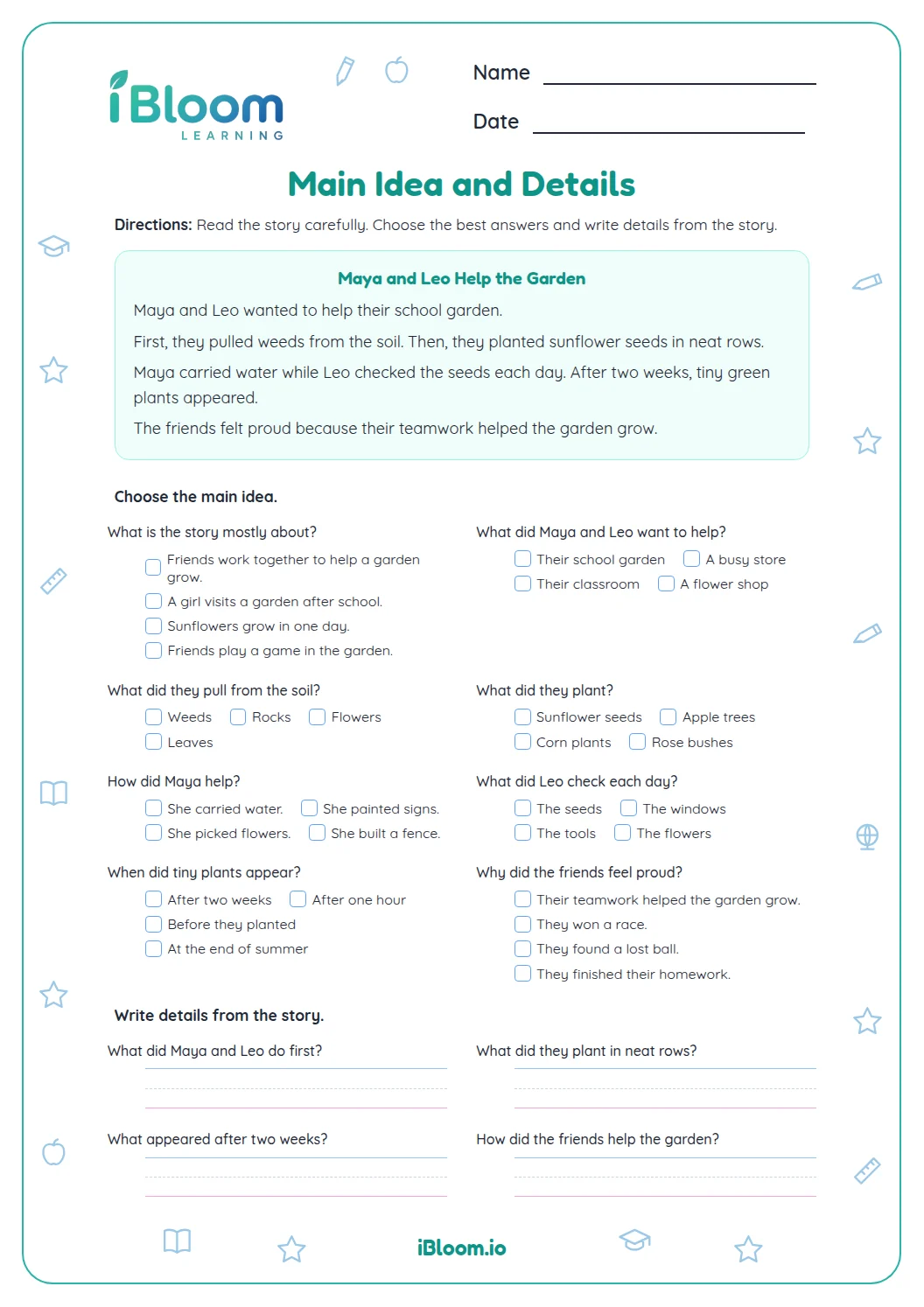
This Grade 2 printable features an original story about Leo’s paper boat. Students answer detail questions, put events in order, identify the problem and solution, and notice how the ending completes the action. It practices Common Core RL.2.1 and RL.2.5. A separate answer key lists responses and sample explanations.
Aligned to RL.2.5 and RL.2.1
How do readers keep story events in order?
Notice time words and actions that depend on one another. Maya plants seeds before watering them; shoots appear before she ties on supports; flowers open before she picks one for her grandmother.
- 1plant seeds → shoots appear → flowers open
How do a problem and solution shape this story?
Maya’s seeds begin to grow, and she adds sticks to support the shoots. The flowers open later, and Maya picks one to give her grandmother.
What does the ending tell us?
The beginning introduces Maya planting seeds; the middle follows the shoots and flowers; the final event shows her choosing a flower for her grandmother.
How to use this worksheet
- 1Read once to understand what Leo wants to do.
- 2Underline or say the actions in the order they happen.
- 3Find the sentence that describes the problem.
- 4Match the solution to that problem.
- 5Use the key to review details you missed.
Common mistakes and quick fixes
The mistake
Putting the stuck boat after it floats across.
The fix
Retell the story in the order the actions happen.
The mistake
Calling the bridge the problem.
The fix
Find the part that stops Leo from reaching his goal: the boat beside the rock.
The mistake
Choosing an answer from memory without checking the passage.
The fix
Return to the sentence that gives the detail.
Common Core alignment
This page practices the listed grade-level reading and writing skills.
Describe how the story’s beginning, middle and end build its events.
On this sheet: Students sequence events and identify how the problem and ending connect.
Show the official wordingHide the official wording
Describe the overall structure of a story, including describing how the beginning introduces the story and the ending concludes the action.
Answer questions with key details from the story.
On this sheet: Students answer who, what, where, when, why and how questions.
Show the official wordingHide the official wording
Ask and answer such questions as who, what, where, when, why, and how to demonstrate understanding of key details in a text.
What to practice next
Questions parents and teachers ask
What happens in Maya’s sunflower story?
Maya plants three sunflower seeds beside a fence and waters the soil. Green shoots appear, so she adds small sticks for support. A week later the flowers open, and Maya picks one to give her grandmother. Questions follow these events and their structure.
How does the worksheet practice sequence?
Students answer what happened first and next, identify events before and after a given action, and put three events in order. They also complete sentences with time-order words such as “First,” “After a few days,” and “Finally” in the printed story.
What story structure questions are included?
The final part asks what the story is mostly about, which event begins and ends it, and what pattern organizes the story. Children use details from Maya’s planting and flower-giving to explain how the events connect at the end of the passage.
Can a student use different words from the answer key?
Yes. The multiple-choice items have one best answer, but short responses may be phrased differently if they match the passage. For example, “Maya watered the seeds each morning” accurately describes the care detail even if the response does not copy the exact wording.
How should a child use the time words?
Use each time word to locate an event in the passage. “After a few days” signals when the shoots appear, and “Finally” introduces Maya’s last action. The prompts include choices so students can connect each signal to the event it introduces.