






About this worksheet
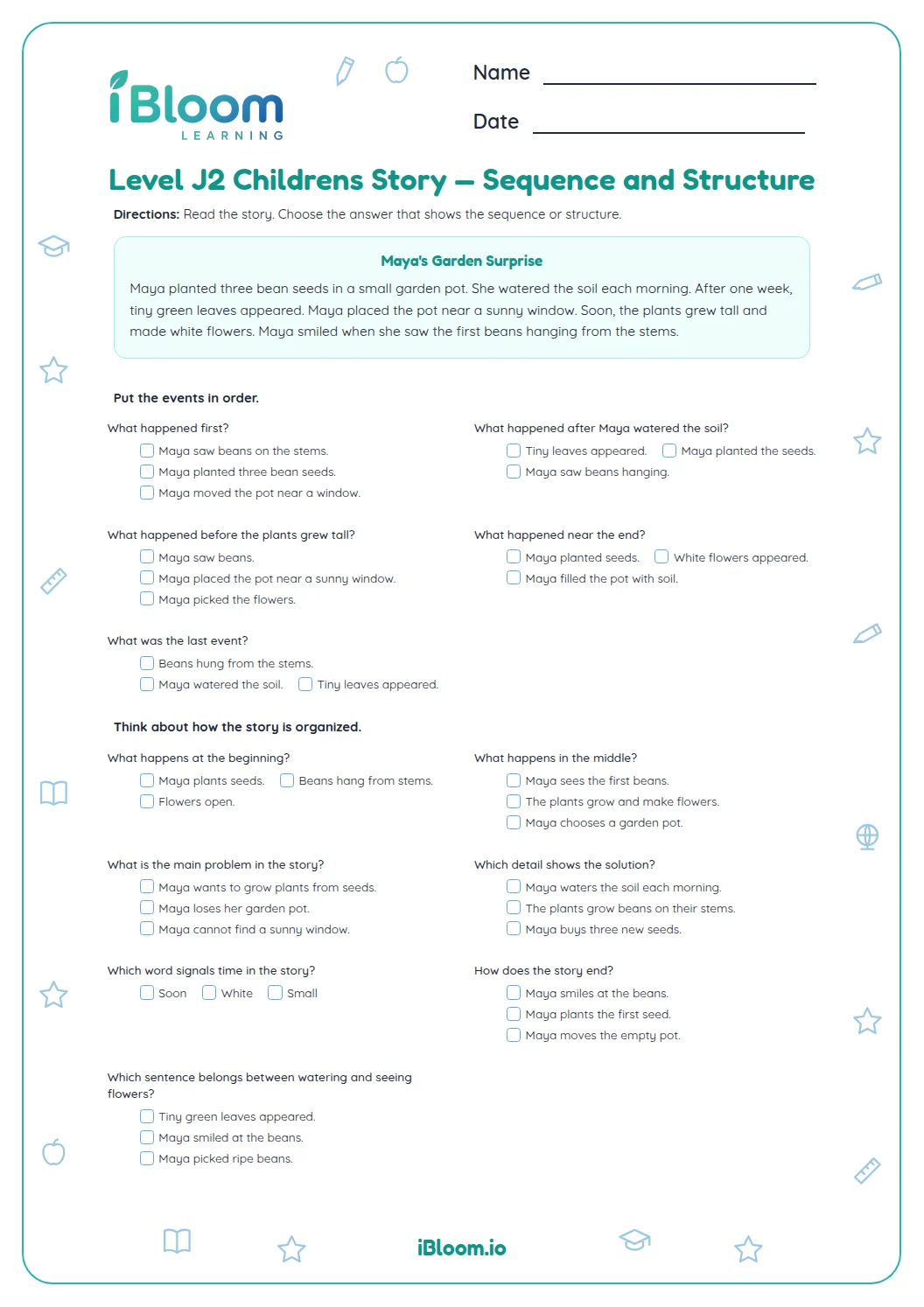
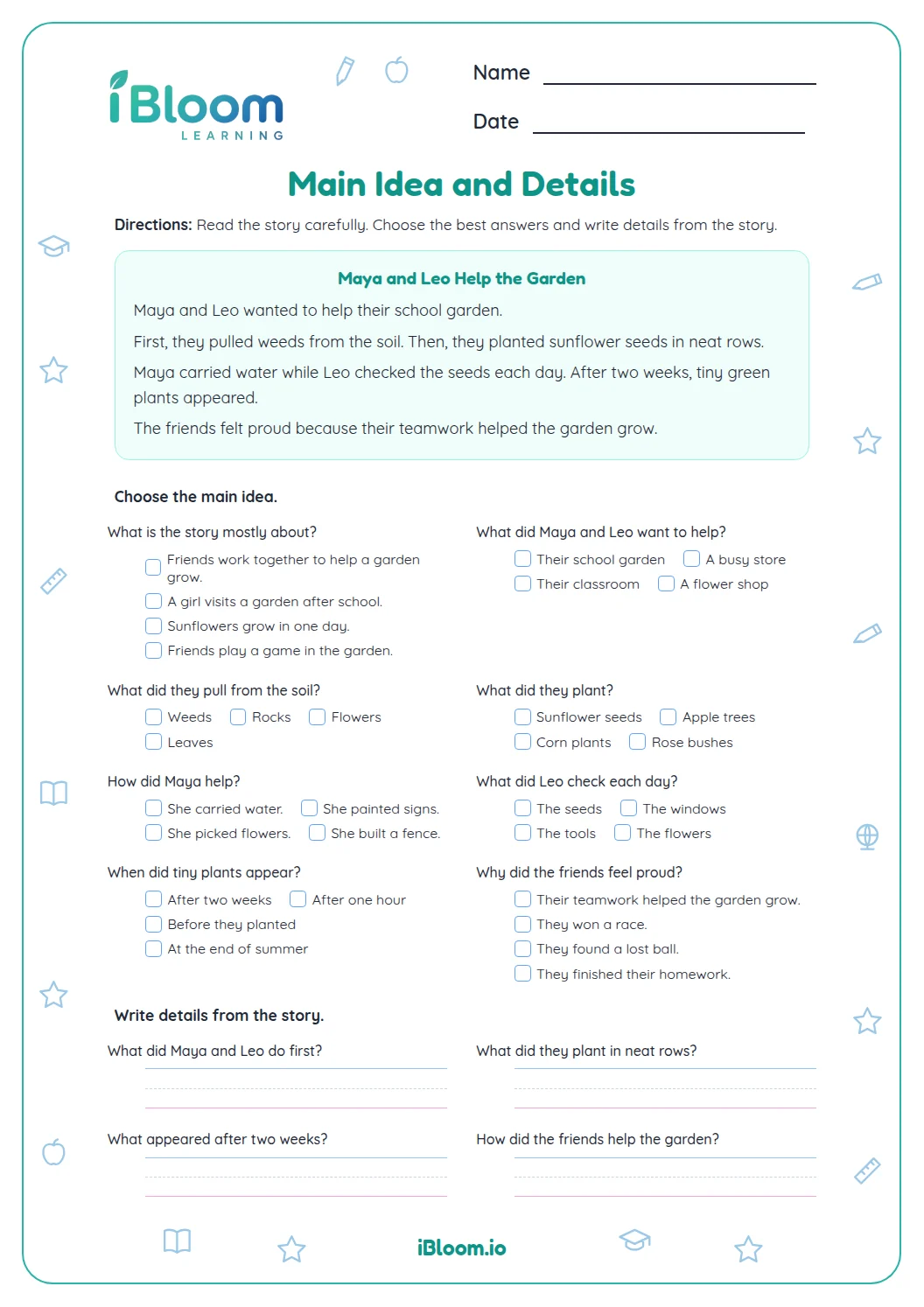
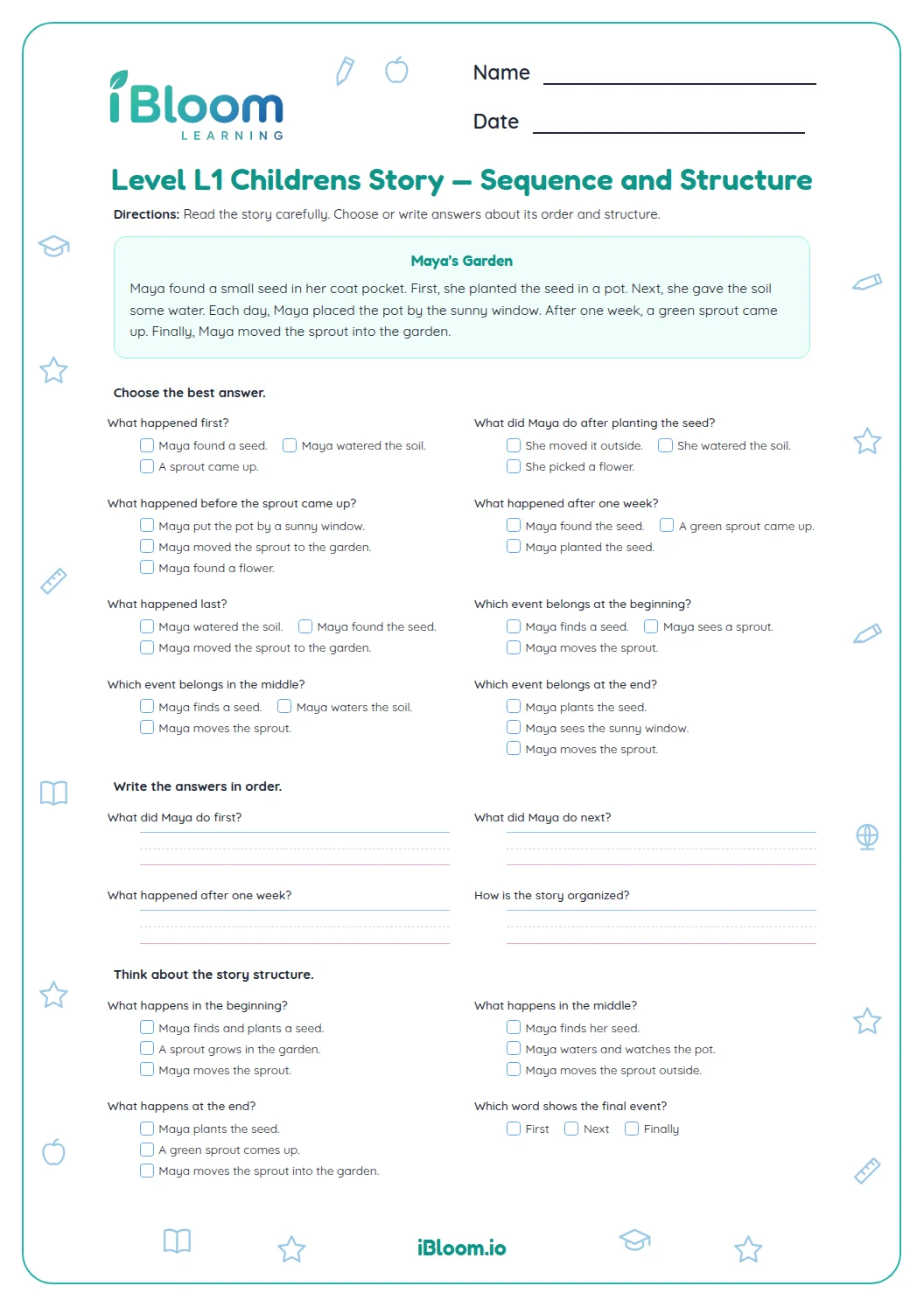
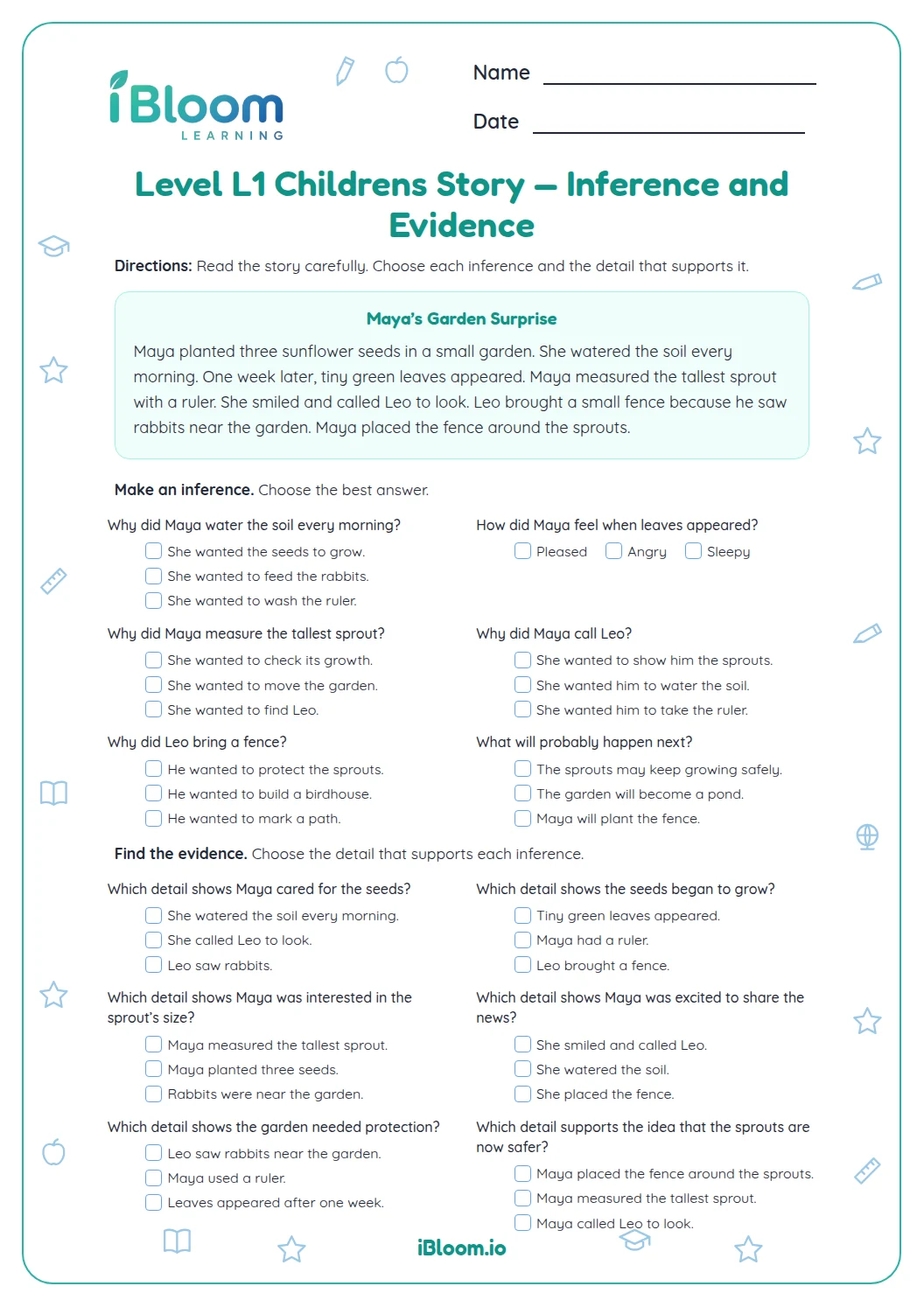
This free Grade 2 reading worksheet pairs Maya’s garden story with questions about its main idea and supporting details. Students follow how Maya plants seeds, cares for the soil, and sees leaves appear. They recall key events and explain how those details support the story’s larger idea. The sheet includes 14 questions and a separate answer key.
Aligned to RL.2.1
How can a reader find the main idea?
The main idea tells what the whole story is mostly about. Look across the beginning, middle, and ending rather than choosing one small event. Maya plants seeds, tends the soil, and eventually sees green leaves appear.
Question 1 asks for the idea that covers the full story: Maya patiently cares for a garden. Planting carrots is one true detail, but it does not explain the whole story.
- 1Beginning: Maya plants seeds and tends the soil
- 2Middle: at first, nothing grows
- 3Ending: green leaves appear
- 4Main idea: Maya’s patient care helps her garden grow
Which details support that idea?
Supporting details tell what happened and help explain the main idea. Maya waters the soil and pulls out weeds each morning. After a few weeks, green leaves appear, showing that the garden is growing.
For a written answer, include a story detail and explain its connection. Naming one seed is accurate, but it does not by itself state the main idea.
What is included in this reading page?
The original story is followed by 14 questions in two question parts. Students identify the main idea, recall events, and explain which details support the idea.
- Part A: read Maya’s story
- Part B: choose the main idea and recall story details
- Part C: explain how events support the main idea
How can an adult support this reading practice?
- 1Read the story once to follow Maya’s garden.
- 2Notice what Maya does each morning.
- 3Reread to find what changes after a few weeks.
- 4Separate the whole-story idea from one true detail.
- 5Point to a sentence that supports the main idea.
- 6Use the answer key to discuss other accurate details.
Main idea and detail mistakes to watch for
The mistake
Choosing one object from the story, such as the painted sun, as the main idea.
The fix
Check whether the choice covers the beginning, middle, and ending.
The mistake
Picking an answer that is true but too small for the whole story.
The fix
Ask whether it explains why the children made the sign and what happened next.
The mistake
Naming a detail without explaining its connection.
The fix
Add a phrase that tells how the event supports the larger idea.
Curriculum alignment
This story-based practice asks students to answer questions using key details.
Answer who, what, where, and why questions with story details.
On this sheet: Students answer factual questions and use events from the story to support their understanding.
Show the official wordingHide the official wording
Ask and answer such questions as who, what, where, when, why, and how to demonstrate understanding of key details in a text.
What to practice next
Make more practice
Further reading
Questions parents and teachers ask
What is the main idea of “Maya’s Garden”?
The story is mostly about Maya patiently caring for a garden and helping it grow. She plants seeds, waters the soil, and pulls weeds. After a few weeks, green leaves appear. Those events together support the main idea, while any one action is only a detail. T
How is a main idea different from a detail?
The main idea explains what the whole story is mostly about; a detail tells one fact or event. “Maya planted carrot seeds” is a detail. The larger idea is that Maya’s patient care helps her garden grow, which fits the beginning, middle, and ending. h
Which detail shows that Maya’s garden began to grow?
After a few weeks, green leaves appeared. That event shows a change from the beginning, when nothing had grown yet. It supports the main idea because Maya kept caring for the garden until signs of growth appeared. i
How many questions follow the story?
There are 14 questions after the passage: 10 multiple-choice questions and 4 written responses. Students choose the main idea, recall details such as the seeds Maya planted, and explain how events show that her care helped the garden grow. s
Can students give different answers to the written questions?
Yes. The key gives sample responses, but another answer is correct if it matches the story. For question 12, tomato, bean, or carrot seeds work. For the main idea, the response should describe Maya’s care and the garden’s growth, not just name one plant.
How should an adult use the passage?
Have the student read once to understand the events, then reread to find evidence for each answer. If a response is too broad, ask which sentence supports it. The answer key can help compare a child’s wording with details from the story. c