





About this worksheet
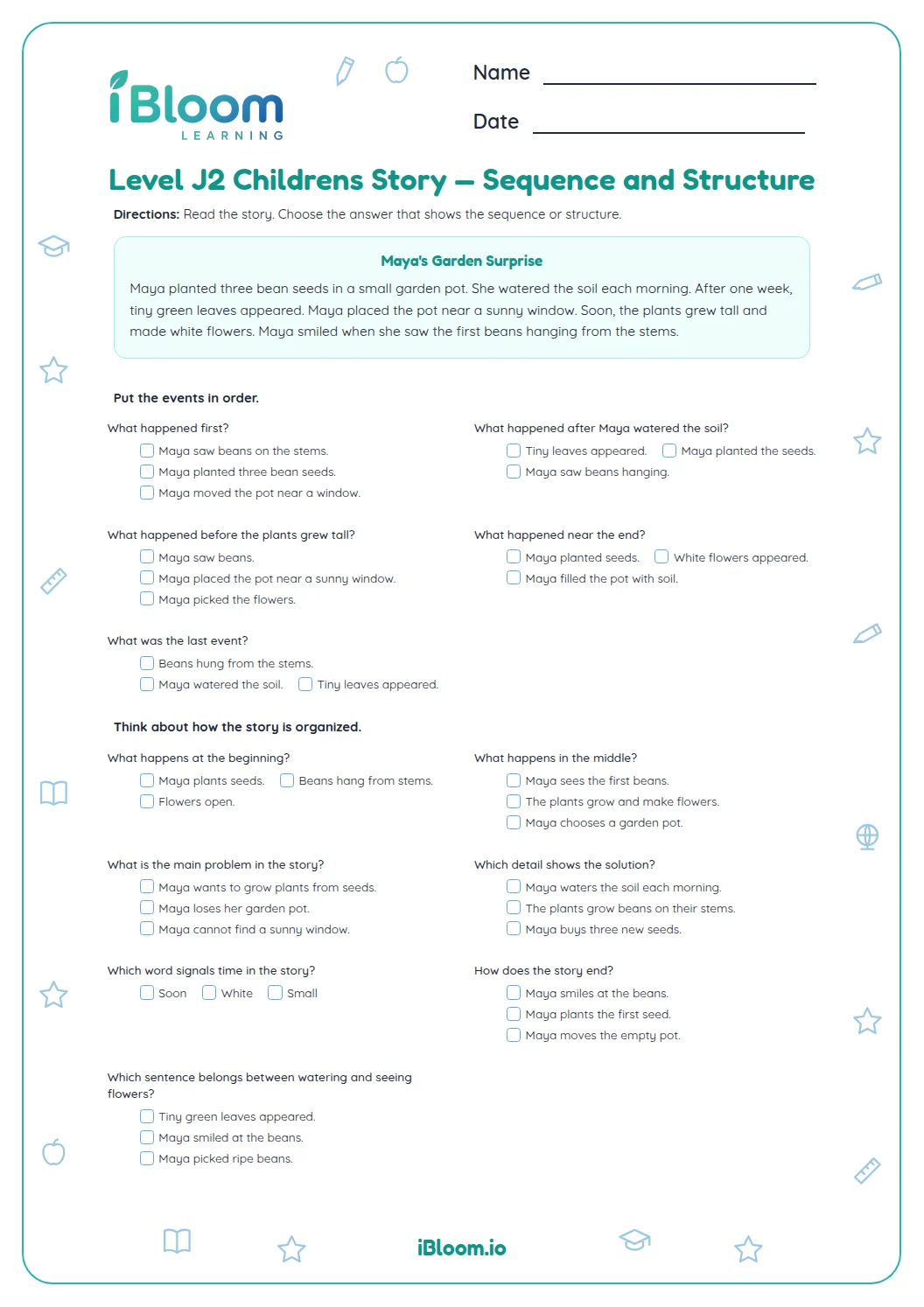
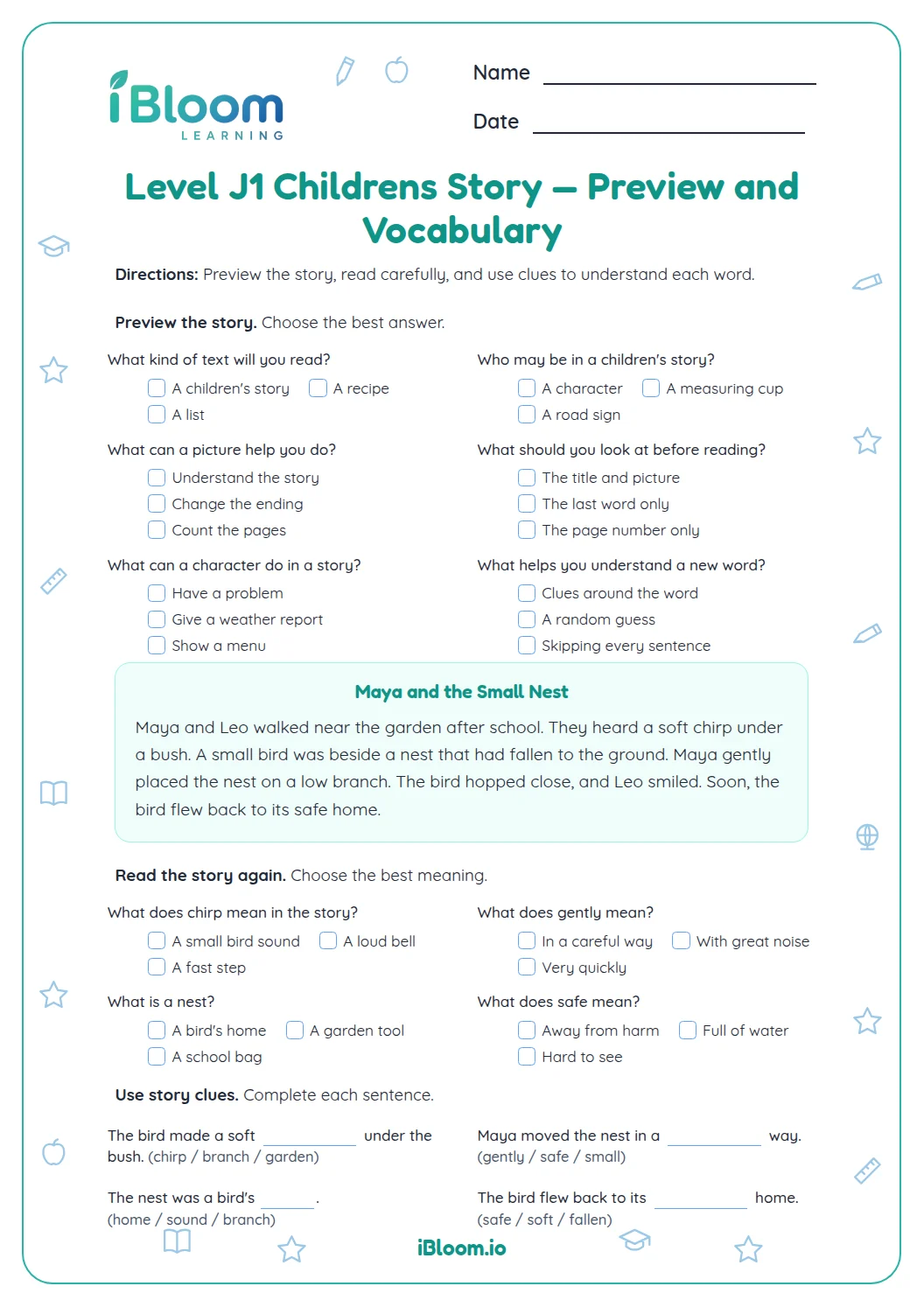
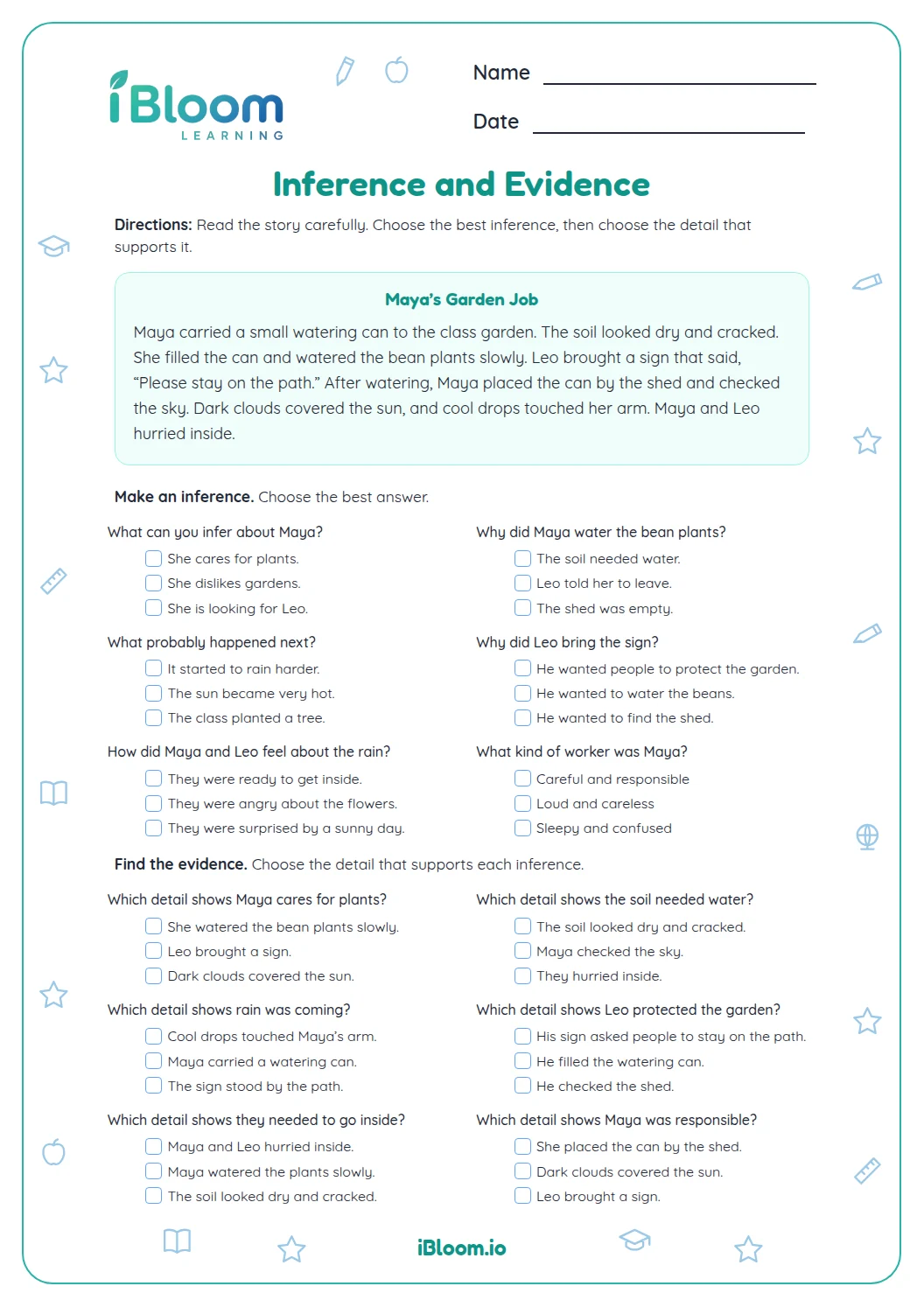
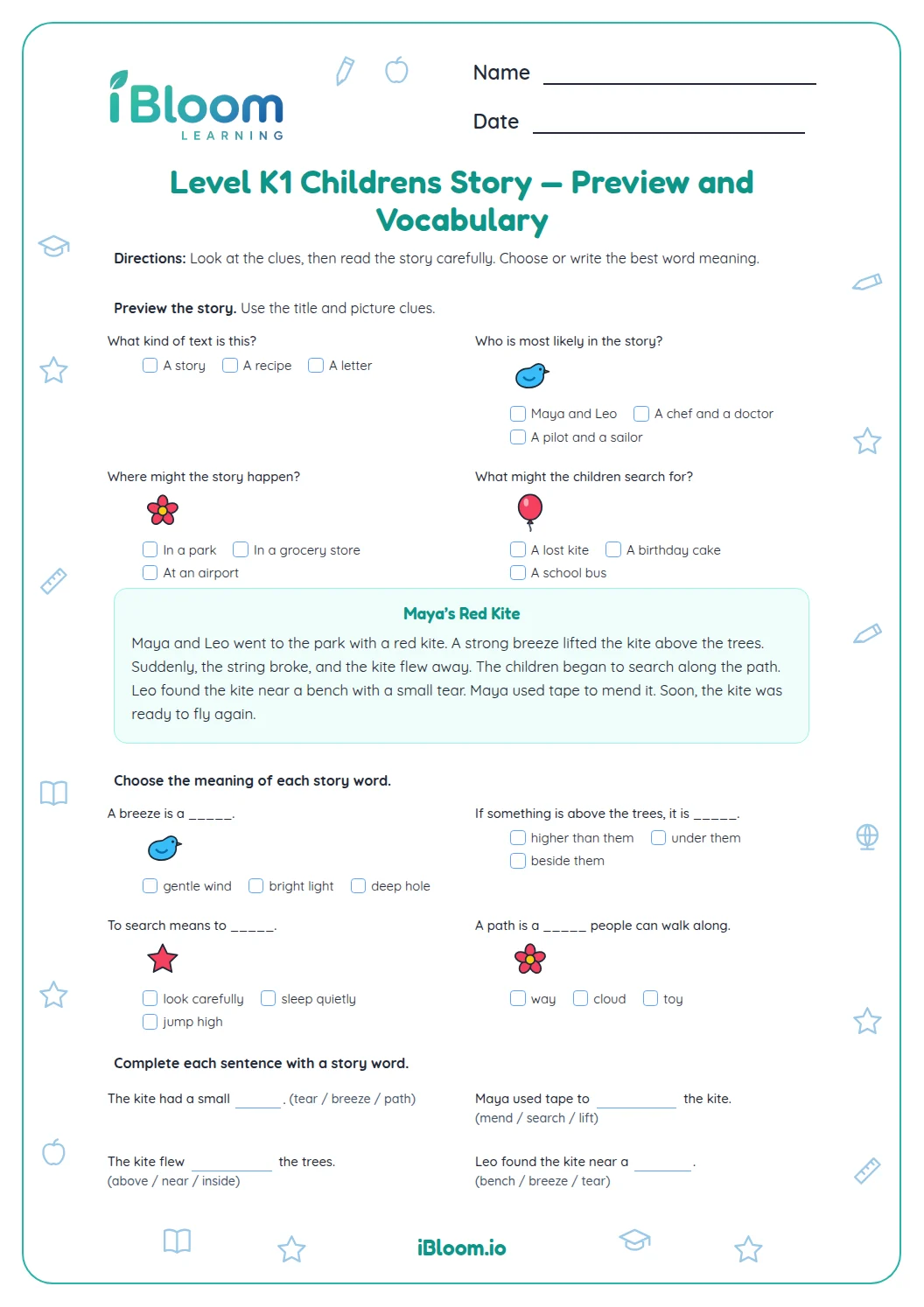
This free Grade 2 worksheet gives children a complete garden story and ten prompts for writing about it. Mia finds her bean plant bent after a windy night and works with Dad to help it stand. Part A is the passage, Part B asks for six brief answers about key details, and Part C asks for four sentence responses about the problem, Mia’s actions, and the ending. The work practices Common Core RL.2.1 and RL.2.3. A separate key offers answers and sample sentences for checking against the text.
Aligned to RL.2.1 and RL.2.3
What will children write about in this story?
The passage follows one clear problem and solution. Mia cares for a bean plant, discovers it bent over after a windy night, and asks Dad for help. Together they use a stick and soft string to support the stem.
Part B makes children locate details before explaining them. The six prompts cover a person, a place, a time, a helper, materials, and a reason. A word or phrase is enough for these questions, leaving the longer writing space for Part C.
How can a child explain Mia’s response to the problem?
Question 7 asks for two connected details: what went wrong and what Mia did first. Encourage children to include both in their answer. Saying only “Dad helped” skips the problem and Mia’s request.
Question 8 develops that answer by asking how Mia and Dad made the support. Their roles matter: Dad holds the stem while Mia ties it to the stick. The loose loops keep the answer tied to the actual solution.
- 1Problem: The plant was bent over after a windy night.
- 2Mia’s first response: She asked Dad to help it stand.
- 3Possible answer: The plant was bent over, so Mia asked Dad for help.
How should the written responses be checked?
Check whether the response answers the question and agrees with the passage. In question 9, “Mia was careful” needs a detail, such as leaving room inside the loops so the stem could grow. The detail explains the description.
The sample sentences are models, and children may use their own wording. After checking meaning, help the child add a capital letter and ending punctuation to the Part C responses. Keep the passage nearby during both writing and review.
How to use this worksheet
- 1Read the passage once, pausing after each paragraph to say what happened.
- 2Complete the six Part B questions with brief words or phrases from the story.
- 3Reread the middle paragraph before explaining Mia’s response and the support she builds with Dad.
- 4For each Part C prompt, say a complete answer aloud and then write one or two sentences.
- 5Use the key to check story meaning, then reread the writing for capitals and punctuation.
Mistakes to notice and how to help
The mistake
Answering where with “in the morning.”
The fix
Look for a place in the first paragraph: a pot by the back door.
The mistake
Saying Mia tied the string tightly.
The fix
Reread loose loops and the reason she leaves space for the stem to grow.
The mistake
Writing “She was careful” without an example for question 9.
The fix
Add the action that proves it: Mia leaves room inside the loops.
Common Core alignment
Write answers about who, what, where, when, why, and how in Mia’s garden story.
On this sheet: Questions 1–6 ask for details from the passage; later answers also use those details.
Show the official wordingHide the official wording
Ask and answer such questions as who, what, where, when, why, and how to demonstrate understanding of key details in a text.
Explain Mia’s response when she finds her bean plant bent over.
On this sheet: Questions 7–10 connect the plant problem to Mia’s actions and the ending.
Show the official wordingHide the official wording
Describe how characters in a story respond to major events and challenges.
What to practice next
Make more practice
Further reading
Questions parents and teachers ask
Does every question require a full sentence?
The first six questions ask for a word or short phrase, and the final four ask for one or two sentences. This lets children gather details before explaining Mia’s actions. Encourage a complete thought in Part C, with enough information that another reader can understand the answer.
What is the problem in Mia’s story?
Mia finds her bean plant bent over after a windy night. She asks Dad to help it stand, and they support it with a stick and loose loops of string. Question 7 asks children to name the problem and Mia’s first response, so a complete answer includes both.
How can I help without supplying the written answer?
Ask your child to find the paragraph that contains the answer and read that part aloud. Then have the child explain the idea in their own words before writing. For question 9, point back to the loops of string and ask what Mia does carefully there.
Must my child copy the sample sentences exactly?
No, the key’s sample sentences show acceptable ideas rather than required wording. A response should answer the prompt and match the passage. For question 10, a child can describe the lifted leaves and the plant standing with support, using a different sentence from the model.
What does Level J2 refer to on this page?
Level J2 is the name of this worksheet’s story collection. The printable contains the complete original passage “A Little Help” and ten response prompts for Grade 2 practice. Read the opening paragraph together to decide how much help your child needs with the vocabulary and sentence length.