


About this worksheet
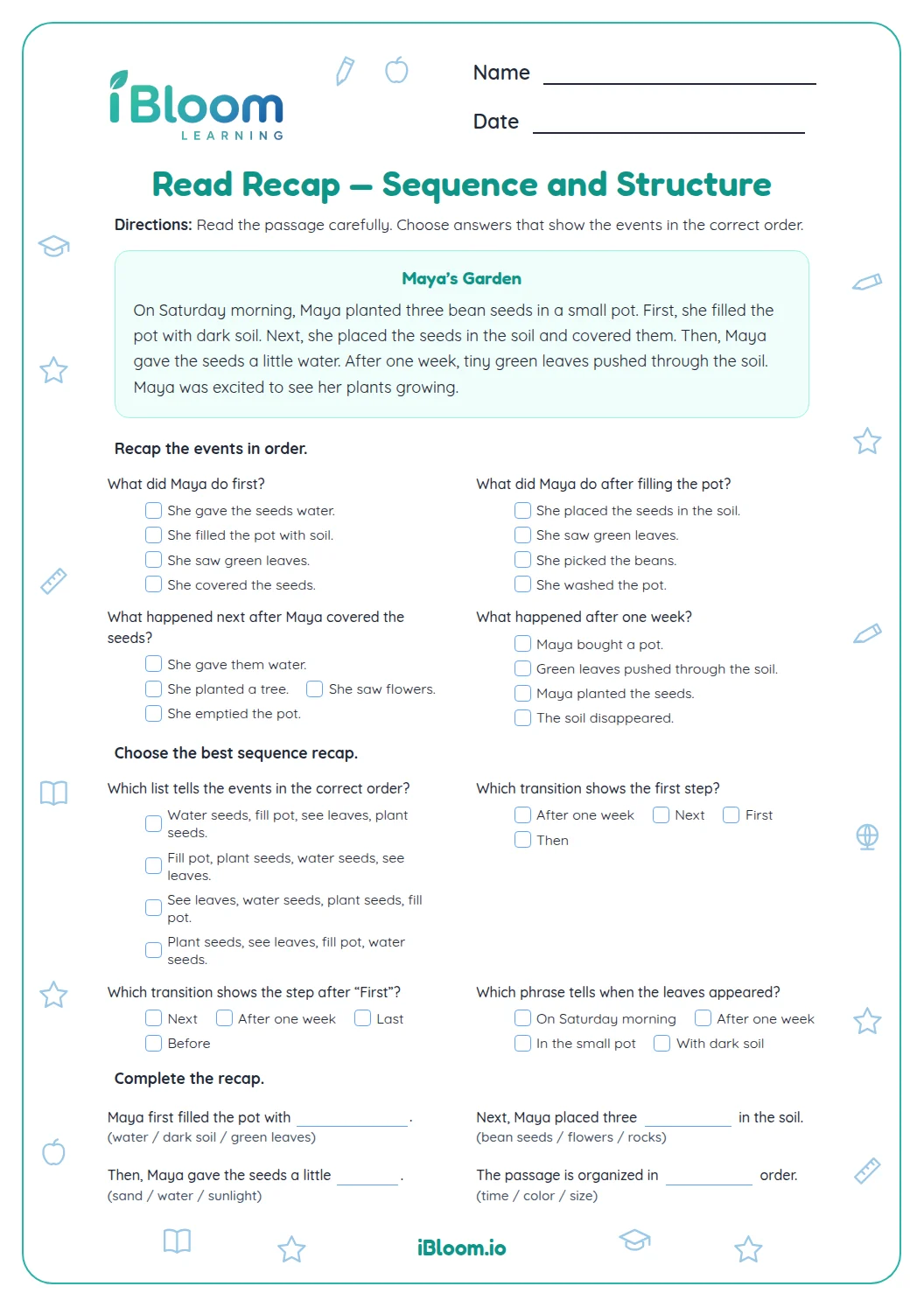
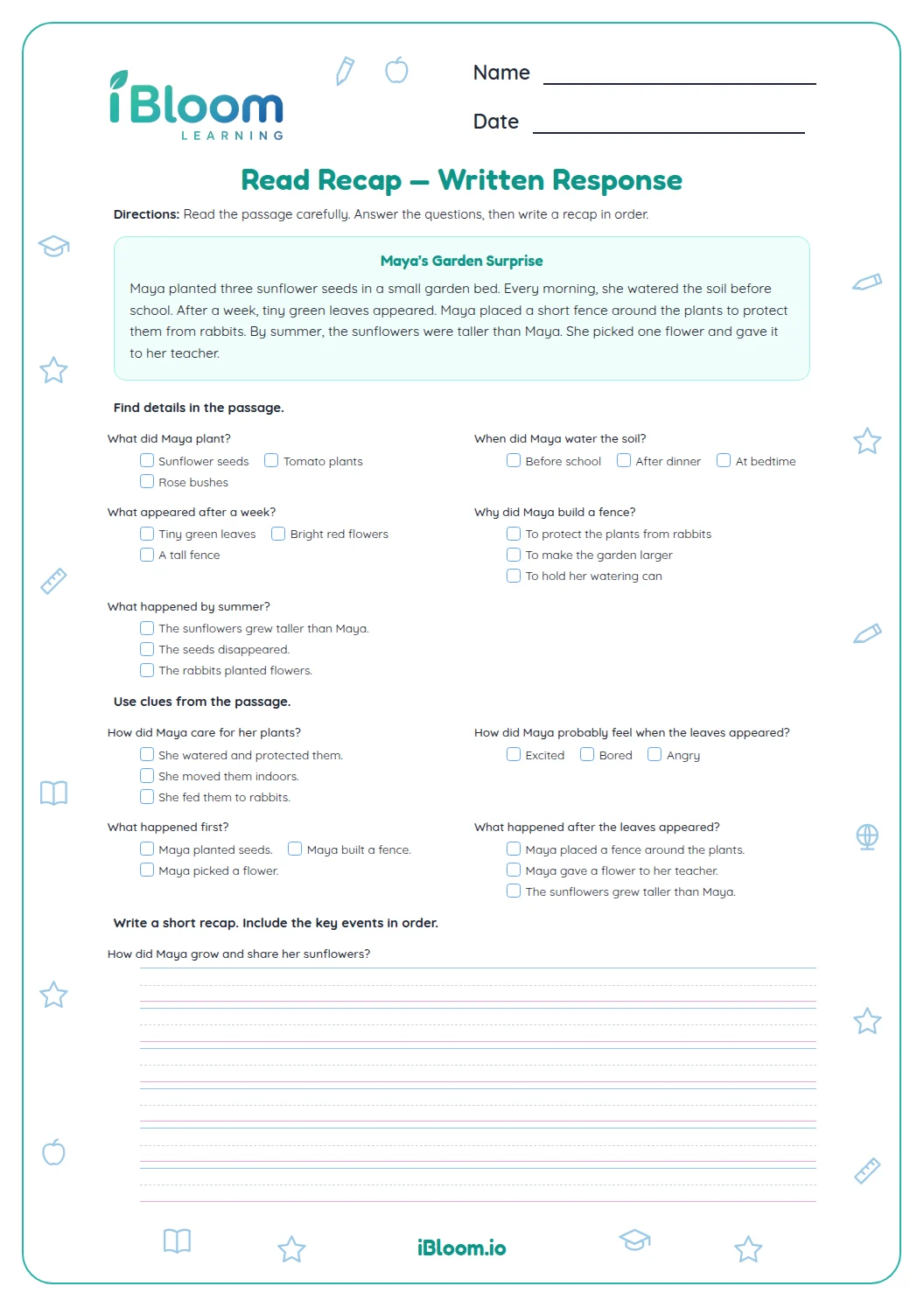
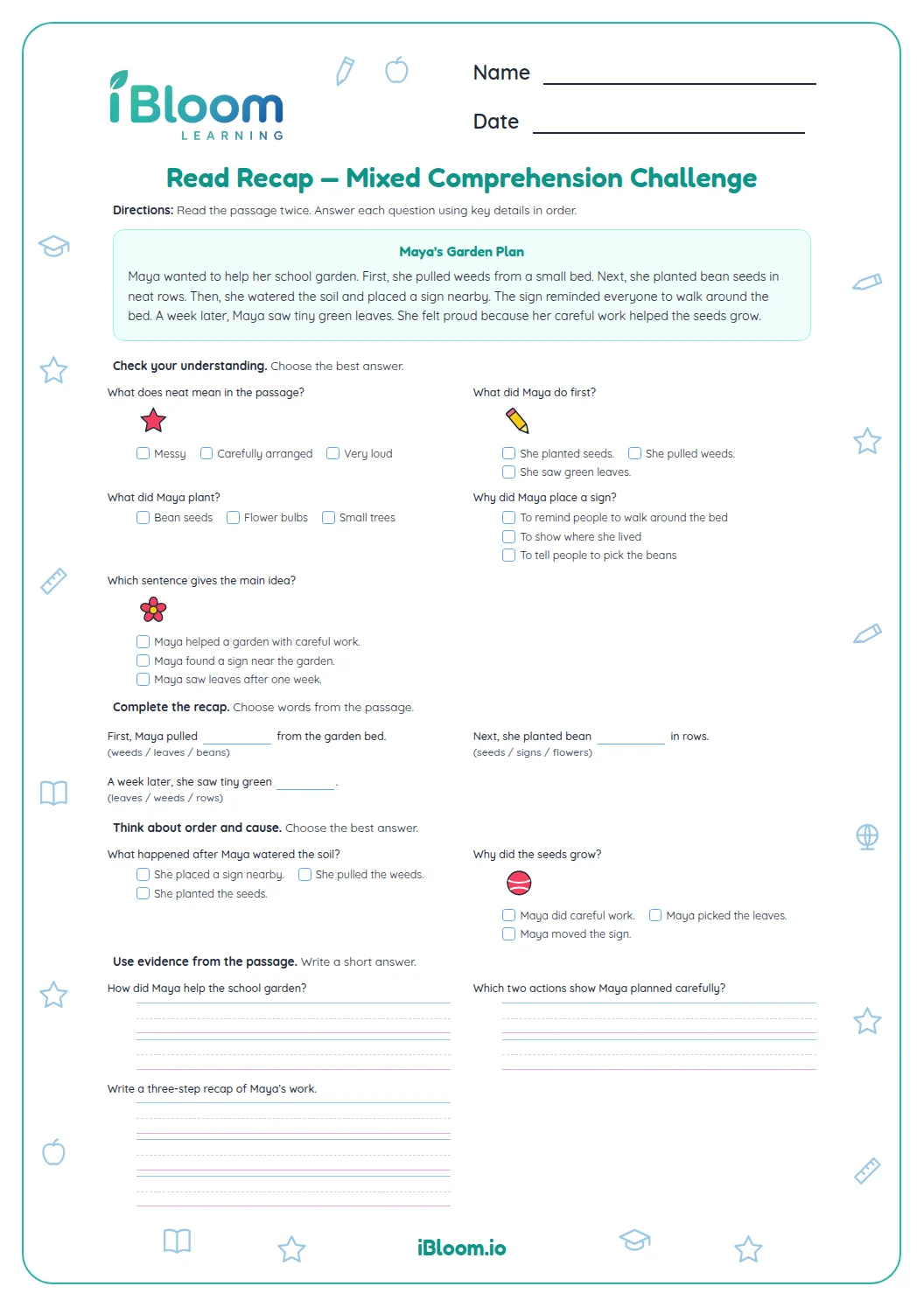
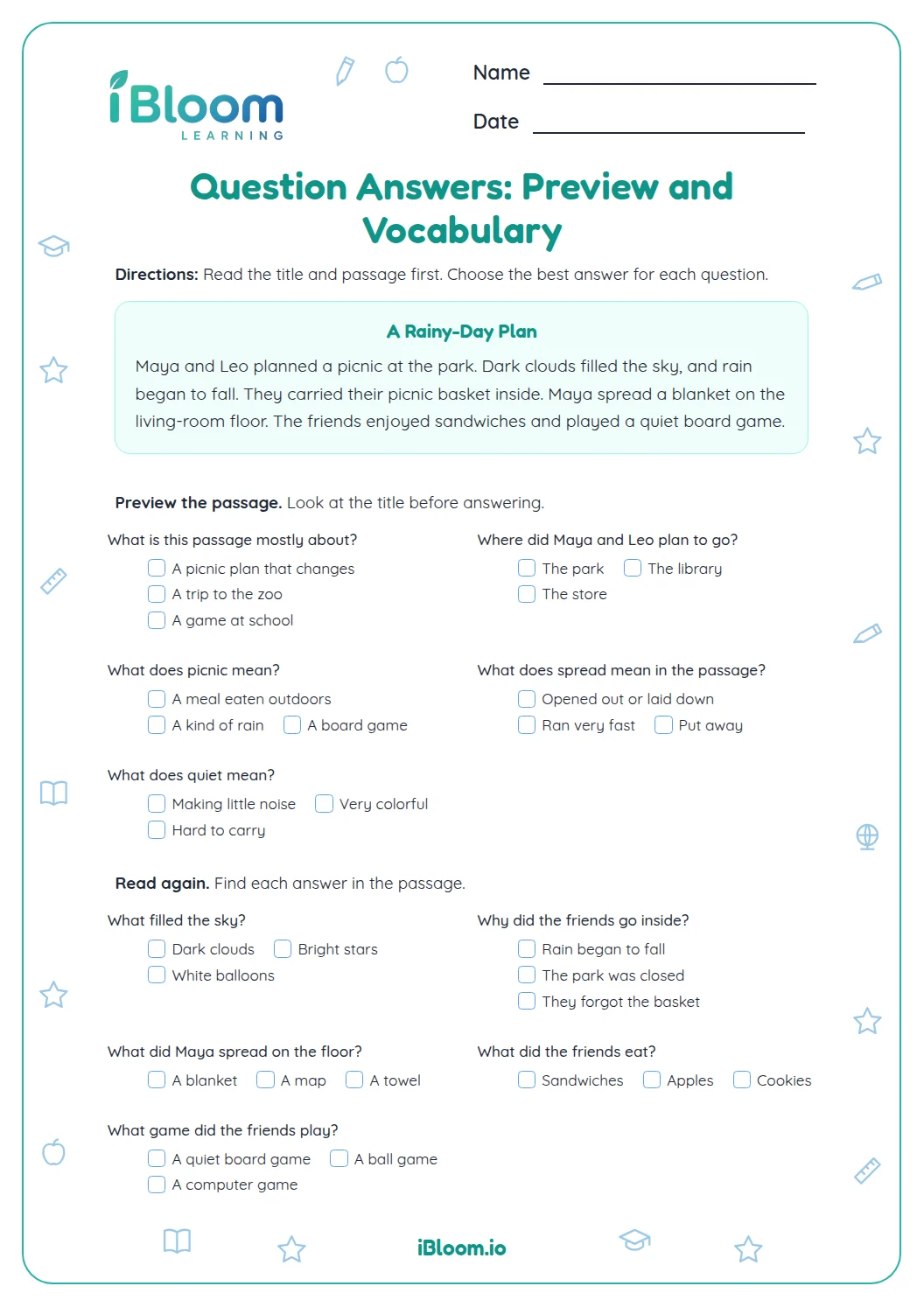
This Grade 2 printable pairs an original two-paragraph story with 14 questions about details, vocabulary, inference, and text evidence. It practices CCSS RL.2.1 by asking readers to answer questions about key details and demonstrate understanding. The separate key gives answer choices for review.
Aligned to RL.2.1
Which details show what Ava did?
Question 1 asks who carried the watering can: Ava. The opening sentence names her as the person who brought it to the school garden.
How can a reader support an inference?
An inference combines a clue with what the reader knows. For question 11, Ava seems careful because she follows the garden note and pours water slowly. The passage does not state “Ava is careful”; the details support that idea.
- 1Idea: Ava is careful.
- 2Clue: She follows the note and waters slowly.
- 3Use both to support the inference.
How do you find evidence for an answer?
Return to the sentence that answers the question and compare it with the choices. For the last question, the order of events matters: Ava notices the ribbon on Saturday, while Ben picks up the can at the end.
Read, infer, and find evidence
- 1Read the whole passage once.
- 2Reread the lines named by a who, what, when, or why question.
- 3For an inference, combine a passage clue with what it suggests.
- 4Choose the detail that directly supports the answer.
- 5Check the order of events before answering sequence questions.
Common comprehension slips
The mistake
Choosing an answer that sounds possible but is not supported by the passage.
The fix
Point to the sentence that gives the clue before choosing.
The mistake
Using an unrelated detail as evidence.
The fix
Match the detail to the exact question being asked.
The mistake
Mixing up what happened first and last.
The fix
Reread the time words and retell the events in order.
Common Core alignment
This page connects the listed standard to the reading and practice on the sheet.
Answer questions about key details and use textual evidence to show understanding.
On this sheet: Answer questions about key details and use textual evidence to show understanding.
Show the official wordingHide the official wording
Ask and answer such questions as who, what, where, when, why, and how to demonstrate understanding of key details in a text.
What to practice next
Make more practice
Further reading
Questions parents and teachers ask
What reading skills does this page practice?
The page asks readers to recall key details, use context to figure out a word, make an inference, retell events, and point to evidence in the passage. Questions follow Ava’s visit to the school garden, from her Saturday watering to Ben helping on Monday.
How long is the passage?
The passage has two paragraphs about Ava caring for a school garden and Ben joining her. Readers can reread it as often as needed, underline a clue, or point to a sentence while answering. Its short length leaves room for 14 questions across three question parts.
How can a child support an inference?
A child can state an idea and name a clue that supports it. For example, Ava seems careful because she follows the garden note and waters slowly. The key includes sample wording; a different answer can work when it matches story details.
Does the worksheet include an answer key?
Yes. The separate key gives direct answers and sample responses where more than one reasonable answer may fit. For written responses, check that the child’s idea is supported by a detail from the passage rather than requiring the exact sample sentence.
Can an adult read the passage aloud?
Yes. An adult can read the passage and questions aloud, or a child can read independently. Either way, invite the child to point to a sentence that supports an answer. This keeps the conversation tied to the story’s details and gives the child a chance to explain.