


About this worksheet
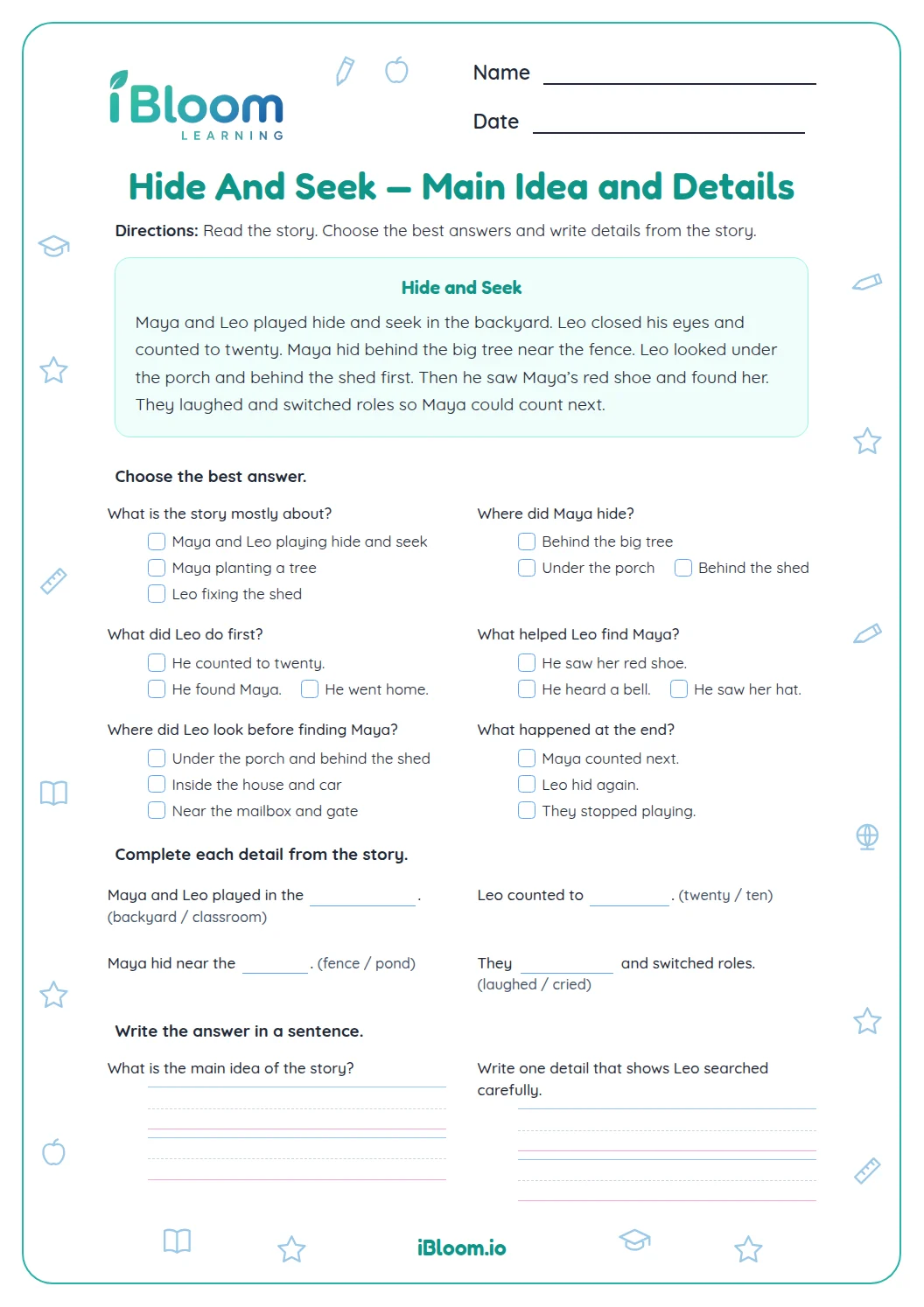
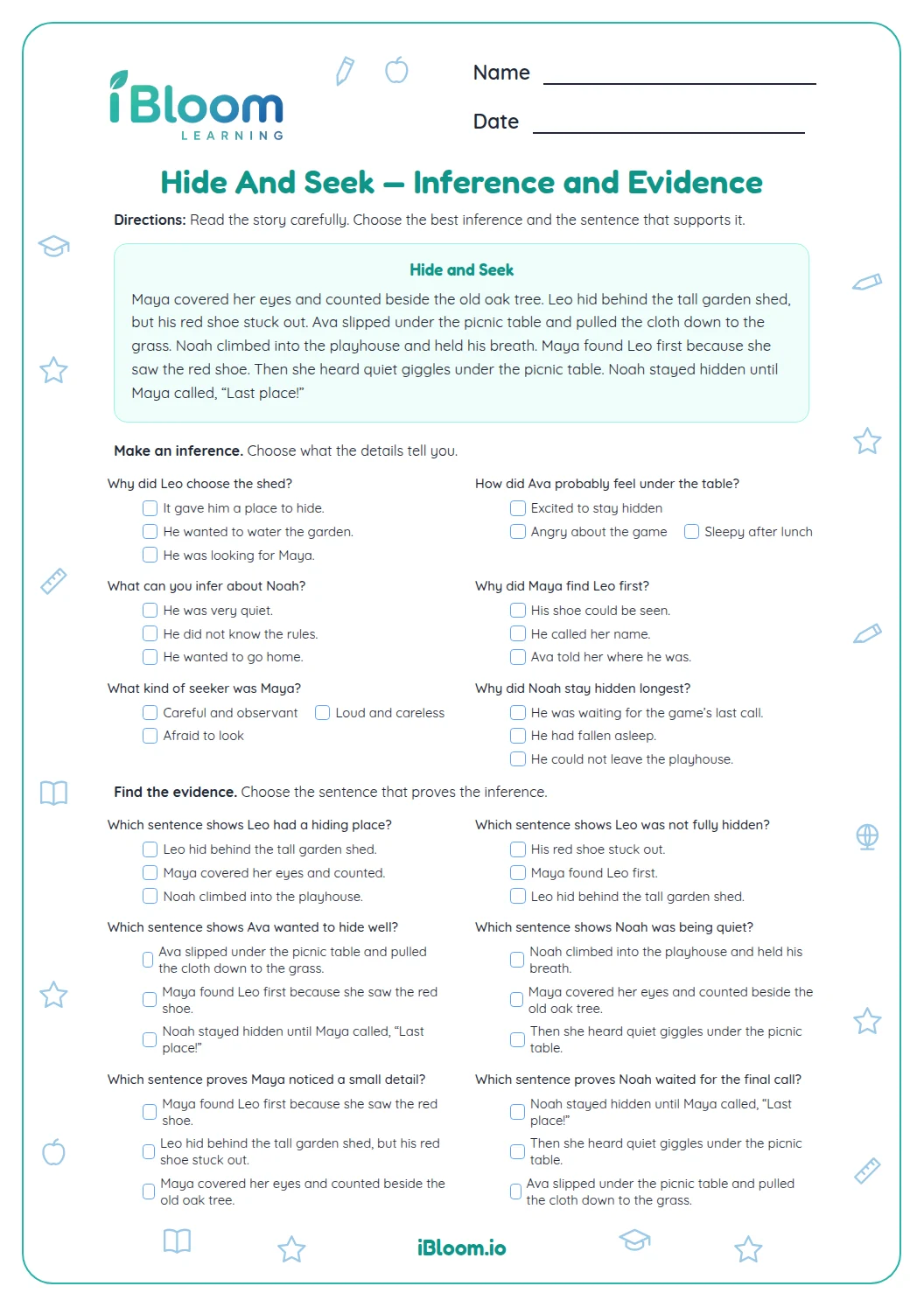
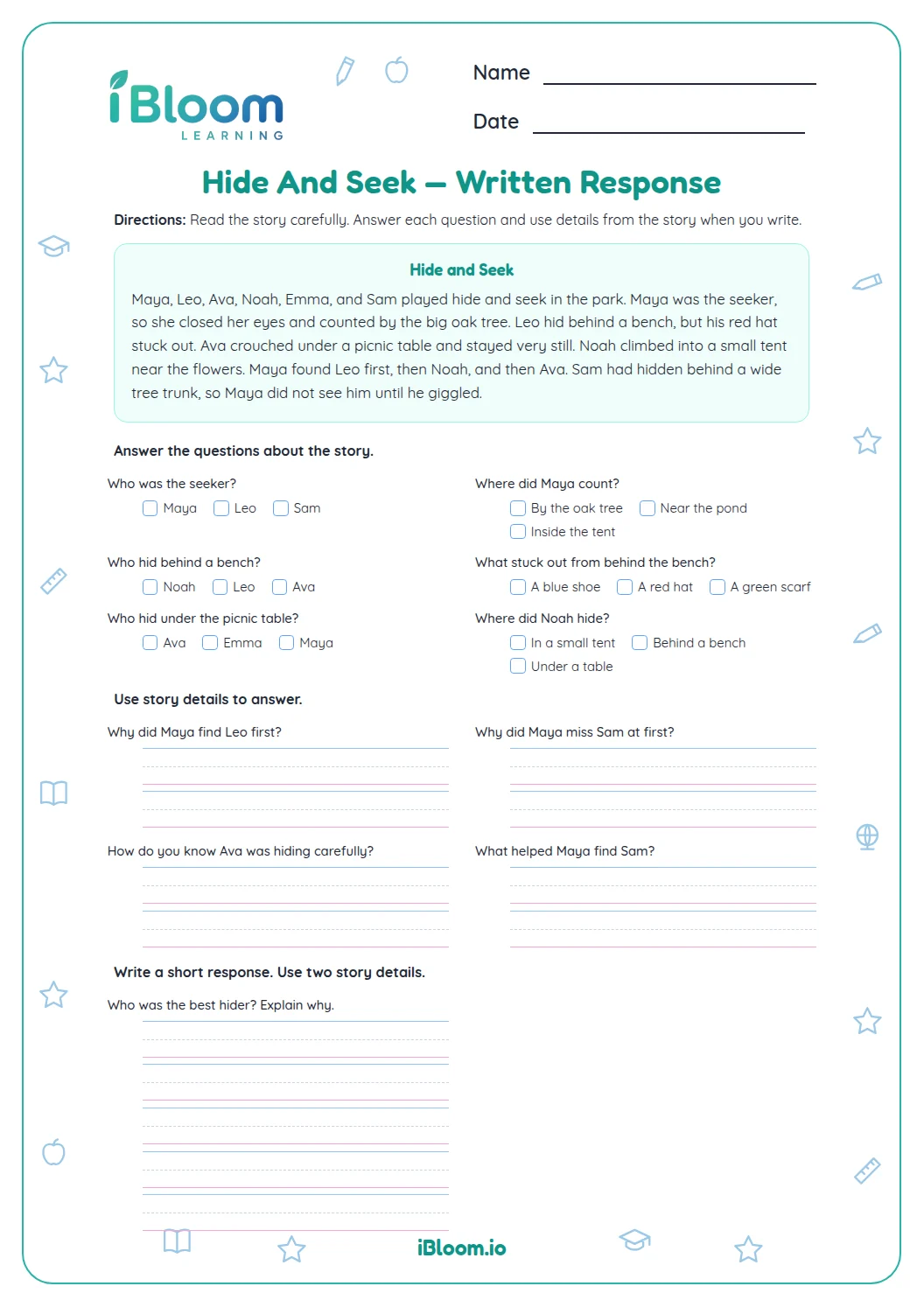
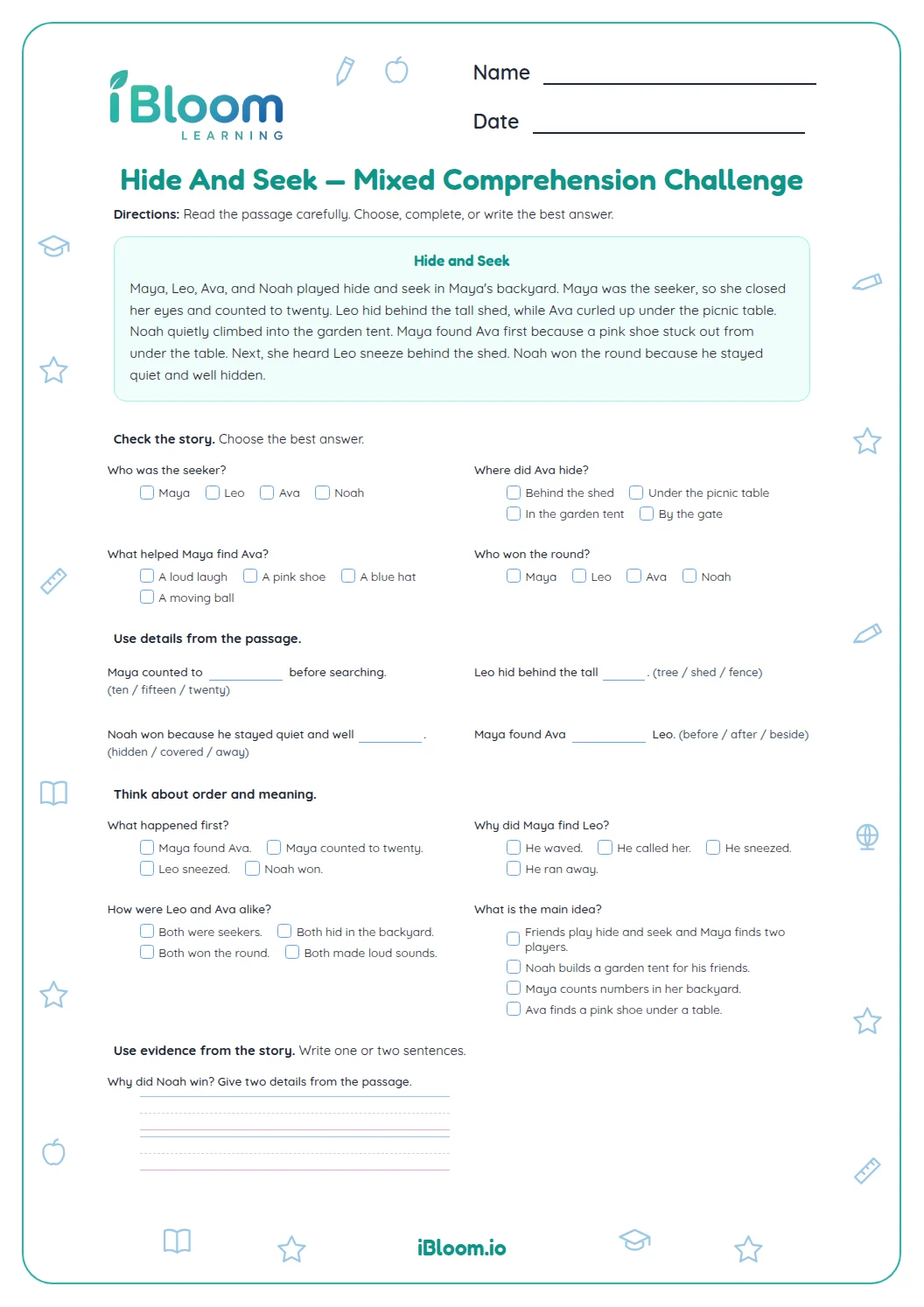
This Grade 2 reading worksheet pairs an original two-paragraph hide-and-seek story with 16 comprehension questions. Children identify story details, follow the order of events, use Leo’s red shoe as a clue, and explain how the story ends. The question set practices Common Core RL.2.3 and RL.2.5 by asking readers to describe a character’s response and track the story’s structure. An answer key includes correct choices and sample written responses.
Aligned to RL.2.3 and RL.2.5
Which story details matter?
Maya, Leo, and Ava play in the yard. Leo hides behind a tree, Ava hides under a picnic table, and Maya looks near the swing before spotting Leo’s red shoe. Children can return to the passage to check each detail.
How can children track the sequence?
Use the sequence words in the story: first Maya counts, next Leo hides, then Ava hides, and finally Maya spots the shoe and finds her friends. Questions in Parts C and D ask children to compare events and explain the ending.
How does the shoe help Maya?
The red shoe is a clue to Leo’s hiding place. When Maya spots it, she finds both friends. A complete answer connects the clue with what Maya does next.
How to use this worksheet
- 1Read the passage once to meet the characters and setting.
- 2Reread a sentence when a question asks for a detail.
- 3Notice time words such as first, next, then, and finally.
- 4Connect the red-shoe clue to Maya’s search.
- 5Answer in a complete sentence when the prompt asks you to explain.
Common mistakes and quick fixes
The mistake
Mixing up where Leo and Ava hide.
The fix
Return to the sentence that names each hiding place.
The mistake
Putting the shoe clue before Maya begins looking.
The fix
Use the story’s sequence words to order the events.
The mistake
Naming the clue without explaining its effect.
The fix
Tell how seeing the shoe helps Maya find her friends.
Common Core alignment
These standards describe the language and literacy skills practiced on this page.
Describe how characters respond to events and challenges in a story.
On this sheet: Children explain how Maya responds to the challenge of finding her friends by following a clue.
Show the official wordingHide the official wording
Describe how characters in a story respond to major events and challenges.
Describe the beginning, middle, and ending structure of a story.
On this sheet: Children track events from the story’s beginning through its ending.
Show the official wordingHide the official wording
Describe the overall structure of a story, including describing how the beginning introduces the story and the ending concludes the action.
What to practice next
Make more practice
Further reading
Questions parents and teachers ask
What is the story about?
Maya, Leo, and Ava play hide-and-seek in a yard. Maya counts, searches, spots Leo’s red shoe, and finds both friends. The final event is that they laugh and switch roles for another game. The story names each character and hiding place before Maya starts her search.
What reading skills does this worksheet practice?
Children recall details, put events in order, use a clue, and explain the story’s ending. They can reread the passage to support answers about where the friends hide and what Maya does after counting. The question sequence moves from recall toward explanation using passage details.
How long is the passage?
The passage is a two-paragraph story about a hide-and-seek game. It introduces the characters and setting, shows how Maya searches, and concludes with the friends switching roles. Sixteen questions follow the story. The questions revisit both paragraphs, including the clue and the final event.
What does the answer key include?
The key lists correct choices and concise answers tied to the story. For written questions, it provides sample responses; other answers are acceptable when they accurately describe the events in the passage. For an open response, check the meaning against the passage rather than requiring exact wording.
How can I help a child sequence the events?
Ask the child to find the words “First,” “Next,” “Then,” and “Finally” in the passage. Have them point to each event and say what happened before or after it. The answer key can help check the completed sequence. The event words are printed in the story.