





About this worksheet
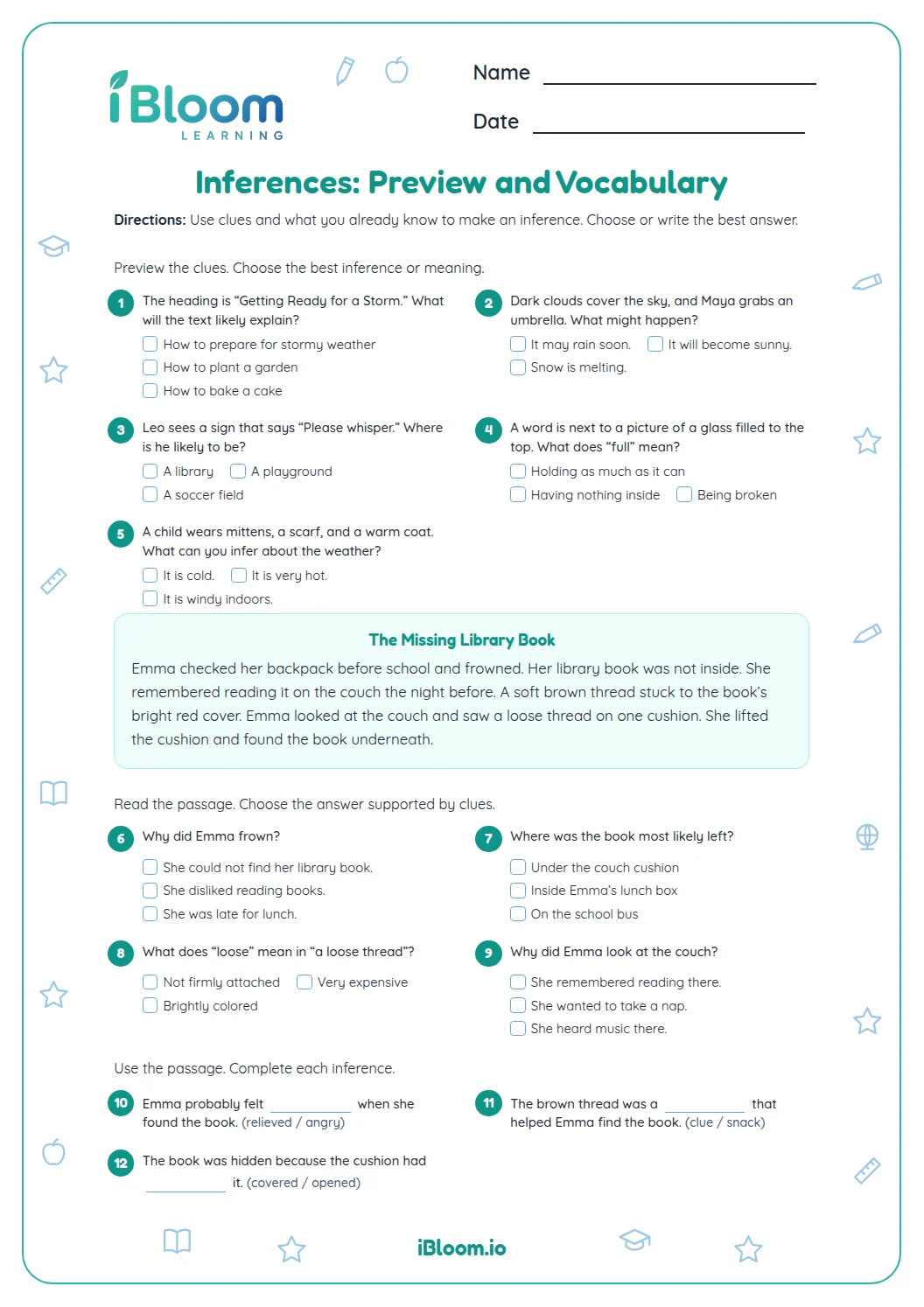
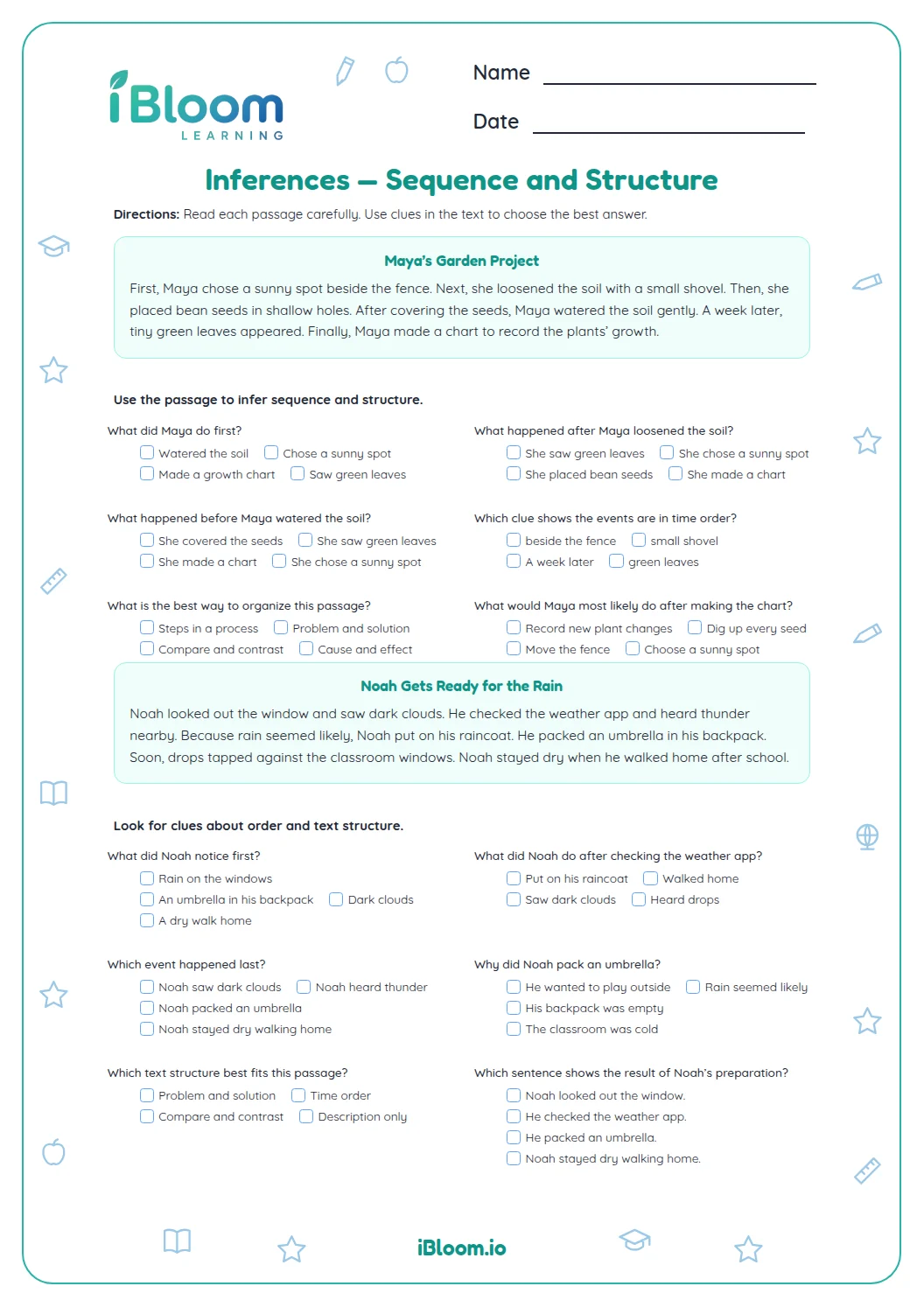
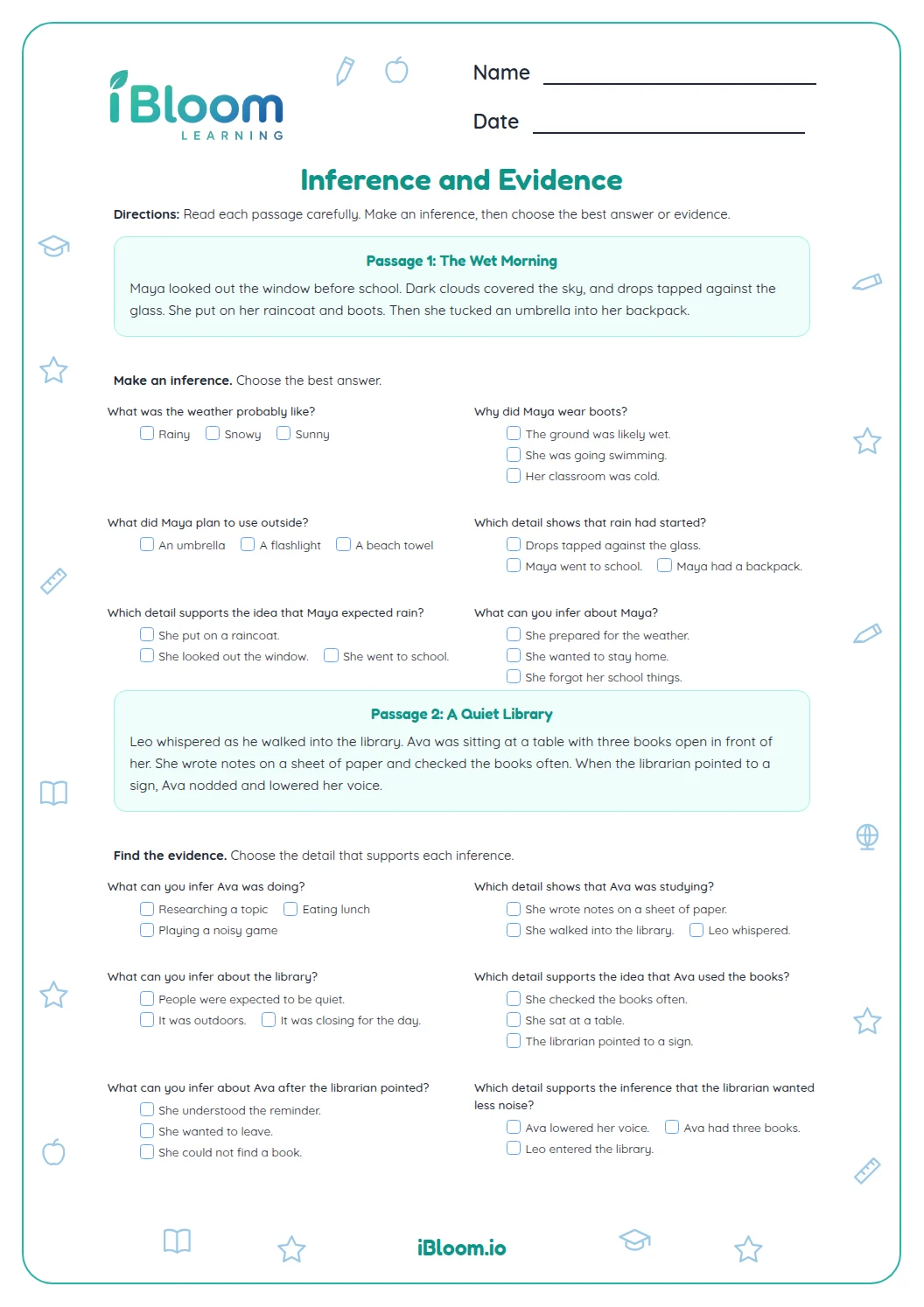
This Grade 3 reading worksheet introduces an original informational passage about two ways students share books: a twice-yearly book swap and a daily lending shelf. Learners preview the topic and details, compare what the plans share and how they differ, and use nearby text to work out words such as traded and lending. The sheet has 14 questions, including short written responses, plus a separate answer key. It practices CCSS RI.3.9 and L.3.4.a.
Aligned to L.3.4.a
What should a reader notice first?
Preview the topic and identify the two things the text discusses. Here, both plans help students find books, but they work in different ways.
Question 1 asks what problem both groups wanted to solve. The passage states that students wanted more children to enjoy books.
- 1Find the shared goal near the beginning.
- 2Answer: help more children enjoy books.
How do you tell a similarity from a difference?
A similarity describes something both plans share. A difference names a feature that belongs to one plan or contrasts the two. The book swap and shelf both help classmates find books, but one happens at special events while the other is open daily.
Question 7 asks for one difference. The passage says the swap happens twice a year and the shelf is open every school day.
How can context explain a new word?
Read the whole sentence and nearby details. Families bring books they have finished and receive different titles, so traded means exchanged. The phrase “fewer books” is clarified by the passage’s comparison between a large swap and a smaller shelf.
How to use this sheet
- 1Read the title and first paragraph to identify the topic and two plans.
- 2Mark details about when each plan is available and how books move.
- 3For each comparison question, decide whether it asks for a shared feature or a difference.
- 4Reread around a vocabulary word and use the sentence to test a meaning.
- 5In written answers, name both plans or cite a clear detail from the passage.
- 6Check the key and make sure each comparison is supported by the text.
Mistakes to watch for
The mistake
Saying the plans are identical because they share a goal.
The fix
Keep the shared goal separate from details such as how often each plan is available.
The mistake
Mixing up which plan runs daily.
The fix
Return to the sentence that says the lending shelf is open every school day.
The mistake
Guessing a word meaning without checking the sentence.
The fix
Use the nearby action or comparison as evidence for the word’s meaning.
Reading standards
Readers use context clues to understand words in a passage that compares two approaches.
Use sentence context to determine the meaning of unfamiliar words.
On this sheet: Vocabulary questions use nearby sentences to clarify traded, lending, and fewer.
Show the official wordingHide the official wording
Use sentence-level context as a clue to the meaning of a word or phrase.
What to practice next
Make more practice
Further reading
Questions parents and teachers ask
What do the book swap and shelf have in common?
Both plans help classmates find something to read. The passage explains that the swap gives books new readers and that students can borrow from the shelf. The passage names each plan and explains how it gives students access to books.
How is the lending shelf different from the swap?
The shelf is open every school day and holds fewer books. The swap happens twice a year and offers many choices at special events. The passage states both the shelf schedule and the swap schedule, making the timing difference explicit.
What does “traded” mean in this passage?
“Traded” means exchanged. Families bring finished books, and students receive different titles in return, which gives a clue to the word’s meaning. The sentence gives the action and result, so readers can infer the word without a dictionary. Readers can point to the sentence that gives the contrast before choosing an answer.
Why is “However” a useful clue?
“However” signals a contrast. The passage uses it before explaining that the daily shelf has fewer books than the swap. The contrast marker appears in the paragraph about the shelf and points to a difference in quantity. Readers can point to the sentence that gives the contrast before choosing an answer.
Can a written comparison have more than one right answer?
Yes. A response may name any similarity or difference supported by the passage. The key gives sample wording, but another accurate, clear sentence can also be correct. The written questions ask readers to support a comparison with details stated in the passage.
Does the answer key include written-response examples?
Yes. The separate three-page key includes sample responses for the written comparison questions. Accept another response when it uses accurate details from the passage. The key responses refer to details such as the shelf schedule, the swap events, and their shared purpose.