




About this worksheet
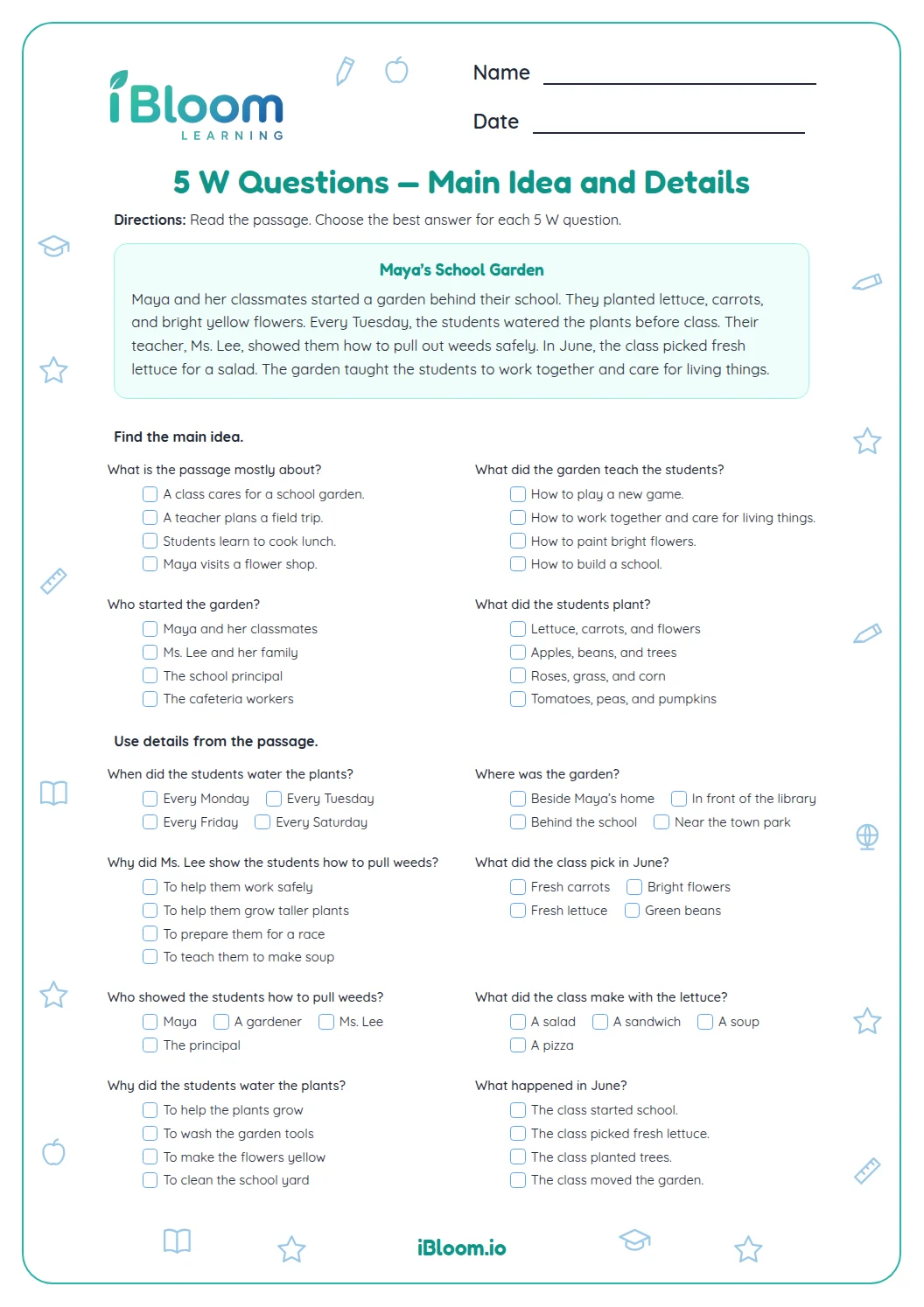
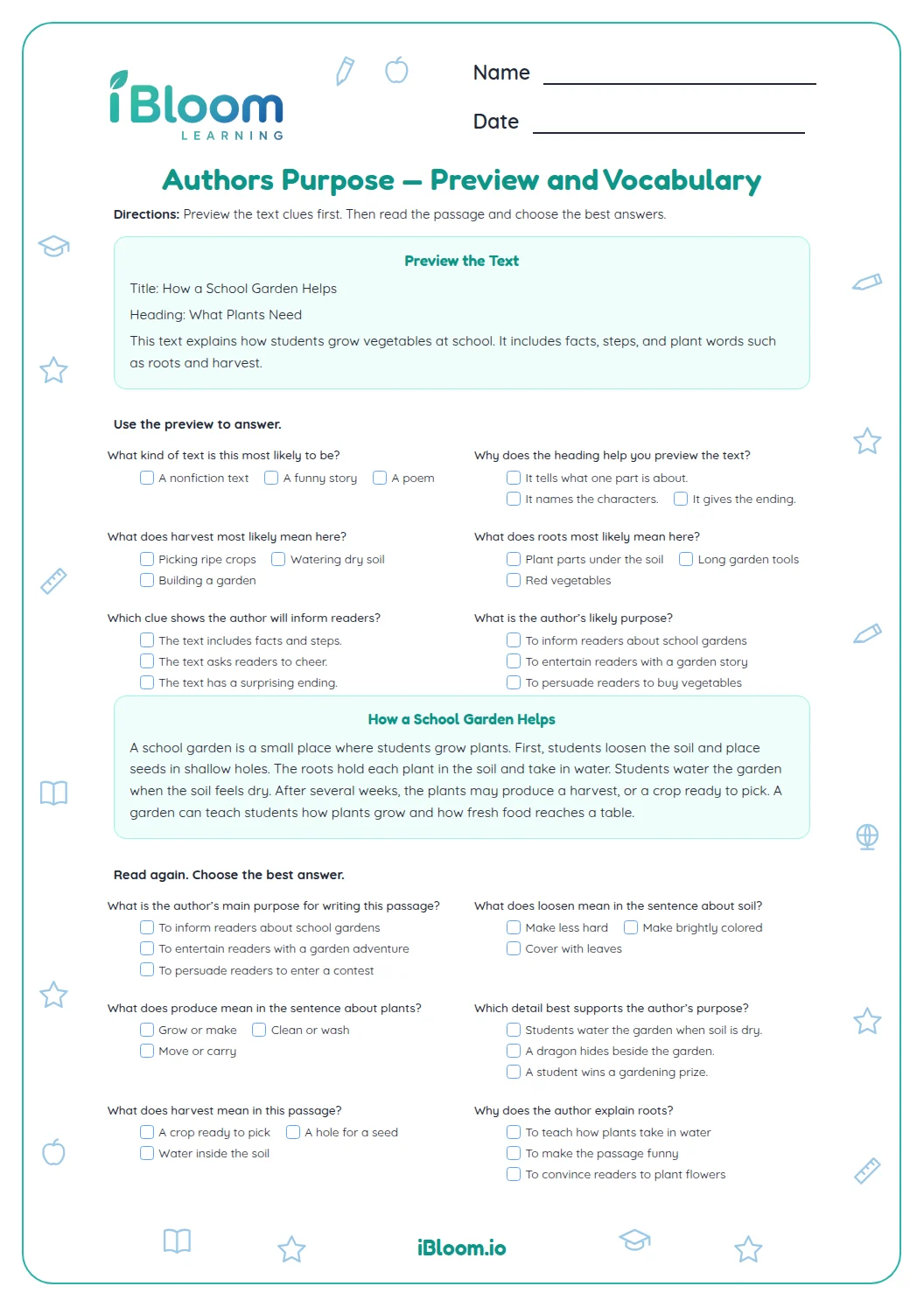
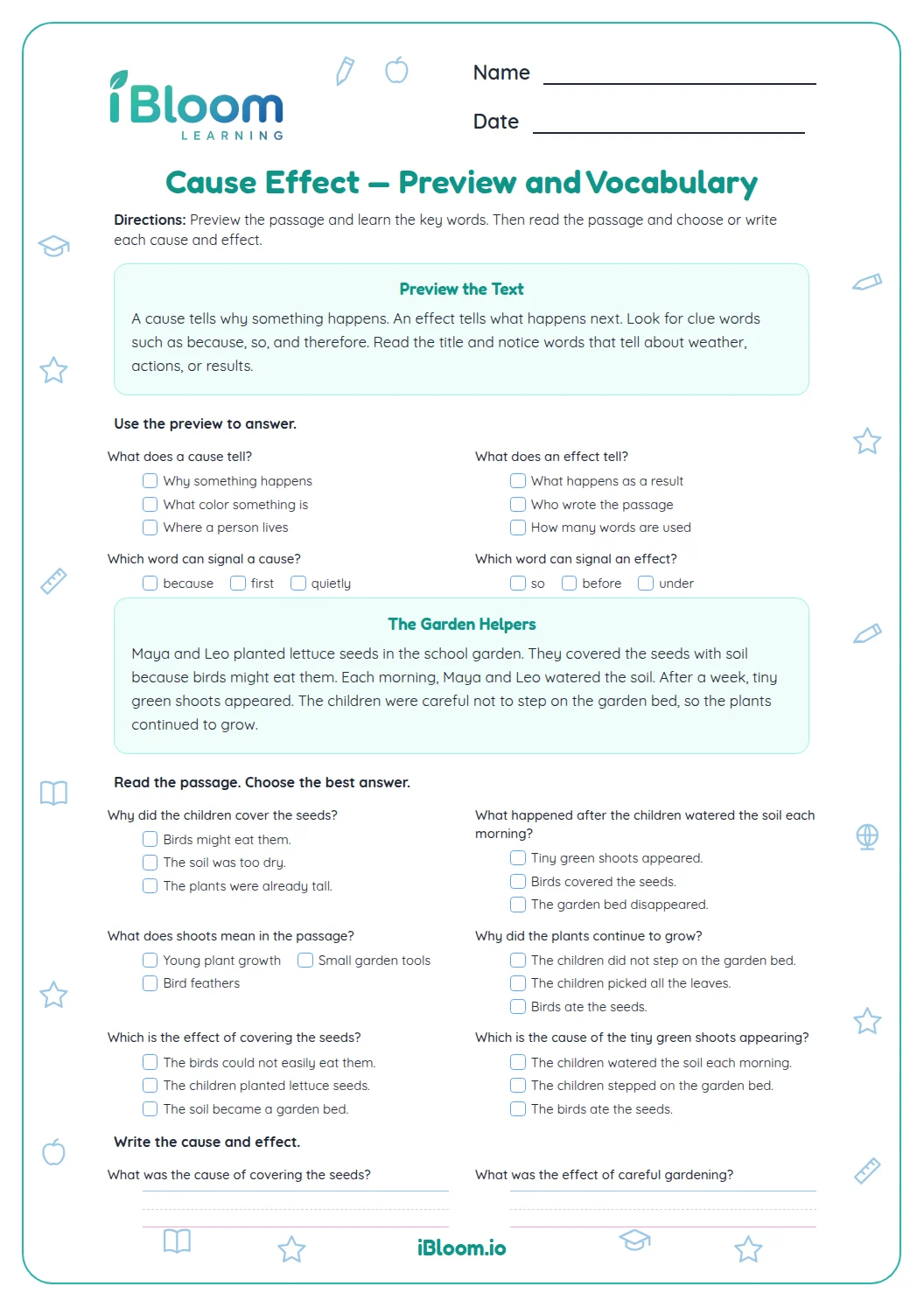
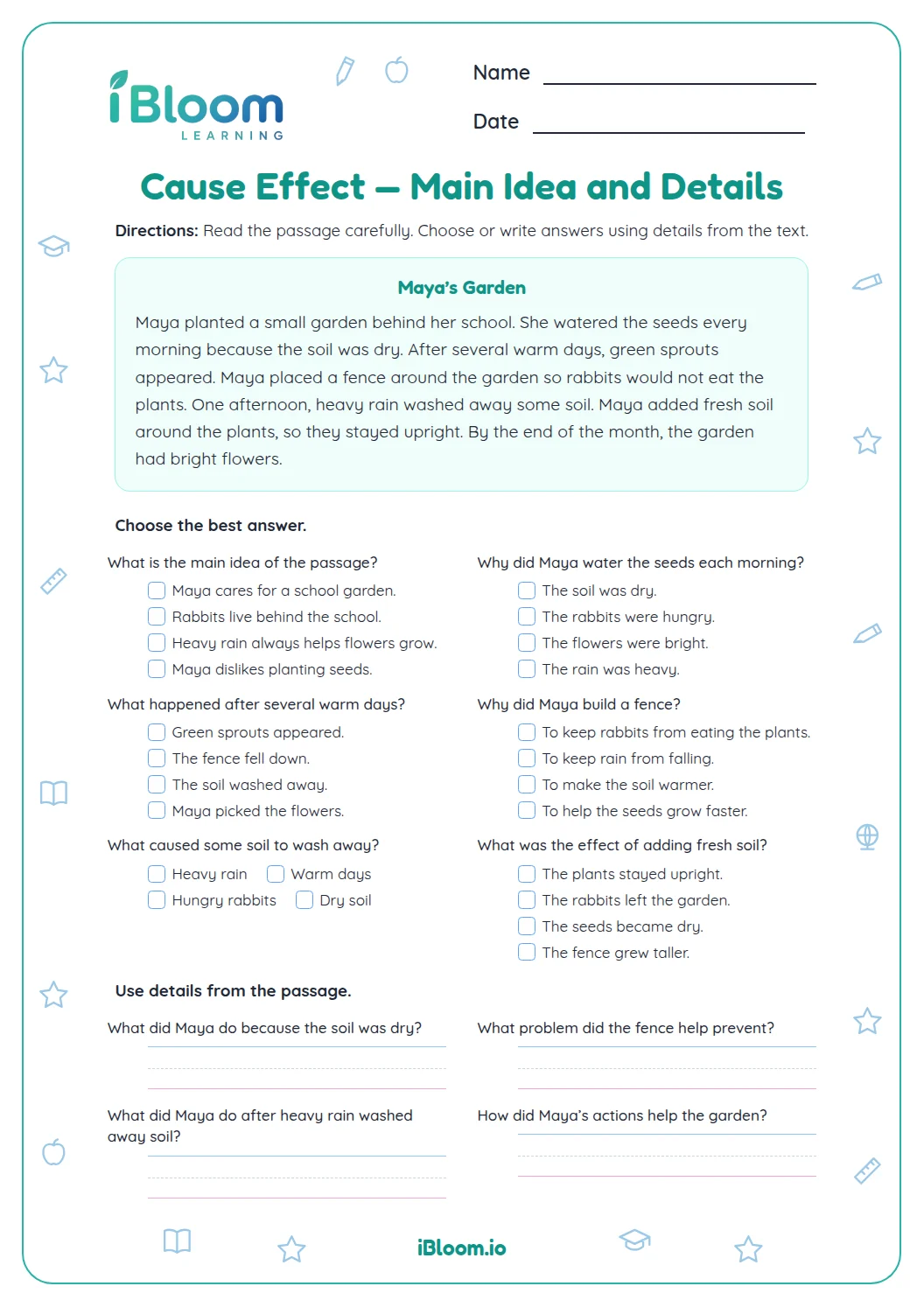
This free Grade 3 reading worksheet uses one original story about a class garden. Sixteen questions ask students to identify the main idea and lesson, follow events in order, and use details about the characters’ actions. The three parts move from the central idea to sequence and then to evidence from the story. A separate answer key is included. The questions practice Common Core reading literature standards RL.3.2 and RL.3.3.
Aligned to CCSS.ELA-Literacy.RL.3.2 and CCSS.ELA-Literacy.RL.3.3
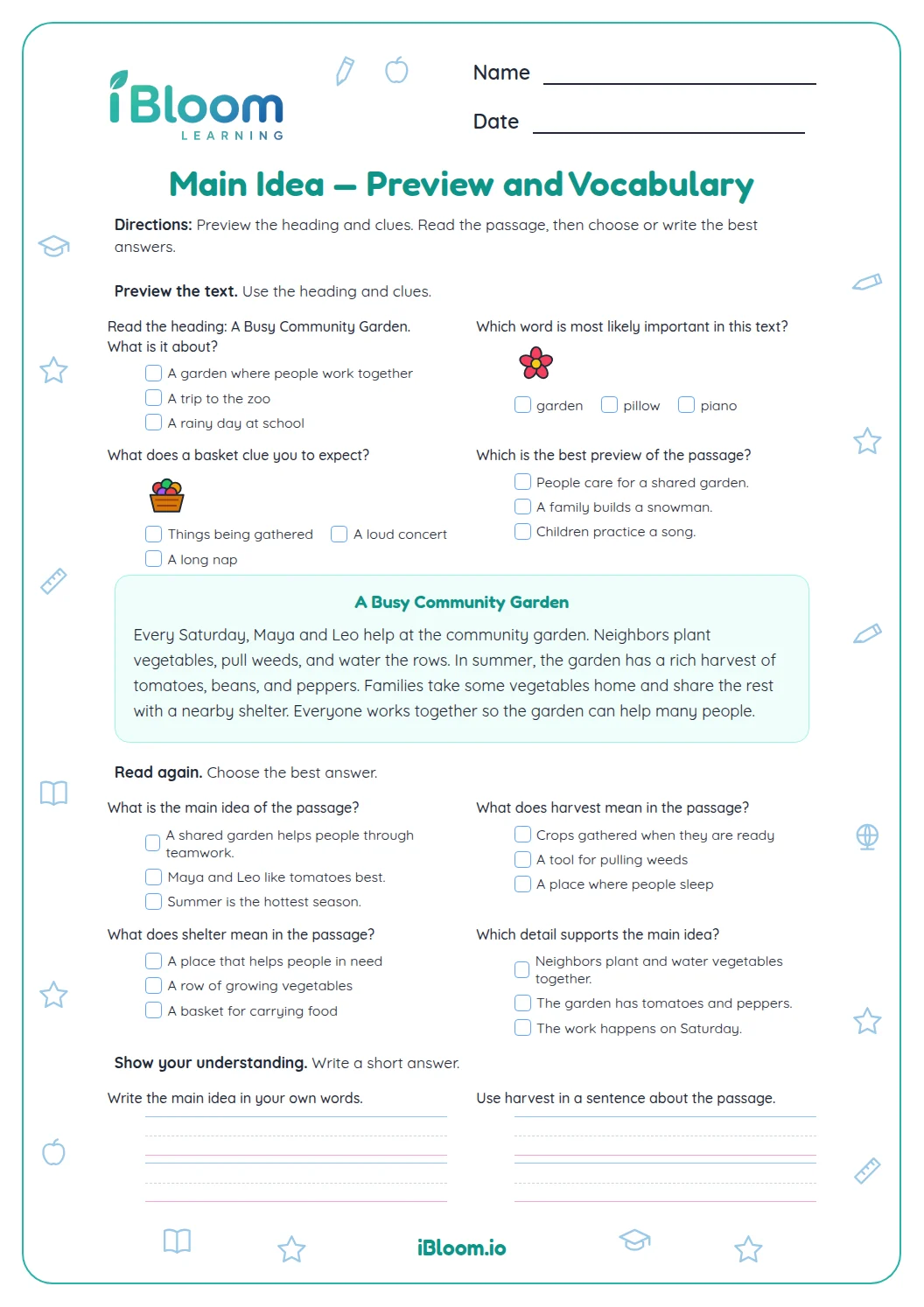
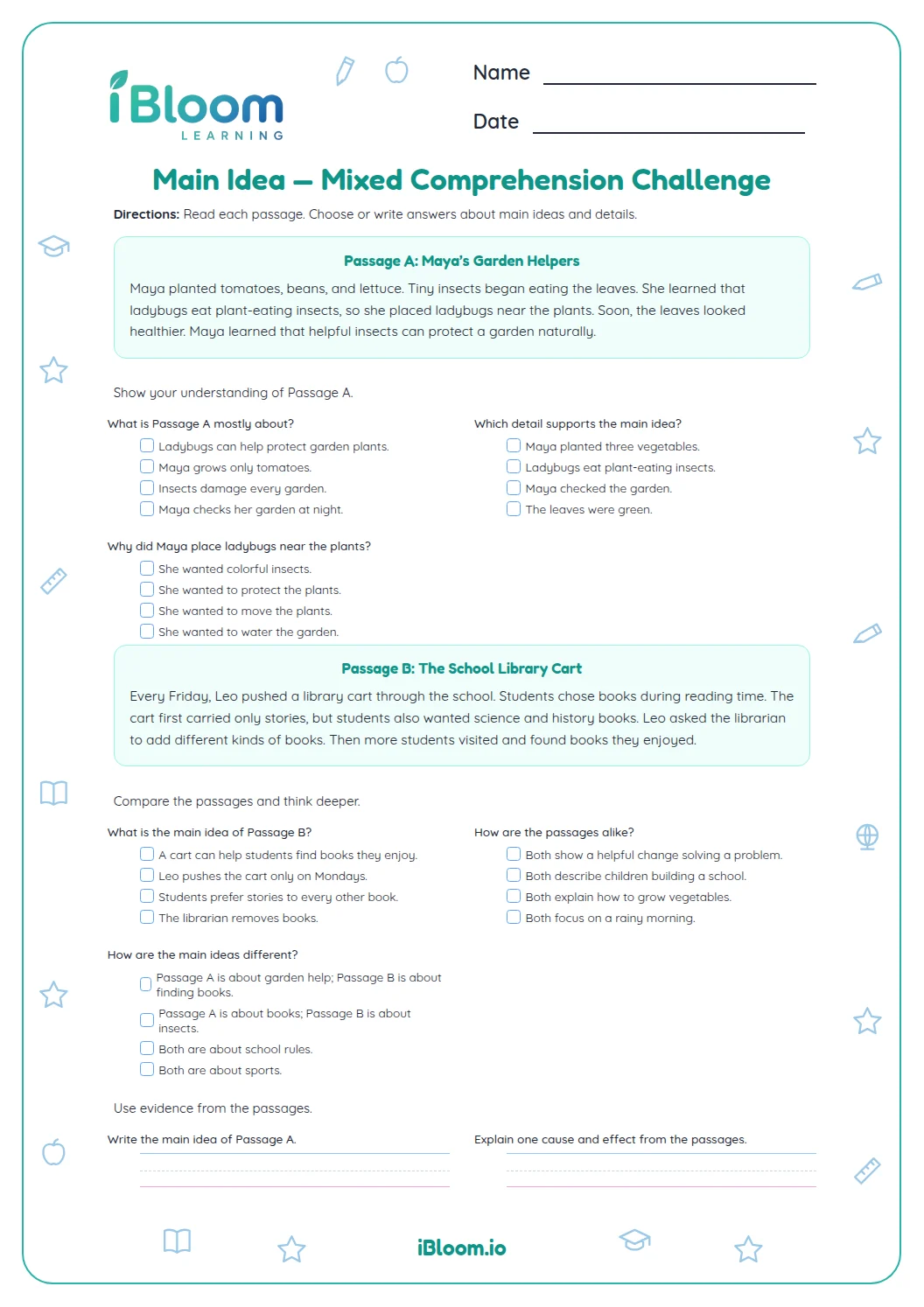
How can a reader find the main idea?
Ask what the whole story is mostly about, then check that idea against more than one event. In this story, planning, planting, watering, and sharing the garden all support the class project as the central idea.
- 1What is the story mostly about?
- 2Answer: Class grows a garden
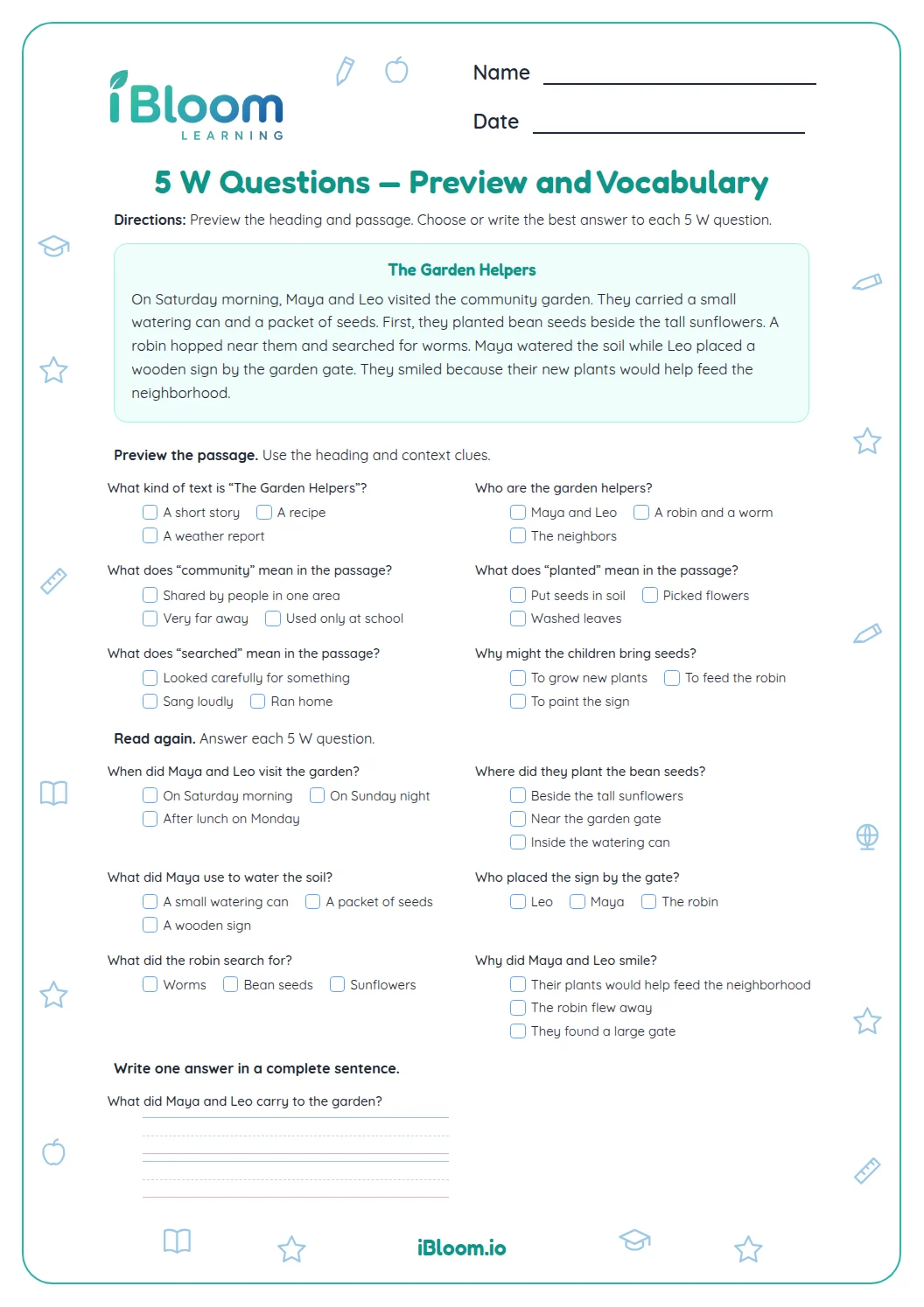
How do the events show the story’s sequence?
Notice time and action clues such as “First,” “Next,” and “By fall.” Put the events in order before deciding what changed from the beginning to the ending.
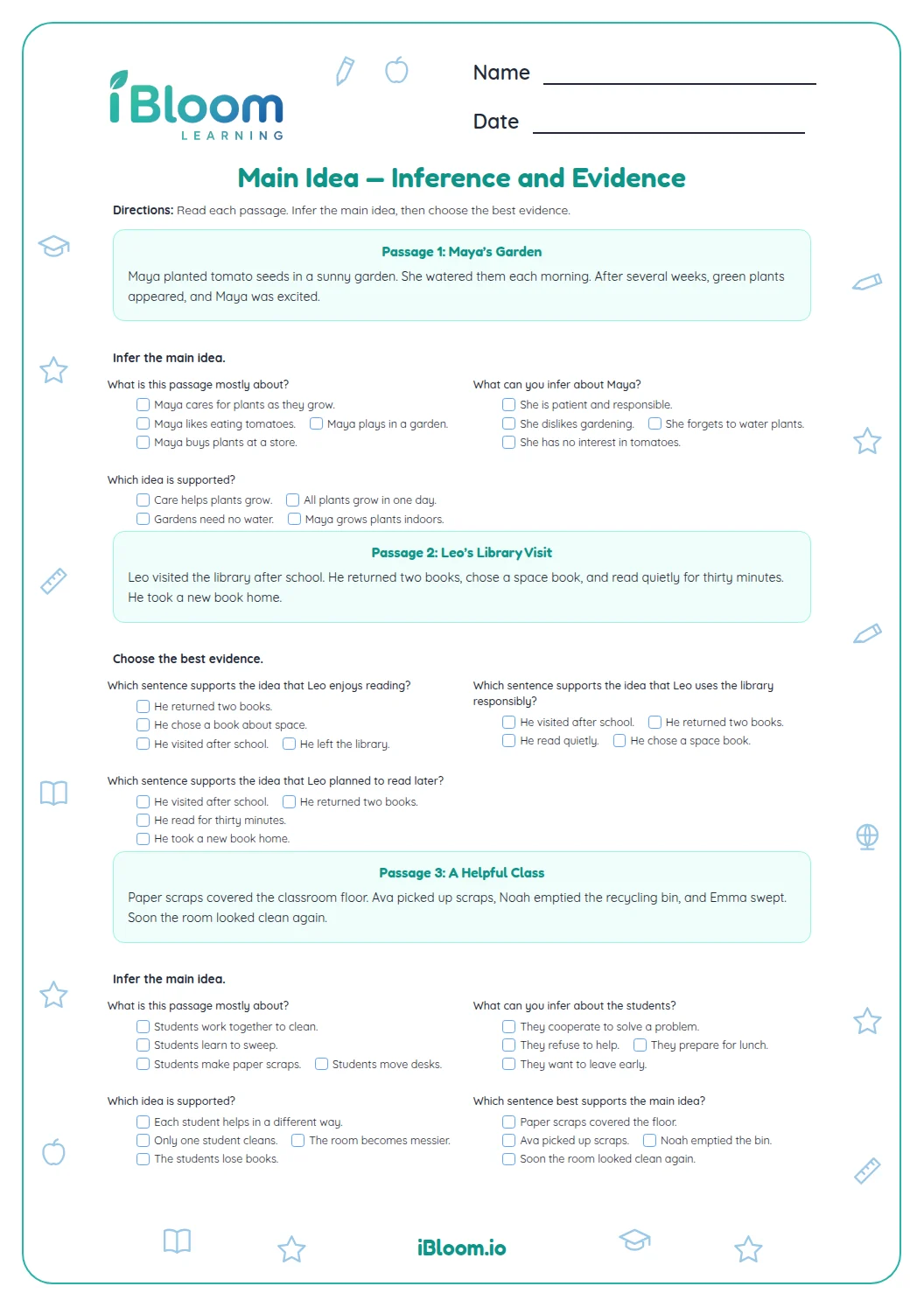
Which details explain the lesson?
The class notices drooping leaves, works together to water them, and later invites a neighbor to join. Those actions support the idea that people can care for a shared place together.
How to use this worksheet
- 1Read the garden story once to understand the whole project.
- 2Answer the main idea questions by checking the whole story, not one sentence.
- 3Use time words and actions to put events in order.
- 4Return to a specific event when a question asks for evidence.
- 5Check short answers with the separate key and add any missing story detail.
Common reading mix-ups
The mistake
Choosing a detail as the main idea.
The fix
Check whether the choice covers the whole story, including its ending.
The mistake
Putting events in the order they are listed in a question.
The fix
Find each event in the passage and use its time clue.
The mistake
Naming a lesson without a story detail.
The fix
Point to an action that shows how the lesson is conveyed.
Common Core alignment
Find a story’s message and connect it to key details.
On this sheet: Students identify the main lesson and explain it with events from the story.
Show the official wordingHide the official wording
Recount stories, including fables, folktales, and myths from diverse cultures; determine the central message, lesson, or moral and explain how it is conveyed through key details in the text.
Explain how characters’ actions shape events.
On this sheet: Questions ask how the class responds to a problem and moves the project forward.
Show the official wordingHide the official wording
Describe characters in a story (e.g., their traits, motivations, or feelings) and explain how their actions contribute to the sequence of events.
What to practice next
Make more practice
Further reading
Questions parents and teachers ask
What story do students read?
Students read “A Garden for Everyone,” an original story about a Grade 3 class that plans, plants, and cares for a school garden. The passage also describes how the class responds when the bean leaves droop and later shares the garden with a neighbor.
What reading skills are practiced?
The 16 questions ask students to identify the central idea and lesson, follow events in sequence, and use details to explain characters’ actions. Several questions return to the garden’s events so students can connect an answer to what happened in the passage.
Is an answer key included?
Yes. A separate answer key accompanies the four worksheet pages. Short-answer responses may use different wording, so students can compare the meaning of their response with the model rather than expecting every sentence to match exactly. Adults can ask which passage detail supports a response.
How long might the worksheet take?
Plan for about 25 minutes to read the passage, answer 16 questions, and review the key. The passage and questions can also be completed in two sittings; students should reread the story when they need to check an event or detail.
How can I help a student explain an answer?
Ask the student to point to the event or detail that supports the response. For a sequence question, have them locate the actions in the passage; for a lesson question, ask how the ending connects to the class’s choices.