



About this worksheet
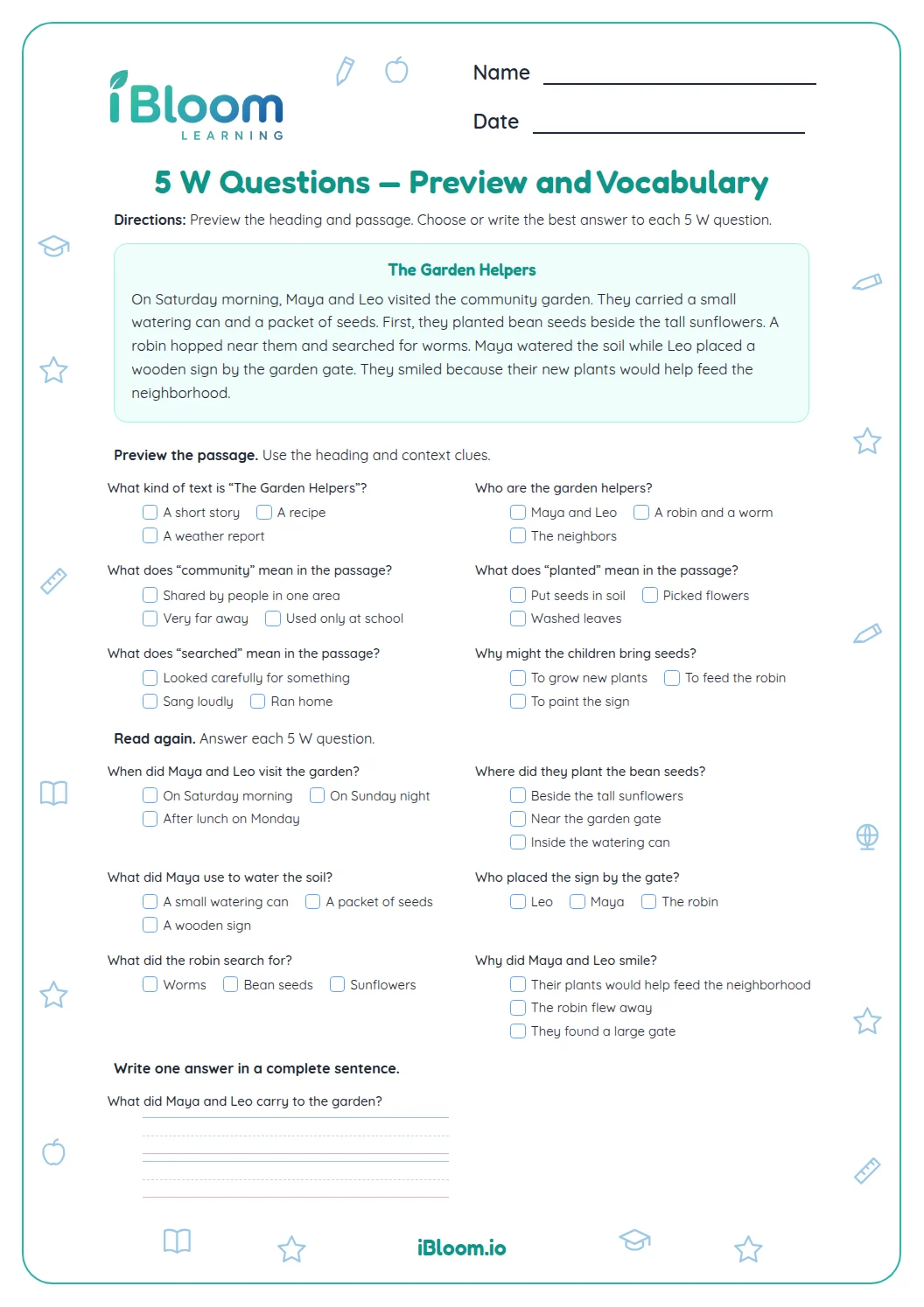
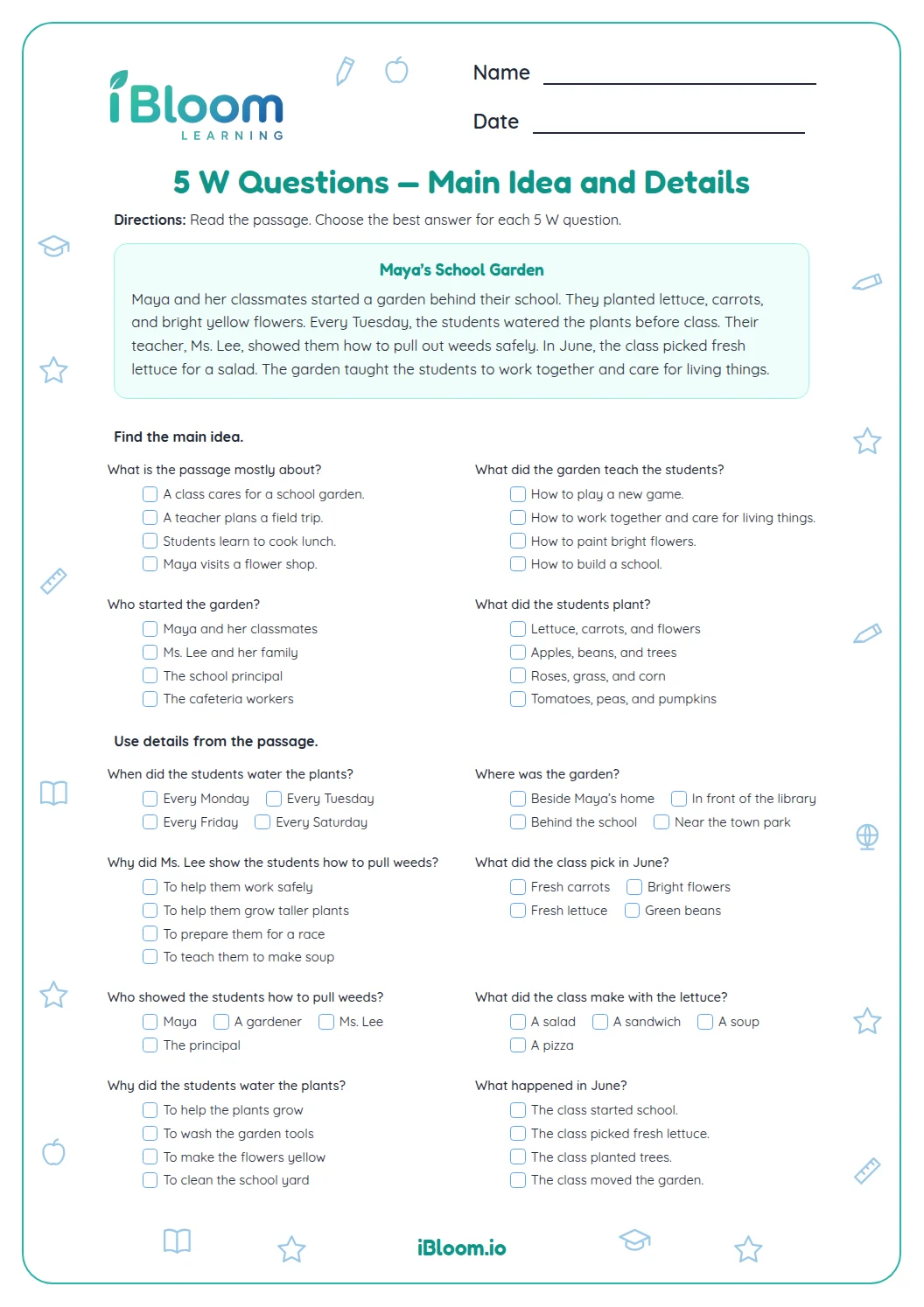
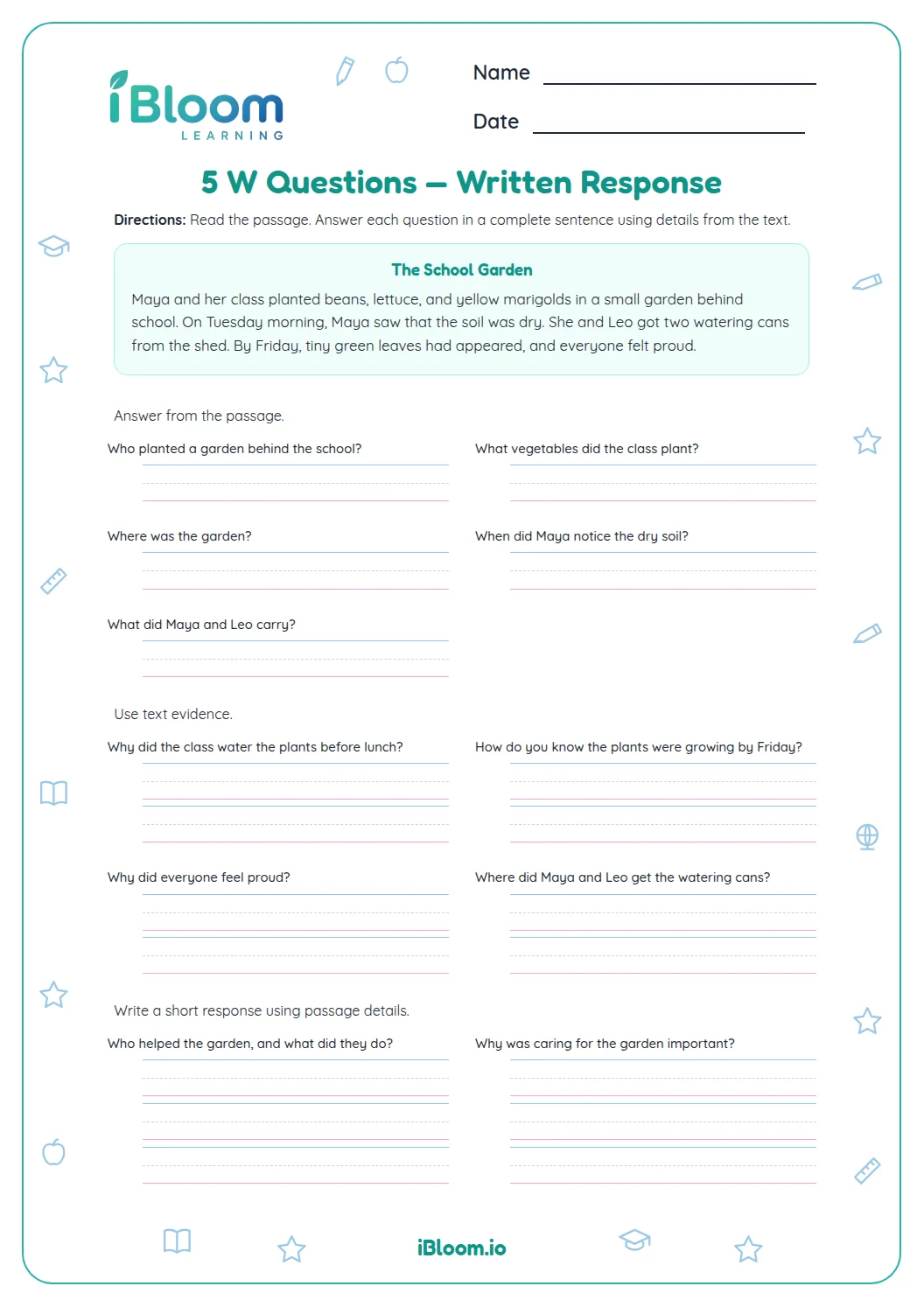
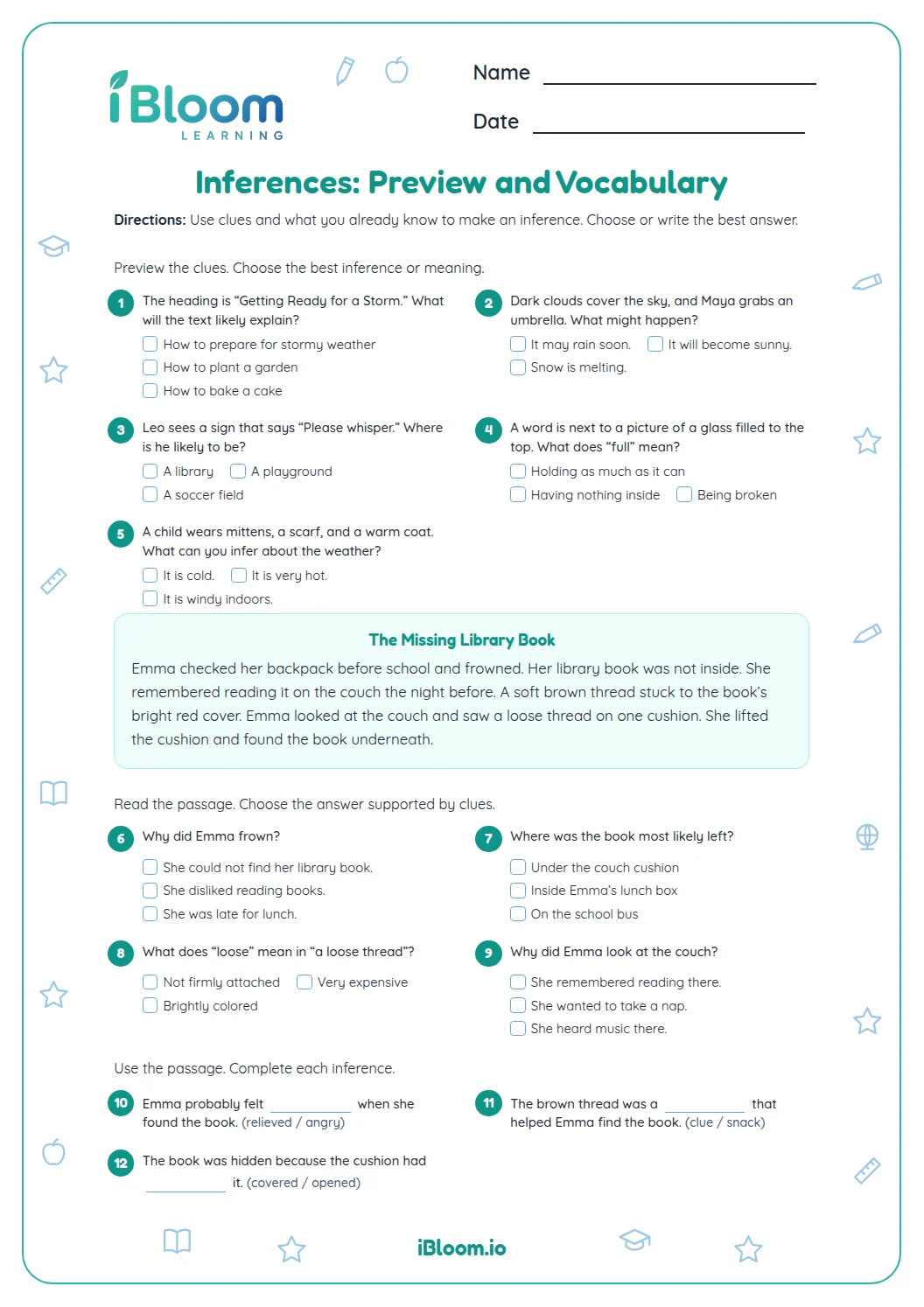
This free Grade 3 reading worksheet pairs an original passage about a class measuring rain with 15 comprehension questions. Students answer who, what, when, and where questions, explain why characters make choices, and use details to support an inference. The work aligns with CCSS RL.3.1: answering questions about a text and referring explicitly to it. The answer key includes sample responses where more than one wording can be correct.
Aligned to RL.3.1
What happens in “The Rain Gauge Project”?
Ms. Chen’s class records rainfall and checks the garden soil before watering. The story gives students concrete details to find, then asks them to connect those details to a character’s decision.
How do the 5 W questions help readers?
Who, what, when, and where questions point to details stated in a passage. Why and how questions ask students to connect a reason with an event. The words in the question can guide a search for the matching sentence.
- 1Question 7 asks why Priya suggested waiting.
- 2The passage says the soil was damp, so the class waited before watering.
How can a reader support an inference?
An inference combines a clue in the text with a reasonable idea. Priya notices that the soil is damp, so a reader can infer that she pays close attention. The answer key offers a sample and names the clue that supports it.
How to use this worksheet
- 1Read the passage once to understand the garden project.
- 2Reread a paragraph when a question asks for a detail.
- 3Underline the words that answer who, what, when, or where.
- 4For why and inference questions, connect your idea to a sentence in the passage.
- 5Compare written responses with the key’s sample and evidence.
Common reading slips and quick fixes
The mistake
Saying the class watered the lettuce on Wednesday.
The fix
Check the passage: they watered the beans and left the moist lettuce soil alone.
The mistake
Guessing why Priya waited without citing a clue.
The fix
Find the detail that the soil was damp, then connect it to her suggestion.
The mistake
Treating an inference as a fact copied word for word.
The fix
State a reasonable idea and add the passage clue that supports it.
Common Core alignment
This passage-based page asks students to answer questions with details from the text.
Answer questions about a passage and cite details that support each answer.
On this sheet: The question sets ask students to locate stated details and use evidence to explain inferences.
Show the official wordingHide the official wording
Ask and answer questions to demonstrate understanding of a text, referring explicitly to the text as the basis for the answers.
What to practice next
Make more practice
Further reading
Questions parents and teachers ask
How long is the passage?
“The Rain Gauge Project” is an original passage of about 170 words. It gives students details about the rain gauge, the garden soil, and the class’s decisions, then provides enough evidence for literal and inference questions. The passage is short enough to reread easily.
Are all the answers copied directly from the passage?
Several who, what, when, and where answers are stated directly. The inference questions ask students to combine a passage clue with an idea, and the key gives sample responses for those items so families can compare the evidence. The supporting sentence can be reread together.
What evidence supports the answer about Priya?
The passage says Priya pointed out that the soil was damp and suggested checking again the next day. A student can use that clue to infer that she observes the garden carefully before deciding whether the plants need water. She uses the dampness as useful evidence.
What should students do when their wording differs from the key?
Check whether the response answers the question and uses an accurate passage detail. For written inferences, the key offers a sample because students may explain the same idea in different words while pointing to the same evidence. The passage remains the source for checking.
What does the worksheet mean by “inference”?
An inference is a conclusion supported by clues. For example, Priya notices damp soil before deciding whether to water, which supports the idea that she pays attention to the garden. Students should connect an idea to a detail in the passage.