




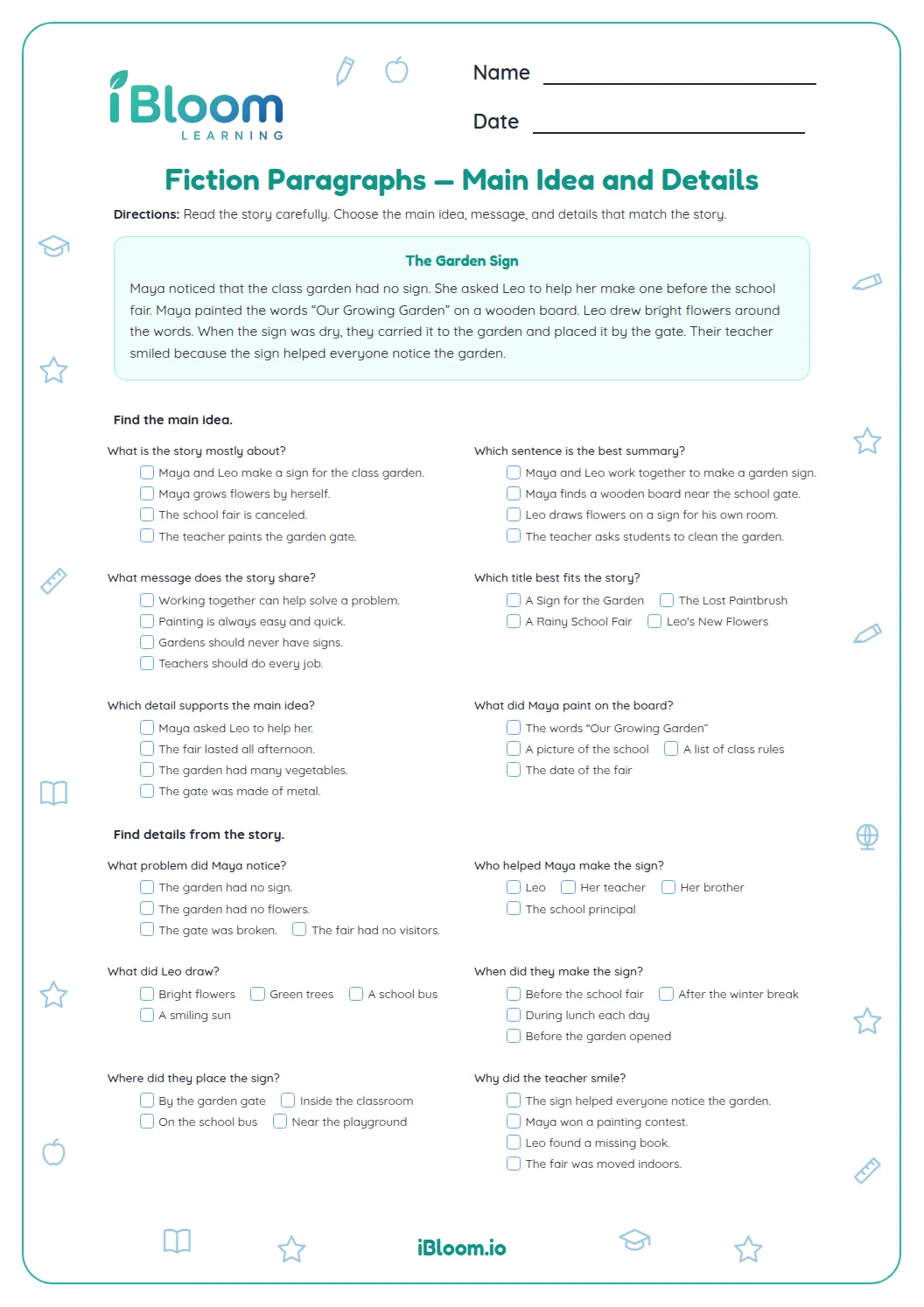


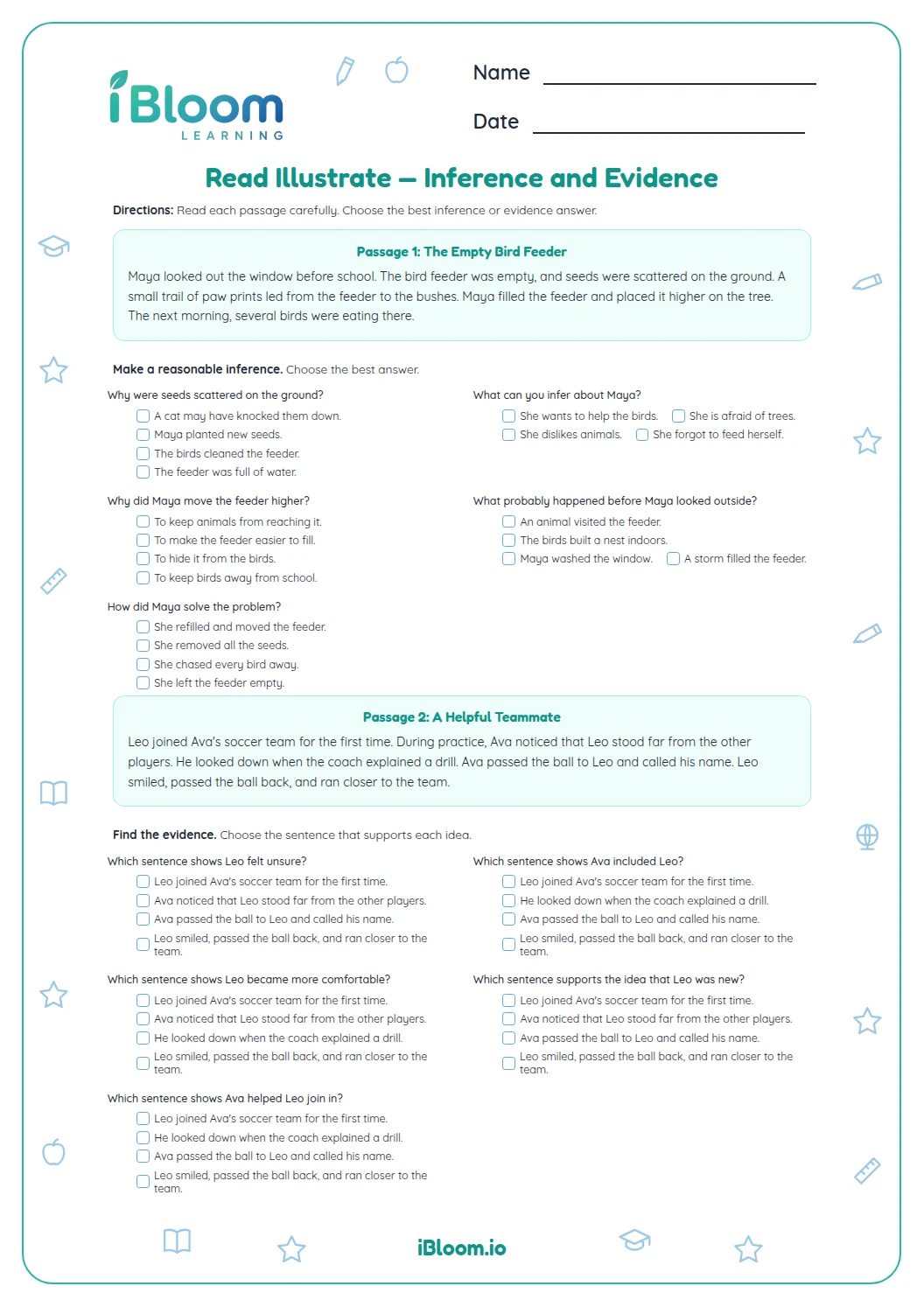
About this worksheet
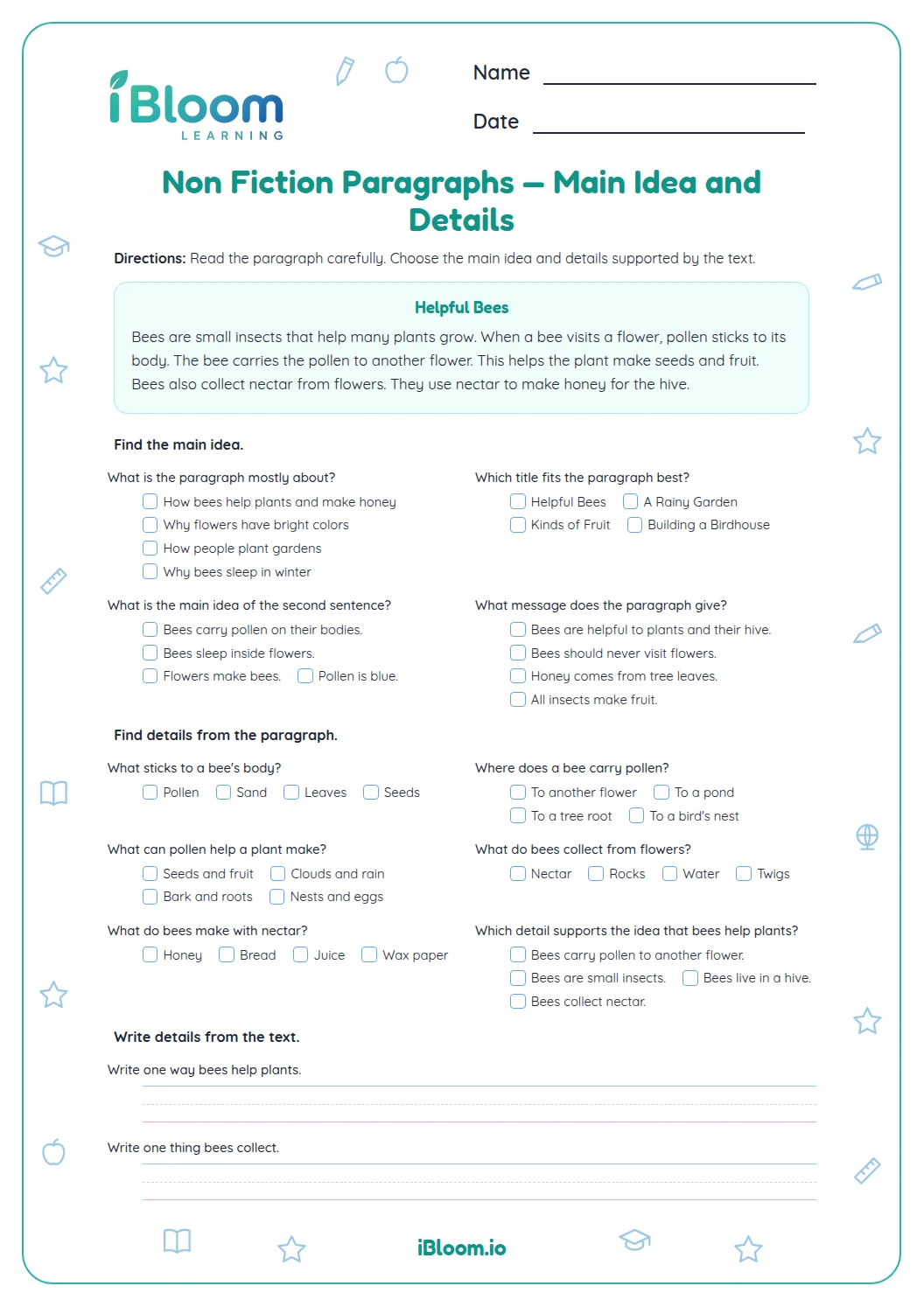
This Grade 3 worksheet pairs an original passage about a class planning a school garden with 14 questions. Students recall details, select the main idea, and connect information from the text to that idea. The separate answer key includes answers for each question. The work practices CCSS RI.3.2.
Aligned to RI.3.2
What will students read and answer?
The passage follows Ms. Lee’s class from finding a garden map to planting seeds and watching bees. Questions 1–10 check recall of details; Questions 11–14 focus on the main idea and how details support it.
How can a detail support the main idea?
A useful detail connects to the central point, rather than naming any fact from the passage. Reread the sentences around the detail and ask how it helps explain the whole text.
- 1Which sentence best states the main idea? → a helpful garden
- 2The garden feeds people and gives pollinators a place to visit.
How can an adult help with rereading?
Invite the learner to point to a sentence that supports an answer. For a main-idea choice, ask whether it covers the whole passage or only one event.
How to use this worksheet
- 1Read the passage once to understand what the class is doing.
- 2Reread the relevant paragraph for a detail question.
- 3For main idea, consider what the passage says as a whole.
- 4Choose the detail that best supports that central point.
- 5Check all 14 responses with the separate answer key.
Common reading mix-ups
The mistake
Choosing one event as the main idea.
The fix
Look for a choice that covers the passage from beginning to end.
The mistake
Picking a true detail that does not support the main idea.
The fix
Explain how the detail connects to the central point.
The mistake
Answering from memory when a detail is easy to find.
The fix
Reread the paragraph and confirm the wording in the text.
Common Core alignment
Identify a text’s main idea and explain how key details support it.
On this sheet: Students identify the passage’s main idea, recall its key details, and connect a detail to the main idea.
Show the official wordingHide the official wording
Determine the main idea of a text; recount the key details and explain how they support the main idea.
What to practice next
Make more practice
Further reading
Questions parents and teachers ask
What is the passage about?
The passage follows a class planning and planting a school garden. Students find an old map, learn about flowers and bees, choose beds for vegetables and flowers, and watch green shoots appear. The questions ask them to recall details and identify the central idea.
What is the main idea of “The School Garden Map”?
The class plans a garden that can feed people and give pollinators a place to visit. Details about vegetables, native flowers, bees, and the final note help readers see that larger point. The passage’s final note restates the purpose of the class garden.
How many questions are on the worksheet?
There are 14 multiple-choice questions across three worksheet pages. Questions 1–10 ask about passage details, and Questions 11–14 ask about the main idea and supporting information. A separate answer key is included. The separate key follows the same question numbers as the worksheet.
How can a child find a supporting detail?
First identify the main idea, then look for a passage detail that helps explain it. A detail about native flowers supports the garden’s purpose because the flowers give bees a place to visit. Students can point to a sentence that supports their selected answer.
Should students reread the passage?
Yes. Rereading the paragraph named by a question helps students confirm a detail and notice the words that support an answer. For the main-idea questions, reread the passage as a whole rather than relying on one sentence. Rereading is especially useful when choices share words from the passage.
What can we practice next?
Try another reading-comprehension worksheet and ask the learner to explain how a chosen detail connects to the main idea. The linked Grade 3 pages offer additional passages and comprehension questions. This explanation helps students connect evidence to the text’s central point.