

About this worksheet
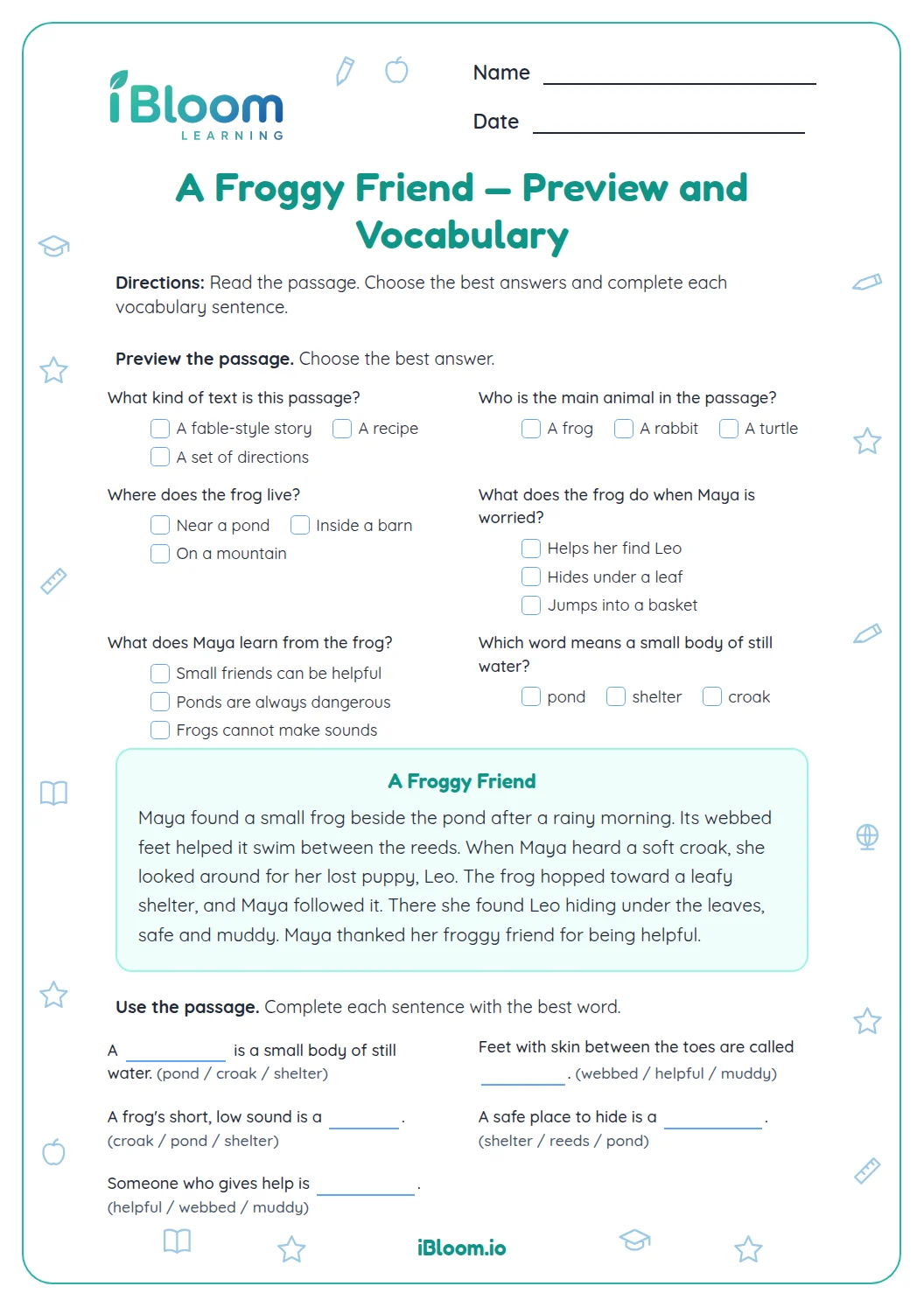
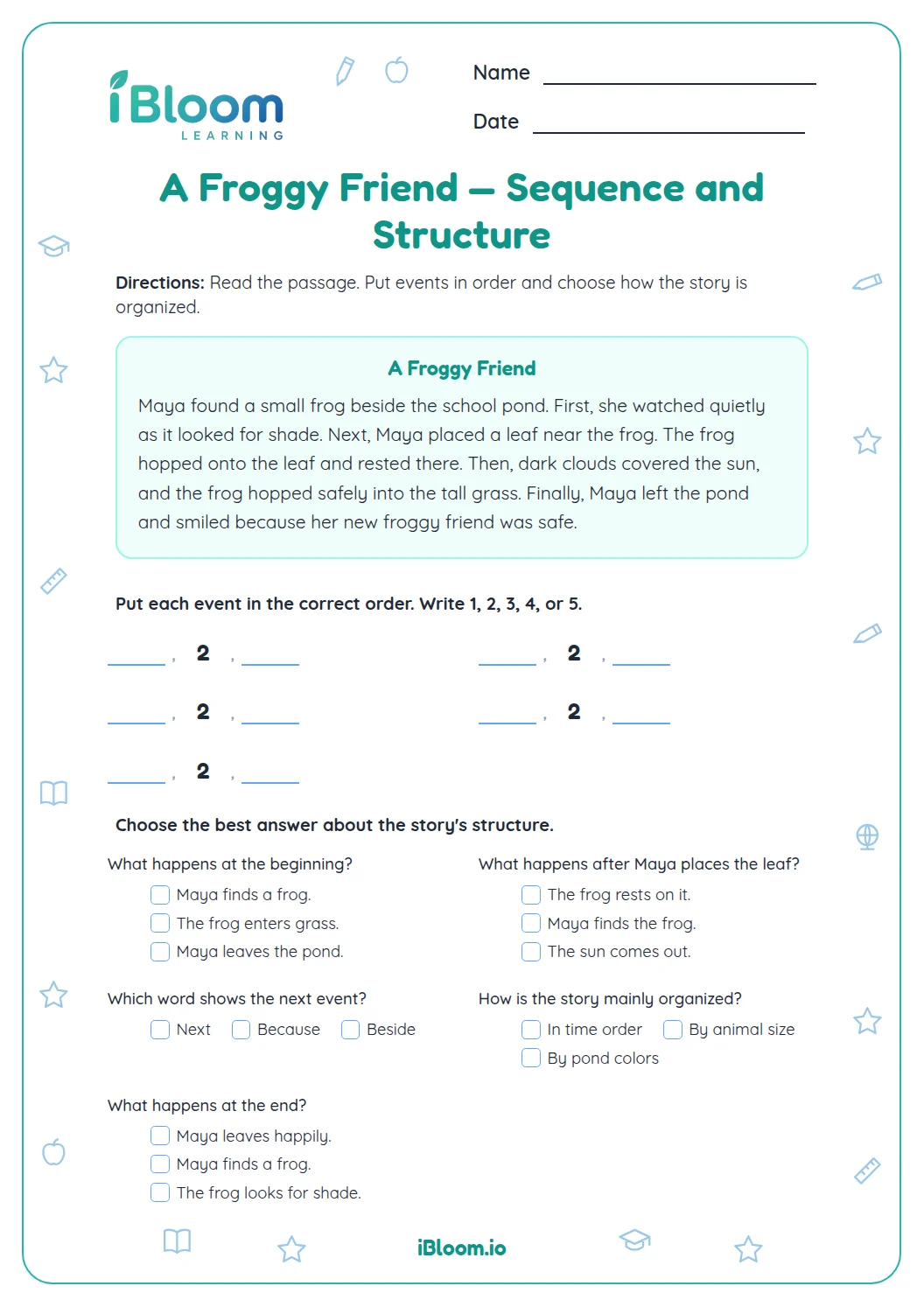
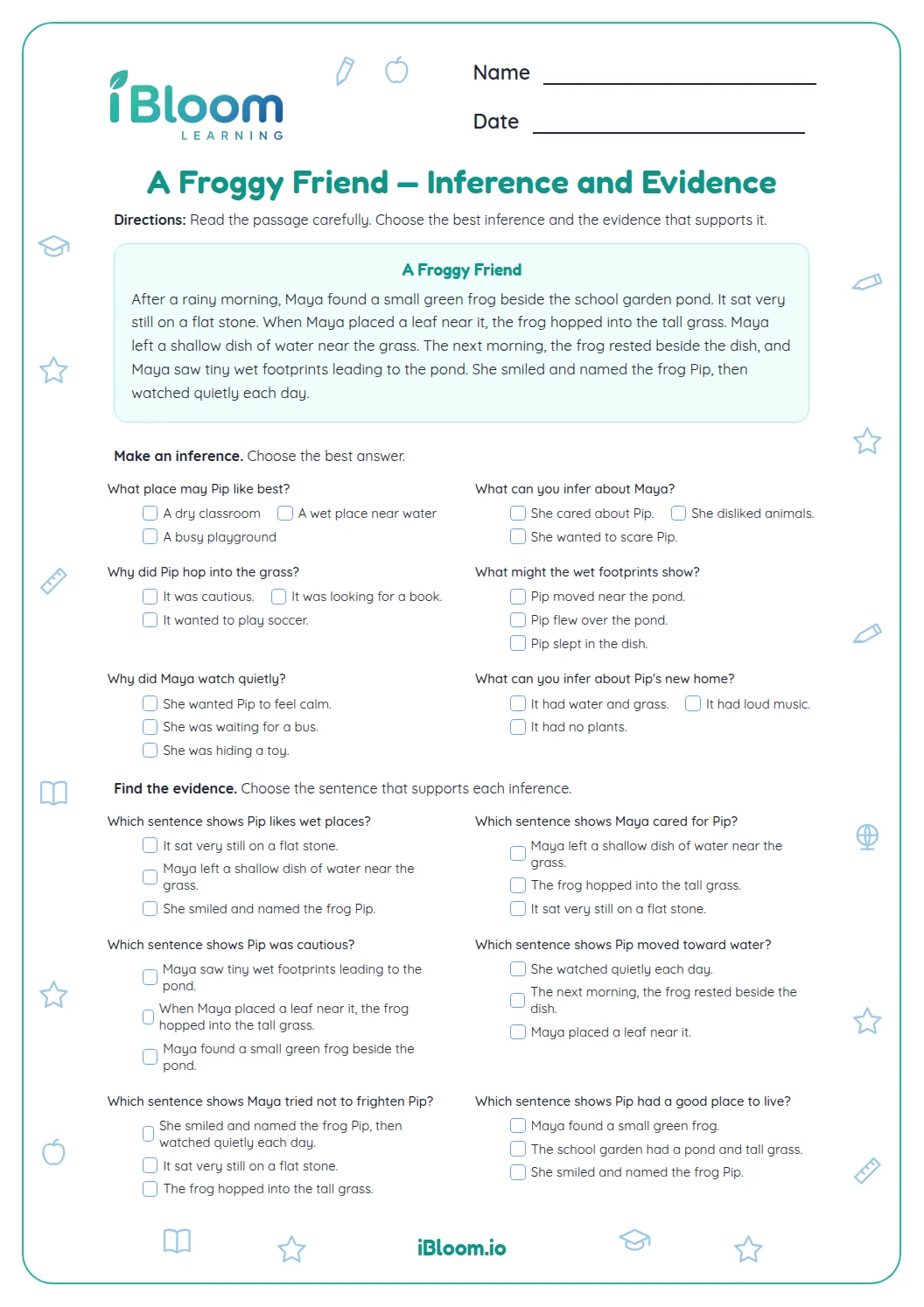
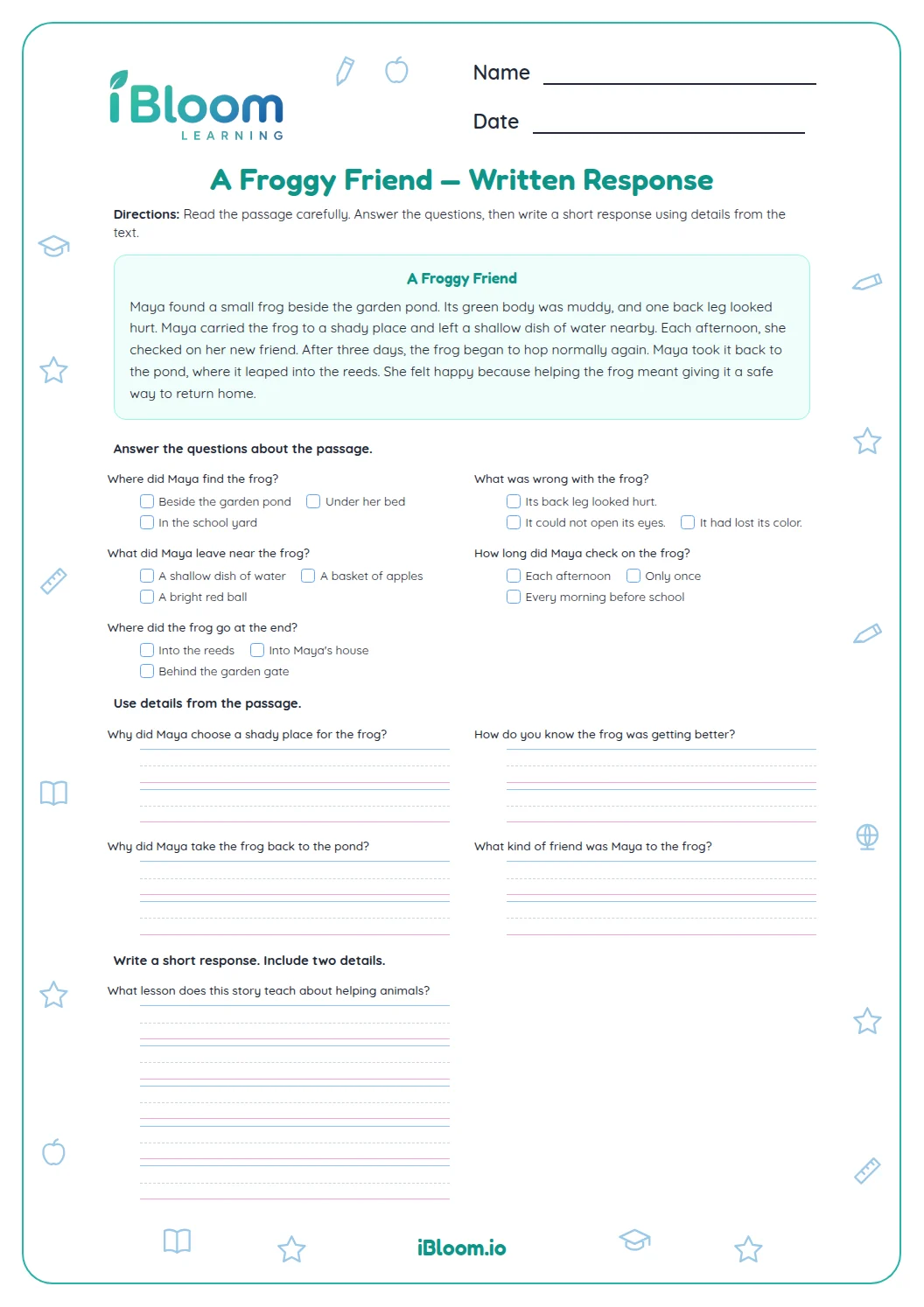
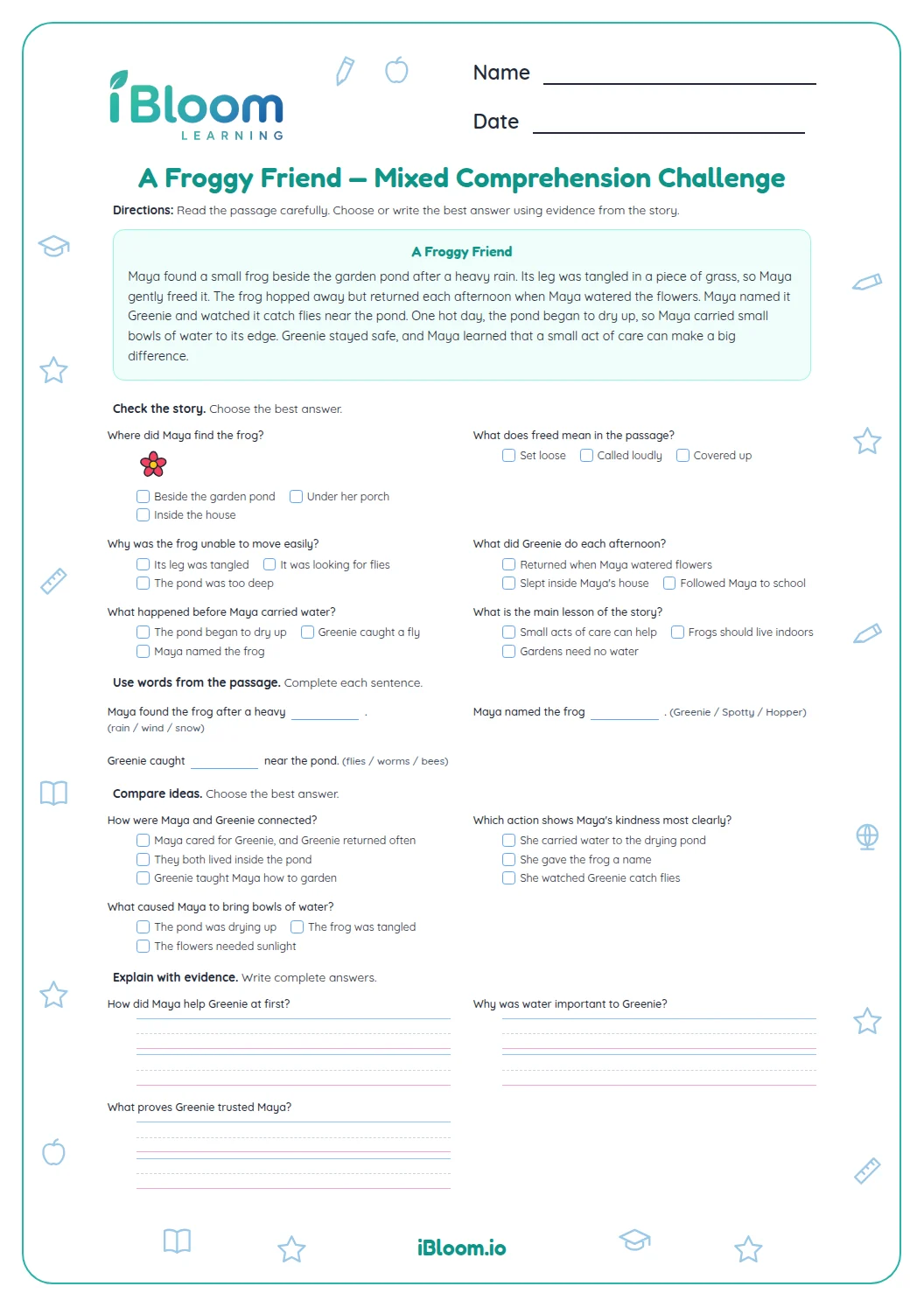
This free Grade 3 printable pairs an original 150-word fable with 15 questions. Readers identify the central message, retrieve details, infer how Maya and the frog become familiar, and use context to interpret a word. Two open responses invite complete explanations; the answer key includes concise answers and sample responses.
Aligned to 3.RL.2
How do readers find the main idea?
The main idea covers the whole fable, while a detail names one event. Maya frees a frog caught under a twig, then lets it live outdoors. A strong main-idea choice accounts for both her kind action and her respect for the frog’s home.
How can details support an inference?
Look at what Maya does and what the frog does next. The frog returns each afternoon, and Maya steps gently near the pond. Those details suggest it has become comfortable nearby.
How to use this worksheet
- 1Read the fable once to follow Maya’s actions.
- 2Read each question and return to the relevant sentence.
- 3For the lesson question, consider more than one event.
- 4Write a complete thought for the two open responses.
- 5Use the key to check facts and compare sample explanations.
Check the reading
The mistake
Choosing one event as the whole main idea.
The fix
Ask whether the choice explains the important events across the fable.
The mistake
Guessing a word meaning without its sentence.
The fix
Reread the sentence and nearby clues.
The mistake
Inferring that Maya keeps the frog.
The fix
Check what she does after the frog is free.
Common Core alignment
This worksheet practices the following Common Core skill.
Identify a fable’s central message and explain it with key details.
On this sheet: Identify a fable’s central message and explain it with key details. is practiced in the worksheet.
Show the official wordingHide the official wording
Recount stories, including fables, folktales, and myths from diverse cultures; determine the central message, lesson, or moral and explain how it is conveyed through key details in the text.
What to practice next
Further reading
Questions parents and teachers ask
How many questions are on the worksheet?
There are 15 questions about Maya and the frog. They ask readers to identify the main idea, find story details, infer from the frog’s return, and interpret a word in context. Ask the learner to point to a sentence before checking the answer key.
What is the fable about?
Maya frees a frog caught under a fallen twig beside a garden pond. The frog returns on later afternoons, and Maya learns that a kind act can create a friendship while respecting a wild animal’s home. Readers can find the clues in Maya’s actions and the story events.
Does the printable include an answer key?
Yes. The key gives selected answers and sample responses for the two written questions. Children can compare their explanation with the sample while using their own words and relevant details from the fable. Readers can find the clues in Maya’s actions and the story events.
How can a child identify the main idea?
Look for an idea that covers the important events across the whole fable. A single detail, such as where Maya found the frog, is too narrow to explain what the story is mostly about. Readers can find the clues in Maya’s actions and the story events.
What does the lesson question ask?
It asks readers to connect Maya’s kind action with the frog’s later visits. Reread what she does to free it and how she lets it live outdoors near the pond. Readers can find the clues in Maya’s actions and the story events.