

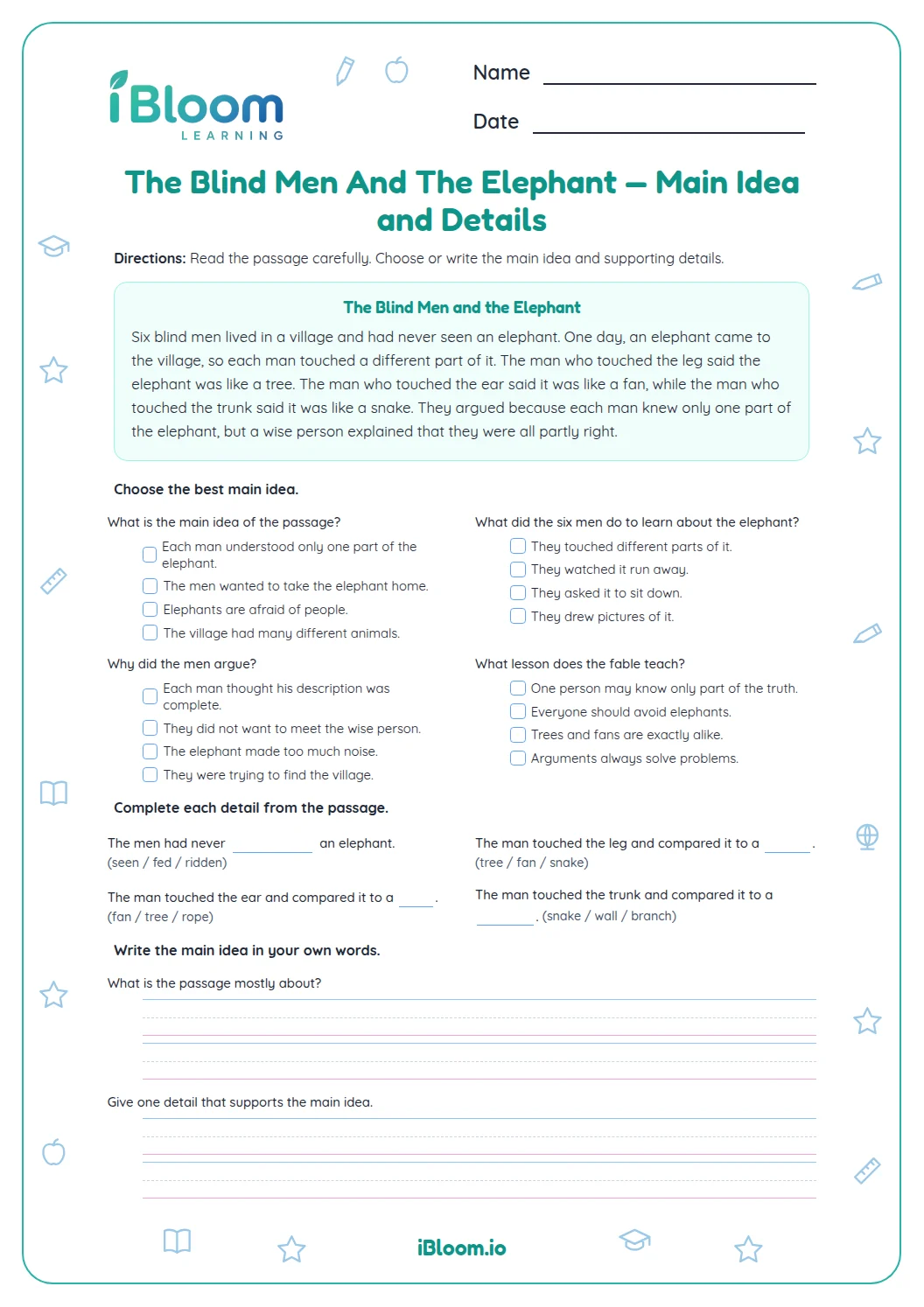
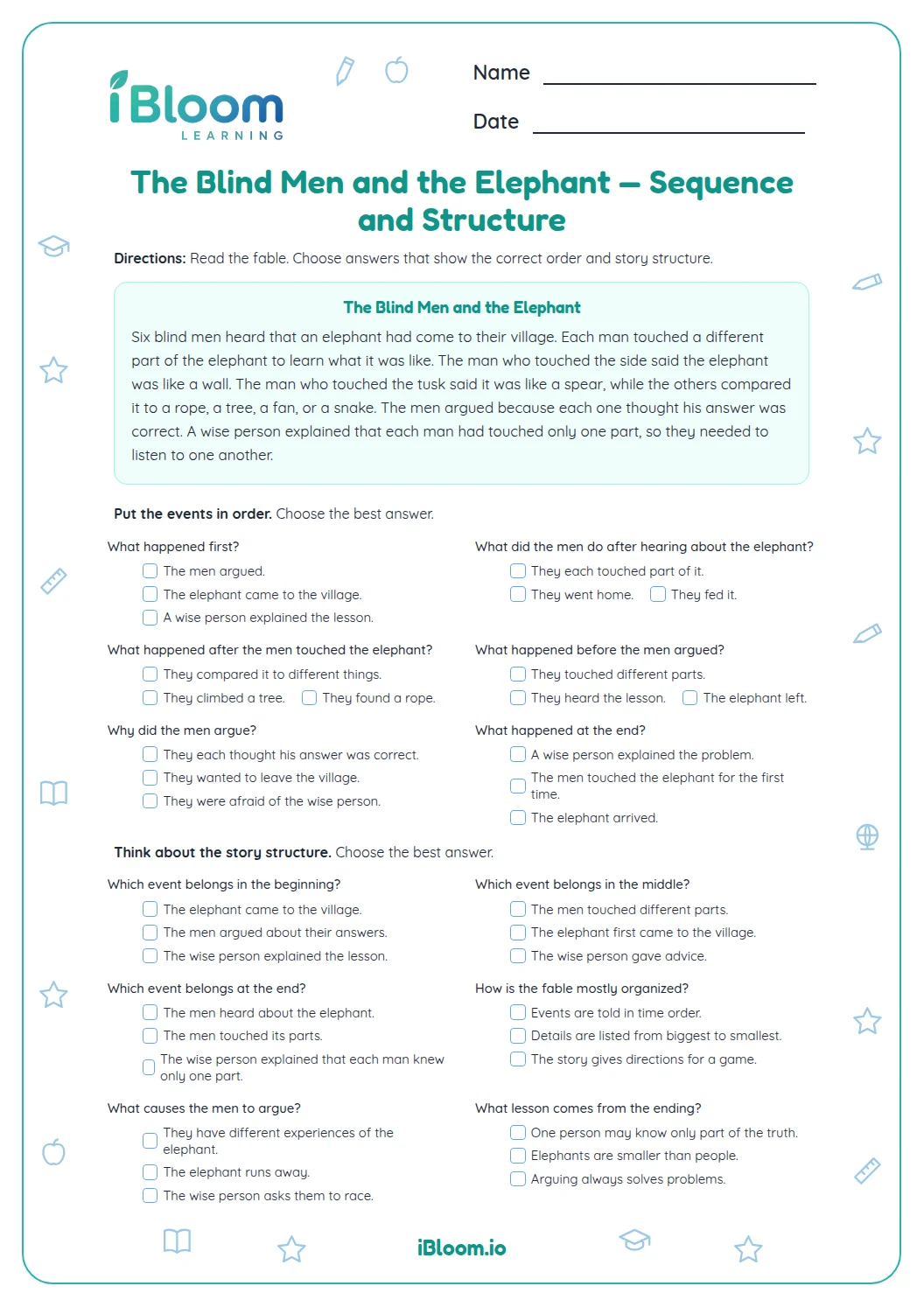
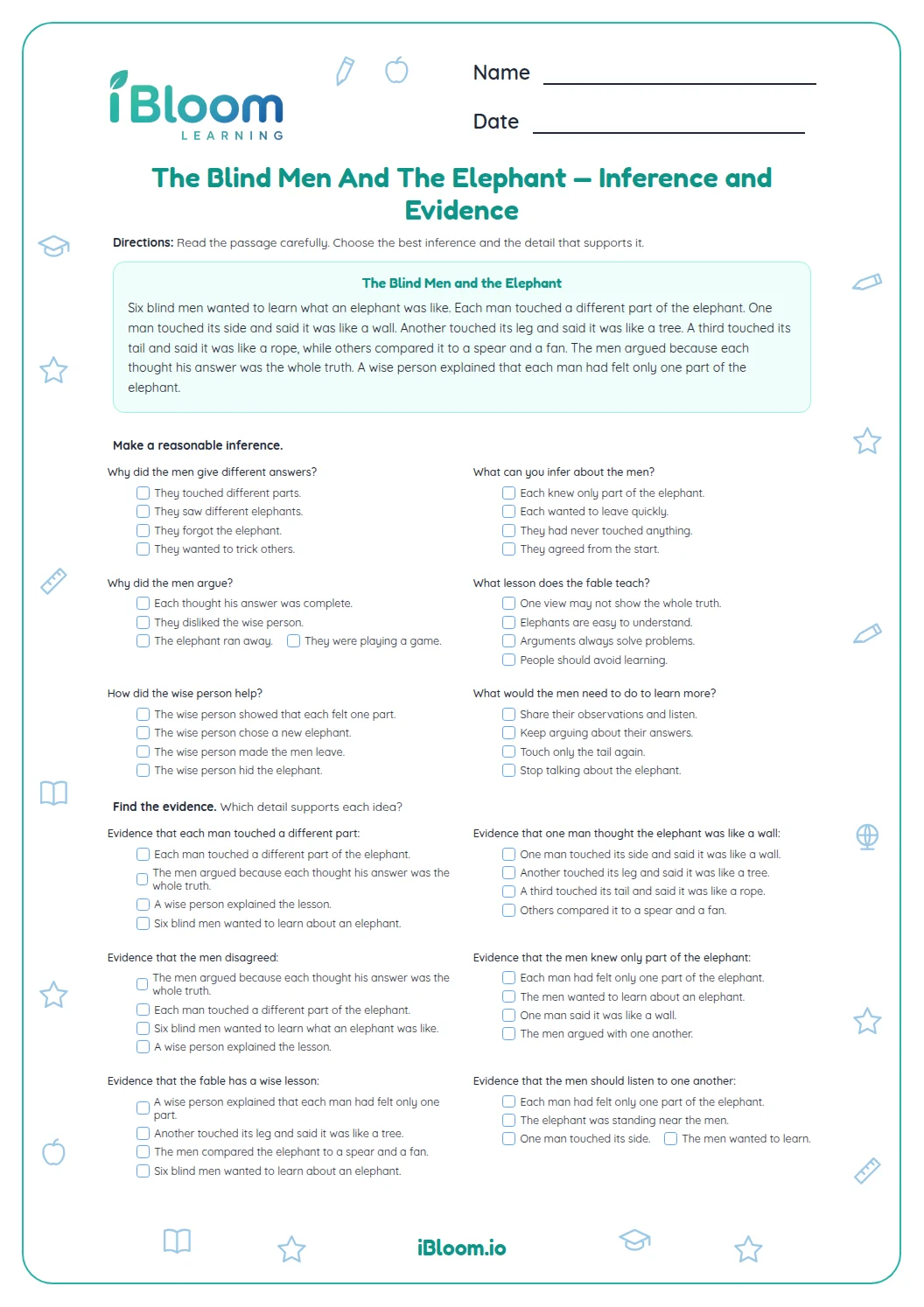
About this worksheet
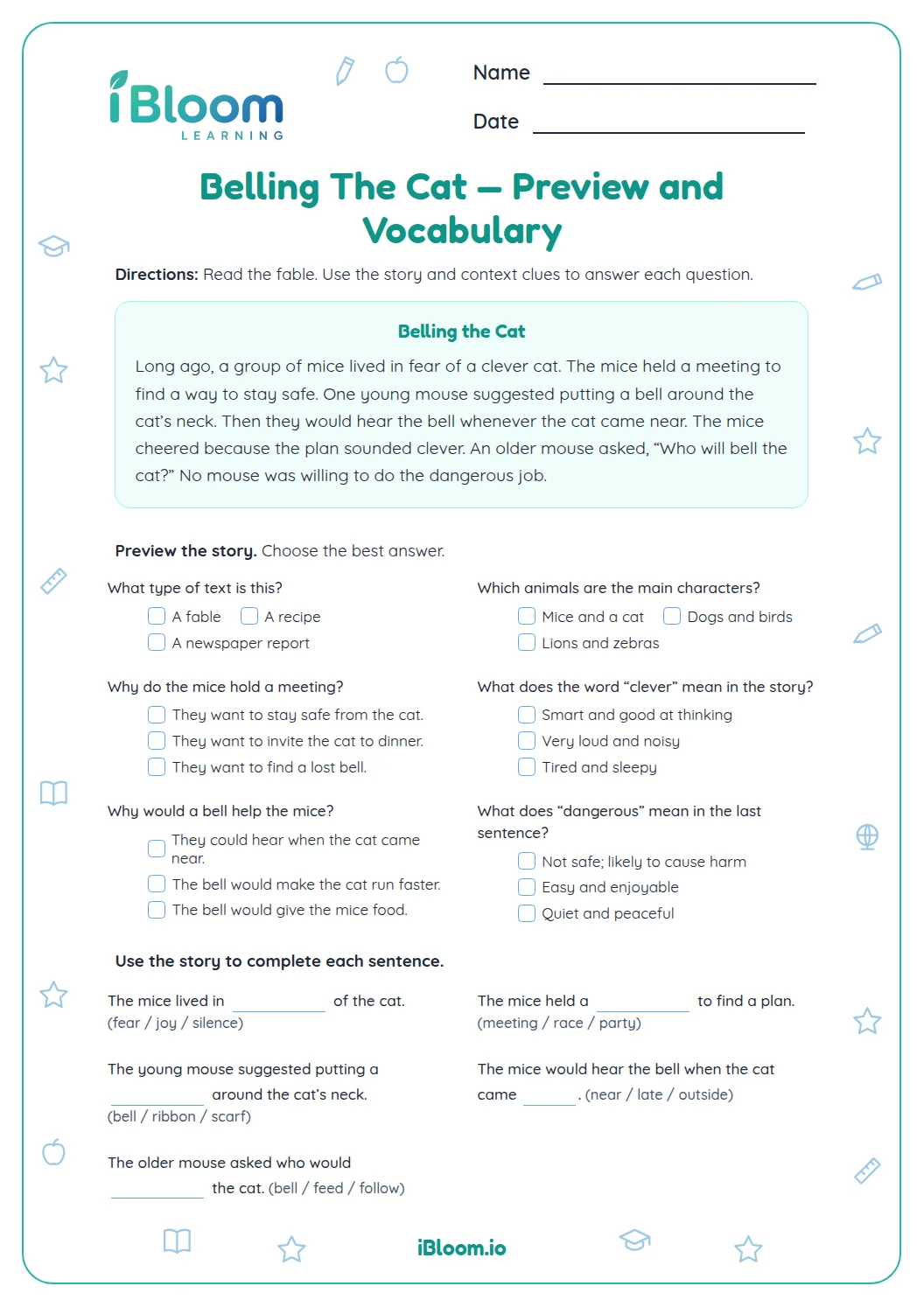
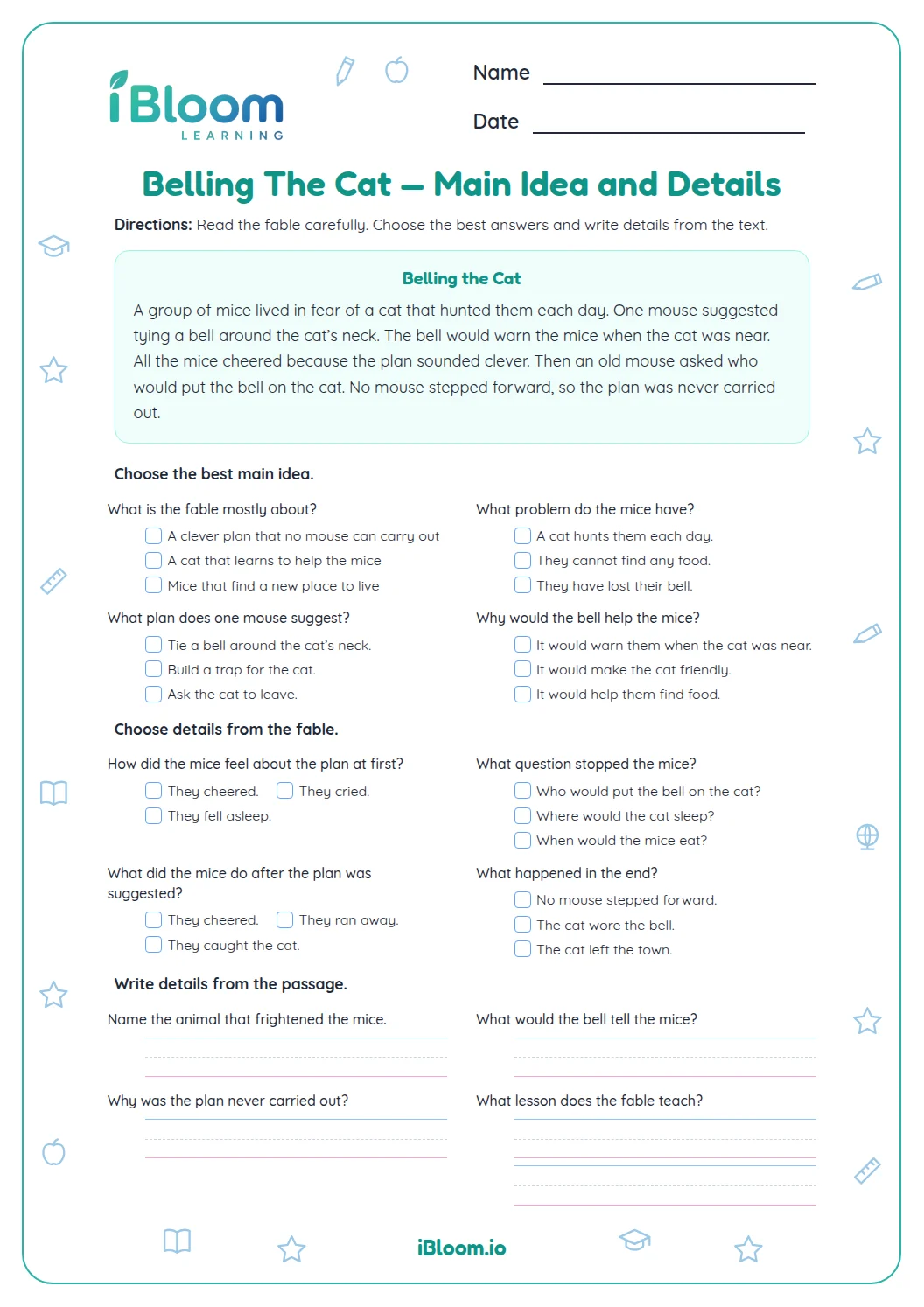
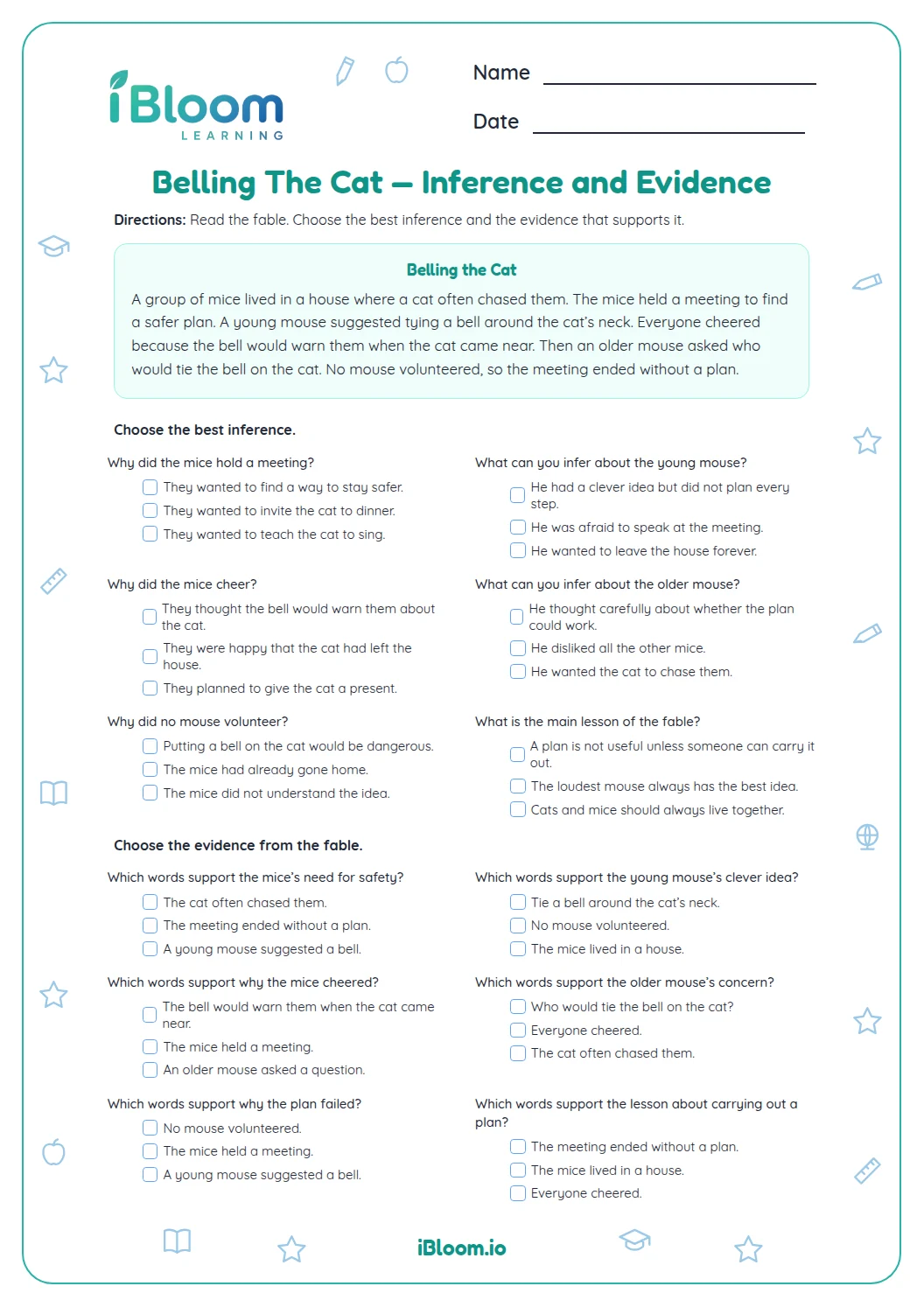
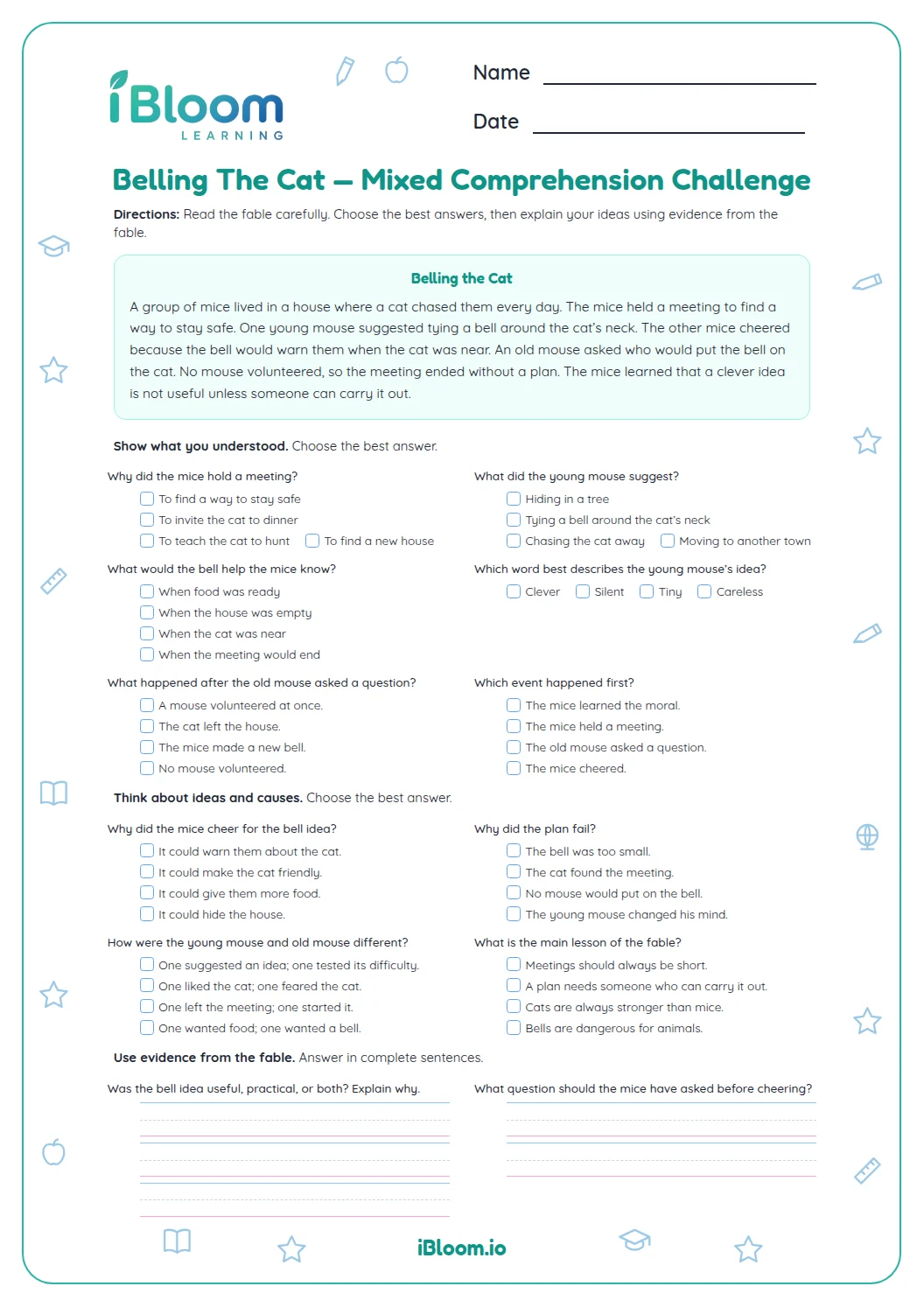
This free Grade 3 worksheet retells Belling the Cat and asks children to explain its problem, proposed solution and lesson. The mice want a warning when the cat approaches, but their clever bell plan has an overlooked danger. Part A contains the fable. Part B has six short detail questions; Part C has four sentence responses about evidence, the ending and the moral. The work practices Common Core RL.3.1 and RL.3.2. A separate answer key offers sample responses for adults checking a child’s ideas and use of the text.
Aligned to RL.3.1 and RL.3.2
Which details should children collect first?
Part B asks about the threat, the bell, its warning sound, the ribbon, the cat’s quiet movement and the mice’s planned escape. These six short answers give children concrete details to use in longer responses.
How can a response explain the problem with the plan?
A useful explanation connects the old mouse’s question with the silence that follows. The plan requires a mouse to approach the cat, and nobody volunteers to do that dangerous job.
- 1Question: Why does the old mouse ask who will tie on the bell?
- 2Sample: She wants them to see that someone must get dangerously close to the cat.
- 3Support: After her question, no mouse answers.
What lesson does the ending support?
The bell remains on the shelf. That final detail shows the difference between suggesting an idea and finding a way to carry it out. Children can express the lesson in their own words, such as “Think about how a plan will work before celebrating it.”
Question 10 asks for both a lesson and a supporting detail. Check those two pieces separately so a correct moral is connected to this particular fable.
How to work through the sheet
- 1Read the fable once for the events and again for the plan’s problem.
- 2Answer the six detail questions with short phrases.
- 3Underline a useful detail before each longer response.
- 4Write the lesson and connect it to the unused bell or missing volunteer.
- 5Compare each response with the key, accepting other accurate wording.
Mistakes to notice and how to help
The mistake
Writing that the cat wears the bell at the end.
The fix
Reread the last sentence: the bell stays on the shelf.
The mistake
Saying the old mouse dislikes every idea.
The fix
Use her actual question: she asks who will do the dangerous job.
The mistake
Giving a moral without story support.
The fix
Add a detail about the silence, the ribbon or the bell remaining unused.
Common Core alignment
Support written answers with details from Belling the Cat.
On this sheet: Written responses name actions and dialogue from the fable.
Show the official wordingHide the official wording
Ask and answer questions to demonstrate understanding of a text, referring explicitly to the text as the basis for the answers.
Explain the fable’s lesson using the mice’s plan and its problem.
On this sheet: Children retell the ending and explain how the missing volunteer reveals the moral.
Show the official wordingHide the official wording
Recount stories, including fables, folktales, and myths from diverse cultures; determine the central message, lesson, or moral and explain how it is conveyed through key details in the text.
What to practice next
Make more practice
Further reading
Questions parents and teachers ask
Is the full fable included?
Yes, the worksheet includes a complete retelling of Belling the Cat. Children can read the passage and answer every question using only the printed sheet. The story keeps the central problem, the young mouse’s bell idea, the old mouse’s question and the plan’s unresolved ending.
How much should children write?
Part B needs only a word or short phrase for each of six questions. Part C asks for complete sentences on four prompts. One clear sentence can answer most prompts; the final response should include both a lesson and a detail that supports it.
What is a suitable moral for this version?
A suitable moral is to think about how a plan can be carried out before celebrating it. The mice like the warning bell, but nobody agrees to approach the cat. Accept another clearly worded lesson if the child supports it with details from this ending.
Are the answers on the key the only acceptable wording?
No, the longer responses are samples that show accurate ideas and relevant evidence. A child might mention the mice’s silence or the young mouse looking at his paws to explain fear. Both details fit the text, so check the meaning rather than requiring identical sentences.
How can I help a child who gives very general answers?
Ask the child to point to one sentence in the fable before writing. For question 8, reread the silence and the young mouse looking at his paws. Then ask what those actions suggest. That gives the response a specific detail and a clear explanation.