



About this worksheet
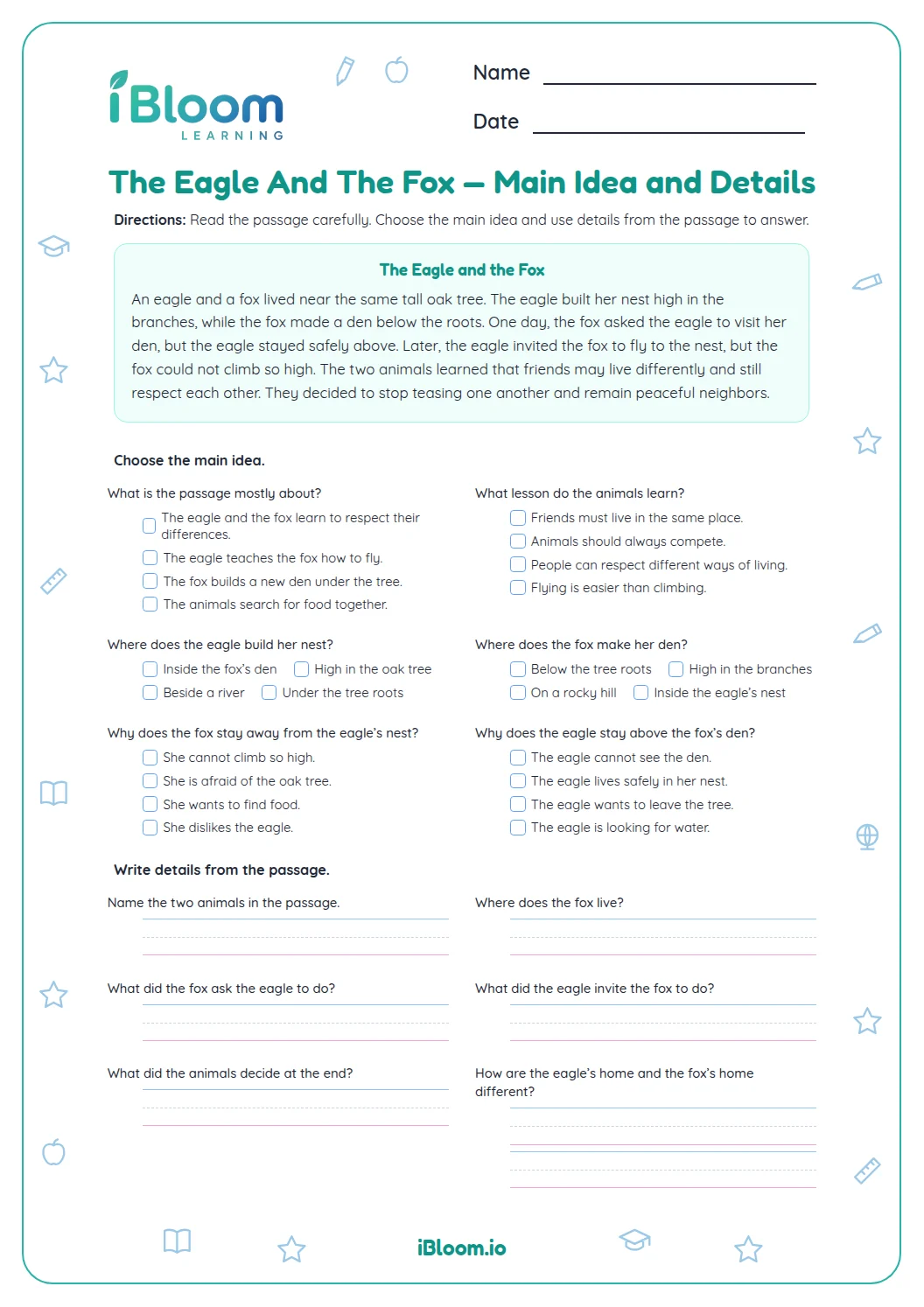
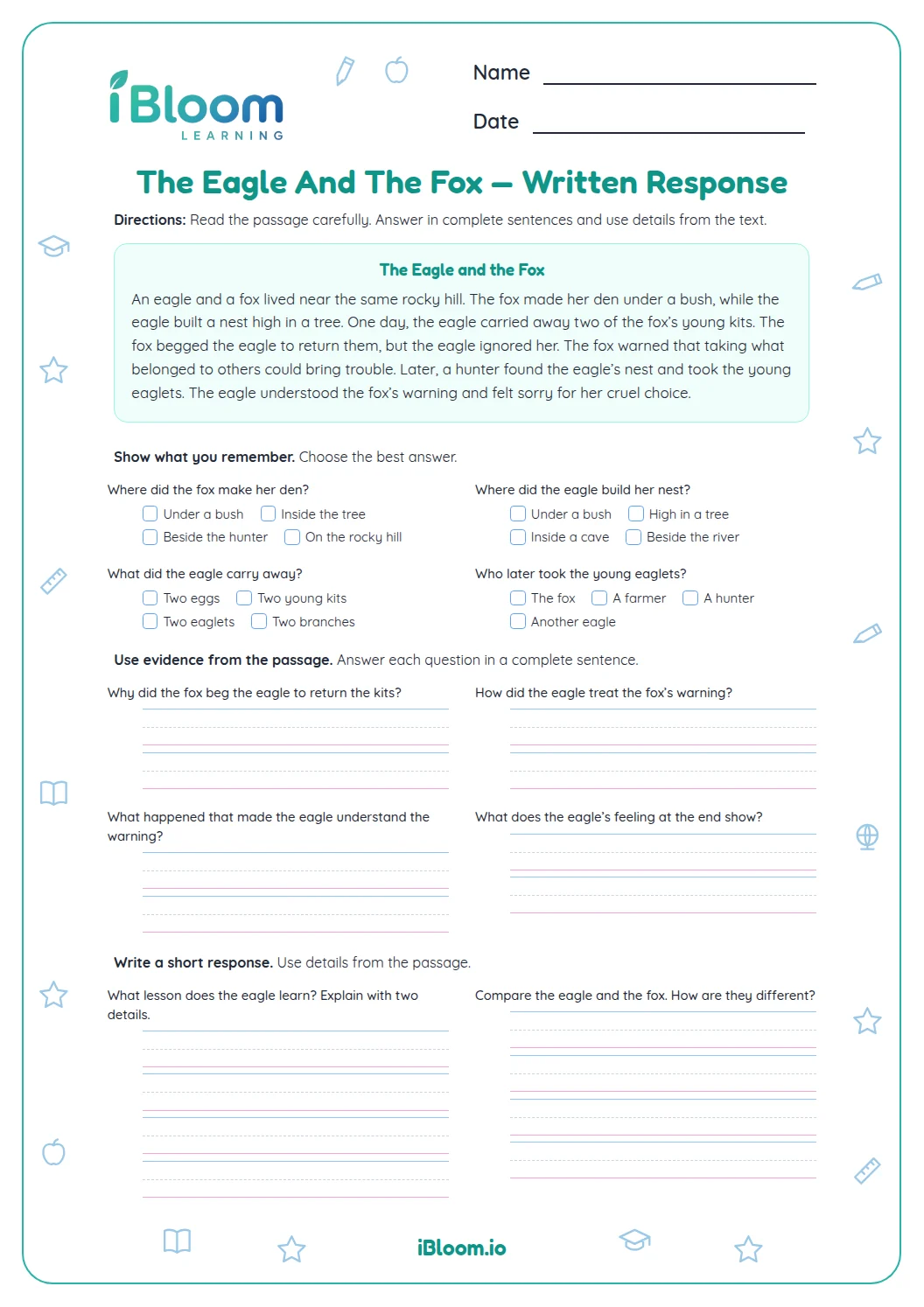
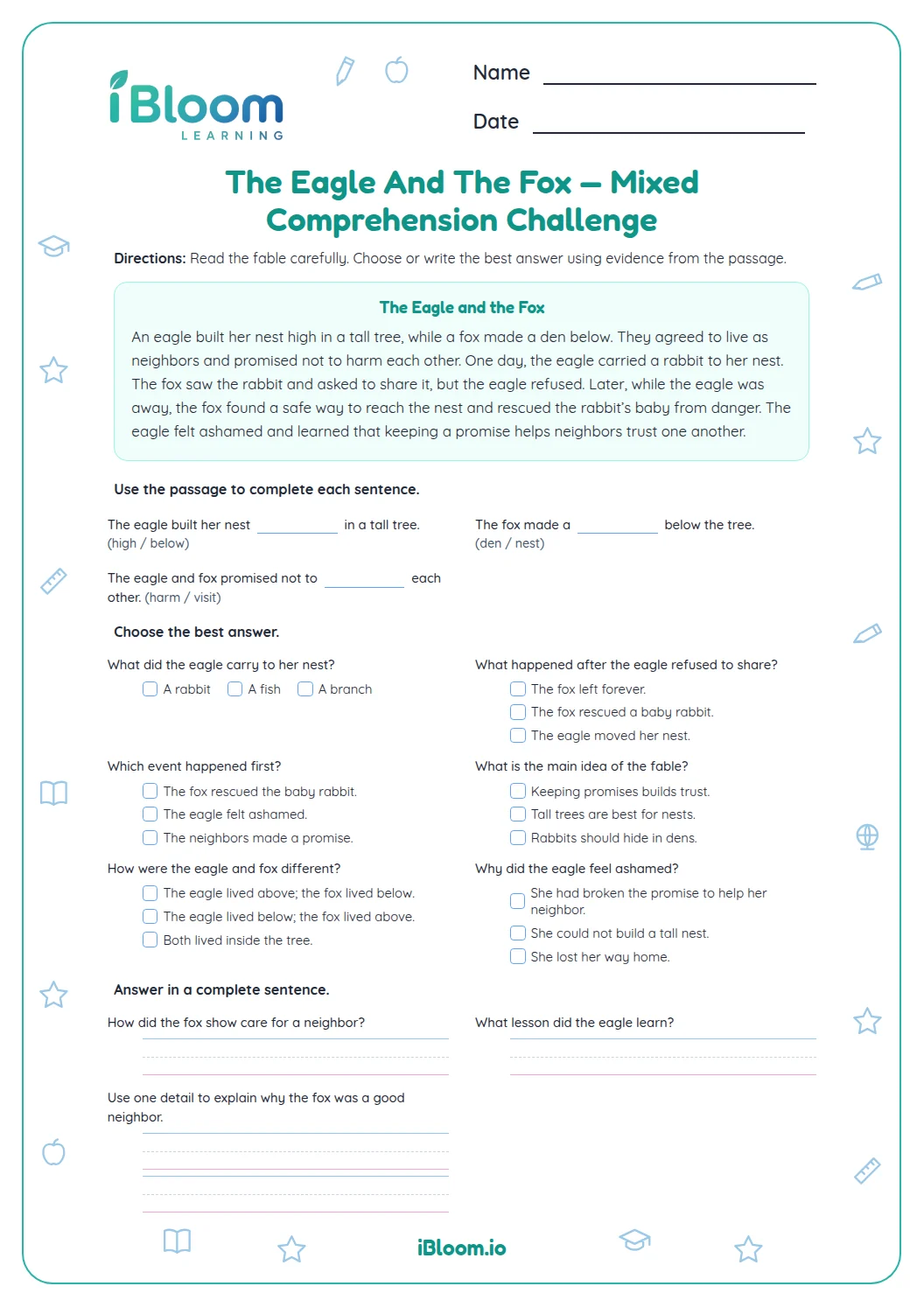
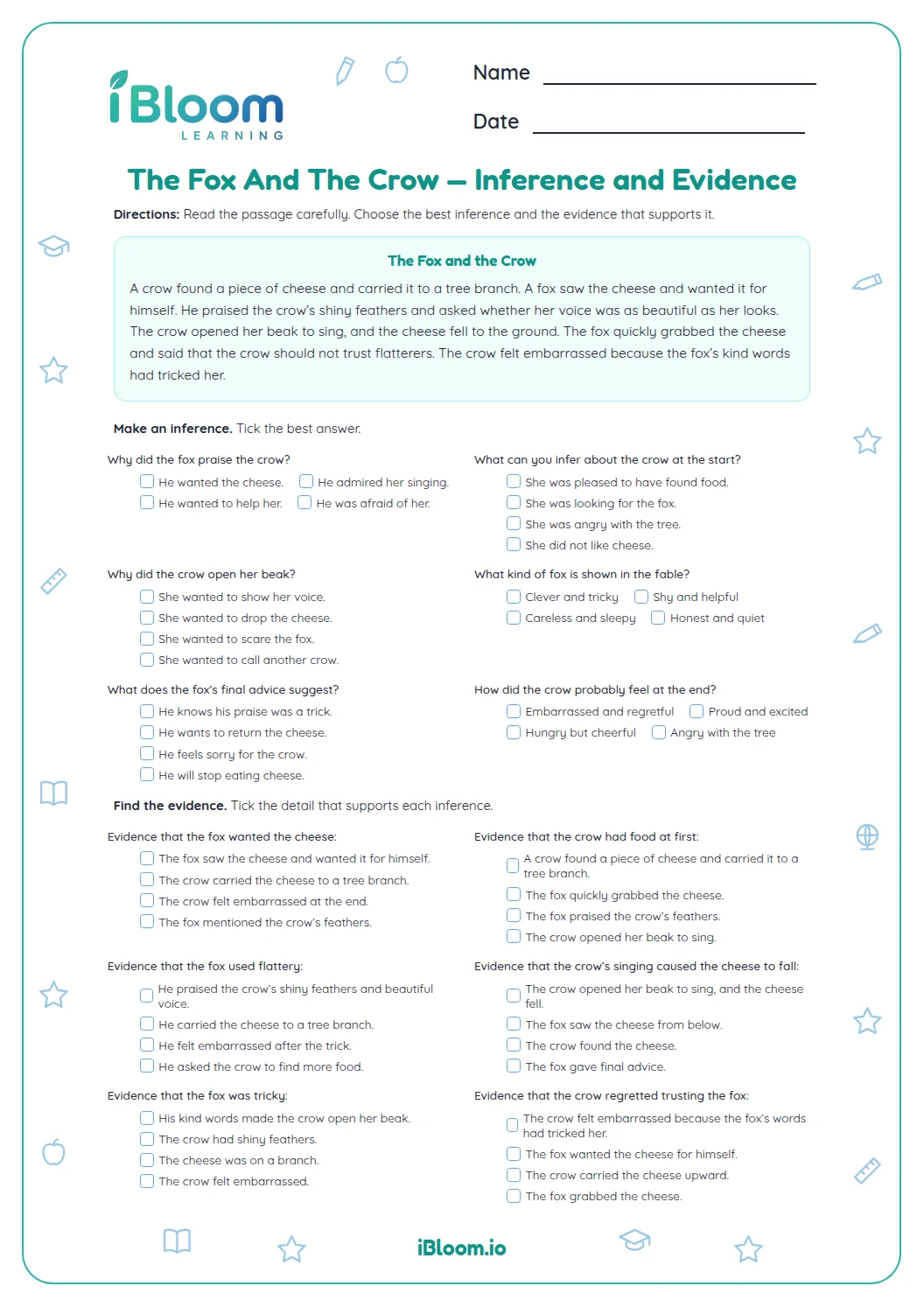
This free Grade 3 reading worksheet pairs an original fable with practice making inferences and pointing to evidence. Students read about Fox and Eagle, neighbors who help one another from their homes in an oak tree. Part B asks what readers can infer from clues; Part C has students find details stated in the text and support inferences with evidence. The 14 questions build from choosing a supported idea to explaining what story details suggest. A separate answer key includes concise sample responses. The work supports CCSS RL.3.1, which asks students to refer explicitly to a text when answering questions.
Aligned to RL.3.1
What happens in the fable?
Fox and Eagle share an oak tree but live at different heights. Fox protects an eaglet in trouble; Eagle later warns Fox and other animals about a hunter. Their berries and feathers become small signs of friendship.
The original passage has 178 words. Children can reread it while answering; noticing a detail again is part of building a sound inference.
How can a reader infer what a character feels?
An inference combines a clue in the story with what the reader knows. The story may not say “Eagle felt thankful,” but Eagle leaves feathers near Fox’s den after Fox rescues the eaglet. Those actions support an idea about Eagle’s feelings.
Part B begins with choices so students can practice weighing a likely answer against other possibilities. The best answer explains more of the clues and does not add events the story never gives.
- 1Question 2 asks how Eagle may feel after the rescue.
- 2Clue: Fox holds the eaglet safely until Eagle returns.
- 3Inference: Eagle likely feels thankful to Fox.
What counts as text evidence?
Text evidence is a word, action or event the author actually includes. Part C asks students to find details such as what Fox heard or what Eagle did when a hunter crossed the stream. Keep each answer close to the story instead of substituting a guess.
Part D moves from locating a detail to connecting it with an inference. A useful frame is “I infer ___ because the story says ___.”
How can students check whether an inference fits?
Reread the sentence or paragraph that contains the clue. Then ask whether that detail supports the inference directly. If several ideas seem possible, choose the one that best matches the character’s actions and the ending.
The key gives sample answers for written items. Children may use different words and still be right when their inference and supporting clue fit the fable.
How to use the worksheet
- 1Read the fable once for the main events and characters.
- 2Reread the relevant paragraph when a question asks why a character acted.
- 3In Part B, compare each choice with the story clues before selecting one.
- 4In Part C, answer with a specific detail the text states.
- 5In Part D, write both an inference and the clue that supports it.
- 6Use the answer key to discuss other responses that are supported by the passage.
Common inference and evidence mistakes
The mistake
Choosing a possibility that sounds reasonable but has no clue in the fable.
The fix
Point to an action or sentence that supports the idea before choosing it.
The mistake
Retelling an event when asked what it suggests about a character.
The fix
Add what the action may show, such as gratitude, worry or kindness.
The mistake
Giving an inference without naming its evidence in Part D.
The fix
Use “because” to connect the idea to a specific detail from the story.
Common Core alignment
This worksheet asks readers to answer questions about a literary text and refer to its details as evidence.
Answer questions about the fable and use details from it to explain an inference.
On this sheet: Parts B through D ask students to infer from the fable, find stated details and support written answers with evidence.
Show the official wordingHide the official wording
Ask and answer questions to demonstrate understanding of a text, referring explicitly to the text as the basis for the answers.
What to practice next
Further reading
Questions parents and teachers ask
What is an inference?
An inference is an idea a reader figures out by combining story clues with what the reader already knows. The fable does not directly say Eagle is grateful, but Eagle leaves feathers near Fox’s den after Fox protects the eaglet. Students use that action to support a reasonable idea about Eagle.
How many questions are on this worksheet?
There are 14 questions across three question parts after the fable. Part B has six multiple-choice inferences, Part C has four short answers using story details, and Part D has four written explanations connecting an inference to evidence. The answer key follows the three worksheet pages.
Should students use the passage while answering?
Yes. The questions ask students to return to the fable for clues and details. Rereading the paragraph about the eaglet or the winter feather can help a child check an answer and quote or restate the evidence accurately.
What makes a written answer complete?
A complete response gives a reasonable idea and connects it to a detail from the fable. For example, a student might say Fox is kind because Fox saves the eaglet. The answer key offers sample wording, but another response can work when the story supports it.
Can a child give a different answer from the key?
Yes, especially on the four written questions. The key shows one sample response for each, not the only acceptable wording. Check that the child names a reasonable inference and connects it to an accurate action or detail from the passage.
What should we practice next?
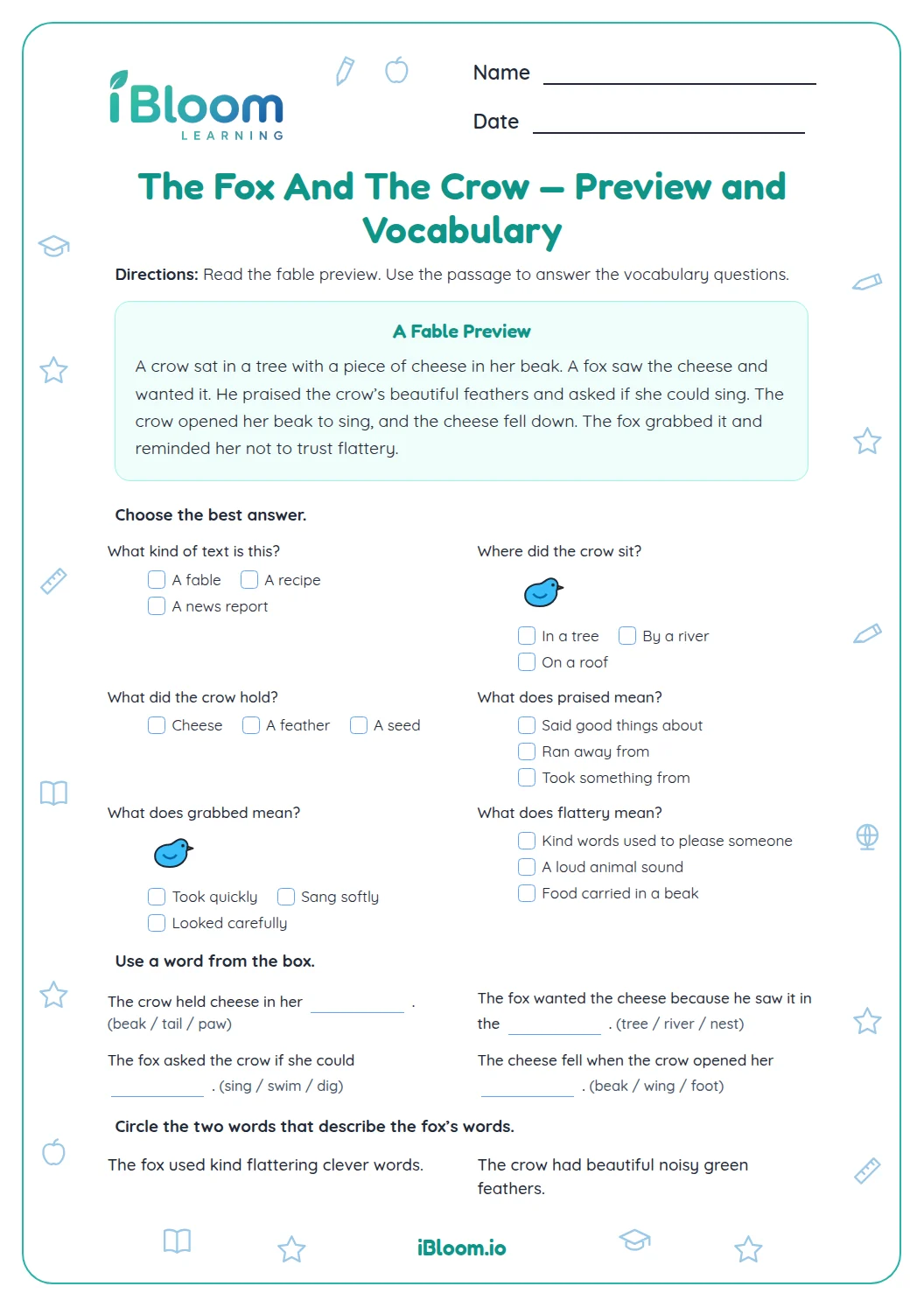
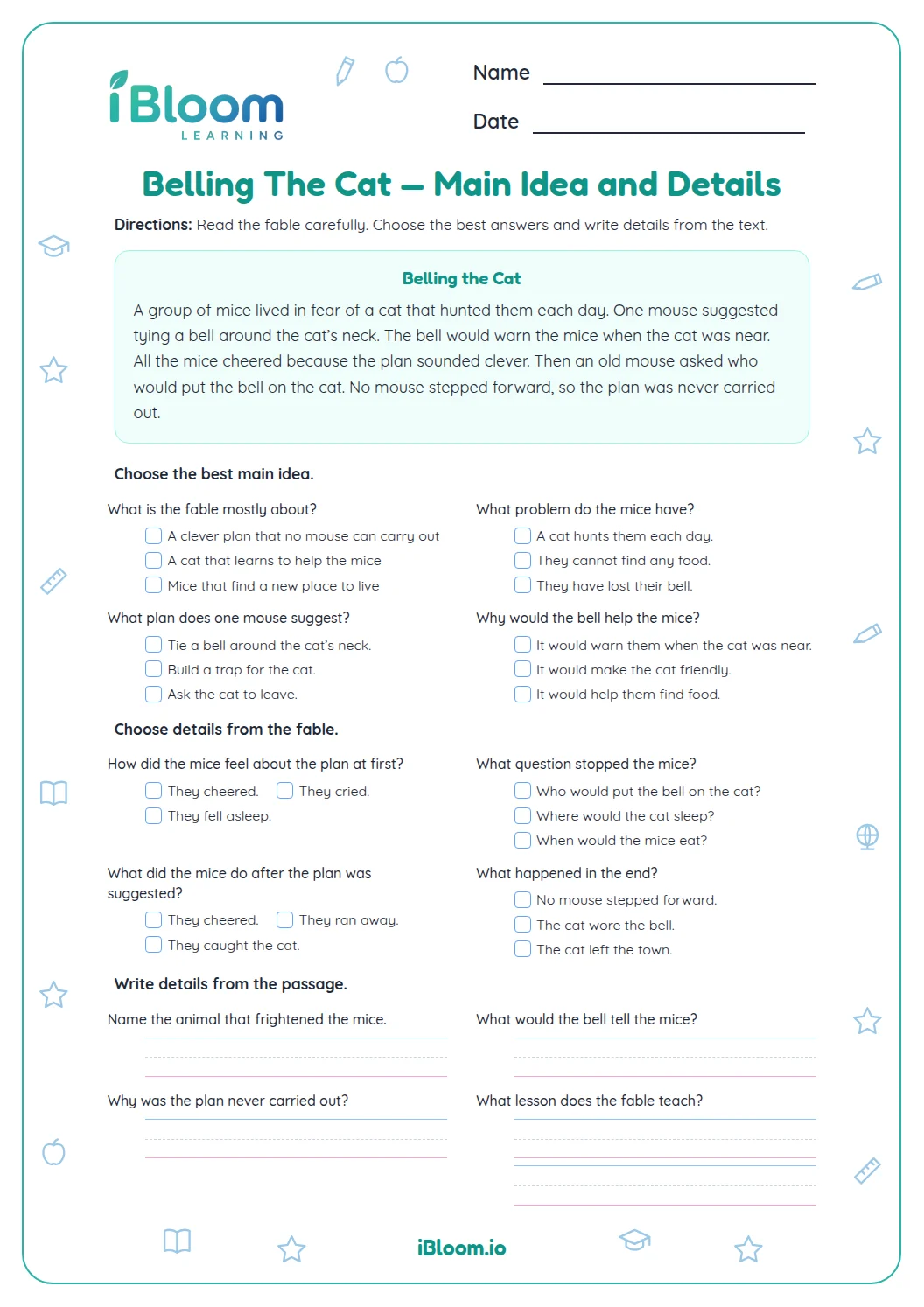
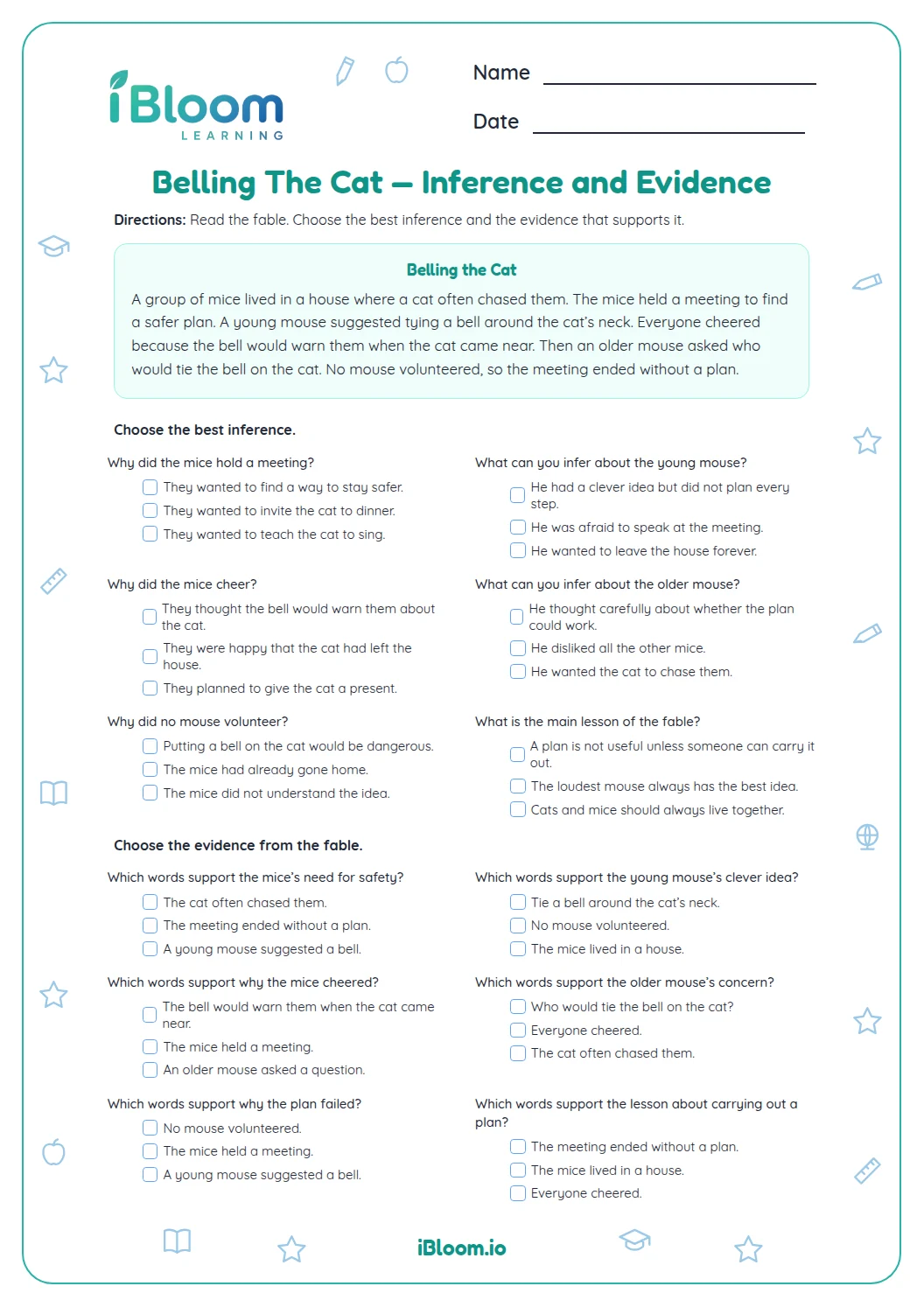
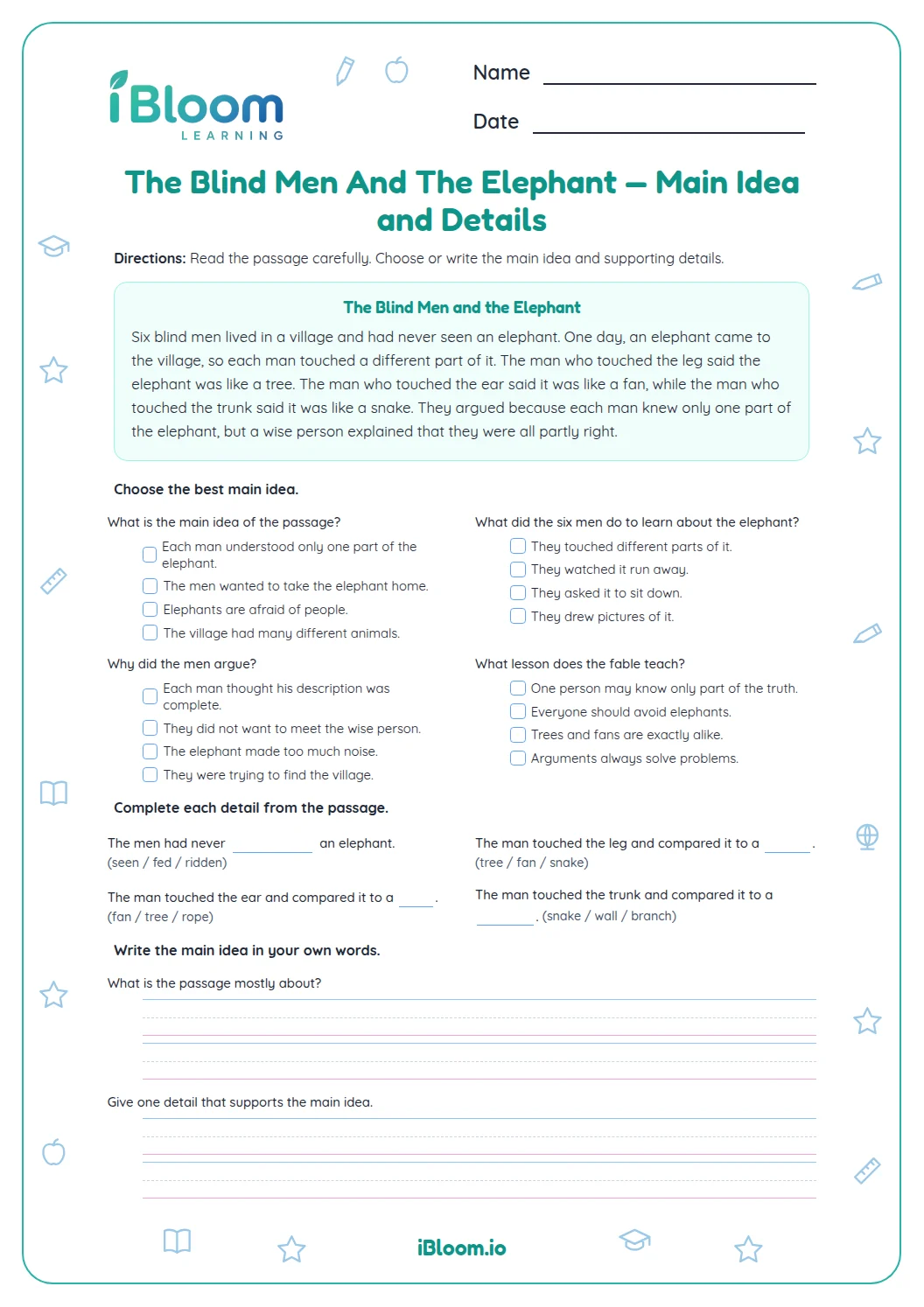
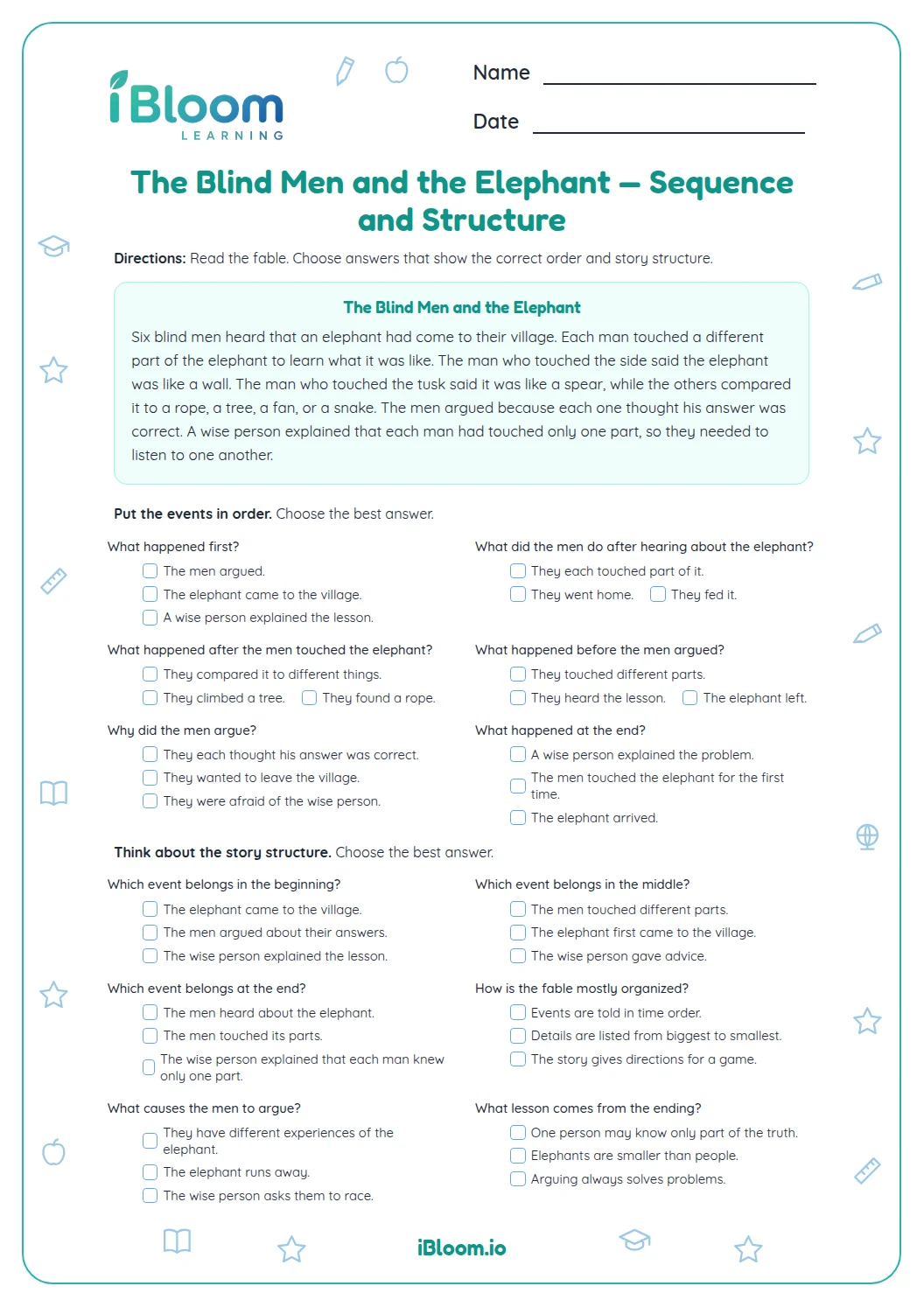
Try another Grade 3 fable and ask what a character’s actions suggest. The Fox and the Crow worksheet offers a related story, while Belling the Cat and The Blind Men and the Elephant provide more opportunities to explain ideas using details from a literary text.