

About this worksheet
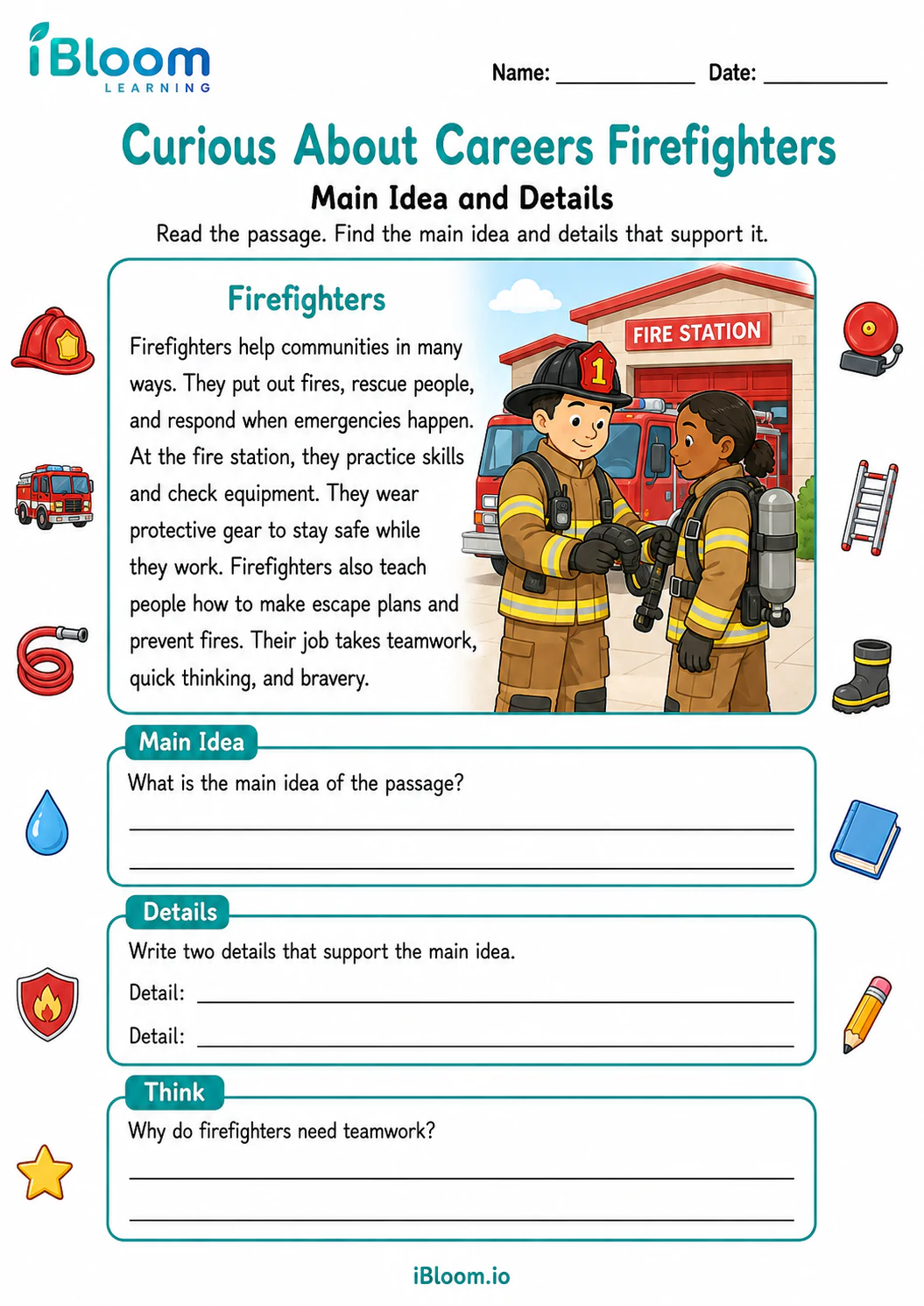
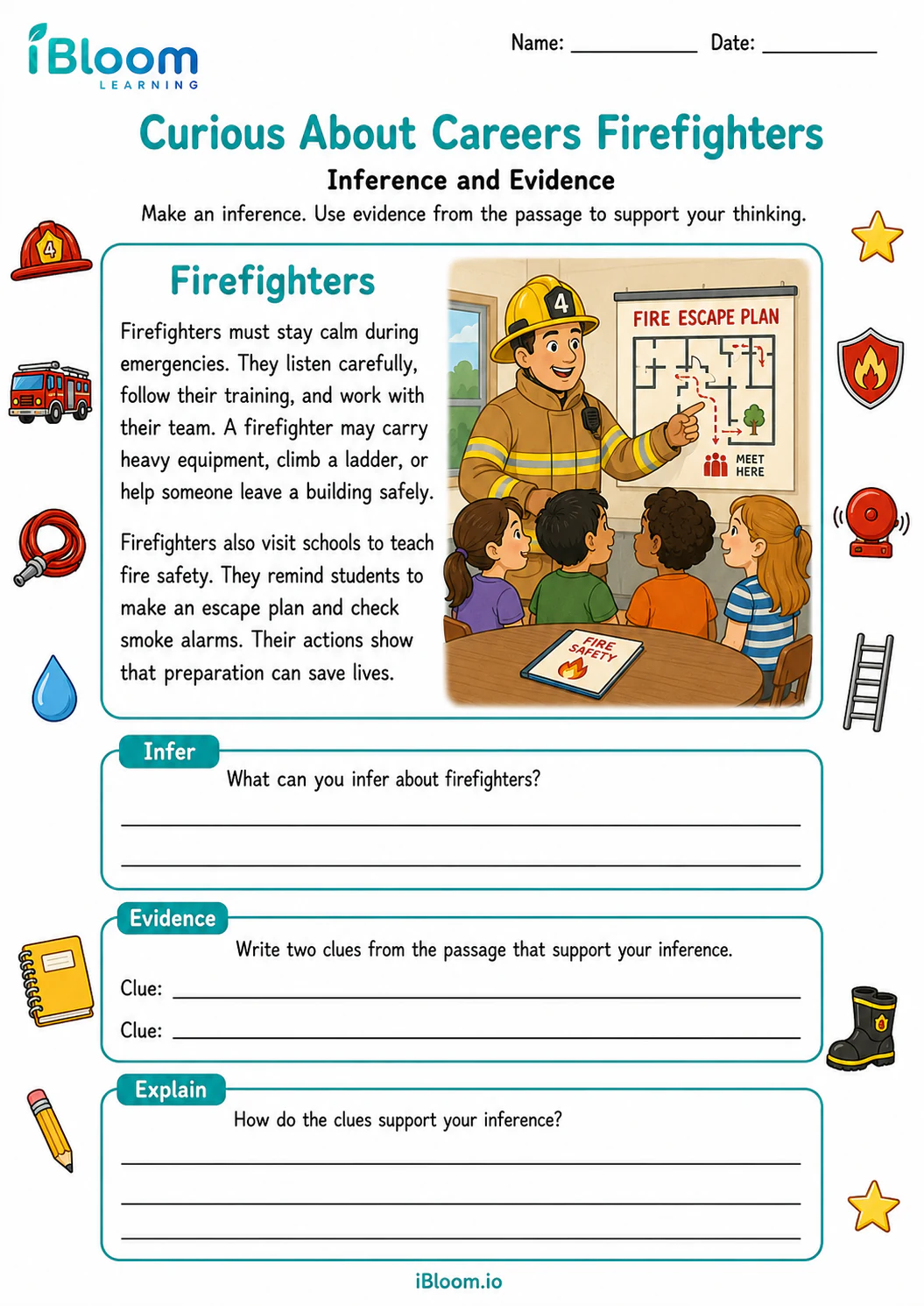
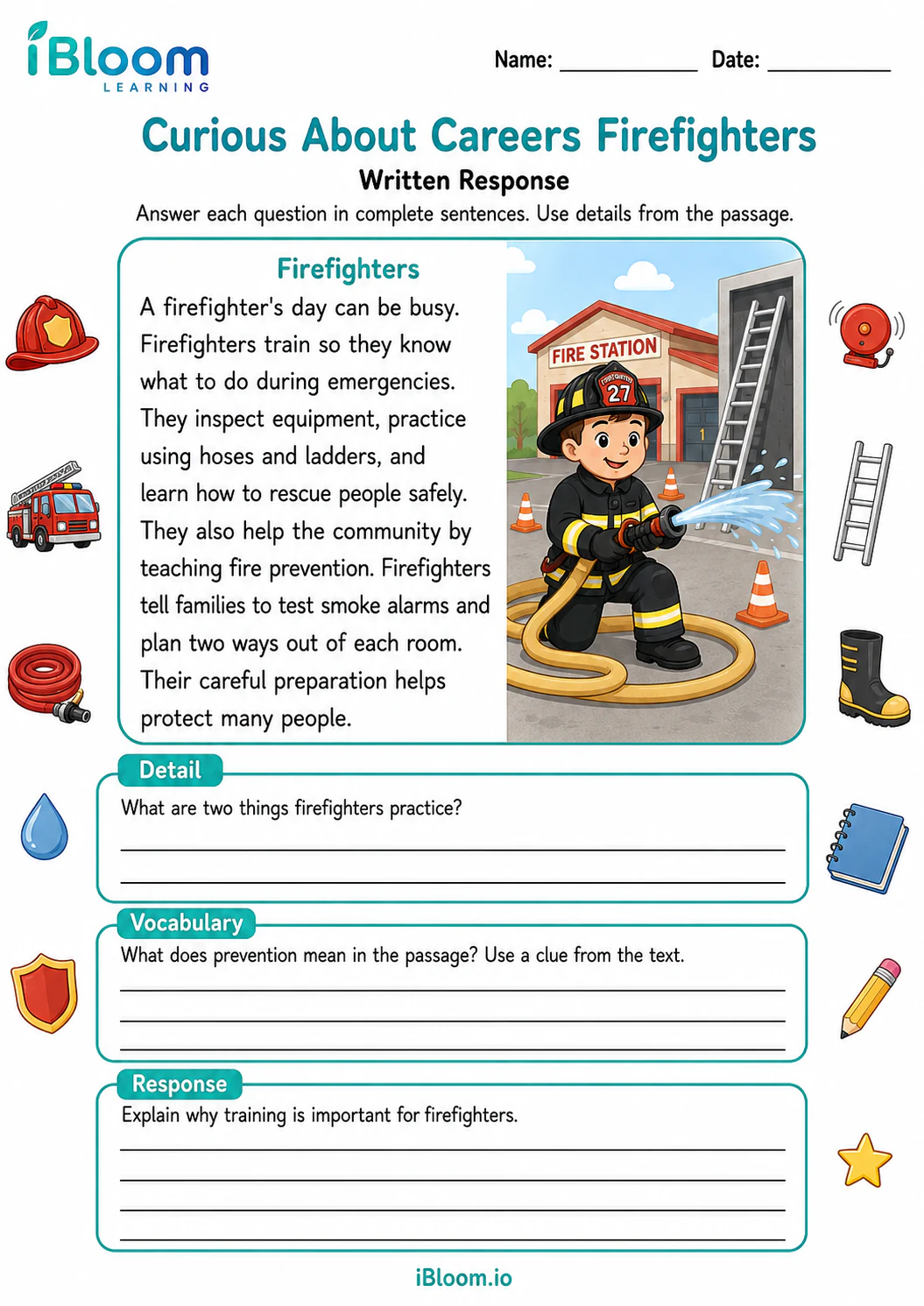
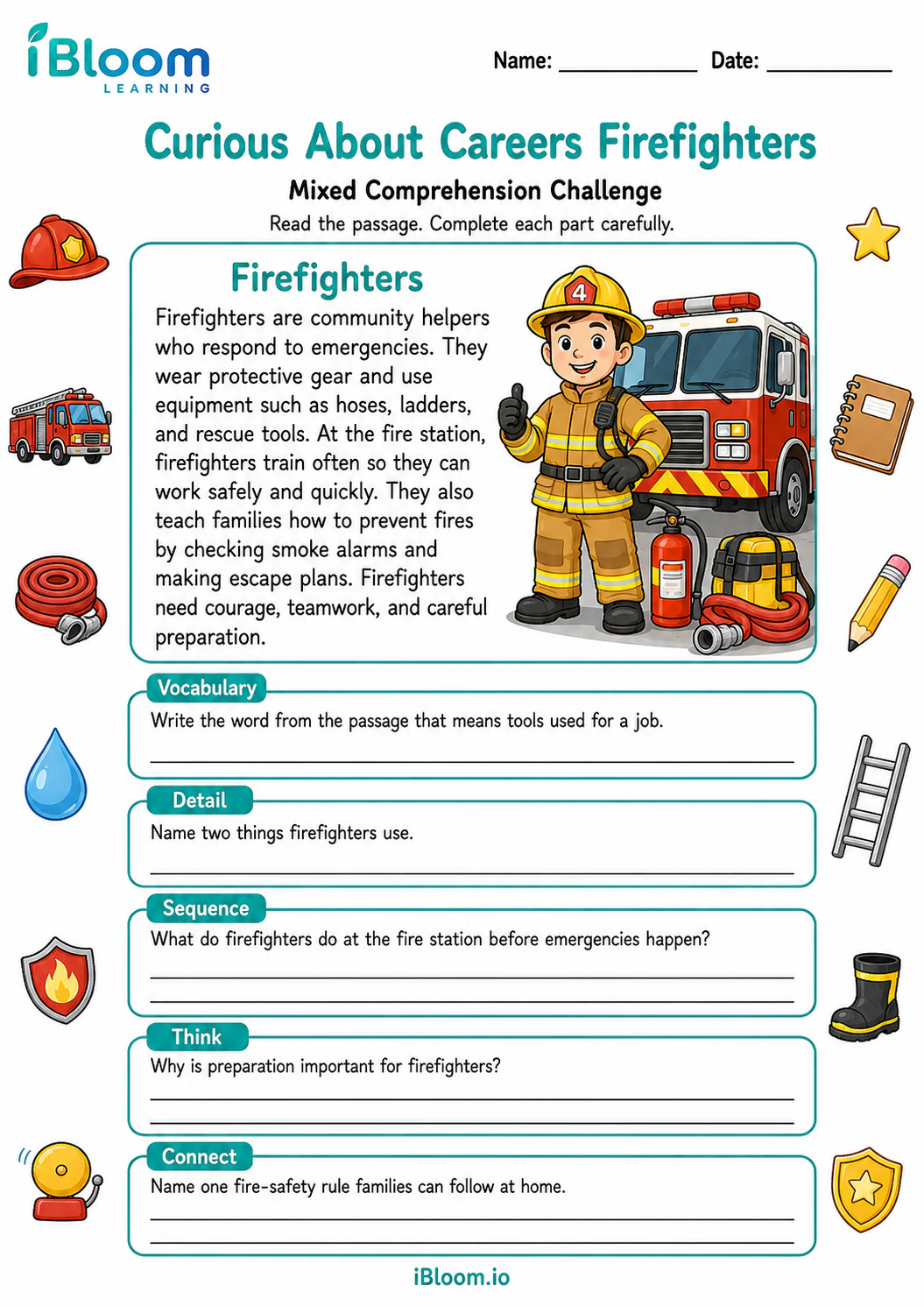
This Grade 4 reading page follows Maya’s visit to a fire station. Readers use details, sequence, context clues, and inference to learn how firefighters prepare, teach safety, and respond together. Fourteen questions move from finding information to explaining ideas with evidence. The worksheet includes an answer key and practices CCSS RI.4.1.
Aligned to RI.4.1 and L.4.4.a
What does Maya learn at Station 8?
Maya arrives thinking firefighters mainly rush to fires. Details about gear, drills, equipment checks, and safety lessons help her revise that idea.
How can context help with new words?
The passage gives nearby clues for “resist,” “route,” and “inspect.” Readers can use the sentence around each word to select a meaning that fits.
- 1“A coat and pants resist heat.”
- 2The gear protects firefighters from heat.
- 3Here, resist means “hold back.”
How should readers support an inference?
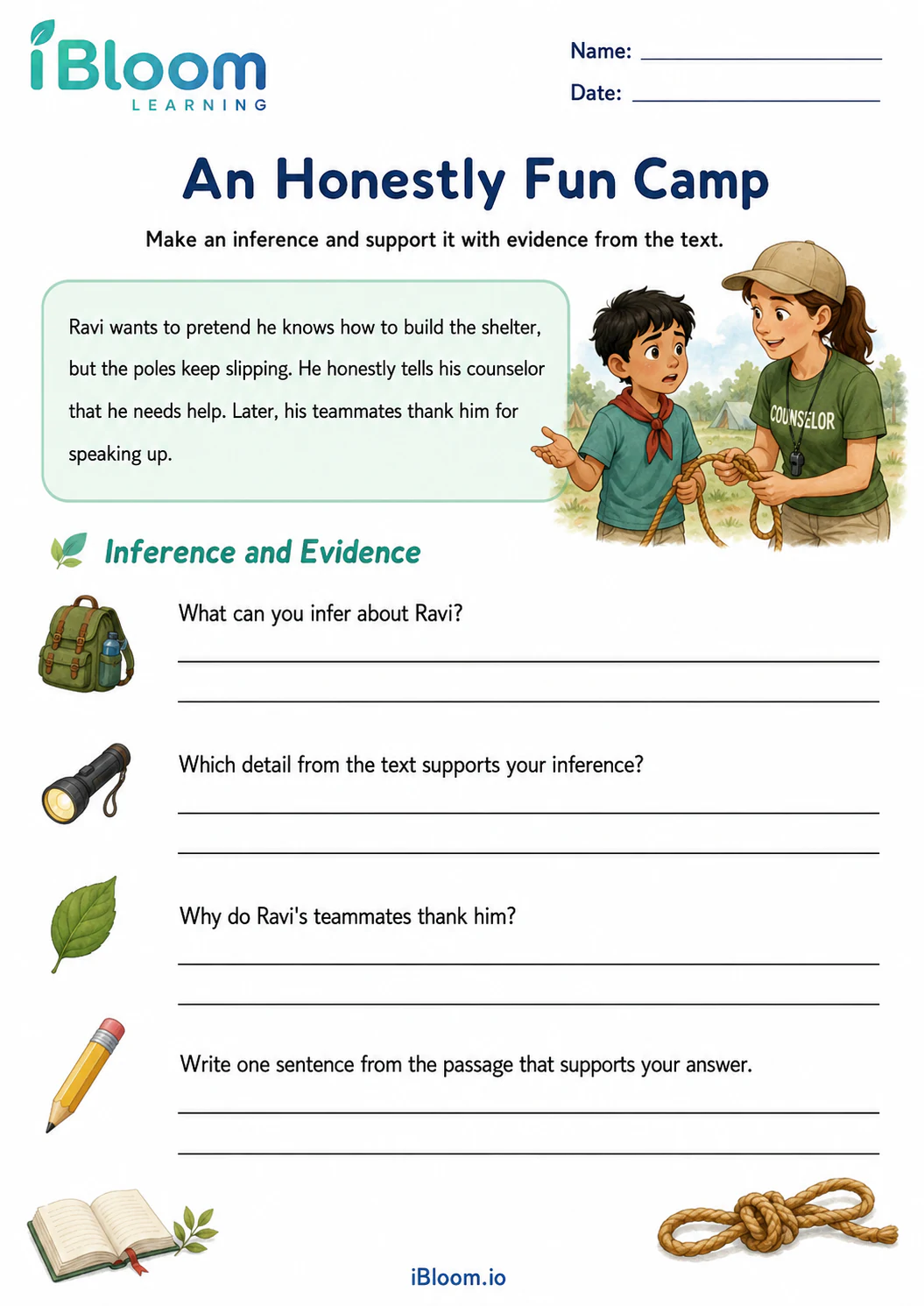
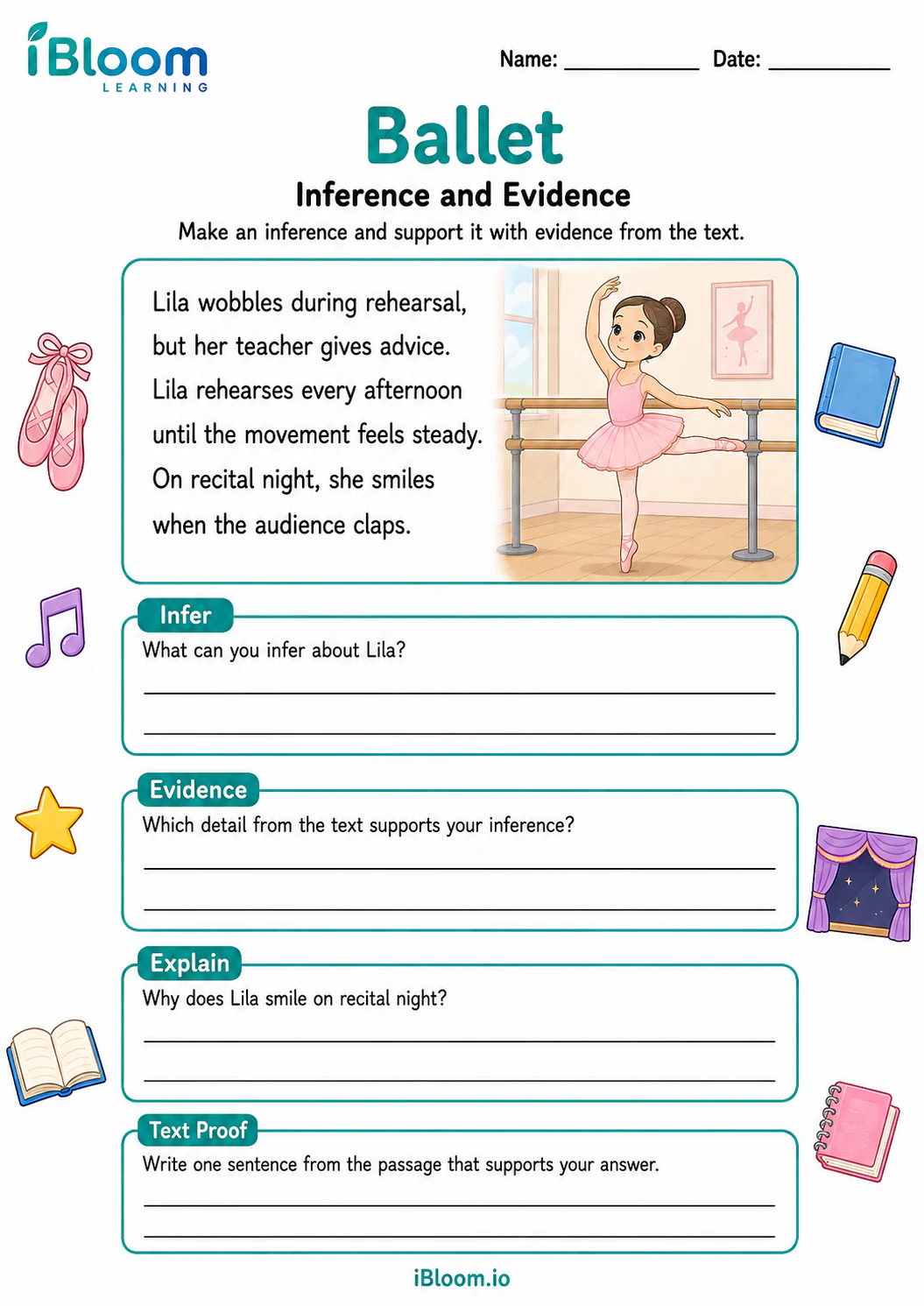
For an inference, join a passage detail to a reasonable conclusion. For example, equipment checks before the truck leaves suggest that preparation helps the crew respond safely.
How to use the worksheet
- 1Read the passage once for the overall job.
- 2Reread a paragraph when an answer asks for a detail.
- 3Underline nearby clues before answering vocabulary questions.
- 4For inference questions, connect a passage detail to what it suggests.
Common reading slips
The mistake
Giving a personal guess instead of a passage detail.
The fix
Point to a sentence that supports the response.
The mistake
Treating “route” as a vehicle.
The fix
Use the surrounding action: a route is the path the truck follows.
The mistake
Naming only one part of the job as the main idea.
The fix
Look for an idea that includes preparation, teaching, and response.
Common Core alignment
This page practices close reading and evidence-based responses.
Readers refer to details and examples when explaining the text.
On this sheet: Readers refer to details and examples when explaining the text.
Show the official wordingHide the official wording
Refer to details and examples in a text when explaining what the text says explicitly and when drawing inferences from the text.
Readers use context to determine word meaning.
On this sheet: Readers use context to determine word meaning.
Show the official wordingHide the official wording
Use context (e.g., definitions, examples, or restatements in text) as a clue to the meaning of a word or phrase.
What to practice next
Make more practice
Further reading
Questions parents and teachers ask
What does the passage explain about firefighters?
Maya learns that firefighters prepare for emergencies as well as respond to them. The passage describes protective gear, a practice drill, equipment checks, teamwork, and lessons for families. Students use those details to answer questions about the job and how Maya’s understanding changes. Students can return to the passage to locate the details that support each response.
Which words appear in the vocabulary questions?
The worksheet asks about “resist,” “route,” and “inspect,” along with the clue for “meeting place.” Readers can look at the sentence where each word appears and choose the meaning that makes sense in that context. Each word appears in a sentence with clues that help narrow its meaning.
How many questions are included?
There are 14 questions in three parts. The first four ask about passage details, the next four use context clues, and the final six ask readers to connect details, explain an idea, or make an inference. The last part includes questions about change, main idea, connections, and inference.
How can a student support an inference?
A strong inference connects a detail in the passage with what that detail suggests. For example, the crew checks equipment before leaving, which suggests that preparation helps firefighters work safely and quickly. A detail such as an equipment check can support a conclusion about preparation.
Is an answer key included?
Yes. The separate key gives answers for all 14 questions and sample wording for responses that can vary. A student’s wording can differ from the sample while still being supported by the passage. Sample wording is a guide; responses should still point to the passage.