

About this worksheet
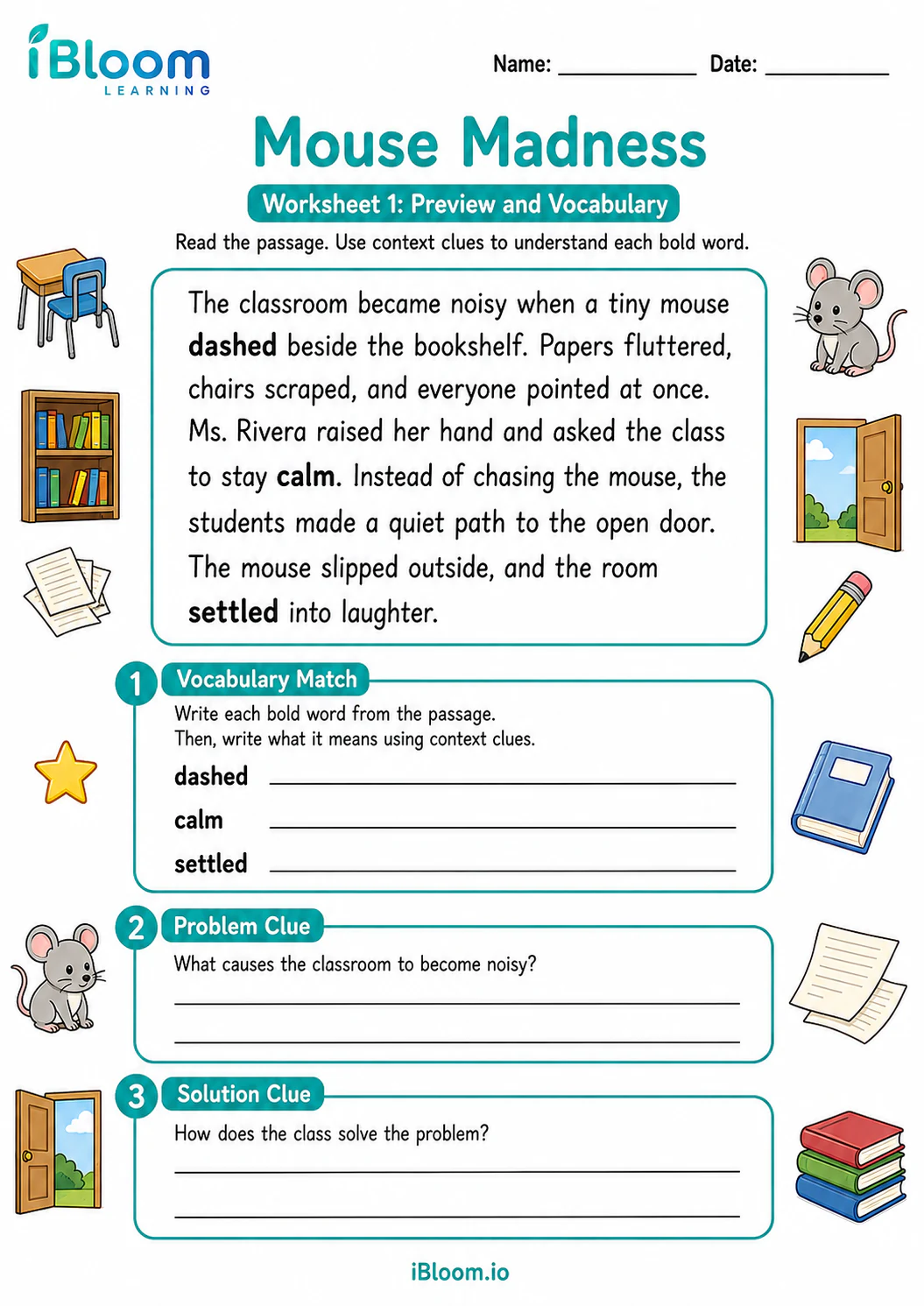
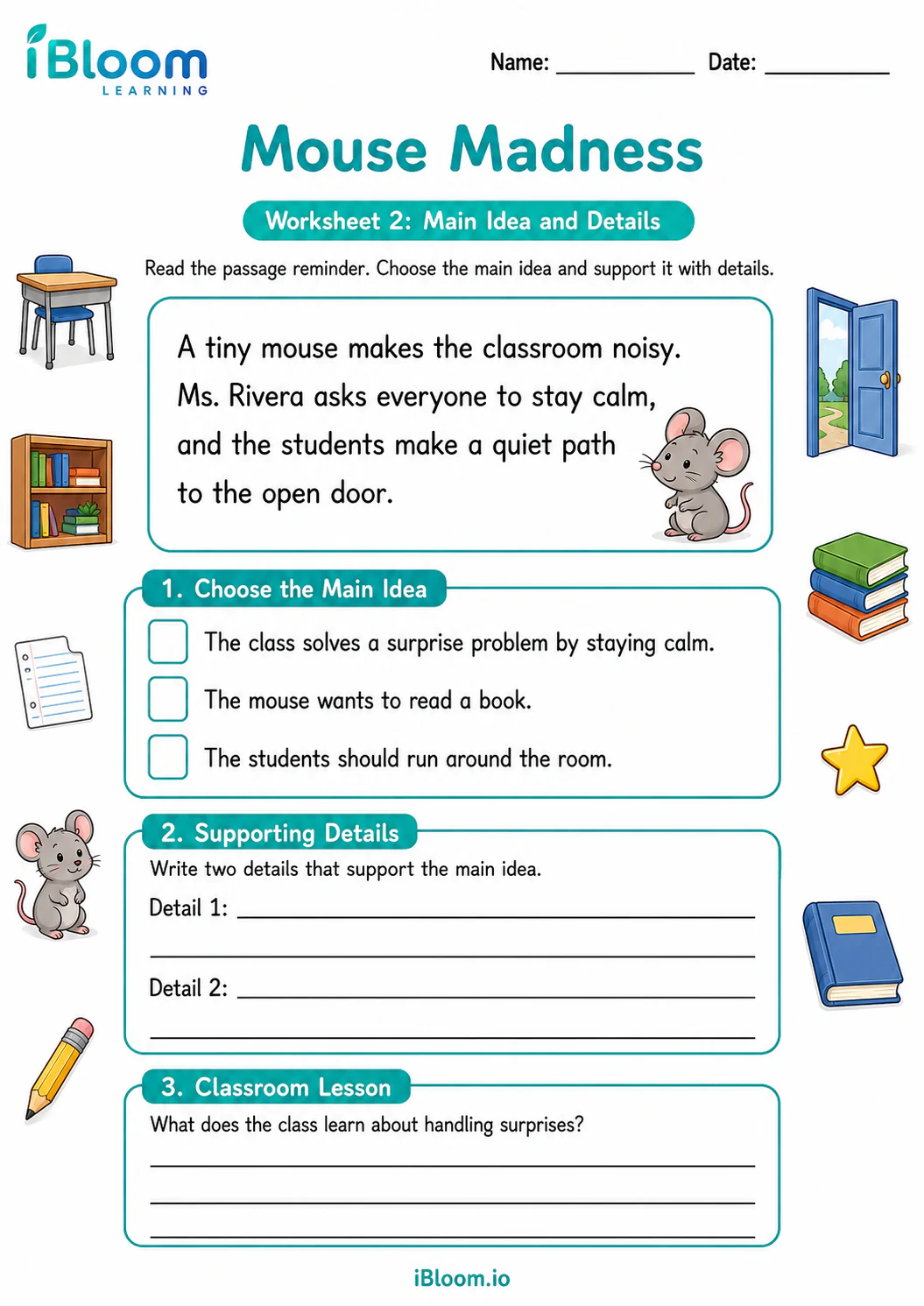
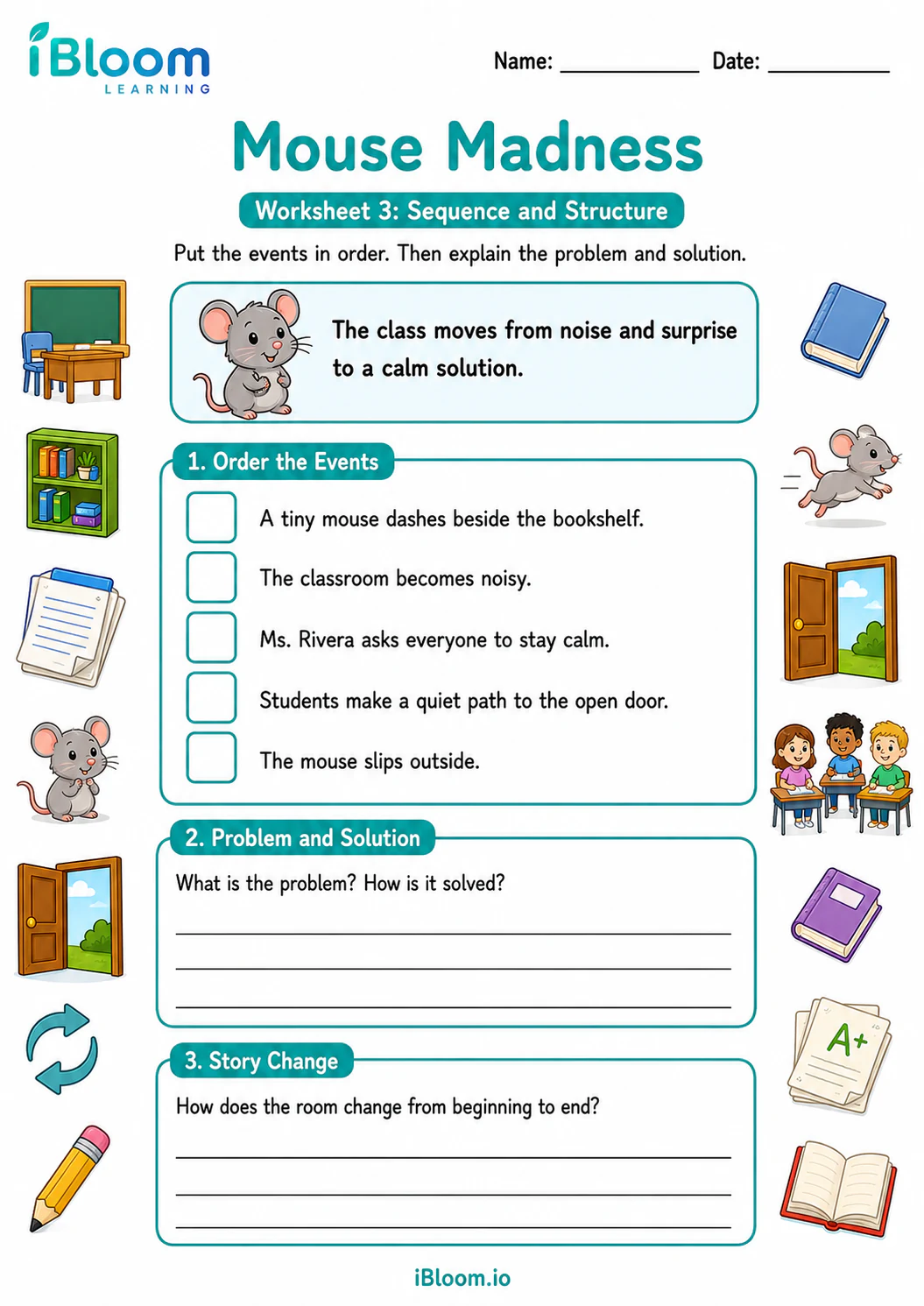
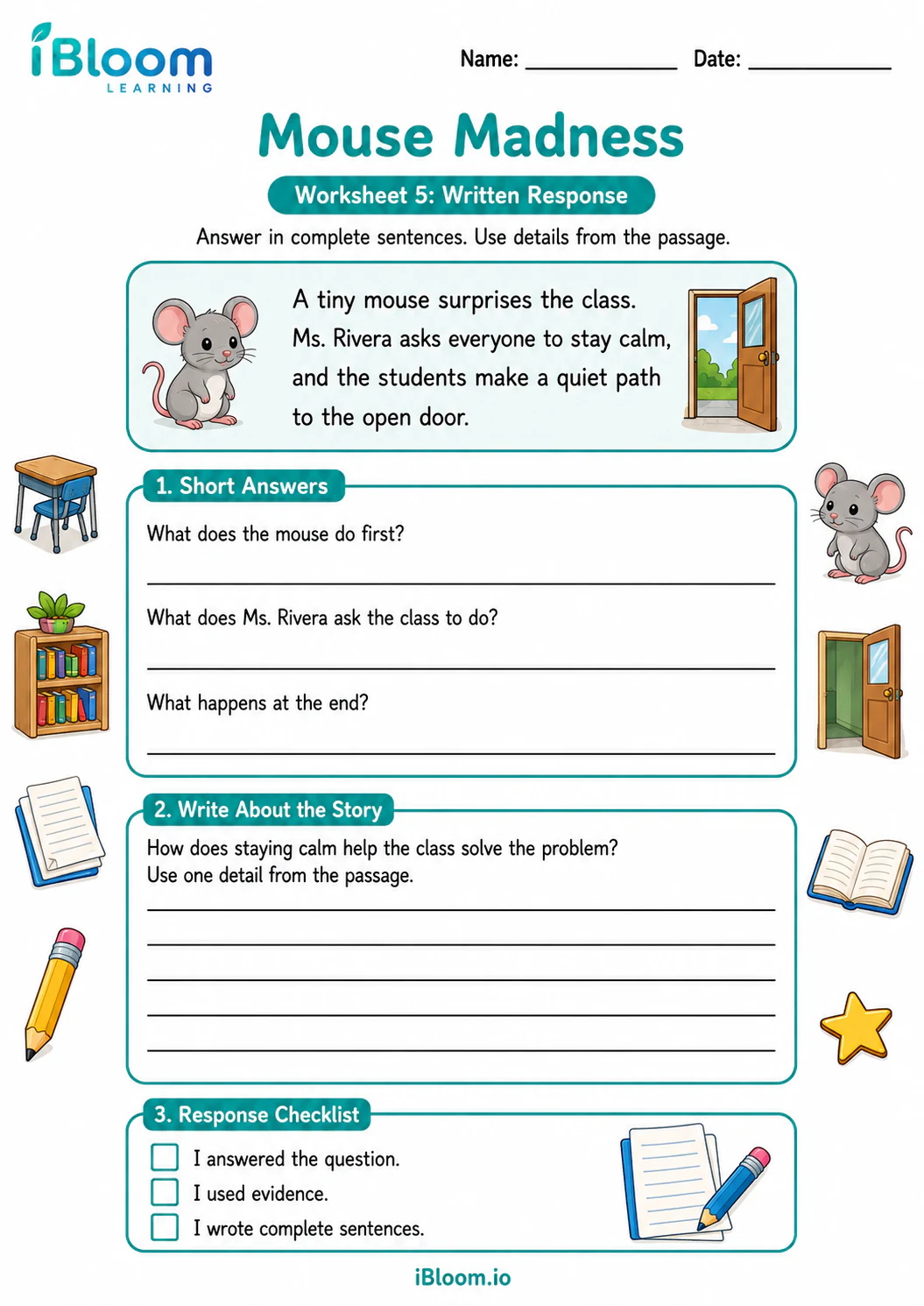
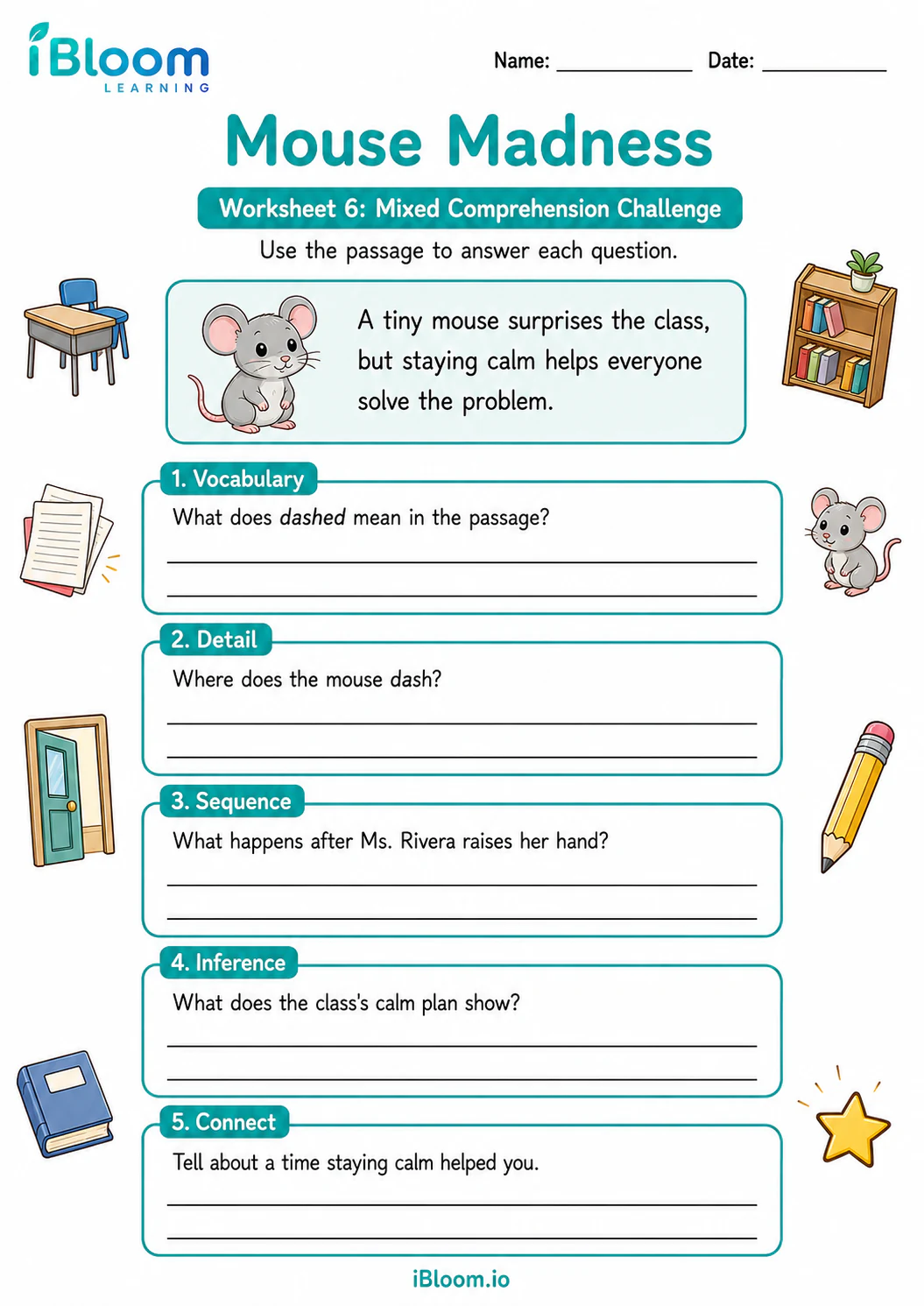
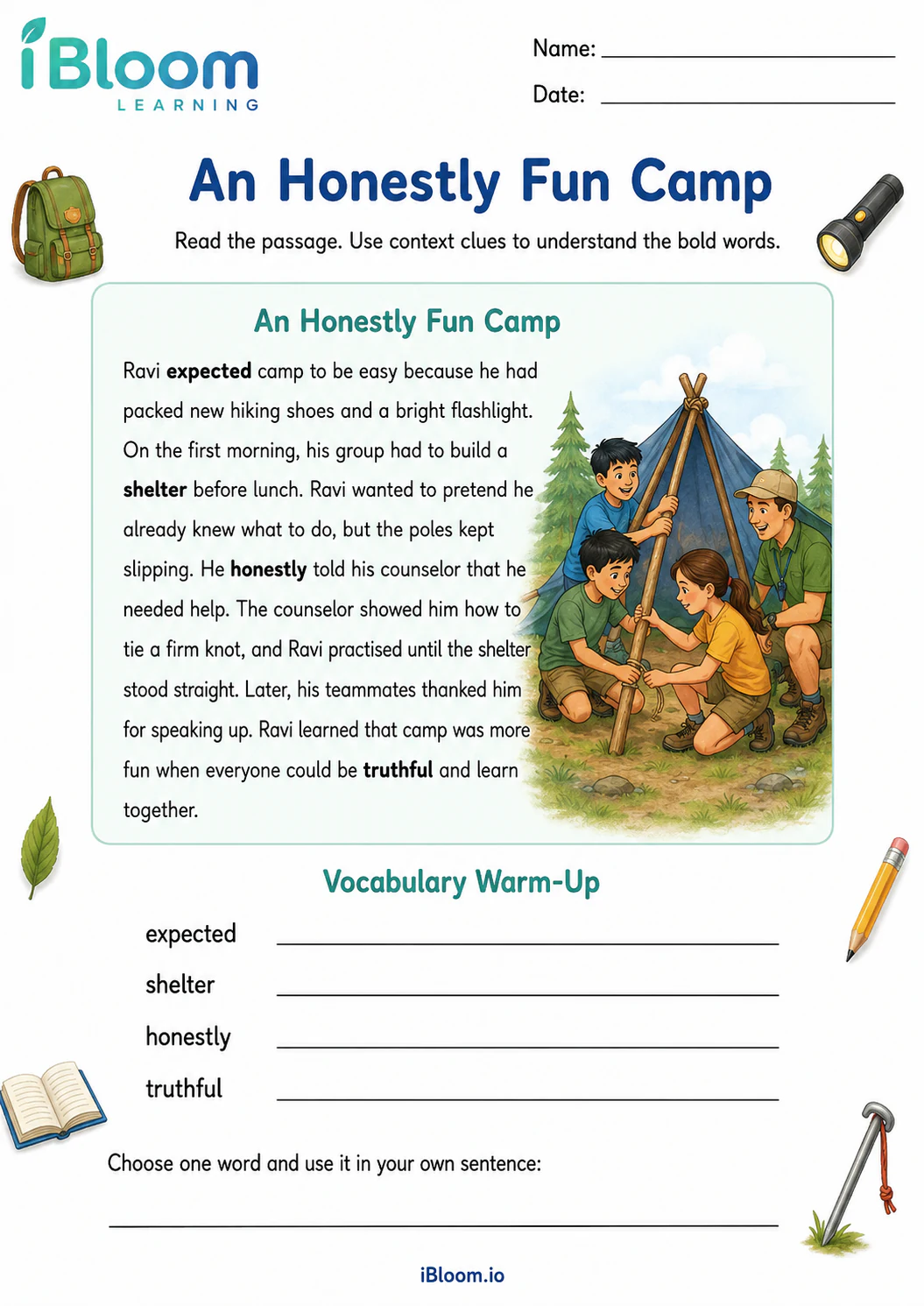
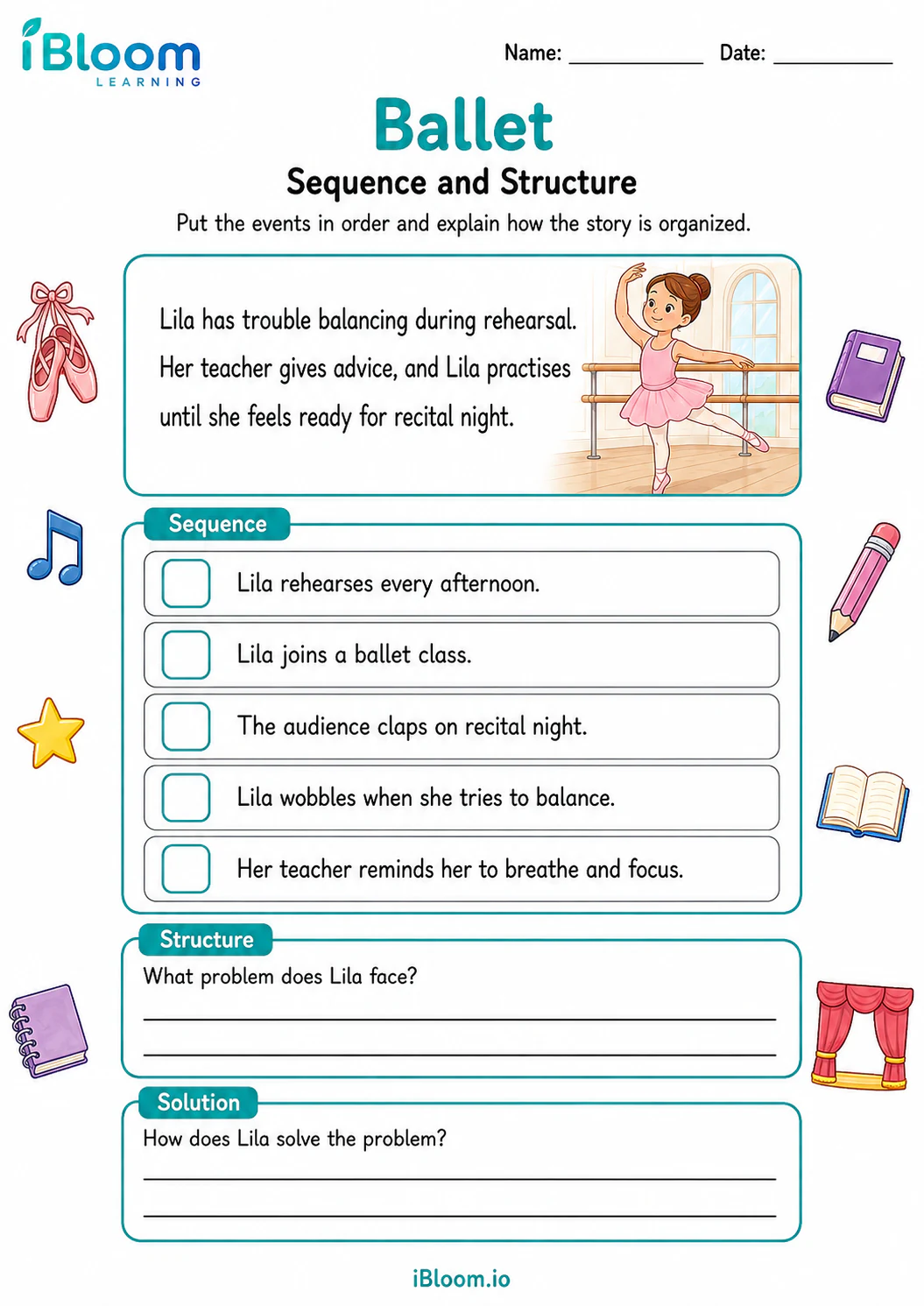
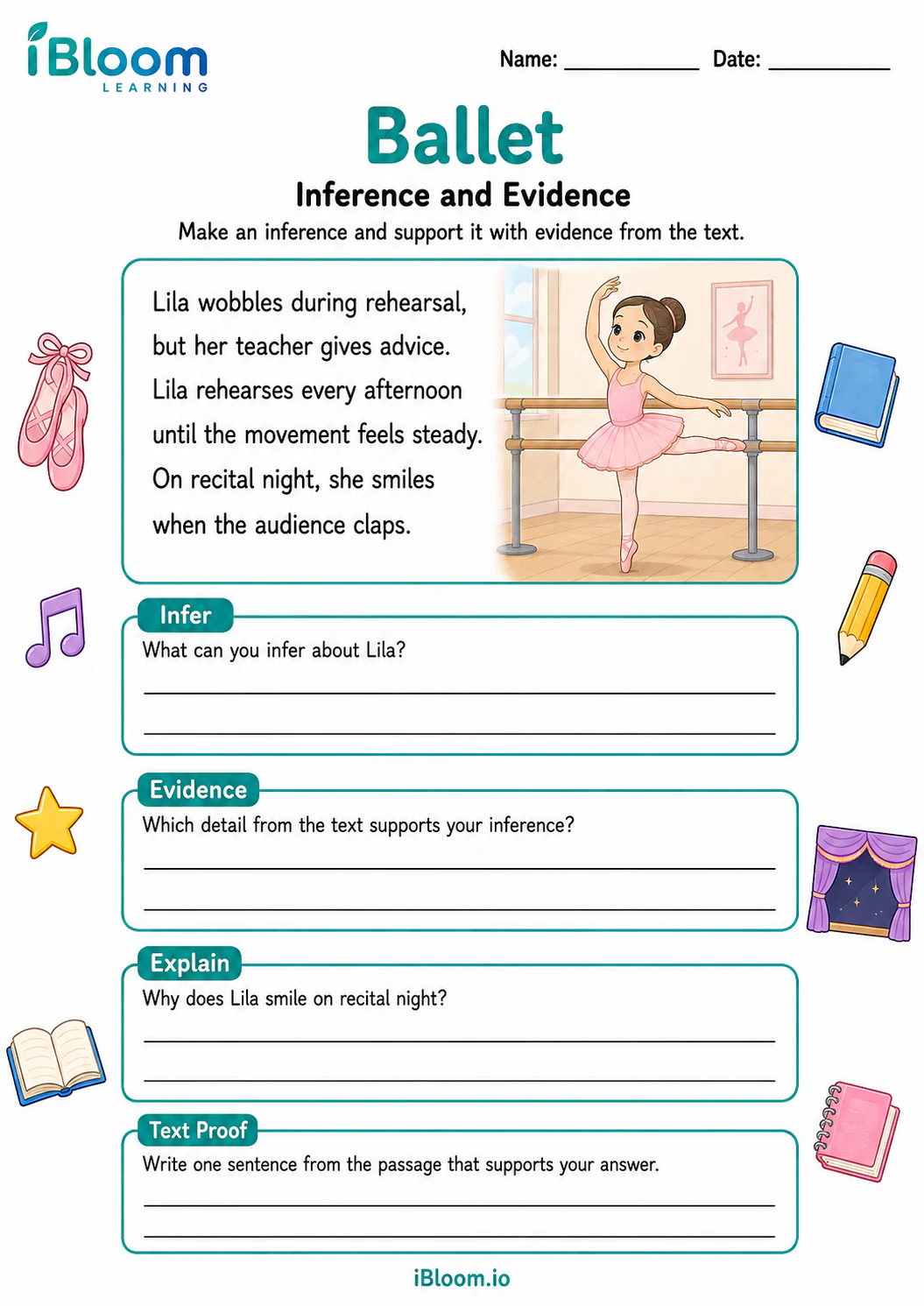
This Grade 4 printable pairs an original Mouse Madness passage with questions about inference and evidence. Students follow Ms. Rivera and her class as they notice clues that their mouse is out, then consider how a quiet path helps it return. Multiple-choice items provide an entry point; written responses ask students to point to a detail or explain an inference. The page practices CCSS RL.4.1 by connecting claims about a story to its details. A separate answer key includes sample responses.
Aligned to RL.4.1
What is an inference?
An inference is an idea a reader builds from clues in the text and what the reader already knows. The story may not say “Mia feels relieved,” but Pip’s safe return and Mia’s smile help readers infer that feeling.
Which details count as evidence?
Evidence is a specific word, action, or event from the passage that supports an answer. Strong responses name a relevant detail instead of retelling the whole story.
- 1Question: What can readers infer when Pip pauses at the open door?
- 2Clue: “Pip paused at the doorway and twitched his nose.”
- 3Inference: Pip is cautious or unsure.
- 4Evidence: He pauses instead of walking through.
How can students explain their thinking?
Answer the question first, then add a story detail that makes the answer reasonable. Some questions have more than one acceptable wording; the key labels these as sample answers.
How to use this worksheet
- 1Read the passage once for the events.
- 2Reread the paragraph that relates to the question.
- 3State an inference in your own words.
- 4Name a detail that supports it.
- 5Check written answers against the key, allowing equivalent evidence.
Common mistakes and quick fixes
The mistake
Giving an opinion that the passage does not support.
The fix
Find a sentence or action that makes the idea reasonable.
The mistake
Repeating a detail without answering the question.
The fix
State the inference first, then connect the detail to it.
The mistake
Choosing evidence from the wrong moment in the story.
The fix
Reread the paragraph where the event or feeling occurs.
Common Core alignment
Use story details to explain what the text says and support inferences.
On this sheet: Questions ask students to infer Mia’s and Pip’s feelings or actions and cite story clues.
Show the official wordingHide the official wording
Refer to details and examples in a text when explaining what the text says explicitly and when drawing inferences from the text.
What to practice next
Further reading
Questions parents and teachers ask
What is the Mouse Madness passage about?
Ms. Rivera notices that the class mouse has left its box. She helps the students follow clues and make a quiet seed path beside the wall so the mouse can return without being chased. The class solves the problem with patience and close attention to small details.
What does RL.4.1 mean on this worksheet?
It asks students to refer to details and examples when explaining what a text says and when drawing inferences. Several questions ask what a character may feel or why an action happens, then ask for a passage clue.
Do students need to quote the passage?
Yes. Students may quote a few words or describe a detail in their own words. The important part is making the connection clear: name a clue and explain how it supports the inference in the answer. A response should connect that evidence to the idea instead of merely copying a sentence.
Are there right answers to the written questions?
The key gives concise model responses, and some begin with “Sample” because students may explain an inference in different words. Accept another response when it fits the passage and uses a relevant detail as evidence. The answer key accepts a concise paraphrase when it accurately describes a relevant moment in the passage.
How many questions are included?
There are 16 questions: six multiple-choice items and ten written responses. The passage and questions span four worksheet pages, with a separate four-page answer key that includes sample wording for open responses. The key separates direct details from sample inferences so families can see what the question asks.