

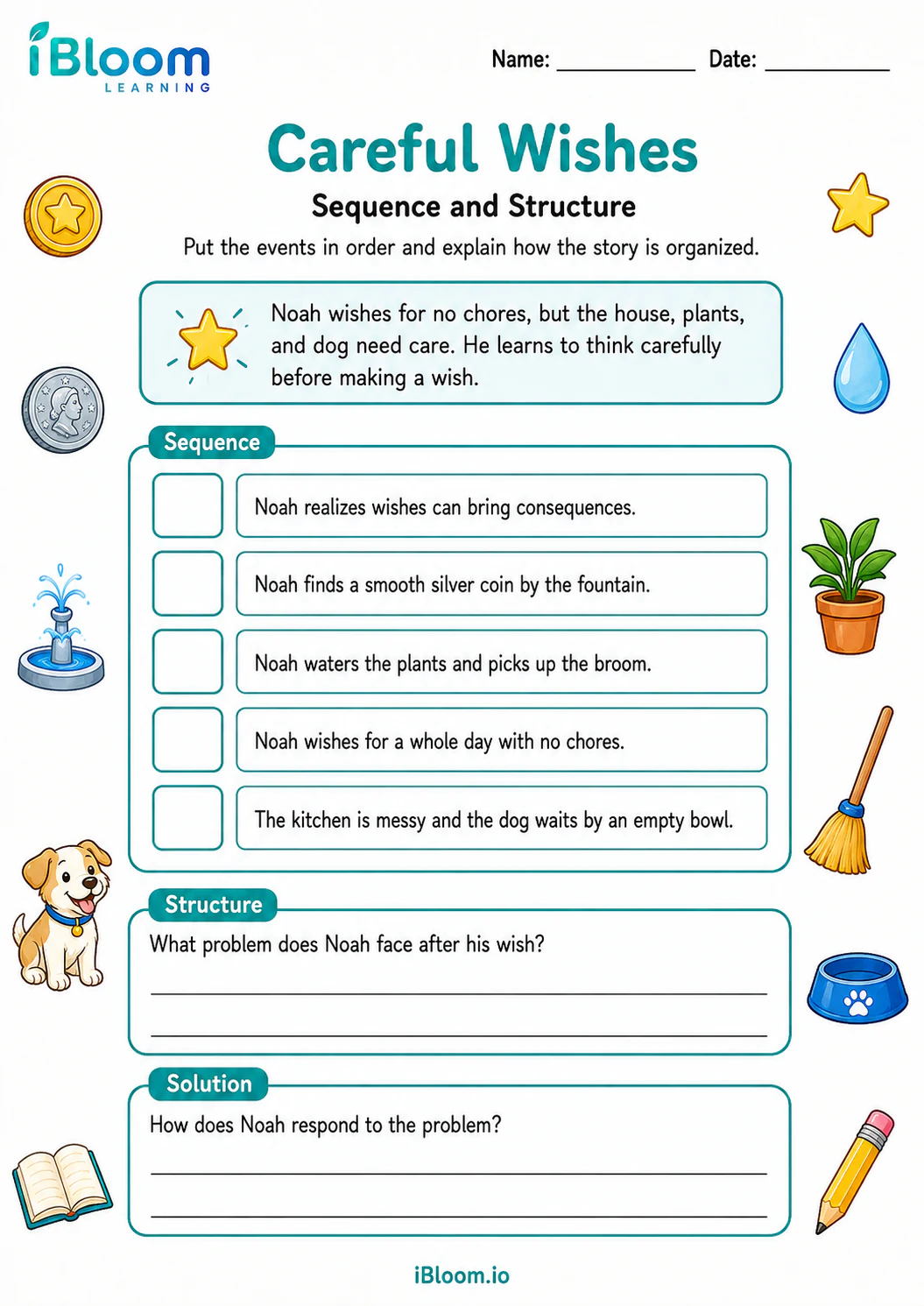
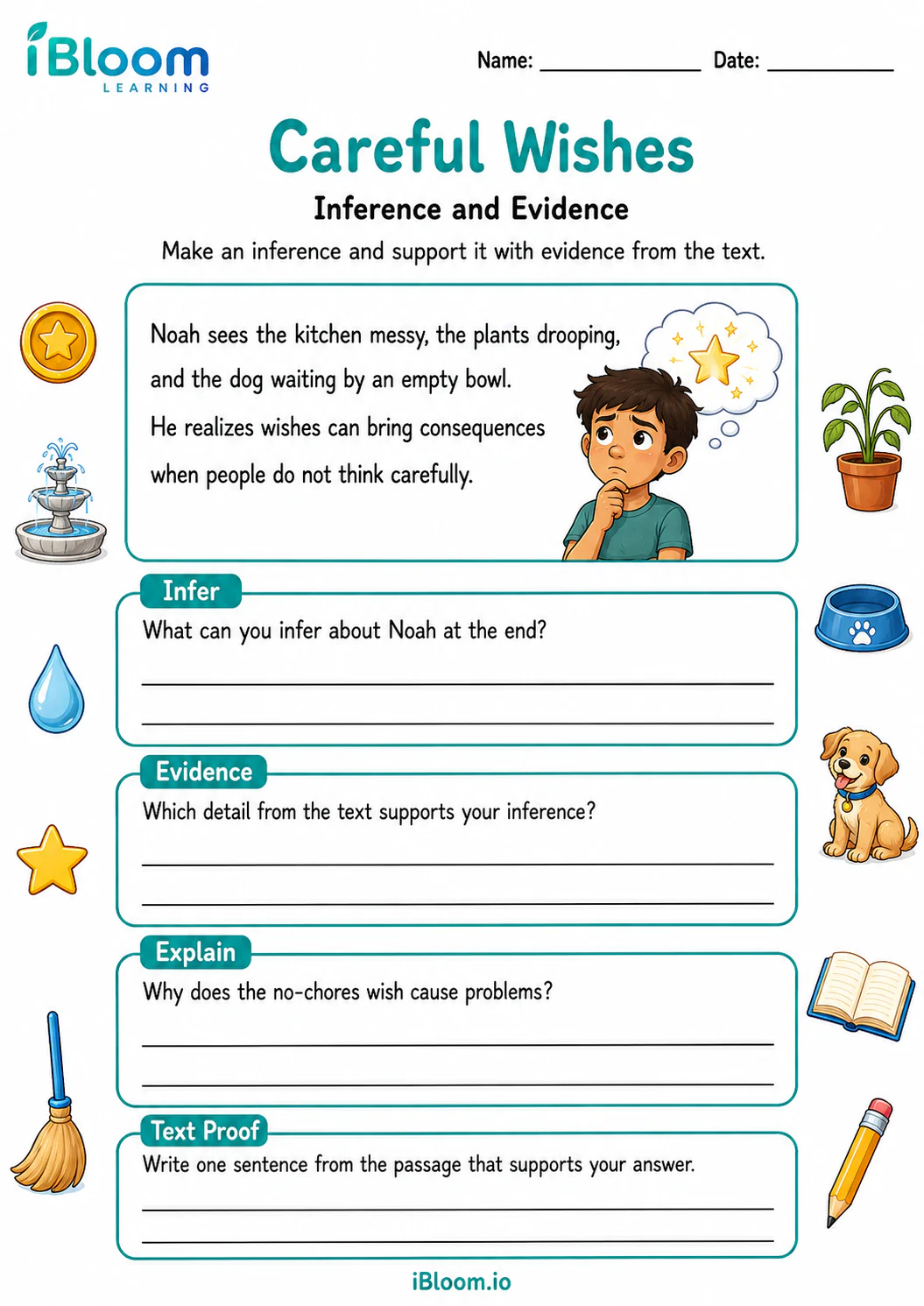
About this worksheet
This free printable Grade 4 worksheet gives children focused practice with main idea and supporting details. It replaces the old mixed or placeholder activity with questions built around the named skill. The sheet has 10 questions across short parts, with a separate answer key for checking work.
What does main idea and supporting details mean?
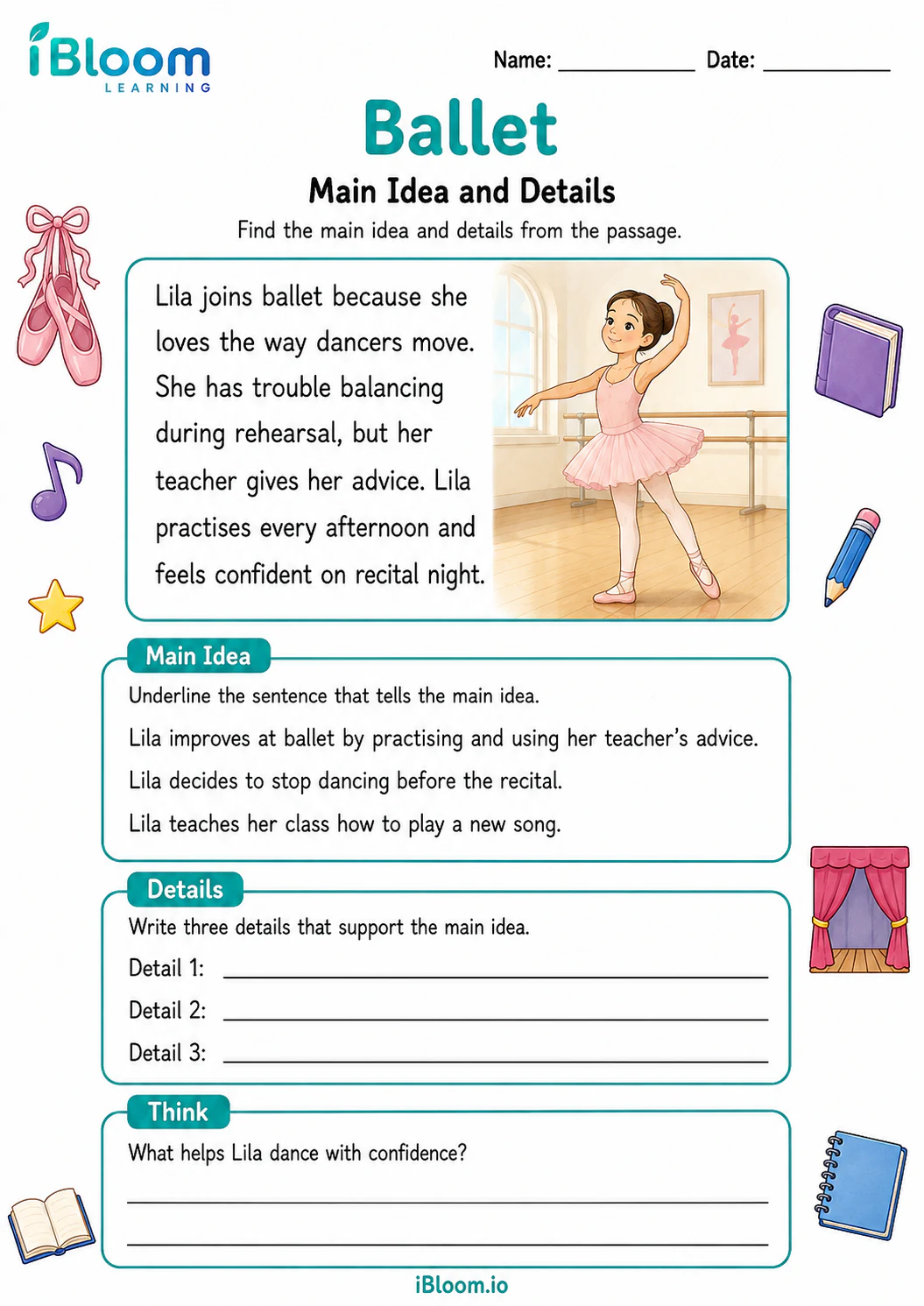
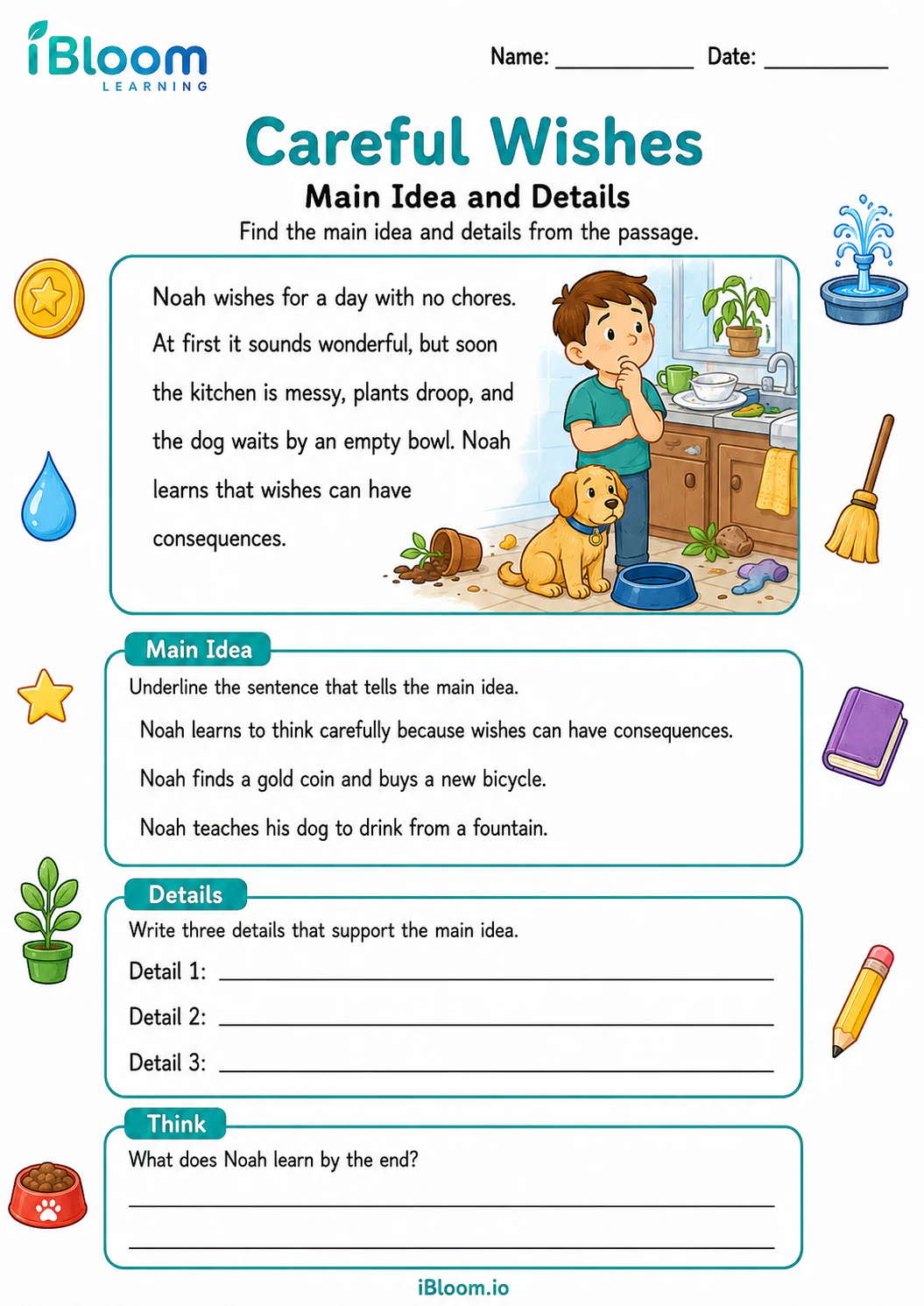
A main idea explains what a whole passage is mostly about. Supporting details are specific facts or events that develop that idea.
How do details support the main idea?
For q1, the neighbors reopen the shop, organize useful services, and review how it serves people. Together those details support the answer about bringing the shop back for the town.
- 1Main idea: neighbors reopen a useful shop.
- 2Details: groceries, book swap, local goods.
- 3Several details support the same big idea.
How is the practice organized?
Questions first ask for the passage’s central idea, then connect specific choices and outcomes to it. Written responses ask readers to cite details from the shop’s trial and the council’s review.
How to use this worksheet
- 1Read the full passage before choosing a main idea.
- 2Look for an idea that covers several paragraphs, not one detail.
- 3Match each supporting detail to the idea it helps explain.
- 4For written answers, name specific events or services from the passage.
- 5Reread the answer and check that the passage supports it.
Common mistakes and quick fixes
The mistake
Choosing one interesting detail as the main idea.
The fix
Look for an idea that connects several details across the passage.
The mistake
Picking an answer that is true but too narrow.
The fix
Ask which choice explains the whole passage.
The mistake
Giving a broad claim without evidence.
The fix
Name the service, action, or outcome described in the text.
What to practice next
Make more practice
Questions parents and teachers ask
How many questions are on the Grade 4 sheet?
There are 14 questions, grouped into short parts. Children can complete the parts in order and use the separate answer key to review their work. Invite the learner to explain one answer aloud and point to the clue or pattern that supports it.
Is an answer key included?
Yes. A separate answer key lists the answers for the worksheet. Use it after the child has tried each question, then revisit any answer that needs another look. Ask the child to compare each answer with the prompt and talk through any correction together.
How should I introduce the activity?
Read the directions together and talk through the first prompt. Ask the child to explain how the several passage details support the main idea before moving on. That short conversation can make the written practice clearer and give you a chance to clear up confusion.
Can I use this at home or in class?
Yes. Print the worksheet for independent practice, a small group, or a short review with an adult. The answer key makes it easy to check completed work. The activities are grouped so learners can move through them at a comfortable pace.
What if a question feels difficult?
Pause and return to the prompt. Point out the information it gives, then solve one step at a time. The child can skip a tricky item and return after completing the next question. Keep the focus on the thinking process, not speed.