

About this worksheet
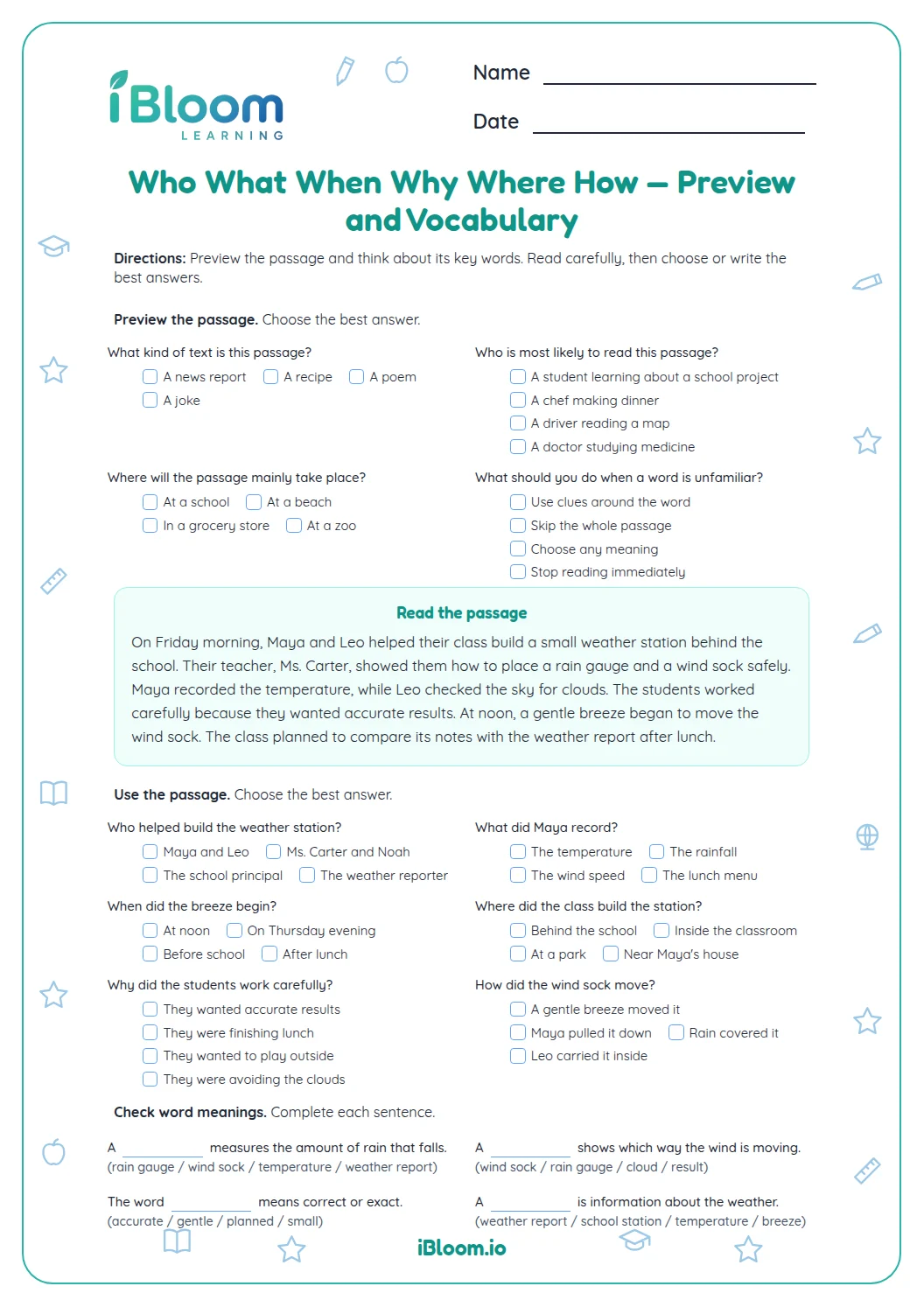
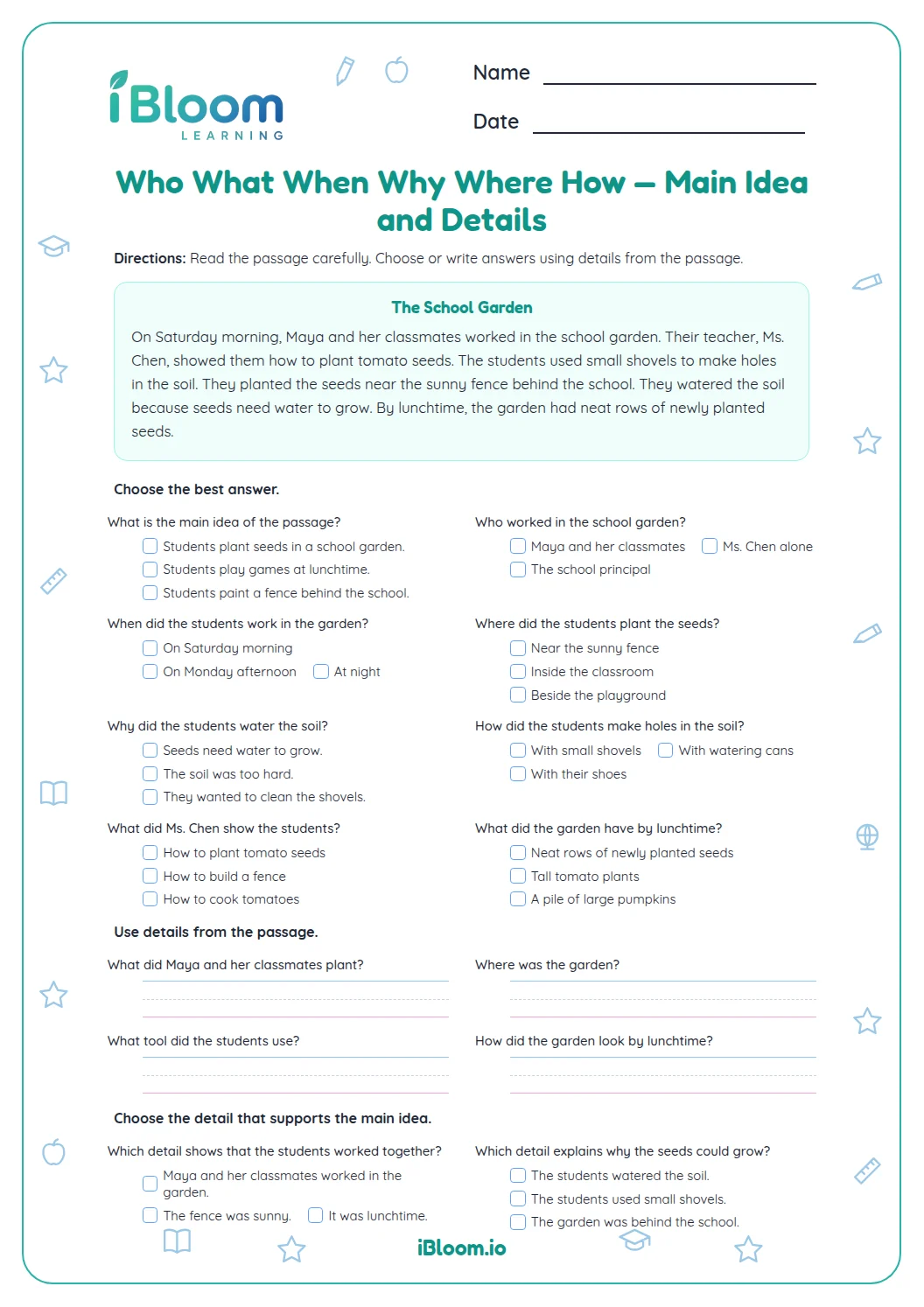
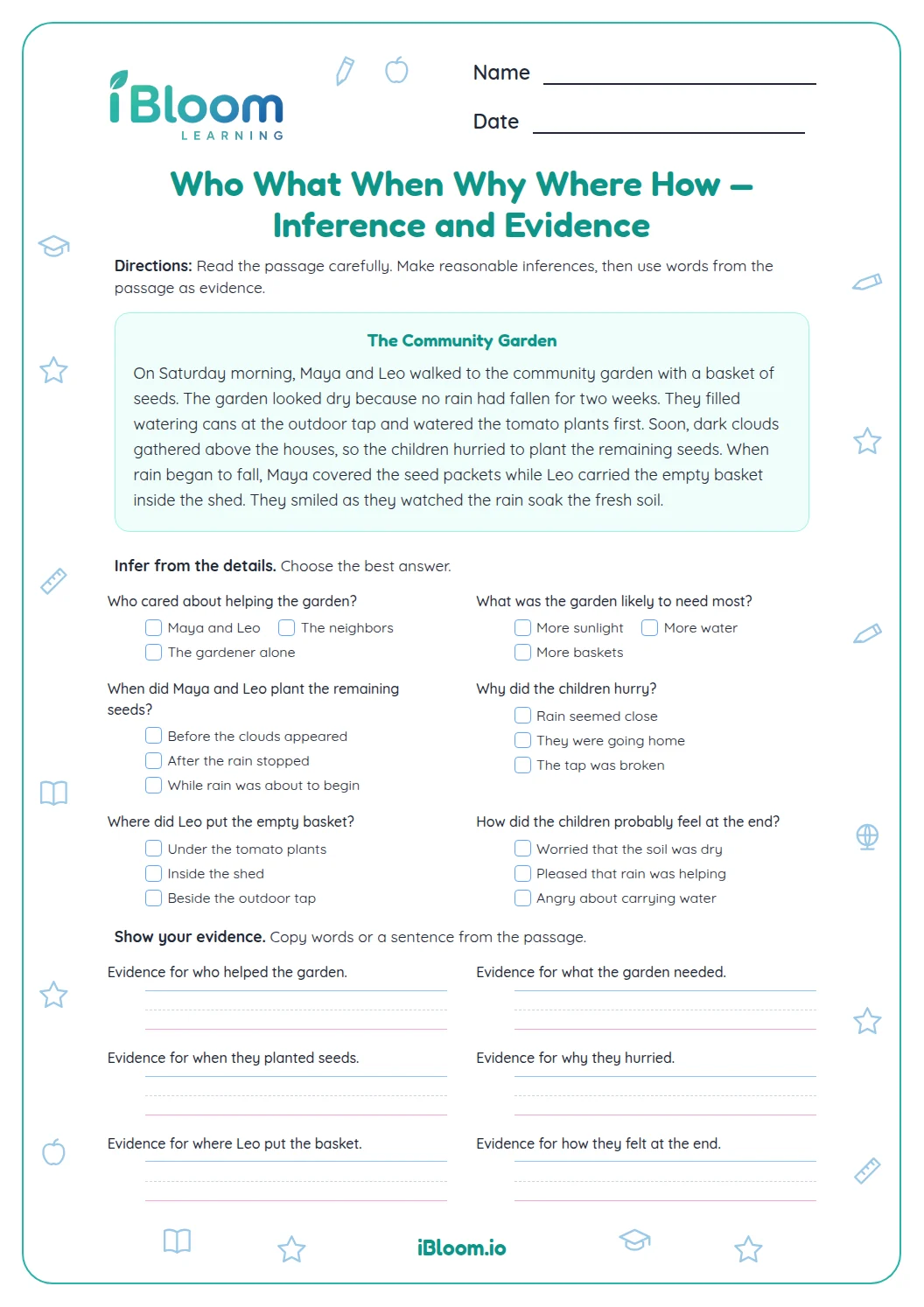
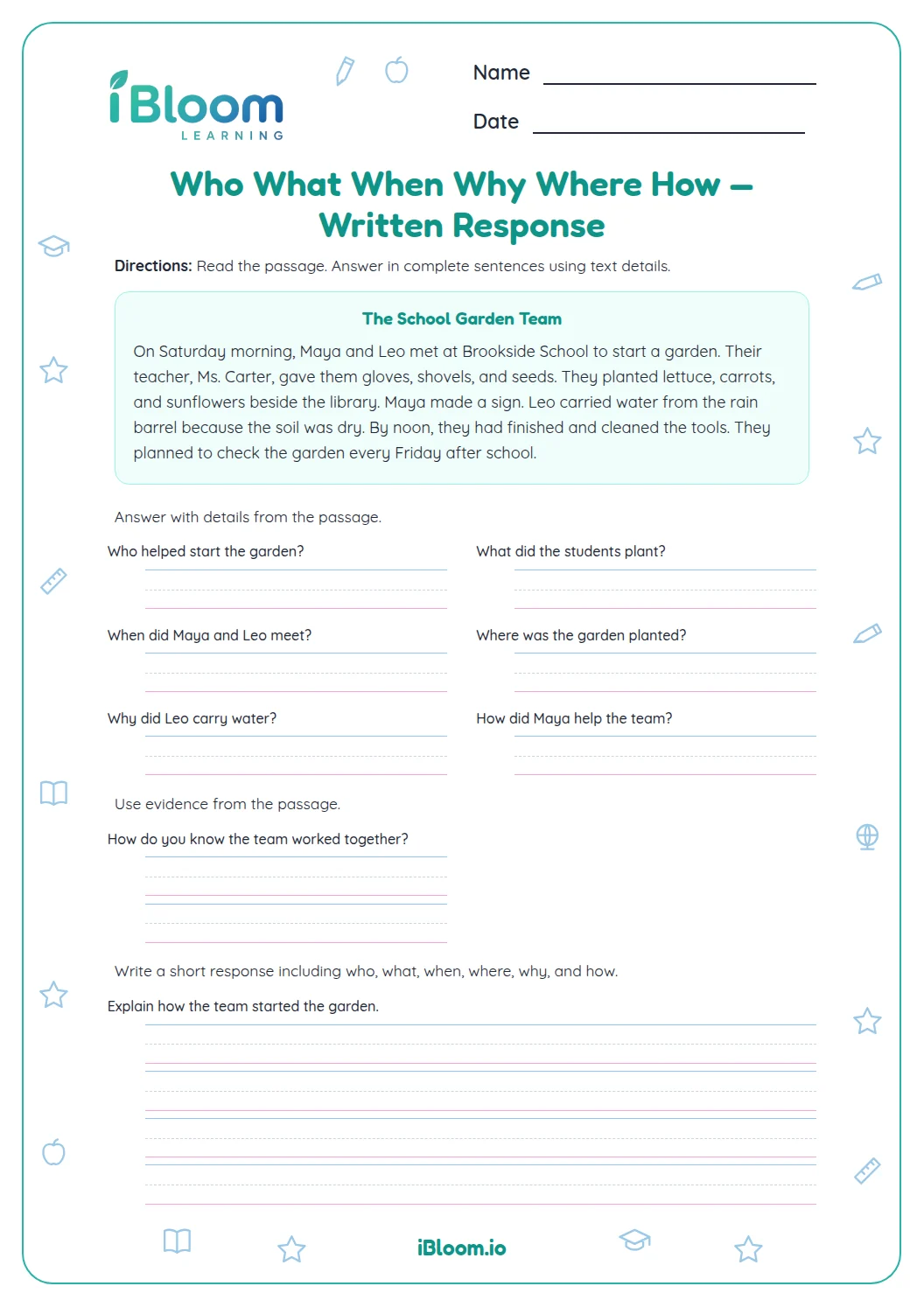
This Grade 4 printable pairs an original informational passage about repairing a muddy marsh trail with 15 comprehension questions. Students identify who, what, when, where, why, and how details, follow the team’s steps, and explain the problem-and-solution structure. The questions ask readers to connect information across the passage and support answers with evidence. The work aligns with CCSS RI.4.5, with a separate answer key and sample written responses.
Aligned to RI.4.5
How do question words guide a close reading?
Each question word points readers toward a kind of information. Who names people, where identifies a place, and why asks for a reason. Look back at the passage to find the detail that answers the question rather than relying on a guess.
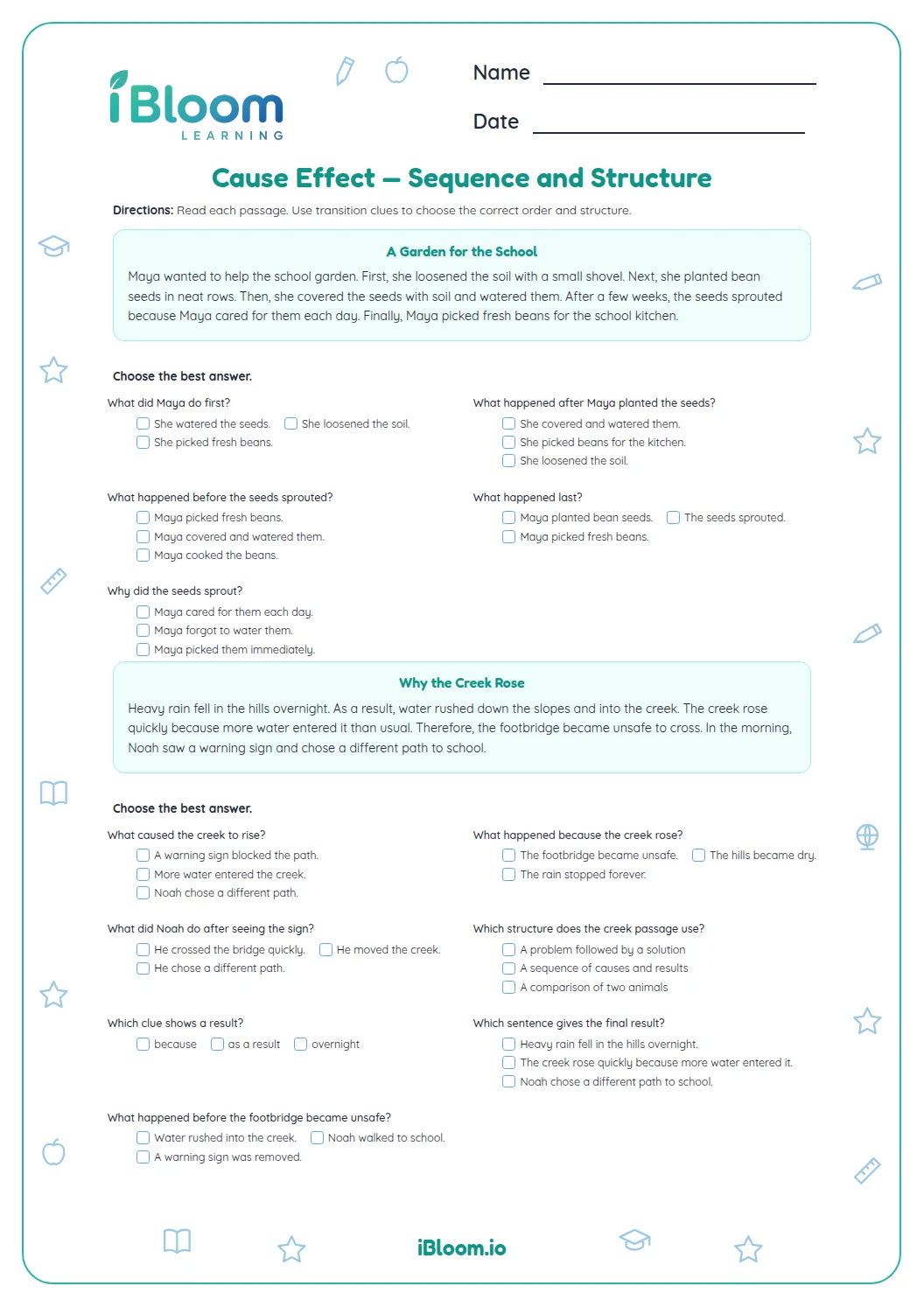
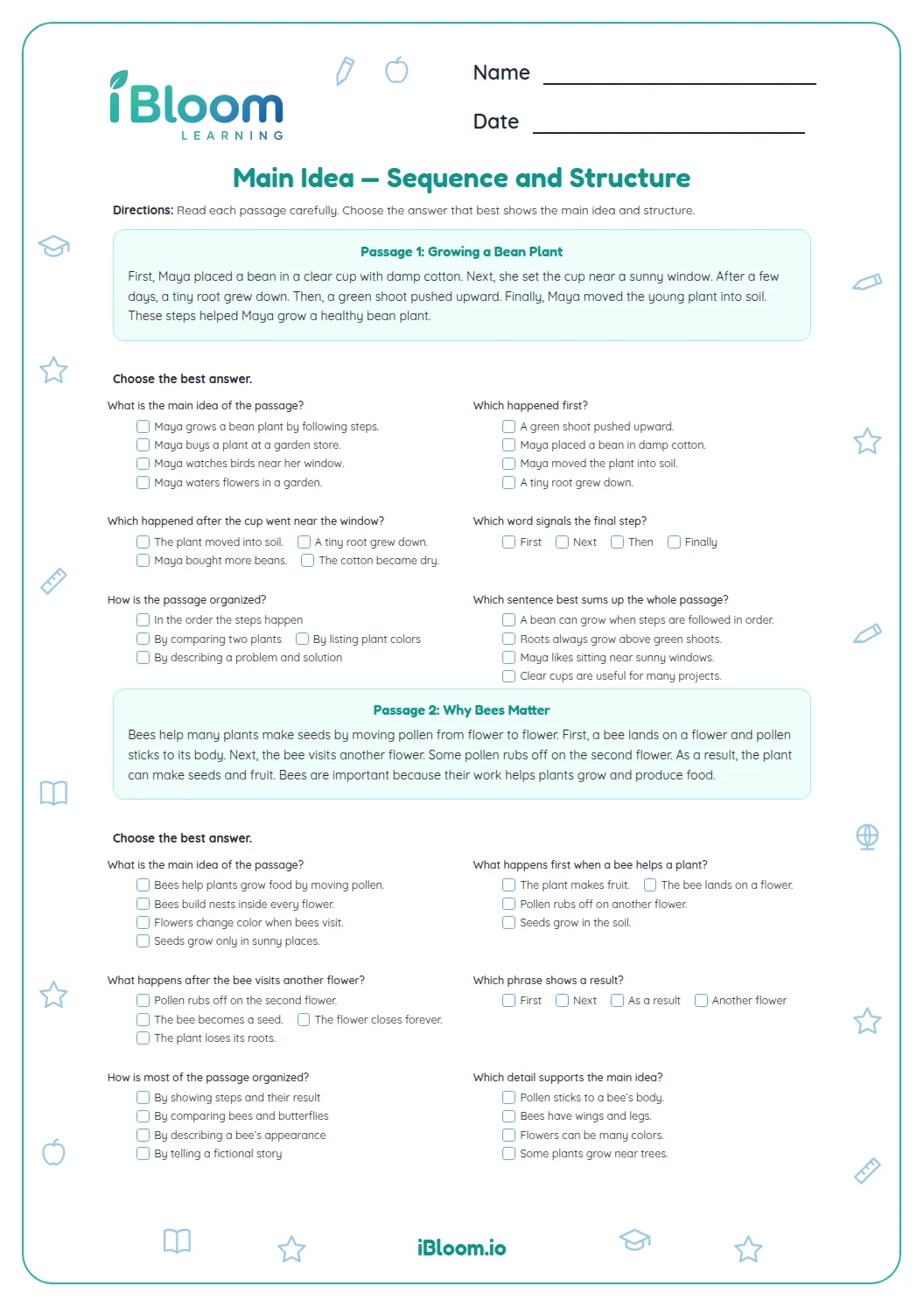
How can readers track a sequence of steps?
Sequence words such as first and next help readers follow what the team did. Some passages state order directly; others require connecting actions to the problem they address.
- 1Question: What did the team do before laying gravel?
- 2Sequence: First they walked and observed; next they selected a route and marked it.
- 3Answer: They marked the route with short posts.
How does the passage’s structure shape its ideas?
The passage introduces a muddy trail, describes the team’s investigation and changes, then shows the result for visitors. Those parts form a problem-and-solution structure. The final question asks students to name the structure and point to a clue.
Steps for close reading
- 1Read the passage once to understand the trail problem and the team’s goal.
- 2Reread around the detail named by each question word.
- 3For how and why questions, connect an action with its reason or result.
- 4Use sequence words and event clues to order the team’s actions.
- 5In written answers, include a detail from the passage.
- 6For the structure question, name the pattern and cite one clue.
Common reading mix-ups and fixes
The mistake
Mixing up when the route was prepared with when it was inspected.
The fix
Track the time clues: before the May walk, on its morning, and after a future heavy rain.
The mistake
Naming an action without explaining why the team took it.
The fix
Join the action to its purpose, such as the bridge letting stream water keep moving.
The mistake
Calling the text chronological only because events are in order.
The fix
Look at the larger pattern too: the text presents a problem and explains a solution.
Curriculum alignment
Describe whether information is organized by time, cause and effect, or problem and solution.
On this sheet: Students identify the passage’s problem-and-solution structure and use details about the team’s actions.
Show the official wordingHide the official wording
Describe the overall structure (e.g., chronology, comparison, cause/effect, problem/solution) of events, ideas, concepts, or information in a text or part of a text.
What to practice next
Make more practice
Further reading
Questions parents and teachers ask
What passage is included?
The original passage, “A Better Path to the Marsh,” describes a park team investigating a muddy trail, marking a higher route, and adding gravel and a small bridge. The details support questions about the people, timing, location, reasons, sequence, and the text’s overall structure.
How many questions are on the worksheet?
There are 14 multiple-choice questions. They locate who, what, when, where, why, and how details, then ask readers to order events and recognize problem-and-solution structure. Students can reread the passage as they work and point to a clue for each answer.
What does problem-and-solution structure mean?
A text with problem-and-solution structure presents an issue and explains actions that address it. In this passage, rainwater makes the trail muddy, and the park team marks a higher route and builds a small bridge so visitors can cross without stepping into mud.
How should students use evidence in the questions?
Students should give a concise answer grounded in the passage. For sequence, list the steps in order; for a why or how question, connect the action with its purpose or result. The answer key gives sample responses, but accurate wording can vary.
Can the passage be read aloud?
Yes. A student can listen to the passage and still practice locating details, following steps, and identifying structure. Pause after each paragraph to summarize what changed, then return to the printed text when answering so the student can find supporting evidence.
How long will this worksheet take?
Plan for about 25 minutes to read the passage, answer 14 questions, and review responses. Rereading for evidence may take a little longer, especially when students explain the structure or connect a design choice to the trail problem.