


About this worksheet
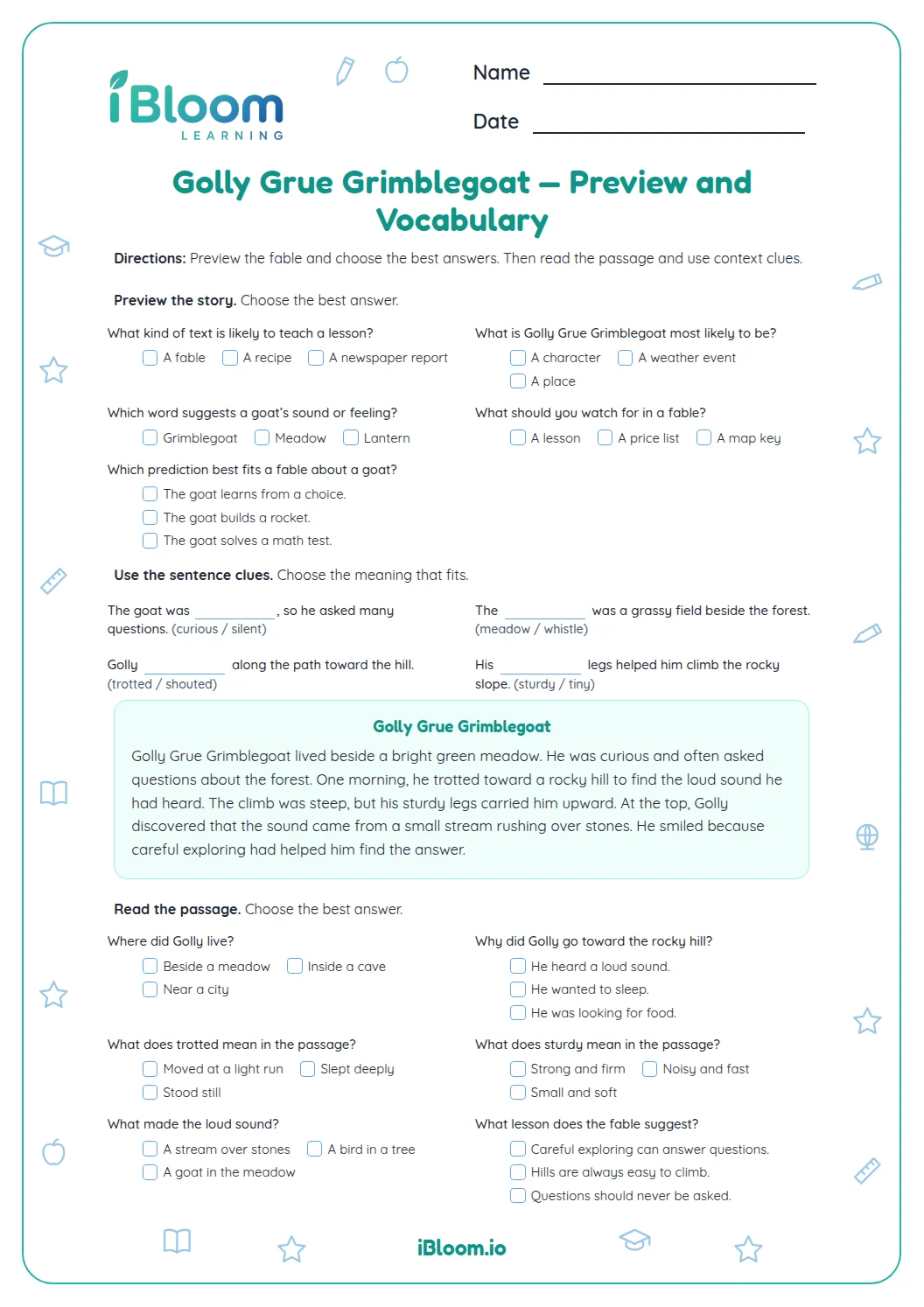
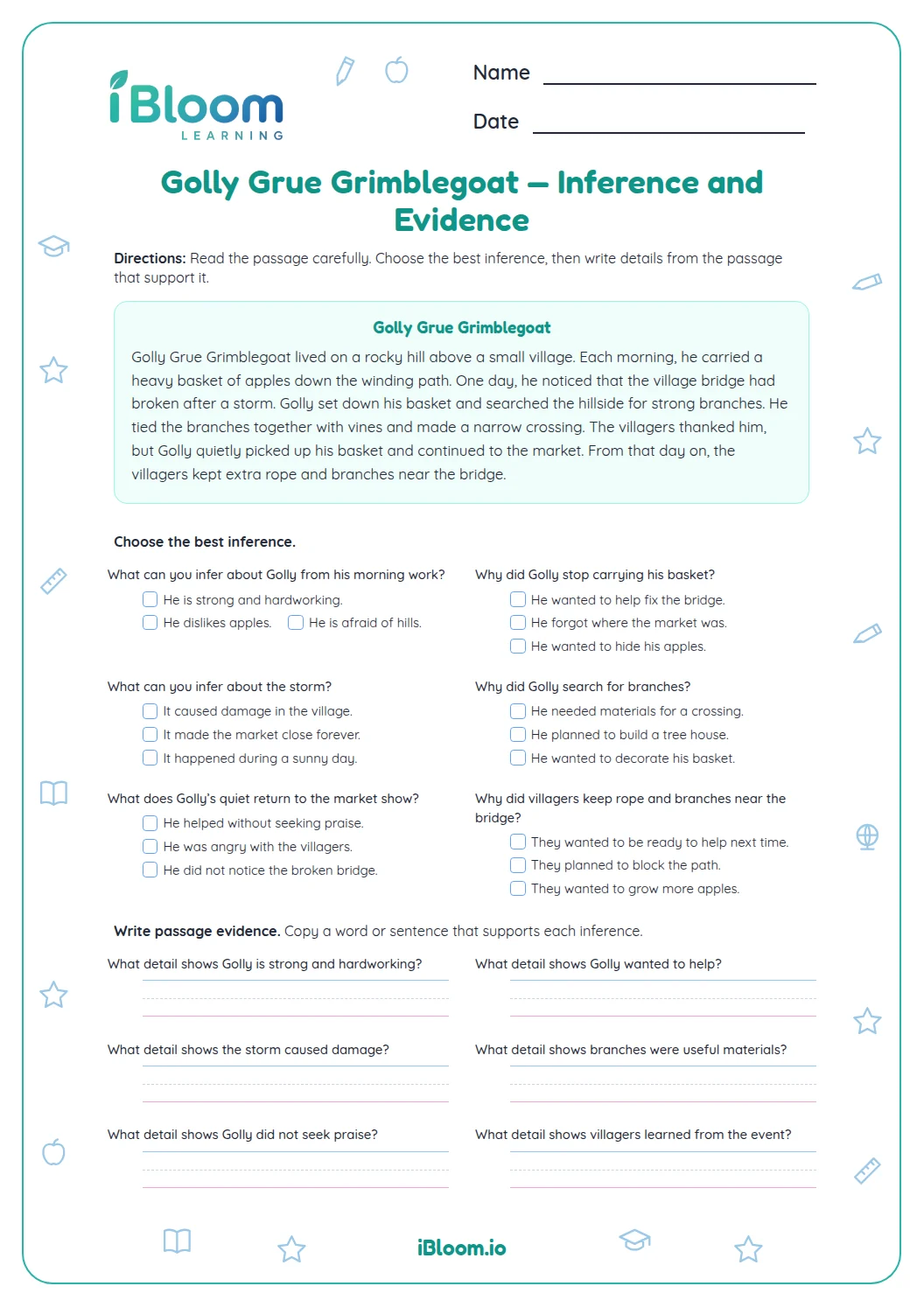
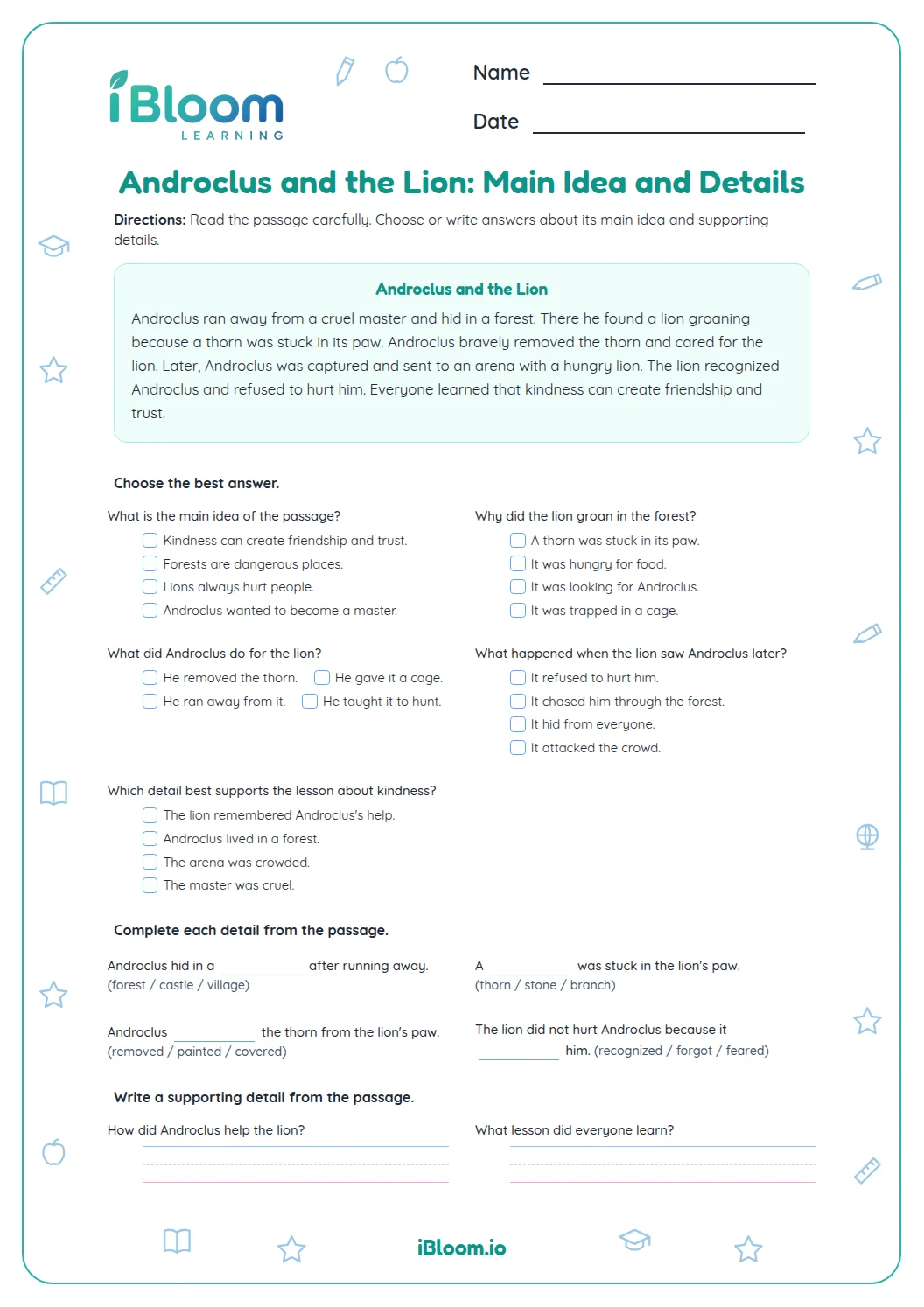
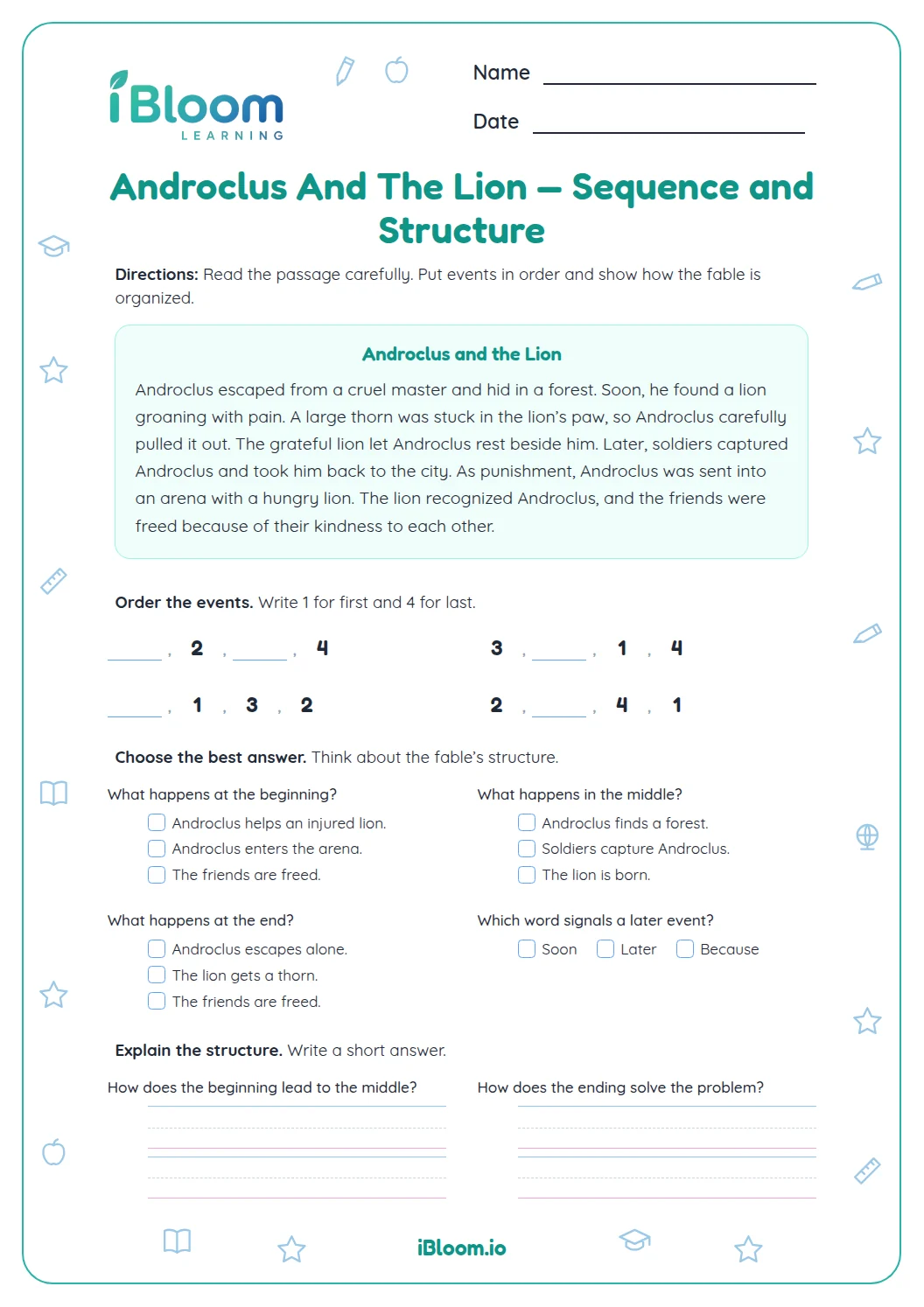
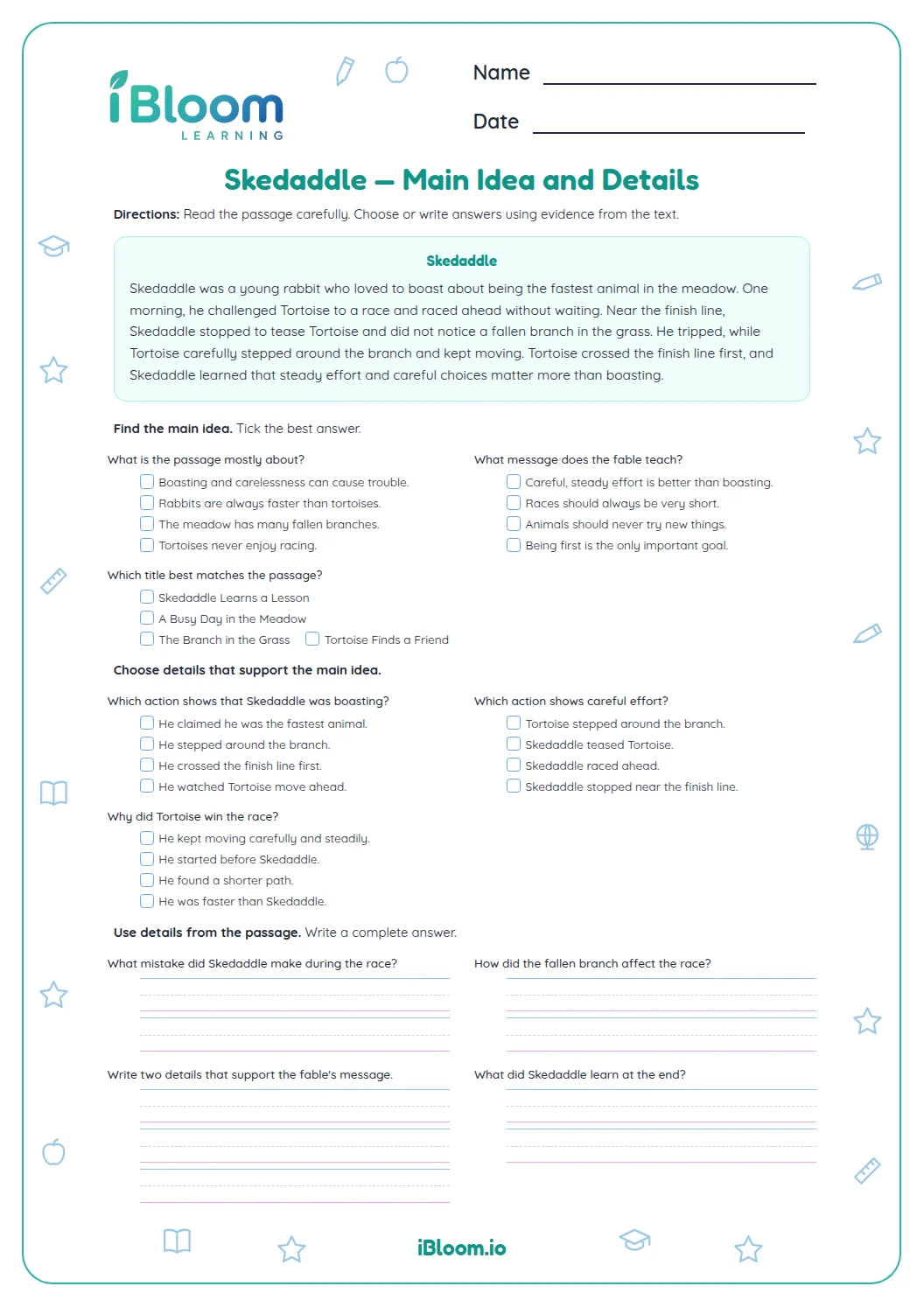
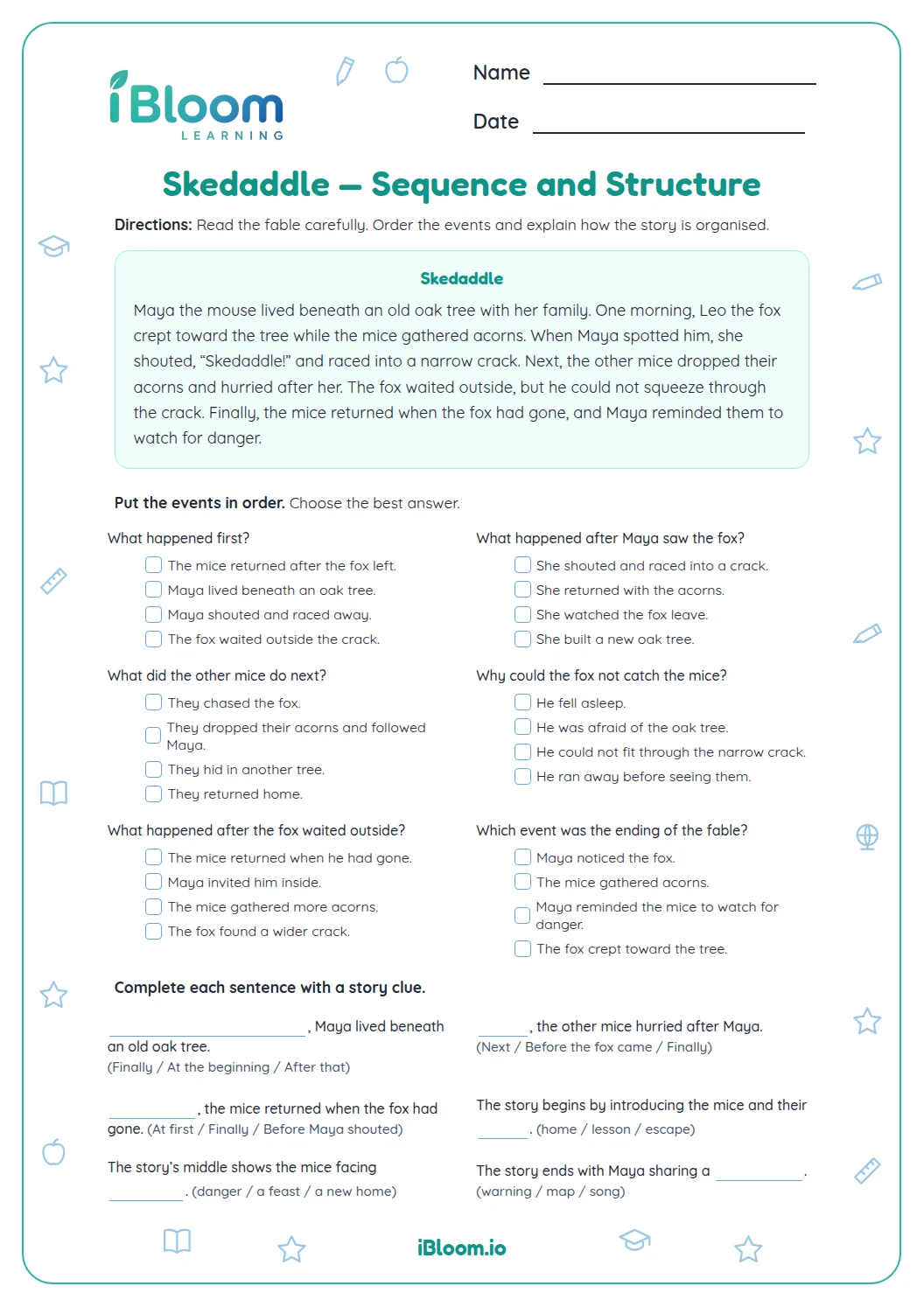
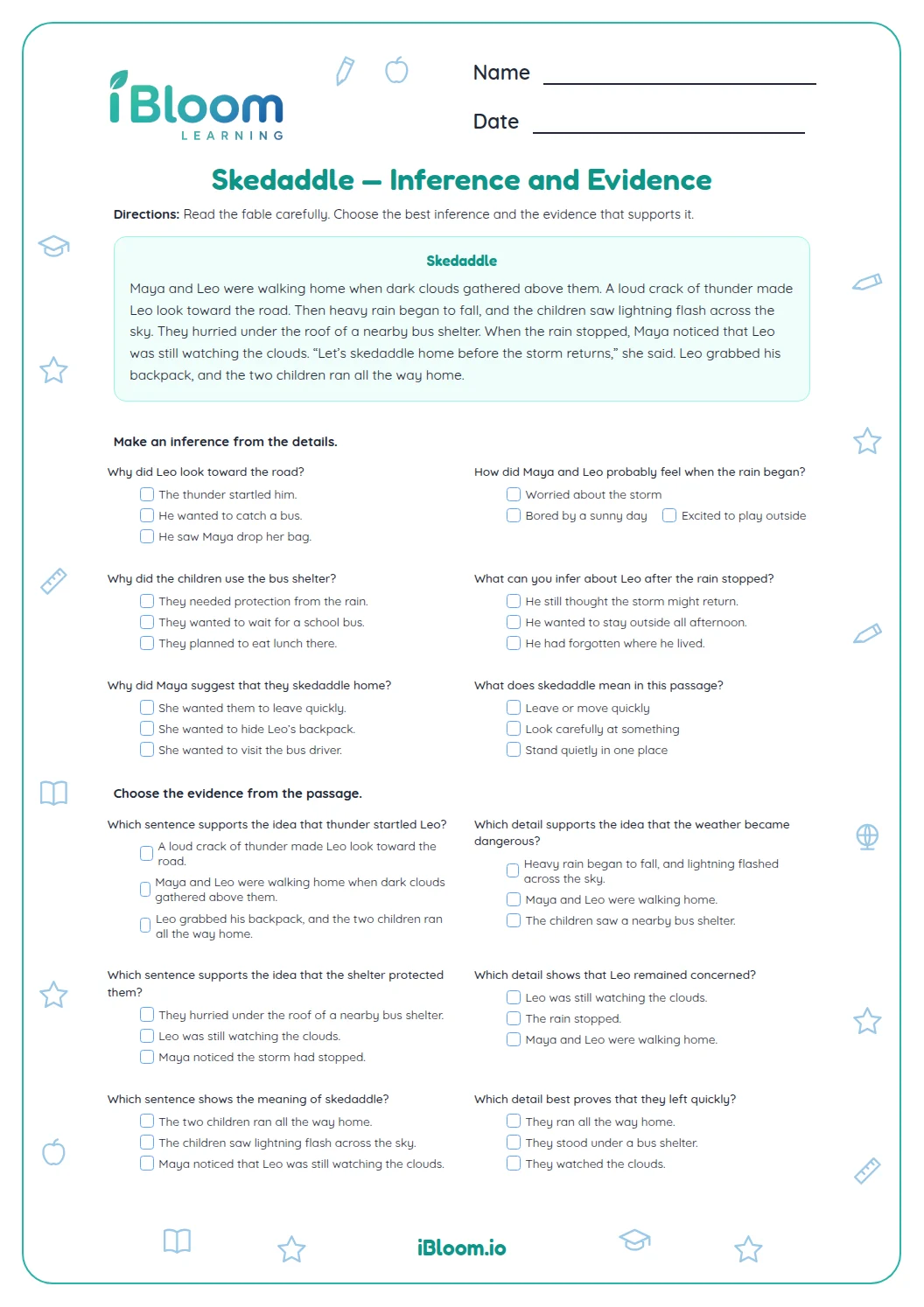
This Grade 4 printable features Golly Grue Grimblegoat in an original fable about a small goat who frees Golly from a thorny bush. Students identify the central idea, connect important details, follow the solution, and write a short summary. The answer key includes correct choices and sample responses. It practices Common Core RL.4.2 by using story details to determine a lesson and summarize.
Aligned to RL.4.2
What is the main idea of a fable?
Golly laughs at a small goat who cannot pull a heavy cart. Later, Golly’s horns get stuck in a thorny bush. The small goat uses a smooth stick to free him, and Golly learns that kindness and clever thinking matter more than showing off.
Which details support Golly’s lesson?
The small goat’s smooth stick is a key detail: it solves a problem that Golly cannot fix by tugging. Golly’s thanks and lesson show that he recognizes the small goat’s helpful idea.
- 1Detail: Golly leaves the rope by the path.
- 2What changed? At first, he wanted to keep it safe in the cave.
- 3What does the detail support? He now shares useful things.
How can readers summarize the fable?
A short summary names Golly’s trouble, the small goat’s useful idea, and what Golly learns. Those events connect the problem to the fable’s message about kindness and clever thinking.
How to use this worksheet
- 1Read to find the problem that affects the animals.
- 2Notice what Golly wants at first and how he responds to Wren.
- 3Choose details that connect to the full story, not just one paragraph.
- 4For a written response, state the idea and support it with an event.
- 5Check the key and make sure each answer matches the fable.
Common mistakes and quick fixes
The mistake
Choosing a small detail as the main idea.
The fix
Ask whether the idea describes the whole story or only one object.
The mistake
Retelling events without stating what they show.
The fix
Add a sentence explaining the lesson supported by those events.
The mistake
Using a detail that does not support the answer.
The fix
Connect the chosen detail directly to Golly’s change or the problem’s solution.
Common Core alignment
Students use story details to determine the fable’s lesson and summarize its events.
Use story details to identify the fable’s lesson and summarize its events.
On this sheet: The fable questions connect details and events to its central lesson and a short summary.
Show the official wordingHide the official wording
Determine a theme of a story, drama, or poem from details in the text; summarize the text.
What to practice next
Make more practice
Further reading
Questions parents and teachers ask
What is the main idea of the Golly Grue Grimblegoat fable?
The fable shows that kindness and clever thinking matter more than showing off. Golly first laughs at a small goat, then learns from the goat’s clever help when his horns get tangled in a thorny bush. Ask the student to point to a specific detail, explain how it supports the answer, and check the response against the separate key.
How many questions are included?
There are 14 questions: ten multiple-choice items and four written responses. Students identify the main idea, select supporting details, and explain what Golly learns. Ask the student to point to a specific detail, explain how it supports the answer, and check the response against the separate key.
What should count as a supporting detail?
A supporting detail connects to the lesson or the events that develop it. The small goat uses a smooth stick to loosen the thorns, showing both clever problem-solving and helpfulness. Ask the student to point to a specific detail, explain how it supports the answer, and check the response against the separate key.
Does the worksheet include a summary question?
Yes. One written response asks students to state the fable’s main idea in their own words. A complete answer can name kindness and clever thinking and connect those qualities to the small goat’s help. Ask the student to point to a specific detail, explain how it supports the answer, and check the response against the separate key.
Can answers differ from the key?
The multiple-choice answers are fixed, while written answers can use different wording. A response works when it answers the prompt and accurately connects a story event to the main idea. Ask the student to point to a specific detail, explain how it supports the answer, and check the response against the separate key.
How long does this worksheet take?
About 20 minutes is a useful estimate for reading the fable, answering ten choice questions, and writing four short responses. Ask the student to point to a specific detail, explain how it supports the answer, and check the response against the separate key.