
About this worksheet
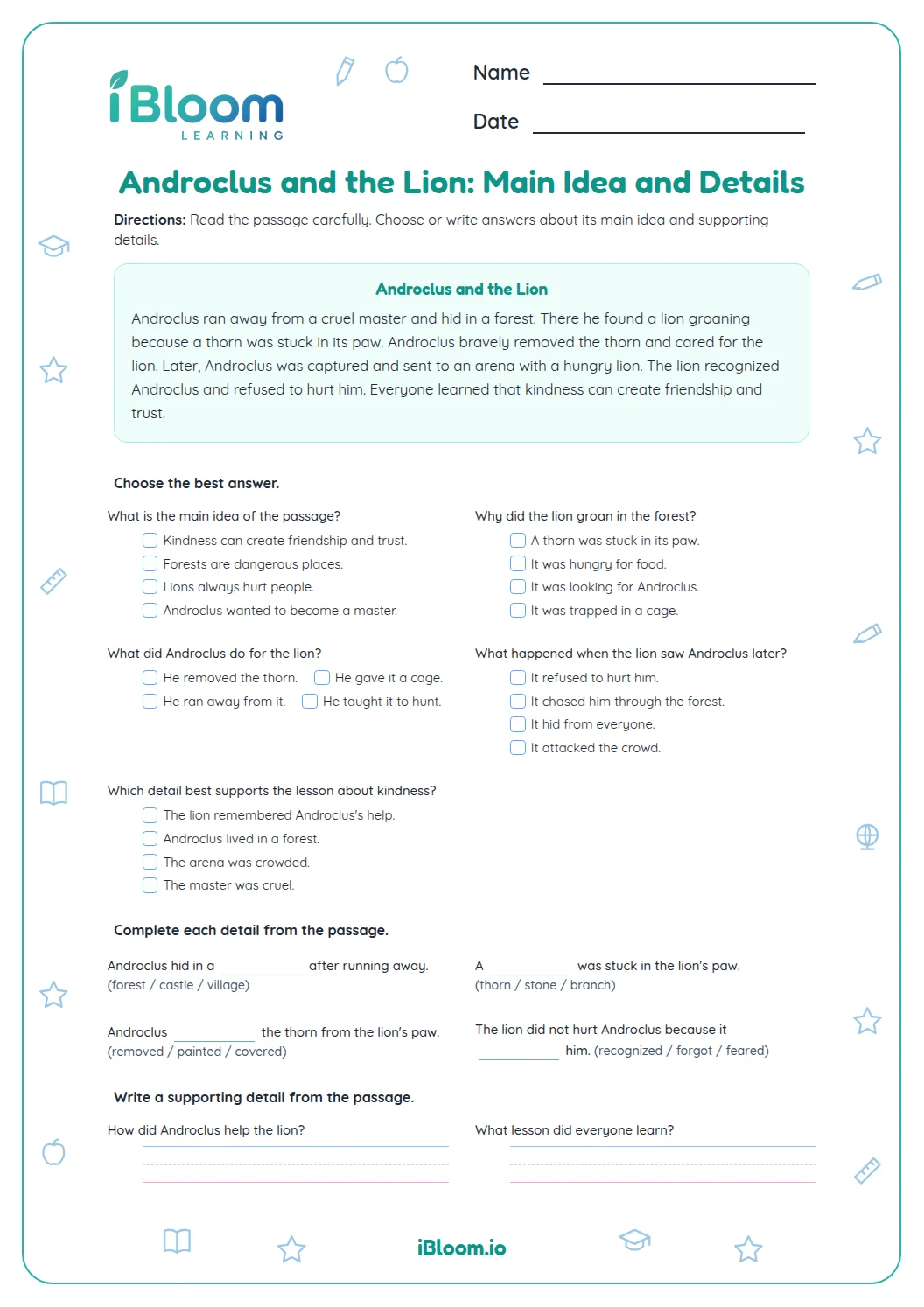
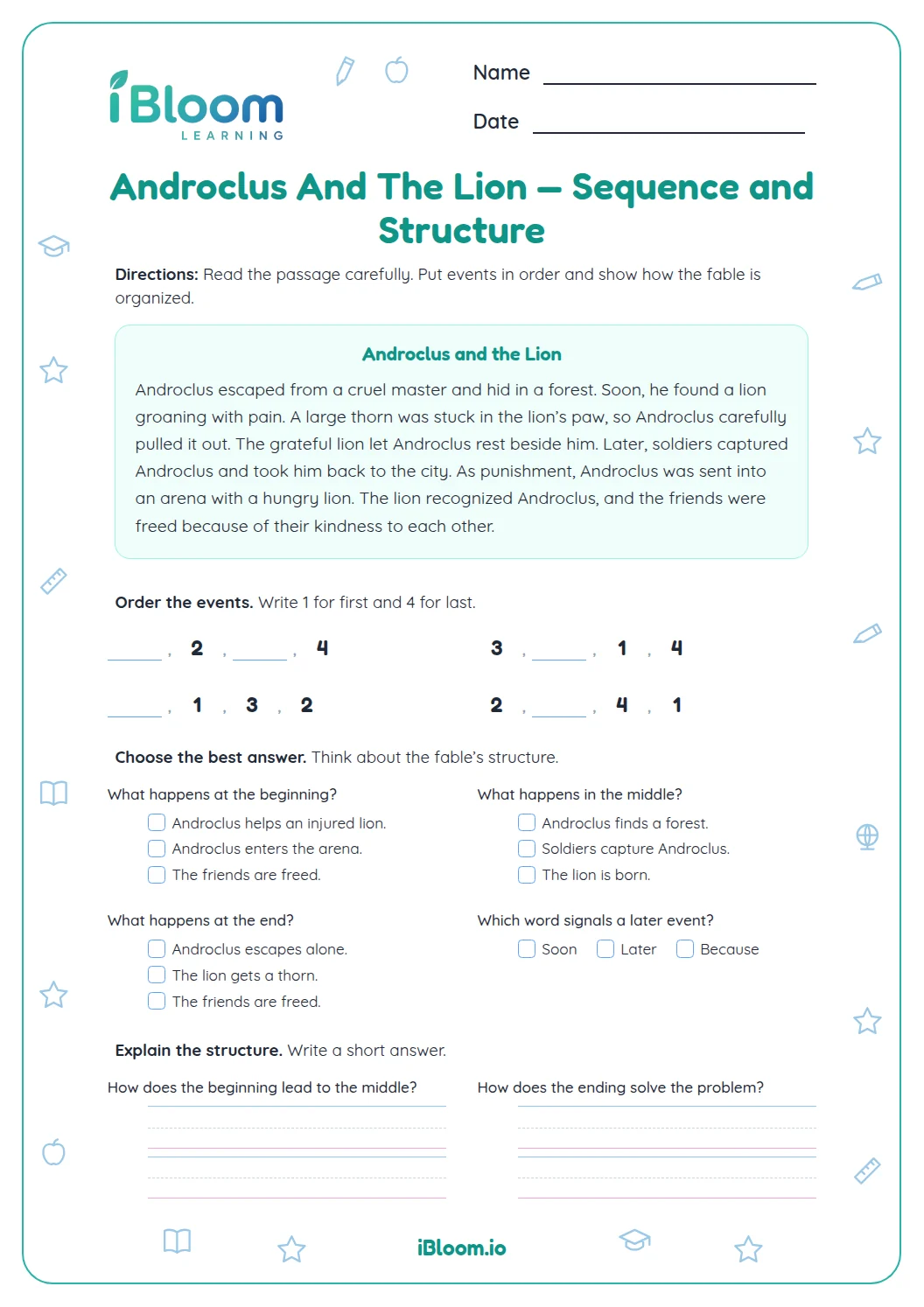
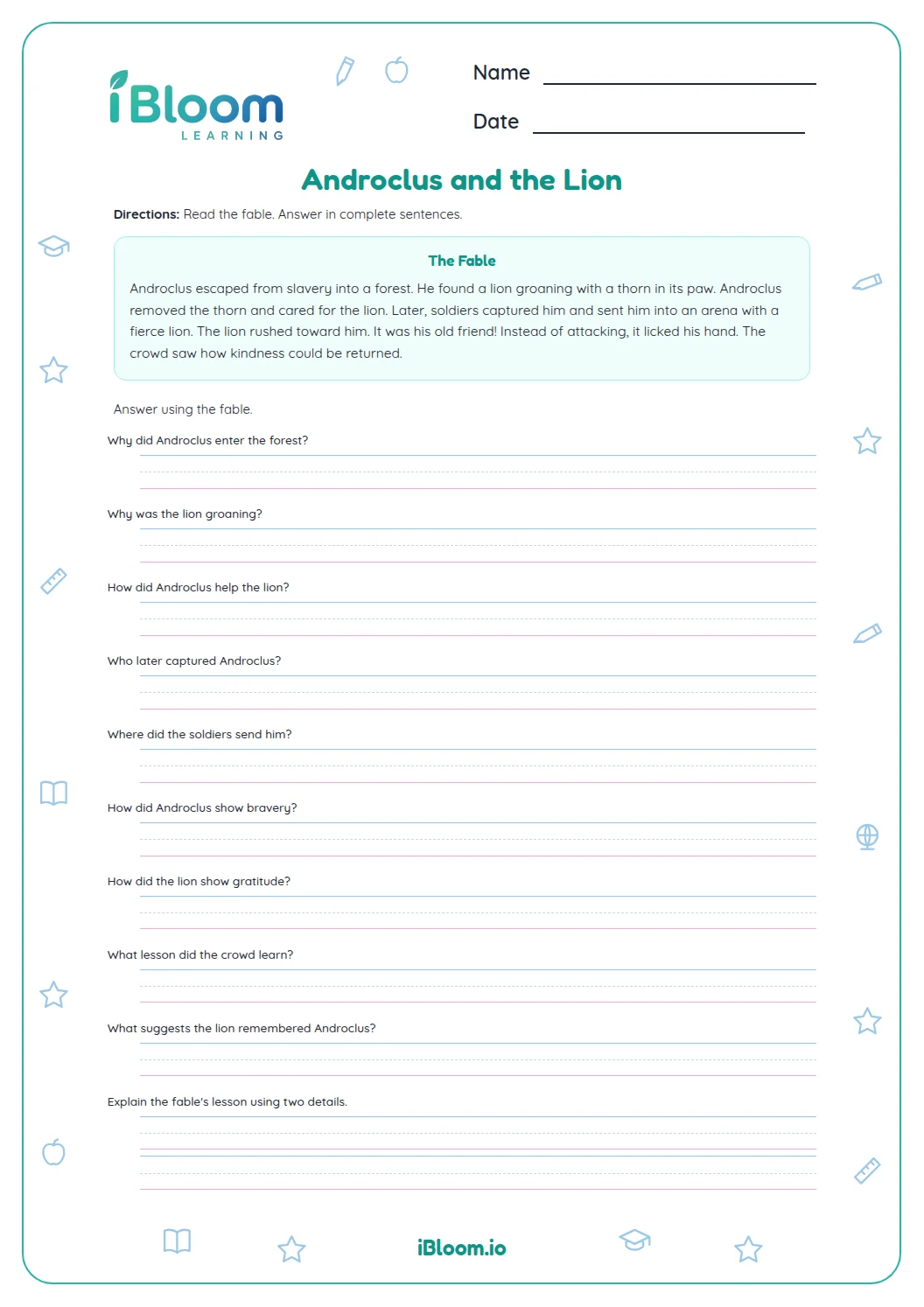
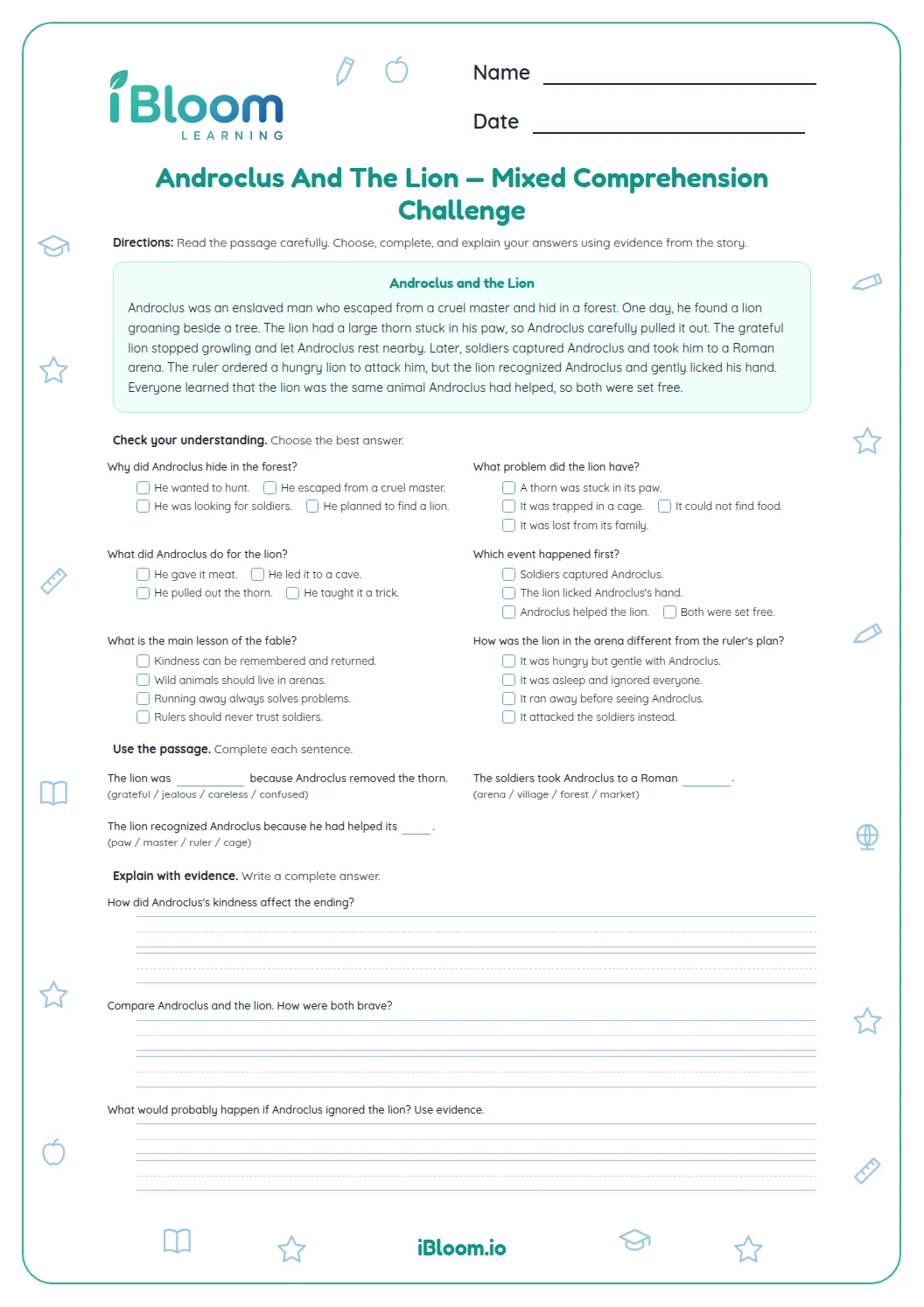
This Grade 4 fable worksheet asks readers to distinguish stated details from inferences about Androclus and the lion. The passage retells their meeting in a cave and reunion in a Roman arena. Fourteen multiple-choice questions practice finding evidence, tracking events, and inferring character actions in CCSS RL.4.1. A separate answer key is included.
Aligned to RL.4.1
What details help readers understand the fable?
Start with what the passage states: Androclus finds the lion in a cave, notices the thorn, and helps. These details give readers evidence for thinking about his choices.
- 1Clue: Androclus helps the injured lion even though he is afraid.
- 2Inference: He is brave and compassionate.
How do details support an inference?
An inference is a reasonable idea supported by clues. The lion’s gentle greeting in the arena suggests that it recognizes Androclus. The passage then confirms the reunion.
What will children practice?
After reading the fable, answer 14 multiple-choice questions about details, sequence, vocabulary, character inferences, and evidence. The answer key marks the correct option for each item.
How to use this worksheet
- 1Read the passage once to follow the events.
- 2Reread the sentence around the detail named in a question.
- 3For an inference, name the clue and explain what it suggests.
- 4Read each option and choose the one best supported by a passage detail.
- 5Compare each choice with the answer key and reread any passage clue you missed.
Common mistakes and quick fixes
The mistake
Giving an opinion without a story clue.
The fix
Name the action or sentence that led to the inference.
The mistake
Mixing up the order of the cave meeting and arena reunion.
The fix
Retell the events in order before answering sequence questions.
The mistake
Treating an inference as a directly stated fact.
The fix
Separate what the passage says from what those details suggest.
Common Core alignment
This worksheet gives focused practice with the standard below.
Use details and examples from a story to explain what it says and what can be inferred.
On this sheet: Children answer literal and inferential questions and support inferences with passage details.
Show the official wordingHide the official wording
Refer to details and examples in a text when explaining what the text says explicitly and when drawing inferences from the text.
What to practice next
Make more practice
Further reading
Questions parents and teachers ask
What reading skill does this worksheet practice?
It practices using story details to make and explain inferences. Children also locate facts, follow the event sequence, and use context to reason about a word. Each response can be checked against the original fable passage and the answer key.
Is the Androclus passage included?
Yes. The worksheet begins with an original retelling of the fable. Children can return to its details about the cave, the thorn, and the arena as they choose answers about Androclus, the lion, and the way their reunion unfolds.
How many questions are included?
There are 14 multiple-choice questions after the passage. They cover details, event sequence, a word in context, and inferences supported by the story. The separate answer key identifies the correct option for each question and makes checking responses straightforward.
How should children answer an inference question?
Connect a passage clue to a reasonable idea. For instance, Androclus helps the lion despite feeling afraid, which supports the inference that he is brave and compassionate. The passage supplies the evidence for that conclusion, and children can reread it before selecting an answer.
How can children support an inference choice?
Point to the sentence or action that supports the chosen answer. For example, the lion nuzzles Androclus after recognizing him, supporting the idea that it remembers him. Rereading the nearby passage detail helps children check that their inference fits the story.
What standard is listed for this sheet?
The page practices CCSS RL.4.1: using details and examples to explain what a text says and to draw inferences. Questions ask children to find facts and select inferences supported by the fable, including ideas about the characters and events.