
About this worksheet
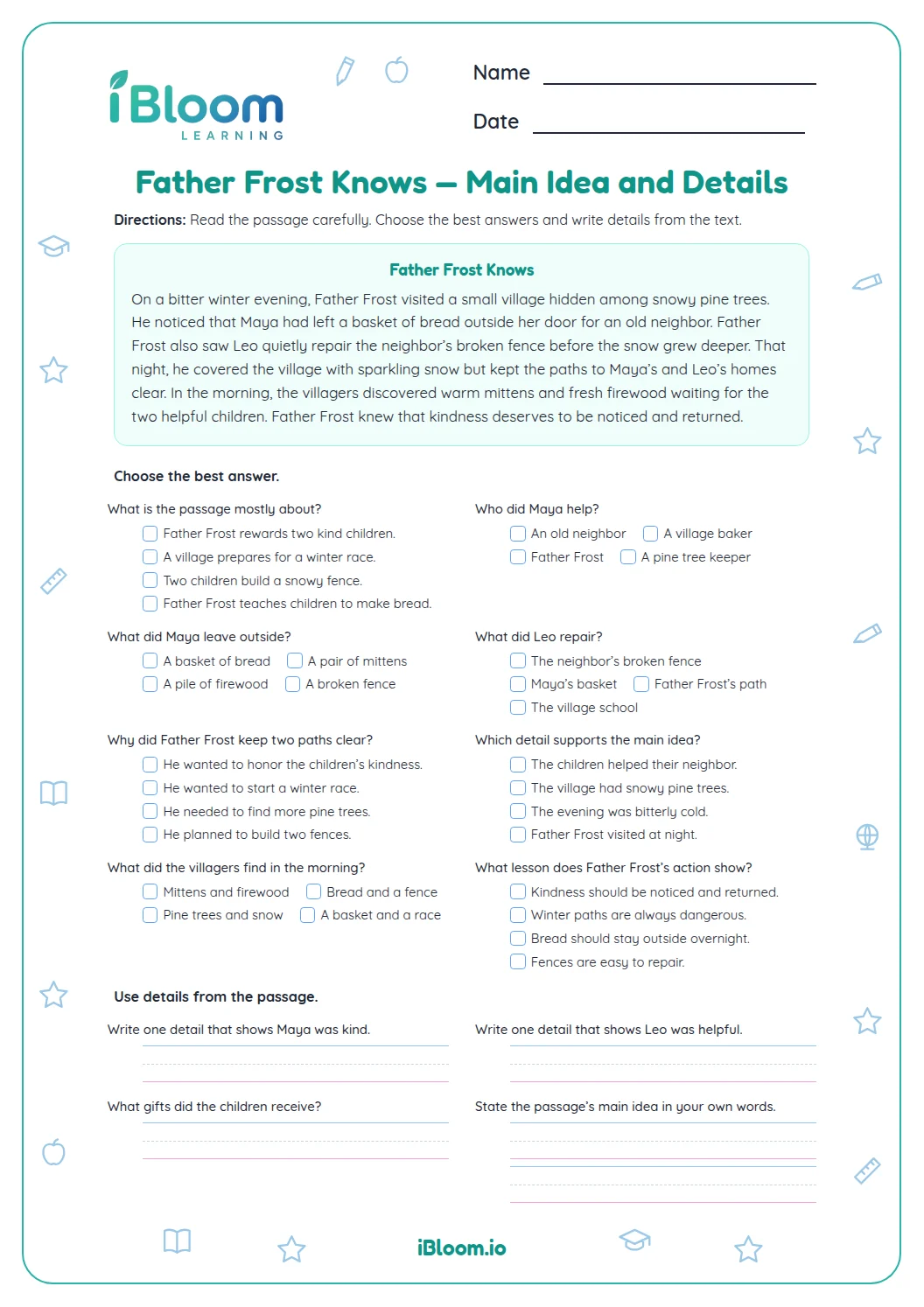
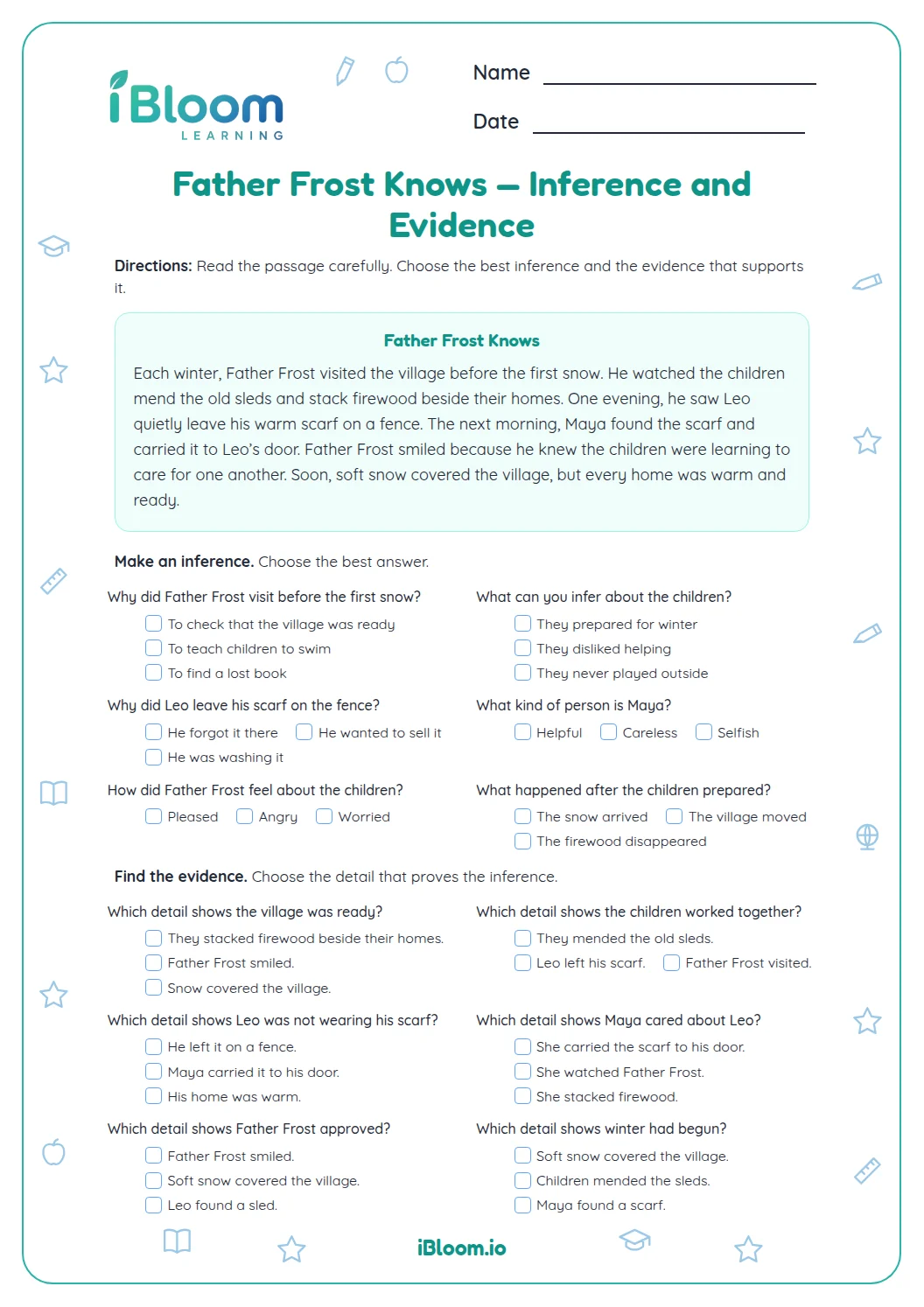
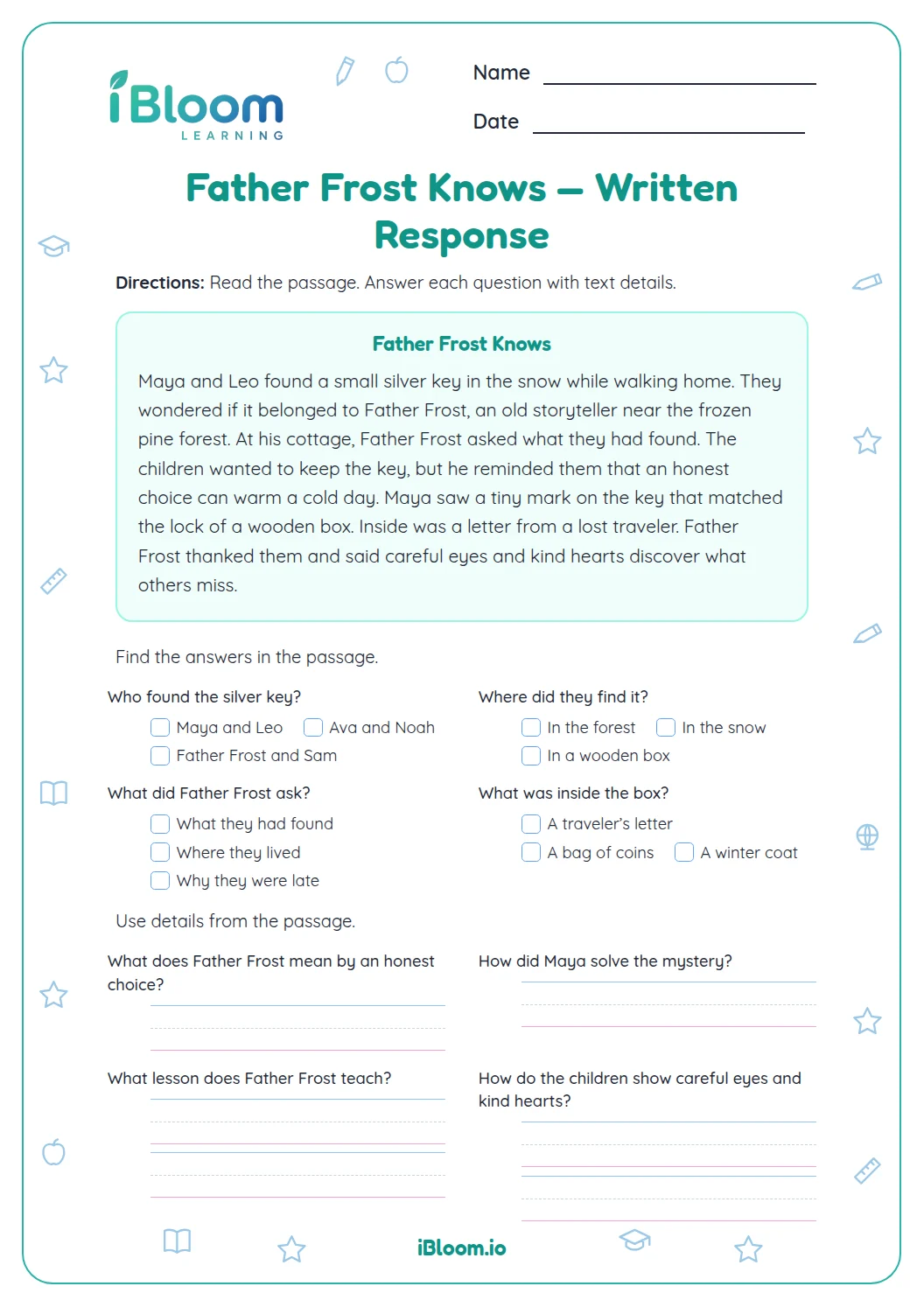
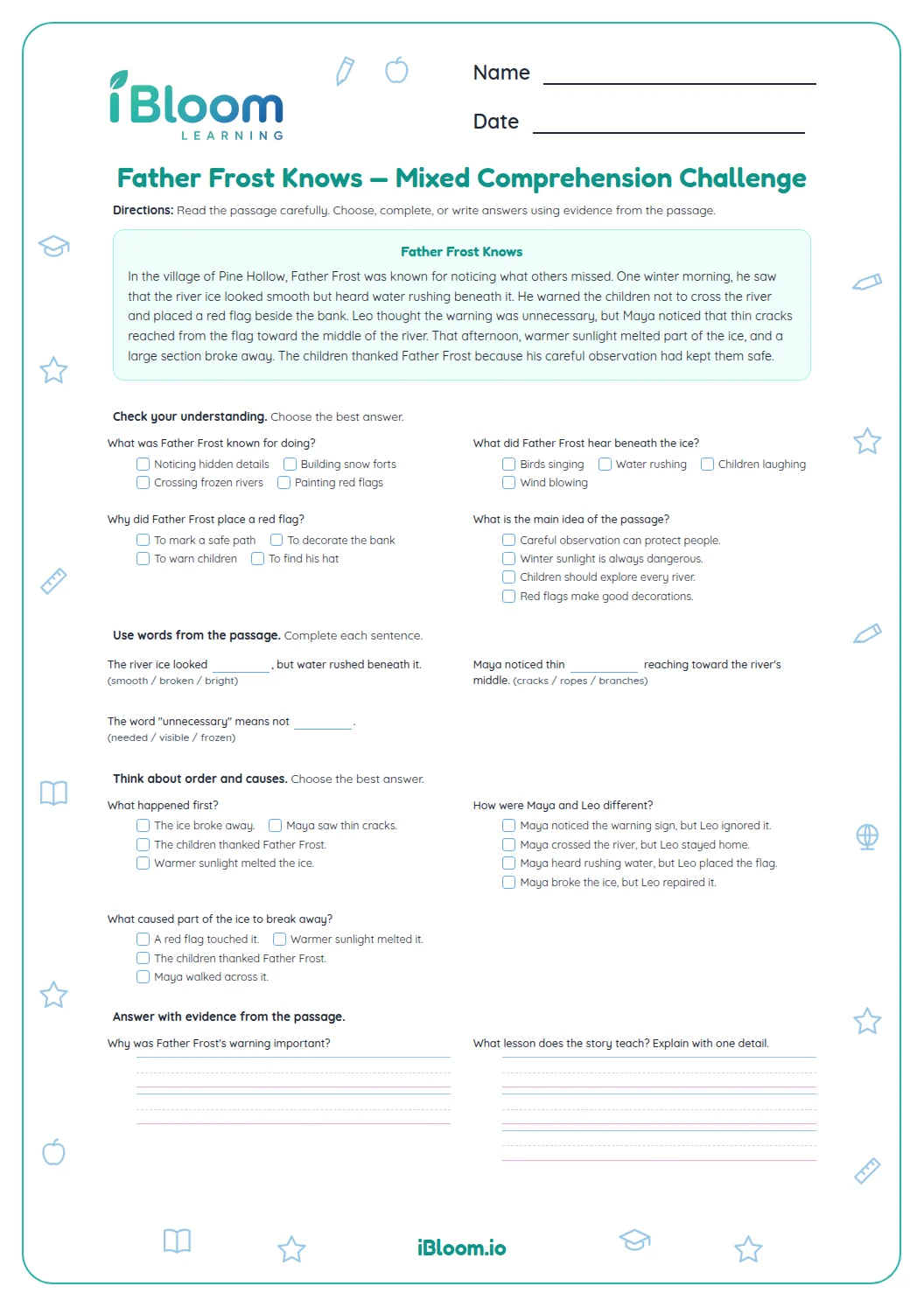
This Grade 4 worksheet pairs the Father Frost Knows story text with a short preview and vocabulary questions. Students identify the fable, infer what the title suggests, follow details about Maya, Leo, and their neighbors, and use context for words such as worried and gather. The 14 multiple-choice questions are arranged in two parts, followed by a separate answer key. The vocabulary work practices CCSS L.4.4.a.
Aligned to L.4.4.a
What is in the Father Frost worksheet?
The passage keeps the story text from the old sheet: Father Frost visits a village, helps Maya and Leo gather supplies, and sees the village brighten through kindness. The questions use this text to explore story details and word meaning.
Part A previews the story; Part B asks about vocabulary and details. The repeated gather item has been replaced with a question about the phrase “brighter than snow.”
- Part A: preview the fable and its title
- Part B: use details and context clues
- 14 multiple-choice items with a separate answer key
What can the title and preview tell a reader?
Before reading closely, use the title and first details to predict the setting and kind of story. Then check those predictions against the complete passage. A prediction should fit the text rather than replace it.
- 1What kind of text is Father Frost Knows?
- 2The story uses a made-up winter visitor and ends with a lesson about kindness.
- 3Those clues fit a fable.
How does context clarify vocabulary?
Use what happens around a word. The children gather coats, blankets, and food, so gather means collect together. When kindness makes the village brighter than snow, brighter describes the village’s hopeful feeling, not a change in sunlight.
Which story details support an answer?
Look for the sentence that gives the answer. The passage says the children worried about their neighbors and that some families had no warm coats. These details explain why Father Frost showed them how to collect supplies.
How to use this worksheet
- 1Read the story once before answering.
- 2Use the title and opening to preview the setting and kind of text.
- 3For vocabulary, reread the whole sentence and nearby details.
- 4Find the passage detail that supports each answer.
- 5Check the selected choices against the answer key.
Common mistakes and quick fixes
The mistake
Choosing a word meaning from one clue word alone.
The fix
Read the full sentence and connect the word to what happens.
The mistake
Treating a metaphor as a literal weather change.
The fix
Ask whether the phrase describes a feeling or a physical event.
The mistake
Confusing the children’s need with the action they take.
The fix
Track who notices the problem and who gathers the supplies.
Curriculum alignment
This page practices a grade-level skill named in the Common Core State Standards.
Use context to determine the meaning of a word or phrase.
On this sheet: Students use sentence and passage clues to interpret vocabulary in context.
Show the official wordingHide the official wording
Use context (e.g., definitions, examples, or restatements in text) as a clue to the meaning of a word or phrase.
What to practice next
Make more practice
Further reading
Questions parents and teachers ask
What kind of story is Father Frost Knows?
The passage is a fable: it tells a brief made-up story and ends with a lesson about kindness. On Part A, students choose the kind of text that fits. The neighbors’ need and the children’s helpful actions give the story its lesson.
What does gather mean in the passage?
Gather means collect together. Father Frost shows Maya and Leo how to gather extra coats, blankets, and food for families who need them. Those examples in the same sentence help readers infer the meaning without needing a separate definition. Students can reread before choosing.
What does “brighter than snow” suggest?
The phrase suggests that kindness made the village feel more joyful and hopeful. It is figurative language: the passage does not say that the snow or sunlight changed. The final sentence connects the village’s brighter mood with the neighbors helping one another.
How do the children help their neighbors?
Maya and Leo help gather extra coats, blankets, and food for their neighbors. The passage says some families had no warm coats, so the children collect supplies and every family has something warm to use by evening. This detail explains how their kindness changes the village.
How many questions are in the printable?
There are 14 multiple-choice questions across three worksheet pages and a three-page answer key. The first part previews the story; the remaining questions use its vocabulary and details. Students can refer back to the passage whenever they need evidence. The passage remains available throughout the activity.